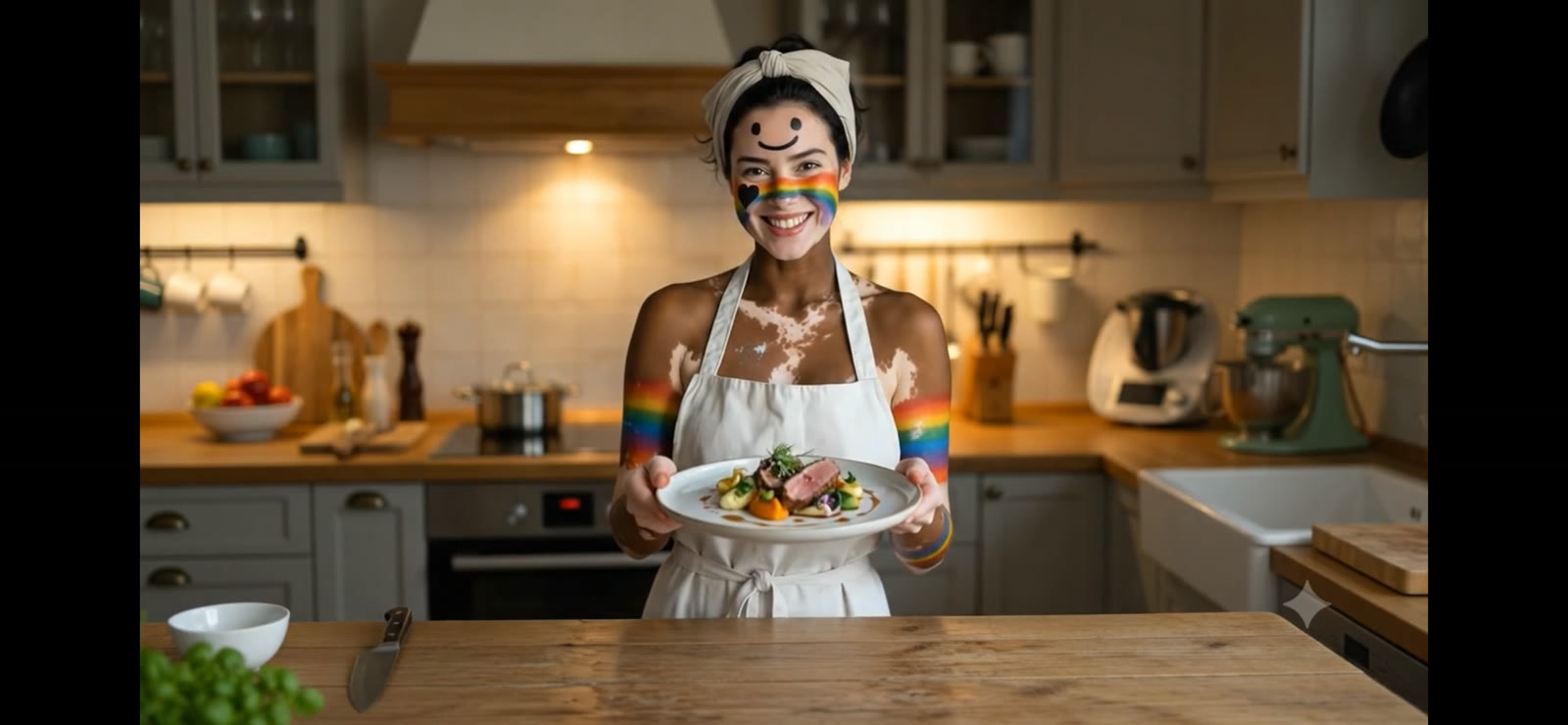
Sesame-crusted tuna steak with parsnip purée
Seared sesame-crusted tuna over a smooth parsnip purée with baby pak choi — a striking, restaurant-grade plate for two in about 35 minutes.
35 min
Time
2
Servings
700
Kcal
Watch the method Video
Ingredients
- Tuna steak (sushi grade)2 pcs (à 150 g)
- Sesame seeds (white + black)4 tbsp
- Parsnip400 g
- Butter30 g
- Whipping cream60 ml
- Baby pak choi2 pcs
- Baby carrots2 pcs
- Enoki mushrooms1 handful
- Soy sauce3 tbsp
- Balsamic vinegar2 tbsp
- Honey1 tsp
- High smoke point oil (canola or peanut)1–2 tbsp
- Fresh dillto garnish
- Flaky saltpinch
Method
- Coat the tuna. Pat the steaks dry and press them firmly on all sides into a mix of white and black sesame seeds so they form a compact crust.
- Parsnip purée. Cut the parsnip into cubes and cook until soft (~15–20 min), drain, and blend with butter and cream into a silky purée. Season with salt.
- Sear it hard. Heat a little oil in a hot pan and sear the tuna hard for 30–45 seconds on each side — it should stay pink inside. Take it out and let it rest for a moment. Add baby pak choi, thinly sliced carrot, and enoki to the same pan and sauté for a few minutes until the vegetables start to soften.
- Glaze. Reduce the soy sauce, balsamic vinegar, and honey into a glossy, thick glaze.
- Plate it. Slice the tuna with a sharp knife into pieces about 1 cm thick. Spread the purée on the plate, arrange the tuna slices, and add the sautéed vegetables. Drizzle with the glaze and garnish with dill and flaky salt.
Safety & hygiene Important
- Buy sushi-grade. You're serving the tuna pink, so only buy fish labeled sushi/sashimi grade from a trusted seller. That label is mainly the seller's promise rather than an officially defined term, so trusting them is key. Ordinary counter tuna isn't suitable for eating raw.
- Raw fish and parasites. A quick sear (30–45 s per side) leaves the inside raw, so only prior freezing will kill any parasites. Sushi/sashimi grade is usually frozen to regulation (e.g. -20 °C for 7 days), which a home freezer often can't manage. So rely on the seller to have treated the fish this way for raw consumption.
- Keep the fish cold throughout. Carry the tuna home on ice and keep it in the coldest part of the fridge, as close to 0 °C as possible (definitely below 4 °C), and use it as soon as you can. Thaw it slowly in the fridge, never on the counter or in warm water. Searing won't destroy histamine from improperly stored fish — if it smells sour or of ammonia, throw it out.
- Always cook enoki. Don't eat enoki mushrooms raw — they've repeatedly been a source of listeria. Briefly sauté or simmer them until piping hot all the way through.
- Keep a separate board for fish. Cut raw fish on a dedicated board with a dedicated knife and wash them immediately with hot soapy water. Don't put the finished tuna back where the raw fish sat. Wash your hands and wipe down the work surface before you start and after every contact with raw fish.
- Care with at-risk groups. Pink-seared (raw) tuna isn't suitable for pregnant women, young children, the elderly, or people with weakened immunity — for them, cook the fish all the way through. They should eat the mushrooms only cooked, never raw.
- Serve right away, chill leftovers. Serve the finished plate fresh. Refrigerate anything you don't eat within two hours and finish it by the next day. You can technically refreeze thawed tuna in the fridge (it's safe), but the quality and texture suffer — for raw consumption we don't recommend it, so better not to refreeze.