How to plate food like a professional chef
We eat with our eyes first — the same dish, plated with intent, tastes better before the fork moves. Here's the whole craft in one guide: composition, color, sauce and garnish, ending with a routine you can run on tonight's dinner.
The photos on this page are AI-generated illustrations.
Plating isn't cheffy vanity, and it isn't tweezers. It's the last two minutes of cooking — the difference between the twenty minutes of work you did looking like it, or landing on the table as a pile. And it is measurable: served the identical chicken dish in two arrangements, restaurant diners rated the flavor of the food higher when the plate looked better.1
The good news is that plating is a learnable system, not a talent. Chefs follow a handful of composition rules that you can copy exactly — and every rule in this guide works on a Tuesday-night dinner as well as it works on a tasting menu. Where the research contradicts the folklore, as it does with the famous odd-numbers rule, this guide follows the research. Every study it leans on is listed at the bottom.
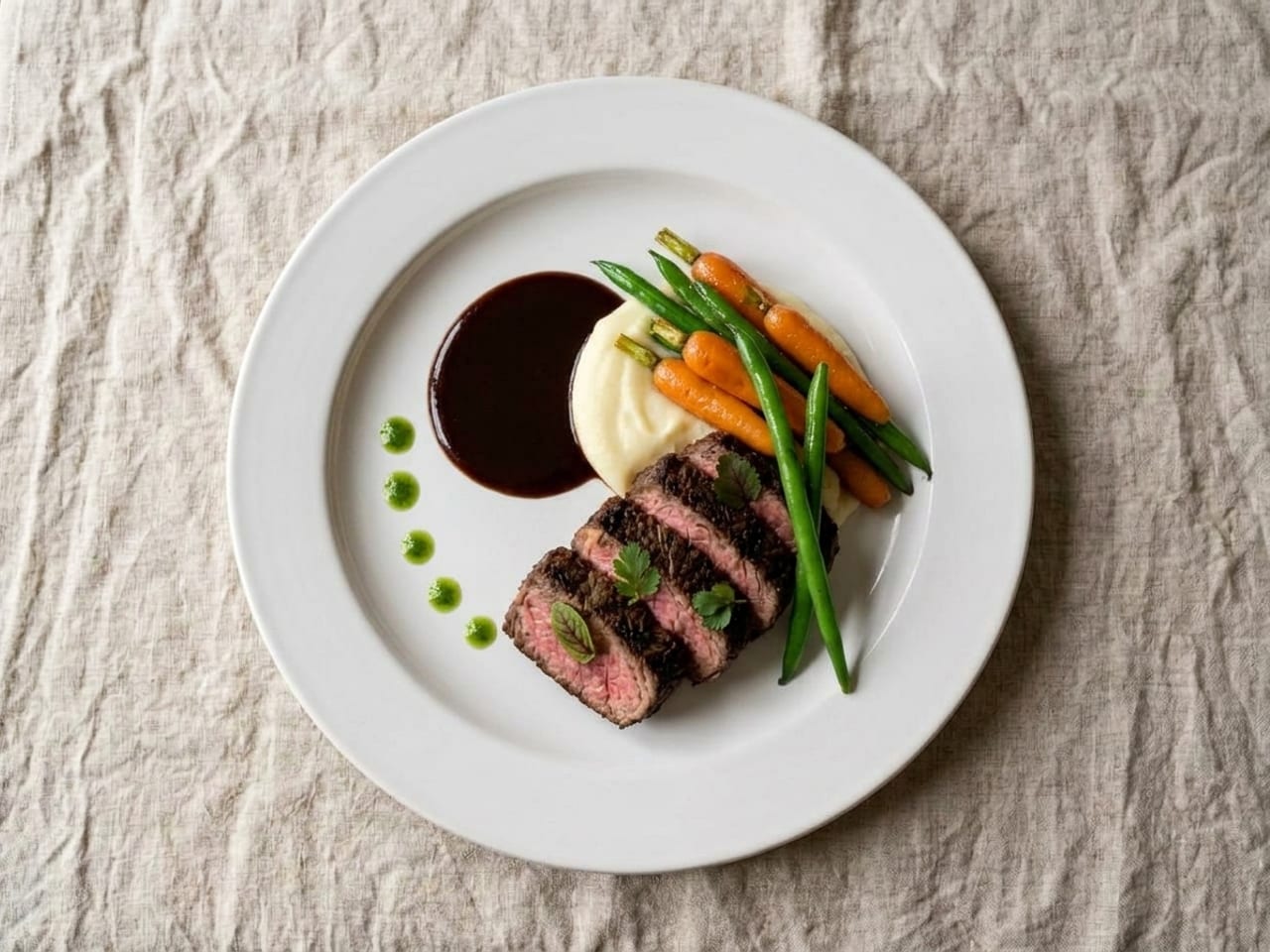
Start with the plate itself
The plate is the canvas and the frame in one. Choose it before you think about arrangement.
- Go bigger than feels natural. Food should occupy roughly the middle two-thirds of the plate; the rim stays clean as a frame. A generous plate makes a modest portion look like a choice. A small crowded plate makes any portion look like a struggle.
- White is the default for a reason. It flatters nearly everything and makes color pop. Reach for a dark plate when the food is pale — scallops, risotto, panna cotta — and skip busy patterns entirely.
- Match the shape to the dish. Flat round plates for composed plates with sauce work; wide shallow bowls for anything that flows — braises, pasta, grain bowls.
- Warm plates for hot food, chilled for cold. A cold plate starts cooling the food the moment it touches it, and fat firms as it cools. This one habit separates home plating from restaurant plating more than any arrangement trick.
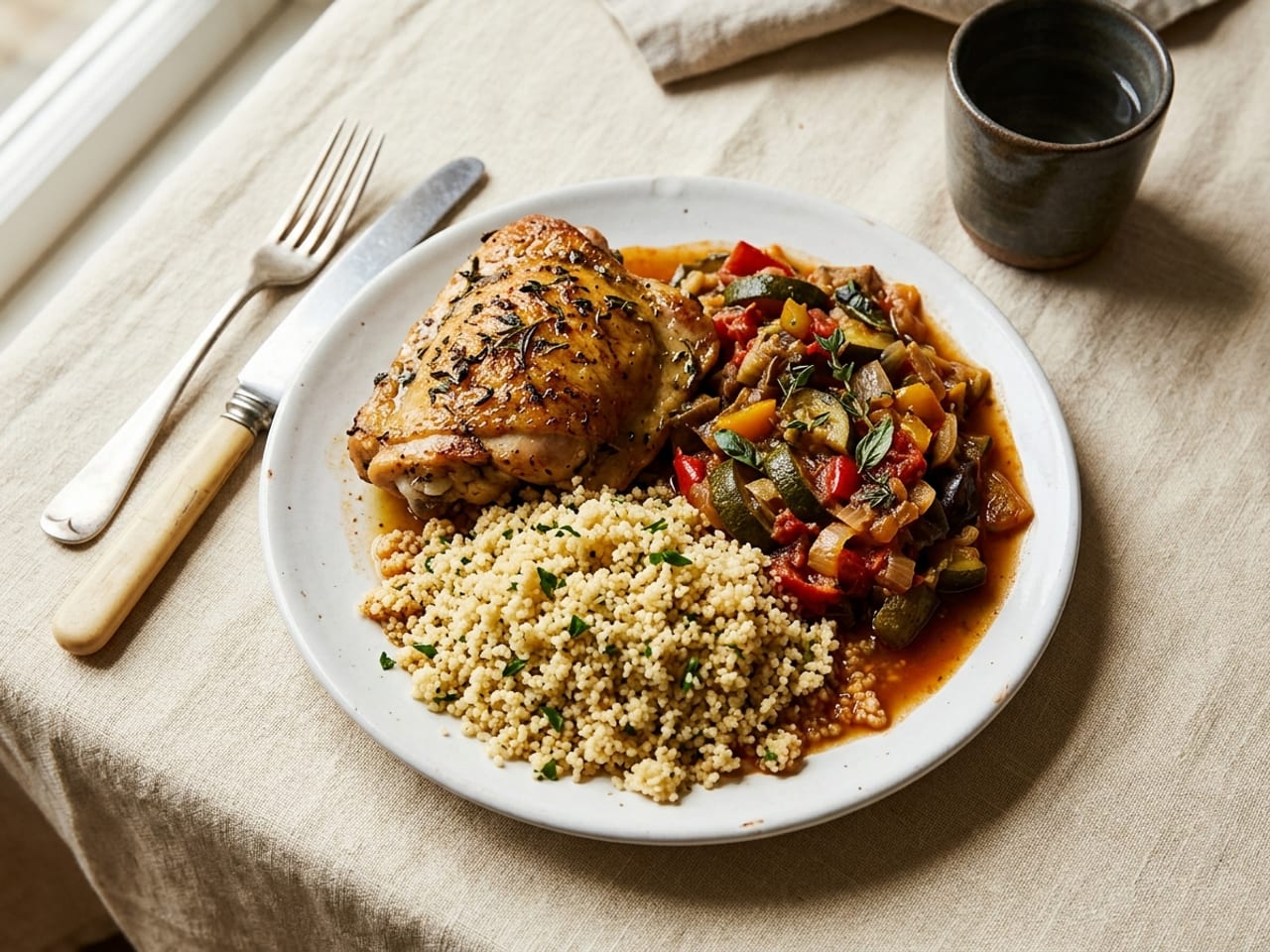
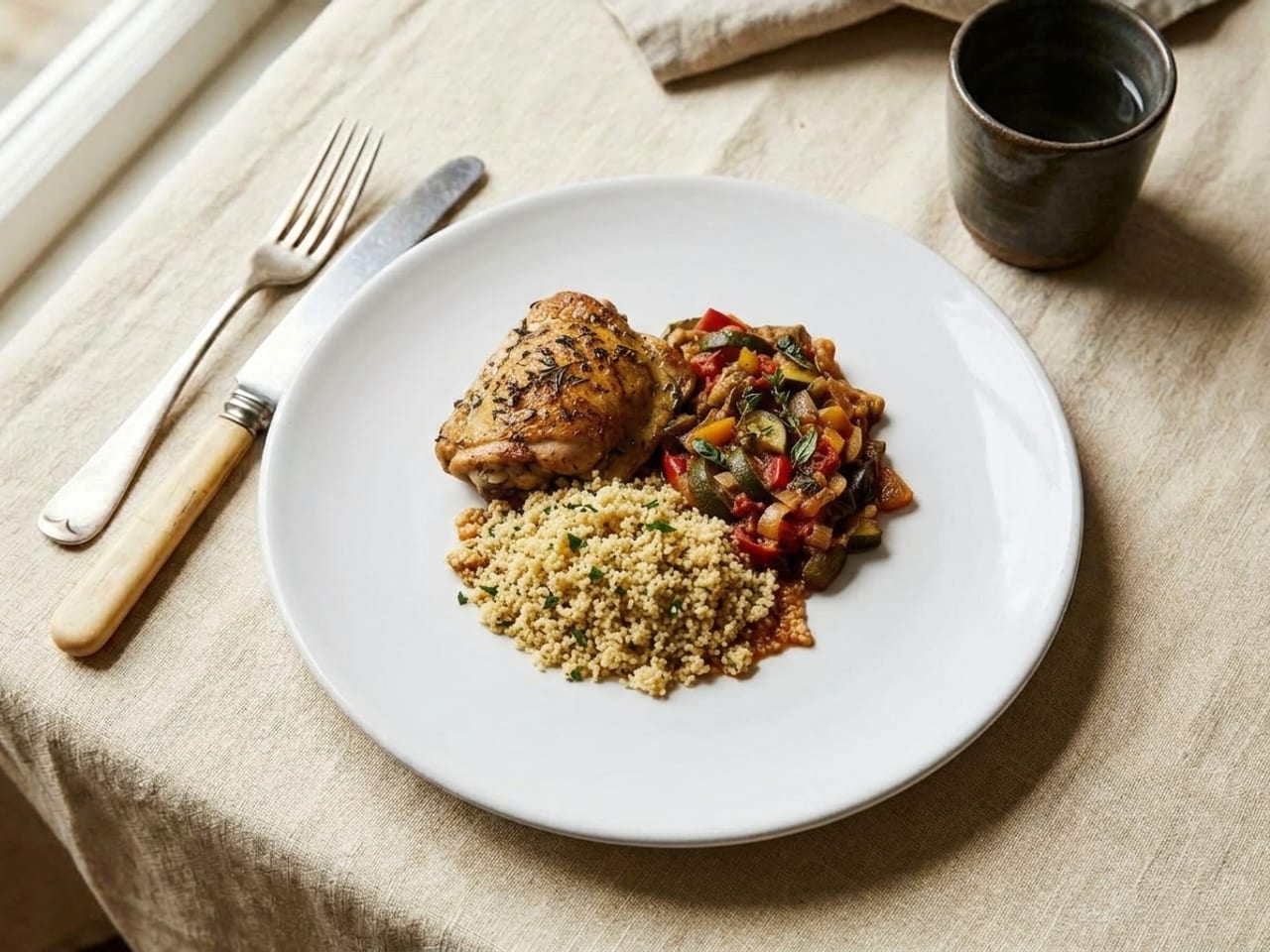
The plate's color — and everything else color does to a dish — is a big enough lever that it has a guide of its own.
Six composition rules chefs actually use
Every polished plate you've admired is some combination of these six moves.
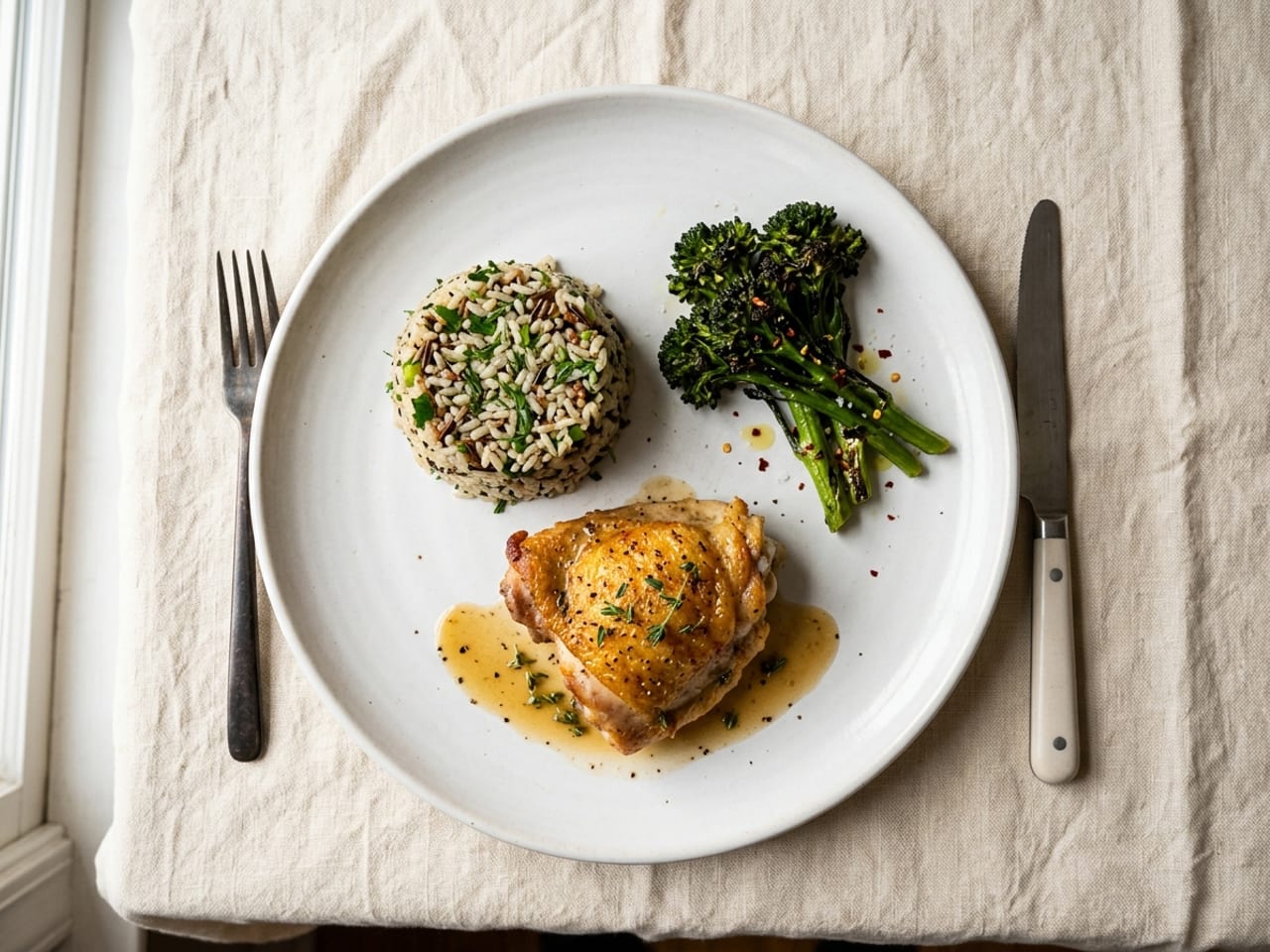
Use the clock method
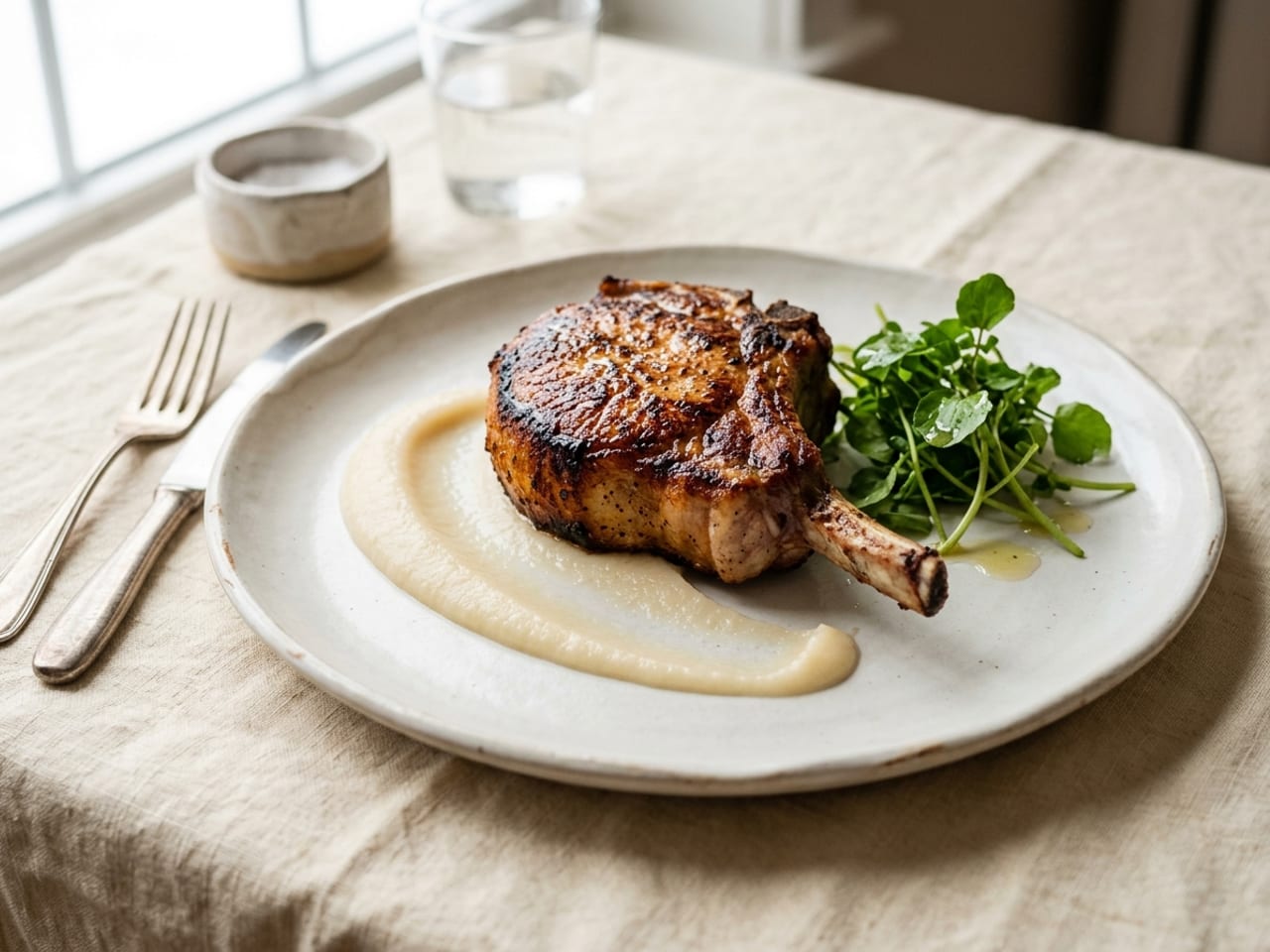
Picture the plate as a clock face. Protein sits at 6 o'clock, closest to the diner; starch at 10; vegetables at 2. It's the classic culinary-school layout (the other styles are defined in the plating techniques glossary) because the eye reads it effortlessly — start here before you experiment.
Give the plate one focal point
Decide what the hero is — usually the protein — and build everything else to support it. The eye should land somewhere first, then travel. Two competing centerpieces read as clutter, not abundance.
Keep the composition centered
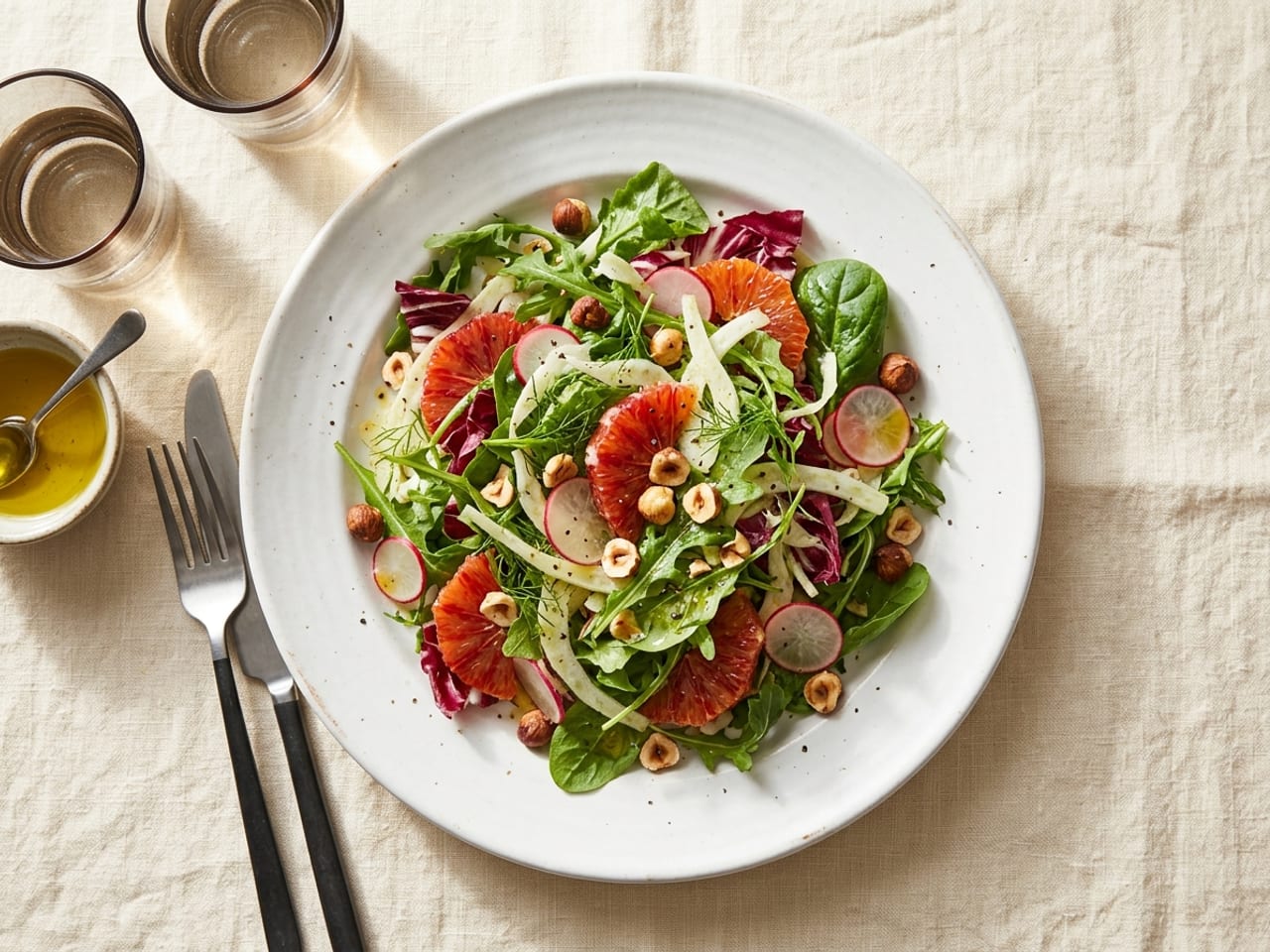
Push the same dish off to one side and diners like it less, judge it less artistic, and say they'd pay about a quarter less for it. Center the arrangement as a whole — then let individual elements sit slightly off-axis inside it.
Build height
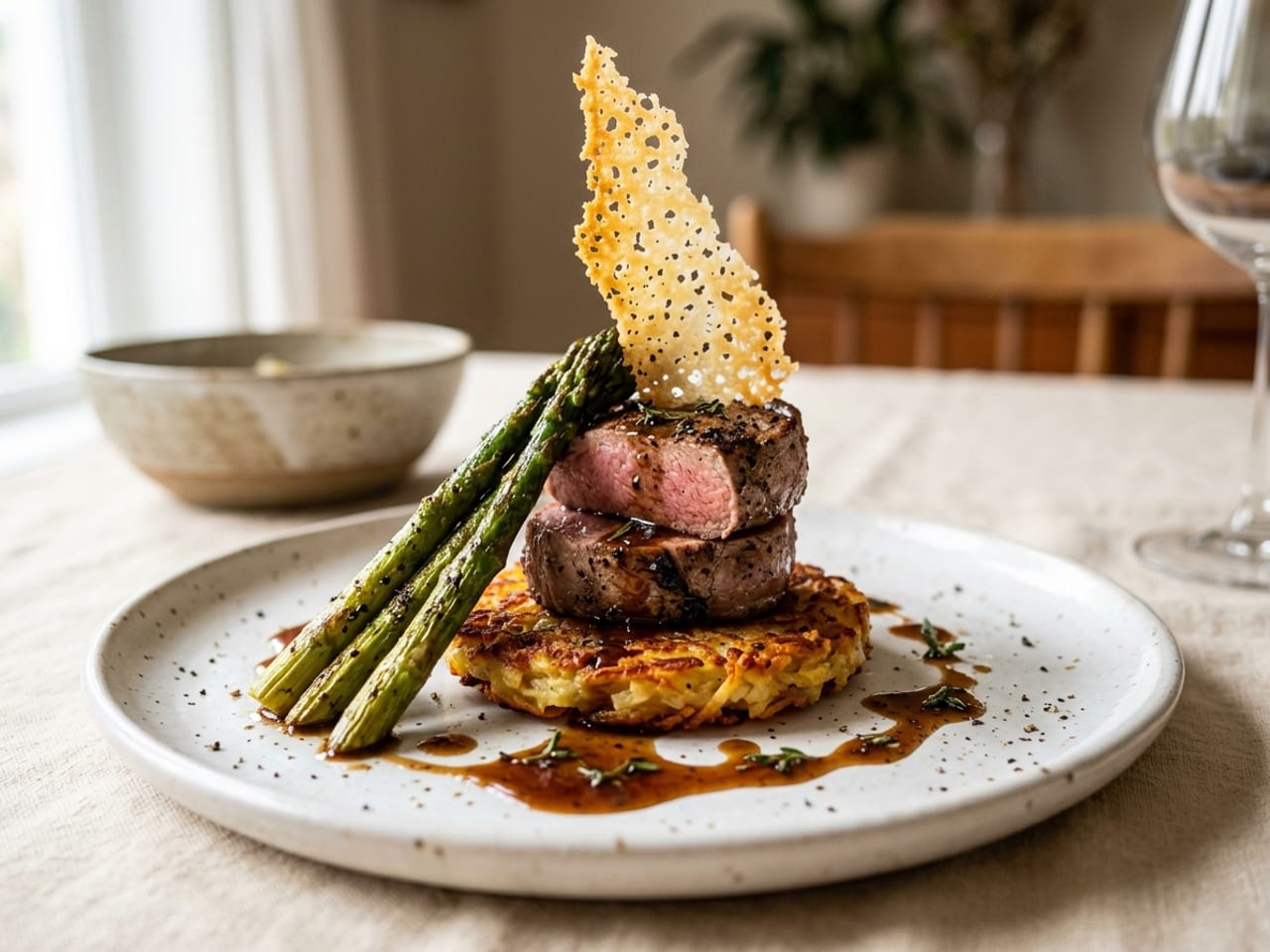
A plate with no height at all can look unfinished (our view; the studies on stacks disagree). Lean the protein against the starch, stack elements, stand garnishes up. A plate with one tall moment looks intentional; just keep it stable enough to survive the trip to the table. The layer order, the ring mold and what keeps a stack standing: how to stack food for plating.
Respect negative space
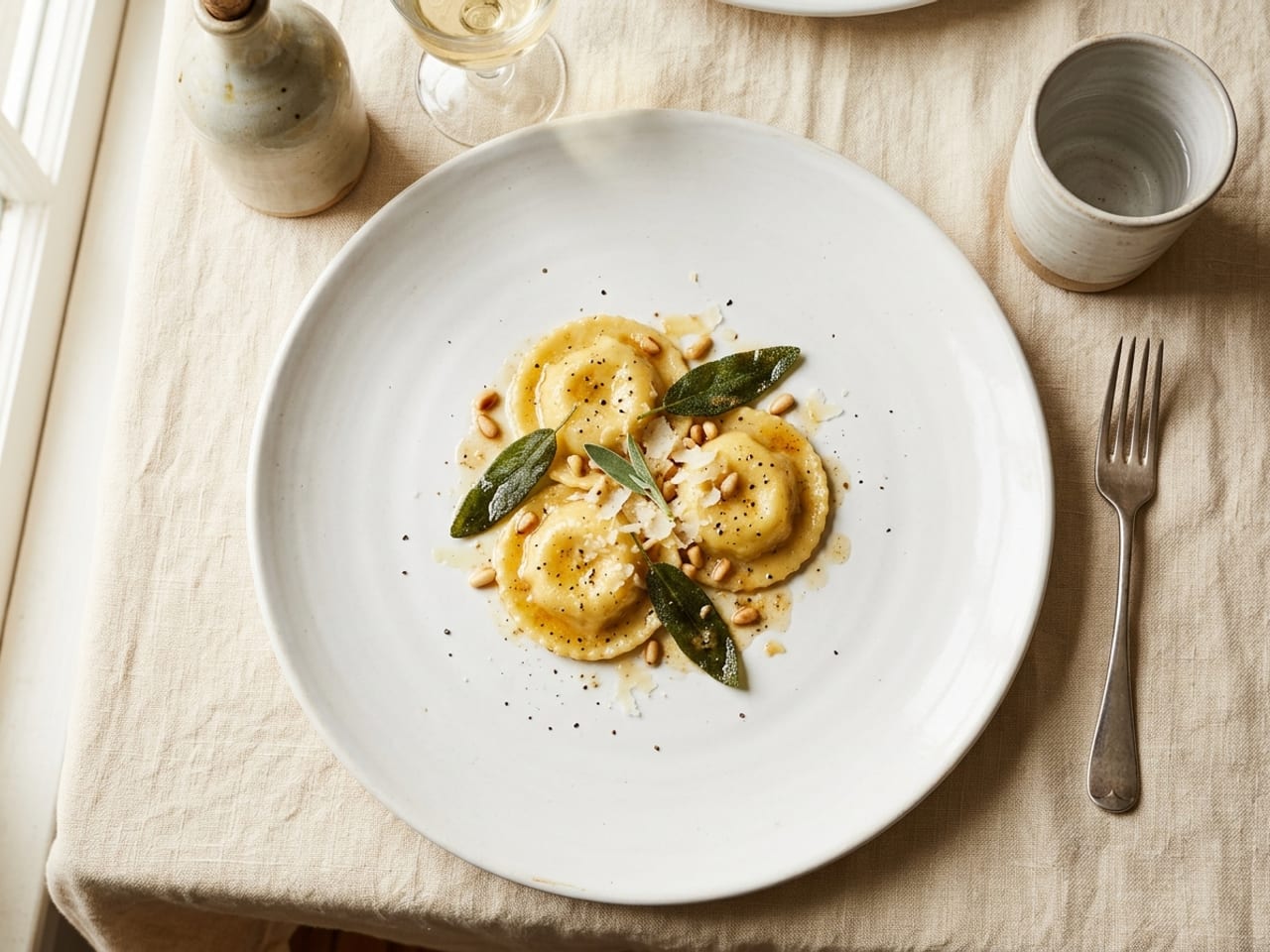
Empty plate is not wasted plate — it's the frame. Keep food to roughly the middle two-thirds and let the rim stay clean. Crowding is the single fastest way to make good food look careless.
Work in color contrasts
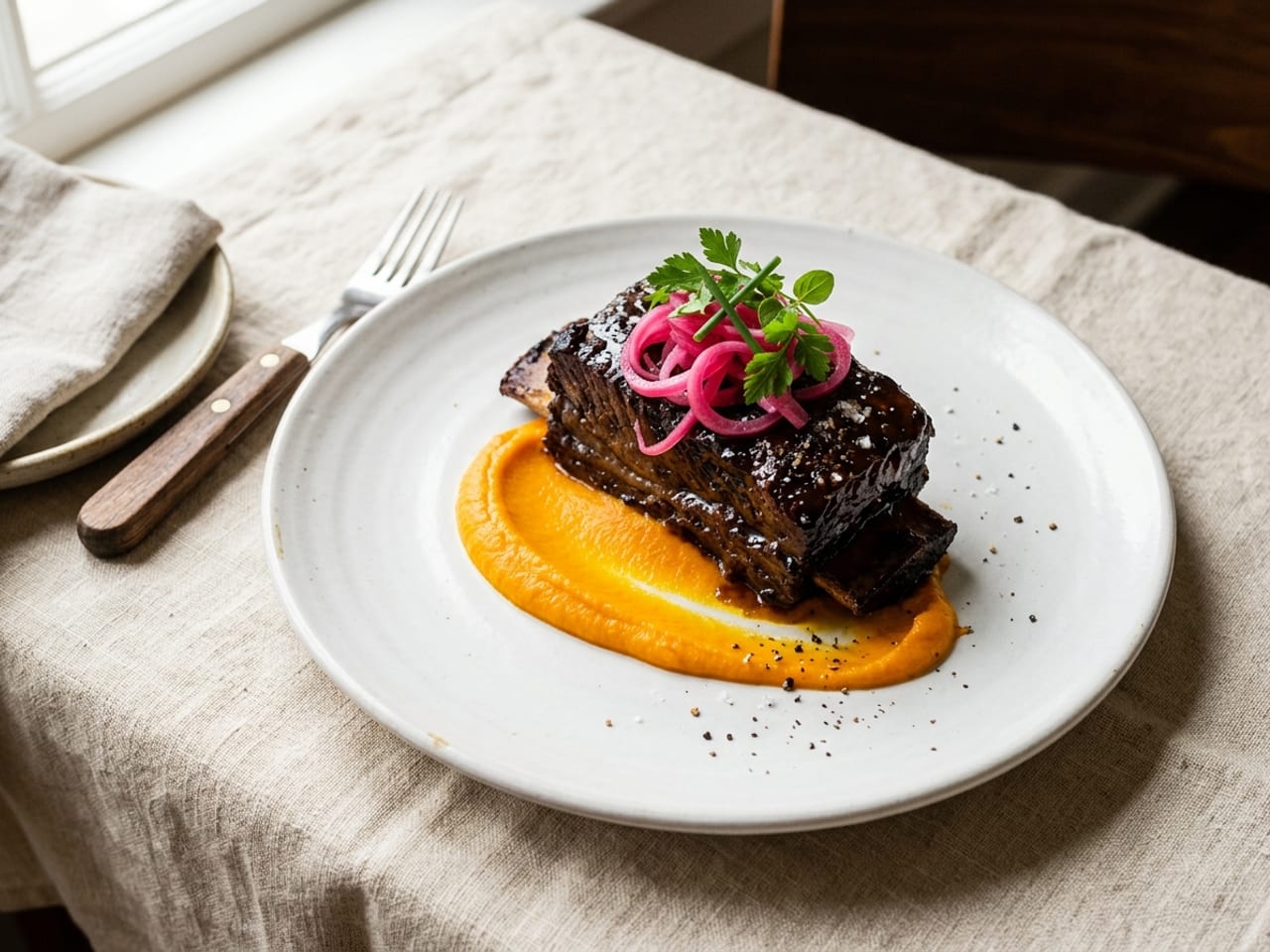
Beige on beige is where appetite goes to die. Put green against orange, a bright pickle against a dark braise, white plate under a colorful dish. One fresh, high-contrast element wakes up the whole composition.
What the research actually says
Plating has been studied properly — in real restaurants, not only in labs. Four findings worth knowing, including one that kills a rule you've almost certainly been taught.
- Attractive plating makes the same food taste better. Diners were served an identical chicken dish in two arrangements, judged equally neat but differing in attractiveness. They liked the flavor of the food more — the chicken and the sauce significantly so — when it arrived in the more attractive arrangement.1
- An artistic arrangement is worth real money. At a 163-diner luncheon, the same salad plated in an artistically-inspired way lifted what people said they would pay from £4.10 to £5.94. Centering the main course instead of pushing it to one side lifted it from £11.65 to £15.35 — and the centered plate was liked more.2
- The odd-numbers rule does not hold up. Oxford's Crossmodal Research Laboratory ran large-scale preference tests — three seared scallops against four, then one through six — on round and square plates, arranged in lines, in polygons and at random. They found no consistent preference for odd numbers over even ones. Grouping, spacing and contrast do the work the count gets credit for.3
- The plate itself changes the taste. Identical popcorn was rated differently for sweetness and saltiness depending on whether the bowl it came from was white or colored.4 The shape and curvature of plateware shift taste expectations the same way — which is why the plate is a decision, not a default.5
None of this makes plating a trick. It makes it the part of the meal the diner meets first — the only part already doing its work before anyone picks up a fork.6
Sauce is design, not gravy
Nothing separates amateur and professional plates faster than sauce. The rule: sauce goes on the plate before the food, or beside it — almost never poured over the top at the end.
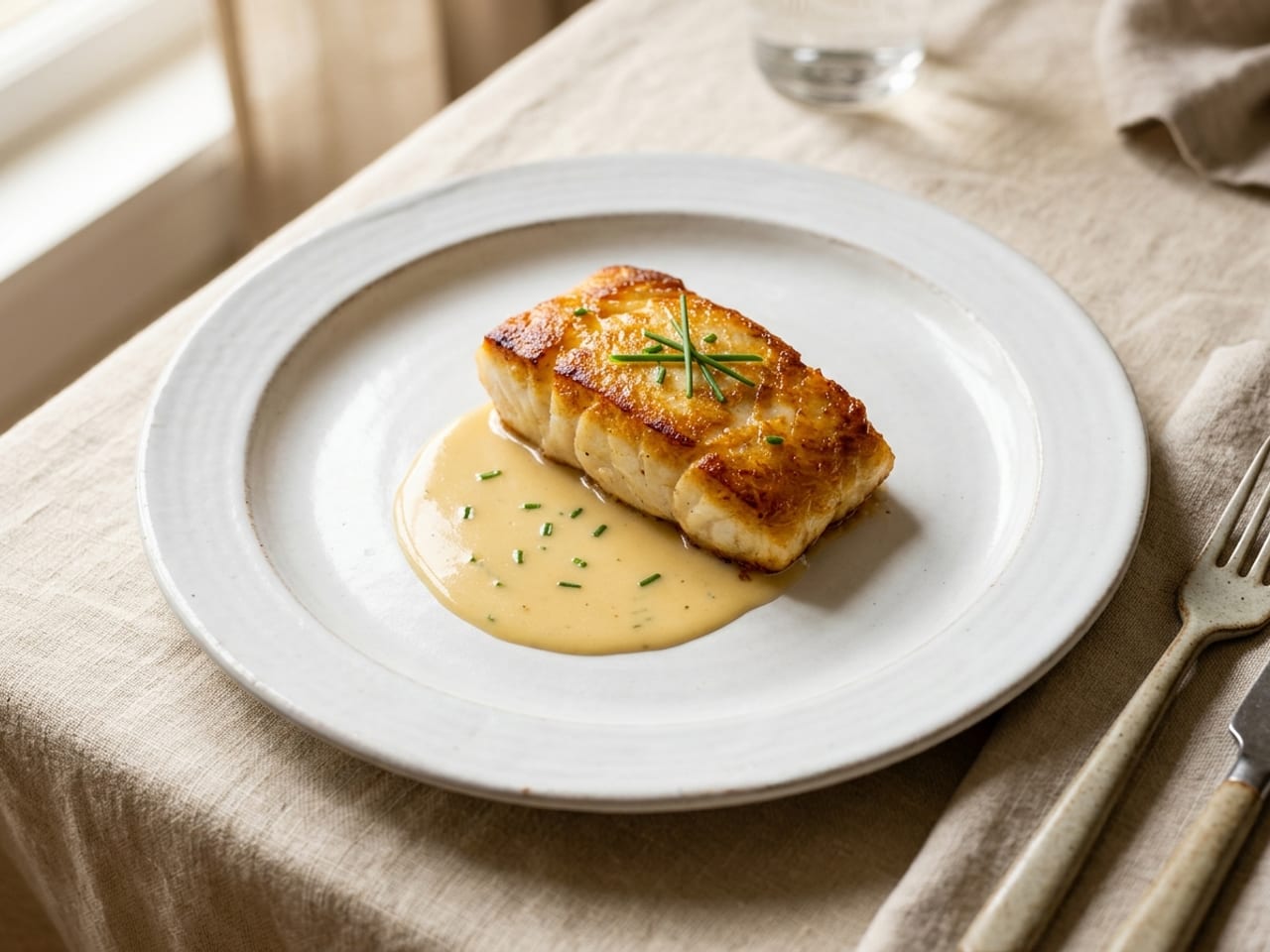
- The pool: a few spoonfuls set slightly off-center, with the protein placed on top. Clean, classic, forgiving.
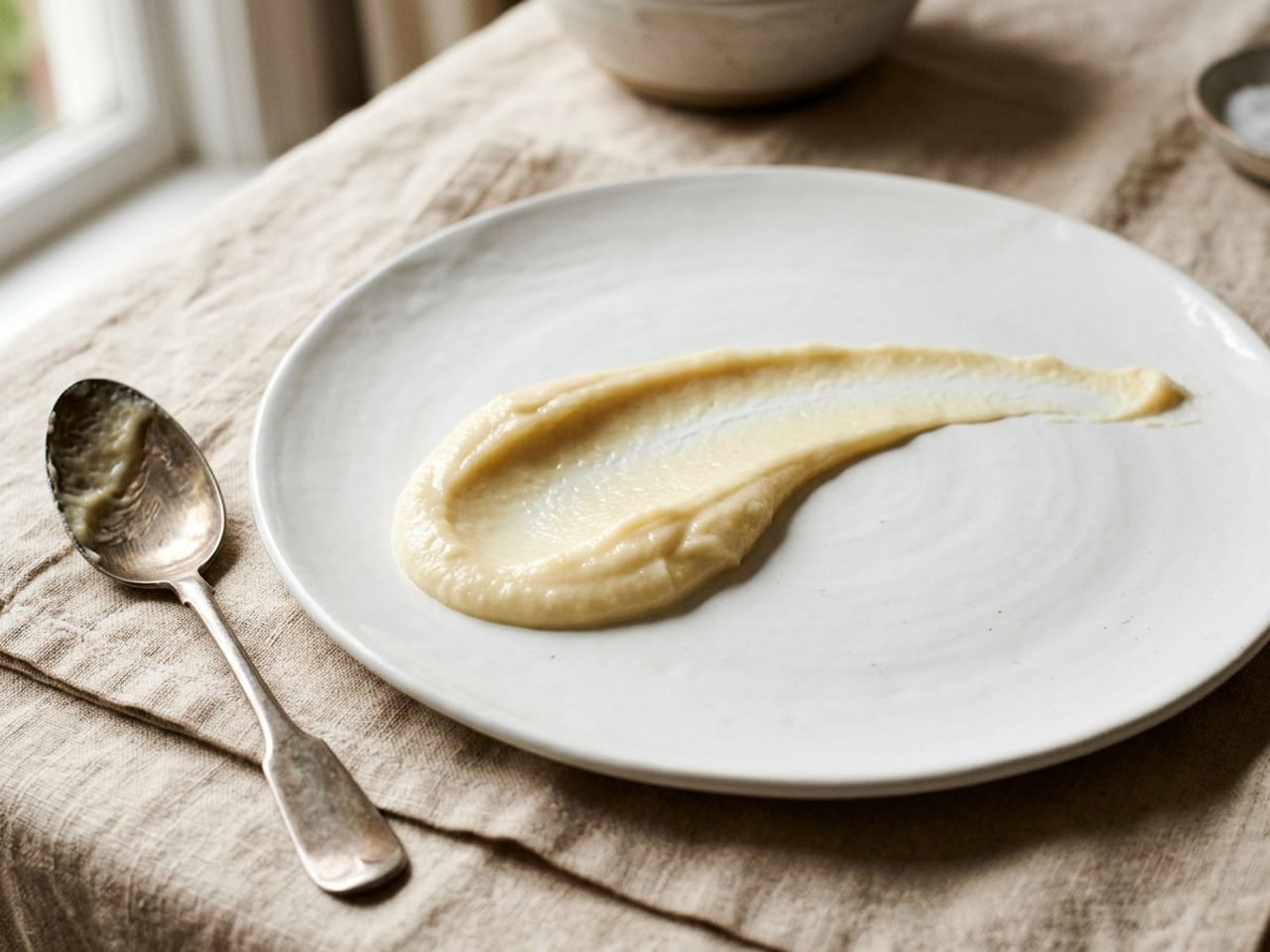
- The swoosh: a spoonful at one edge, then drag the back of the spoon through it in one confident stroke. Practice on an empty plate twice; the third one is yours.
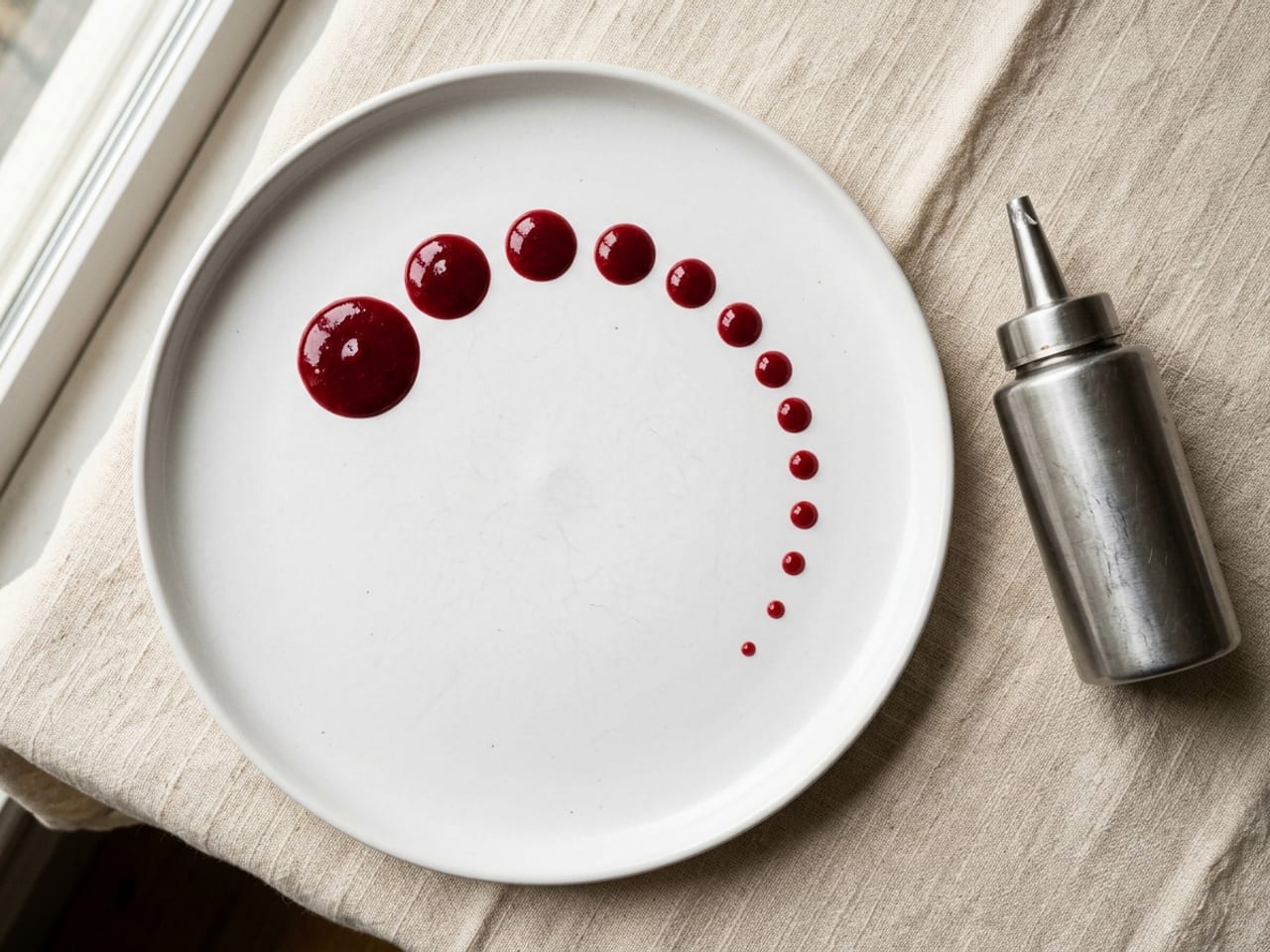
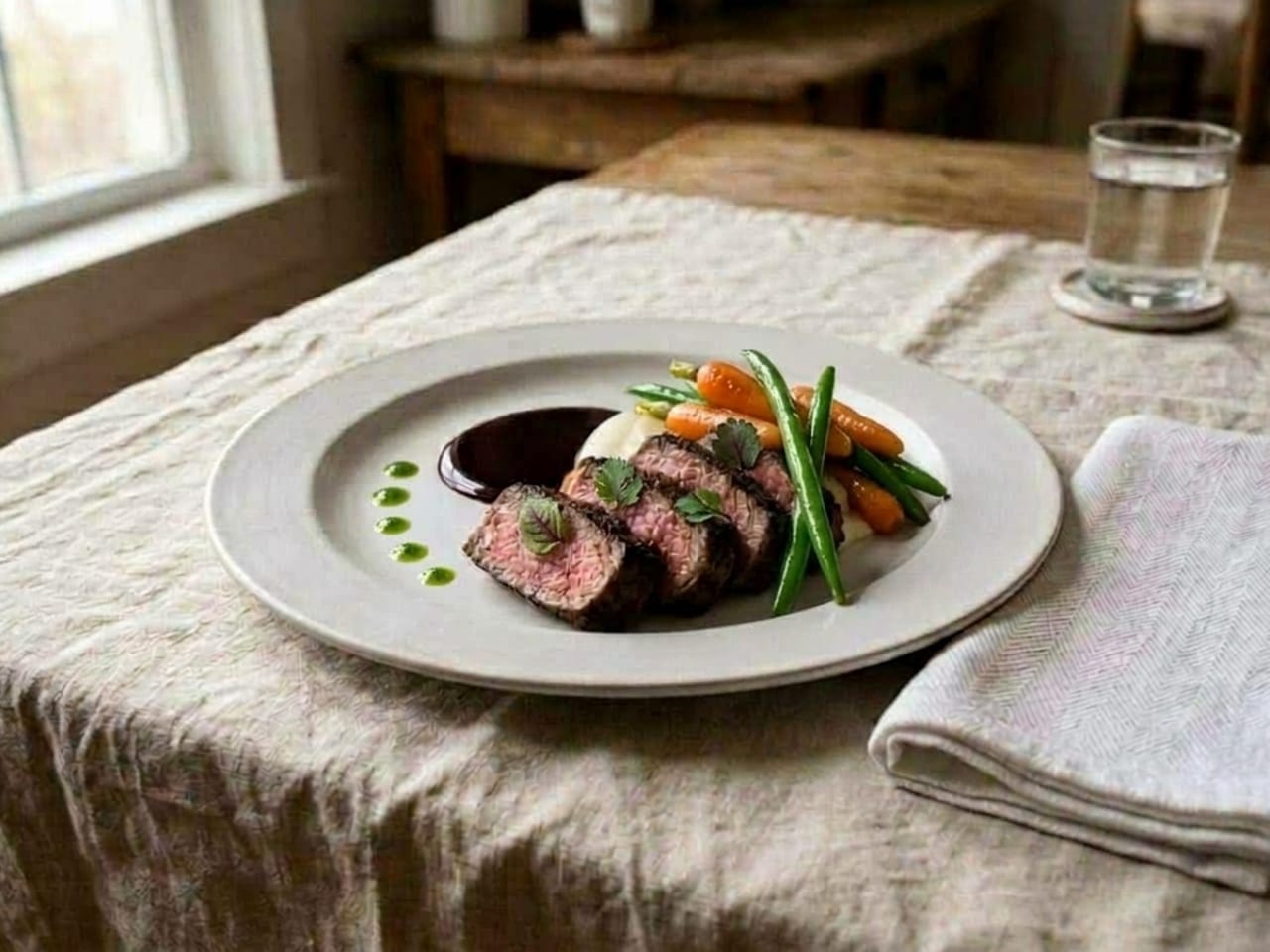
- Dots: a run of evenly spaced dots from a squeeze bottle along the empty side of the plate. Consistent size and spacing are what read as deliberate — the count matters far less than people think. A squeeze bottle is a cheap plating tool to add; the plating tools guide covers it and what to use from the drawer instead.
- Check the thickness: the sauce should coat the back of a spoon. Too thin, it bleeds across the plate; too thick, it sits like paste.
Garnish with intent
Four rules, no exceptions — they're what keeps garnish from becoming decoration for its own sake.
- It has to be edibleIf the diner can't eat it, it doesn't belong on the plate. No decorative twigs, no raw inedible flowers, no giant rosemary tree standing in the mash.
- It should echo a flavor already in the dishBasil on a tomato dish, chives on a potato purée, lemon zest on fish it was cooked with. A garnish is a preview of the flavor, not confetti.
- Place it, don't sprinkle itThree leaves set with your fingers beat a handful scattered from height. Random sprinkling says "I gave up at the last step."
- Add it at the last secondHerbs wilt, microgreens collapse, crisps go soggy. Garnish is the final move before the plate leaves the kitchen — never earlier.
Plate a dish, step by step
The full routine in order — six moves, about ninety seconds once it's in your hands.
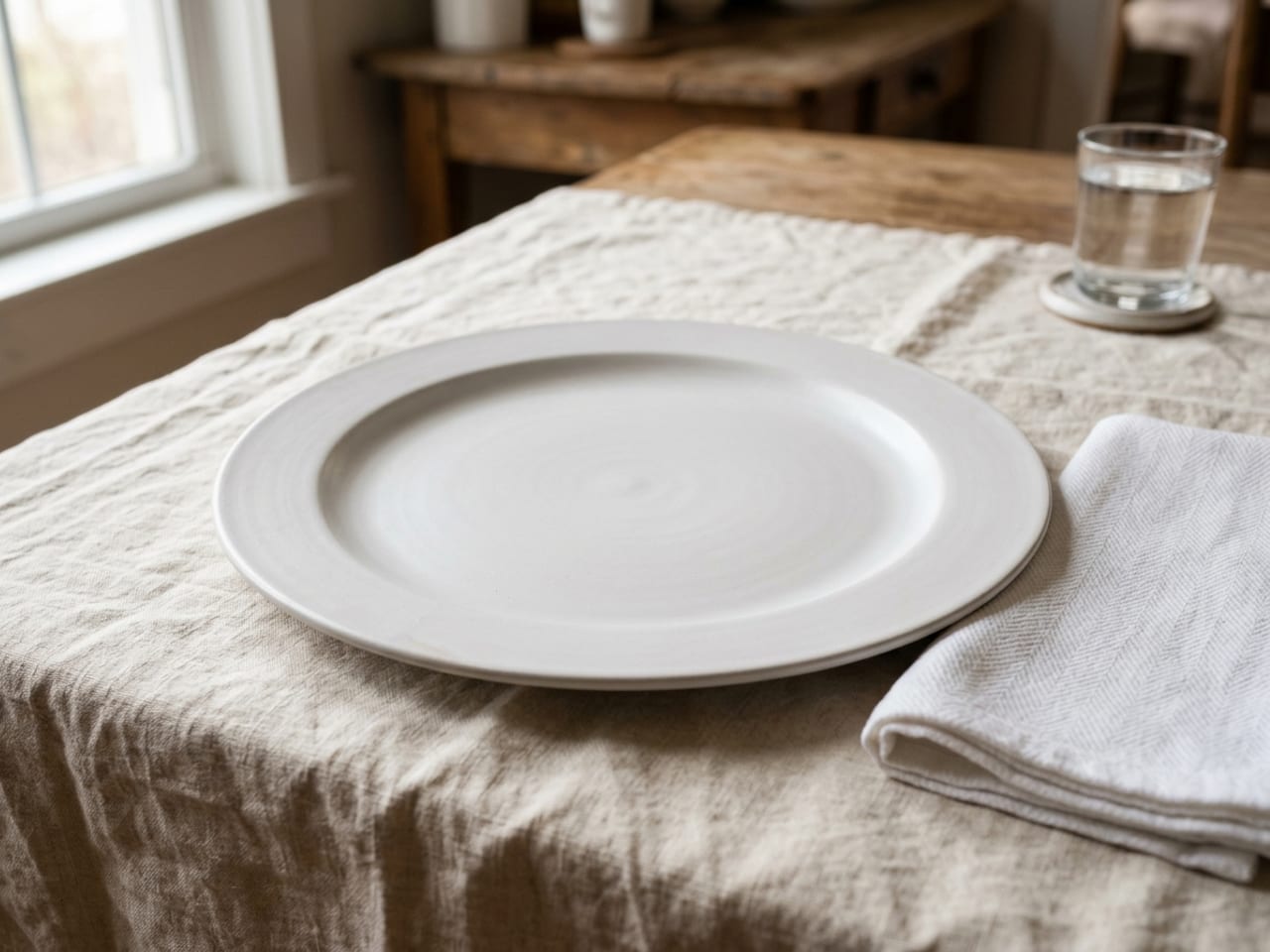 1
1Warm the plate
Give it a few minutes in a low oven, if the plate is ovensafe, or pour boiling water over it and dry it (America's Test Kitchen found hot tap water too weak); chill it for cold dishes. A warm plate keeps sauces loose and food glossy; it's the cheapest upgrade in this whole guide.
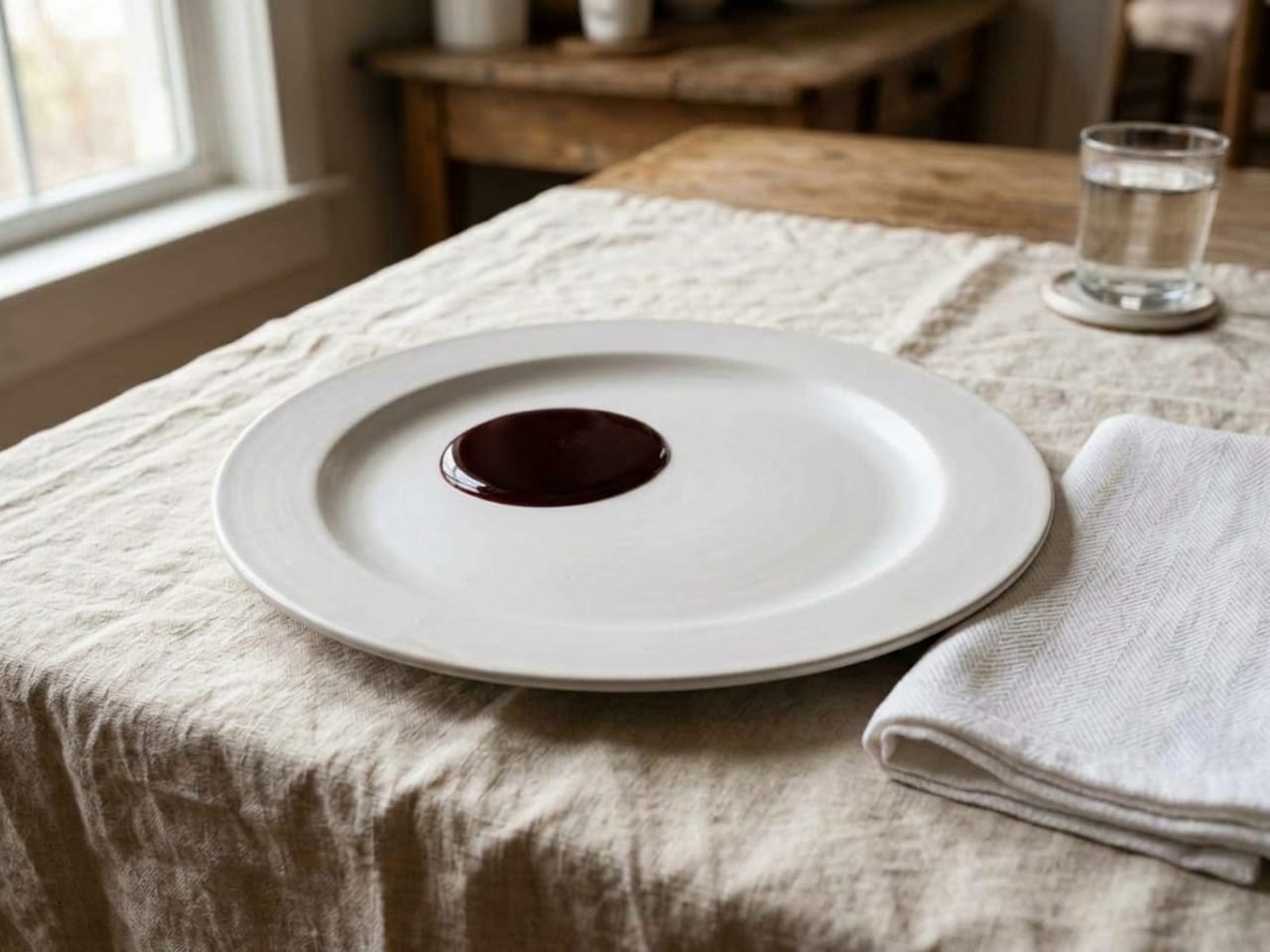 2
2Sauce goes down first
Pool it slightly off-center, or drag a spoon through a spoonful for a clean swoosh. Saucing the empty plate first gives you a designed base — pouring it over the finished plate destroys everything underneath.
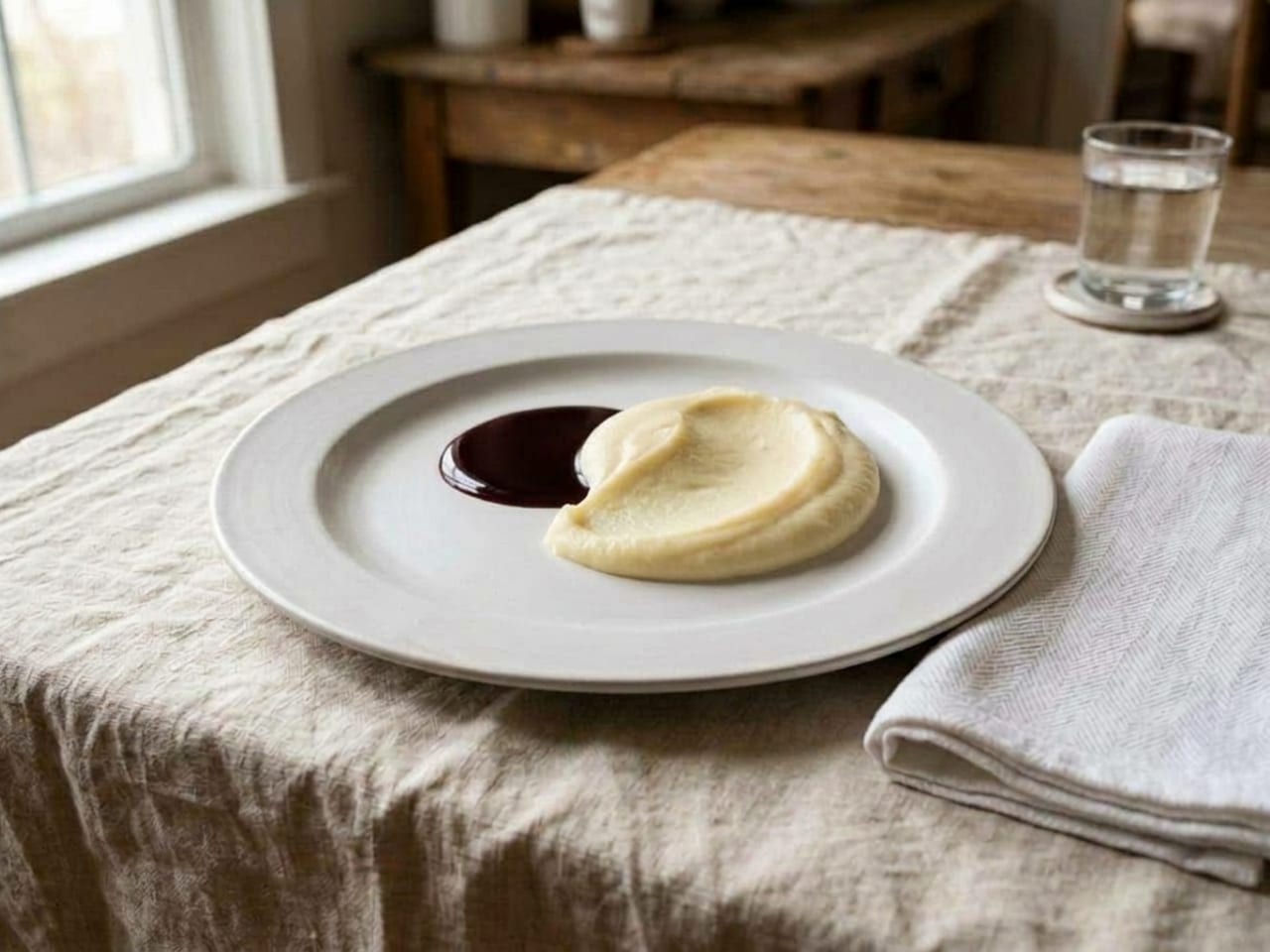 3
3Anchor with the starch
Purée, mash or grains go just off-center — they're the bed the hero leans on. Nudging the anchor off-axis keeps the plate from looking stiff, but keep the composition as a whole near the middle: pushed to one side of the plate, the same dish is liked less.
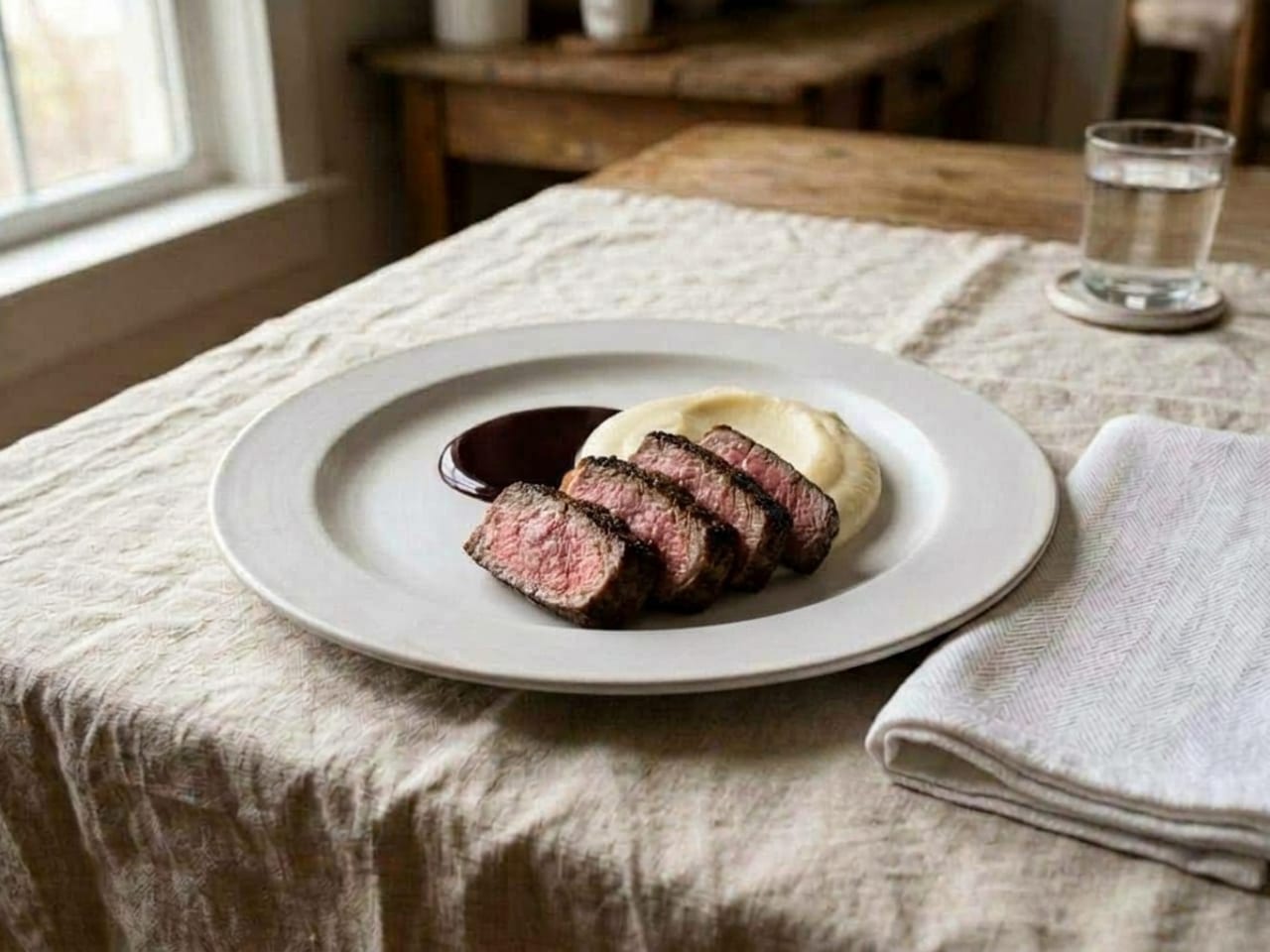 4
4Set the protein at 6 o'clock
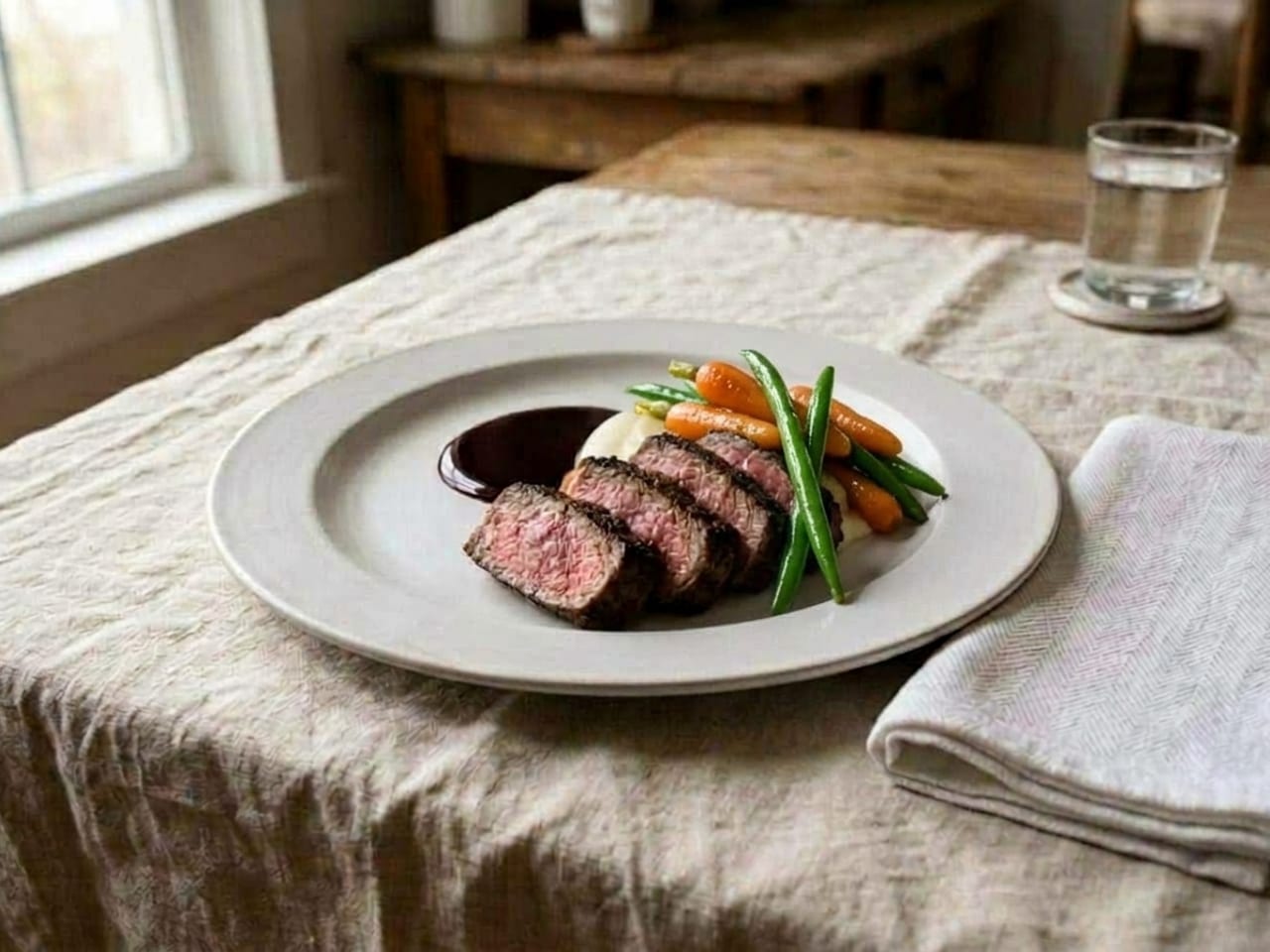
Place it on or against the starch, facing the diner. If it's sliced, fan the slices so the cut side — the proof of doneness — is what the eye meets first.
 5
5Cluster the vegetables
Group them at 2 o'clock rather than scattering them across the plate, and let one or two lean on the protein for height. This is where your color contrast lives — make the greens glossy with a little butter or oil.
 6
6Garnish, wipe, serve
Set the garnish, dot any finishing oil, then wipe the rim with a clean towel. A spotless rim is the frame of the picture — smudges undo everything. Serve immediately.
Five mistakes that flatten a plate
If a plate looks off and you can't say why, it's almost always one of these.
- Overcrowding the plateToo many components, portions too big, no empty space. Cut one element and shrink the rest — the food that remains will look twice as good.
- All-beige everythingSchnitzel, fries and a white plate is a monochrome wall. Add one bright, fresh element — herbs, pickled onion, a lemon wedge with char — and the dish comes alive.
- Drowning the plate in sauceSauce is design, not gravy for hiding. Under or beside the protein, never flooding it — serve extra on the side if the dish needs more.
- Plating on a cold plateFat congeals, sauce tightens, steam dies. Thirty seconds of warming preserves the look you spent twenty minutes cooking for.
- Garnish with no purposeThe lonely parsley sprig fools no one. If a garnish doesn't add a flavor, a texture or a color the dish needs, leave it off.
The fastest way to get better
Plating improves the way handwriting improves: through short, honest feedback loops. Plate the dinner you're already cooking, then photograph it — once from straight above, once from 45° — and compare it against a reference. The camera is brutal and that's the point: it shows the crowding, the flat color and the smudged rim that your hungry eyes forgive.
Be clear about what the photo does, though. When researchers randomly assigned people to photograph their food or not, the photography alone changed neither how much they enjoyed the meal nor how much they ate.7 The camera isn't the intervention. It's the mirror that tells you what to change — and the plating is what changes the meal.
That reference is exactly what Plate Artists gives you. Upload the photo of your plate and the AI re-plates your own dish — same food, same angle — the way a fine-dining kitchen would send it, with 3–5 concrete steps explaining what changed. Cook, plate, compare, adjust: the loop that trains line cooks, running on your phone.


See tonight's dinner, re-plated
Put this guide to work: snap your next plate and get the fine-dining version of it back — plus the exact steps to plate it that way yourself.
Start free · 1 enhancement →Free account · 1 free enhancement · No credit card
Plating questions, answered
What is food plating?
Food plating is the arrangement of a dish on the plate — composition, color, height and garnish — so it looks as good as it tastes. The same food, plated with intent, is perceived as fresher, more flavorful and more valuable before the first bite.
What are the basic rules of food plating?
Start with the clock method (protein at 6 o'clock, starch at 10, vegetables at 2), keep one focal point, keep the composition centered rather than pushed to one side, build a little height, leave negative space around the food, use color contrast, and finish with an edible garnish that echoes a flavor in the dish.
Does plating really change how food tastes?
Yes. When restaurant diners were served the identical chicken dish in two arrangements — rated equally neat, but one more attractive — they reported liking the flavor of the food more in the attractive presentation (Zellner et al., Appetite, 2014). In a separate experiment with 163 diners, the same salad arranged artistically raised the price they said they would pay from £4.10 to £5.94, and a centered main course beat an off-center one, £15.35 against £11.65 (Michel et al., Appetite, 2015).
Do odd numbers of food items on a plate look better?
No — that rule is folklore. Researchers at Oxford's Crossmodal Research Laboratory ran large-scale preference tests pitting odd against even numbers of seared scallops (three versus four, and one through six), on round and square plates, arranged in lines, in polygons and at random. They found no consistent preference for odd numbers (Woods, Michel & Spence, PeerJ, 2016). Grouping, spacing and color contrast do the work the count gets credit for.
What color plate makes food look best?
White is the default for a reason — it frames almost everything and makes colors pop. Dark plates flatter pale food like scallops, pasta or panna cotta. Avoid busy patterns: the plate is the frame, not the art. Color is not only framing, either: identical popcorn was rated differently for sweetness and saltiness depending on whether the bowl was white or colored (Harrar, Piqueras-Fiszman & Spence, Perception, 2011).
How do restaurants make food look so good?
Consistency and reference: professional kitchens plate to a visual standard, on warm plates, with practiced sauce work and garnish placed at the last second. Every cook plates the dish the same way because they have a reference picture of the ideal plate at the pass.
How can I practice plating at home without wasting food?
Plate the dinner you're already cooking. Give yourself the last two minutes of every meal as plating practice: warm the plate, compose it, photograph it from straight above and from 45°, and compare against a reference. The food is eaten either way — the practice is free.
The research behind this guide
Peer-reviewed studies, retrieved via PubMed. Every figure quoted above comes from one of these papers.
- Zellner, D. A., Loss, C. R., Zearfoss, J., & Remolina, S. (2014). It tastes as good as it looks! The effect of food presentation on liking for the flavor of food. Appetite, 77, 31–35. doi:10.1016/j.appet.2014.02.009
- Michel, C., Velasco, C., Fraemohs, P., & Spence, C. (2015). Studying the impact of plating on ratings of the food served in a naturalistic dining context. Appetite, 90, 45–50. doi:10.1016/j.appet.2015.02.030
- Woods, A. T., Michel, C., & Spence, C. (2016). Odd versus even: a scientific study of the ‘rules’ of plating. PeerJ, 4, e1526. doi:10.7717/peerj.1526
- Harrar, V., Piqueras-Fiszman, B., & Spence, C. (2011). There’s more to taste in a coloured bowl. Perception, 40(7), 880–882. doi:10.1068/p7040
- Spence, C. (2023). Explaining visual shape–taste crossmodal correspondences. Multisensory Research, 36(4), 313–345. doi:10.1163/22134808-bja10096
- Spence, C., Okajima, K., Cheok, A. D., Petit, O., & Michel, C. (2016). Eating with our eyes: From visual hunger to digital satiation. Brain and Cognition, 110, 53–63. doi:10.1016/j.bandc.2015.08.006
- Yong, J. Y. Y., Tong, E. M. W., & Liu, J. C. J. (2020). When the camera eats first: Exploring how meal-time cell phone photography affects eating behaviours. Appetite, 154, 104787. doi:10.1016/j.appet.2020.104787
Keep going
Edible flowers: which are safe
The garnish rule for flowers: which are edible, which part to eat, and which belong nowhere near a plate.
Cook something worth plating
75+ recipes with step-by-step methods — each one a fresh canvas to practice on.
Plate Artists for home cooks
How the plating coach fits into a home kitchen — and what you get on the free plan.
Color on the plate — the color guide
Composition is half the picture; color is the other. The cook's color wheel, plate choice and the 60-second color audit — in one guide.
Michelin-star plating, dissected
These fundamentals, run at fine-dining intensity: the purée-sear-crunch anatomy and the sixty-second home pass.
Plating techniques & styles — the glossary
Classic, free-form, landscape, stacked and the rest, defined and shown on one dinner — with every sauce and shaping technique.
How to plate food — dish by dish
These rules applied to pasta, steak, salmon, lamb chops, deviled eggs and more, each shown as a home plate re-plated.
The five French mother sauces
Béchamel, velouté, espagnole, tomate and hollandaise — how each is made and thickened, its daughters, and where it goes on the plate.
Types of plates — the dinnerware glossary
Every plate, bowl and platter defined and sized: charger to saucer, rimmed to coupe, porcelain to slate, and which one to plate on.