Pork goulash
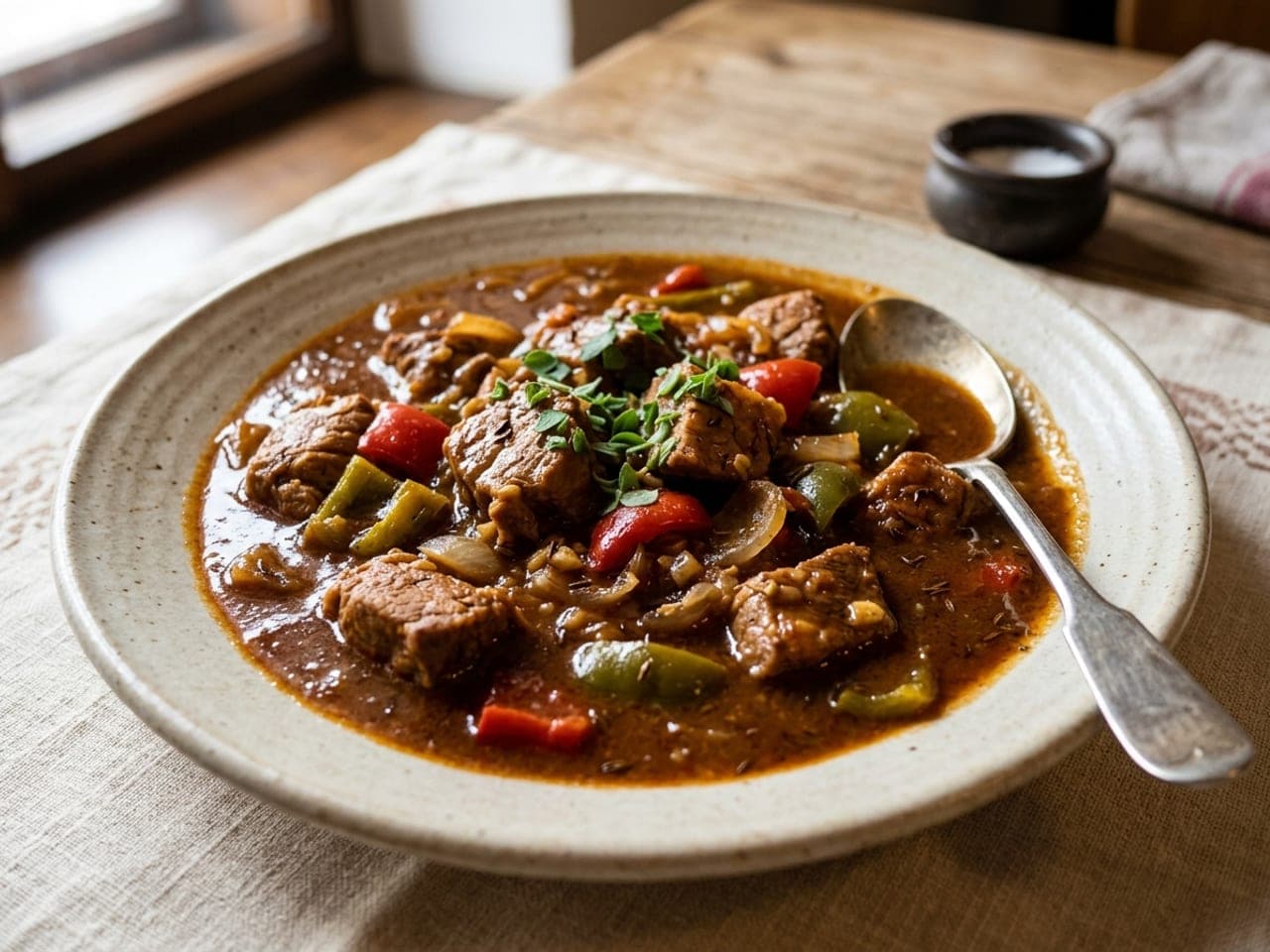
Soft pork shoulder simmered with onion, peppers and caraway into a warming, paprika-rich goulash for four.
1 h 40 min
Time
4
Servings
590
Kcal
Ingredients
- pork shoulder600 g
- onion3 pcs
- ground sweet paprika2 tbsp
- garlic2 cloves
- caraway1 tsp
- broth400 ml
How to make Pork goulash
- Prep your ingredients. Cut the pork shoulder into roughly 3 cm chunks, trimming any excess fat. Slice the onions into half-moons, crush the garlic, and measure out the caraway and paprika so everything is ready before the pan gets hot.
- Brown the pork. Heat a little oil in a heavy-bottomed pot or Dutch oven over a high heat. Brown the pork in batches for 3–4 minutes per batch until deep golden on all sides — don't crowd the pan or it will steam. Set the browned meat aside.
- Soften the onions. Reduce the heat to medium and add a touch more oil if needed. Cook the onions for 8–10 minutes, stirring regularly, until completely soft and starting to turn golden at the edges. Add the garlic and caraway and stir for another minute until fragrant.
- Bloom the paprika. Pull the pot off the direct heat, add the sweet paprika, and stir it into the onion mixture for about 30 seconds — the residual heat will wake up its flavour without burning it, which would turn it bitter.
- Build the braise. Return the pot to a low heat and nestle the browned pork back in. Pour in the broth and stir to lift any sticky bits from the bottom. Season well with salt and pepper.
- Simmer low and slow. Bring to a gentle simmer, then cover and cook over a low heat for 60–70 minutes, stirring occasionally, until the pork is completely tender and yielding when pressed with a spoon. The sauce should thicken to a glossy, rich consistency — remove the lid for the last 10 minutes if it needs reducing.
- Taste and plate. Taste and adjust the seasoning, then ladle the goulash into warm bowls or over your chosen accompaniment — egg noodles, bread dumplings or crusty bread all work beautifully.
Safety & hygiene Important
- Pork core temperature. Pork shoulder is safe to eat once it reaches an internal temperature of 75 °C, though at that point the collagen in this cut will have broken down and the meat will be fork-tender — use that texture as your main cue.
- Cooling and reheating leftovers. If making ahead, cool the goulash within two hours and refrigerate. Reheat thoroughly until steaming hot all the way through before serving — starchy, protein-rich braises can harbour bacteria if left warm for extended periods.
Made it? Re-plate your dish →
Snap your finished plate and let the AI plate it again — more beautifully.