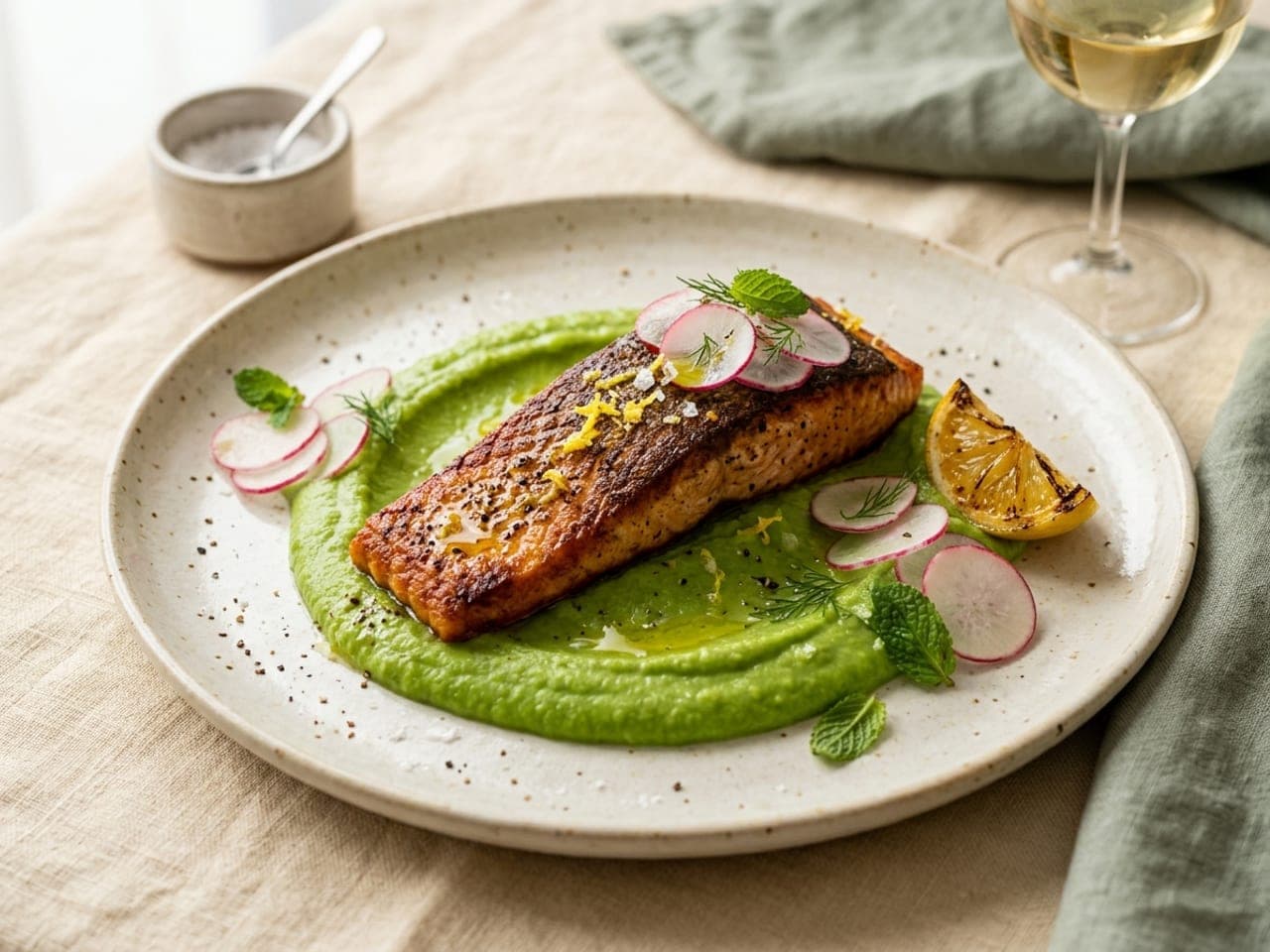
Citrus salmon with pea purée
Pan-seared salmon over a silky butter-pea purée with lemon and radish — a bright, restaurant-style plate for two in under 40 minutes.
38 min
Time
2
Servings
480
Kcal
Ingredients
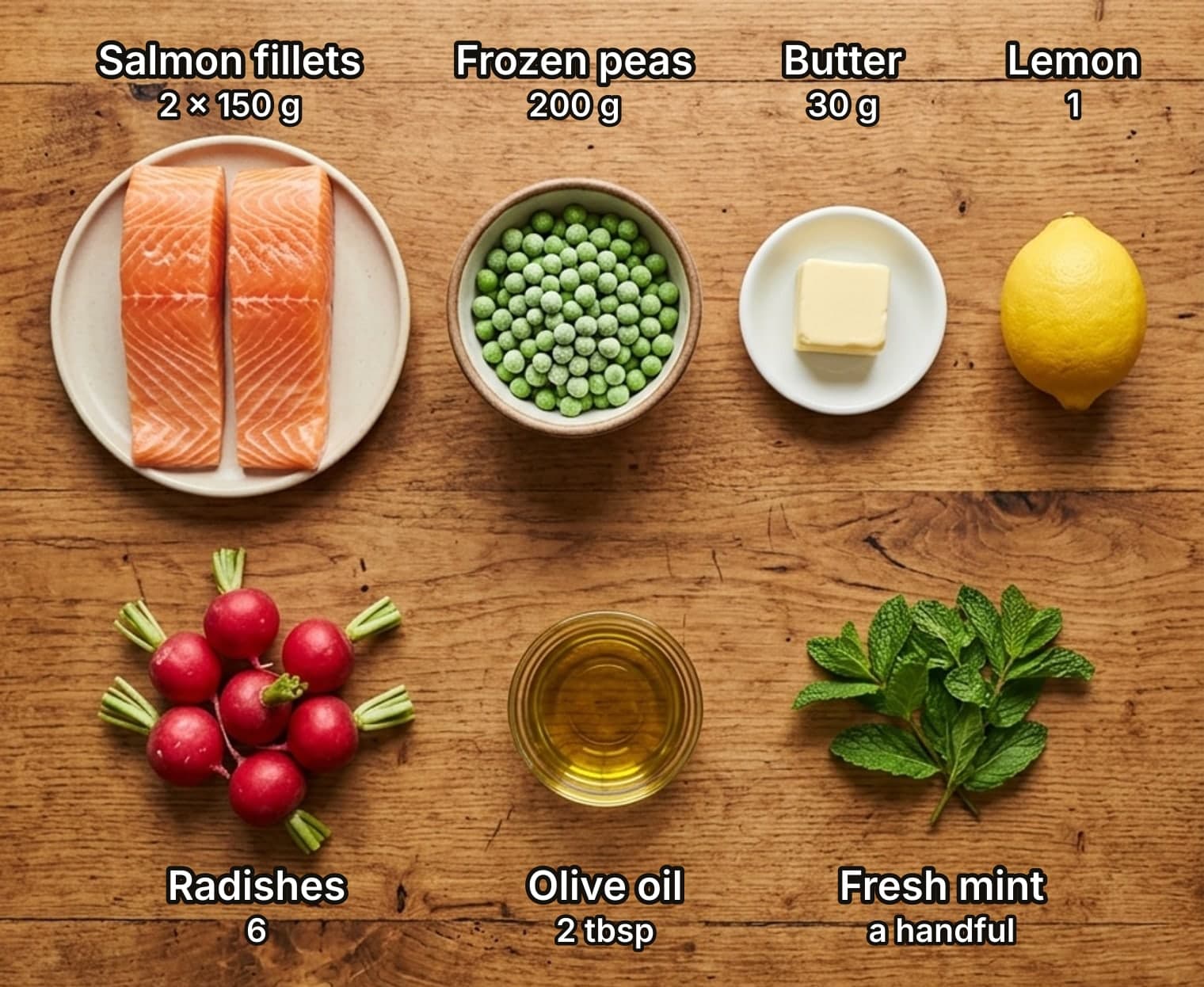
- Salmon (fillet)2 × 150 g
- Frozen peas200 g
- Butter30 g
- Lemon1 pcs
- Radishes6 pcs
- Olive oil2 tbsp
- Fresh minthandful
- Salt and pepperto taste
How to make Citrus salmon with pea purée
- Prep your garnishes. Thinly slice the radishes and set aside. Zest the lemon, then cut it in half — you'll use the juice for both the purée and to finish the salmon.
- Cook the peas. Bring a small pan of salted water to a rolling boil and cook the frozen peas for 3–4 minutes until tender and bright green. Drain well, reserving a splash of the cooking water.
- Blitz the purée. Tip the drained peas into a blender or use a stick blender with 20 g of the butter, a good squeeze of lemon juice, the fresh mint, and salt and pepper. Blitz until silky smooth, loosening with a little reserved cooking water if needed. Keep warm over a very low heat.
- Pat salmon dry. Pat the salmon fillets dry with kitchen paper and season generously on both sides with salt, pepper, and the lemon zest. Dry skin is key to a crisp finish.
- Sear skin-side down. Heat the olive oil in a heavy frying pan over a high heat until shimmering. Lay the salmon in skin-side down and press gently for the first 10 seconds to stop it curling. Cook for 4–5 minutes until the skin is deeply golden and the flesh has turned opaque about two-thirds of the way up the fillet.
- Flip and finish. Flip the fillets, add the remaining 10 g of butter to the pan, and cook for a further 2–3 minutes, basting with the foaming butter. The salmon is ready when it just yields to gentle pressure but still has a blush of pink at the centre.
- Rest and plate. Rest the salmon off the heat for 1 minute. Spoon a generous pool of pea purée onto each warmed plate, sit the salmon on top skin-side up, and finish with the sliced radishes and a final squeeze of lemon.
Safety & hygiene Important
- Salmon doneness. Salmon is safe to eat when the thickest part reaches 63 °C internally, though many cooks prefer it slightly under for a moist, blush centre — avoid serving it completely raw or cold in the middle if you are cooking for vulnerable groups such as pregnant women or the elderly.
Made it? Re-plate your dish →
Snap your finished plate and let the AI plate it again — more beautifully.