Chicken Fajitas Recipe (Sizzling Skillet, Real Marinade)
The fajita is named after a cut of beef, so a chicken fajita is a contradiction the whole world happily eats. This page tells that story straight (ranch wages in the Rio Grande Valley, a fair stand in Kyle in 1969, Ninfa’s in 1973, the sizzling platter that conquered Austin in the 1980s) and then cooks the definitive home version: a lime marinade with its time window stated, a homemade seasoning that spends its weight on spice instead of the packet’s cornstarch, chicken seared whole and sliced against the grain, peppers with real char, and the sizzle brought home to the table. Flour tortillas, warm, as South Texas insists.
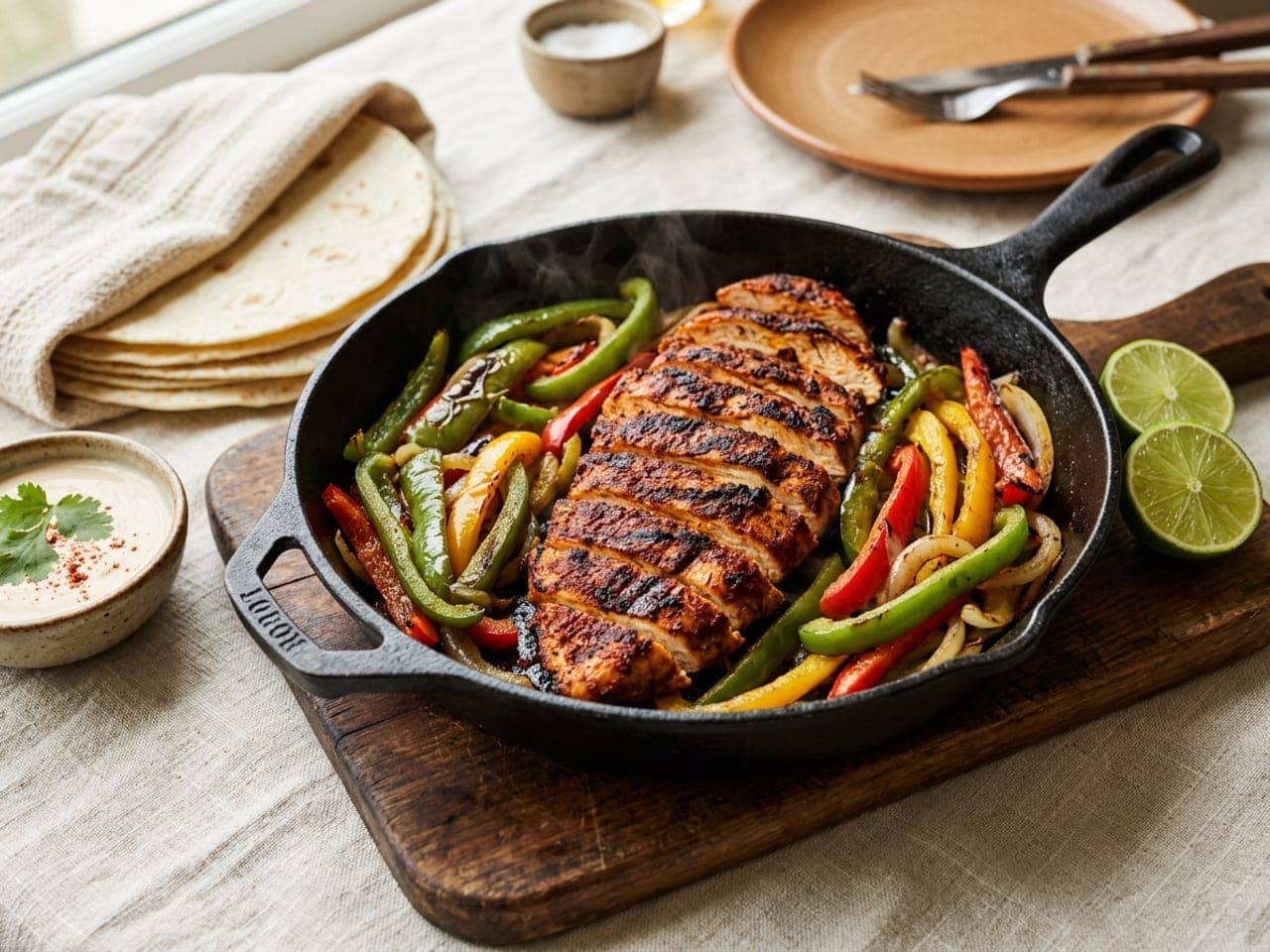
Ingredients
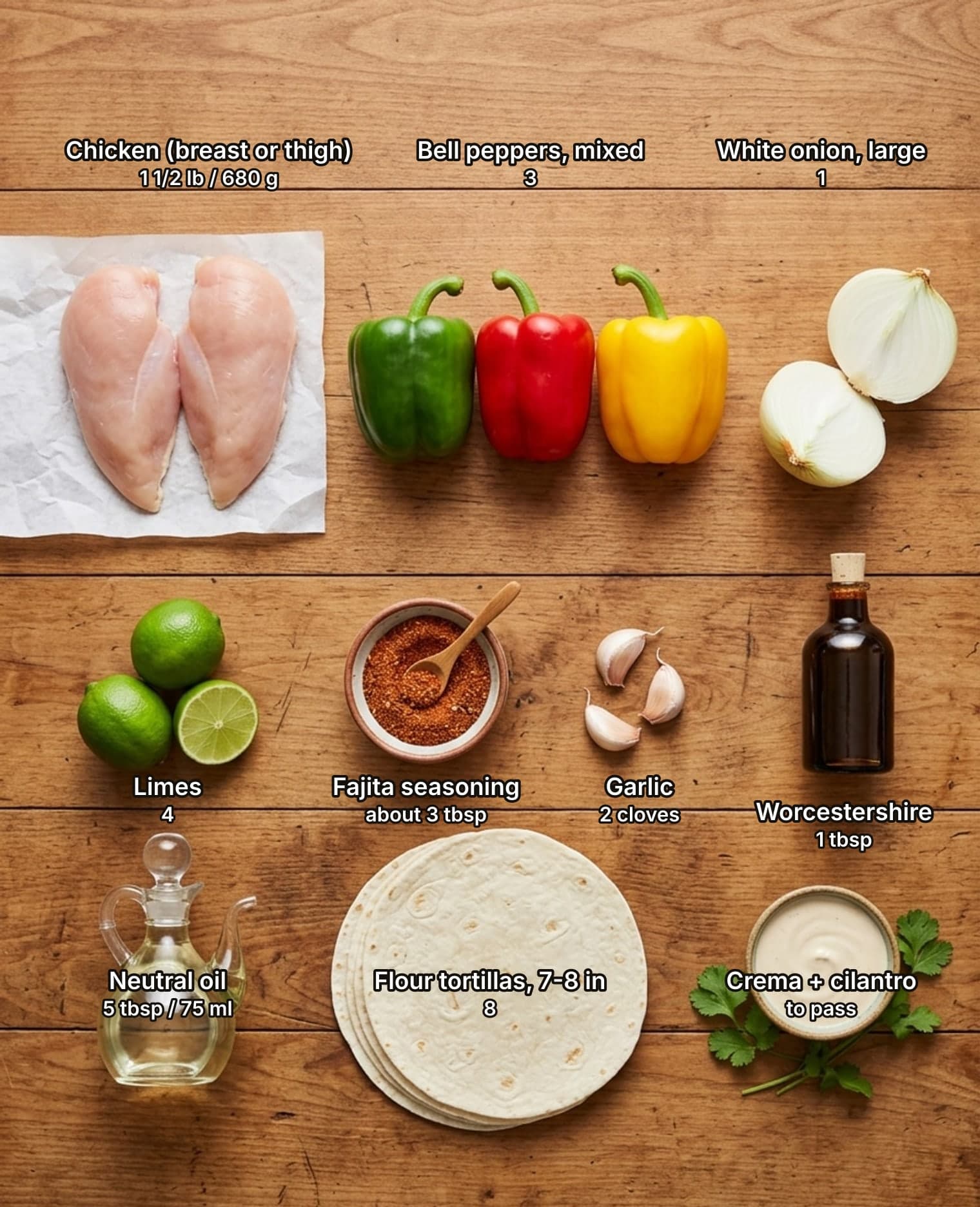
- boneless, skinless chicken breasts or thighs (breasts slice cleaner; thighs forgive overcooking, see the FAQ). Whole pieces, not pre-cut strips: they sear whole and get sliced after resting1 1/2 lb (680 g)
- limes: 2 juiced into the marinade (about 1/4 cup / 60 ml), 1 halved for finishing the pan, 1 cut into wedges for the table4
- neutral high-heat oil (canola, avocado or refined vegetable), split between marinade and pan; extra-virgin olive oil smokes and turns acrid at proper cast-iron heat, and its flavor argues with the spices5 tbsp (75 ml)
- Worcestershire sauce, the restaurant umami tell (contains anchovies: fish allergen; UK/EU bottles usually carry barley malt vinegar, so gluten, where the US version does not; soy sauce substitutes, carrying wheat instead)1 tbsp
- garlic, crushed or finely grated2 cloves
- homemade fajita seasoning: 1 tbsp chili powder, 2 tsp ground cumin, 2 tsp smoked paprika, 1 tsp garlic powder, 1/2 tsp onion powder, 1 tsp dried oregano (Mexican if possible), 1 tsp fine salt, 1/2 tsp black pepper, optional 1/2 tsp chipotle powderabout 3 2/3 tbsp
- bell peppers, mixed colors (one green, one red, one yellow is the classic spread), cut into 1/4 inch (6 mm) strips3
- white or yellow onion, large, sliced pole to pole into 1/4 inch (6 mm) strips1
- flour tortillas, 7 to 8 inch / 18 to 20 cm (fajita or soft-taco size), warmed; corn tortillas cut calories and sodium but this is historically a flour-tortilla dish (wheat allergen)8
- to pass at the table: cilantro sprigs, pico de gallo, sour cream or Mexican crema, guacamole or sliced avocado, shredded cheese (all optional except the limes)to taste
What a fajita is, and why a chicken fajita should not exist
A fajita, strictly, is a cut of beef: the skirt steak, the cow’s diaphragm muscle, which hangs inside the ribs like a sash. Faja is Spanish for a belt, sash or girdle; fajita is its diminutive, the little belt. In Mexico the same cut is arrachera. The word names the meat, not the dish, which is why Tex-Mex purists have such fun with the chicken version: Lisa Fain, the Homesick Texan, calls it the equivalent of saying ‘chicken sliced steak’, and Texas Monthly once filed it alongside ‘zucchini potato chips’ as a misnomer. There is no skirt on a chicken.
Usage stopped caring decades ago. Somewhere in the 1980s boom, ‘fajita’ slid from naming the cut to naming the format: strips of high-heat meat with charred peppers and onions, flour tortillas, and toppings passed around the table. Chicken, shrimp, even portobello fajitas followed, the way ‘California roll’ stretched sushi without breaking it. This page cooks the format honestly and keeps the history straight, and when you want the original article, the cut itself, that is a steak fajitas page of its own one day; the marinade and vegetables here already speak the language.
What has not budged is the rest of the definition. Fajitas are a flour-tortilla dish by strong tradition, from the northern Mexico and South Texas table where the flour tortilla, not the corn one, is the everyday bread (though the earliest ranch descriptions allow either). They are built at the table, not in the kitchen. And they arrive loud: the sizzle is not garnish, it is the dish announcing itself.
How to make Chicken Fajitas
- Mix the seasoning, and put the packet down. Stir together 1 tbsp chili powder, 2 tsp ground cumin, 2 tsp smoked paprika, 1 tsp garlic powder, 1/2 tsp onion powder, 1 tsp dried oregano (Mexican oregano if you can get it: brighter, more citrus than the Mediterranean kind), 1 tsp fine salt, 1/2 tsp black pepper and, if you want heat, 1/2 tsp chipotle powder. That is the whole secret of a fajita seasoning packet, minus the cornstarch (the first ingredient on the best-selling one), the sugar, the artificial color and the yeast extract. Set aside 1 teaspoon of the blend for the vegetables; the rest goes into the marinade. The blend scales: make four batches in a jar and you have replaced the packet for a month (about 3 2/3 tbsp per batch of this recipe). Chili powder here means the American blend, itself mostly ancho; if you only have pure ground chile, halve it and taste.
- Marinate inside the window, and bank a spoonful first. In a bowl or zip-top bag, whisk the juice of 2 limes (about 1/4 cup / 60 ml), 3 tbsp neutral oil, 1 tbsp Worcestershire sauce, 2 crushed garlic cloves and the seasoning. Now the important move: spoon 2 tablespoons of this marinade into a small cup and set it aside before any chicken touches it. That reserved spoonful is your finishing sauce later, with no food-safety asterisk attached. Add 1 1/2 lb (680 g) chicken to the rest and turn to coat. Give it 30 minutes in the refrigerator, or up to 2 hours for breasts and 4 for thighs; USDA's rule is the fridge for any marinating, and the chill costs the marinade nothing, since it works at the surface. The split is not fussiness. Lime juice is acid doing slow ceviche chemistry, and a lean breast shows the damage first; leave it overnight and the acid denatures the surface into something mealy and slightly chalky that no sear can rescue, while a fattier thigh shrugs off a longer soak. The oil is not filler; cumin, paprika and chile carry most of their aroma in fat-soluble compounds, and the oil ferries them onto the meat.
- Cut the vegetables while it sits, in the right order. While the chicken marinates, halve 3 bell peppers, pull the seeds and ribs, and slice them lengthwise into strips about 1/4 inch (6 mm) wide. Slice 1 large white onion pole to pole into strips the same width, so both cook at the same rate and soften without collapsing; rings fall apart and steam. Use mixed pepper colors, and know what you are buying: nearly every bell pepper starts green. Red is the same fruit left to ripen fully; yellow and orange are their own cultivars picked at their final color. Green is unripe, which is why it is cheaper and slightly bitter; the ripe colors hung on the plant for extra weeks, converted starch to sugar, and cost more for it. One green plus one red and one yellow is the classic fajita look and a genuine flavor spread, not just decoration. Do all this cutting before you handle the raw chicken again, or use a separate board: the vegetables never get cooked past crisp, so whatever the board carries, they carry.
- Sear the chicken whole. Set a large cast-iron skillet (or your heaviest pan) over medium-high heat until a drop of water skitters and vanishes, then film it with 1 tbsp oil. Lift the chicken out of the marinade, let the excess drip off, and lay the pieces down flat with room between them; crowd the pan and the dripping marinade pools, the temperature crashes, and the chicken steams grey instead of searing. Cook breasts 4 to 6 minutes per side, thighs 5 to 7, moving them as little as possible so the sugars in the marinade can char in spots. Cooking the pieces whole and slicing afterwards is a deliberate choice: strips of raw marinated chicken have so much wet surface that they dump liquid, overcook in the time it takes to color, and turn to shreds under the tongs. A whole breast sears hard outside while the inside comes up gently, and it holds its juices through the rest. Pull breasts at 165°F (74°C) in the thickest spot on an instant-read thermometer; thighs are better at 175 to 185°F (79 to 85°C), where their collagen relaxes.
- Rest the meat, give the pan to the peppers. Move the chicken to a plate, tent it loosely with foil, and leave it alone for 5 minutes; the juices redistribute and the carryover finishes the last degree or two. Do not wash the skillet. The browned marinade stuck to it is concentrated flavor, and the peppers are about to lift it. Raise the heat to high, add 1 tbsp oil, and tip in the peppers and onion with the reserved teaspoon of seasoning and a pinch of salt. Now do the hard part: leave them be. Toss only every minute or so, so the strips sitting against the iron blister and char at the edges while the rest stay crisp-tender, 4 to 6 minutes total. Fajita vegetables are a texture as much as a flavor; cook them to softness and you have made a stir-fry topping, not fajitas. If the fond starts to catch, a tablespoon of water scrapes it up and glazes the onions with it.
- Slice against the grain, on a clean board. On a clean cutting board (not the one that held raw chicken; see the safety notes), slice the rested chicken across the grain into strips about 3/8 inch (1 cm) wide, on a slight diagonal for wider ribbons. On a chicken breast the muscle fibers run roughly the long way; look for the direction of the fine white lines and cut across them. This is not chef superstition, and it has been measured: America’s Test Kitchen put steak under a texture analyzer and found against-the-grain slices needed less than a quarter of the shearing force of with-the-grain ones. On chicken the same testing found a subtler truth that fits this recipe exactly: for paper-thin slices the direction barely matters, but at the finger-width strips fajitas want, tasters found against-the-grain cuts noticeably more tender. Any juices that pooled under the resting chicken go back over the slices, not down the drain.
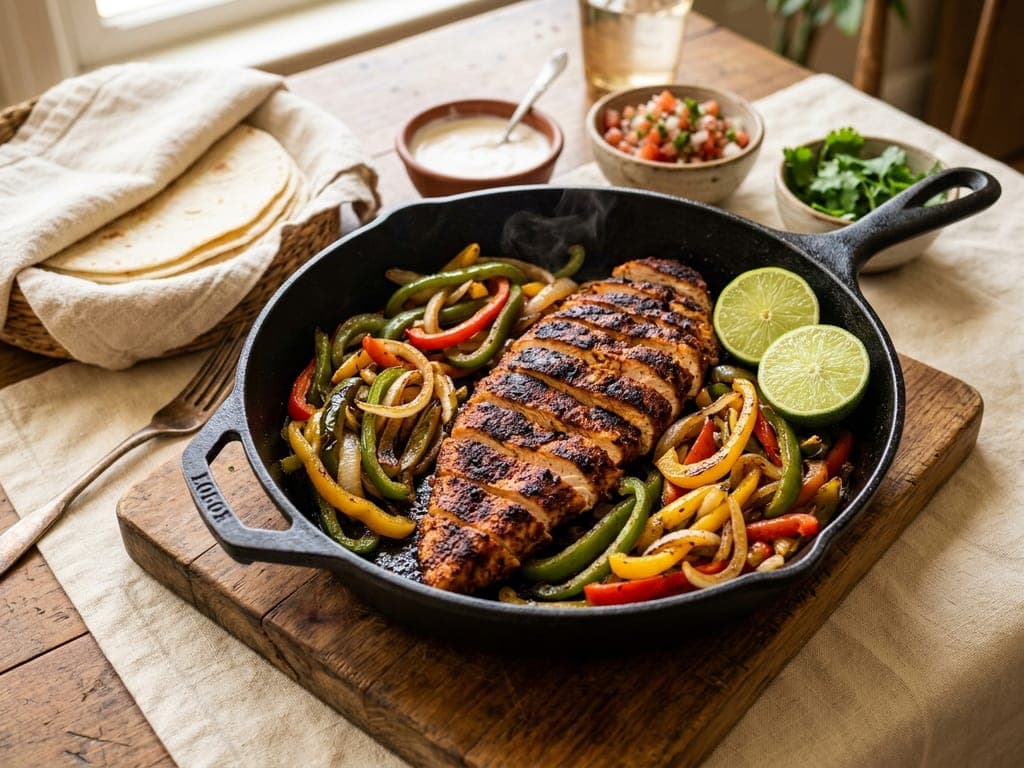
- Bring the sizzle home. Return the sliced chicken and its juices to the skillet with the vegetables, still over high heat, and drizzle in the reserved 2 tablespoons of marinade you banked before the raw chicken went in. It hits the hot iron, sputters, reduces in about thirty seconds, and glazes everything it touches. Kill the heat, squeeze half a lime over the pan and listen: that sound is the point, and it always was; the Austin American-Statesman’s account of the famous Ninfa’s platters notes that the sizzle came from lime juice squeezed over hot cast iron, not from the beef. The theater has science behind it too. Oxford’s crossmodal lab showed that making food sound crisper makes the identical food taste fresher (the potato-chip experiment that won the 2008 Ig Nobel in Nutrition), and Charles Spence has been calling sound ‘the forgotten flavour sense’ ever since. At home the skillet itself is the platter. Carry it (two hands, dry towel, warn the table) to a wooden board or trivet at the center of the table.
- Warm the tortillas properly and let the table build. Warm 8 flour tortillas while the chicken rests or just before serving: 20 to 30 seconds per side in a dry skillet until soft with a few brown freckles, or straight over a gas flame for a few seconds a side with tongs for real char, or the whole stack wrapped in a barely damp towel and microwaved 45 to 60 seconds. Keep them stacked and wrapped in a dry towel (or a tortilla warmer) at the table; a naked tortilla stiffens in two minutes. Set out small bowls of whatever your table loves: lime wedges and cilantro at minimum, then pico de gallo, sour cream, guacamole, shredded cheese. Two tortillas per person is the honest serving; fajitas are a build-your-own dish, and the assembly at the table, meat, vegetables, a squeeze, a topping or two, is the whole point of serving them this way.
Safety & hygiene Important
- The marinade that touched raw chicken. Marinade that has held raw poultry is not a sauce; it carries whatever the chicken carried. Either discard it when the chicken comes out, or bring it to a full boil before using it (that is USDA's rule for reusing a raw-meat marinade; holding the boil a minute costs nothing and adds margin), but the cleanest habit is the one in step 2: reserve your finishing spoonfuls before the raw meat goes in, and the question never comes up. Never brush the used marinade onto anything that will not see more heat, and marinate in the refrigerator, not on the counter; USDA's rule has no room-temperature exception.
- Endpoints: 165°F (74°C) for breasts, higher for thighs, no exceptions in tortilla-light. Chicken is done by thermometer, not by clock or color: 165°F (74°C) in the thickest part is USDA’s consumer rule, and it needs no hold-time math. (Commercial kitchens pasteurize poultry at lower temperatures held for minutes; that is thermometer-babysitting territory, and many recipes quietly split the difference by pulling at 160°F / 71°C and letting carryover finish the job. This page's instruction stays 165: if you pull early, check the thickest spot again after the rest and do not slice until it reads 165°F / 74°C.) Thighs are safe at the same number but better past it, 175 to 185°F (79 to 85°C), where their connective tissue melts. Check the biggest piece, not the smallest. Dim dinner-table light through a warm tortilla makes slightly underdone chicken easy to miss, which is one more argument for temping the whole pieces before you ever slice: one reading per piece instead of guessing at a pan of strips.
- Boards, tongs and the topping bar clock. Two boards or one washed board: the strips get sliced after cooking, so the knife and surface must not be the ones that touched raw chicken, and the tongs that laid raw pieces into the pan should not be the tongs that serve. Wash hands with soap for 20 seconds after the marinade bag. The build-your-own spread has its own rule: perishable toppings (sour cream, guacamole, pico) and the cooked platter itself follow the 2-hour room-temperature clock (1 hour above 90°F / 32°C). For a long party, set out half-size bowls and refill from the fridge rather than letting one big bowl sit out all evening.
- The sizzling platter is a real burn hazard, and leftovers have a clock. Restaurant fajita platters arrive at roughly 400°F (200°C) with hot fat actively spitting, and the hazard is real enough to have its own case law: a New Jersey appeals court ruled in 2015 that a sizzling fajita skillet is an ‘open and obvious’ danger, in the case of a diner burned when he leaned over the platter. At home: dry towel or mitts (a damp towel conducts steam instantly), warn the table, set the skillet on a board that cannot slide, and keep the lime squeeze at arm’s length; acid into hot fat spits. Leftovers: refrigerate within 2 hours in shallow containers. USDA keeps cooked chicken 3 to 4 days with reheating to 165°F (74°C); UK guidance (FSA/NHS) says use within 48 hours and reheat only once, until steaming hot throughout. The peppers survive reheating better than you expect; the tortillas do not, so store them separately and re-toast.
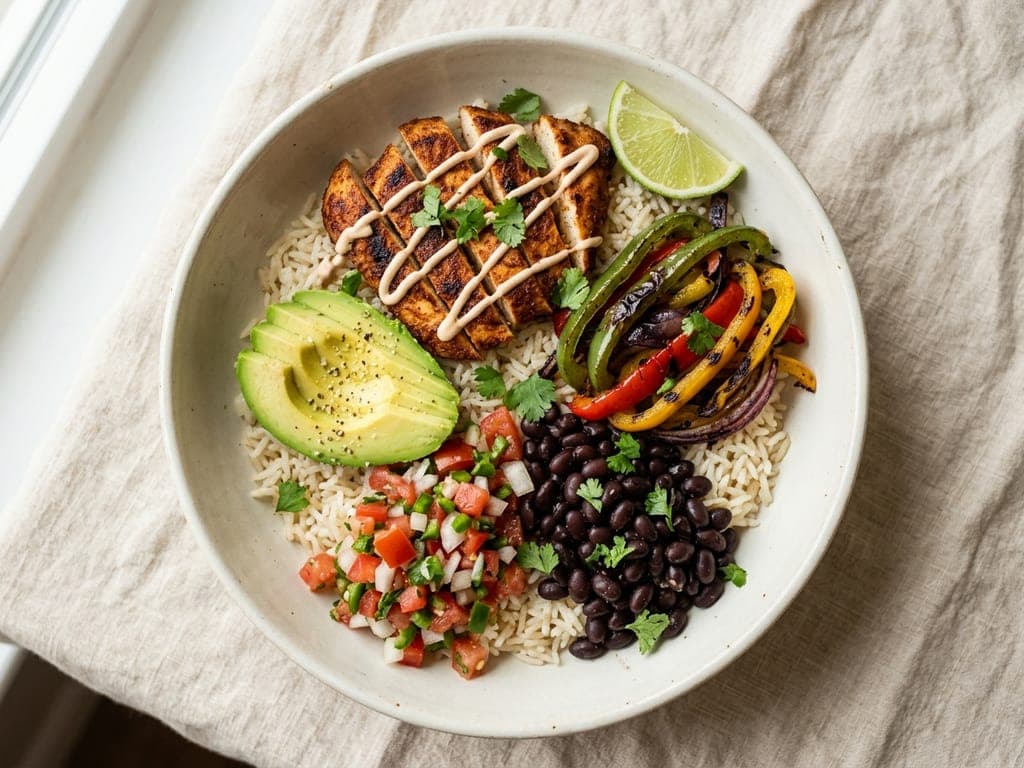
3 ways to plate it
From ranch wages to the sizzling platter
Start with the word. Spanish speakers in South Texas were calling the steer’s diaphragm fajita, the little belt, by the 1940s or earlier, according to the Oxford English Dictionary; the OED’s first sighting of the word in English print is 1971, in Sam Huddleston’s Tex-Mex Cookbook, a full generation later (most food sites still copy a wrong 1975 date from an old reference book). The ranch story behind it is the one everybody tells: South Texas roundups in the 1930s, vaqueros paid partly in kind with the hide, the head, the entrails and the tough trimmings, skirt among them, grilled over mesquite and rolled into flour tortillas. Worth knowing: that part is oral history. Nobody seriously chased it down until 1984, when a Texas A&M graduate researcher named Homero Recio went looking, prompted by the cut’s exploding price, and even the Fajita King’s own son, the family’s archivist, likes to point out that no journal or menu records it: ‘I assure you they weren’t riding around on horseback with pre-made tortillas in their saddlebags.’
The paper trail starts in 1969, twice. In September of that year Sonny Falcón, an Austin meat-market manager raised in the Rio Grande Valley, set up the first documented commercial fajita stand at a Diez y Seis celebration in Kyle, Texas: pure outside skirt, grilled, chopped, served on a flour tortilla (‘because they hold heat better’) with salt and salsa. No marinade, no spices. It flopped; his best night cleared about seventeen dollars, and the nickname the Fajita King came years later, from an Austin reporter. The same year, in the Valley itself, Otilia Garza took over the Round-Up Restaurant in Pharr and began serving the cut, a dish she had from her grandmother, who ran a restaurant across the border in Reynosa. Garza is also the one the record generally credits with the theater: served queso flameado on sizzling cast iron in Acapulco, she brought the idea home, and by 1977 her sizzling botana platter was setting the pattern for Valley menus. The two claims are different firsts, Falcón’s the first commercial stand and Garza’s the first restaurant to make the dish famous, and this page declines to referee.
Houston made the dish famous and Austin made it loud. In July 1973 Ninfa Laurenzo opened ten tables in front of her tortilla factory on Navigation Boulevard and sold mesquite-grilled skirt in her own flour tortillas as tacos al carbón; the fajita name only attached itself during the late-1970s boom. Her daughter, who waited those first tables, put the family’s claim honestly in 2026: ‘My mother did not invent the fajita. But she did popularize it, as far as I know, in the United States.’ Then in 1982 the new Hyatt Regency Austin put ‘sizzling fajitas’ on the menu at its La Vista restaurant, and by 1984 the kitchen was plating more than 13,000 orders a month, the most profitable restaurant in the whole hotel chain. Footnote the purists relish: chef George Weidmann built it on sirloin, so the dish that took fajitas upscale was not, strictly, a fajita either. Chili’s rolled fajitas out across all twenty-three of its restaurants in 1984 and put the sizzling sound in its first TV ad; by the account in Joel Beckerman’s The Sonic Boom, its cooks had a name for the chain reaction of copycat orders that followed the night’s first platter across a dining room: ‘the fajita effect’.
The chicken arrived with the invoice. Skirt steak sold for 49 cents a pound in Texas in 1976; by 1989 a New York restaurateur was paying $10.58 wholesale for the pound that had cost her $3.50 five years earlier, and by 1993 Texas retail had more than quintupled. A steer carries only about 8 lb (3.6 kg) of skirt, and Japan was buying most of the American supply. Demand had outrun the cut, the word slid over to the format, and chicken stepped in. One of the earliest sightings in print is a Los Angeles Times food writer in May 1985, recording a large sign outside a Pasadena restaurant: ‘Have you had your chicken fajitas today?’ (her own parenthetical: ‘True fajitas are made with beef’). And the thing that made ‘fajita’ a household word nationally was, of all things, Jack in the Box’s Fajita Pita, launched with beef in 1987 and joined by a chicken version the next year. Nobody can name a documented inventor of chicken fajitas; anyone who does is guessing. Sonny Falcón never made peace with the phrase. ‘It bothers me every time I see it written,’ he told a columnist in 1991. ‘We are calling them chicken fajitas, but we feel like we have been forced to. They have totally destroyed the word.’ He put them on his own menu anyway, because customers demanded them. He died in 2019, and his family said fajitas would be served before his interment at the Texas State Cemetery.
The marinade, the packet, and the sodium ledger
First, an honesty note the history section earns: the lime bath is not the 1969 part. The two commercial pioneers both skipped it: Falcón grilled plain skirt (‘no spices, no tenderizer’) and Otilia Garza used a dry spice mix and no marinade at all. But the ranch cooks that Texas A&M’s researchers documented did the opposite, tenderizing the tough cut by beating it and soaking it in lime juice for hours before it hit the mesquite, and Ninfa’s built its version on a marinade the family has never fully published. So the acid is real tradition, from the ranch and from the boom rather than the fair stands, and it stuck on chicken because it works on a lean cut in a way plain salt does not. A fajita marinade needs four things: acid, salt, fat and the spice blend.
Each part has a job. Lime seasons the surface and, given time, loosens the proteins there; its window is real, because the same chemistry that makes ceviche eventually turns a chicken breast’s surface mealy (30 minutes to 2 hours for breasts, 4 for thighs). Salt is the only part that truly travels inward, a light brine that helps the meat hold its juices through a hard sear. The oil carries the spices: cumin, paprika and chile store most of their aroma in fat-soluble compounds, which is why a watery marinade tastes like its own ghost. And the Worcestershire is the restaurant tell, a small umami engine of anchovy, tamarind and molasses that reads as ‘why does theirs taste deeper’. Soy sauce does the same job in plenty of professional kitchens; both carry allergens worth flagging (fish in Worcestershire, and gluten in UK/EU bottles via barley malt vinegar; wheat in most soy sauce). One more, for the severely peanut-allergic: ground cumin and chili powder have a recall history of undeclared peanut protein (the big 2014-15 US cumin recalls), so buy the blend's spices from major brands.
The packet question deserves numbers instead of attitude, and the numbers are humbler than the usual sermon. Per two-teaspoon spoonful, the big commercial fajita packets run 250 to 290 mg of sodium; the homemade blend in step 1 actually runs higher, around 430 to 460 mg, precisely because it is not padded with cornstarch. Measured per batch of fajitas, the sodium comes out similar either way. The real differences are elsewhere. The best-selling packet’s first ingredient is cornstarch, followed by salt and sugar, with artificial color and yeast extract further down; the homemade blend spends that same weight on actual chile, cumin and smoked paprika, and its salt is a knob you can turn down without losing the spice. Homemade is not a sodium miracle; it is more flavor per gram and control.
The full ledger for one serving as written, chicken, vegetables, glaze and two flour tortillas, lands around 675 calories and roughly 1,000 to 1,300 mg of sodium. Here is the line nobody expects: the two tortillas are the single biggest sodium item on the plate, about 720 mg between them by USDA’s numbers, more than the seasoning and the Worcestershire combined. Brands swing hard (a single 8-inch / 20 cm flour tortilla carries anywhere from about 230 to 480 mg), corn tortillas run near zero sodium if you want the easy cut, and toppings ride on top of everything. Details in the FAQ.
Peppers, onions and the color economics
Every bell pepper starts green. Red is the same fruit left to ripen fully; yellow and orange are cultivars bred to finish at those colors. Green is picked unripe: firmer, faintly bitter, cheapest, because the plant that grows it yields again sooner. All the ripe colors hung on the plant for extra weeks, converting starch to sugar, which is why they taste sweeter and cost more (USDA’s tables agree: a red pepper carries nearly twice the sugars of a green one). Fajitas traditionally get the mixed set, and it is not just for the photograph; green’s slight bitterness against red’s sweetness is a real range, and the onion bridges them.
Cut both to the same 1/4-inch (6 mm) width so they finish together, onion pole to pole so the layers hold. Then cook them less than instinct says: high heat, minimal tossing, blistered and edge-charred but still with a snap, 4 to 6 minutes. The restaurant term of art is crisp-tender. Vegetables that go soft release their water into the platter and the last tortilla of the night gets a soggy floor. If you love a deeper char, do the peppers in two batches rather than one crowded one; char comes from contact with hot iron, and a crowded pan gives every strip less of it.
Skillet, grill, or sheet pan
The cast-iron skillet is this page’s default because it is the closest most kitchens get to the two things fajitas want: brutal, stable heat and a serving vessel that keeps sizzling at the table. It also builds fond, which the peppers recycle.
The grill is the ancestral route and still the best-tasting one: the dish began as skirt steak over mesquite coals, and chicken takes the same treatment gladly. Grill the marinated pieces whole over direct high heat, 4 to 6 minutes a side to the same temperatures, and give the peppers and onion a grill basket or a cast-iron pan set on the grates; loose strips through the bars are a tax you pay once. A handful of soaked mesquite chips on charcoal is the single biggest authenticity upgrade this dish has.
The sheet pan version exists and we will not pretend otherwise: everything tossed with the marinade’s dry seasoning and oil (skip the lime until after), spread on a hot sheet in a 425°F (220°C) oven for 15 to 20 minutes with a finishing minute under the broiler (the overhead grill). It is a different dish, roasted rather than seared, gentler and juicier and without the char or the sizzle, and on a Wednesday that is sometimes exactly the assignment. If that is your default, cut everything before cooking and cook the chicken already in strips (same 165°F / 74°C endpoint); the oven’s gentleness forgives what the skillet punishes.
What to serve with fajitas
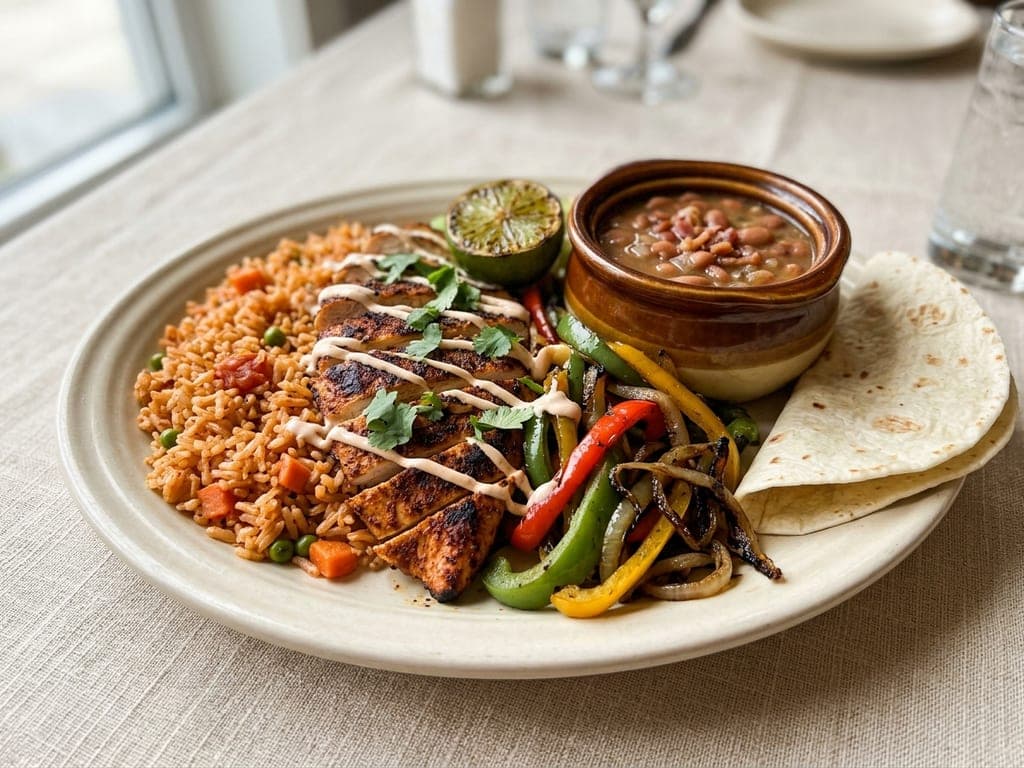
The plate wants one starch and one soft landing. Spanish rice is the canonical starch and ours is built for exactly this table; refried beans or brothy charro beans are the other half of the Tex-Mex combination plate. After that it is the topping bar doing the work: pico de gallo for acid and crunch, guacamole or plain sliced avocado for fat, sour cream (or Mexican crema, looser and tangier) for cooling, shredded cheese if the table insists, cilantro and lime wedges always. Pickled jalapeños earn their place for the heat-seekers without committing the whole pan.
Drinks: anything cold and a little sweet against the char. The margarita is the obvious marriage, a cold Mexican lager with lime does the same job for less ceremony, and agua de jamaica or limeade covers the table’s designated drivers. Dessert after a fajita night should be small and cold; this is a dish that ends loud.
Questions, answered
What is a fajita, exactly?
Strictly, a fajita is a cut of beef: the skirt steak, the steer’s belt-like diaphragm muscle (faja is Spanish for belt or sash; fajita is its diminutive). In Mexico the cut is arrachera. By extension, and by universal usage since the 1980s Tex-Mex boom, a fajita is the dish built on that cut’s treatment: strips of hot-seared meat with charred peppers and onions, served with warm flour tortillas and toppings so each person builds their own. Chicken fajitas apply the format to chicken, a stretch of the word purists still protest and everyone else happily eats.
What do you put in chicken fajitas?
Marinated chicken (lime juice, oil, Worcestershire, garlic and a chili-cumin-paprika seasoning), seared hard and sliced against the grain; bell peppers and onion cooked crisp-tender with char; warm flour tortillas; and a topping bar of lime wedges, cilantro, pico de gallo, sour cream, guacamole and optionally shredded cheese. The non-negotiables are the seasoned meat, the peppers and onions, and warm flour tortillas; everything else is the table’s choice.
What is the secret to good fajitas?
Heat and restraint. Sear the chicken whole in a screaming cast-iron pan and slice it afterwards against the grain; cook the peppers and onions less than you think, tossing rarely, so they char but keep a snap; and reserve a couple of spoonfuls of clean marinade before the raw chicken goes in, to sizzle over everything at the end. The seasoning matters less than the technique: any decent chili-cumin-paprika blend works if the pan is hot enough and the vegetables stay crisp-tender.
How do you make chicken fajitas taste like a Mexican restaurant’s?
Three tells. First, the marinade usually has an umami backbone behind the lime and spices: Worcestershire or soy at home, and in plenty of professional kitchens a plain pinch of MSG. Second, restaurant fajitas are cooked hotter than home stoves usually dare: hard char on meat and vegetables, in batches, never crowded. Third, the sizzle is staged; the platter comes off a 500°F (260°C) hold and a spoonful of fat hits it at the pass, so the dish arrives loud and aromatic. The food does not make that sound by itself. A cast-iron skillet carried straight to a trivet at the table with the reserved marinade sputtering does the same thing at home.
What do you marinate chicken fajitas in?
Per 1 1/2 lb (680 g) chicken: the juice of 2 limes (about 1/4 cup / 60 ml), 3 tbsp neutral oil, 1 tbsp Worcestershire sauce, 2 crushed garlic cloves, and a generous 3 tbsp of fajita seasoning (chili powder, cumin, smoked paprika, garlic powder, onion powder, oregano, salt, pepper). Thirty minutes does visible good; the ceiling is 2 hours for breasts, 4 for thighs. Reserve 2 tablespoons before the chicken goes in, and use them as the finishing drizzle.
How long can chicken sit in a lime marinade?
30 minutes to 2 hours for breasts, up to 4 hours for thighs; the flavor benefit is mostly front-loaded either way. Past that, the lime’s acid starts to denature the surface proteins the way ceviche does, and lean chicken breast shows it first, turning mealy and chalky at the edges. If your schedule needs an overnight, two clean outs: mix the marinade without the lime juice and stir it in during the last hour, or marinate with lime zest instead of juice, which carries the aroma with zero texture risk, and squeeze the fresh juice over the finished platter.
Are breasts or thighs better for fajitas?
Both work and the choice is honest preference. Breasts are the classic look, slice into cleaner strips, and stay leaner; their cost is a narrow doneness window, so pull them at 165°F (74°C) and not a minute later. Boneless thighs forgive: cooked to 175 to 185°F (79 to 85°C) their collagen melts and they stay juicy through a crowded pan, a delayed dinner and a reheat. If your history with fajitas is dry chicken, switch to thighs before you change anything else.
Flour or corn tortillas for fajitas?
Flour, by tradition and by function. Fajitas come from the northern Mexico and South Texas table where the flour tortilla is the default bread, and a soft 7 to 8 inch (18 to 20 cm) flour tortilla flexes around a heavy, juicy filling that would split a corn tortilla. Corn is not wrong, it is just a different taco, and it does cut the calories and sodium meaningfully (roughly 60 calories and about 10 mg sodium for corn against 130 to 210 calories and 230 to 480 mg for flour). Warm either properly and serve wrapped in a towel.
Is fajita seasoning the same as taco seasoning, and what about the packet?
They are siblings built on the same chili-cumin base; fajita blends usually lean harder on cumin and paprika and skip taco seasoning’s heavier oregano and sometimes its tomato powder. The practical difference is the packet’s formula, not the batch sodium: per two-teaspoon spoonful the big brands run 250 to 290 mg while the undiluted homemade blend runs higher, around 430 to 460, yet per batch of fajitas the two come out about even. The best-selling packet lists cornstarch first, then salt and sugar, with artificial color and yeast extract down the label; the blend in step 1 (chili powder, cumin, smoked paprika, garlic, onion powder, oregano, salt, pepper) spends the same weight on actual spice, and the salt is yours to cut.
How many calories are in chicken fajitas?
As this recipe serves them: about 675 per person, counted honestly: roughly 205 from 6 oz (170 g) of chicken breast, 115 from the marinade and cooking oil that actually ends up on the plate, about 40 from peppers and onions, about 300 from two 8-inch (20 cm) flour tortillas, and 15 from the seasoning and lime. Sodium lands between 1,000 and 1,300 mg, and the tortillas are the biggest single line (about 720 mg for the pair), not the seasoning. Be suspicious of the numbers under other recipes: the pages ranking for this dish report anywhere from 137 to over 1,000 calories a serving, and the difference is almost entirely what each one quietly leaves out (usually the tortillas, sometimes disclosed nowhere). Toppings ride on top here too: a tablespoon of sour cream adds about 30 calories, a generous spoon of guacamole 50 to 60, cheese about 30 per tablespoon (a quarter-cup sprinkle is about 110). Corn tortillas or lettuce wraps drop the base figure fastest.
Can I make fajitas with steak instead of chicken?
You can, and historically you would be restoring the original: fajita names the skirt steak the dish was born from. The marinade, vegetables, tortillas and platter here transfer directly; skirt steak wants the same screaming heat but shorter, 2 to 4 minutes a side to about 130 to 135°F (54 to 57°C) for the chef's medium-rare (USDA's published minimum for whole cuts is 145°F / 63°C with a 3-minute rest), a real rest, and thin slicing sharply across its very pronounced grain. Flank works if skirt is sold out. Given how fajitas repriced skirt steak from throwaway cut to premium, the chicken version is also, fittingly, the budget one.
Snap your finished plate and let the AI plate it again — more beautifully.