Food styling — make real food look its best
Professional food styling has two toolkits: the advertising one (glue, glycerin, motor oil) and the edible one. This guide is the edible one — the moves that make food you're actually going to eat look fresh, glossy and alive on camera.
The photos on this page are AI-generated illustrations.
Between the plating and the photo sits a craft of its own: getting the food itself to look the way it tastes. The eye judges freshness from surface evidence — research on visual freshness shows the judgment tracks gloss and luminance distribution1, and that changing nothing but the luminance texture of food changes the flavor people expect from it.2 Styling is simply managing that evidence: moisture where it dried, color where it faded, height where it slumped.
It matters beyond vanity — appetizing food imagery measurably moves appetite and attention3, and care in presentation raises liking for the identical food.4 Every study is listed at the bottom. The rule that governs everything below: if you're going to eat it, every trick stays edible.
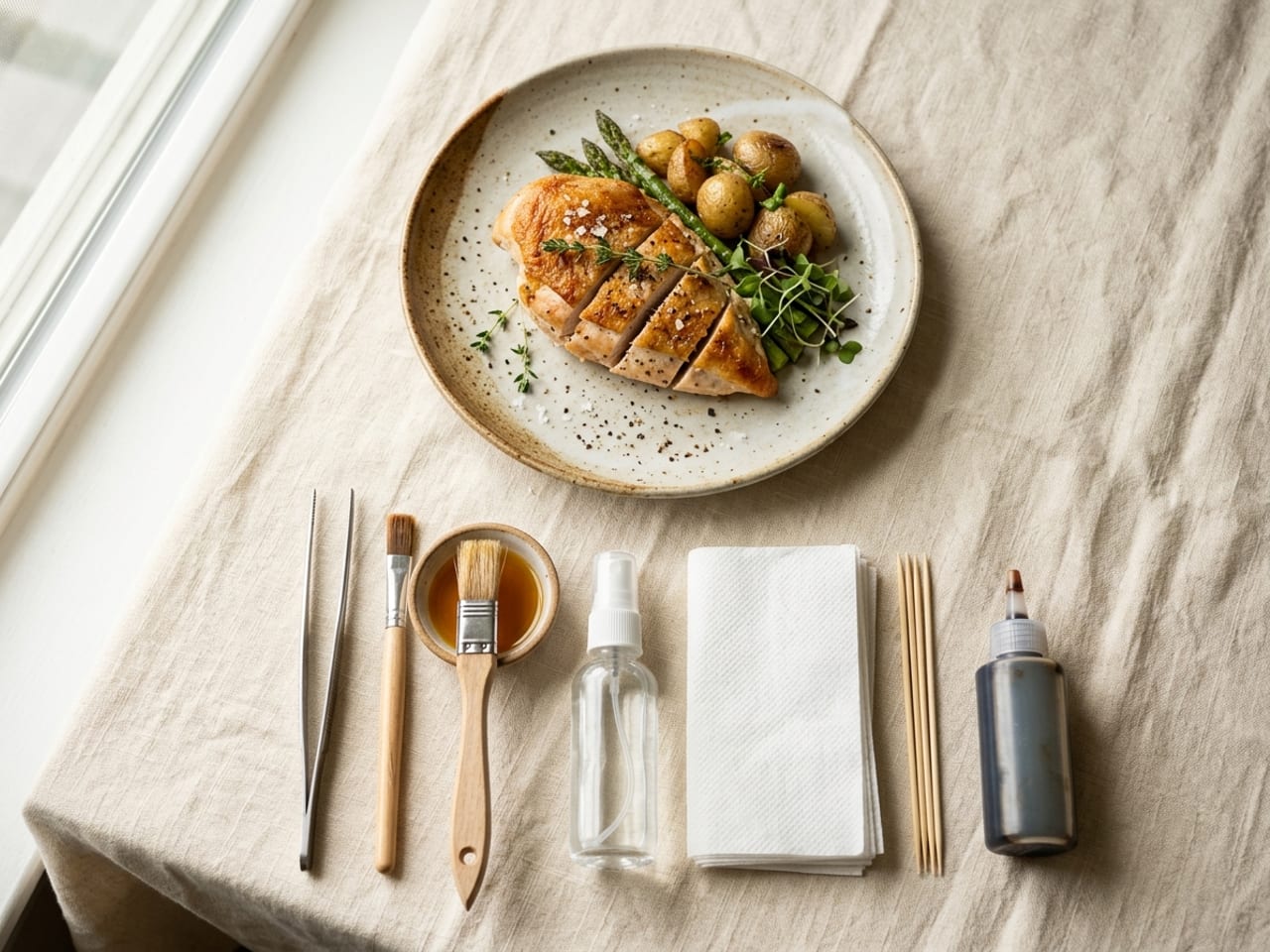
Six stylist moves that stay safe to eat
The working repertoire of editorial food styling — nothing here needs to be scraped off before dinner.
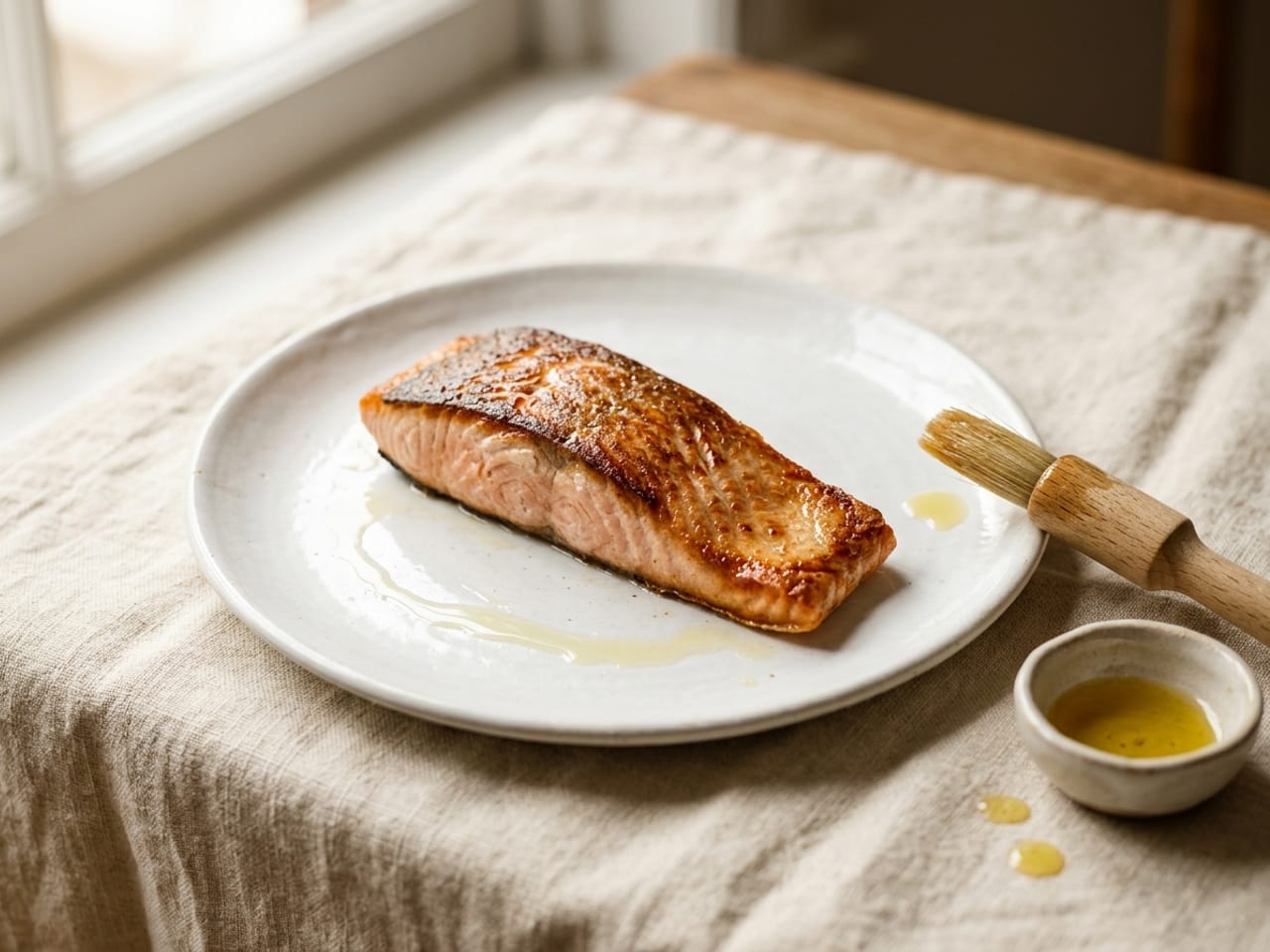
Gloss is freshness — brush it on
A whisper of neutral oil or warm glaze on the protein, brushed just before shooting, restores the just-cooked shine that dies in minutes. The eye reads gloss as moisture and moisture as fresh — it's the single highest-leverage styling move.
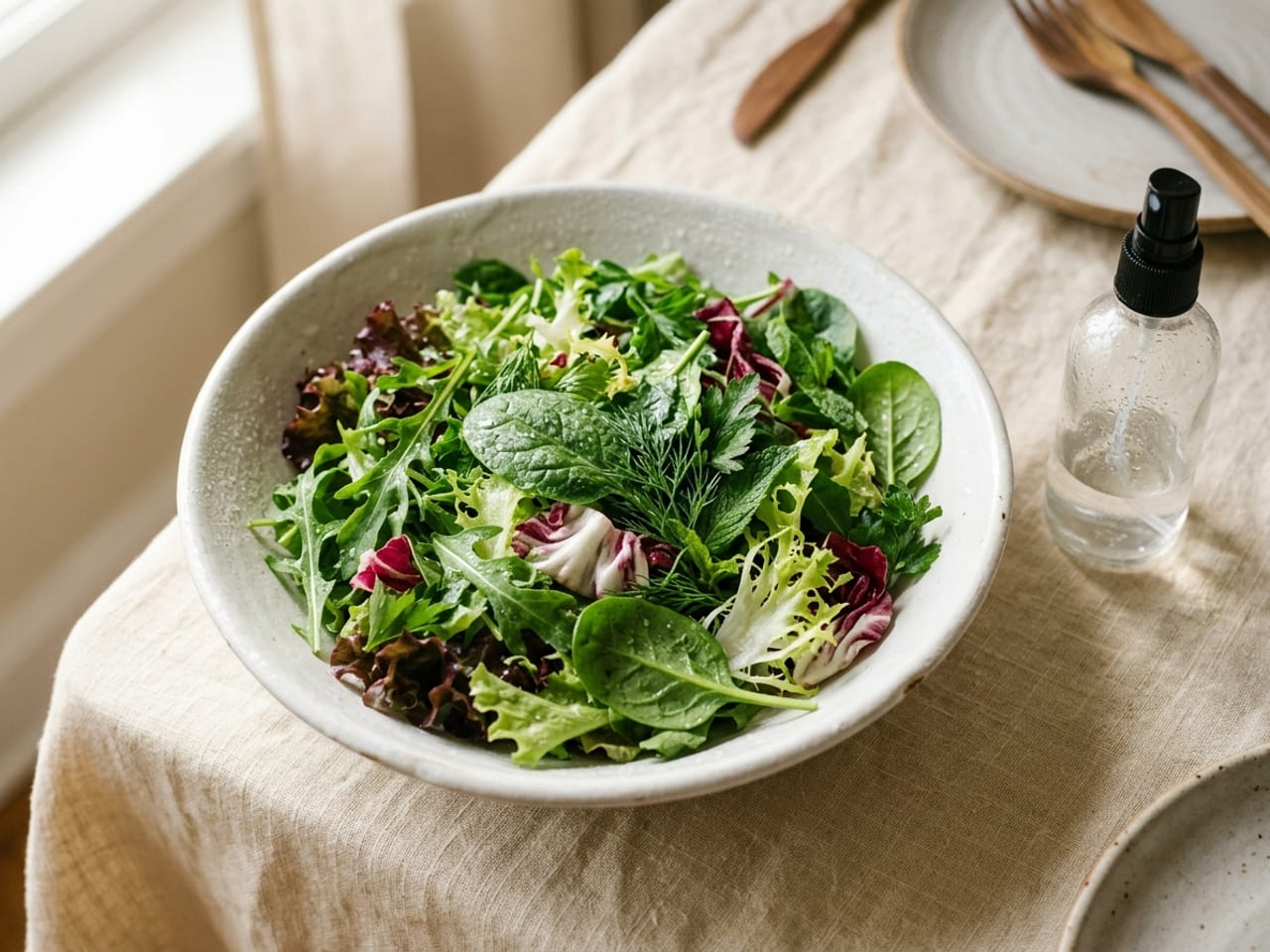
The water spritz
A fine mist over salad leaves, herbs and fruit brings back the dewy, just-washed look. One or two pumps from a distance — droplets should be visible only up close. A soaked salad reads as rained-on, not fresh.
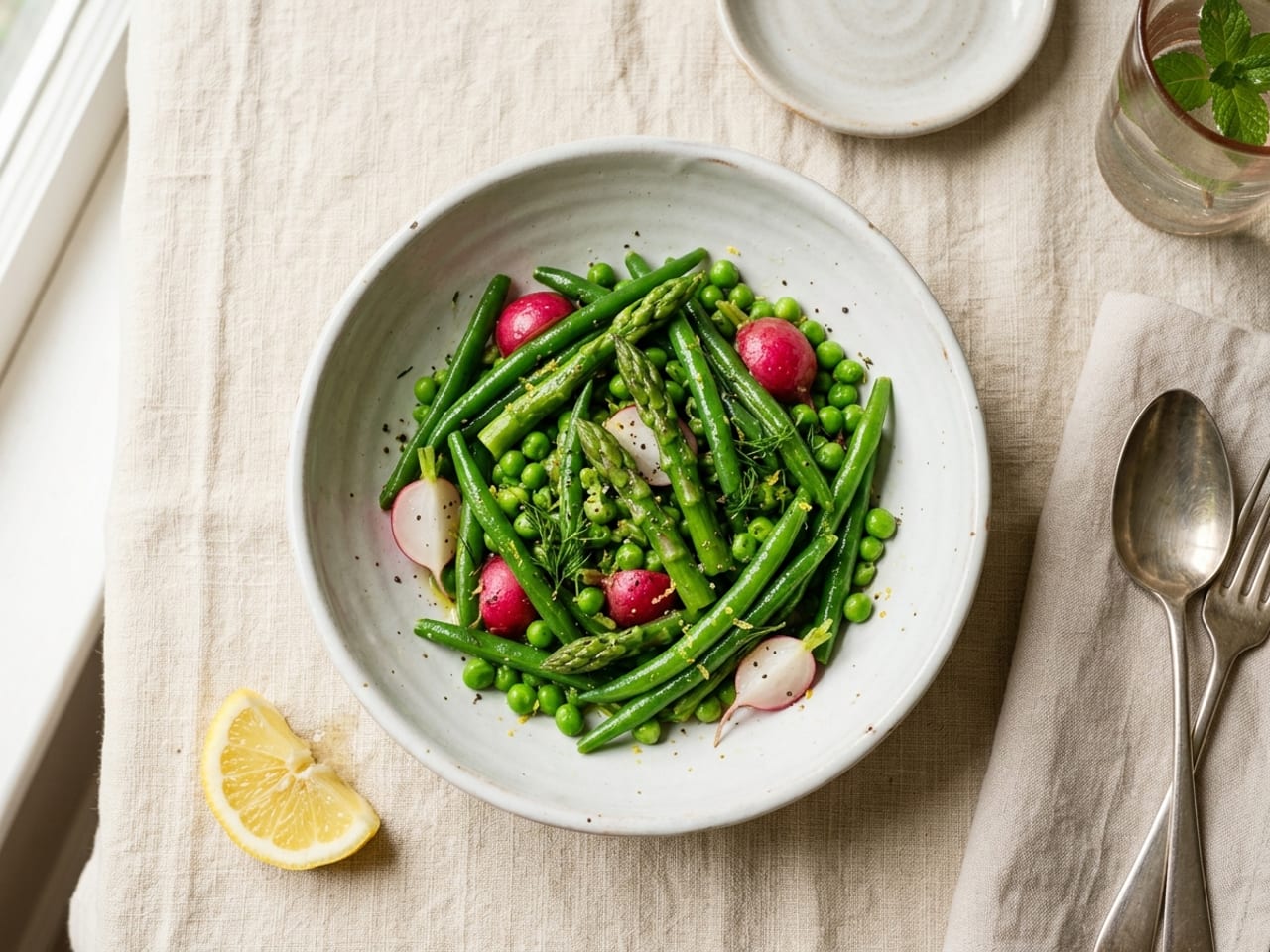
Undercook for the camera
Vegetables one minute short of done keep their color and snap; pasta pulled early holds its shape in the twirl. You're plating the version of the food that photographs as perfectly cooked — then you finish cooking your actual dinner.
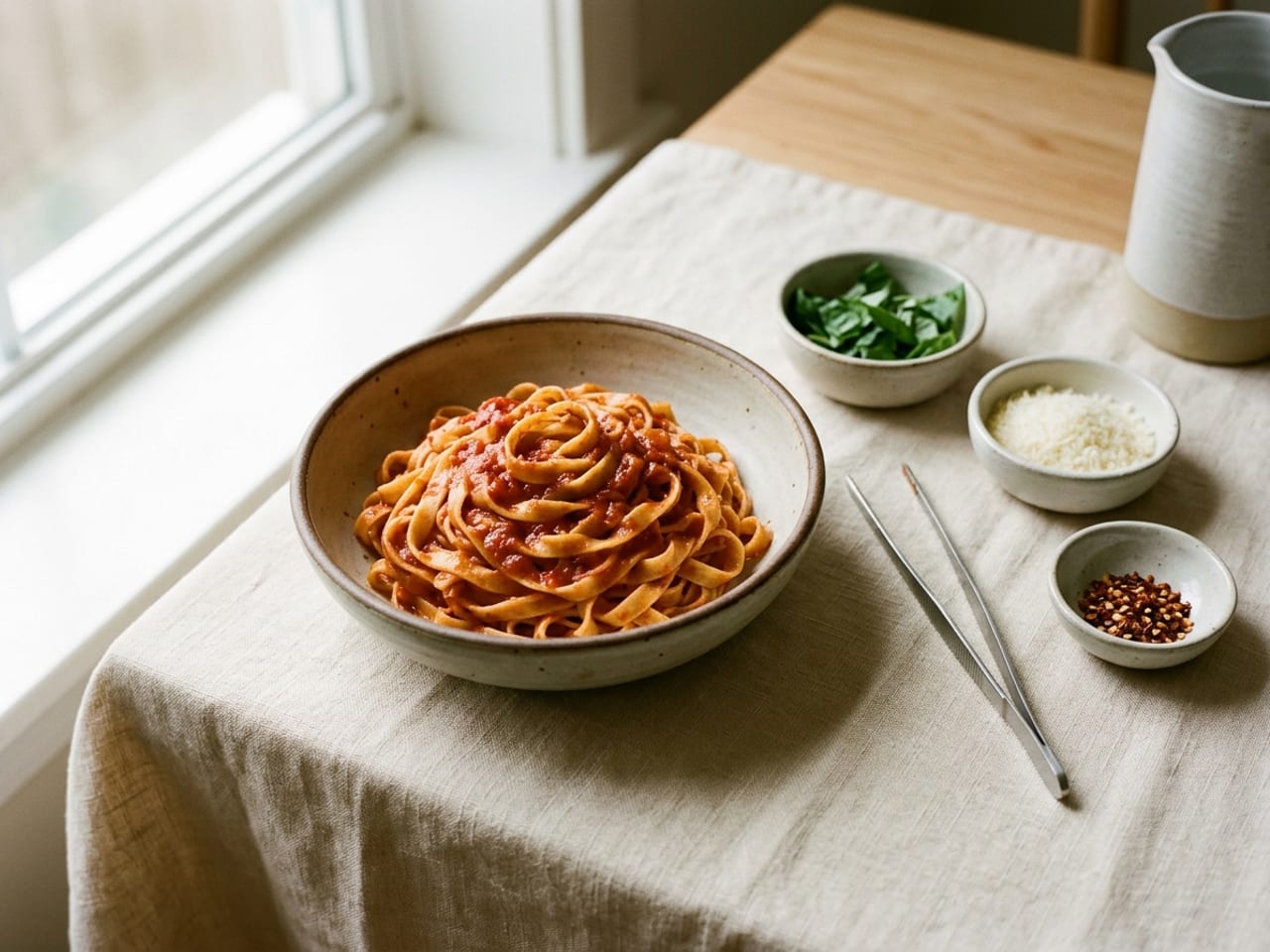
Garnish at the last second
Herbs wilt, cut avocado browns, cheese sweats. Stage every garnish in a bowl and land it after the plate is in position, seconds before the shot. The order is: compose, light, THEN garnish.
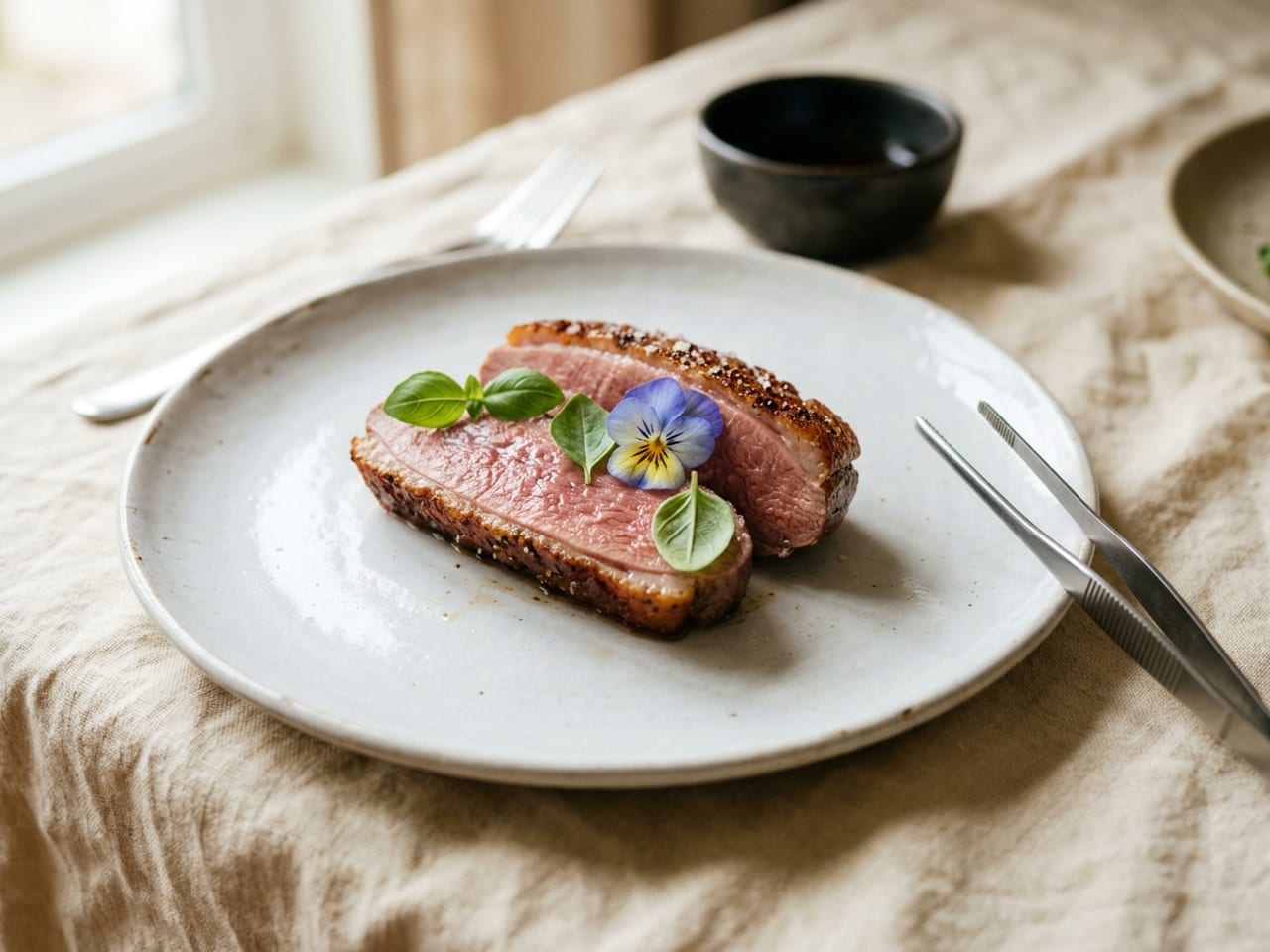
Tweezers and towel edges
The two tools that mark a stylist: tweezers to place the small things exactly (a leaf angled, a seed turned), and a damp paper towel wrapped on a fingertip to erase every smear from the rim. Detail work is most of the job.
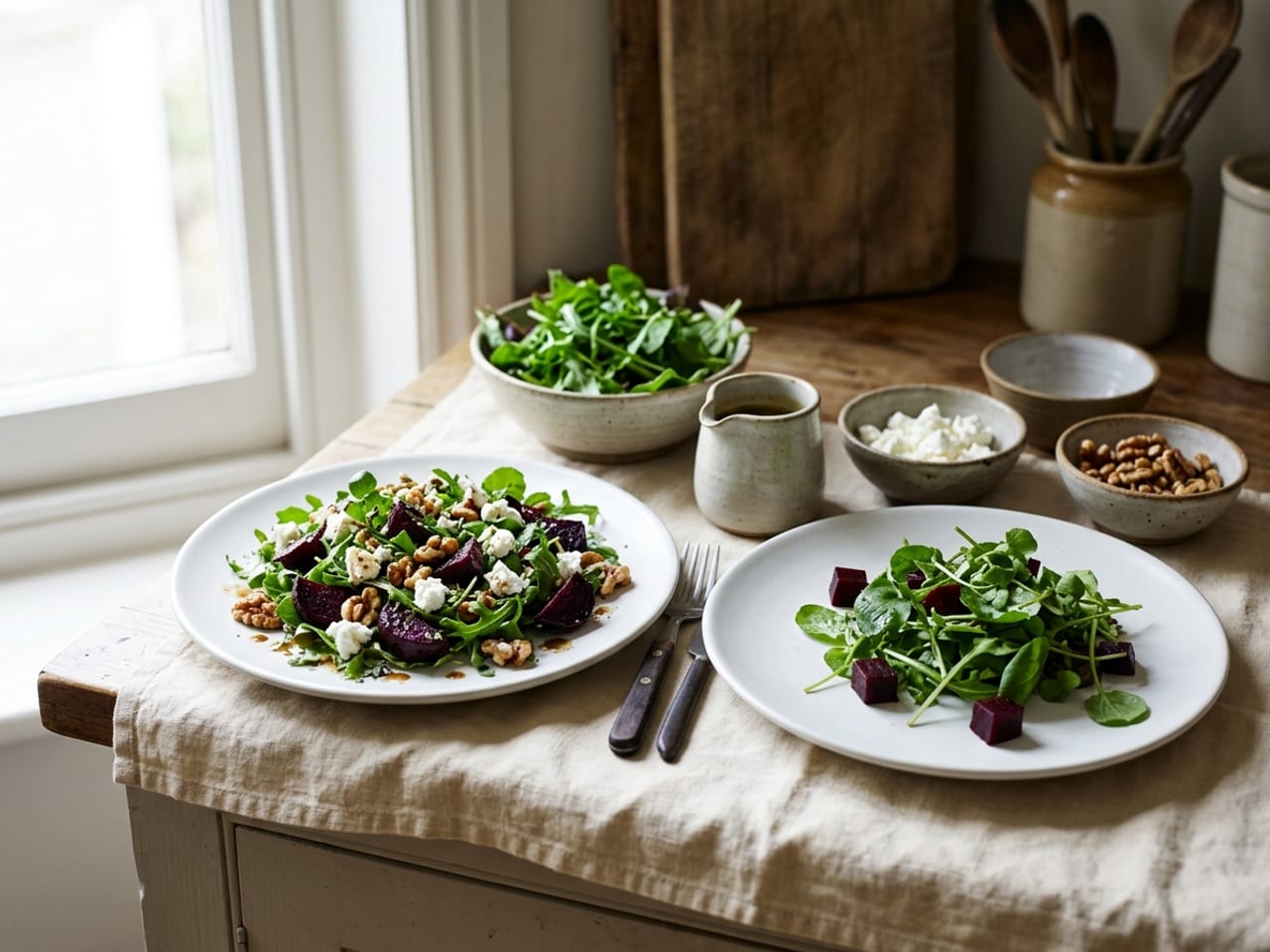
Cook a stunt double
Pros shoot with backups: two proteins, extra garnish, sauce in reserve. At home the honest version is simply holding components back — plate half the salad, keep half crisp in the fridge, and rebuild if the shot takes too long.
Two minutes of styling, side by side
The same ramen bowl: straight from the pot, then styled — rebuilt nest, re-glossed broth surface, garnish landed last.
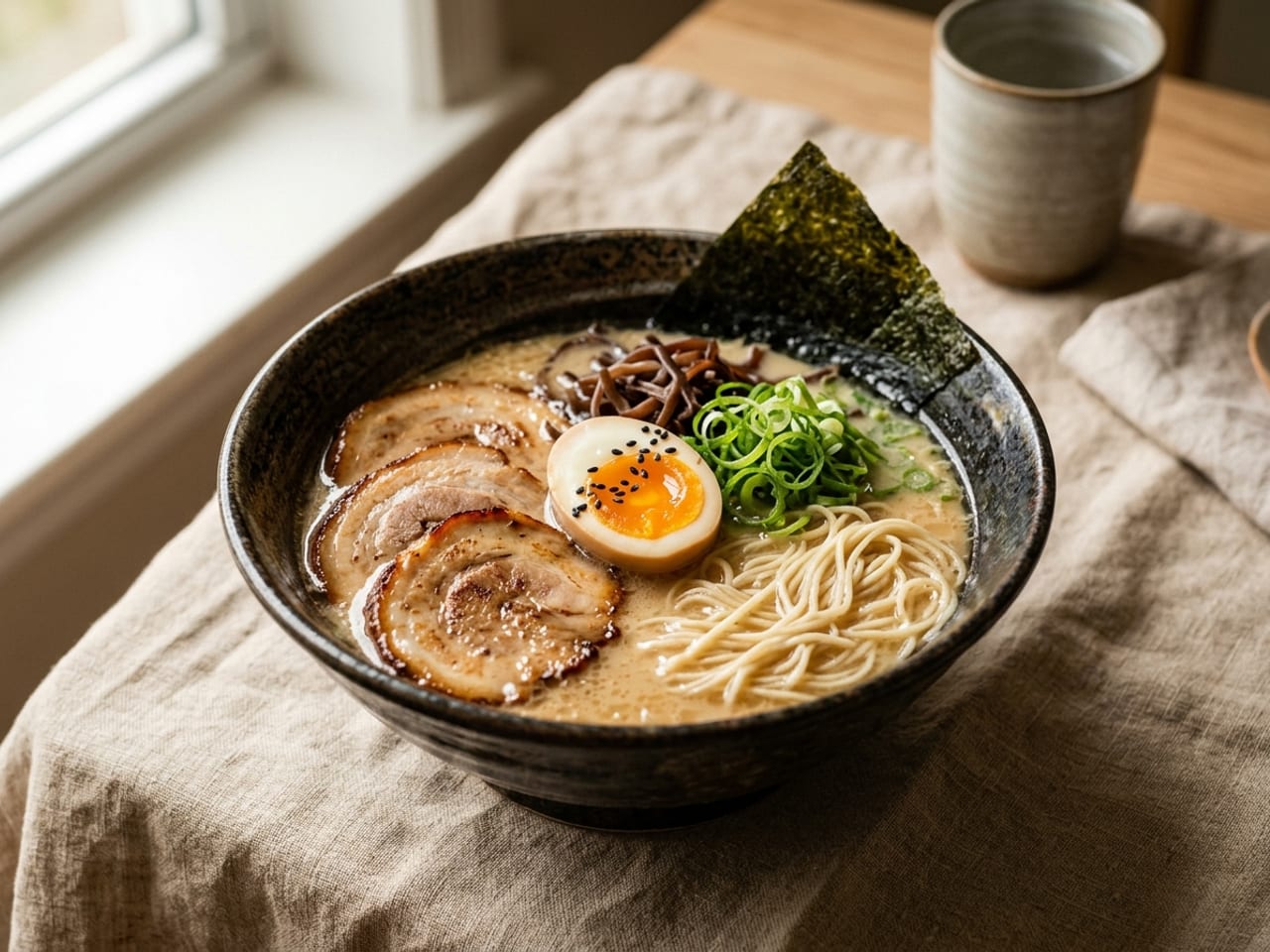
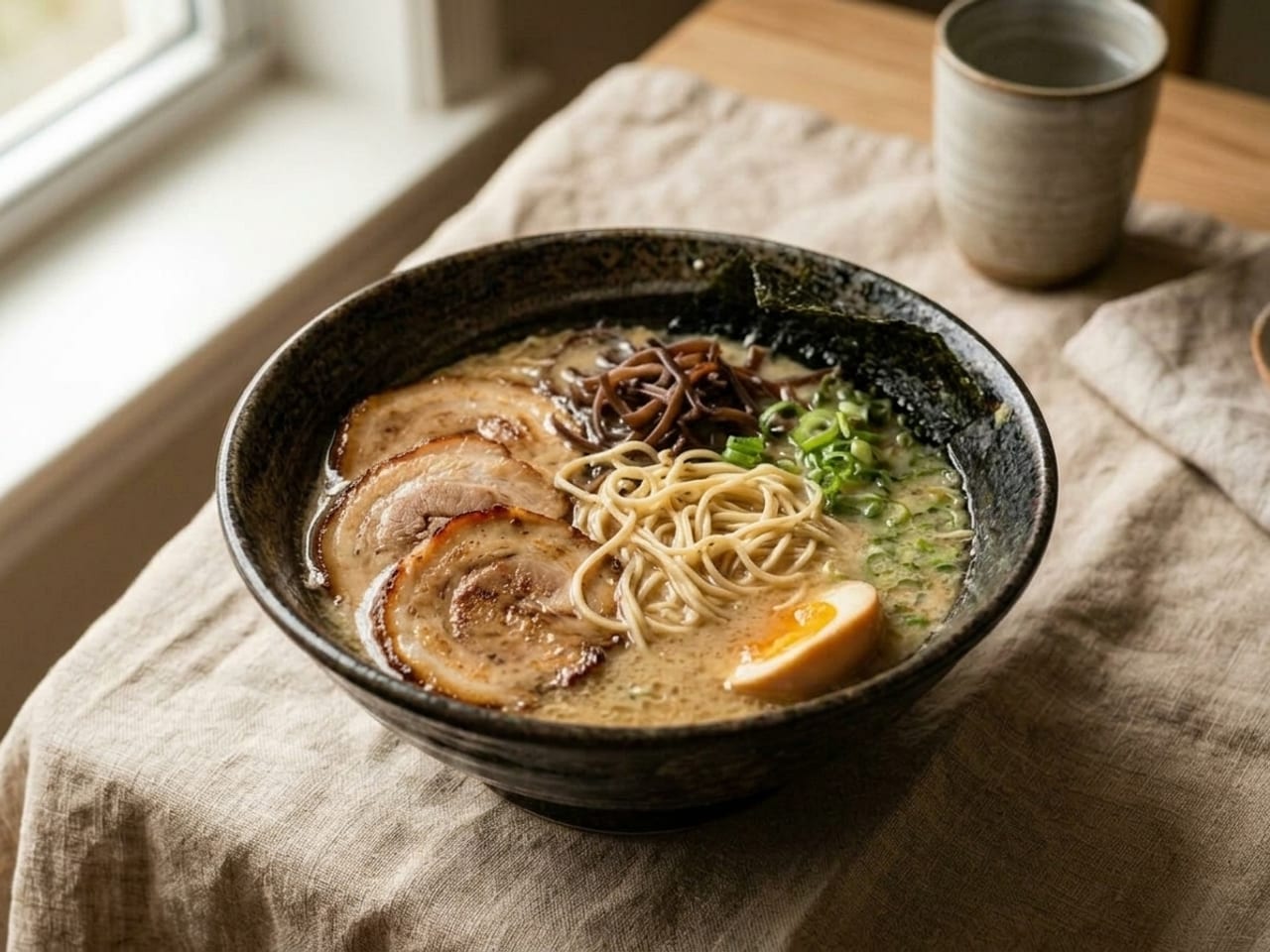 BeforeAfter
Styling moves by dish type
Five dishes cover most of what home cooks shoot — each has one move that does most of the work.
- Soups & stewsThe garnish raft is everything: cream swirl, herb cluster, croutons or a chili-oil drizzle floating dead center. Wipe the bowl walls; fill only two-thirds up.
- PastaTwirl a fork-and-ladle nest and set it seam-down, then spoon sauce over the crown and finish with cheese and herbs. A flat tangle of dressed pasta photographs as leftovers.
- Burgers & sandwichesLayer for the lens: lettuce shingled at the cut edge, cheese melted over the patty's rim, everything pushed slightly toward the camera side. A discreet skewer through the back half holds the architecture.
- SaladsBuild tall and loose in a wide bowl — height means air, air means fresh. Dress at the last moment or serve the dressing beside; vinaigrette starts collapsing leaves in minutes.
- Steak & roastsNever shoot the whole muscle: slice, fan the slices to show the interior, and brush the cut faces with resting juices for gloss. The pink gradient IS the photo.
Six styling mistakes (one of them ethical)
- Ad-industry tricks on real dinnerGlue as milk, motor oil as syrup, glycerin sprayed on everything — those exist for shoots where nobody eats. If tonight's food is tonight's dinner, every styling move must stay edible. (All six moves above do.)
- Over-saucing the heroSauce keeps spreading after you stop pouring. Under-sauce for the camera and serve the rest in a pitcher — a drowned plate can't be un-drowned.
- Wilted garnishA tired basil leaf undoes a fresh plate — the viewer's eye goes straight to the one dead thing. Garnish from ice water, at the last second, or not at all.
- Camera-portion sizesA plate loaded for eating photographs as a heap. Style two-thirds of a real portion with deliberate gaps — the camera adds visual weight the way it adds none of the appetite.
- Styling cold food as hotA congealed sauce and matte, sweating cheese tell the truth no angle can hide. Reheat, re-gloss, re-shoot — or restyle the dish honestly as a cold plate.
- Props that outdress the foodVintage spoons, triple napkins, scattered peppercorns — the food should be the loudest thing in frame. One board, one linen, one plate is a stylist's default set.
Style it, shoot it, then push it further
Styling is the middle of a three-step chain: compose the plate, style the food, shoot it in window light. Run all three on one dinner and the photo stops looking homemade — the ingredients didn't change, the evidence did.
Plate Artists is the fourth step: upload that photo and the AI re-plates your own dish with fine-dining discipline — showing you the gloss, height and garnish decisions a professional pass would have made, as concrete steps you can copy next time.
See what a stylist would do with your plate
Snap your dish and get the styled, restaurant-grade version back — with the steps that get you there for real.
Start free · 1 enhancement →Free account · 1 free enhancement · No credit card
Food styling questions, answered
What does a food stylist actually do?
A food stylist prepares and arranges food so it photographs the way it tastes — choosing the best-looking specimens, cooking to the visually perfect moment, building the plate for the camera angle, and doing detail work (gloss, garnish placement, rim cleaning) between frames. On commercial sets they also manage stunt doubles and timing so the hero plate is always at its peak when the shutter fires. Everything in this guide is that same job, scaled to a home kitchen and kept fully edible.
How do you make food look fresh and glossy in photos?
Restore moisture where the eye expects it: brush proteins and roasted vegetables with a thin coat of neutral oil or their own warm glaze, mist leaves and fruit lightly with water, and shoot within minutes of cooking. Research on visual freshness shows the judgment rides on gloss and luminance — the eye reads surface shine as moisture and moisture as fresh — so a ten-second brush pass does more than any filter.
Is the food in advertisements real?
Often not entirely — classic ad-set tricks include white glue standing in for milk, motor oil for syrup, mashed potato for ice cream and glycerin spray for condensation, used because the real thing dies under studio lights. Editorial and restaurant photography has largely moved to real, edible styling. For anything you plan to eat, the inedible tricks are pointless anyway: the edible toolkit gets you 95% of the look.
How do stylists keep salads looking fresh?
Cold, dry, tall and undressed: leaves washed and held in ice water, spun very dry, built loosely for height, then misted lightly and dressed only seconds before the shot (or not at all, with the vinaigrette shown beside). Acid and salt start collapsing greens on contact — the walk from kitchen to table is fine, ten minutes under lights is not.
What tools do you need for food styling?
A serviceable home kit is small and cheap: fine-tip tweezers, two small brushes (one for oil, one dry), a fine-mist spray bottle, paper towels, wooden skewers, and a squeeze bottle for sauces. Everything else in a pro kit is a variation on those five jobs — place precisely, gloss, mist, clean, and hold things in position. Our plating tools guide gives the names, uses and kitchen-drawer substitutes for the plating versions of these tools.
The research behind this guide
Peer-reviewed studies, retrieved via PubMed and Crossref. Every figure quoted above comes from one of these papers.
- Murakoshi, T., Masuda, T., Utsumi, K., Tsubota, K., & Wada, Y. (2013). Glossiness and perishable food quality: Visual freshness judgment of fish eyes based on luminance distribution. PLoS ONE, 8(3), e58994. doi:10.1371/journal.pone.0058994
- Ueda, J., Spence, C., & Okajima, K. (2020). Effects of varying the standard deviation of the luminance on the appearance of food, flavour expectations, and taste/flavour perception. Scientific Reports, 10, 16175. doi:10.1038/s41598-020-73189-8
- Spence, C., Okajima, K., Cheok, A. D., Petit, O., & Michel, C. (2016). Eating with our eyes: From visual hunger to digital satiation. Brain and Cognition, 110, 53–63. doi:10.1016/j.bandc.2015.08.006
- Zellner, D. A., Loss, C. R., Zearfoss, J., & Remolina, S. (2014). It tastes as good as it looks! The effect of food presentation on liking for the flavor of food. Appetite, 77, 31–35. doi:10.1016/j.appet.2014.02.009
Keep going
How to photograph food
Where to put the light, what to do after dark, the three angles and the phone settings, with the sources named.
Color on the plate
Styling manages freshness; color manages appetite. The food color wheel and the 60-30-10 rule.
Cocktail garnishes
Styling for the glass: the right garnish for twenty classic drinks and how to cut every twist, wheel and rim.
Cook something worth styling
100+ recipes with step-by-step methods — and three plating ideas at the end of every one.