Leche de Tigre Recipe (Peru's Tiger's Milk, from Scratch)
Tiger's milk — the cloudy, fierce, faintly sweet lime marinade at the heart of Peruvian ceviche, made deliberately in a blender instead of scraped from the bottom of the bowl. Lime, fish, ají, ginger, celery and ice, strained cold into a jug: it cures the next ceviche, it fills the levanta muertos shot glass, and it is the best thing to happen to a hangover since sleep.
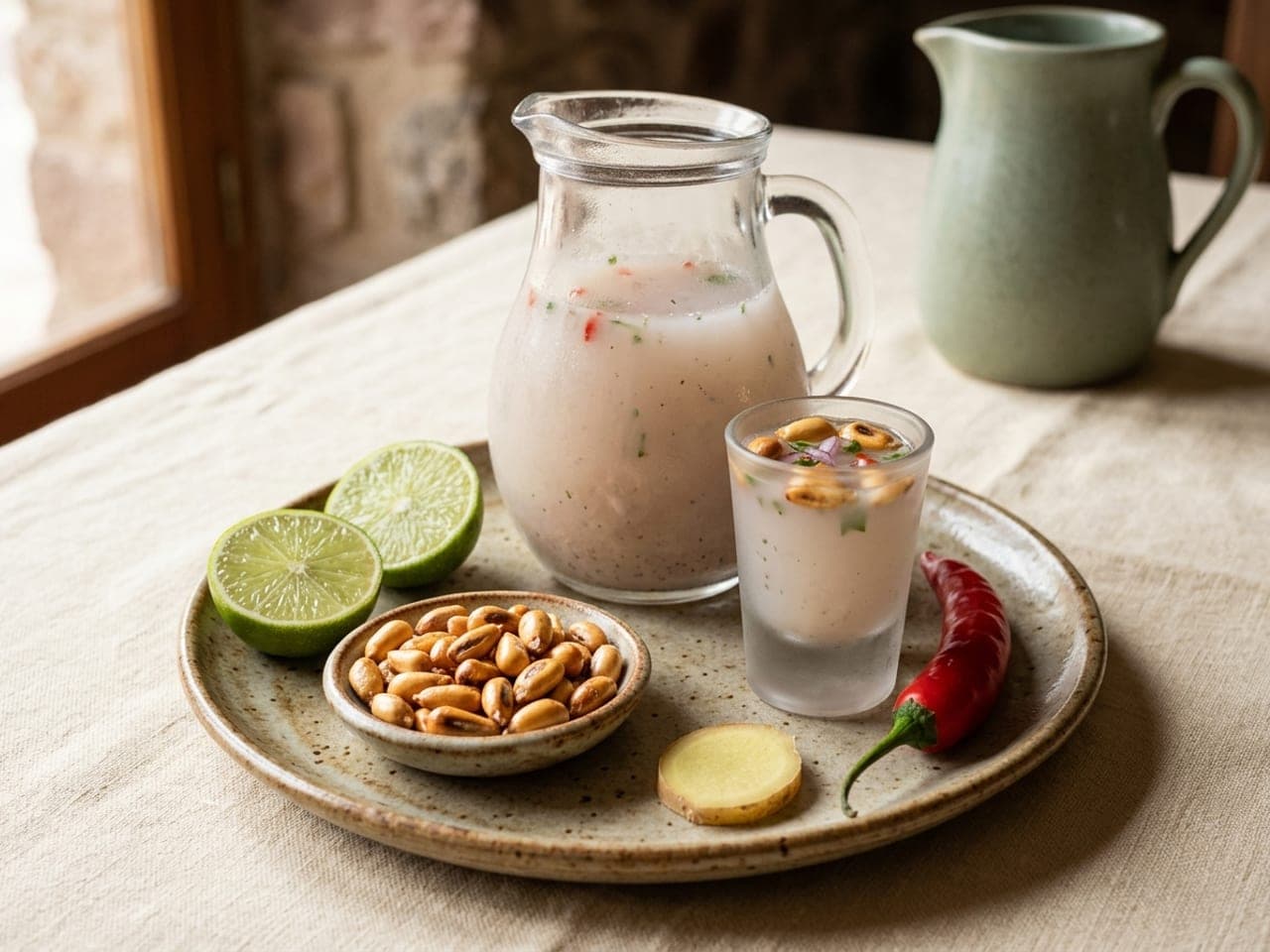
Ingredients
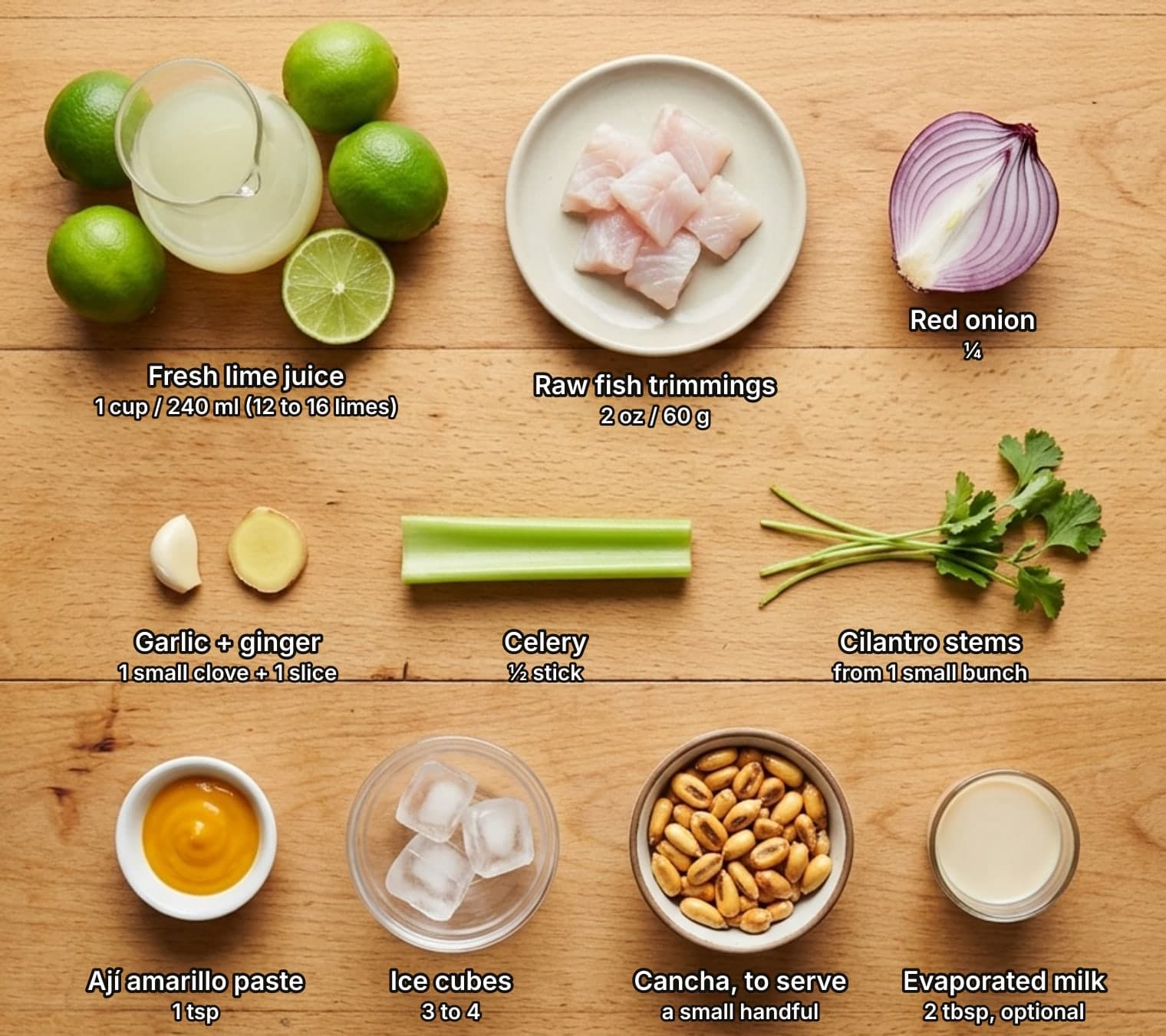
- fresh lime juice1 cup / 240 ml (12–16 limes)
- raw white fish trimmings (frozen-for-raw, very fresh)2 oz / 60 g
- red onion¼
- garlic1 small clove
- fresh ginger, a thin coin1 slice
- celery, roughly chopped½ stick
- cilantro (fresh coriander) stemsfrom 1 small bunch
- ají amarillo paste (or 1 seeded fresh red chile)1 tsp
- fine salt½ tsp, to taste
- ice cubes3–4
- cancha (toasted corn nuts), to serve the shotsa small handful
- evaporated milk — optional, a la crema style2 tbsp
From leftover to institution
Every ceviche produces it: the lime juice that went in sharp and clear comes out cloudy, pale and transformed, thickened by the proteins the fish surrendered and charged with chile, onion and salt. For generations that pool was simply the cook's tip — drunk from the bowl at the counter, offered to a favoured customer, credited along the Peruvian coast with powers ranging from hangover cure to aphrodisiac, which is roughly the range of powers coastal cultures credit to everything delicious. The names tell you how seriously it was taken: leche de tigre, tiger's milk, and for a strong batch levanta muertos — raiser of the dead.
Somewhere in the last few decades — as Peruvian food went from national pride to global export — the leftover became a preparation. Cevicherías began blending it fresh and to order: fish trimmings, lime, aromatics and ice, strained into chilled glasses and jugs, adjusted like a cocktail. Gastón Acurio's kitchens, which carried cebiche to the world, treat leche de tigre as a foundation with its own recipe rather than a by-product with luck. The version on this page is that modern build. It is faster than making ceviche and waiting for the bowl, it tastes cleaner (the fish goes in fresh rather than steeping), and it turns the marinade from something you get into something you make.
How to make Leche de tigre
- Understand what you are making. Leche de tigre began as the by-product — the milky pool left in the ceviche bowl, named for its colour and its claws, drunk by whoever moved fastest. Modern Peruvian kitchens turned it into a preparation in its own right: blended fresh, strained, and used as a cure, a sauce and a drink. This recipe makes about 1½ cups (360 ml) — enough to dress a ceviche for four with shots left over.
- Save your trimmings — the fish is the milk. The body of real leche de tigre is fish, not just lime: 2 oz (60 g) of raw white-fish trimmings — the off-cuts from cubing your ceviche fish are exactly right, and this is why the two recipes are made together. The same raw-fish rules apply as on the ceviche page: frozen-for-raw fish, impeccably fresh, cold at every step. No trimmings? Buy the smallest fillet at the counter; it is doing real work here.
- Juice the limes last, gently. You need 1 cup (240 ml) of fresh lime juice — 12 to 16 limes. Squeeze them just before blending (lime juice starts turning bitter within the hour) and stop before the last drops of each half: pressed pith oils are the classic bitterness mistake, and in a drink this concentrated there is nowhere for them to hide.
- Load the blender cold. Into the jug: the lime juice, the fish, ¼ of a red onion, 1 small garlic clove, a thin slice of fresh ginger, half a celery stick roughly chopped, the stems of a small cilantro (fresh coriander) bunch — stems carry the flavour, leaves would tint it green — 1 tsp of ají amarillo paste (or a seeded fresh red chile), ½ tsp of fine salt, and 3 or 4 ice cubes. The ice keeps the blend cold and gives the finished milk its silky body.
- Blend briefly — thirty seconds, no more. Blitz on high for 30 seconds, until cloudy and pale but not perfectly smooth. Longer blending warms the mix, bruises the onion into harshness, and whips in air that turns the texture frothy instead of milky. It should look like its name: pale, opaque, faintly pink-grey — tiger's milk, not smoothie.
- Strain, press, chill. Pour through a fine sieve into a chilled jug, pressing the solids firmly with the back of a ladle to wring out every drop, then discard them. What comes through should be silky and pourable, like thin cream. Taste and correct: more salt if it tastes flat, a little ají if it lost its temper in the straining. Use it within the hour for its best, or refrigerate up to 24 hours.
- Use it three ways. As the cure: pour it over cubed salted fish, wait two minutes, and you have made the ceviche on our anchor page with the engine pre-built. As the shot: a chilled small glass, a few cancha kernels dropped in, knocked back before lunch — the levanta muertos, “raiser of the dead”, Peru's standing answer to the night before. As the cocktail: 2 parts leche de tigre to 1 part pisco over ice is the marisquería's leche de pantera, and the best argument for making a double batch.
- Scale it by ratio, not by recipe. Once you have made it, remember it as proportions: 4 parts lime juice, 1 part raw fish, and per cup of lime — a quarter onion, a garlic clove, a ginger coin, half a celery stick, a teaspoon of ají, a big pinch of salt, ice. From there it scales from one shot glass to a party jug without a recipe card, and you can push it: more ginger for a sharper shot, a spoon of the blend before straining for a thicker cure, evaporated-milk splash for the creamy cevichería style.
Safety & hygiene Important
- It is a raw-fish preparation and keeps like one. Leche de tigre contains blended raw fish, and every rule from the ceviche page rides along: the fish must have been frozen to the parasite-destruction schedule (FDA: -4°F / -20°C for 7 days, or -31°F / -35°C for 15 hours), kept cold, and handled cleanly. The acid preserves nothing — it is flavour, not safety.
- 24 hours in the fridge, and that is the ceiling. Fresh is best within the hour; refrigerated below 40°F (4°C) it holds for a day, growing slightly more bitter and less bright. Past 24 hours, discard it — the fish content makes it perishable in a way plain citrus juice is not, and no smell test is reliable with something this aromatic. It does not freeze well; the emulsion breaks and the lime turns dull.
- The shot is strong medicine — pour it small. A traditional leche de tigre shot is 2–3 tbsp, not a tumbler: it is intensely acidic, genuinely spicy, and on an empty morning stomach a large glass of it is a memorable mistake. Anyone who should not eat raw fish — pregnant women, the immunocompromised, the very young and old — should not drink it either; the shot is concentrated ceviche, not a juice.
- Blender hygiene matters more than usual. Raw fish through a blender leaves protein in every crevice — take the blade assembly apart and wash it in hot soapy water immediately, along with the sieve, rather than rinsing and hoping. The same board-and-knife rules as any raw-fish prep: nothing that touched the raw trimmings touches finished food without a wash.
3 ways to plate it
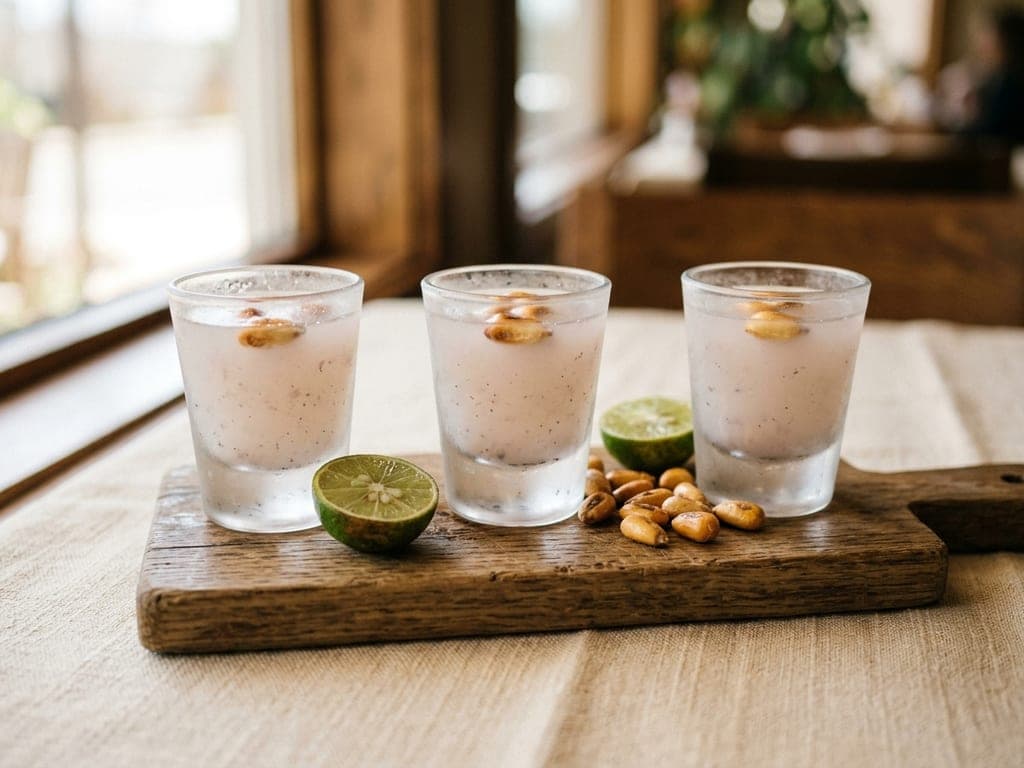
- Freeze the shot glasses for ten minutes — frost on the glass is the promise the drink keeps.
- Pour through the sieve one final time directly into the glasses so the last pour is the silkiest.
- Drop two or three cancha kernels onto each surface at the moment of serving; they float briefly, and briefly is the photo.
- Line the glasses on a small board with lime halves and loose cancha — a row reads as ritual where one glass reads as leftovers.
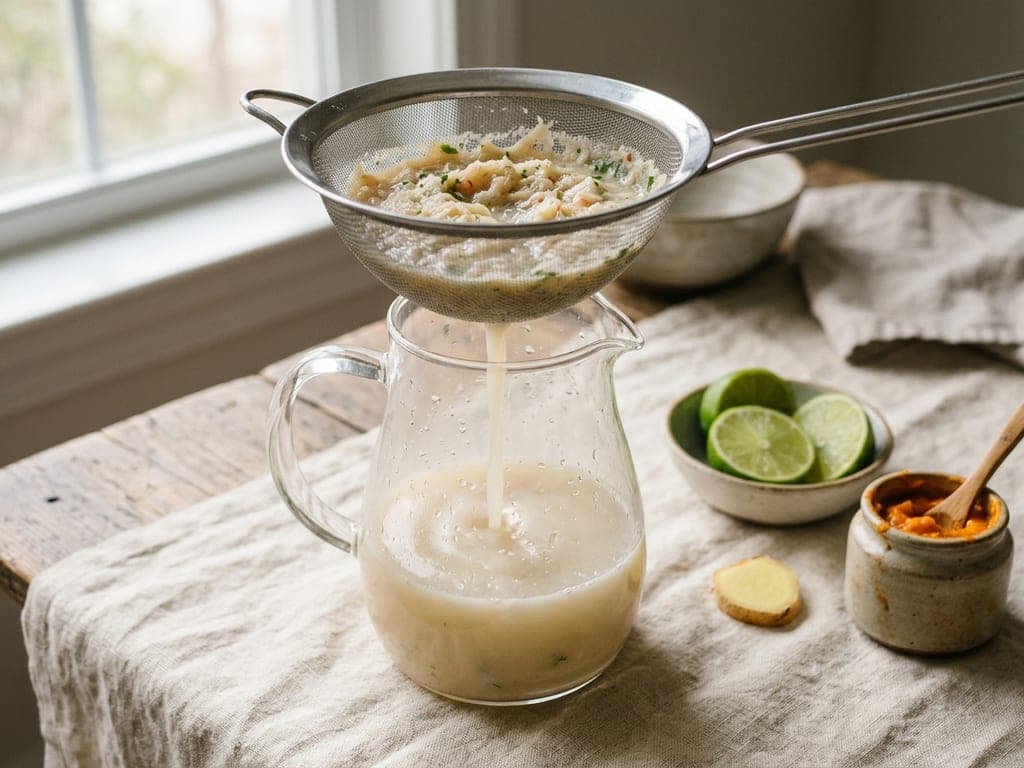
- Use a clear glass jug so the milky pale colour — the whole point of the name — reads against the light.
- Catch the pour mid-stream with the sieve half-full; the transformation from rough blend to silk is the picture.
- Keep the raw materials in frame — halved limes, a ginger coin, the ají jar — so the shot teaches the recipe.
- Work fast and cold: condensation on the jug is good styling, warm murky liquid is not.
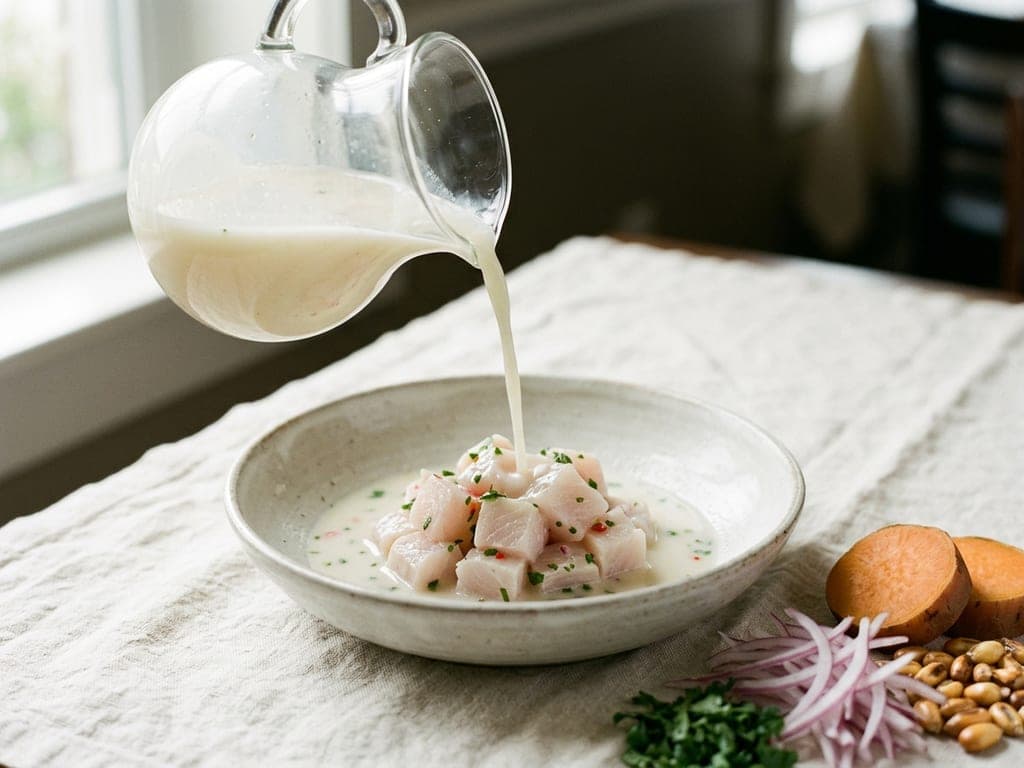
- Have the fish cubed, salted and mounded in a wide chilled bowl before the jug comes anywhere near — the pour is the only moving part.
- Pour from six inches up in one steady stream so the milk visibly pools and laps the fish.
- Keep the finished plate's cast — onion feathers, sweet potato rounds, cancha — staged at the frame's edge as the next scene.
- Serve two minutes later exactly as the ceviche page directs; this figure is that page's opening move, photographed.
What each ingredient is doing in the glass
Lime is the body and the law — everything else negotiates with it. The raw fish is what makes it milk instead of dressing: blended protein emulsifies into the acid and turns the liquid cloudy, silky and faintly sweet, which is why a fish-free “leche de tigre” of plain lime and aromatics tastes like salad dressing wearing a costume. Onion brings bite, garlic depth, and the ginger coin — a cevichería-era addition — a clean heat that sharpens the whole profile. Celery is the quiet essential: its herbal salinity is the note people cannot place and miss immediately when it is gone.
Cilantro goes in stems-only for flavour without the lawn-green tint; the ají — amarillo paste from a jar being the practical European route — supplies fruit-forward heat that floats above the acid rather than sinking into it; salt makes the whole argument legible; and the ice cubes are not dilution but texture, chilling the blend against the blade's friction and loosening it to pourable silk. Nothing in the jug is optional, and nothing needs measuring twice once you hold the 4:1 lime-to-fish ratio. The variations are all additions, not substitutions: evaporated milk for the creamy style, more ají for a rocoto-tempered northern accent, a few shrimp blended in where the coast is generous.
The shot-glass culture
In Lima the little glass has its own choreography. It arrives before or beside the ceviche, cold, sometimes with a kernel or two of cancha floating on top, occasionally crowned with a piece of fish or shrimp like a garnished oyster shooter. It is drunk, not sipped — one motion, a breath, and lunch has properly begun. Cevicherías list it on the menu in its own right, often in sizes (shot, glass, jug) and temperaments (clásico, al rocoto for the brave, con maracuyá for the sweet-toothed), and it is entirely normal to order it alone, as one orders an espresso.
Its medical reputation is folk pharmacology, but not entirely foolish folk pharmacology: intense acidity, salt, hydration, capsaicin and cold are a plausible set of levers for a rough morning, and “levanta muertos” is the kind of name a remedy only keeps if it seems to work. The honest claim is smaller — it wakes you up the way a plunge pool wakes you up — and the cultural claim is the real one: drinking the tiger's milk is how you show the table you understand what the marinade is. Serve it that way at home: small, very cold, before the ceviche lands, with the warning label of a raised eyebrow.
The creamy style, and other forks in the road
Order leche de tigre in the north of Peru or in half the cevicherías of Lima and it may arrive paler and rounder than this recipe makes it — that is leche de tigre a la crema, with a splash of evaporated milk blended in. The dairy softens the acid's attack and gives the drink a genuine milkiness that suits the shot format especially well; it also divides purists neatly down the middle. Try both: add 2 tbsp of evaporated milk to half your batch and taste them side by side. (Fresh cream curdles in this much acid; evaporated milk, already cooked, holds.)
The other forks: leche de pantera — panther's milk — is the pisco cocktail, 2:1 leche to pisco over ice, occasionally with a shellfish garnish, and it converts leche-skeptics at a suspicious rate. Tumbo and maracuyá (passionfruit) versions swap some lime for the tart fruit juices the Moche were using two thousand years before limes arrived — a nice piece of circularity for the oldest new drink on the menu. And in the kitchen, leftover leche de tigre is a marinade for grilled fish, a dressing base thinned with oil, and the correct liquid for tomorrow's michelada if it survives that long, which it will not.
Questions, answered
What is leche de tigre?
“Tiger's milk” — the cloudy, intense lime-and-fish marinade at the heart of Peruvian ceviche, either left over from the bowl or (as here, and in modern cevicherías) made deliberately in a blender: lime juice, raw white fish, onion, garlic, ginger, celery, cilantro stems, ají and ice, strained cold. It cures ceviche, fills the traditional shot glass, and bases the leche de pantera cocktail.
Why is it called tiger's milk?
The colour and the kick: the fish proteins turn the lime juice milky-pale, and the drink bites. Peru's other name for a strong batch is levanta muertos — “raiser of the dead” — for its standing reputation as the coast's hangover cure and general restorative. Neither name is regulated; both are earned.
Does leche de tigre contain raw fish?
Yes — about 2 oz (60 g) of raw white fish per batch, blended in; it is what gives the drink its milky body and faint sweetness. All raw-fish rules apply: frozen-for-raw fish, cold chain, 24-hour fridge life, and not for pregnant or immunocompromised drinkers. A fish-free version can be made but tastes like dressing rather than milk.
Can I just use the leftover juice from ceviche?
That is the original leche de tigre and it is still legitimate — strain it and drink it proudly. The blended-fresh version tastes cleaner and comes out more consistent because the fish goes in fresh rather than steeping, and you control the strength. Make it deliberately when you want shots or a cocktail; scrape the bowl when you just want the cook's reward.
How long does leche de tigre keep?
At its absolute best within the hour, acceptable for 24 hours refrigerated below 40°F (4°C), and discarded after that — the raw fish content makes it genuinely perishable. It does not freeze; the texture breaks and the lime dulls. Scale the batch to the day, not the week.
How do you drink leche de tigre?
Cold and small: 2–3 tbsp in a chilled shot glass, a couple of cancha kernels on top if you have them, drunk in one before the ceviche arrives. As a cocktail, 2 parts leche de tigre to 1 part pisco over ice — the leche de pantera. As a chaser for a rough morning: the same shot, with more ceremony and less conversation.
What is ají amarillo and what can replace it?
Peru's signature yellow chile — fruity, floral, moderately hot — sold in Europe almost exclusively as jarred paste by Latin grocers and online, and worth stocking. In this recipe 1 tsp of paste is right; a fresh red chile, seeded, is the honest substitute, and a habanero quarter gets the fruitiness with more violence. Ají amarillo is also the gateway to half of Peruvian cooking, so the jar will not go to waste.
What is the difference between leche de tigre and ceviche marinade?
Direction of travel. Ceviche marinade becomes leche de tigre after the fish has cured in it; this page builds the same liquid before any curing, with the fish blended in rather than steeped. Functionally: pour this over salted cubed fish and two minutes later you have ceviche — it is the anchor recipe with the engine pre-assembled.
What is leche de tigre a la crema?
The creamy variant: 2 tbsp of evaporated milk blended into the batch, softening the acid and giving a genuine milkiness that suits the shot format. Use evaporated milk specifically — fresh cream curdles in this much lime. Popular across northern Peru and Lima; try half your batch each way and pick your side of the argument.
How many calories in leche de tigre?
About 45 per generous shot serving — it is mostly lime juice and a little fish. The a la crema version adds roughly 20 per serving; the leche de pantera cocktail adds the pisco's ~70 and its own consequences. As drinks go, the tiger's milk is close to free; the tostadas that follow it are another conversation.
Snap your finished plate and let the AI plate it again — more beautifully.