Shrimp Ceviche Recipe (Mexican Ceviche de Camarón)
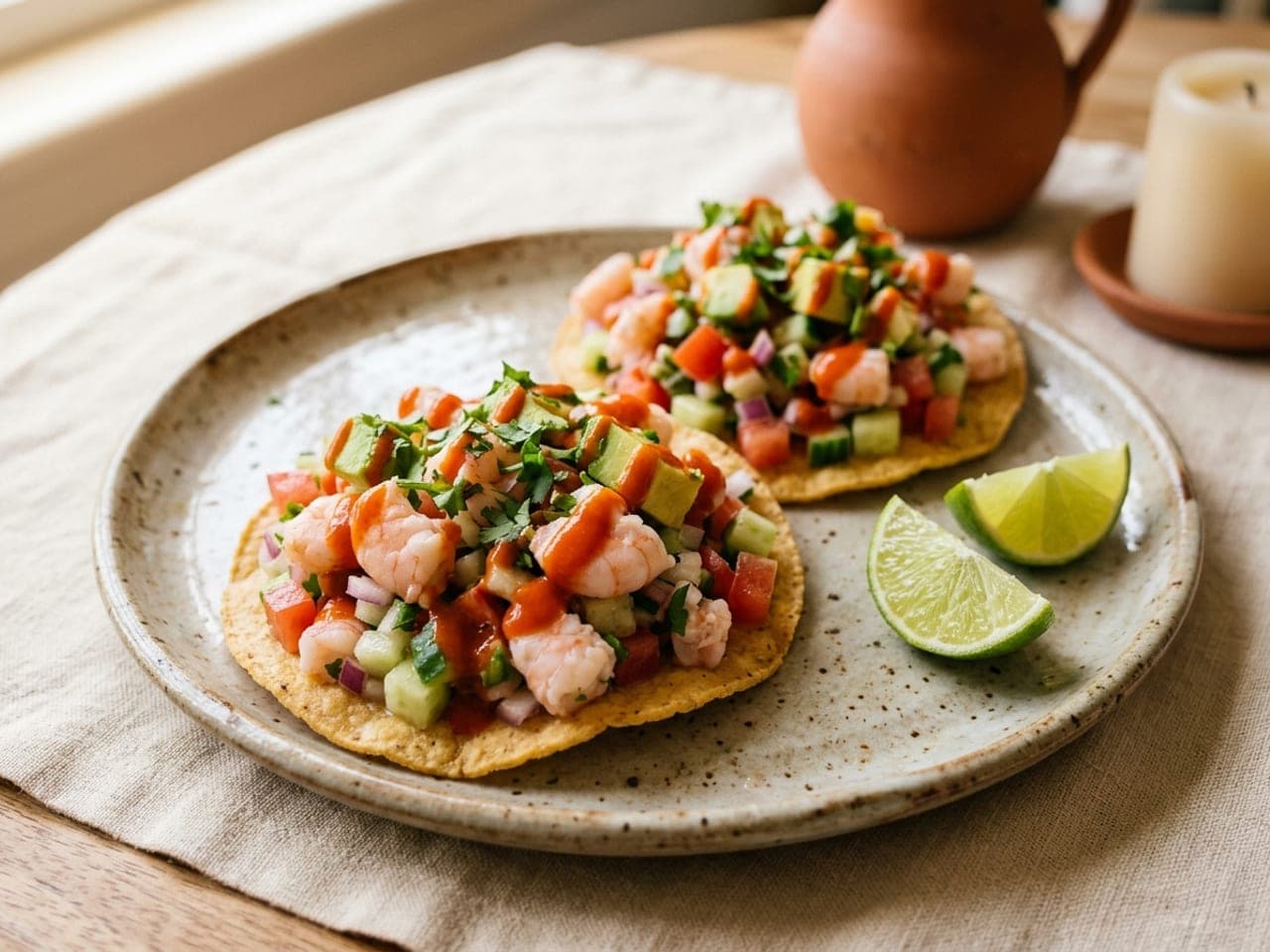
Ceviche de camarón the way the Mexican coast actually makes it: shrimp poached for one minute — not lime-“cooked” raw — then marinated in lime and folded chunky with tomato, cucumber, red onion, serrano and avocado, piled onto tostadas with a shake of bottled hot sauce. The poach is not a compromise; it is the tradition, and it makes this the ceviche you can serve to anyone.
Ingredients
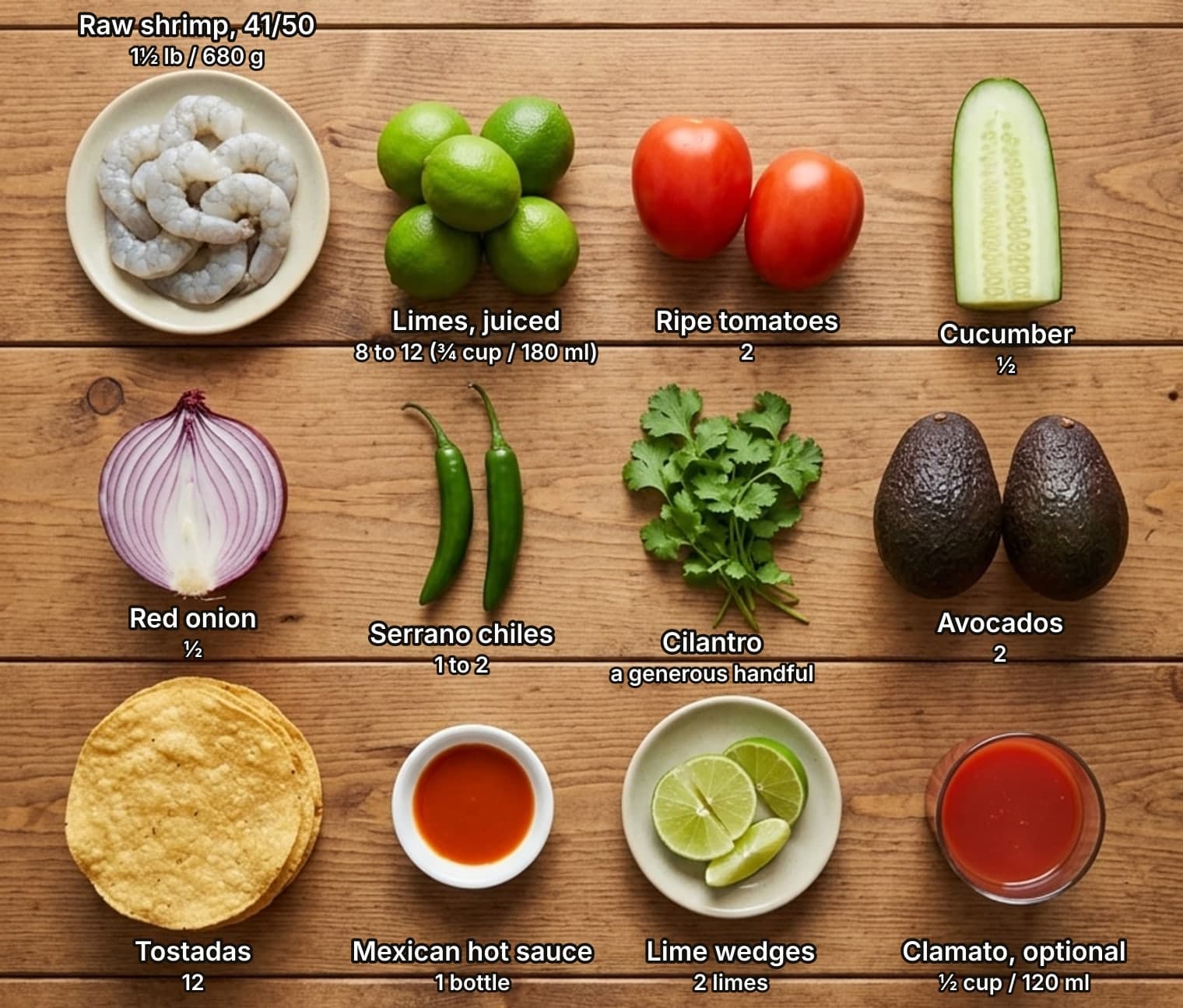
- raw shrimp, peeled and deveined (41/50), frozen and thawed1½ lb / 680 g
- limes8–12 (¾ cup / 180 ml juice)
- ripe tomatoes, seeded and diced2
- cucumber, peeled, seeded, diced½
- red onion, finely chopped and rinsed½
- serrano chiles, minced (or 2 jalapeños)1–2
- cilantro (fresh coriander), choppeda generous handful
- avocados, cubed, folded in last2
- fine salt½ tsp, plus more to taste
- tostadas (crisp fried corn tortillas), to serve12
- Mexican bottled hot sauce, for the table1 bottle
- lime wedges, to serve2 limes
- Clamato or tomato juice — optional, cocktel style½ cup / 120 ml
Cooked shrimp is the tradition, not the training wheels
There is a quiet assumption in food media that “real” ceviche means raw seafood and anything cooked is a concession to squeamishness. The Mexican coast disagrees. Ceviche de camarón as served in Sinaloa, Nayarit and Baja is very commonly made with shrimp that have met real heat — a brief boil or a steam — before their lime bath, for reasons that have nothing to do with timidity. Shrimp are not fish: their muscle structure turns pleasantly snappy with a flash of heat, where acid alone leaves them slippery and mealy in a way plenty of people quietly dislike but assume is the price of authenticity.
The safety logic points the same direction. Raw warm-water shrimp are one of the more genuinely risky raw proteins — Vibrio thrives in exactly the waters most shrimp come from, and lime juice, whatever the folklore says, does not sterilise anything. A sixty-second poach solves the problem entirely and costs close to nothing. The one place raw shrimp genuinely earns its keep is aguachile, where impeccable, just-thawed shrimp meet chile and lime and are eaten within minutes — that dish has its own page here, with its own rules. For a big bowl that sits on a summer table while people go back for thirds, poached is not the safe version of the real thing. It is the real thing.
How to make Shrimp ceviche
- Buy shrimp that were frozen, on purpose. You need 1½ lb (680 g) of raw shrimp, peeled and deveined — medium (41/50 count) are ideal because they end up in spoonable pieces. Frozen-and-thawed is not the fallback here, it is the correct buy: nearly all shrimp is frozen at source anyway, and the freeze matters for safety with any dish this lightly cooked. Thaw overnight in the fridge, never on the counter.
- Poach for sixty to ninety seconds — that is all. Bring a pot of well-salted water to a rolling boil, drop in the shrimp, and pull them the moment they curl loosely and turn opaque-pink — 60 to 90 seconds, before the water even fully reboils. A loose C-shape means done; a tight O means overcooked. Straight into a big bowl of iced water to stop the cooking dead.
- Why poached, said once and clearly. This is not the timid version. On the Mexican coast, ceviche de camarón is routinely made with briefly cooked shrimp — shrimp's texture actually improves with a flash of real heat, unlike fish, and raw Gulf shrimp carry a genuine Vibrio risk that lime juice does absolutely nothing about. The one-minute poach costs you nothing in flavour and buys you a dish everyone at the table can eat. (For the raw-shrimp experience done properly, that is our aguachile page.)
- Cut the shrimp, then marinate them properly. Drain the shrimp, pat them dry, and cut each into 2–3 pieces. Toss with ¾ cup (180 ml) of fresh lime juice (8–12 limes) and ½ tsp of salt in a glass or ceramic bowl, cover, and refrigerate for 20–30 minutes. Already-cooked shrimp still take the marinade — the lime firms them slightly, seasons them through, and starts the juice that makes the bottom of the bowl worth drinking.
- Chop the vegetables while it sits. Dice 2 ripe tomatoes (seeds shaken out so the mix stays chunky, not soupy) and ½ a cucumber, peeled and seeded. Chop ½ a red onion fine and rinse it briefly under cold water to soften the sting. Mince 1–2 serranos (jalapeño for milder heat), and chop a generous handful of cilantro (fresh coriander). Everything should be roughly the size of a shrimp piece — this is a chunky dish that eats with a spoon.
- Fold it together, then taste like you mean it. Add the vegetables to the shrimp and their juice and fold gently. Now taste: it should be bright to the point of insolence, then salty, then hot. Adjust salt first, chile second. If you want the Sinaloa cocktail direction — a splash of Clamato or tomato juice and a spoon of ketchup for a rosier, sweeter mix — this is the moment; it is common on the coast and entirely optional here.
- Avocado last, always. Cube 2 avocados and fold them in with two strokes, no more, just before serving. Added earlier they slick the whole mix green and disintegrate; added last they stay in creamy islands that cool the chile down. A final scatter of cilantro on top.
- Serve on tostadas, cold, with the bottle on the table. Spoon generously onto tostadas (crisp fried corn tortillas — bagged ones from a Latin grocer or lightly oiled tortillas baked at 400°F / 200°C until crisp), or into chilled glasses with tortilla chips. A bottle of Mexican hot sauce and extra lime wedges go on the table, not in the bowl — the last adjustments belong to the eater. Cold beer is not optional equipment.
Safety & hygiene Important
- Raw shrimp and Vibrio — the risk the lime cannot touch. Warm-water raw shrimp are a known carrier of Vibrio bacteria, and citric acid does not reliably kill it — studies on ceviche marinades show reduction, not elimination. That is why this recipe poaches: 60–90 seconds at a rolling boil takes shrimp safely past the danger while barely registering in the texture. If you do go raw, use commercially frozen shrimp, keep them ice-cold, and know who is at your table.
- The two-hour window, shortened in summer. A bowl of ceviche at a barbecue is bacteria's favourite dish: protein, moisture, and a warm afternoon. Standard rule is two hours maximum out of refrigeration, one hour above 90°F (32°C) — and in practice, serve it from a bowl nested in ice and put leftovers back in the fridge immediately. The lime juice slows nothing meaningfully once the temperature climbs.
- Who gets the poached version — everyone, conveniently. Because the shrimp are genuinely cooked, this ceviche is the one raw-ish seafood dish that pregnant guests and cautious eaters can share — provided you kept the poach honest (fully opaque, no translucent centres) and the cold chain tight. If anyone at the table is immunocompromised, skip the Clamato variation, which adds unpasteurised-style clam broth to the equation.
- Leftovers keep one day, barely. Poached-shrimp ceviche survives to the next day better than any raw version — the shrimp just firm up further in the lime — but the avocado browns and the vegetables weep. If you plan for leftovers, hold back the avocado from whatever portion you will keep, refrigerate below 40°F (4°C), and eat it within 24 hours, once, cold from the fridge.
3 ways to plate it
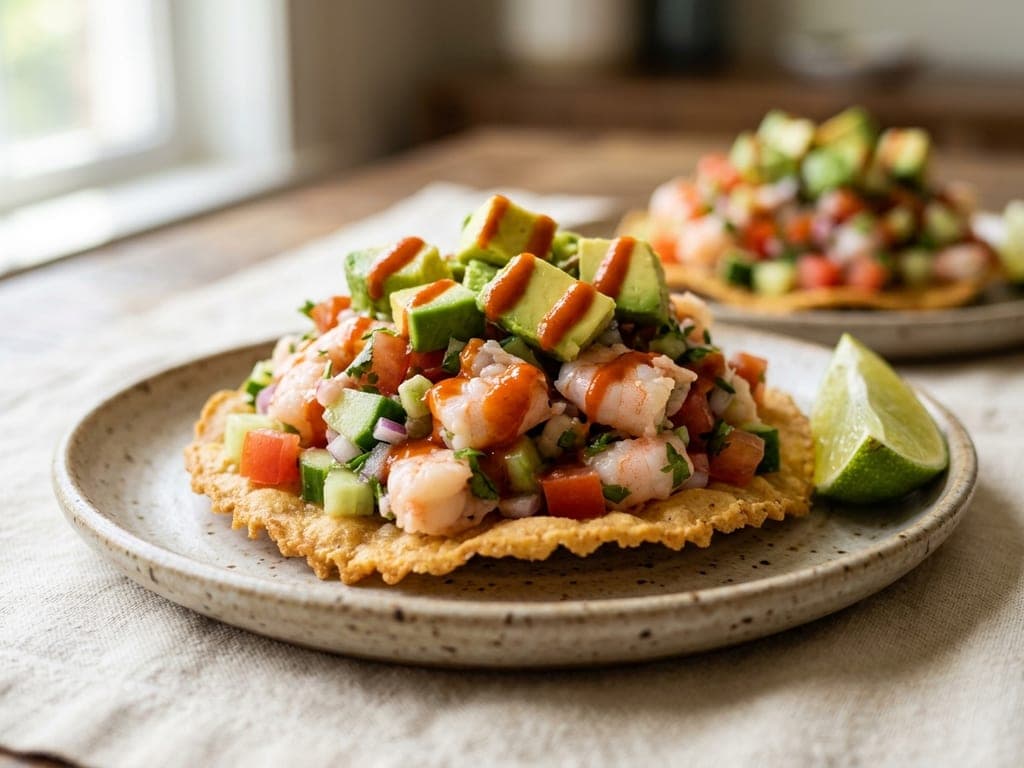
- Drain the ceviche with a slotted spoon as you build — a soaked tostada collapses in the hand and in the photo.
- Pile the mix a full inch high with the biggest shrimp pieces and avocado cubes placed on top where they can be seen.
- Stripe the hot sauce across in two quick passes at the very end; bottled-sauce orange against pink and green is the shot.
- Serve two to a plate with lime wedges and shoot within a minute — the crisp edge of the shell is the whole promise.
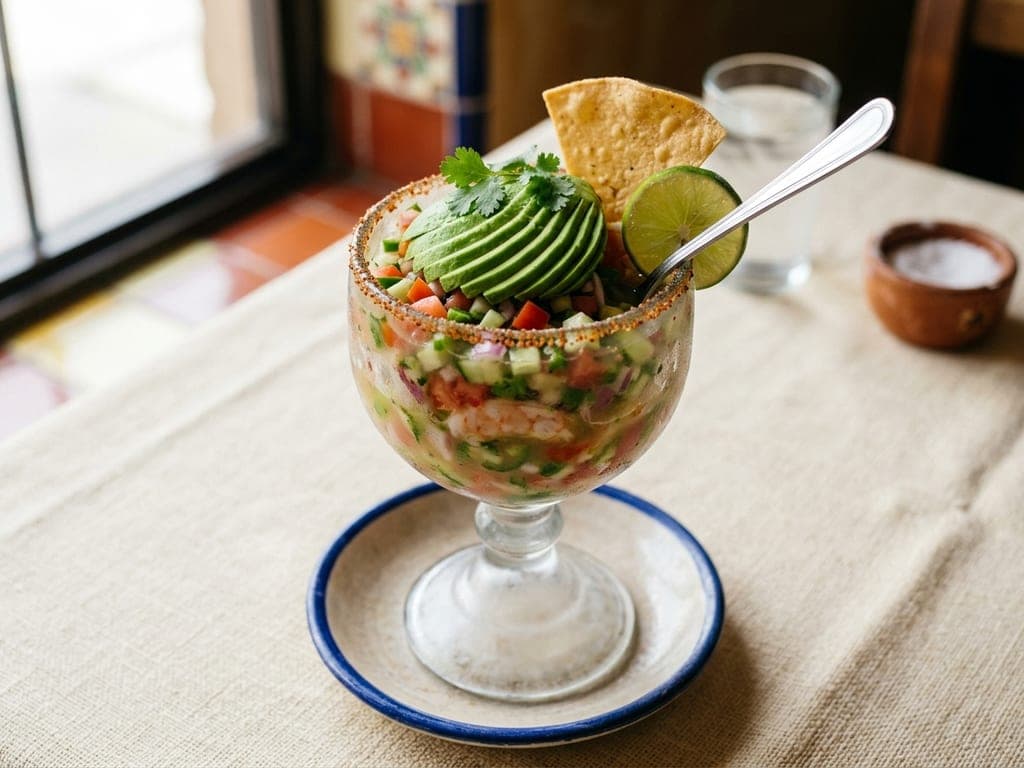
- Chill the glasses in the freezer for ten minutes first — frost on the outside is half the presentation.
- Spoon the ceviche in with its juice; unlike the tostada build, the glass format wants it saucy enough to drink at the bottom.
- Fan a quarter of an avocado across the top and add the chip and lime wheel to the rim just before it goes out.
- Stand a long spoon in the glass and serve on a small plate to catch drips — the ceremony is the point of this one.
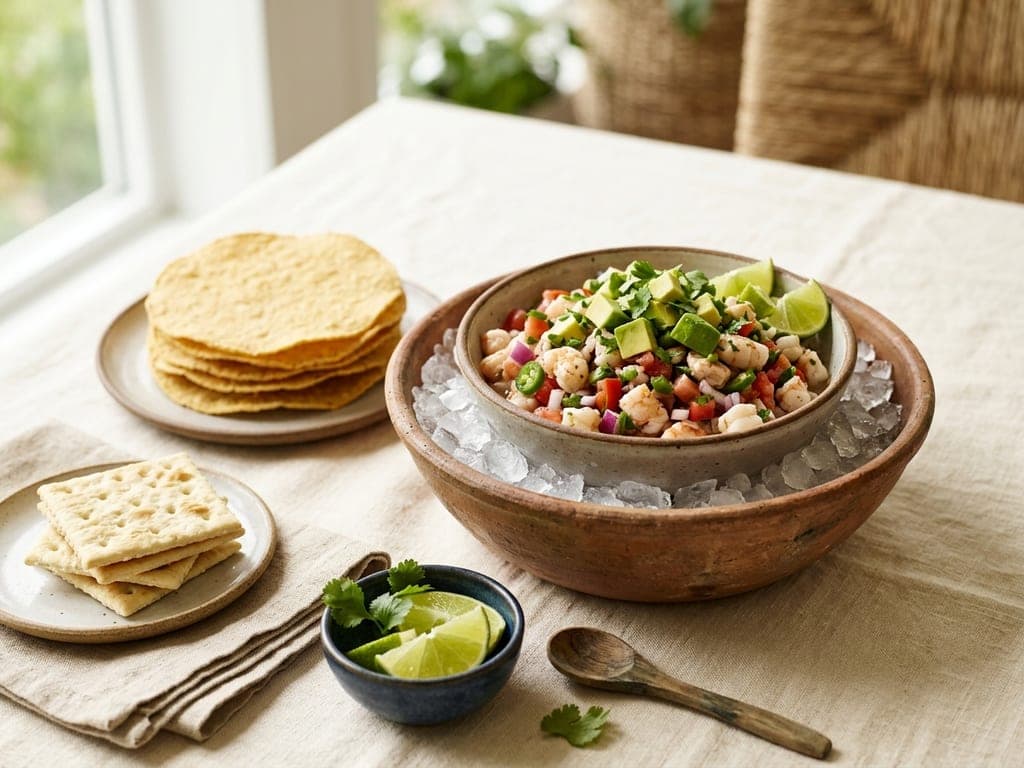
- Nest the serving bowl into a wider bowl packed with crushed ice — it keeps the ceviche safely cold for the length of a party and reads as generosity.
- Leave the surface chunky and unsmoothed, with cilantro scattered at the end; a levelled bowl looks like deli salad.
- Stack the tostadas and saltines to the side rather than around the rim, where they go soggy in minutes.
- Put out two hot sauces and a bowl of lime wedges and let people dress their own — the table becomes part of the dish.
The Clamato question, answered honestly
Ask ten Mexican home cooks about tomato in shrimp ceviche and you will get diced fresh tomato from all ten — and from a good number, especially in the northwest, a splash of something from a bottle as well: Clamato, plain tomato juice, sometimes a spoon of ketchup. This is the cocktel de camarones tradition bleeding into ceviche, and it produces the rosier, sweeter, saucier style you may know from Mexican seafood counters, often eaten with a spoon from a glass, with saltines.
Purists wince; the coast keeps pouring. The honest framing: fresh tomato is structural in this recipe, the bottled splash is a direction you can take it. Clamato brings brine and umami along with sweetness (it is tomato concentrate with dried clam broth and MSG — read the label, know what you are adding); plain tomato juice keeps it cleaner; ketchup is doing sugar's work. If you go that way, add a modest ½ cup (120 ml) after the marinade stage, cut the salt slightly, and call the result what it is — a cocktel-style ceviche, delicious on its own terms. If you skip it, the recipe as written is complete without it. Both bowls empty at the same speed.
Tostadas are the format, not the accessory
The rest of the ceviche family gets eaten off a fork or a spoon. The Mexican branch is built for architecture: a crisp fried tortilla, a thick layer of chunky ceviche, hot sauce shaken over, the whole thing eaten from the hand in four dripping bites and rebuilt immediately. The tostada is not a chip served alongside — it is the plate, and the reason this ceviche is cut chunky and folded thick. A watery, fine-diced mix soaks the shell to collapse before it reaches your mouth; a chunky one with its juice mostly drained stays crisp to the last bite. That is why the tomatoes lose their seeds and the avocado goes in last and barely folded.
Buy tostadas where you buy tortillas — any Latin grocer and increasingly the supermarket world-food aisle — or make them: brush corn tortillas lightly with oil and bake at 400°F (200°C) for 8–10 minutes until they snap. The other classic vehicle is the saltine cracker, straight from the sleeve, which sounds wrong and eats exactly right at a beach palapa. Chilled glasses with tortilla chips are the party format. However it is served, the hot-sauce bottle stays on the table — dressing the tostada is the eater's job, and half the pleasure.
Shopping notes for Europe
Shrimp: the freezer aisle is your friend, and “raw, peeled, deveined” is the phrase to look for — cold-water prawns are sweeter but tiny and pre-cooked, so buy warm-water raw shrimp (often labelled gambas or king prawns) around the 41/50 size. Thaw overnight in the fridge. Pre-cooked supermarket prawns technically work — skip the poach, marinate slightly longer — but their texture is softer and the dish loses its snap.
Tostadas hide in the world-food aisle or any Latin grocer; failing that, bake your own from corn tortillas as above. Serranos are increasingly common, and jalapeños universal — use two jalapeños where one serrano is called for and you land in the same place. “Hot sauce” here means the Mexican bottled style — vinegary, moderate heat, more tang than fire; any Latin grocer stocks the familiar brands, and a vinegary Louisiana-style sauce is nearer the mark than sriracha or habanero fire. Cilantro is the herb sold as fresh coriander, and Clamato, should you want the cocktel direction, is stocked by Latin grocers and the bigger supermarkets' drinks aisle — next to the michelada makings.
Questions, answered
Is the shrimp in ceviche raw or cooked?
In this Mexican-style recipe, cooked — poached 60–90 seconds, then marinated in lime for 20–30 minutes. That is standard practice for ceviche de camarón on the Mexican coast, it gives shrimp a better texture than acid alone, and it removes the Vibrio risk that raw shrimp genuinely carry. The raw-shrimp experience belongs to aguachile, which has its own page and its own safety rules.
Can lime juice cook raw shrimp safely?
It changes the texture — the acid firms and opacifies the flesh — but it does not kill bacteria, and raw warm-water shrimp are a real Vibrio carrier. No marinade time fixes that; only heat or scrupulous sourcing manages it. Sixty seconds in boiling water does what six hours of lime cannot, which is why this recipe poaches.
How long should shrimp ceviche marinate?
20–30 minutes for poached shrimp — enough for the lime to season them through and firm them pleasantly. Longer does no harm for a few hours but gradually turns them rubbery. If you used raw shrimp instead, the lime needs 45–60 minutes to fully opacify them, and the safety caveats on this page apply in full.
What is the difference between shrimp ceviche and aguachile?
Time, heat and temperature. Shrimp ceviche: cooked or cured shrimp, a 20–30-minute marinade, a chunky tomato-cucumber-avocado build, eaten cold off tostadas. Aguachile: raw butterflied shrimp, a fierce blended chile-lime water poured over at the table, eaten within minutes of the pour, no tomato anywhere. Same coastline, opposite philosophies — we keep a page for each.
Should I put Clamato or tomato juice in ceviche?
It is a legitimate regional direction, not a rule: the rosier cocktel-style ceviche of northwest Mexico often takes a splash of Clamato, tomato juice or even ketchup. Add about ½ cup (120 ml) after marinating and reduce the salt slightly. The recipe is complete without it; fresh diced tomato is the structural ingredient either way.
Can I use pre-cooked frozen shrimp?
Yes — skip the poach, thaw them, cut and marinate 30–40 minutes. The dish still works; you lose some snap because industrially cooked shrimp are softer, and you gain ten minutes. If you are buying specially, raw-and-frozen then home-poached is noticeably better and barely harder.
Why did my ceviche come out watery?
Tomato seeds, unseeded cucumber, and over-marinated vegetables are the usual culprits — the salt and lime pull water out of everything the longer they sit together. Seed the tomatoes and cucumber, fold the vegetables in only shortly before serving, and if serving on tostadas, lift the mix out with a slotted spoon and leave the (delicious, drinkable) excess juice in the bowl.
What do you serve shrimp ceviche on?
Tostadas first — the crisp fried tortilla is the traditional vehicle and the reason the mix is chunky. Saltine crackers are the unglamorous beach classic, tortilla chips the party fallback, chilled glasses the cocktel presentation. Hot sauce bottle and lime wedges on the table; cold lager alongside.
How far ahead can I make shrimp ceviche?
Poach and marinate the shrimp up to half a day ahead, refrigerated in their lime. Fold in the vegetables within an hour of serving and the avocado at the last moment — both weep and soften if they sit. Fully assembled leftovers keep 24 hours refrigerated, minus whatever avocado you failed to hold back.
How many calories in shrimp ceviche?
About 220 per serving as written (six generous glasses' worth) — shrimp are extremely lean, and the only real fat in the bowl is the avocado. Two piled tostadas add roughly 120–150 more depending on the brand. The Clamato variation adds sugar worth noting if you are counting closely.
Snap your finished plate and let the AI plate it again — more beautifully.