Tom Yum Recipe (Shrimp-Shell Broth, Clear or Creamy the Thai Way)
Thailand's hot-and-sour soup, built the Thai way: a ten-minute stock from the shrimp's own shells, a trio of bruised aromatics that flavor the broth and stay in the bowl, and the balance — fish sauce, lime, chile — struck off the heat at the very end. Comes in two moods, clear and creamy, and the creamy one holds a surprise most Western recipes miss.
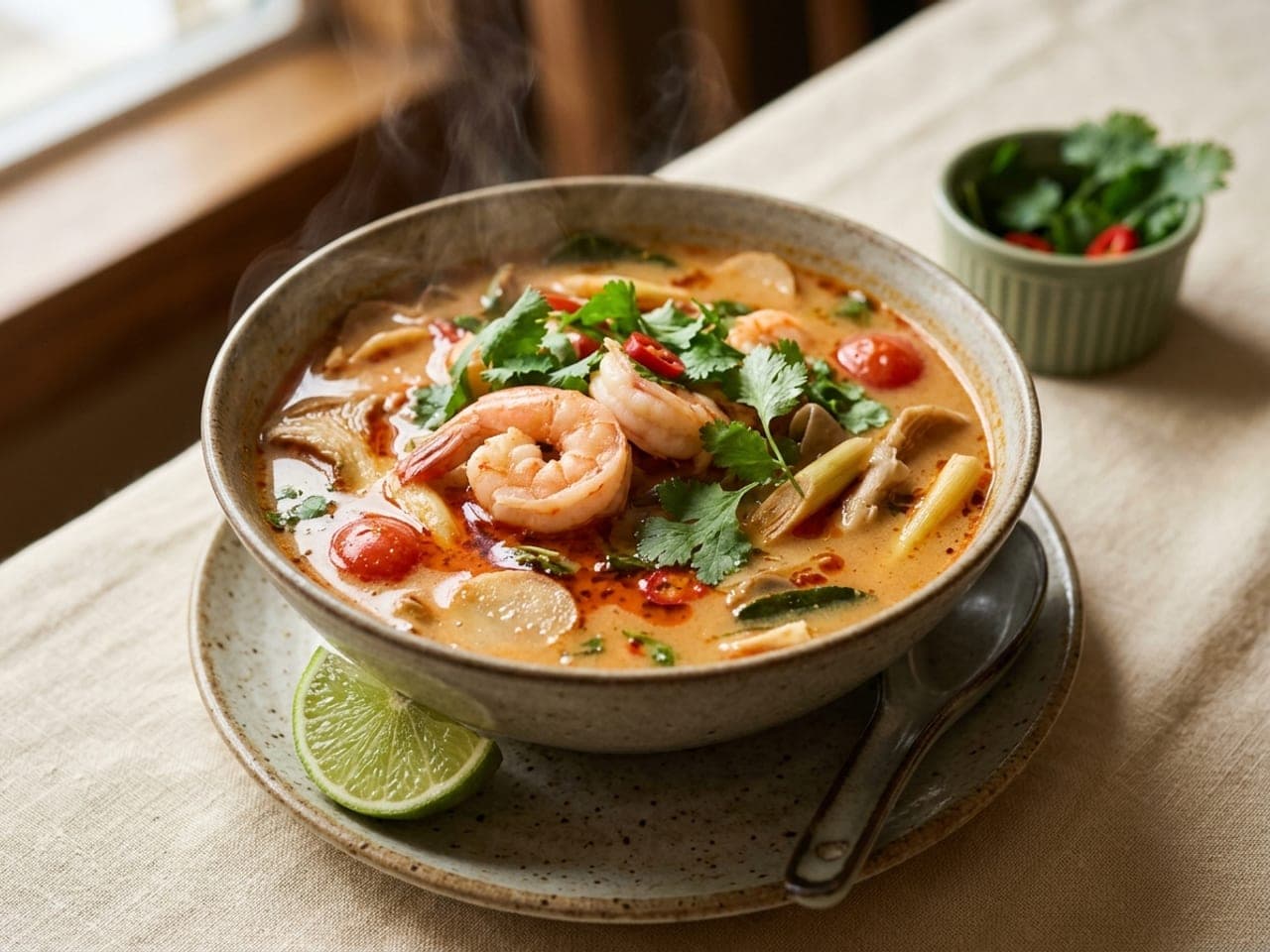
Ingredients
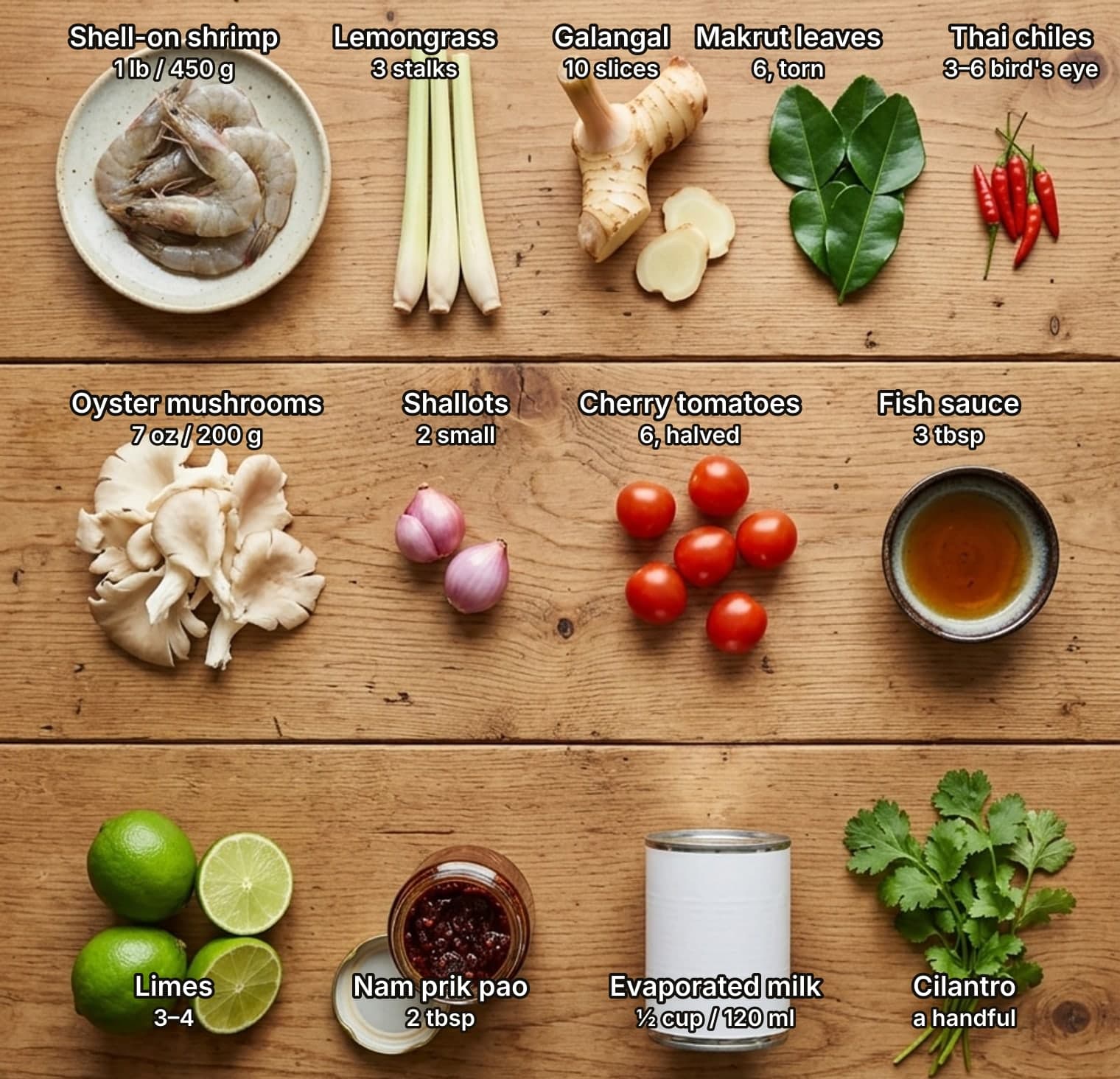
- large shell-on shrimp (sold as prawns in the UK and much of Europe), heads on if you can get them — the shells are the stock1 lb (450 g)
- water5 cups (1.2 L)
- neutral oil, for the shells1 tbsp
- lemongrass, bottom thirds, cut into 2-inch (5 cm) lengths and bruised3 stalks
- galangal, sliced into thin coins (fresh or thawed from frozen — see the shopping section before substituting ginger)10 thin slices, about 1 oz (25 g)
- makrut lime leaves, torn in half6
- Thai bird's eye chiles, lightly smashed — fewer for a gentler pot1–6 (3 makes a medium pot)
- oyster mushrooms, torn into bite-size pieces (or straw mushrooms from a can, halved)7 oz (200 g)
- shallots, halved and thickly sliced (or white onion wedges, the street-version habit) — optional2 small
- cherry tomatoes, halved (optional but common)6
- fish sauce3 tbsp
- fresh lime juice — 3 to 4 limes; added off the heat1/4 cup (60 ml)
- nam prik pao (Thai chili jam) — essential for the creamy version, excellent in the clear one1–4 tbsp — 1–2 for clear, 3–4 for creamy
- evaporated milk — for the creamy (nam khon) version only1/2 cup (120 ml)
- cilantro (fresh coriander), roughly choppeda handful
- sugar (only if your limes run harsh)a pinch
What tom yum is (and the two soups it actually is)
Tom yum — ต้มยำ: tom for boiling, yum for the hot-sour-salty flavor logic that also governs Thailand's yum salads — is Thailand's most famous soup and one of its national dishes — UNESCO inscribed tom yum kung on its intangible cultural heritage list in December 2024 — a broth built on lemongrass, galangal and makrut lime leaves, sharpened with lime and fish sauce, and heated with bird's eye chiles. The version the world knows is tom yum goong, with shrimp — goong — and it's the version this page teaches, because the shrimp bring their own stock with them. Chicken (tom yum gai), mixed seafood (tom yum talay) and other variants run on the same aromatic chassis.
The soup splits into two legitimate moods, and knowing both doubles your repertoire for free. Tom yum nam sai is the clear version: translucent, light, aggressively bright — the broth in its purest form. Tom yum nam khon is the creamy one: enriched until it turns a peachy, sunset orange. Here's the detail most Western recipes fumble: the traditional enrichment in Thailand is evaporated milk — a can-aisle staple of Thai coffee-shop culture since mid-century, though the creamy tom yum built on it is younger, dating to around the 1980s — plus a generous spoon of nam prik pao, not coconut milk. Coconut-milk tom yum drifts toward tom kha, a different (and gentler) soup with its own name and its own agenda. This page's recipe makes the clear version by default and turns creamy with two pantry moves at the end.
One more identity note: tom yum's fire is supposed to be negotiable. Thai cooks scale the chiles to the table, not to a standard — three smashed chiles makes a pot most spice-tolerant Westerners enjoy, six makes it Thai-street honest, and one, lightly smashed and fished out early, still perfumes the broth. Scaling down isn't inauthentic; it's exactly what a Thai cook feeding mixed company does.
How to make Tom Yum
- Peel the shrimp and keep every shell. Peel the shrimp, saving every shell and head in a bowl, and set the meat aside in the fridge — it won't be needed for another twenty minutes. Devein the shrimp if the veins are dark and gritty. This division of labor is the whole recipe in miniature: the shells carry most of the shrimp's flavor, and tom yum's broth gets its depth from them, not from a cube. (Bought peeled shrimp anyway? The honest fallback is in the FAQ — the soup survives, a little politer.)
- Fry the shells, then drown them. Heat 1 tbsp neutral oil in your soup pot over medium-high heat and fry the shells and heads, stirring, for 2–3 minutes until they turn coral-pink and smell like a seaside grill — pressing the heads with the spoon to release their juices, which is where the deepest flavor lives. Pour in the 5 cups (1.2 L) of water, bring to a boil, and simmer uncovered for 10 minutes. That's the stock: ten minutes, one pot, no skill required, and it outperforms any cube or carton for this soup by an embarrassing margin.
- Bruise the aromatics — they need to be hurt to be useful. While the stock simmers, prepare the herb trio: cut the lemongrass bottoms into 2-inch (5 cm) lengths and smash each piece with the flat of your knife until it splits and frays; slice the galangal into thin coins; tear the makrut lime leaves in half, discarding the center stem. Bruising isn't ceremony — these aromatics are woody and keep their oils locked up until the cell walls break. Smash the chiles the same way: lightly, so they season the broth without disintegrating into pure fire.
- Strain, then steep the trio. Strain the stock through a sieve into a bowl, discard the shells, and return the coral-tinted liquid to the pot over medium heat. Add the lemongrass, galangal, lime leaves and chiles and simmer gently for 5 minutes — long enough for the broth to smell like a Thai kitchen, short enough that nothing turns bitter. The aromatics now stay in the pot for the soup's whole life, and into the bowls beyond it: they're infrastructure, not food, and the etiquette section settles what to do with them at the table.
- Mushrooms and shallots first, they need the minutes. Add the mushrooms (canned straw mushrooms are authentic Thai-restaurant practice, not a compromise), shallots or onion, and tomatoes (both optional) and simmer for 3–4 minutes, until the mushrooms have wilted into the broth and the tomatoes have just slumped. Stir in the nam prik pao now — 1–2 tbsp for a clear pot, 3–4 tbsp if you're going creamy, where it's mandatory, and even in the clear version it adds a roasted, faintly sweet depth and the soup's signature red-orange slick. The broth at this point should look glossy and smell loud; it is deliberately under-seasoned, because the balancing act comes last.
- Shrimp for two minutes — not one second of ten. Drop the peeled shrimp into the simmering broth and cook for about 2 minutes, just until they curl into loose commas and turn opaque pink throughout. Then kill the heat. Shrimp are the most overcooked protein in home kitchens and soup is where it happens fastest — they keep cooking in the hot broth after the burner is off, which is exactly the margin the recipe uses. A shrimp curled into a tight O is a shrimp that suffered; a loose C is the target.
- The balance happens off the heat. With the heat off, stir in the fish sauce, then the lime juice, then taste — and now adjust like a Thai cook: more lime if it doesn't make you sit up, more fish sauce if it tastes hollow, the pinch of sugar only if your limes are harsh rather than fragrant. Lime juice goes in off the heat for a reason: boiled lime turns flat and faintly bitter, and tom yum's whole personality is that bright, sharp top note riding over the aromatic broth. For the creamy nam khon version, stir the evaporated milk in now too, with the heat off, until the broth turns a peachy orange.
- Serve hot, aromatics and all. Ladle into bowls — aromatics included, they perfume the bowl to the last spoonful — and shower with cilantro. Serve with steamed jasmine rice on the side: in Thailand tom yum is part of a shared table, spooned over rice bite by bite, not a standalone starter, and eating it that way tames the heat and stretches the pot into a meal. Warn newcomers about the lemongrass batons and galangal coins, or fish them out before serving if your table prefers — the broth already has everything it needs from them.
Safety & hygiene Important
- Raw shrimp, shells included. The bowl that held raw shrimp, the board, the knife and your hands are on raw-seafood rules until hot soapy water says otherwise — the shell bowl included. (The sieve only ever meets cooked stock; wash it anyway, since it touches food you won't cook again.) Shrimp doneness is visual and fast: opaque throughout with no glassy grey centers, about 2 minutes at a simmer. Frozen shrimp are often the freshest choice and completely legitimate here — thaw them overnight in the fridge or under cold running water in a colander, never on the counter.
- Shellfish allergy travels in the broth. This soup IS crustacean shellfish, top to bottom: the broth is built from shrimp shells, so there is no picking-the-shrimp-out version for an allergic guest — the allergen is dissolved in every spoonful, and shrimp is a major allergen with severe potential. For a shellfish-free pot, build the same soup on chicken and chicken stock (tom yum gai is a real Thai dish, not a compromise) and check the nam prik pao label — many chili jams contain dried shrimp, and the fish sauce is anchovy, its own allergen for fish-allergic eaters. And two more allergen notes: the creamy version adds evaporated milk — a major allergen in its own right; the clear nam sai pot is the dairy-free one. For an allergic guest, the gai version wants a pot, ladle and utensils washed in hot soapy water before any shrimp work — and for a severe shellfish allergy, don't cook the shrimp version in the same kitchen at the same time: cooking steam can carry the allergen. A home kitchen reduces cross-contact; it can't certify against it.
- Chiles, steam and the leftover clock. Wash your hands after smashing bird's eye chiles — capsaicin transfers to eyes, contact lenses and small faces with total indifference to your intentions — and mind the first spoonful: soup holds heat longer than solid food, and a full ladle of just-off-the-boil broth is a scald. Leftovers cool fastest and safest in shallow containers, into the fridge within 2 hours (1 hour above 90°F/32°C), and keep 3–4 days; reheat the broth to a boil and hold returned shrimp in it until steaming hot through — 1–2 minutes, 165°F (74°C); yes, they toughen, and that trade is exactly why the make-ahead move in the FAQ stops the recipe before the shrimp go in. The lime fades in the fridge too: brighten leftovers with a fresh squeeze after reheating, off the heat, same as the first time.
3 ways to plate it
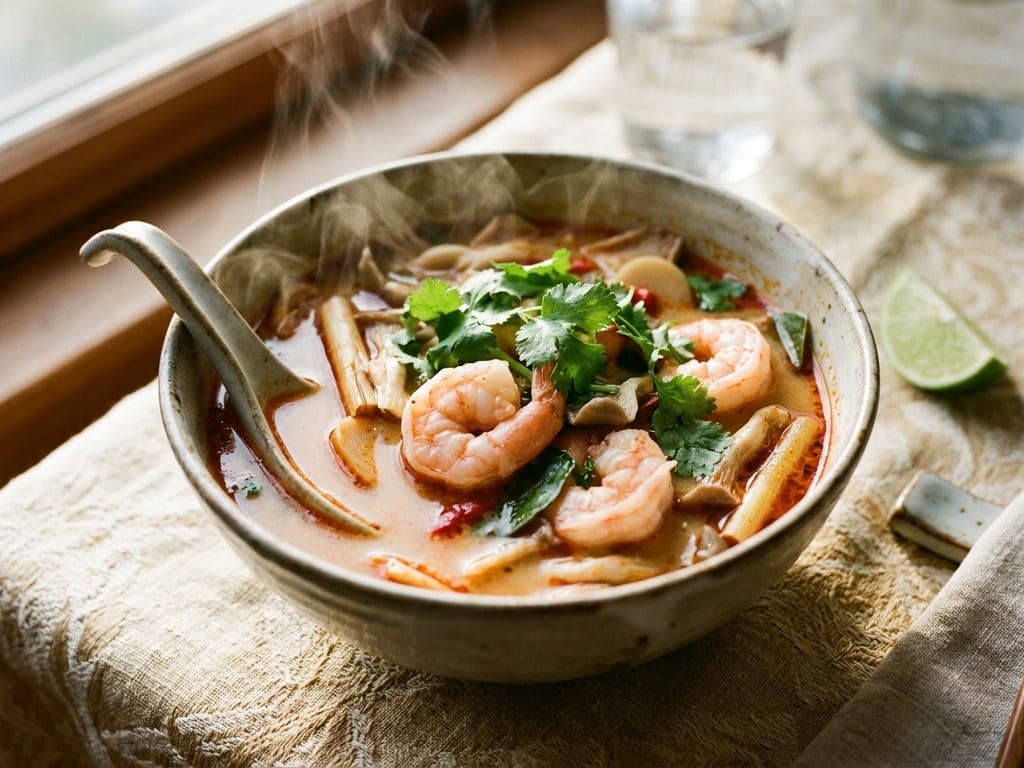
- Use a bowl with real depth — tom yum is mostly broth, and a shallow plate turns it into a puddle with shrimp in it.
- Ladle from the bottom up so every bowl gets mushrooms, shrimp AND aromatics — the lemongrass and galangal keep perfuming to the last spoonful.
- Let the nam prik pao's red-orange slick sit visible on the surface rather than stirring it in — it's the soup's signature and the first thing the nose meets.
- Finish each bowl with cilantro and serve with a lime wedge — some eaters want one extra squeeze, and the bowl should let them.
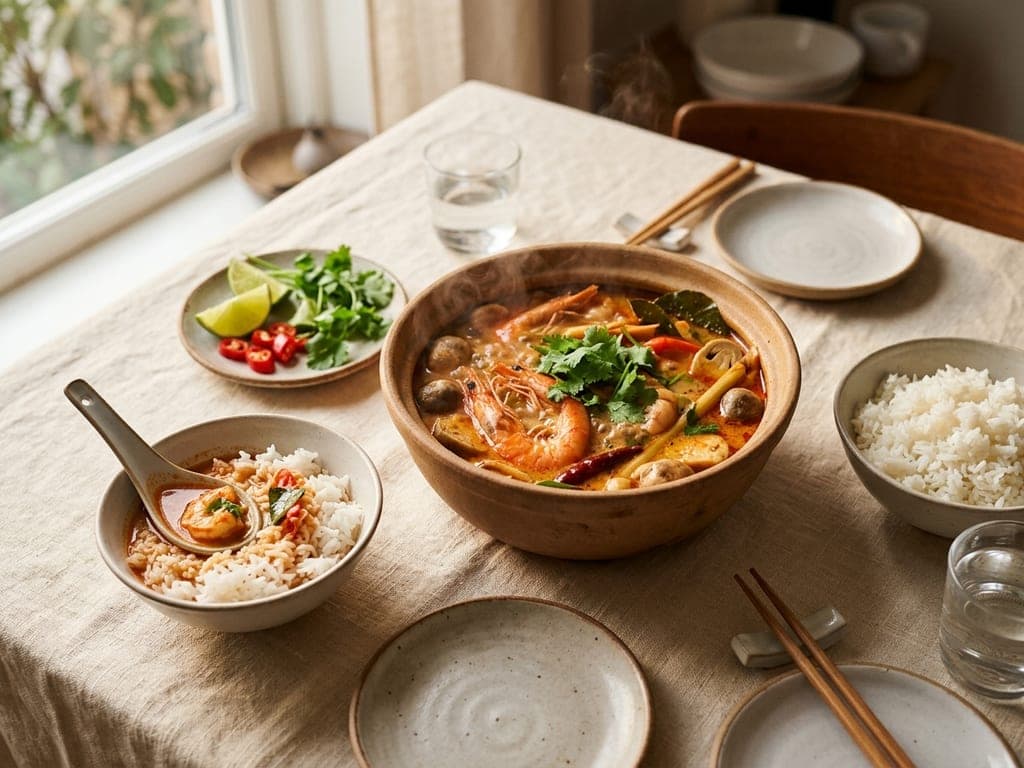
- Put the soup in one large bowl at the center and give every diner a small bowl of hot jasmine rice — the soup is shared, the rice is personal.
- Show the move once: a spoonful of broth and shrimp over your own rice, not rice dumped into the soup pot.
- Keep lime wedges and cilantro on a small plate so everyone tunes their own bowl.
- Pair it with one or two other dishes from the Thai shelf — a noodle stir-fry or satay skewers — and dinner becomes a table, not a course.
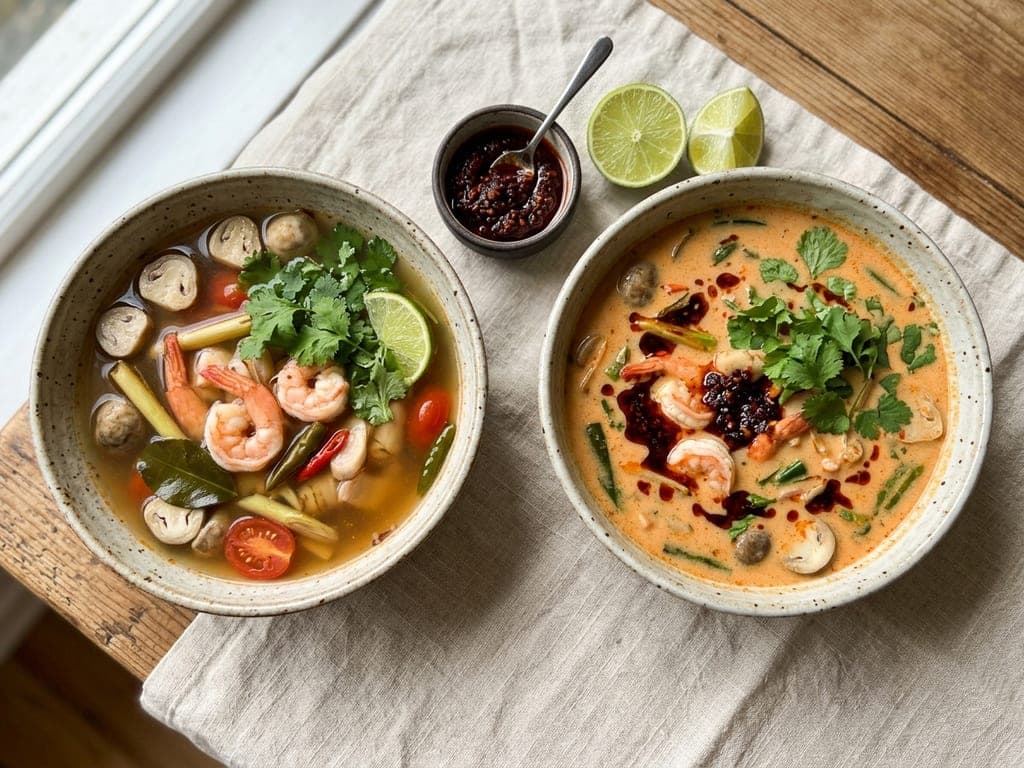
- Make the pot as the clear version, serve half, then turn the remainder creamy in the pot: nam prik pao plus evaporated milk, off the heat.
- Serve the two versions in matching bowls so the color difference — amber glass against sunset orange — does the explaining.
- Give each bowl its own cilantro and keep a small dish of nam prik pao between them for the eaters who want to push further.
- Tell the table the one-line story: same broth, and the creamy one is evaporated milk, not coconut — the fact everyone gets wrong.
The broth is the recipe: shells, the trio, and the off-heat finish
Every serious tom yum starts with the same open secret: the flavor is in the shells. Shrimp meat is texture; the shells and especially the heads carry the deep, sweet, roasted-ocean flavor, and frying them before the water goes in — two minutes, until coral and fragrant — converts the pot from 'shrimp-flavored water' to actual stock. This is why the recipe insists on shell-on shrimp and why the ten-minute stock outperforms any bouillon: the cube gives you salt and a vague marine idea; the shells give you the specific shrimp you're about to eat, twice. If your market only sells peeled shrimp, the fallback is real stock (fish or chicken) plus a slightly heavier hand of nam prik pao — different soup, still good, and honesty says so.
The herb trio is the soup's second engine, and it works on a principle Western soup logic doesn't use: the aromatics are infrastructure, not ingredients. Lemongrass batons, galangal coins and torn lime leaves are too woody and too intense to eat — they're bruised to crack their oils open, simmered to move those oils into the broth, and then left in the pot and the bowl, where they keep perfuming the soup to the last spoonful. At a Thai table nobody eats them; you spoon around them, the way you'd leave a bay leaf. Tell your table once and the mystery is solved forever. What you don't do is substitute freely: this trio IS tom yum, and the shopping section is blunt about what happens when ginger tries to stand in for galangal.
The third engine is timing: tom yum is balanced at the end, off the heat, every single time. Fish sauce and lime are not simmered into the soup — they're stirred into the finished broth, tasted, and corrected, because heat dulls lime into bitterness and because the balance point depends on your limes, your fish sauce and your tongue. The target is a three-way argument — sour slightly winning, salt right behind it, heat as the referee — and the pinch of sugar exists only to soften genuinely harsh citrus, not to make the soup sweet. If you take one habit from this page into all your cooking, take this one: acid finishes, it doesn't cook.
Shopping honestly: galangal, makrut, nam prik pao
Galangal is the hill this soup dies on, so here's the honest map. It looks like ginger's paler, harder cousin and tastes nothing like it — piney, citrusy, sharp-medicinal where ginger is warm and sweet-hot. Fresh galangal lives in Asian markets; the freezer aisle of the same markets carries sliced frozen galangal that's genuinely excellent (it's usually frozen fresher than the 'fresh' root travels); dried slices need a long soak and give maybe half the perfume. Ginger as a substitute doesn't ruin dinner, but it makes a different, vaguer soup — if ginger is truly your only option, use less of it and lean harder on the lemongrass and lime leaves. The same market trip solves everything else on this list: lemongrass, lime leaves, bird's eye chiles and nam prik pao in one basket, and all four freeze beautifully, which makes the second pot of tom yum a fifteen-minute affair. And if the whole trio is missing? The honest answer: this isn't the week — order the frozen aromatics online, cook something else tonight, and make tom yum when the bag arrives. No supermarket circuit of ginger and lime zest reconstructs the smell.
The lime leaves deserve their naming note: you'll see them sold as makrut lime leaves (bai makrut in Thai) and, on older packaging, under a k-word name that's now widely avoided — it's a slur in southern Africa, and the food world has been steadily moving to 'makrut' for years. Buy them fresh or frozen (dried ones are ghosts), tear them to release the oils, and freeze the spares flat in a bag; they keep their perfume for months. There is no substitute that does their job — regular lime zest, the internet's favorite, gives you citrus without the floral perfume that makes tom yum smell like tom yum — but a pot missing the leaves and leaning on extra lemongrass is still a soup worth eating.
Nam prik pao — Thai chili jam — is the quiet celebrity of this recipe: a dark, sticky paste of chiles, shallots and garlic roasted and ground with tamarind, palm sugar and usually dried shrimp. In the creamy nam khon version it's non-negotiable (it IS the color and half the flavor), and even in clear tom yum a spoonful adds roasted depth the raw aromatics can't reach. Mae Pranom and Pantai Norasingh are the classic brands; check the label if shellfish or fish allergies are at the table, because most jars contain dried shrimp. It keeps in the fridge for months and earns its space — spread on buttered toast, stirred into fried rice, whisked into dressings. Evaporated milk, finally: the unsweetened canned milk, not condensed — condensed milk is sugared and turns the soup into dessert by accident.
Questions, answered
What does tom yum mean, and what's the difference between tom yum and tom kha?
Tom means boiled; yum names the Thai family of hot-sour-salty flavor compositions — so tom yum is that flavor logic in soup form. Tom kha ('boiled galangal') is its gentler cousin: coconut-milk-based, milder, galangal-forward, usually with chicken. The practical line: tom yum is sharp, bright and brothy (even the creamy version uses evaporated milk, not coconut milk); if a recipe builds the soup on coconut milk, it's drifting into tom kha territory whatever the label says.
I can only find peeled shrimp — is the soup ruined?
Not ruined, just quieter. Build the broth on good chicken or fish stock instead of water, add an extra spoonful of nam prik pao for depth, and proceed exactly as written. The soup loses the specific sweet-roasted shrimp depth that shells provide and gains nothing — so if a shell-on bag exists in your store's freezer, choose it next time; frozen shell-on beats fresh peeled for this recipe every day.
Can I really not substitute ginger for galangal?
You can — with eyes open. Ginger is warm and sweet-hot where galangal is piney and sharp, so the soup comes out rounder and vaguer, more 'Asian soup' than tom yum. Use two-thirds the amount, lean harder on lemongrass and lime leaves, and call it what it is. Better plan: buy frozen sliced galangal once — it keeps for months and costs little — and the question retires itself.
Am I supposed to eat the lemongrass and galangal?
No — and neither do Thais. The lemongrass batons, galangal coins, lime leaves and smashed chiles are aromatics: bruised and simmered to flavor the broth, then left in the pot and bowl, where they keep perfuming the soup. You spoon around them like a bay leaf. If your table finds that stressful, fish them out before serving — the broth has already taken everything it needs — but leaving them in is the Thai presentation and keeps the bowl fragrant to the end.
Clear or creamy — which is more authentic?
Both, fully. Tom yum nam sai (clear) is the older, purer form; tom yum nam khon (creamy) is the street-stall favorite, enriched with evaporated milk and nam prik pao until it turns sunset orange. Neither outranks the other in Thailand. The non-classic move is building the cream from coconut milk — that's tom kha's tool (though some Thai cooks do reach for it as a dairy-free fallback), and it softens exactly the sharpness that makes tom yum itself.
How spicy is tom yum supposed to be, and how do I control it?
As spicy as the table wants — Thai cooks scale it to company, not to a standard. The heat comes from smashed bird's eye chiles (prik kee noo, 'mouse-dropping chiles', in Thai), and the control is mechanical: 1–2 chiles smashed lightly and fished out after the steep = fragrant warmth; 3–4 left in = properly hot; 6, roughly pounded = Bangkok street honest. The nam prik pao adds roasted depth but little fire. You cannot effectively un-spice the pot afterward, so err low — eaters can always crush a chile into their own bowl.
Can I make tom yum ahead, or freeze it?
The smart split: make the broth through the aromatic steep (step 4) up to 3 days ahead, or freeze it for 2 months — the flavors meld, though the bright top notes fade; refresh with a torn lime leaf when reheating, and the lime finish as always. Then reheat to a simmer and finish fresh: mushrooms, shrimp, and the off-heat balance take under ten minutes total. What doesn't hold is finished soup: refrigerated leftovers are safe for 3–4 days but the shrimp toughen on reheating and the lime goes flat (revive it with a fresh squeeze). Freeze broth, never the finished pot.
What do I serve with tom yum?
Steamed jasmine rice, always — in Thailand tom yum is a shared-table dish spooned over rice, not a Western-style starter, and the rice is the heat management system. For a fuller Thai table from this site's shelves: pad see ew or drunken noodles alongside, or chicken satay to start. A squeeze of lime and fresh cilantro at the table finish every bowl, and a cold lager forgives every chile decision.
Snap your finished plate and let the AI plate it again — more beautifully.