Teriyaki Marinade (Timing Table for Every Protein)
One cup of marinade, every protein timed: whisk soy, mirin, sake, brown sugar and aromatics in ten minutes, then follow the table — chicken gets hours, salmon gets minutes, and nothing gets more than two days. With the reserve-before-you-soak rule that solves the raw-marinade safety question, the freezer-bag meal-prep method, and the honest science of what a marinade can and cannot reach.
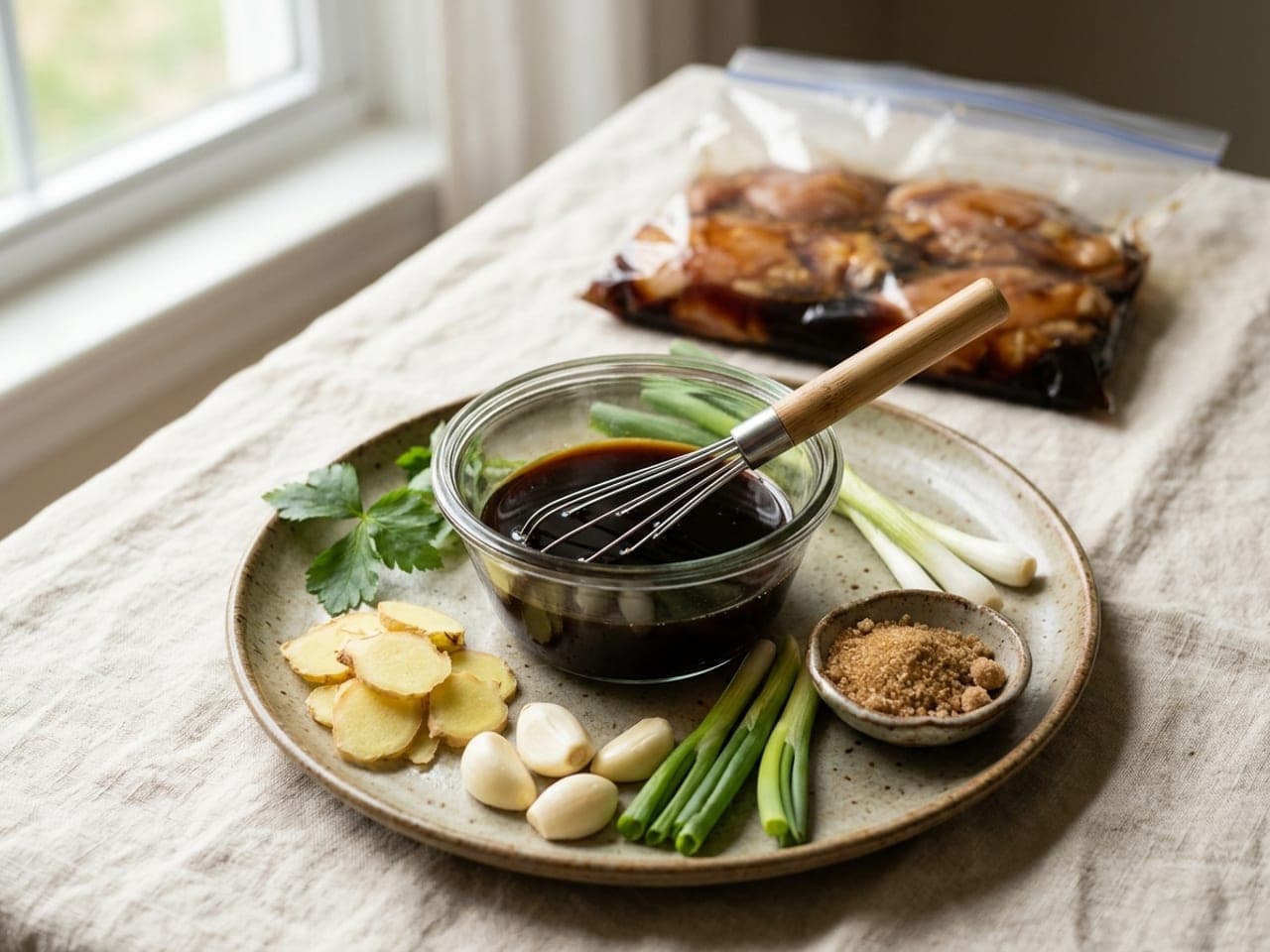
Ingredients
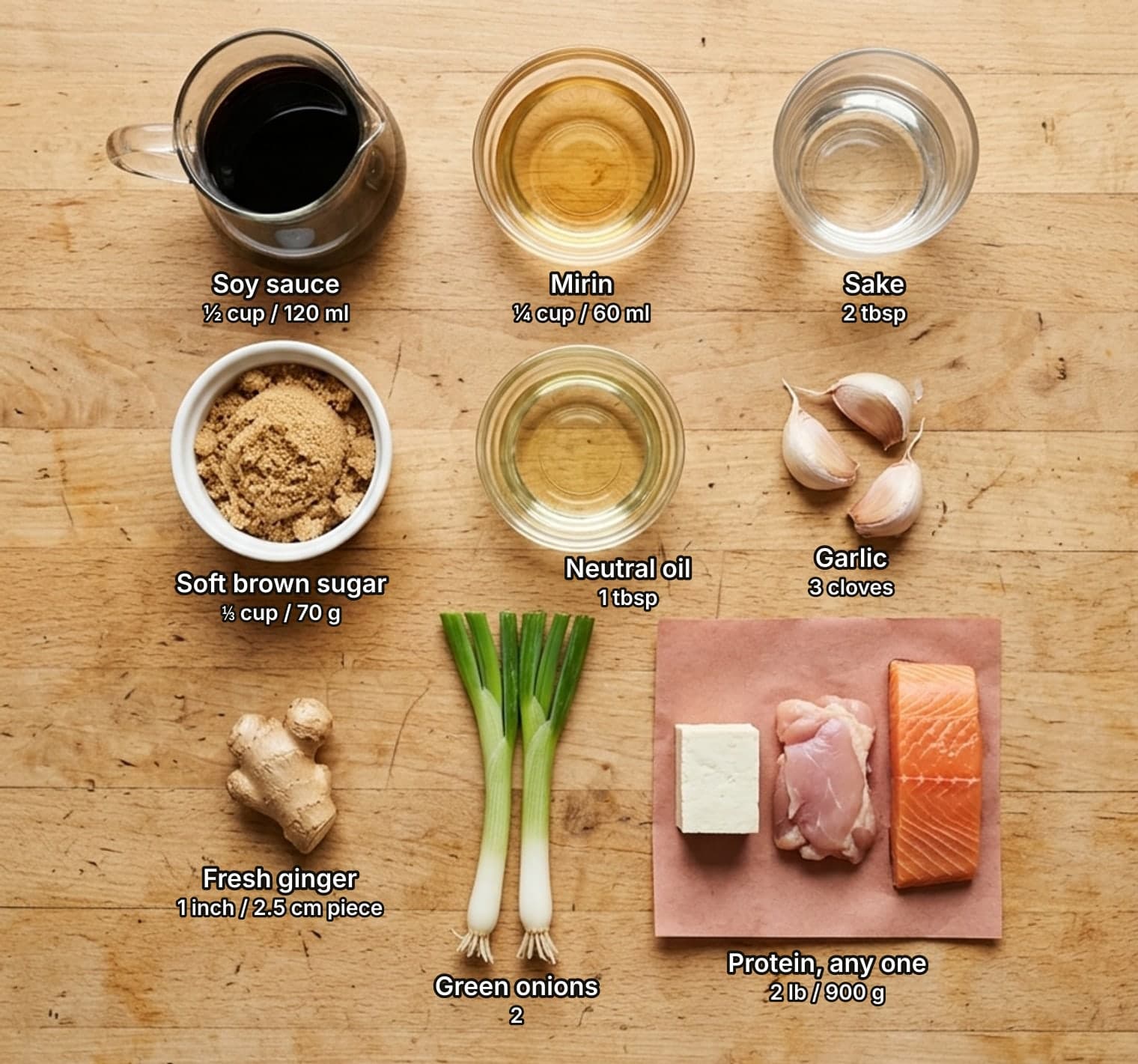
- soy sauce (Japanese all-purpose / koikuchi)½ cup / 120 ml
- mirin (supermarket mirin-style is fine here)¼ cup / 60 ml
- sake (or dry sherry)2 tbsp
- soft brown sugar⅓ cup / 70 g
- neutral oil1 tbsp
- garlic, smashed3 cloves
- fresh ginger, in coins1 inch / 2.5 cm piece
- green onions (spring onions), halved2
- protein of choice (tofu, chicken, beef, pork or salmon)2 lb / 900 g
Marinade or sauce? They’re different tools
One of the most-followed recipes on the internet is literally titled “marinade and sauce,” one liquid for both jobs — and that blur is worth undoing, because the difference is the whole craft. A marinade is raw, thin and salt-forward: it works before the heat, and it ends its life discarded or boiled. A teriyaki sauce is cooked, reduced and glossy: it finishes the dish, added in the pan’s last minutes or spooned over the plate. The starch test settles any bottle in your hand: thickened means sauce, and a thick sauce makes a poor soak — it clings to the surface, burns early, and never lets the salt through to do the real work.
The two jobs meet exactly once: reserve some marinade before it touches meat, reduce it in a pan while dinner cooks, and you’ve made a small batch of true sauce from the same bowl. Our teriyaki sauce page runs that side of the family — the jar that keeps for weeks — and the chicken and salmon pages show both tools working on an actual dinner.
How to make Teriyaki marinade
- Whisk the base. In a bowl, whisk ½ cup (120 ml) of soy sauce with ¼ cup (60 ml) of mirin, 2 tbsp of sake (or dry sherry), ⅓ cup (70 g) of soft brown sugar and 1 tbsp of neutral oil until the sugar dissolves. Add 3 smashed garlic cloves, a thumb of ginger — about 1 inch (2.5 cm) — in coins, and 2 green onions (spring onions), halved. Ten minutes, one bowl, no cooking.
- Reserve before anything raw. The single smartest move on this page: pour off a few tablespoons into a clean jar now, before any meat arrives. That reserved portion is your finishing sauce and basting glaze later — no boiling, no worry, because it never met raw protein. It’s the food-safety agencies’ own preferred method, and it costs you nothing.
- Portion it right. This batch — about 1 cup (240 ml) — marinates 2 lb (900 g) of protein; that ratio scales linearly in both directions. (The calorie count covers the whole batch: since most of the liquid is discarded or boiled off, what actually reaches your plate is closer to a third of it.) Use a food-grade zip bag or a glass or stainless dish: the bag needs less liquid and coats more evenly. Never aluminum, cast iron or copper — salt and acid pick fights with reactive metal, and the marinade picks up the flavor of losing.
- Time it by the protein. Chicken: 30 minutes already works, 2–24 hours is the sweet spot, 2 days is the hard ceiling. Beef and pork: 2–24 hours, with flank and skirt gaining the most. Salmon and any fish: 15–60 minutes, no more — salt and seasoning start curing thin fillets after that. Tofu and vegetables: 30 minutes to 4 hours. The full why-these-numbers table is in the sections below.
- In the fridge, always. Marinating happens in the refrigerator, never on the counter — soy is not a preservative and a marinating bag at room temperature is just a slow incubator. Set the bag flat on a plate (bags weep), and flip it once halfway so both faces get equal time in the liquid.
- Pat dry before the heat. Lift the protein out, let the excess drip off, and pat the surface dry with paper towels. Wet marinade steams instead of searing, and the sugar in the clingy layer is a burn waiting to happen. Drying feels like undoing your work; it isn’t — the flavor that matters has already moved in.
- Cook over middle heat, glaze late. Marinated meat cooks over medium or indirect heat, not the hottest part of the grill — a sugared surface starts scorching from about 265°F (130°C), well below where clean caramel even begins. In the last 10 minutes on the grill (in a pan, glazing is the last 2–3 minutes — see the chicken and salmon pages below), brush with the reserved never-touched-raw portion and let it set into a lacquer. Chicken cooks to 165°F (74°C); the full doneness numbers live on the chicken and salmon pages below.
- The used marinade decision. The liquid left in the bag has raw-meat juices through it. The strict answer is the bin. The salvage answer: pour it into a saucepan, bring it to a full rolling boil and keep it there 3–5 minutes, and it becomes a safe sauce — thinner than the jar version, but honest. What it can never become is a brush-on for cooked food without that boil.
- Or freeze the whole future dinner. The meal-prep move this marinade was born for: combine chicken and marinade in a freezer bag on day one, press the air out, freeze flat. It marinates as it thaws overnight in the fridge — the soak and the defrost are the same step. Three months of quality window, dated in marker on the bag. One exception: never fish, whose one-hour marinating ceiling is blown long before the thaw ends.
Safety & hygiene Important
- Used marinade is raw-chicken juice. Never spoon, brush or serve marinade that held raw meat unless it has had a full rolling boil for 3–5 minutes first — and the strictest official guidance is simpler still: don’t save it at all. The clean solution is upstream: reserve a portion before the meat goes in, and let the bag’s share do its one job and retire.
- Two days is the poultry ceiling. Chicken in a marinade keeps at most 2 days in the refrigerator — a limit some popular recipes cheerfully exceed. Past it, safety erodes and so does texture, as salt keeps curing the surface toward mush. Beef and pork tolerate the clock better, but nothing on this page improves after 24 hours.
- The counter is not a marinating station. Marinate in the fridge, full stop, and get the bag back in within the 2-hour room-temperature rule (1 hour on a hot day) any time it comes out. A sweet, salty liquid at kitchen temperature is growth medium with good branding.
- Frozen-in-marinade still follows the rules. Thaw marinade-frozen bags overnight in the refrigerator — never on the counter, never in warm water. Once thawed, cook within a day, discard the liquid (or boil it properly), and don’t refreeze raw. The freezer pauses every clock; it doesn’t reset any of them.
3 ways to plate it
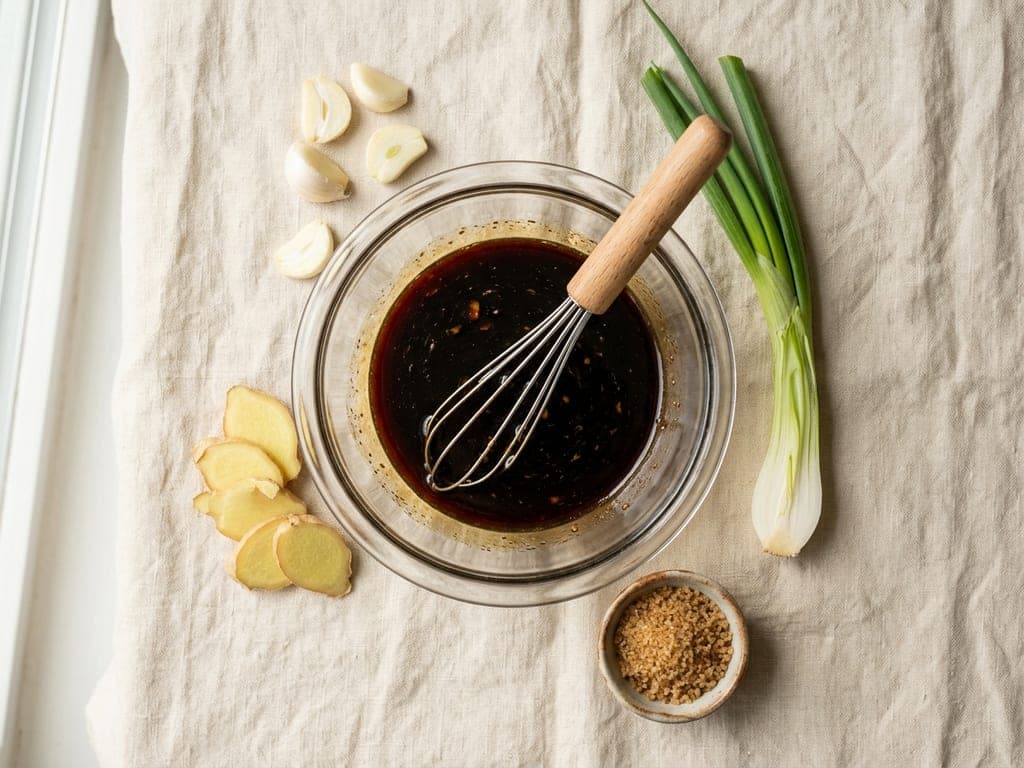
- Use a glass bowl — the marinade’s dark gloss against glass reads intentional where a steel bowl reads like prep.
- Leave the whisk resting in the bowl, handle angled out of the frame; a tool mid-task keeps a still image from going flat.
- Arrange the aromatics in loose, separated groups around the bowl — coins of ginger fanned, garlic together, the green onions laid long.
- Keep one herb leaf or green top trailing casually; styled-but-alive beats symmetrical every time.
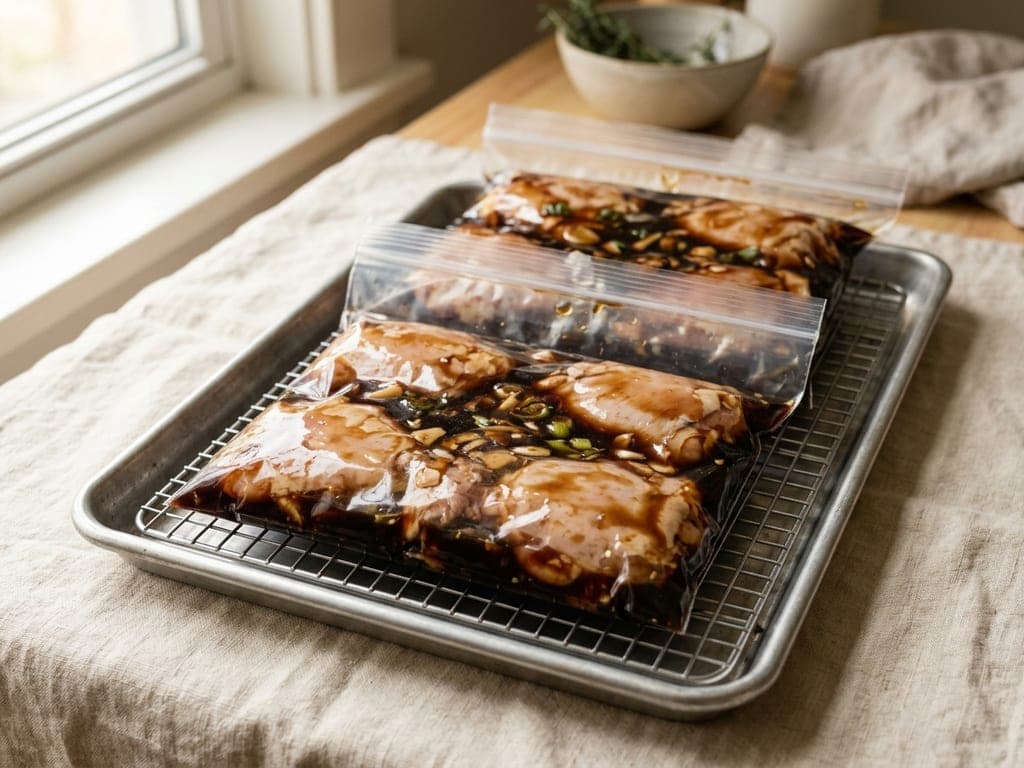
- Lay the bags side by side rather than piled, then press each flat and chase the air out before the final seal — flat bags freeze faster and stack cleaner later.
- Stage them on a rimmed metal tray or rack; it’s the real food-safety practice (bags weep) doubling as the composition’s frame.
- Let the marinade pool around the chicken so the pieces read glazed, not drowned — half a cup per bag shows; two cups hides.
- Keep the bags unprinted and the seal lines straight; the plainness is the aesthetic.
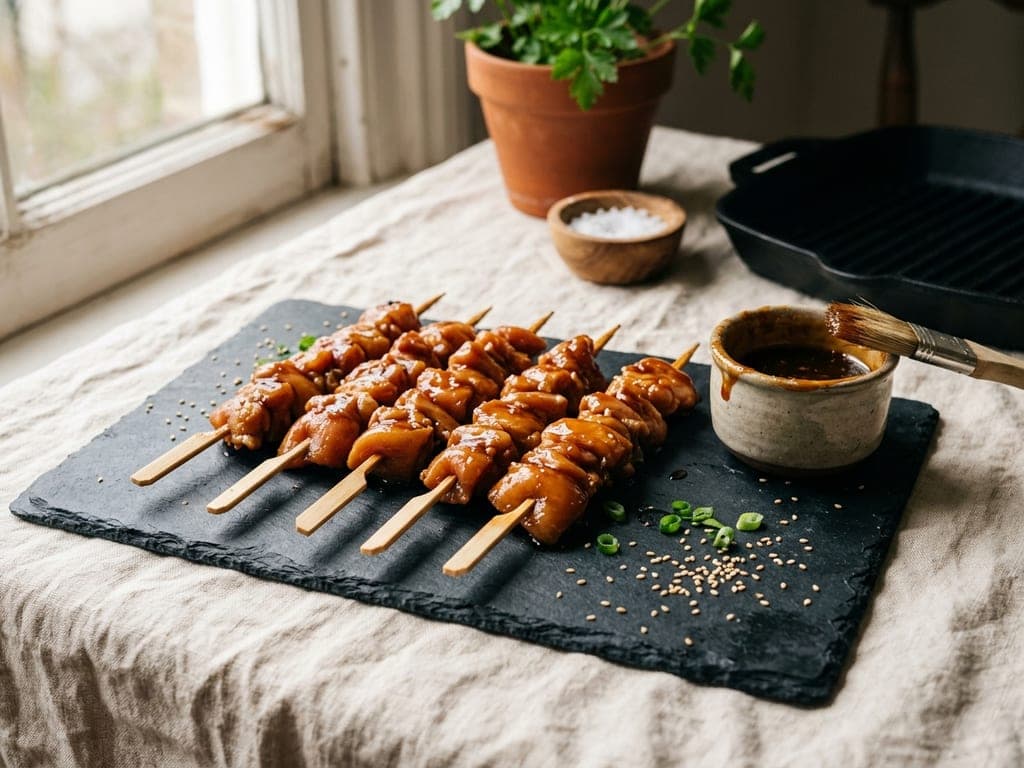
- Thread the pieces snug but not crushed — gaps read sloppy, compression cooks unevenly; the skewer line does the geometry.
- Line the skewers up in parallel on dark slate, handles toward the diner, points away.
- Set the reserved glaze in a small dish with the brush resting against it — the safe-sauce story told as a prop.
- Scatter a pinch of sesame across the skewers and the slate — a light hand here, since the finished dish gets the real shower.
What a marinade actually reaches
Kitchen honesty, measured: flavor molecules barely penetrate meat. Careful testing has shown marinade flavors reaching less than a millimeter deep even after many hours — garlic, ginger and sugar are simply too large to travel between muscle fibers. The one real traveler is salt, which migrates by diffusion and seasons genuinely deep given hours; soy sauce is, usefully, a salt delivery system with flavor attached. Everything else forms a seasoned coat on the surface — a glaze-in-waiting that caramelizes when the heat arrives. That’s not a failure; it’s the design. Season deep with salt, coat the surface with everything else, and let the fire finish the argument.
This is also why the timing table is shaped the way it is. Thirty minutes already does most of what marinating can do for a thin cut; hours help the salt work deeper into chicken thighs or flank steak; days help nothing and start curing the surface into mush. And it’s why fish gets minutes, not hours — thin, delicate flesh takes salt fast, and past the hour mark you’re not marinating salmon, you’re slowly making it mushy. Match the soak to the protein’s thickness, not to your schedule.
Sugar meets fire
Every burnt teriyaki skewer has the same autopsy: a sugared surface starts scorching on the grate from around 265°F (130°C) — well below the 320°F (160°C) where clean sugar caramelizes, because brown sugar’s molasses fraction breaks down early — and a grill runs hundreds of degrees past both. Honey is worse still, its fructose giving way around 230°F (110°C), which is why honey-sweetened marinades char soonest. The playbook: pat the marinated surface dry, cook over medium or indirect heat, keep the hottest zone for a final kiss of color, and save the sweet reserved glaze for the last 10 minutes, painted on in coats so it sets to lacquer instead of carbon.
If you’re building for the grill on purpose, tilt the recipe itself: a touch less sugar in the marinade (the glaze will bring sweetness at the end), and skip fresh pineapple juice — its bromelain enzyme genuinely does tenderize, but it works only on the surface and overshoots into mush; canned juice is pasteurized and better behaved. The marinade seasons; the reserved glaze decorates; the fire gets managed. Three jobs, in that order.
Bags, freezers and the European pantry
Containers, ranked: a food-grade zip bag wins (least liquid, best contact, flip-able, disposable), then glass or stainless. The reactive metals — aluminum, cast iron, copper — sit this one out. For the freezer-marinade method, bags are the whole point: flat-frozen bags stack like files, thaw fast, and turn tonight’s ten minutes into next month’s zero-effort dinner. Write the date and contents on the bag before it goes in; frozen mystery slabs are how good systems die.
European shopping runs on the family notes: supermarket mirin-style seasoning is completely fine here (the marinade is never reduced, so the hon-mirin depth argument barely applies), cooking sake from an Asian grocer carries added salt (ease the soy slightly), and dry sherry stands in for sake without apology. Use Japanese koikuchi soy — the standard Kikkoman bottle — never Chinese dark soy, which stains the marinade tarry and bitter. “Soft brown sugar” is the UK label, cassonade the Belgian-French one; any soft brown sugar dissolves cold, which coarse demerara won’t. And since low-sodium soy is rarer on European shelves than American ones: this recipe already does that job with its mirin and sugar — no dilution needed.
Questions, answered
How long should I marinate chicken in teriyaki marinade?
Thirty minutes already earns its keep, 2–24 hours is the sweet spot (thighs and bone-in pieces at the longer end), and 2 days is the hard safety-and-texture ceiling. Longer doesn’t go deeper — flavor sits in the surface millimeter; only salt travels — it just starts curing the outside to mush.
How long can I marinate salmon or fish?
15–60 minutes, and no more — thin, delicate fish takes salt fast, and past the hour the surface starts turning cured and soft. Thick fillets toward the hour, thin ones toward 15 minutes. This is also why fish never gets the freeze-in-marinade treatment: the thaw alone overshoots the window.
How long for beef or pork?
2–24 hours for both. Flank, skirt and kebab cubes profit most — big surface, thin profile; a thick chop gains little after a few hours. Nothing improves past 24, and the two-day line is where texture goes to die.
Can I use teriyaki sauce as a marinade?
You can, thinned — but it’s the wrong tool wearing the right label. Bottled and homemade sauces are thickened and sweeter, so they cling to the surface and burn early instead of letting salt work. Better: whisk this marinade in ten minutes, and let sauce do what sauce does — finish the cooked dish. (The two-tools story is in the sections above.)
Is it safe to use the marinade after raw chicken was in it?
Not as it stands — it’s seasoned raw-chicken juice. Either boil it hard: a full rolling boil held 3–5 minutes turns it into a safe, thin sauce; or better, sidestep the problem by reserving a clean portion before the chicken ever goes in. The strictest official line is simply: don’t save used marinade.
Can I freeze meat in the marinade?
Yes — it’s the best version of this recipe: bag the chicken and marinade together, press flat, freeze up to 3 months, and it marinates as it thaws overnight in the fridge. Cook within a day of thawing and treat the liquid by the usual rule (bin, or boil). Fish is the one exception.
Why did my meat turn mushy?
One of three culprits: too long in the soak (past 24–48 hours, salt cures the surface), fresh pineapple juice (its bromelain enzyme digests surface protein — canned is pasteurized and gentler), or a heavily acidic build. A teriyaki marinade tenderizes gently through salt and time; anything that promises dramatic tenderizing is mostly promising mush.
How do I grill teriyaki without burning it?
Respect the sugar: pat the meat dry, cook over medium or indirect heat (a sugared surface scorches from about 265°F / 130°C), and paint the sweet reserved glaze on only in the last 10 minutes, in thin coats. If you get char before doneness, you’re not unlucky — you’re on the wrong burner.
What ingredients are in teriyaki marinade?
This one: soy sauce, mirin, sake, soft brown sugar, a little oil, and the aromatics the classic sauce leaves out — garlic, ginger and green onion. The marinade is where those coarse aromatics belong: they season the surface and get discarded with the liquid, instead of clouding a glaze.
What container should I marinate in?
A food-grade zip bag first — least liquid, best coverage, easy to flip, gone when you’re done. Glass and stainless steel are the reusable seconds. Skip aluminum, cast iron and copper: salt and acid react with them, and the marinade wins the flavor of the argument.
Snap your finished plate and let the AI plate it again — more beautifully.