Teriyaki Salmon Recipe (Crispy Skin, Glossy Glaze)
Closer to the original than chicken ever was: teriyaki began as an Edo-period glaze for fish, and salmon wears it best — seared skin-down, steamed briefly under a lid, then lacquered in the pan with a four-ingredient tare. With the doneness numbers recipe pages skip (FDA line and chef’s pull temperature, honestly side by side) and the fix for the white albumin bloom that ruins the glossy shot.
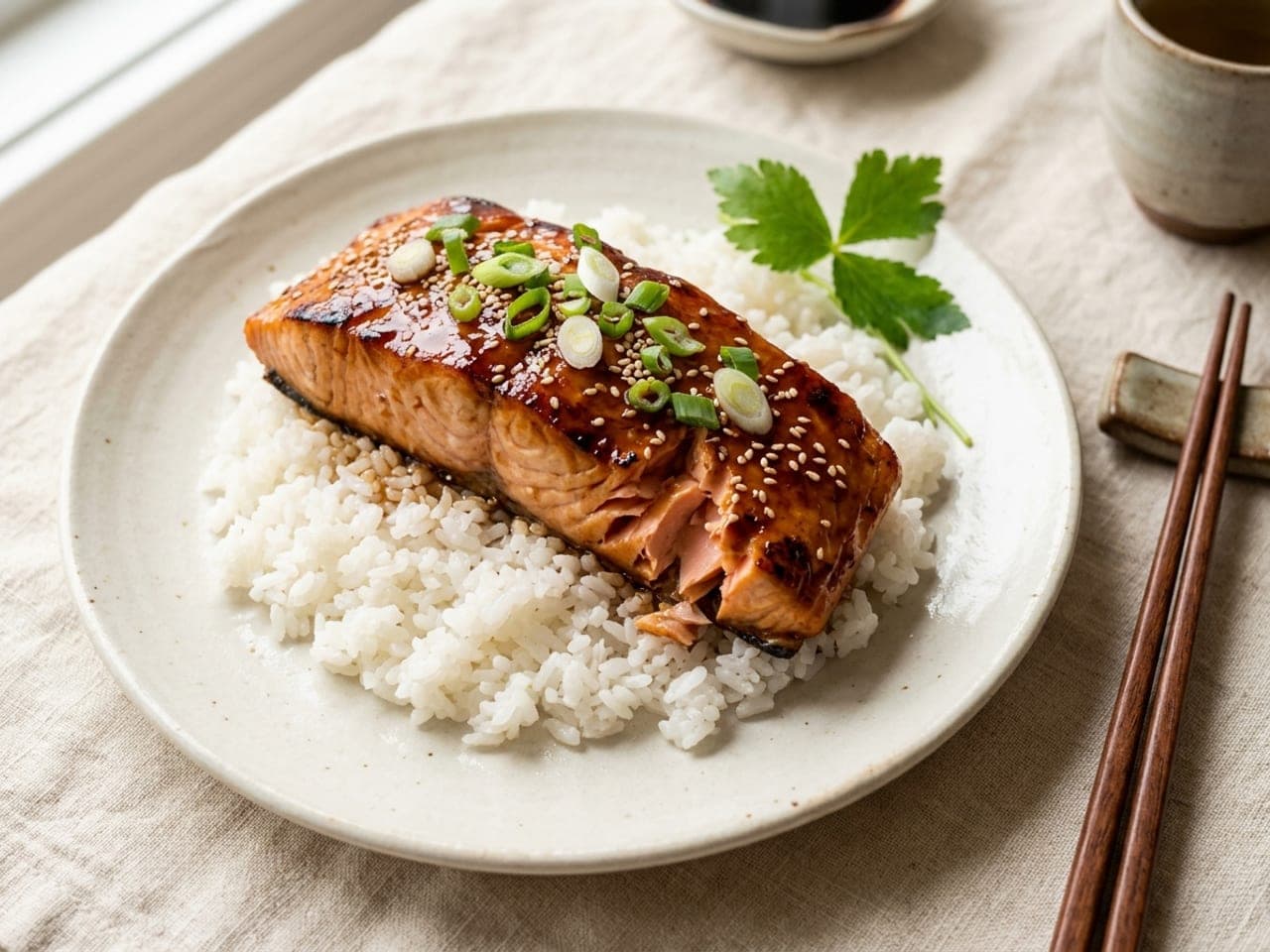
Ingredients
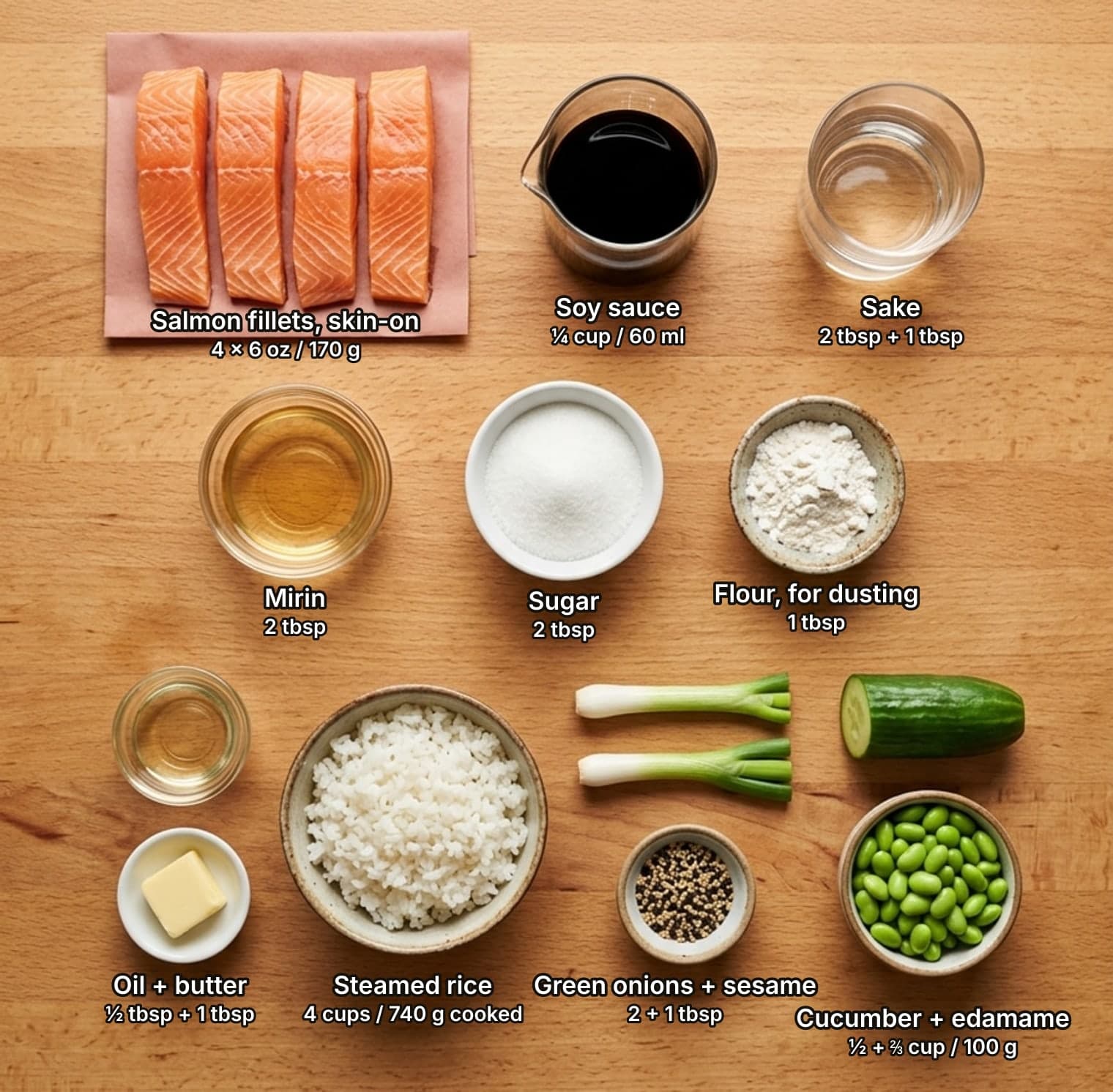
- salmon fillets, skin-on (farmed Atlantic is the EU default)4 × 6 oz / 170 g
- fine salt, for the optional brine1 tbsp per 1 cup / 240 ml water
- soy sauce (Japanese all-purpose / koikuchi)¼ cup / 60 ml
- sake (or dry sherry), plus a splash for the pan2 tbsp + 1 tbsp
- mirin (supermarket mirin-style works)2 tbsp
- sugar2 tbsp
- flour, for dusting (cornstarch or potato starch for gluten-free)1 tbsp
- neutral oil½ tbsp
- butter1 tbsp
- steamed short-grain rice, to serve4 cups / 740 g cooked
- green onions (spring onions), sliced2
- toasted black and white sesame seeds1 tbsp
- cucumber and shelled edamame (for the bowl variation)½ cucumber + ⅔ cup / 100 g
Fish was the original teriyaki
Chicken is the famous teriyaki; fish is the older one. The Edo-period cooks who named the technique — teri for luster, yaki for the grill — were glazing fish with soy and mirin, with yellowtail (buri no teriyaki) the classic that still anchors Japanese home cooking. Eel got the same glossy soy-sweet treatment under its own name, kabayaki, from the same family of master sauces. Chicken joined the party centuries later, mostly on the far side of the Pacific. So a teriyaki salmon dinner isn’t a variation on the chicken dish — historically, it’s the other way around.
Salmon itself is the modern chapter: a North Pacific fish meeting a Japanese technique in exactly the region — the American Northwest — where teriyaki became street food. We’ll resist claiming a tidy origin story that the record doesn’t support; call it the obvious homecoming, and note that the technique transfers perfectly because it was engineered for exactly this: rich fish, high heat, and a glaze that flatters both. The full teriyaki family history lives on our chicken and sauce pages.
How to make Teriyaki salmon
- Choose your fillets. Four skin-on fillets, about 6 oz (170 g) each. In Europe your supermarket default is farmed Atlantic — thick, fatty and forgiving, which happens to be exactly what this method wants. Wild Pacific fish (usually frozen in the EU) is leaner and thinner: shorten every time below and pull it a few degrees earlier. Keep the skin on either way; it’s equipment, not packaging.
- The ten-minute brine (the albumin fix). Optional but transformative for the finished look: dissolve 1 tbsp of salt in 1 cup (240 ml) of cold water and submerge the fillets for 10–15 minutes — mix the tare while they sit — then pat thoroughly dry. The brine seasons lightly and — the real prize — largely prevents the white albumin bloom that seeps out of hard-cooked salmon. The science is in the sections below; the glossy, bloom-free glaze is the payoff.
- Mix the tare. Stir together ¼ cup (60 ml) of soy sauce, 2 tbsp each of sake and mirin, and 2 tbsp of sugar until dissolved. Same four-ingredient family as the rest of our teriyaki pages, tilted soy-forward here because rich fish can take it — and no cornstarch, no garlic; salmon’s richness wants the glaze clean. (A standing jar from our teriyaki sauce recipe works here too: use ⅓ cup / 80 ml.)
- Dust for adhesion. Pat the fillets dry again, season lightly with salt and pepper, and dust all over with 1 tbsp of flour (cornstarch or potato starch for gluten-free), tapping off the excess. The whisper-thin coat does two jobs: it keeps the flesh juicy through the sear, and it gives the glaze something to hold onto — lacquer needs a primer.
- Sear skin-side down. Heat ½ tbsp of neutral oil with 1 tbsp of butter in a pan over medium. Lay the fillets in skin-side down and leave them — 4–5 minutes, pressing gently for the first few seconds so the skin sits flat. The skin is doing what it was born for: crisping itself while insulating the flesh above from the direct heat.
- Flip, splash, steam. Flip carefully, sear the flesh side 1–2 minutes, then add a splash — about 1 tbsp — of sake, drop the heat to low and cover. Two to three minutes of gentle steam finishes the inside without toughening the outside. Thick Atlantic fillets may want a minute more; thin wild ones a minute less.
- Pull early, on purpose. The FDA’s safety line for fish is 145°F (63°C). Cooks who love salmon pull it at 125–130°F (52–54°C) at the thickest point and let carryover heat finish the job through a short rest — that’s the moist, just-set middle. Both numbers are true; the sections below lay the choice out honestly. What’s not negotiable: a thermometer beats poking.
- Lacquer in the pan. Lift the fillets out, wipe the pan, pour in the tare and let it bubble hard for 60–90 seconds until it thickens to a light syrup. Return the salmon flesh-side up and spoon the glaze over repeatedly for another minute — the coats build into a deep amber lacquer. Off the heat before the sugar crosses from caramel to char; the line is half a minute wide.
- Rest and serve. A two-minute rest lets the glaze set and the carryover finish. Serve over steamed rice with the pan’s last spoonful of tare over the top, green onions (spring onions) and sesame scattered, and something green alongside — or flake it into a rice bowl with cucumber ribbons and edamame, this page’s meal-prep afterlife.
Safety & hygiene Important
- 145°F (63°C) is the FDA line — here’s the honest fork. Fish is officially done at 145°F (63°C): opaque and flaking throughout. Most cooks prefer salmon pulled at 125–130°F (52–54°C) and rested — silkier, still translucent at the center. That’s a personal-risk choice like a soft-boiled egg: fine for most healthy adults with fresh, well-handled fish; go to the full 145°F (63°C) for pregnancy, immune compromise, or any fillet you don’t entirely trust.
- Frozen salmon plays by thaw rules. Thaw overnight in the refrigerator, or sealed in cold water for 30–60 minutes and cook immediately — never on the counter. Cooking straight from frozen is safe too: add 5–10 minutes and verify 145°F (63°C) with a thermometer, and skip any marinating (it can’t penetrate ice). Refreezing thawed raw fish costs texture; don’t.
- Fish marinates in minutes, not hours. If you soak salmon in marinade first (our teriyaki marinade page covers it), the ceiling is 60 minutes — after that, salt starts curing the thin flesh soft. And used fish marinade follows the same law as chicken’s: boil it hard for a few minutes or bin it.
- Leftovers, briefly and well. Cooked teriyaki salmon keeps 3 days refrigerated, airtight, and is genuinely good cold in a rice bowl — reheating salmon past its first cooking is where the albumin and the dryness live. Cool it within 2 hours, and if you do reheat, go gentle and covered, once.
3 ways to plate it
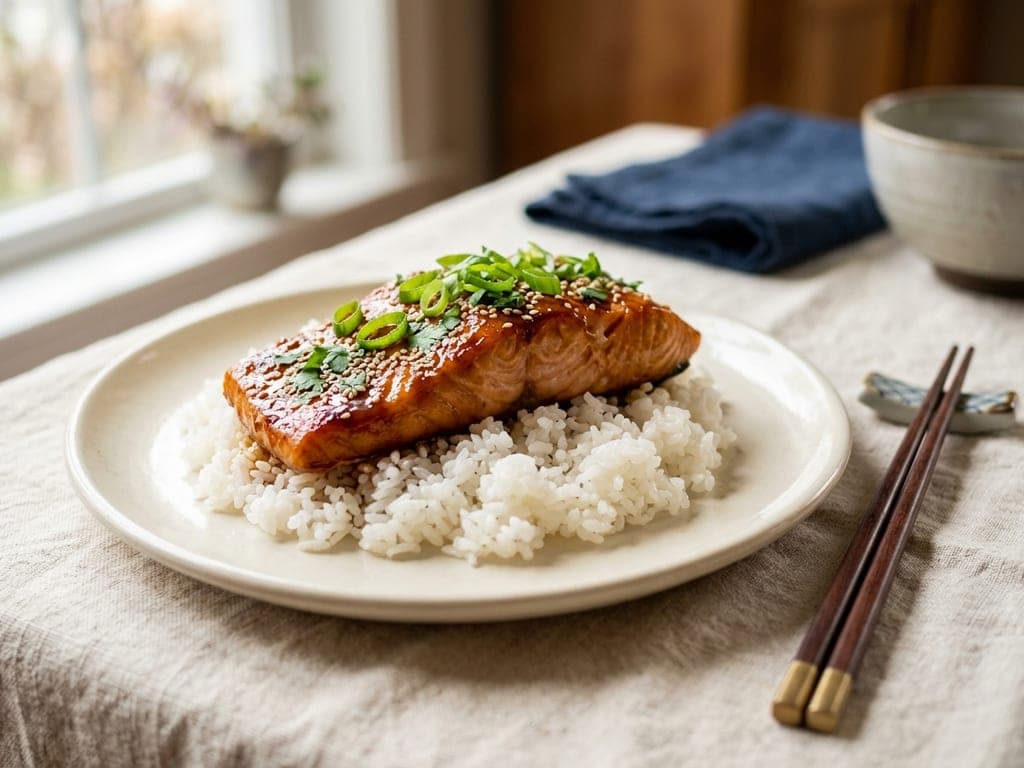
- Shape the rice into a loose low bed just larger than the fillet — a pedestal, not a mattress.
- Set the fillet slightly off-center, best corner toward the diner, and spoon one last coat of warm glaze along its length.
- Run the green onion and sesame along the length of the fillet, with a few coriander leaves tucked in if you want the fresh green note.
- Wipe the plate rim and serve within minutes — lacquer is a fresh-paint effect and dulls as it cools.
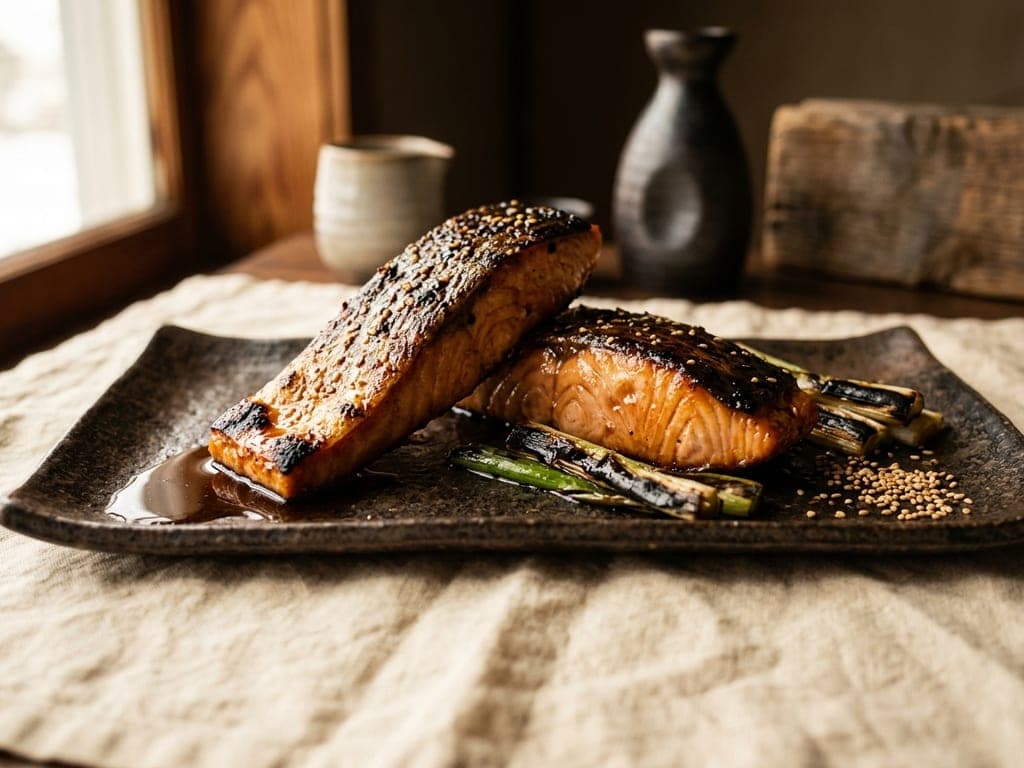
- Lean one fillet against the other at a shallow angle — one lies flat and lacquered, the other tips up to show the dark seared crust; together they tell the whole method.
- Char whole green onion lengths in the emptied pan and lay them alongside like brushstrokes.
- Pour the last of the glaze at the platter’s edge, not over the fish — a deliberate pool reads chef, a flood reads accident.
- Choose your darkest plate and low side light if you have a say; amber lacquer on black ceramic is the dish’s best outfit.
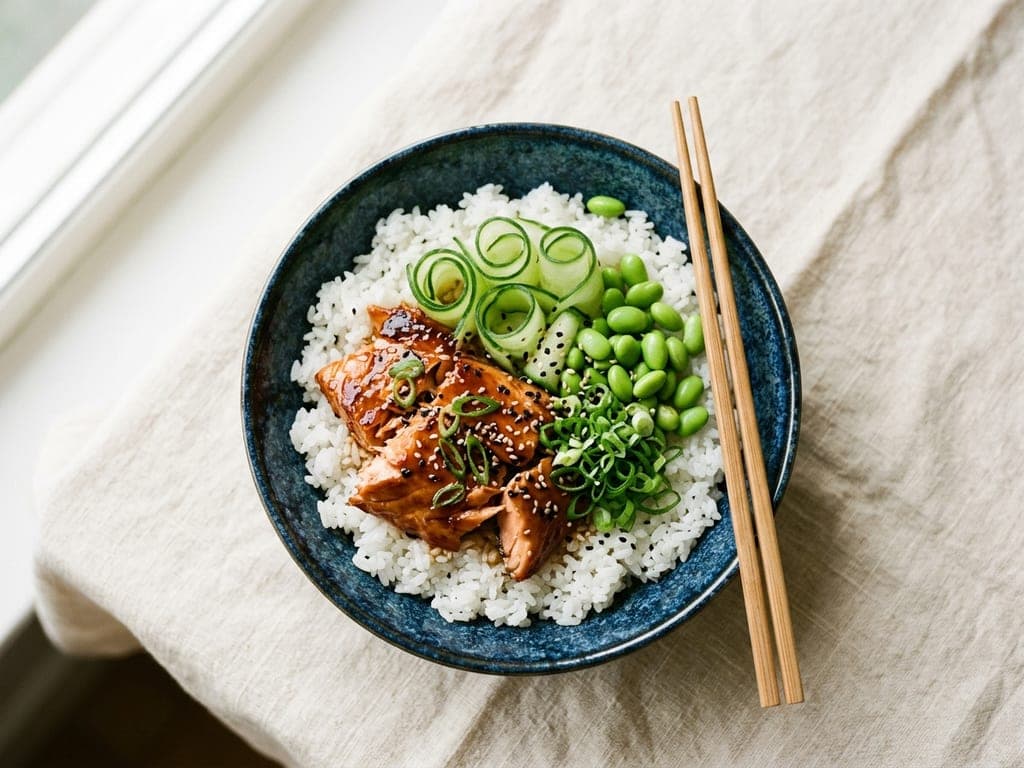
- Flake the salmon into large, deliberate pieces along its natural seams — chunks read generous, shreds read leftover.
- Keep each topping in its own zone around the bowl: flakes, cucumber coils, edamame, green onion — assembly is the aesthetic.
- Coil the cucumber ribbons rather than laying them flat; the spirals give the bowl its height and movement.
- Finish with mixed black and white sesame over everything and rest the chopsticks across the rim — the bowl reads complete before the first bite.
The doneness table nobody prints
The strangest thing about the top-ranking versions of this recipe is what’s missing: the number-one result gives no temperature at all — “until flaky” is the entire guidance for a fish that travels from silk to sawdust in about four minutes. Here is the honest table. Safety: the FDA says 145°F (63°C), fully opaque. Preference: kitchens that measure — including the test-kitchen tradition — pull farmed Atlantic salmon at about 125°F (52°C) and wild Pacific at nearer 120°F (49°C), then let a rest and carryover heat close the gap. Wild runs leaner and firmer, with more collagen; it dries out sooner, which is why it gets the earlier exit.
Practically: thermometer in at the thickest point, pull at your chosen number, rest two minutes, and know which fish you bought — the fat European farmed fillet forgives a missed minute that a thin wild one won’t. Both camps are right about their own claims; the safety number is about risk, the preference number is about texture, and an honest recipe hands you both instead of pretending the tension away.
The white stuff, explained and prevented
That white bloom that oozes from salmon and sets like cottage cheese is albumin — a soluble protein squeezed to the surface as muscle fibers contract under heat. It’s completely harmless and completely avoidable, which matters on a plate whose whole argument is a glossy amber lacquer. Two levers control it: heat and salt. Gentler heat contracts the fibers less violently — this recipe’s medium sear plus lidded low steam is already half the cure — and a short brine (1 tbsp salt in 1 cup / 240 ml of water, 10–15 minutes) changes the surface proteins so they hold rather than weep.
The brine-plus-moderate-heat combination is the closest thing home cooking has to a guarantee: seasoned flesh, no bloom, and a surface that takes the glaze evenly. If a little albumin appears anyway, dab it away before the lacquering step — the glaze hides sins, but it showcases the ones it can’t.
Salmon shopping, Europe edition
American recipe pages assume wild Pacific salmon and treat farmed as the fallback; European shelves run exactly backwards. Your default fillet is farmed Atlantic — most of it Norwegian or Scottish — thicker and, depending on the fish, half again to twice as fatty as wild sockeye, which is precisely why it takes this recipe so well: the fat buys forgiveness on timing and carries the glaze. Wild Pacific species mostly arrive frozen in Europe; treat them as the delicate variant — thinner, leaner, earlier out of the pan.
The Japanese trick that equalizes everything: slice a thick fillet diagonally into 1.5–2 cm (about ⅝–¾ in) slices before cooking, the way Japanese fishmongers cut salmon for the pan. Thin cuts sear fast, glaze evenly, and turn one fat Atlantic fillet into the quick-cooking fish the original technique assumed. Everything else follows the family’s European notes: mirin-style from the supermarket works, dry sherry stands in for sake, and koikuchi soy — not Chinese dark — keeps the lacquer amber instead of tar.
Questions, answered
Do you put teriyaki sauce on salmon before or after cooking?
After — teriyaki is a finishing glaze. Sear the salmon plain (a light flour dust helps the glaze grip), then reduce the tare in the pan and lacquer the fish in the final minutes. Sauce applied raw burns its sugar before the fish cooks, which is how most bitter teriyaki is born.
Is it better to bake or pan-fry teriyaki salmon?
The pan is the traditional and best route: crispy skin, and the glaze reduces onto the fish. Baking wins for hands-off volume — 400°F (200°C) for 12–16 minutes, brushing with sauce in the last few — and the broiler (the overhead grill) is a finisher only: 1–2 glaze-setting minutes, watched the whole time.
Should I marinate teriyaki salmon?
It’s optional and short if you do: 20–30 minutes, never past an hour — thin fish takes salt fast and turns cured-soft beyond that. The traditional method skips the soak entirely and lets the pan glaze do everything, which also keeps the flesh’s delicate flavor in front.
Skin on or off?
On. The skin insulates the flesh from the pan’s direct heat, holds the fillet together through the flip, and crisps into the best bite on the plate. Take it off only if you’re poaching the fish directly in sauce — and even then, consider not.
What temperature is salmon done?
Two honest numbers: the FDA’s safety line is 145°F (63°C), fully opaque; the cook’s pull point for a moist middle is 125–130°F (52–54°C) for farmed Atlantic, nearer 120°F (49°C) for leaner wild fish, plus a two-minute rest. Choose by your table’s risk comfort — and by thermometer, not by poking.
Why does white stuff come out of my salmon?
That’s albumin — a harmless protein pushed to the surface when muscle fibers contract under aggressive heat. Prevent it with gentler heat and a 10–15 minute brine (1 tbsp salt in 1 cup / 240 ml water), which reshapes the surface proteins so they hold instead of weep. Details in the sections above; your glaze will thank you.
Can I use frozen salmon?
Yes. Best: thaw overnight in the fridge (or sealed in cold water for 30–60 minutes) and cook as written. In a pinch, cook from frozen — add 5–10 minutes, verify 145°F (63°C), and skip any marinade, which can’t penetrate ice. European wild-Pacific fish is usually sold frozen; that’s quality preservation, not a defect.
Can I use bottled teriyaki sauce on salmon?
Yes — warm it and apply late, as a finishing glaze rather than a soak, and thin thick bottled sauce with a splash of water so it coats rather than clumps. The homemade tare is four ingredients and a couple of minutes in the pan; our teriyaki sauce page keeps a jar of it on standby.
How many calories in teriyaki salmon?
About 700 per serving as plated here — a 6 oz (170 g) fillet, its glaze, and a generous cup of rice. The salmon and glaze alone are closer to 420; salmon is a rich fish, and that fat is exactly what makes it forgiving in the pan. Shrink the rice or serve it as the bowl variation with extra vegetables to bring the number down.
What do you serve with teriyaki salmon?
Steamed short-grain rice and one green thing — steamed broccoli, sesame spinach, edamame or cucumber — plus miso soup if it’s a proper Japanese dinner. Leftovers flake into an excellent cold rice bowl; the glaze keeps the fish tasting deliberate on day two.
Snap your finished plate and let the AI plate it again — more beautifully.