Crème Brûlée Cheesecake Recipe
A vanilla-bean cheesecake under crème brûlée’s glassy torched sugar crust — baked in a water bath for a crack-free top, chilled overnight, and caramelized just before serving.
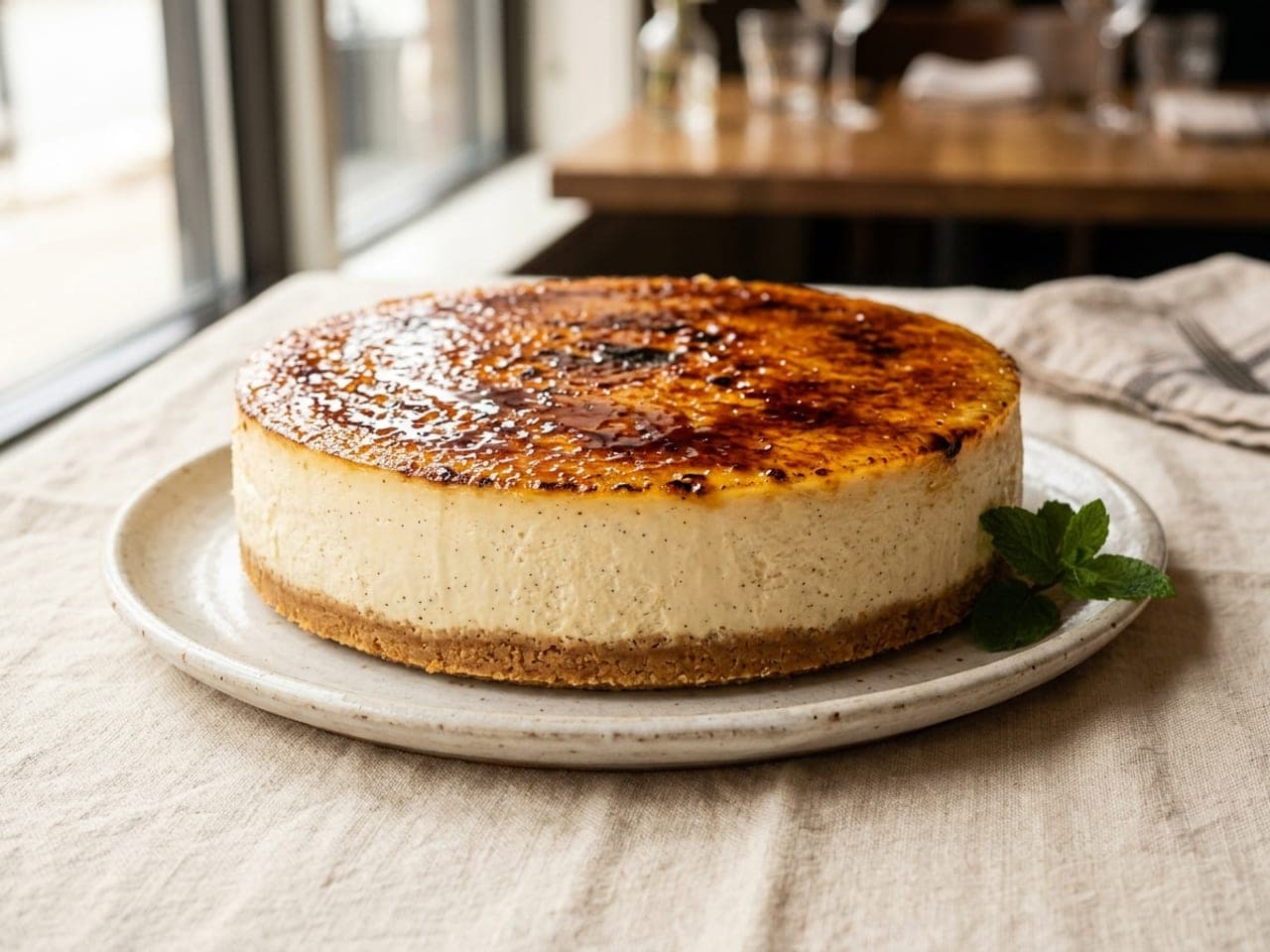
Ingredients
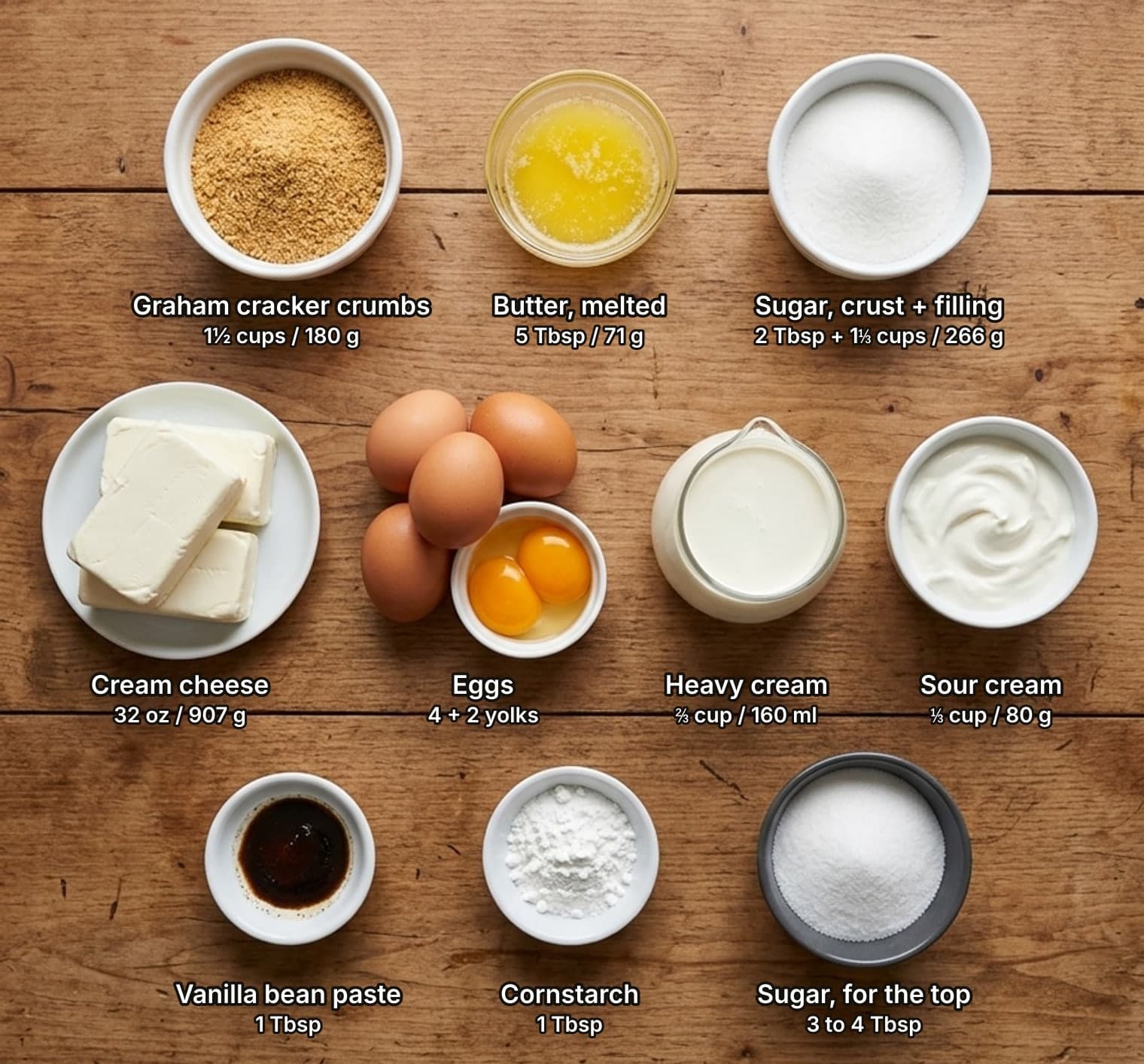
- graham cracker crumbs1½ cups / 180 g
- unsalted butter, melted5 Tbsp / 71 g
- granulated sugar (crust)2 Tbsp
- cream cheese, room temperature32 oz / 907 g
- granulated sugar (filling)1⅓ cups / 266 g
- eggs (large)4 + 2 yolks
- heavy cream (or 30%+ whipping cream)⅔ cup / 160 ml
- sour cream⅓ cup / 80 g
- vanilla bean paste (or 1 vanilla bean)1 Tbsp
- cornstarch1 Tbsp
- fine sea salt¼ tsp + a pinch for the crust
- superfine or granulated sugar, for the top3–4 Tbsp
Why this recipe works
The filling splits the difference between the two schools in the top-ranking recipes: most use 4 whole eggs for classic cheesecake structure, while the most custard-obsessed version uses 10 yolks to chase true brûlée silkiness. Four eggs plus two extra yolks lands in between — sliceable like a cheesecake, but with the eggy richness of the custard it is imitating. Vanilla bean paste rather than extract is the other signature: the flecks and perfume are half the crème brûlée illusion.
A tablespoon of cornstarch and a proper water bath are the crack insurance. Every one of the five top-ranking recipes bakes this cake in a water bath and slow-cools it in the switched-off oven — and here a crack-free, dead-flat top is not cosmetic, it is structural: it is the surface the caramel sheet sits on.
The overnight chill happens uncovered, and that detail is doing real work: the fridge air dries the surface, and dry is exactly what the brûlée layer needs. Sugar sprinkled on a damp cheesecake dissolves and weeps; on a dry one it melts into clean amber glass.
How to make Crème brûlée cheesecake
- Make the crust. Stir 1½ cups (180 g) graham cracker crumbs with 5 Tbsp (71 g) melted butter, 2 Tbsp sugar and a pinch of salt until it feels like wet sand. Press firmly into the bottom of a 9-inch (23 cm) springform pan and bake at 350°F (177°C) for 10 minutes. Cool while you make the filling, and drop the oven to 325°F (163°C).
- Waterproof the pan. Wrap the springform in two layers of heavy-duty foil that come all the way up the sides — or set it inside a slightly larger cake pan — so the water bath can never seep through the seam.
- Beat the cream cheese and sugar. Beat 32 oz (907 g) room-temperature cream cheese with 1⅓ cups (266 g) sugar on low speed until completely smooth, scraping the bowl twice. Low and slow matters: air whipped in now becomes puffing and cracks in the oven.
- Finish the filling. Beat in 1 Tbsp cornstarch, ¼ tsp salt and 1 Tbsp vanilla bean paste (or the seeds of a whole bean). Add the 4 eggs and 2 yolks one at a time on low, then the ⅔ cup (160 ml) heavy cream and ⅓ cup (80 g) sour cream, mixing each just until combined — stop the moment the last streak disappears.
- Set up the water bath. Pour the filling over the crust and smooth the top. Set the wrapped pan in a large roasting pan on the oven rack, then pour boiling water into the roasting pan until it reaches about halfway up the springform.
- Bake. Bake at 325°F (163°C) for 80–90 minutes. It is done when the edges are set and slightly puffed but the center 2–3 inches (5–8 cm) still wobble like jelly when you nudge the pan.
- Slow-cool in the oven. Turn the oven off and prop the door open a crack, leaving the cheesecake in its water bath for 1 hour. Then lift it out and cool to room temperature on the counter. The gradual cool-down is the crack prevention — and a flat, crack-free top matters double here, because it is about to become the brûlée surface.
- Chill uncovered overnight. Refrigerate uncovered for at least 6 hours, better overnight. Chilling uncovered dries the surface — exactly what you want, because sugar caramelizes on a dry top and weeps on a damp one.
- Sugar the top in thin coats. Release the springform ring. Sprinkle 3–4 Tbsp superfine (caster) sugar over the top in two thin, even coats — a thin layer caramelizes before the heat reaches the filling; a thick one burns outside before it melts inside.
- Torch and serve. Torch on a low flame in constant slow circles, never hovering, until the sugar melts into a glassy amber sheet. Rest 5 minutes to harden, then serve — within a couple of hours, while the crust still cracks. For later servings, leave slices untorched and brûlée each one just before it is eaten.
Safety & hygiene Important
- Raw egg handling. Wash hands, bowl and beaters after working with the raw-egg filling, and refrigerate it if you are not baking right away. The long 80–90 minute bake plus the hour-long oven rest cooks the filling through — bake until the edges are fully set and only the very center wobbles.
- Boiling water and heavy pans. Pour the boiling water in only after the roasting pan is on the oven rack, and remember the loaded pan is heavy and full of hot water — lift the cheesecake out with dry towels or silicone gloves, not bare hands.
- Open flame. Torch with a low flame, away from anything flammable — parchment, towels, the cake box — and refill butane outdoors. Keep the torch moving; a flame held in one spot burns sugar in seconds.
- Skip the broiler here. Unlike ramekin crème brûlée, a whole cheesecake should not go under the broiler (the overhead grill): the filling warms and can melt or scorch before the sugar caramelizes. If you have no torch, brûlée individual slices under the broiler on a small tray, watching nonstop — or serve it as a classic vanilla cheesecake.
- Storage. The un-torched cheesecake keeps covered in the fridge for 4–5 days, or frozen (whole or as slices, well wrapped) for up to a month — thaw overnight in the fridge, never on the counter. Once torched, the sugar top softens within hours and does not survive refrigeration, so only torch what you are serving.
3 ways to plate it
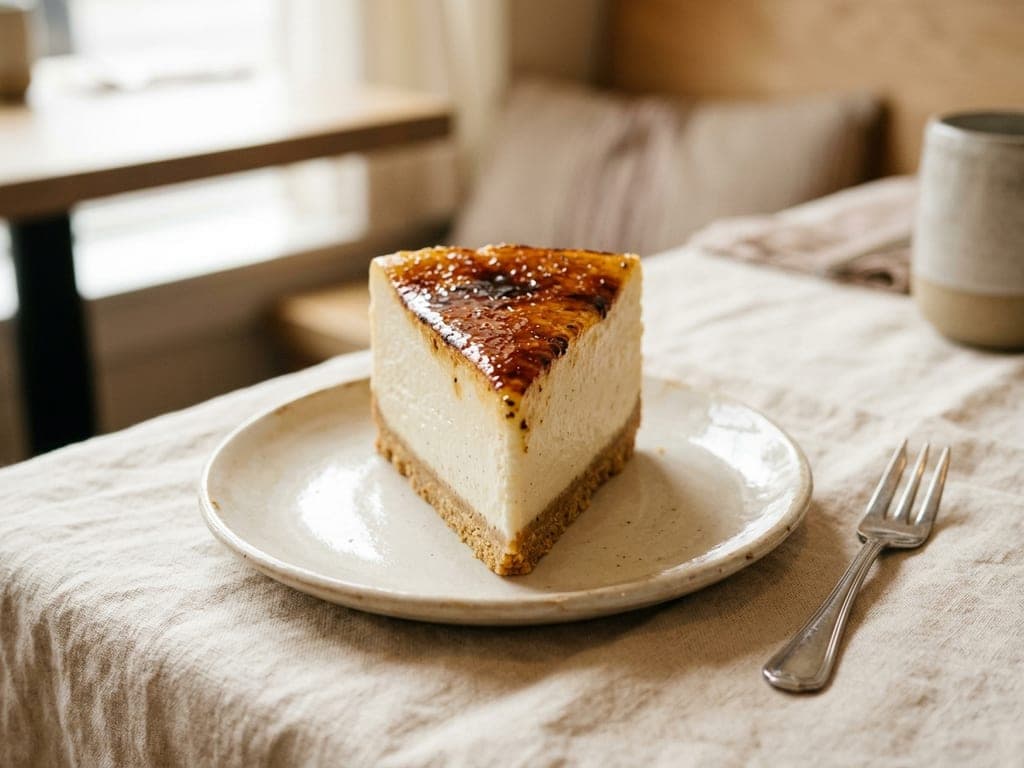
- Dip a long thin knife in hot water and wipe it dry between every single cut — this is the whole secret to clean layer lines.
- Lay the slice down on its side? Never. Stand it upright, point facing the diner.
- Wipe the plate rim, and resist stacking anything on the slice itself — the layers are the presentation.
- If the slice was stored untorched, sugar and torch it now, and let the caramel harden for a minute before it goes out.
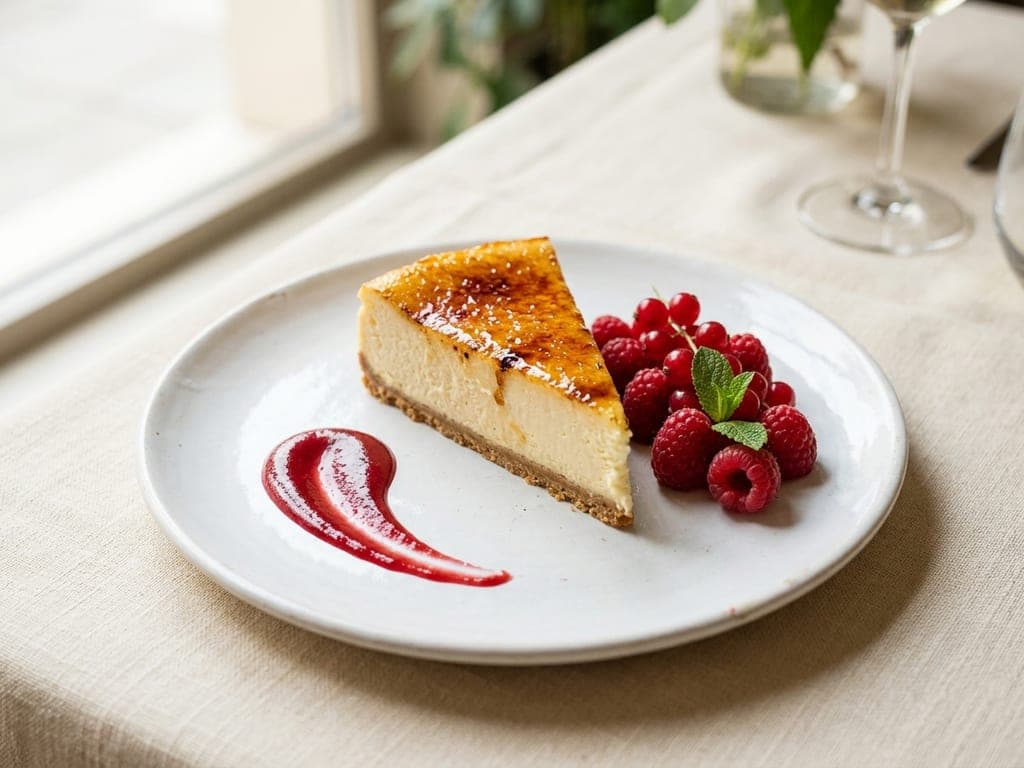
- If the slice is untorched, sugar and torch it first and give the caramel a minute to harden — flame wilts fruit, so the fruit always comes second.
- Place the slice just off-center, then cluster a few raspberries or redcurrants beside its base, not on top — the caramel sheet stays unbroken.
- Tuck one small mint leaf into the berry cluster, tip pointing away from the slice.
- Finish with a teaspoon of berry coulis in a comma-shaped swipe on the open side of the plate.
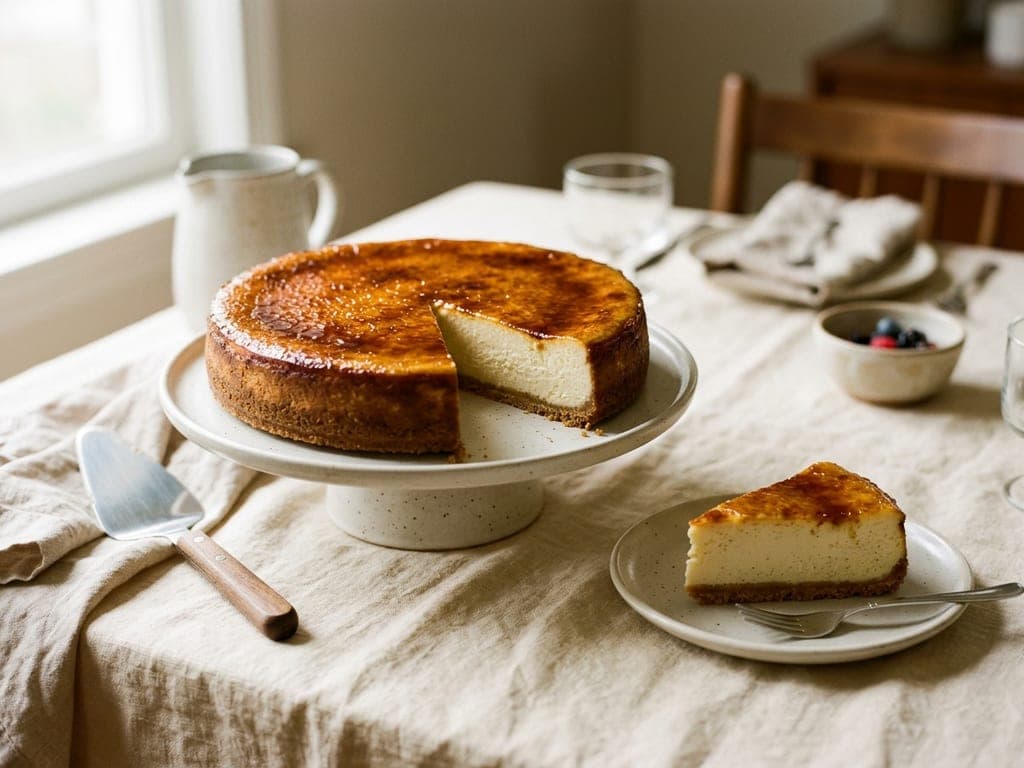
- Torch the whole top at the counter — two thin coats of sugar, low flame, slow circles — and let it harden for five minutes.
- Cut and remove one clean slice before the cake reaches the table, so the crust, filling and caramel layers show in cross-section.
- Set the cake on a stand or a flat plate with nothing else on it; the amber top is the centerpiece.
- Crack the crust at the table, not in the kitchen — the sound is the show.
The brûlée top: whole cake or slice by slice?
Here is the honest physics no recipe card headline admits: caramelized sugar is hygroscopic, and a cheesecake surface is moister than a baked custard, so the glassy top softens in hours — faster than on classic crème brûlée — and no version of it survives a night in the fridge. The five top-ranking recipes split into two camps only on what to do about it.
For the table moment, torch the whole cake: sugar in two thin coats, low flame, constant circles, five minutes to harden — then serve within a couple of hours, while every slice cracks under the spoon. This is the showpiece move, and it is the right call when the whole cake will be eaten in one sitting.
For everything else, brûlée by the slice: store the cheesecake untorched, and give each serving its own pinch of sugar and ten seconds of flame just before it is eaten. Every slice gets a fresh, loud crust — this is how half the ranking recipes serve it, and it is the better default for a cake that lasts days.
Questions, answered
Can you torch a cheesecake directly without melting it?
Yes — if it is thoroughly chilled and the torch keeps moving. Use a low flame in slow circles, never hovering over one spot, and apply the sugar in thin layers so it caramelizes before any heat reaches the filling. Every top-ranking version of this recipe torches the cheesecake surface directly.
Can I use the broiler instead of a torch?
On a whole cheesecake, don’t — the broiler heats the entire dessert, so the filling warms and can scorch before the sugar finishes caramelizing. If you have no torch, broil individual slices on a small tray with the door cracked, rotating and watching every second. The torch is genuinely the right tool here.
Why did my sugar top melt, weep or go soggy?
Caramelized sugar is hygroscopic — it pulls moisture from the air and from the dessert under it. A cheesecake surface is moister than baked custard, so the crust softens within hours and a night in the fridge will liquefy it. Chill the cake uncovered so the surface dries, keep the sugar layer thin, and torch as close to serving as possible.
Can I make crème brûlée cheesecake ahead?
The cheesecake itself is better made a day ahead — it needs at least 6 hours of chilling anyway, and overnight improves the texture. The one thing you cannot make ahead is the brûlée layer: sugar and torch just before serving, or the crust will be soft by the time it reaches the table.
How do I keep leftovers crisp?
You don’t keep the crust — you re-make it, and it takes thirty seconds. Store the remaining cheesecake untorched (covered, in the fridge), then sprinkle each slice with a thin coat of sugar and torch it fresh just before eating. Every serving gets a brand-new crack.
What sugar works best for the brûlée top?
Superfine (caster) sugar torches fastest and most evenly on a cheesecake; plain granulated works but takes longer under the flame, which risks warming the filling. Keep it thin either way — 3–4 tablespoons covers a whole 9-inch (23 cm) top in two coats.
What makes this different from plain vanilla cheesecake?
Two things: the glassy torched sugar crust, and a filling tuned toward custard — vanilla bean instead of extract, extra yolks and cream for brûlée-style richness. It eats like a cheesecake that finishes like a crème brûlée: cool and creamy, then the crack.
Do I really need the water bath?
All five top-ranking recipes use one, even the outliers — that should tell you something. The bath bakes the filling gently and evenly, and paired with the slow cool-down in the switched-off oven it is the difference between a flat top and a cracked one. On this cake a crack is not just cosmetic: the top is your brûlée surface.
Snap your finished plate and let the AI plate it again — more beautifully.