Homemade Worcestershire Sauce: Ready Tonight or Fridge-Aged
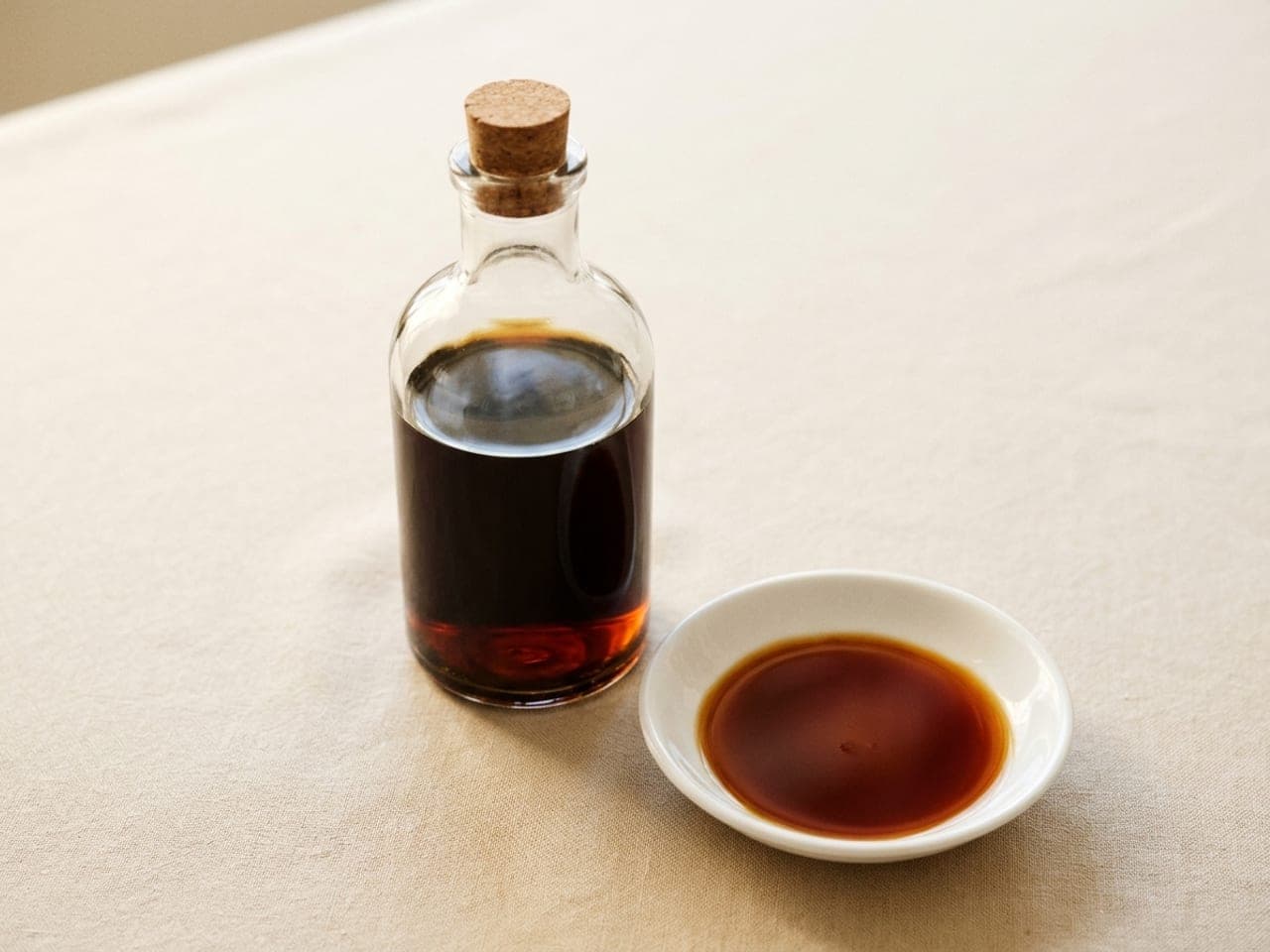
Homemade Worcestershire sauce in the cooked, caramelized-sugar style: vinegar, molasses, soy, tamarind, anchovy, onion, garlic and whole spices simmered for 15 minutes, a dark caramel stirred in, then steeped in the fridge, strained and bottled. Usable the same night, at its best after 1 to 3 weeks. It makes about 2 cups (480 ml), a little more if you press the solids hard. The salt is given by weight (4 g) because popular recipes use 3 tbsp of kosher salt without saying which brand, a 1.7-fold difference that leaves their sauce three to four times saltier than the bottle; ours works out at about 99 mg sodium per teaspoon, with the arithmetic shown. Distilled white or cider vinegar, gluten-free tamari and a gluten-free curry powder make it gluten-free; malt vinegar makes it taste British. It is steeped and stored in the fridge, never the pantry, and the page explains why, along with what the 1876 court case over the name actually says about where the sauce came from. British and Czech cooks just call it Worcester sauce.
Ingredients
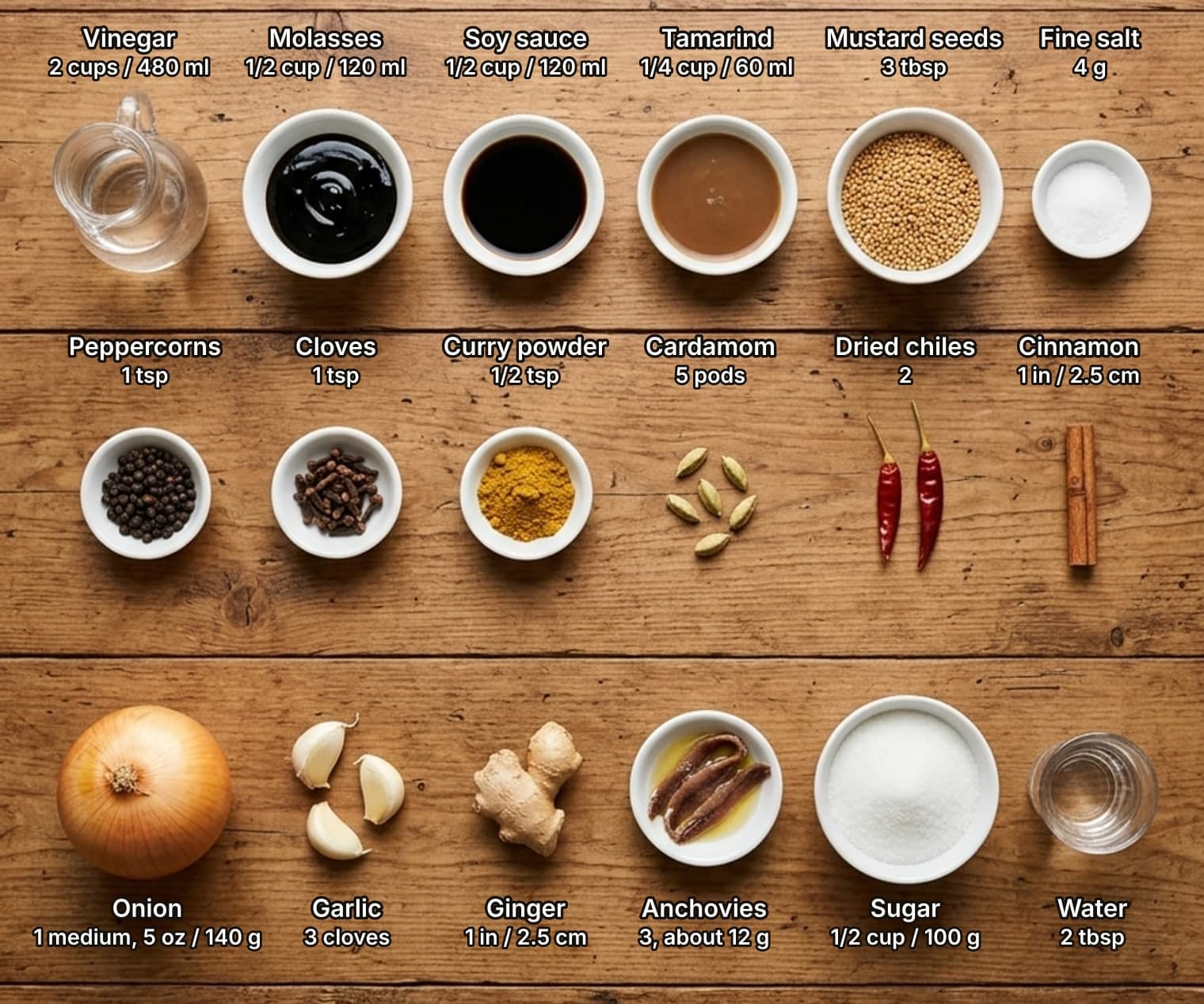
- distilled white vinegar, labelled 5% acidity (US Lea & Perrins uses distilled white), or apple cider vinegar; both are gluten-free. For a sauce that tastes like the UK bottle use malt vinegar, which is brewed from barley: in the US it cannot be used in food labelled gluten-free; in the UK only a malt vinegar labelled gluten-free (such as Sarson’s, certified by Coeliac UK) is suitable for coeliacs. Do not use seasoned rice vinegar or a homemade vinegar of unknown strength2 cups (480 ml)
- molasses, regular unsulphured (light or dark), not blackstrap, which is bitter and salty. In the UK and EU use black treacle, swapped 1:11/2 cup (120 ml, about 170 g)
- soy sauce (contains soy and wheat); use tamari labelled gluten-free for a gluten-free sauce1/2 cup (120 ml)
- tamarind, Thai-style jar (often labelled “concentrate”, thin and brown, about 5 to 15 kcal per tbsp on the label). OR Indian black concentrate (Tamicon type, thick and nearly black, 40 to 50 kcal per tbsp): use 4 tsp only. OR 1 oz (28 g) block pulp soaked 10 minutes in 1/4 cup (60 ml) boiling water and pushed through a sieve. Some Thai pastes contain salt; if yours lists it, the sauce will be a little saltier than our figures1/4 cup (60 ml)
- yellow mustard seeds (mustard is a declared allergen in the UK and EU)3 tbsp
- fine salt, weighed. That is a scant 3/4 tsp fine sea or table salt, a scant 1 tsp Morton coarse kosher salt, or 1 1/2 tsp Diamond Crystal kosher salt (kosher salt is a coarse, additive-free salt; in Europe use the gram weight)4 g
- black peppercorns1 tsp
- whole cloves1 tsp
- curry powder (blends often contain celery and mustard, both declared allergens in the UK and EU; check the label, and pick one labelled gluten-free if you need it)1/2 tsp
- green cardamom pods, cracked with the flat of a knife5
- dried chiles de árbol (small, hot dried red chiles), broken in half, or 1/4 tsp crushed red pepper flakes; use 4 chiles for a hotter sauce2
- cinnamon stick1 piece, 1 inch (2.5 cm)
- yellow onion, finely diced, about 1/4 inch (6 mm), so the vinegar reaches the middle of each piece sooner1 medium, about 5 oz (140 g)
- garlic cloves, peeled and finely chopped (not left whole)3
- fresh ginger, unpeeled, finely chopped1 inch (2.5 cm) piece
- anchovy fillets in oil, drained and chopped (fish). Vegetarian: leave them out and add 1 tbsp white miso (soy; check it is rice-based, not barley, if you need it gluten-free) and 2 dried shiitake mushrooms instead3 (about 12 g)
- granulated sugar, for the caramel1/2 cup (100 g)
- water, for the caramel2 tbsp
What is Worcestershire sauce made of?
Worcestershire sauce is a thin, dark, vinegar-based seasoning, sour first, then sweet, salty and savoury, with a background of clove, chile, garlic and onion. Kraft Heinz lists the US Lea & Perrins ingredients, in this order: “distilled white vinegar, molasses, sugar, water, salt, anchovies, onions, garlic, cloves, natural flavorings, tamarind extract, chili pepper extract.” The UK bottle is different: “Malt Vinegar (from Barley), Spirit Vinegar, Molasses, Sugar, Salt, Anchovies (Fish), Tamarind Extract, Onions, Garlic, Spices, Flavourings.” Same brand, two vinegars, and that one swap is the reason the American bottle has no gluten ingredient and the British one declares barley.
It helps to think of it as four parts. Vinegar is the base and the preservative. Molasses and sugar bring sweetness and colour. Anchovy and salt bring the savoury depth (umami) and the salt. Tamarind adds a fruity sourness, and the spices and alliums sit on top. Every homemade recipe, including this one, is a version of that balance.
How it is made commercially is less secret than the recipe. A 2020 Birmingham Live explainer on the Worcester factory describes onions and garlic packed into barrels of malt vinegar and anchovies packed in salt; once matured they are blended, matured again in large vats, and then “the concentrated sauce is diluted and sterilised, ready for bottling”. Lea & Perrins says its sauce matures for 18 months; a 1993 Los Angeles Times report from the factory put it at three years. A home kitchen cannot reproduce either, so a home recipe simmers to speed up extraction and steeps for weeks instead of months. Like the factory’s, a homemade batch is a concentrate. Unlike the factory, we do not dilute it, because diluting would weaken the acid that keeps it safe, so you simply use a little less.
How to make Worcestershire Sauce
- Weigh the salt and break up the aromatics. Weigh the salt rather than measuring it by the spoon. The best-known homemade recipe calls for 3 tbsp of kosher salt, and a tablespoon of Morton kosher weighs about 1.7 times as much as a tablespoon of Diamond Crystal, so two cooks following the same line end up with very different sauces. Four grams is the amount this batch needs, whatever the brand. Dice the onion finely, about 1/4 inch (6 mm), and finely chop the garlic, ginger and anchovies. Small pieces give up their flavour faster, and they also let the vinegar reach the centre of each piece sooner, which matters for safety in step 5. Crack the cardamom pods and lightly crush the peppercorns and mustard seeds in a mortar or under a heavy pan. This is not fussiness. The flavour of this sauce comes from whole spices and aromatics giving up their flavour to the vinegar, and extension guidance on flavoured vinegars says chopping, crushing or bruising the ingredients shortens that process by about a week. Everything you cut now is strained out later, so the pieces only need to be small, not neat. If you are using block tamarind, pour 1/4 cup (60 ml) of boiling water over 1 oz (28 g) of pulp now and leave it to soften for 10 minutes before pushing it through a sieve.
- Simmer the base in a non-reactive pot. Put the vinegar, molasses, soy sauce, tamarind, mustard seeds, salt, peppercorns, cloves, curry powder, cardamom, chiles, cinnamon, onion, garlic, ginger and anchovies in a stainless steel or enamelled pot of at least 3 quarts (2.8 L). Aluminium and bare cast iron react with vinegar and give the sauce a metallic taste, and unlined copper must never be used: acid dissolves copper into food, which is why the FDA Food Code bans copper from contact with any food below pH 6, vinegar included. The pot looks too big for about 3 1/4 cups (780 ml) of liquid, and that is deliberate: in step 4 the caramel goes in and the sauce foams up. Bring it to a boil over high heat, then lower the heat and simmer gently for 10 minutes, uncovered. Keep it at a gentle simmer, not a rolling boil, which spits hot vinegar and boils away more liquid than the recipe allows for. The heat speeds extraction and takes the raw edge off the vinegar. Do not add water. Two cups (480 ml) of 5% vinegar in this much liquid works out at about 3% acetic acid before the caramel goes in and a little under 3% after, inside the 2.60 to 3.75% range in the USDA purchase specification for commercial Worcestershire. That acid, together with the fridge, is what keeps the sauce safe, and recipes that top the pot up with water, beer or juice dilute it.
- Make a dark caramel while the base simmers. In a heavy, light-coloured saucepan of about 2 quarts (2 L) (a pale pan lets you judge the colour, and the extra room matters in the next step), stir the sugar and 2 tbsp of water over medium-high heat just until the sugar dissolves, then stop stirring and let it boil. Swirl the pan if one side colours faster than the other. In 5 to 8 minutes the syrup goes from clear to straw to amber; take it off the heat when it is a deep amber, the colour of strong tea, about 340 to 350°F (171 to 177°C) if you are using a thermometer. Harold McGee notes that sugar melts at about 320°F (160°C) and starts to brown at roughly 340 to 355°F (170 to 180°C), and that browning syrup adds tart, savoury and bitter notes to its sweetness, which is the point: the caramel gives colour and a roasted bitterness that balances the molasses. It moves fast, and it keeps cooking in the hot pan after you lift it off. Black caramel smells acrid and makes the whole batch bitter, so if it smokes, let it cool, soak it out and start again rather than adding it. Never touch or taste molten sugar. Caramel at this stage is far hotter than boiling water and it sticks to skin.
- Loosen the caramel, then add it: it will spit. This is the one hazardous moment in the recipe. Liquid meeting molten caramel flashes to steam and throws hot syrup, and a reviewer of the best-known version of this recipe was caught out exactly here, pouring caramel straight into the simmering pot. Do it in two stages instead. Wear long sleeves, keep children and pets out of the way, and use an oven mitt and a long-handled whisk or spoon. With the caramel off the heat, wait about 15 seconds so it drops a little below its peak. Then, standing back at arm’s length, ladle about 1/4 cup (60 ml) of the hot sauce from the big pot down the inside wall of the caramel pan, not into the middle. Hot liquid, not cold: the smaller the temperature gap, the smaller the eruption. It will hiss, boil up hard and may seize into a lump. Wait until it settles, then stir it over low heat until the lump has melted into a loose, dark syrup, 1 to 2 minutes. That syrup is now well below caramel temperature but still hotter than boiling water, so pour it slowly into the big pot, away from you, and whisk it in, turning your face away: the burst of steam carries vinegar and stings the eyes. If you do get splashed, hold the burn under cool running water for 20 minutes and do not pull off caramel stuck to the skin.
- Simmer 5 minutes more, then cool it quickly. Once the caramel is whisked in, let the sauce simmer gently for 5 more minutes, then take it off the heat. Taste a little on a spoon, cooled first. It should be sharp, sweet and salty all at once and noticeably stronger than the bottle, because this is a concentrate. Leave the pot uncovered to cool, then move the sauce, solids and all, into a clean 1 1/2 quart (1.5 L) glass jar, or two 1 quart (1 L) jars with the solids divided between them, so there is room to shake it. Cover it with a plastic lid, or put a square of parchment under a metal lid, because vinegar corrodes metal lids. Get it into the fridge within 2 hours of taking it off the heat. Do not leave it on the counter overnight to cool, and do not put it in the pantry to age, however many recipes say so: the chunks of onion, garlic, ginger and anchovy are low-acid foods, and they can take days to become as acidic as the liquid around them, so the safe place for that wait is the fridge.
- Steep in the fridge: tonight, or 1 to 3 weeks. Now decide how long to wait. If you need it tonight, chill the jar for an hour or two, then strain. It will be sharper and more vinegary, with the spice still sitting on the surface, but it is recognisably Worcestershire and works well in a marinade or a Bloody Mary. For the rounded version, leave it in the fridge for 1 to 3 weeks and give the jar a shake every few days. The original Saveur recipe says 3 weeks, and Clemson University’s flavoured-vinegar guidance says most flavours need at least 10 days and up to 3 to 4 weeks for full extraction. What happens in the jar is extraction and mellowing, not fermentation: the cloves, mustard, cardamom, chile and aromatics keep releasing flavour into the vinegar and the harsh edge softens. The USDA specification for commercial Worcestershire actually requires it to be “free from fermentation”. A fizzing jar is a warning sign, not progress.
- Strain and press the solids. Set a fine-mesh sieve over a bowl or a large measuring jug and pour in the sauce. For a clearer sauce, line the sieve with a double layer of cheesecloth (muslin) first. Let it drip, then press the solids hard with the back of a ladle. The onion and the swollen mustard seeds hold a surprising amount of liquid, and how hard you press is the main reason yields vary: expect about 2 cups (480 ml), and up to about 2 1/2 cups (600 ml) if you squeeze the cheesecloth. Discard the solids. Some cooks dry them into a seasoning powder, but they have been sitting in raw-garlic vinegar for weeks, so we do not keep them. A fine brown sediment will settle in the jar over time; the UK bottle warns of the same thing, which is why you shake it before using.
- Bottle, label and keep it cold. Funnel the strained sauce into clean glass bottles or jars with plastic or lined lids, and label each with the date you made it. Keep it in the fridge at 40°F (4°C) or below (the UK’s Food Standards Agency says 5°C or below) and use it within 3 months of making it. For longer keeping, freeze it in an ice-cube tray, 1 tbsp per cube, then bag the cubes; the sugar, salt and acid may keep them slightly soft. Thaw cubes in the fridge, not on the counter, or drop them straight into a hot dish; use thawed sauce within a week (our cautious choice, not a tested figure). If you give a bottle as a gift, write “keep refrigerated” on the label, because everyone’s instinct is to shelve it next to the shop-bought one. In use, it is stronger than the bottle in both salt and sweetness, so start with about two thirds of the amount a recipe asks for, then taste and add more.
Safety & hygiene Important
- Molten caramel burns and the pan will spit. Sugar caramelized to a deep amber is about 340 to 350°F (171 to 177°C), far hotter than boiling water, and it sticks to skin. Adding liquid to it makes it boil up violently, so take it off the heat and wait about 15 seconds, use a caramel pan of about 2 quarts (2 L) so there is room for it to rise, add a small ladle of hot (not cold) sauce down the side while standing back, and only pour the loosened syrup into the big pot once it has calmed. Wear long sleeves and keep children and pets away. For a burn, the NHS advises holding it under cool running water for 20 minutes, taking off rings or clothing near it but not anything stuck to the skin (do not pick off set caramel; the water will cool it), then laying cling film over it, not wrapped round. Do not put butter, oil or creams on it. Do not use ice either (standard first-aid advice). Go to A&E (an emergency room) for a very large or deep burn or one on the face.
- Steep and store in the fridge, never the pantry. Commercial Worcestershire is shelf-stable because it is made to a controlled acidity and heat-treated before bottling: the FDA lists its pH as 3.63 to 4.00, and the USDA purchase specification sets pH 3.0 to 3.9. A home kitchen cannot confirm its own pH without a pH meter or test strips, and Utah State University Extension, writing about home fermentation, says foods cannot be guaranteed safe unless the pH is verified that way. Chunks of onion, garlic, ginger and anchovy are low-acid, and food-safety guidance for acidified sauces says large pieces can take up to 10 days to reach the acidity of the liquid around them and may need refrigerating during that time to prevent the growth of Clostridium botulinum, which needs a pH above 4.6. So the steep goes in the fridge, and so does the finished sauce. Recipes that age it in a cupboard for one to three months, or call it shelf-stable after a quick boil, cite no tested process.
- How long it keeps: fridge, freezer, and when to throw it out. Keep the strained sauce at 40°F (4°C) or below (US) or 5°C or below (UK Food Standards Agency) and use it within 3 months of making it. No one has tested homemade Worcestershire, so we borrow the University of Maine Extension’s storage limit for refrigerated vinegars flavoured with garlic and peppers, 3 months, and treat it as an outer limit: our sauce is weaker in acid than those vinegars and contains fish and soy, which is also why it steeps in the fridge rather than on the counter as flavoured vinegars do. Ranking recipes that give 8 months in the fridge cite no source. Freeze anything you will not use in that time: USDA’s Food Safety and Inspection Service says food kept at 0°F (-18°C) is always safe and only quality declines; we would use frozen cubes within about 6 months for flavour (our opinion). Throw the sauce away without tasting it if it bubbles or fizzes, develops cloudiness that was not there before or a slimy film (Colorado State University Extension’s signs for flavoured vinegars), grows mould, or the lid bulges. A fine brown sediment is normal.
- Allergens and gluten. This sauce contains fish (anchovy), soy, wheat (in regular soy sauce) and mustard, and often celery from the curry powder; all are declared allergens in the UK and EU (fish, soy and wheat in the US). Made with malt vinegar it also contains barley. In the US the FDA does not allow malt vinegar in food labelled gluten-free, because it is fermented from barley and not distilled; in the UK some malt vinegars are certified gluten-free (under 20 ppm) and say so on the label, while still declaring barley. If you cook for someone with coeliac (celiac) disease, the simplest route is distilled white or cider vinegar, tamari labelled gluten-free and a curry powder labelled gluten-free; for the vegetarian version, use a miso labelled gluten-free, since barley miso contains gluten. Use a clean, dry spoon each time you take some out.
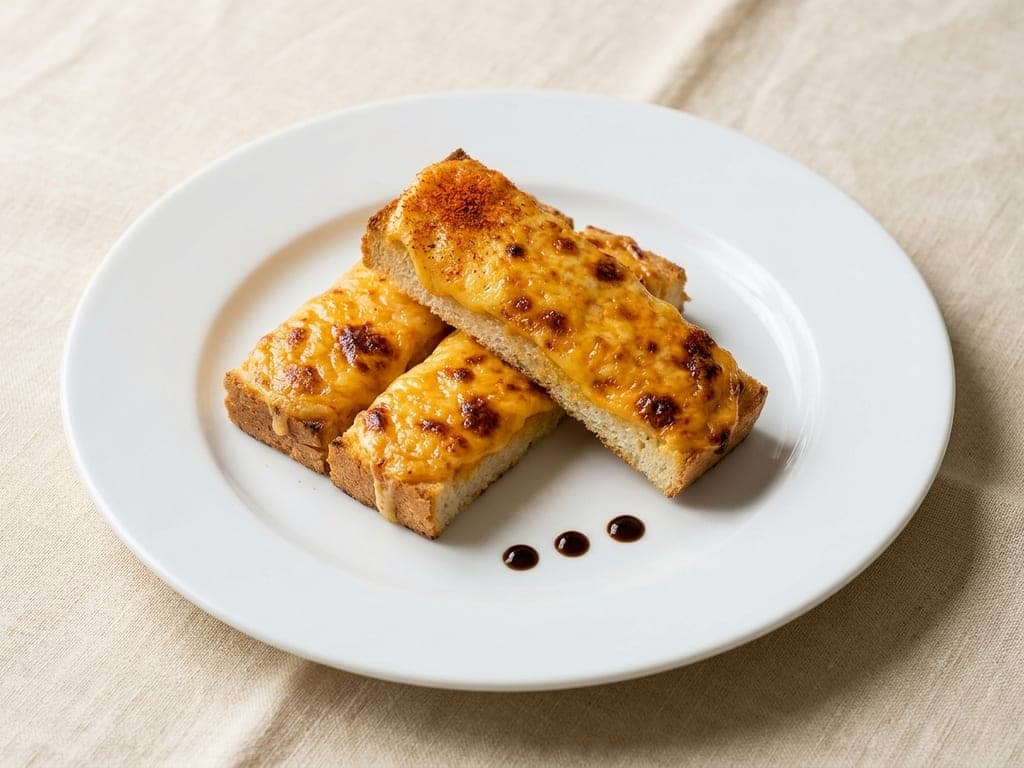
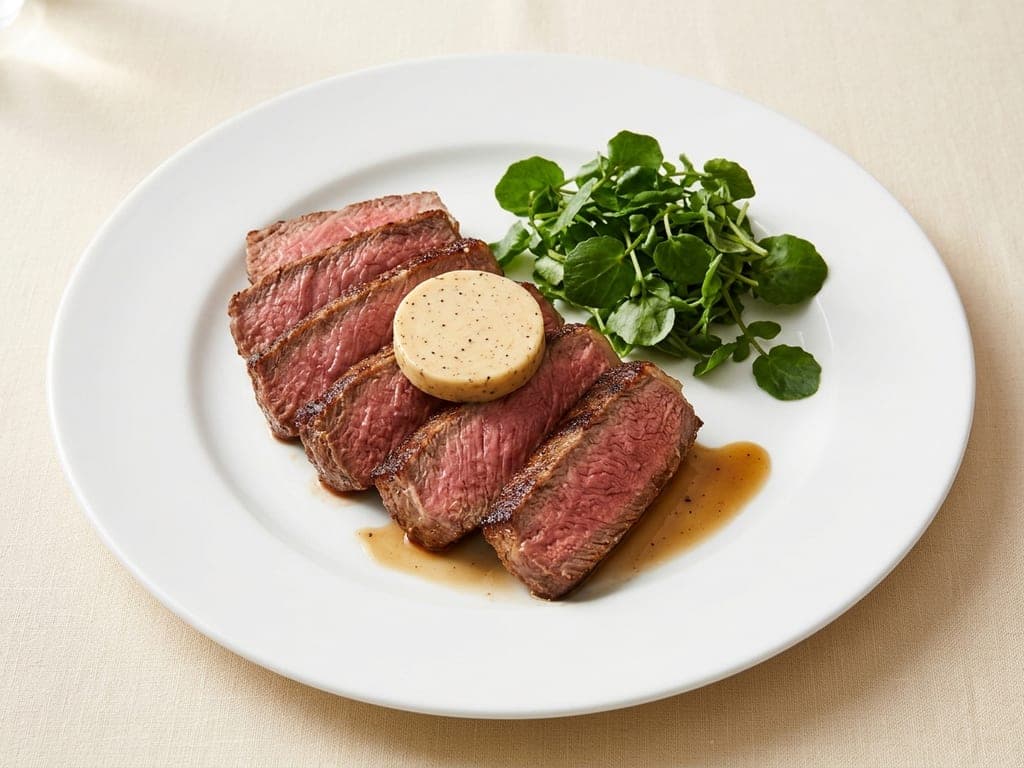
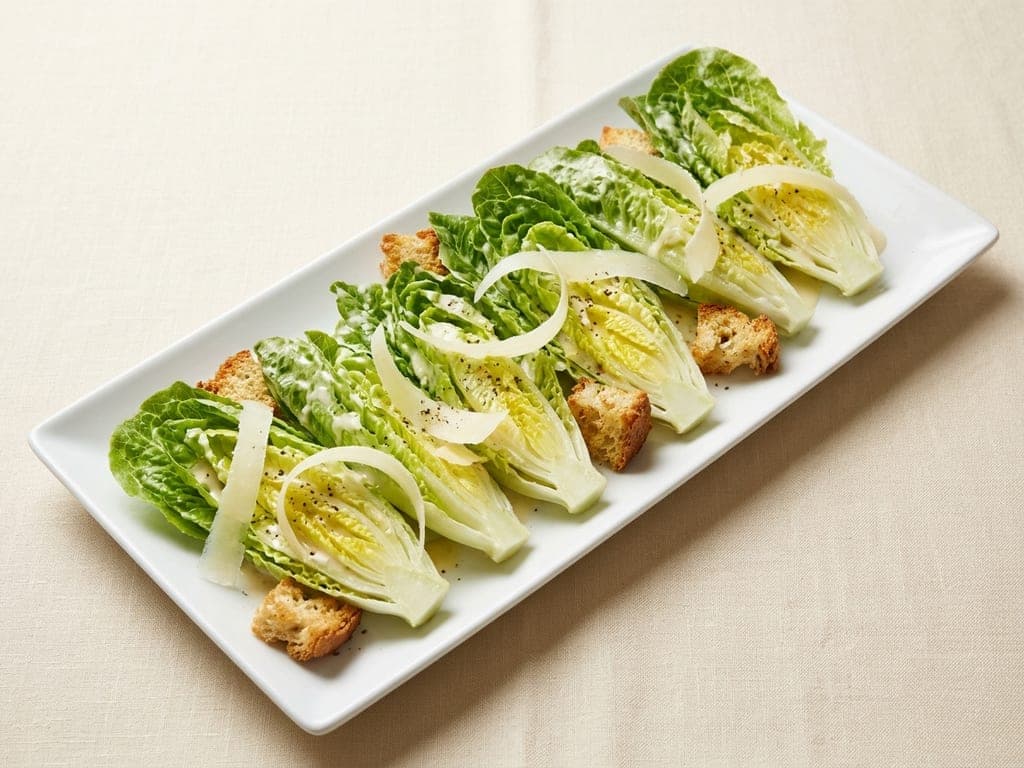
3 ways to plate it
The salt arithmetic: why our recipe weighs it
The most-copied homemade recipe, published by Saveur in 2009 and adapted by Serious Eats in 2011, uses 3 tbsp of kosher salt and 1/2 cup (120 ml) of soy sauce for a yield of about 2 cups (480 ml). Kosher salt brands differ hugely by volume: a quarter teaspoon of Diamond Crystal weighs about 0.7 g and holds about 280 mg of sodium, while a quarter teaspoon of Morton coarse kosher salt weighs about 1.2 g and holds about 480 mg (CSPI, from the brands’ labels). With Diamond Crystal, that batch carries about 10,080 mg of sodium from the salt plus 7,360 mg from the soy sauce (8 tbsp at 920 mg each, the Kikkoman label) plus about 440 mg from the three anchovy fillets in the Serious Eats version (Saveur used one), about 17,900 mg in all, or about 186 mg per teaspoon. With Morton it is about 25,100 mg, or 261 mg per teaspoon. The US bottle of Lea & Perrins has 65 mg per teaspoon, so the popular recipe is three to four times saltier than the sauce it imitates, depending on a brand it never names.
Our batch keeps the 1/2 cup (120 ml) of soy sauce, for depth, and cuts the added salt to 4 g. The arithmetic: soy sauce 7,360 mg, salt 4 g at 39.3% sodium is 1,572 mg, anchovies about 440 mg (12 g at roughly 3,670 mg per 100 g), molasses about 63 mg (170 g at 37 mg per 100 g), tamarind and vinegar about 27 mg. That is about 9,460 mg across 2 cups (480 ml), which is 96 teaspoons, or about 99 mg of sodium per teaspoon and about 296 mg per tablespoon. Yields vary with how long the pot simmers and how hard you press. Our 2-cup figure is the conservative end: most batches come out a little larger, and closer to 2 1/2 cups (600 ml) it falls to about 79 mg per teaspoon. If yours reduces more than ours, it will be saltier per teaspoon. These are our figures, not a lab test.
That still leaves our sauce about one and a half times as salty as the US bottle, and on purpose. It is also sweeter (about 2.5 g of sugars per teaspoon against the bottle’s 1 g) and more intensely spiced, because it is a concentrate. One rule covers all of it: use about two thirds of what a recipe asks for, then taste. For reference, the UK bottle lists 2.9 g of salt per 100 ml, which works out at about 58 mg of sodium per teaspoon, so British and American Lea & Perrins are nearly the same; the claim you will see that the American one has three times the sodium is not supported by current labels.
Calories, for completeness: molasses about 493 kcal (170 g at 290 kcal per 100 g), sugar 387 kcal (100 g), soy sauce about 80 kcal (8 tbsp at 10 kcal), tamarind about 50 kcal, anchovies about 25 kcal and vinegar about 86 kcal, roughly 1,120 kcal across 32 tablespoons, or about 35 kcal per tablespoon. The strained-out onion, spices and aromatics are not counted, since they are discarded.
Is homemade Worcestershire safe to age? Why we steep it in the fridge
Ranking recipes disagree wildly on this. One popular page boils the ingredients for a moment, blends in raw onion, garlic and ginger, and ages the jar in a cupboard for one to three months, calling the result shelf-stable for a year. Another ages its sauce for 3 weeks in the fridge and then keeps it for 8 months. A third says a month. None of them gives a pH or a tested process, and that is the missing piece.
Here is what is actually known. Commercial Worcestershire is acidic: the FDA’s table of food pH values lists it at 3.63 to 4.00, and the USDA specification that government buyers use sets pH 3.0 to 3.9, 2.60 to 3.75% acidity as acetic acid, and a sauce “free from fermentation”. Below pH 4.6, the bacterium that causes botulism cannot grow and make toxin. A factory controls and measures that. At home you would need a pH meter or test strips to know, and Utah State University Extension, writing about home fermentation, says foods cannot be guaranteed safe unless the pH is verified that way.
The risk sits in the solids. Onion, garlic, ginger and anchovy are low-acid foods, and guidance for small sauce makers from the University of Wisconsin and Nebraska explains that in a sauce mixing acid and low-acid ingredients, big pieces can take as long as 10 days to reach the acidity of the liquid, and that such products may need refrigerating during that time to prevent the growth of Clostridium botulinum. Our recipe is vinegar-led and, by our arithmetic, a little under 3% acetic acid once the caramel is in, within the commercial range, so the finished liquid is very likely acidic enough, though acid strength is not the same as pH and the soy sauce buffers some of it. But “very likely” is not a tested process, and the fridge costs nothing. So the steep happens in the fridge, the strained sauce stays in the fridge and is used within 3 months (an outer limit we borrow from the University of Maine Extension’s guidance for refrigerated vinegars flavoured with garlic; no one has tested homemade Worcestershire), and anything longer goes in the freezer.
The 3% figure assumes you do not dilute. Two cups (480 ml) of 5% vinegar carry about 24 g of acetic acid; in the roughly 780 ml (3 1/4 cups) of liquid in the pot before the caramel, that is about 3.1%. Add a cup (240 ml) of water, beer or juice and it drops to about 2.4%, below the commercial range, which is one more reason this recipe adds none.
Choosing the tamarind, the vinegar and the molasses
Tamarind is sold as two quite different products, and recipes that just say “tamarind concentrate” leave you to guess. The jars most supermarkets stock, Thai or Indonesian brands labelled concentrate or paste, are tamarind pulp thinned with water: thin, brown, and about 5 to 15 kcal per tablespoon on the label, as America’s Test Kitchen points out. Indian concentrate (Tamicon is the familiar brand) is thick, nearly black and about 40 to 50 kcal per tablespoon, roughly three times as strong. Our 1/4 cup (60 ml) is for the Thai-style jar. With Indian concentrate use 4 tsp, a third as much, or the sauce turns sharply sour. From a block, soak 1 oz (28 g) of pulp in 1/4 cup (60 ml) of boiling water for 10 minutes and push it through a sieve, which gives about 1/4 cup (60 ml) of paste, the same strength as the jar.
For the vinegar, any 5% vinegar keeps the acid where it needs to be. Distilled white is what the US bottle uses, and it is gluten-free. Cider vinegar is also gluten-free and a little fruitier. Malt vinegar is what makes the UK bottle taste British, a rounder, bready sourness, but it is brewed from barley and not distilled, so in the US the FDA does not allow it in foods labelled gluten-free; in the UK some malt vinegars (Sarson’s, for one) are certified gluten-free by Coeliac UK while still declaring barley, so check the label. Avoid seasoned rice vinegar (weaker and sugared) and homemade vinegar, whose strength you cannot know.
For the molasses, use regular unsulphured molasses. Blackstrap is a different product, about 45% sugar to regular molasses’ 70%, bitter and salty, and Stella Parks of Serious Eats warns it should never stand in for molasses unless a recipe names it. In the UK and Europe, black treacle swaps in 1:1; it is a blend of molasses and refiner’s syrup, slightly sweeter and rounder.
If it goes wrong
Too salty: salt cannot be taken out. Use smaller amounts in cooking, or stretch the batch with more 5% vinegar and a little molasses, simmered together and stirred in, knowing that this dilutes everything else too. Never thin it with water, which weakens the acid. Next time, weigh the salt, and check whether your tamarind paste or soy sauce is a saltier brand.
Bitter or acrid: the caramel went past deep amber, or blackstrap molasses was used. Burnt sugar cannot be strained out. If the caramel smoked before it went in, the batch will taste of it, which is why it is worth starting the caramel again rather than adding a scorched one.
A hard lump of caramel at the bottom of the pot: the caramel met cooler liquid and set. It is harmless. Keep the sauce over low heat and whisk until it melts, which can take several minutes.
Too thin or too weak: it is meant to be thin, so first compare it with the bottle. If it tastes watery, simmer the strained sauce for a few minutes to reduce it a little. Do not add water, juice or beer at any stage.
Fizzing, a domed lid, cloudiness that was not there before, a slimy film or mould: throw it away without tasting it, and do not boil it to rescue it. A fine sediment at the bottom is normal; shake the bottle.
History: what the court records say, and what is legend
The sauce was made by John Wheeley Lea and William Henry Perrins, chemists at 68 Broad Street, Worcester, who went into partnership on 1 January 1823. The company dates its sauce to 1837, but we have found no dated document from 1837. The earliest known is an advertisement in the Manchester Guardian of 17 October 1840, in which the firm says it had hesitated to sell the sauce “beyond our own vicinity” and that it was made from the recipe of “a nobleman of acknowledged gout”, gout meaning taste. The nobleman is not named in any 1840s advertisement we have found.
The most solid dates come from a lawsuit the firm lost. In 1876 Lea & Perrins went to the High Court to stop Richard Millar & Co. using the name Worcestershire sauce. Their own claim said the recipe had been passed to the founders by a nobleman of the county “about the year 1835”. As newspapers reported the judgment, the Master of the Rolls, Sir George Jessel, accepted that they had been the first to sell a sauce under that name, “about the year 1836”, but found that “within a very few, probably not more than two, years afterwards other people, of whom one Batty seemed to be the first, began to sell an article under the same name.” They had waited too long, and lost. In 1879 a US federal court in Lea v. Deakin went further, calling the name “a sort of generic term given to this kind of sauce from the fact that it was originally manufactured in Worcestershire”. That is why anyone may sell Worcestershire sauce, and why the Lea & Perrins label leans on its signature and the words “The Original and Genuine”. It also means the court record puts the sauce a year or two before the 1837 the firm celebrates: its own claim dated the recipe to about 1835, and the judge dated the first sales to about 1836.
Now the legend, which is what most recipe pages tell as history. It says Lord Sandys, back from Bengal, asked the chemists to copy an Indian sauce; it tasted terrible, the jars were left in the cellar, and years later they had matured into something delicious. The story grew in stages. The earliest naming of Lord Sandys we can find is in 1867, when a London weekly, the London Review, named him as the nobleman (an example cited by food historian Julia Fine). An 1884 version makes it a curry powder recipe brought to Lady Sandys by a novelist, Mrs Grey, which was later turned into a sauce. The forgotten jar turns up by 1892, in a trade journal, with an old Indian officer asking for something hot. The Governor of Bengal arrives in mainstream print by 1978. No Lord Sandys ever governed Bengal, and the firm’s own historian, Brian Keogh, found no record that one was ever in India. Even so, Lea & Perrins’ American website was still telling the cellar story as fact in 2012.
In 2009 the BBC reported that the “original recipes” may have been found: rough, partly coded notes that Keogh, the firm’s former accountant and later its archivist, had rescued from a skip (a dumpster) by the factory, and which his daughter brought to Worcester’s museum. The list ran to water, cloves, salt, sugar, soy, fish, vinegar, acetic acid, essence of lemons, peppers, tamarind (spelled “tamoraide”) and pickles, with quantities but no method and no yield. Heinz, which owned the brand, neither confirmed nor denied it: its spokesman said only, “We are delighted to hear that a number of archive items from the history of Lea & Perrins have been found in safe keeping by the daughter of the company’s former archivist.” The soy in that list fits a 1991 letter from the factory’s general manager saying soy sauce was dropped around the Second World War; today’s UK label lists none. Our recipe keeps it.
Long-keeping anchovy sauces were English before any of this. Hannah Glasse’s The Art of Cookery (1747) has a “Catchup to keep twenty Years” of stale beer, anchovies, shallots, mace, cloves, pepper, ginger and mushrooms, simmered, strained and bottled, with the note: “You may carry it to the Indies.” That is a family resemblance, not a proven ancestor, but it shows that the idea of a bottled, spiced, fishy seasoning was already at home in England.
Worcester sauce around the world
In Britain the sauce is often just Worcester sauce, and the short name is old: an Australian newspaper advertised “Celebrated Worcester Sauce” in 1846. The name is said WUUS-tuh-sher, three syllables, with the vowel of “put”.
In Japan it is usutā sōsu, Worcester sauce. Bull-Dog Sauce says the first Japanese company to sell it was Yamashiroya in Osaka, the predecessor of Ikari Sauce, in 1896; Bull-Dog itself began making sauce in 1905. Japanese makers reworked it with vegetables and fruit into a sweeter sauce for pouring over fried food such as cutlets. Japanese Worcester sauce is still thin, the thinnest class in the Japanese Agricultural Standard; the thicker chūnō and tonkatsu sauces, and later okonomiyaki sauce, grew out of it after the Second World War (Bull-Dog launched the forerunner of its tonkatsu sauce in 1949).
Across Latin America it is salsa inglesa, English sauce, and in El Salvador simply “salsa Perrins”; the Wall Street Journal reported in 1996 that Salvadorans got through about 450 tons (about 410 metric tonnes) of it a year, about 2 1/2 oz (70 g) a head. In Czech kitchens it is simply worcester, said “vorčestr”; Czech Wikipedia, citing a Czech household cookbook, says it was being imported into Czechoslovakia around 1925, and it is a standard seasoning in Czech pub-style steak tartare (tatarák), along with onion, mustard and ketchup.
Questions, answered
What is Worcestershire sauce made of?
Vinegar, molasses, sugar, salt, anchovies, tamarind, onion, garlic and spices. The US Lea & Perrins label lists distilled white vinegar, molasses, sugar, water, salt, anchovies, onions, garlic, cloves, natural flavorings, tamarind extract and chili pepper extract; the UK label uses malt vinegar (from barley) and spirit vinegar instead. Our homemade version adds soy sauce, which Lea & Perrins itself used until around the Second World War, according to a 1991 letter from its factory manager, and whole spices that are strained out.
Is Worcestershire sauce gluten-free?
It depends on the country and the vinegar. The US Lea & Perrins Original is made with distilled white vinegar and has no gluten ingredient on its label, but barley is not a US “Contains” allergen, so check the bottle you buy for a gluten-free claim. UK and Canadian Lea & Perrins use malt vinegar from barley, declare barley and carry no gluten-free claim. This homemade sauce is gluten-free if you use distilled white or cider vinegar, tamari labelled gluten-free and a curry powder labelled gluten-free (plus a gluten-free miso in the vegetarian version); with regular soy sauce it is not. Malt vinegar cannot go into gluten-free food in the US; in the UK, only a malt vinegar labelled gluten-free, such as Sarson’s, is suitable.
Is Worcestershire sauce vegetarian or vegan? Can I make it without anchovies?
Classic Worcestershire contains anchovies, so it is neither vegetarian nor vegan, and it is a fish allergen. Many US store brands are anchovy-free, and in the UK Henderson’s Relish is approved by the Vegetarian Society. To make this recipe without anchovies, leave them out and add 1 tbsp white miso (soy; choose a rice-based one, not barley, if you need it gluten-free) and 2 dried shiitake mushrooms to the simmer. The miso adds about 630 mg of sodium (USDA; labels vary) against the anchovies’ 440 mg, so the batch rises by only about 2 mg per teaspoon. Keep the vinegar amount the same.
What can I use instead of Worcestershire sauce?
For each tablespoon, mix 1 tsp soy sauce (or tamari) with 2 tsp cider vinegar and a pinch of brown sugar. Do not swap soy sauce 1:1: a tablespoon of soy sauce has about 880 to 920 mg of sodium (USDA and the Kikkoman label) against about 195 mg in a tablespoon of US Lea & Perrins, roughly 4.5 to 4.7 times as much, and it has none of the sourness. Henderson’s Relish, or a vegan Worcestershire, is the closest ready-made swap.
Is Worcestershire sauce the same as soy sauce?
No. Worcestershire is a vinegar-based sauce, sour-sweet and spiced, with a pH of about 3.6 to 4.0 (FDA); soy sauce is brewed from soybeans and usually wheat, salt-led, with a pH of about 4.4 to 5.4 and roughly 4.5 to 4.7 times the sodium per tablespoon. US Lea & Perrins contains no soy at all, although many homemade recipes, including ours, add some for depth.
How do you pronounce Worcestershire?
WUUS-tuh-sher, three syllables (Cambridge Dictionary). The “Worcester” part is said WUUS-ter, with the vowel of “put”, and in Britain and the Czech Republic the sauce is often just called Worcester sauce.
Where does Worcestershire sauce come from, and what is it named after?
It is named after the county of Worcestershire, England, where chemists John Lea and William Perrins of Worcester first sold it in the mid to late 1830s. The story of Lord Sandys bringing the recipe home from Bengal is a legend that grew between 1867 and the 1970s; no Lord Sandys ever governed Bengal. In 1876 an English court found the firm first sold it “about the year 1836”, and a rival, Batty, was selling a sauce under the same name within about two years.
How long does homemade Worcestershire sauce last, and can you freeze it?
Keep it in the fridge at 40°F (4°C) or below (5°C in UK guidance) and use it within 3 months of making it. No one has tested homemade Worcestershire; 3 months is the University of Maine Extension’s limit for refrigerated vinegars flavoured with garlic, which we use as the outer limit. Freeze it in 1 tbsp ice-cube portions for longer; USDA says food kept at 0°F (-18°C) stays safe, and only flavour fades. Never age or store it in the pantry.
Is Worcestershire sauce low FODMAP?
Shop-bought Worcestershire is listed as low FODMAP by Monash University at 2 tablespoons (Monash uses 20 ml Australian tablespoons). A homemade batch steeped with a whole onion and garlic has not been tested, and straining does not settle it: the fructans in onion and garlic dissolve in water, so they stay in the liquid when the solids are strained out. We cannot call this recipe low FODMAP.
How do I make Worcestershire sauce thicker?
Worcestershire is meant to be thin; the USDA specification describes it as a thin liquid. To make a glaze or steak sauce, thicken a portion, not the jar: simmer it until reduced by a third, which also concentrates the salt, or whisk 1/2 tsp cornstarch (cornflour) with 1 tsp water into 1/2 cup (120 ml) of sauce and simmer for 1 minute.
What is Worcestershire sauce used for?
Four main jobs: as a finishing seasoning (Welsh rarebit, cheese on toast, eggs, steak tartare), in marinades, burgers, meatloaf, stews and Bolognese for savoury depth, in drinks such as a Bloody Mary or michelada, and in dressings such as Caesar. With this homemade version, start with about two thirds of what the recipe asks for.
Snap your finished plate and let the AI plate it again — more beautifully.