How to plate desserts — the pastry chef's system
Dessert is the course with the most plating freedom and the least forgiveness — everything melts, slides or wilts. This guide gives you the five-component anatomy, the six signature moves, and the research that separates real rules from folklore.
The photos on this page are AI-generated illustrations.
No course rewards plating like dessert. The savory cook is stuck with the roast the roast wants to be; the pastry section chooses every shape, every color, every texture on the plate. That freedom is why restaurant desserts look the way they do — and why the same brownie, plated with intent, reads as a different dish. The effect is measurable: careful presentation raises how much diners like the identical food, and an artistically composed plate raised what they'd pay for it.5
It's also the course where the internet's plating advice is at its most confidently wrong — this guide keeps the rules that survived testing and names the ones that didn't. Every study is listed at the bottom.
The anatomy of a plated dessert
Nearly every restaurant dessert is five roles in conversation. Name them on any plate you admire:
- The hero — the element the dessert is named after: the slice, the tart, the soufflé. Everything else exists to frame it. One hero per plate.
- The sauce — anglaise, coulis, caramel, ganache. It goes on the bare plate first and gives the composition its direction.
- The crunch — tuile, crumble, praline, chocolate shard. Texture contrast is what keeps soft desserts from eating monotonously; it's also the architecture that height leans on.
- The cream or frozen element — quenelle of ice cream, rod of whipped ganache, dollop of crème fraîche. The temperature-and-richness counterpoint, always anchored, always last.
- The garnish that belongs — candied zest, a perfect berry, toasted nuts: something the flavor already owns. If the dessert wouldn't miss it on the tongue, the eye doesn't need it either.
A restaurant plate is assembled à la minute — every component made ahead, staged, and combined in the final sixty seconds. Adopt the same split at home: prep is the afternoon, plating is a sprint.
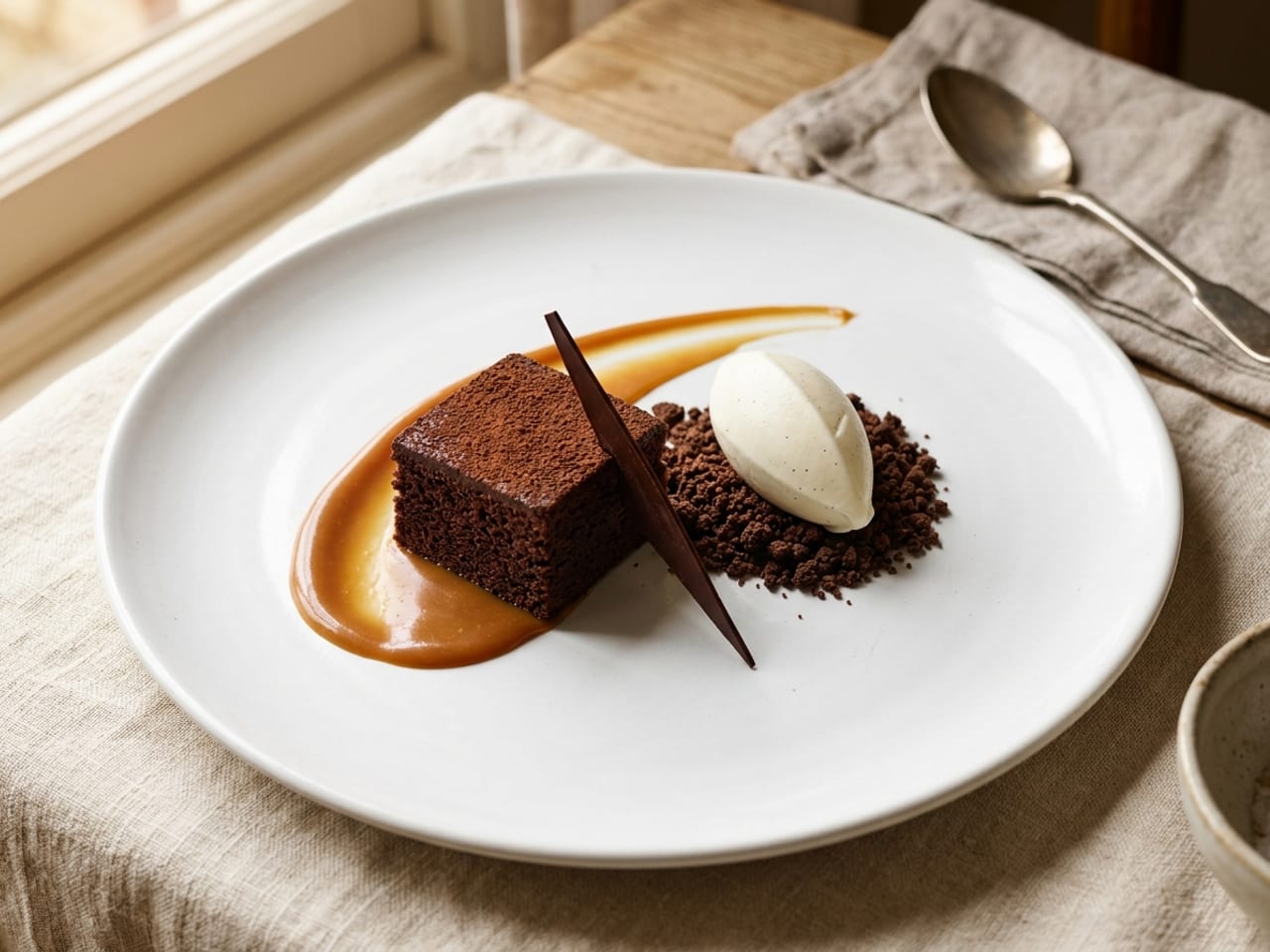
Six dessert plating moves worth practicing
Learn these six and you can plate any dessert in your repertoire: they're the entire visual vocabulary of the pastry pass. The first has a guide of its own, how to quenelle with one spoon or two. The sauce moves, flooding and feathering included, are in sauce plating techniques.
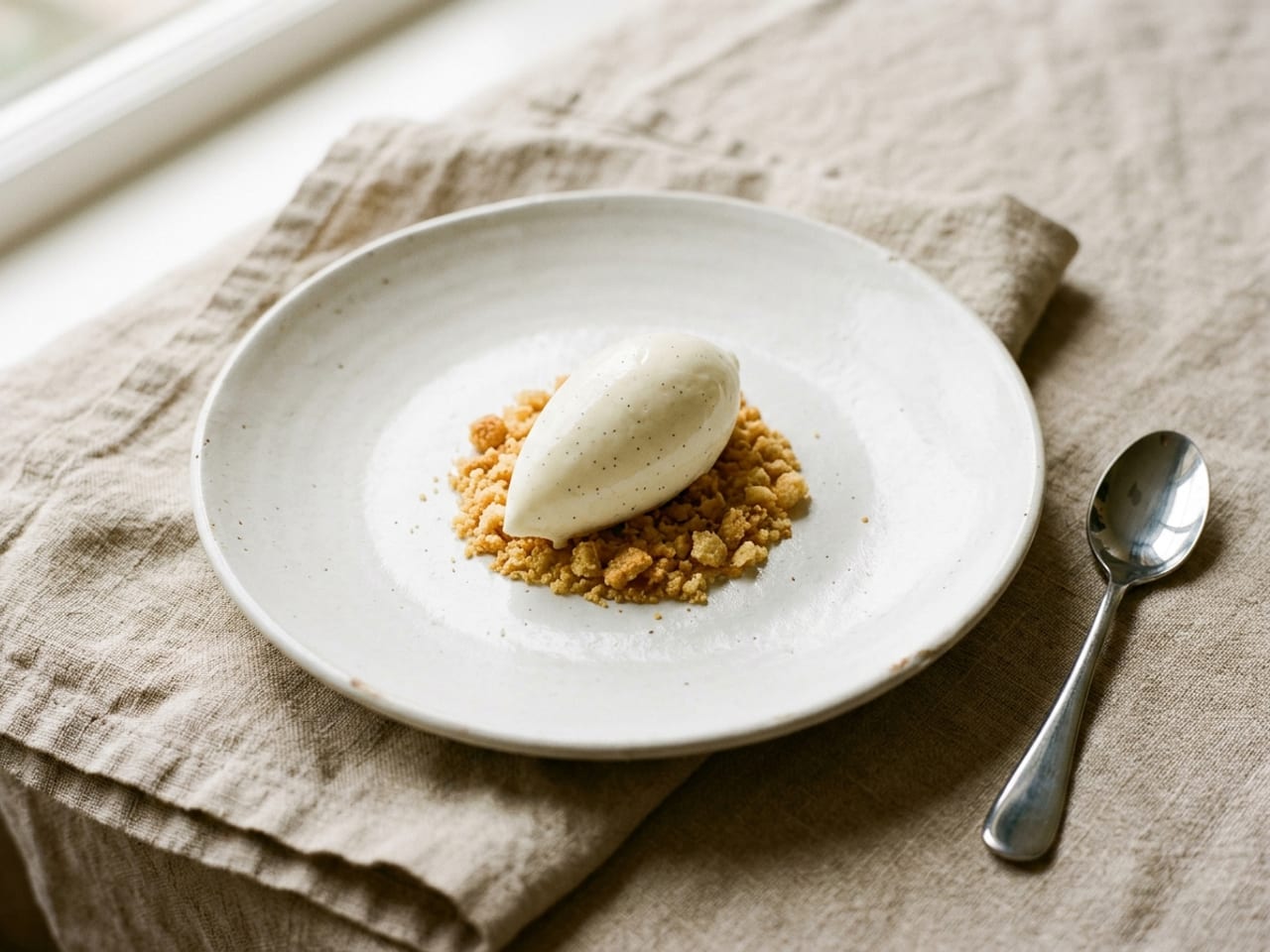
The quenelle
The smooth oval of ice cream or cream that says 'pastry section' louder than anything else on the plate. One warm spoon drawn through the tub in a single motion leaves a smooth egg, which many kitchens call a rocher; two spoons passed back and forth leave three faces. Always land it on a crumble anchor so it can't slide.
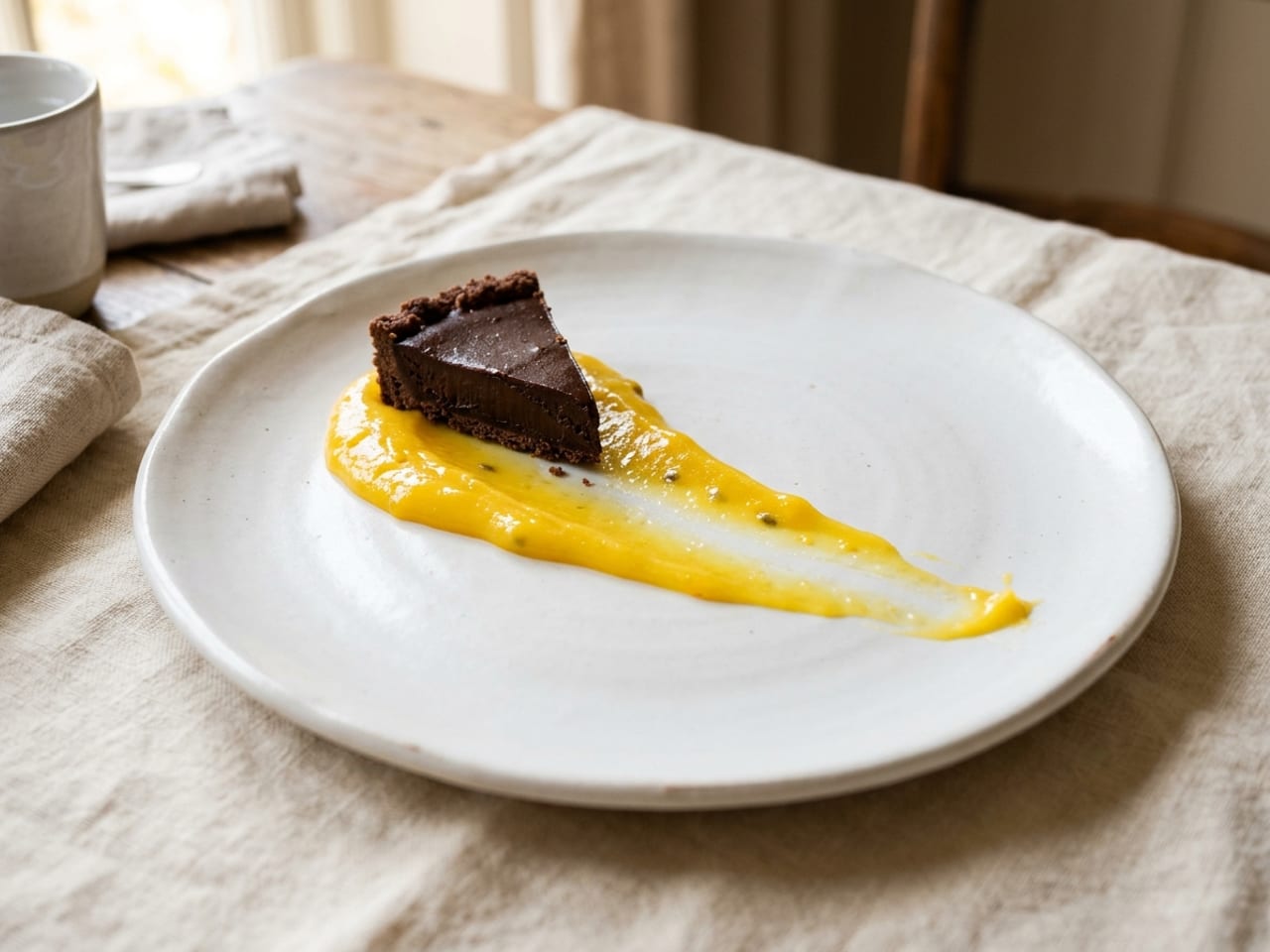
The smear
A spoonful of thick sauce or curd, back of the spoon pressed in, one decisive pull. It gives the plate direction and a base line to build along. One smear per plate — it's punctuation, not wallpaper.
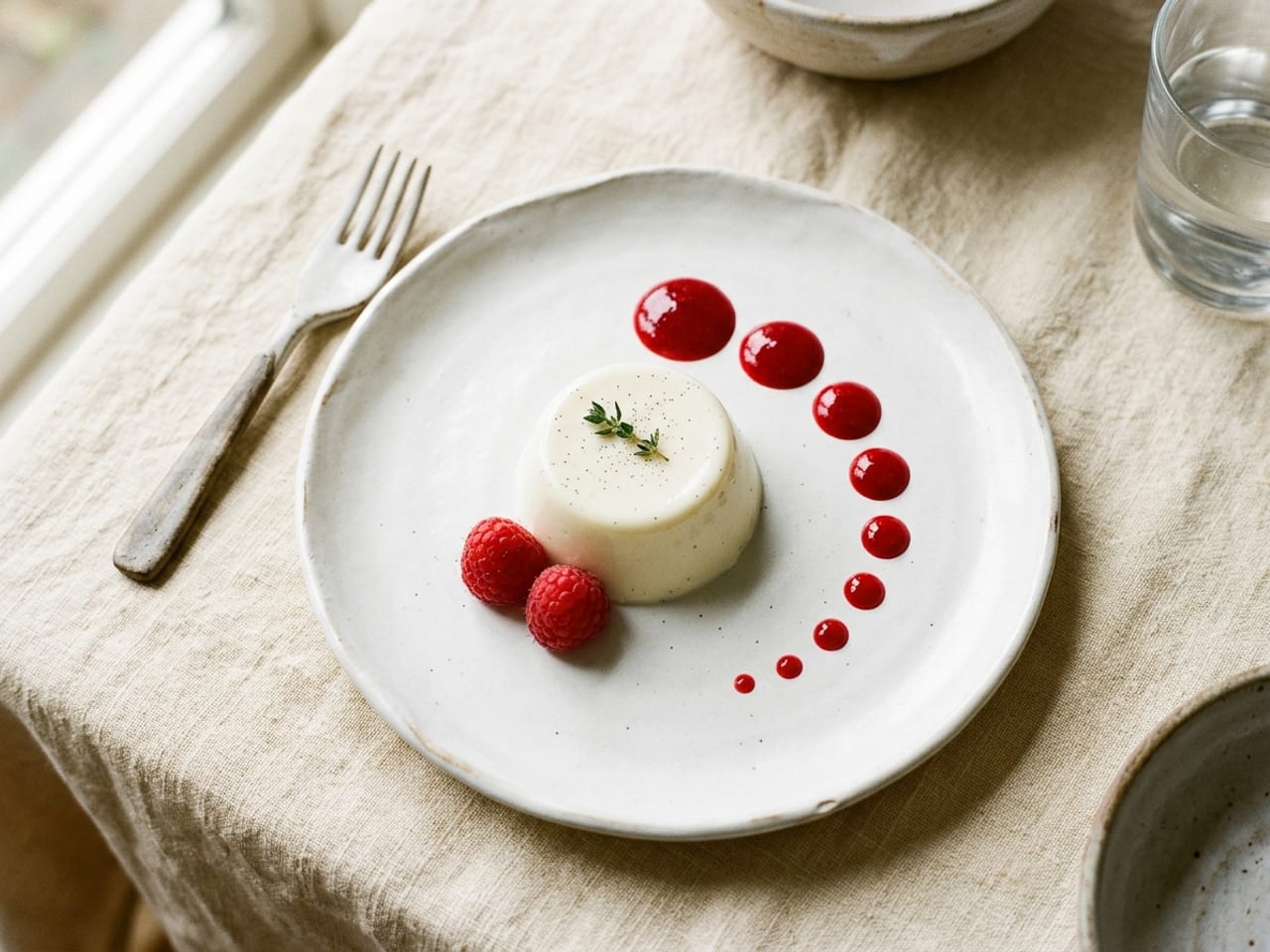
Dots in a dying line
Sauce dots descending in size along a curve — the classic fine-dining rhythm. Squeeze bottle or spoon tip, odd spacing, sizes shrinking away from the hero. Wipe the bottle nozzle between dots; ragged dots read instantly.
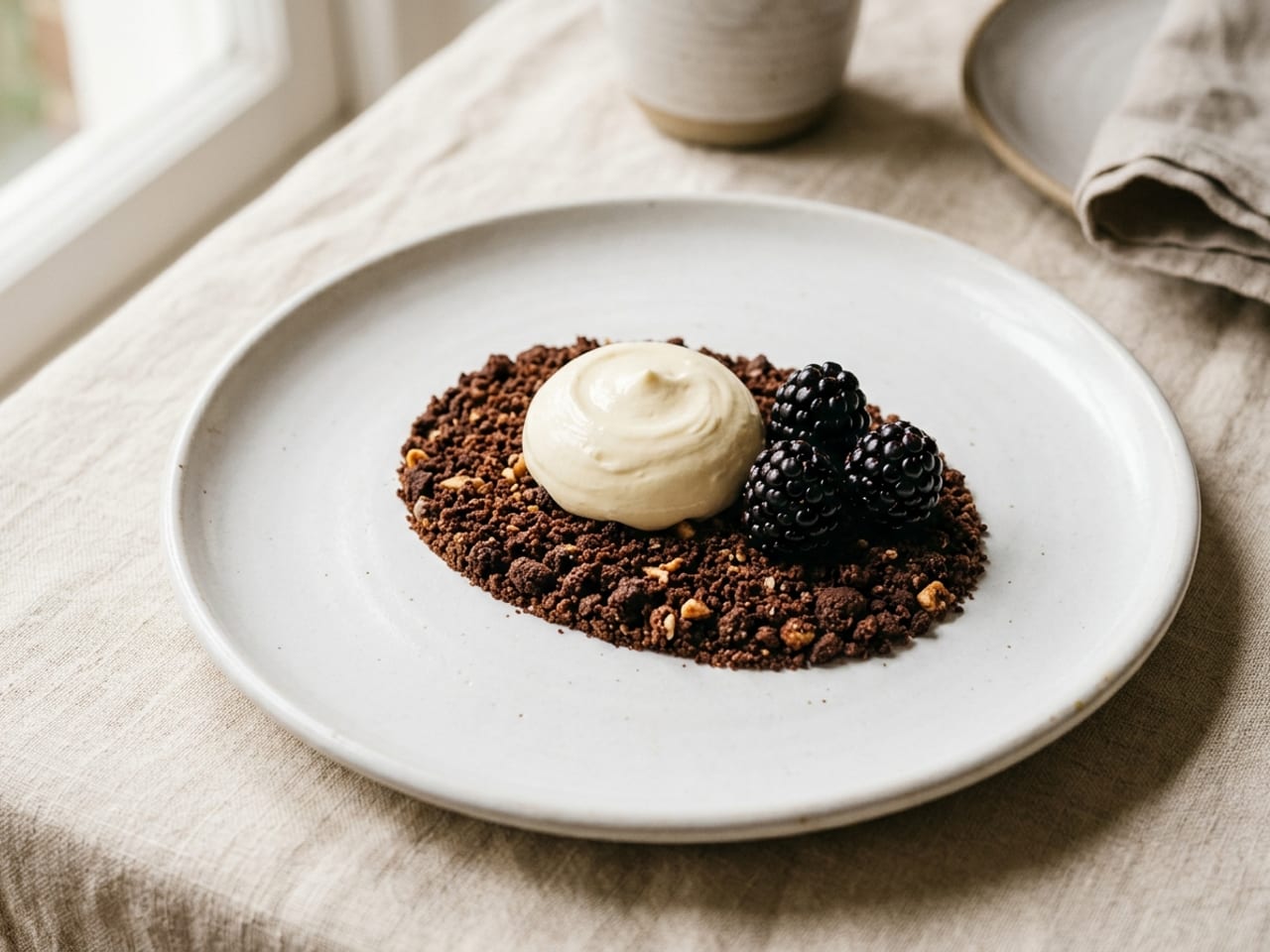
Crumble soil
Cookie crumbs, streusel, crushed praline — scattered as a bed, not a blizzard. Soil does three jobs at once: texture against the cream, an anchor that stops the quenelle sliding, and a warm color block on a pale plate.
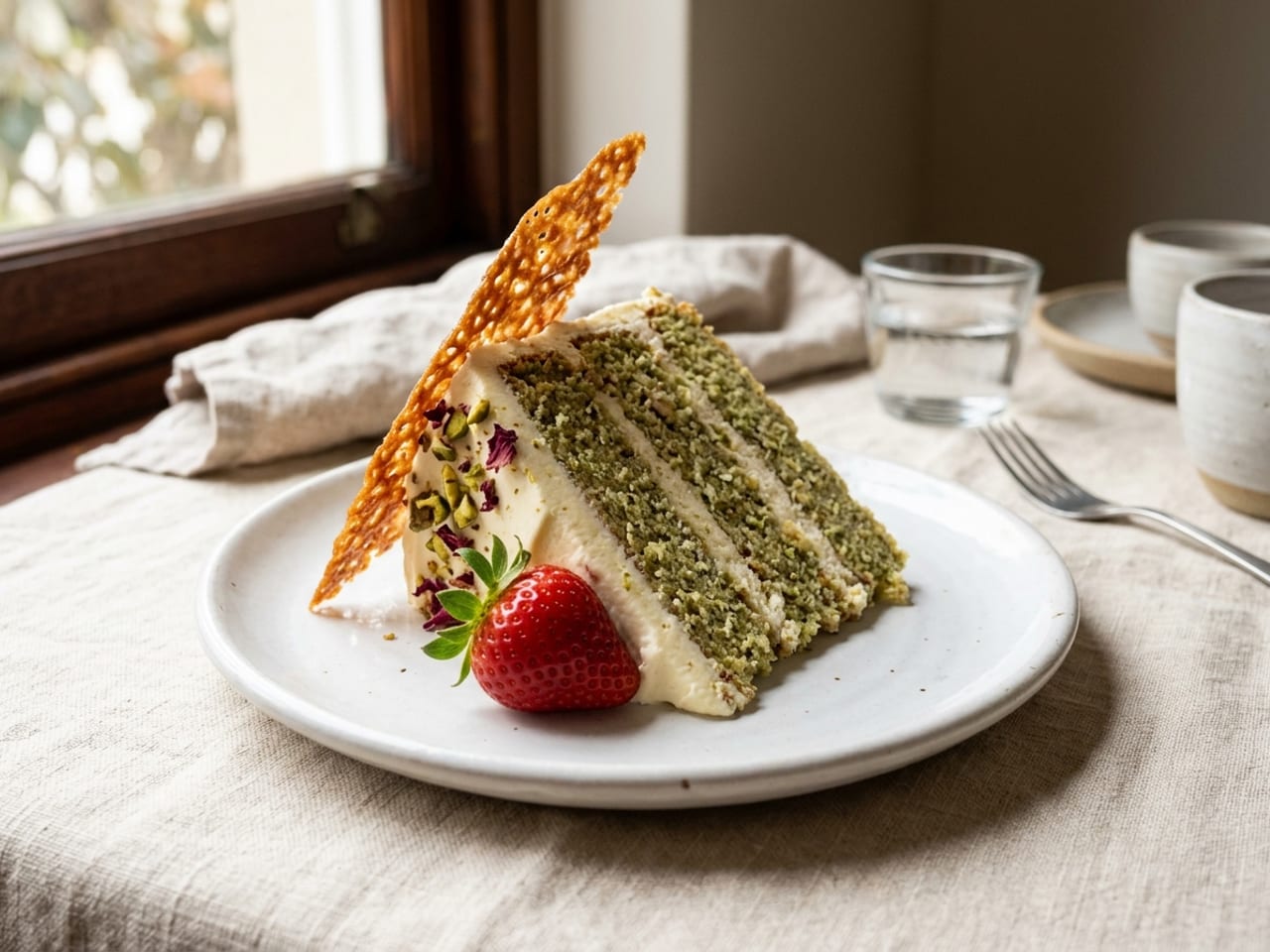
Stack and lean
Height makes dessert feel composed: the tuile leaning on the cake, the berry propped on the cream, the shard of chocolate at an angle. Build one point of height, off-center, and let everything else stay low.
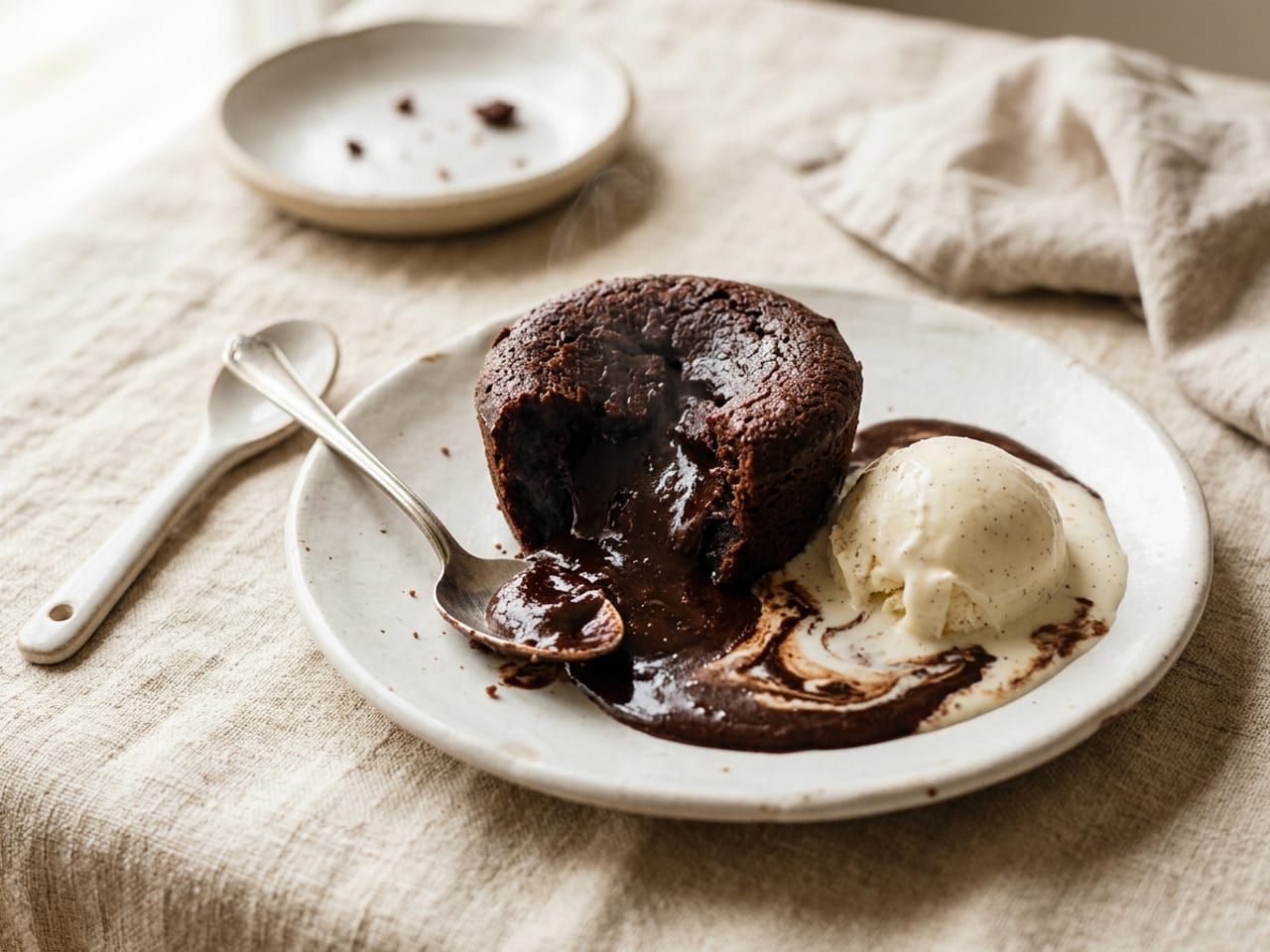
Temperature contrast
Warm chocolate cake, cold quenelle melting into it — dessert is the only course where the clock is part of the plating. Plate everything else first; the frozen element lands last, seconds before serving.
The same brownie, ninety seconds apart
Nothing new was baked: a smear, a quenelle on crumble, one shard, a wiped rim.
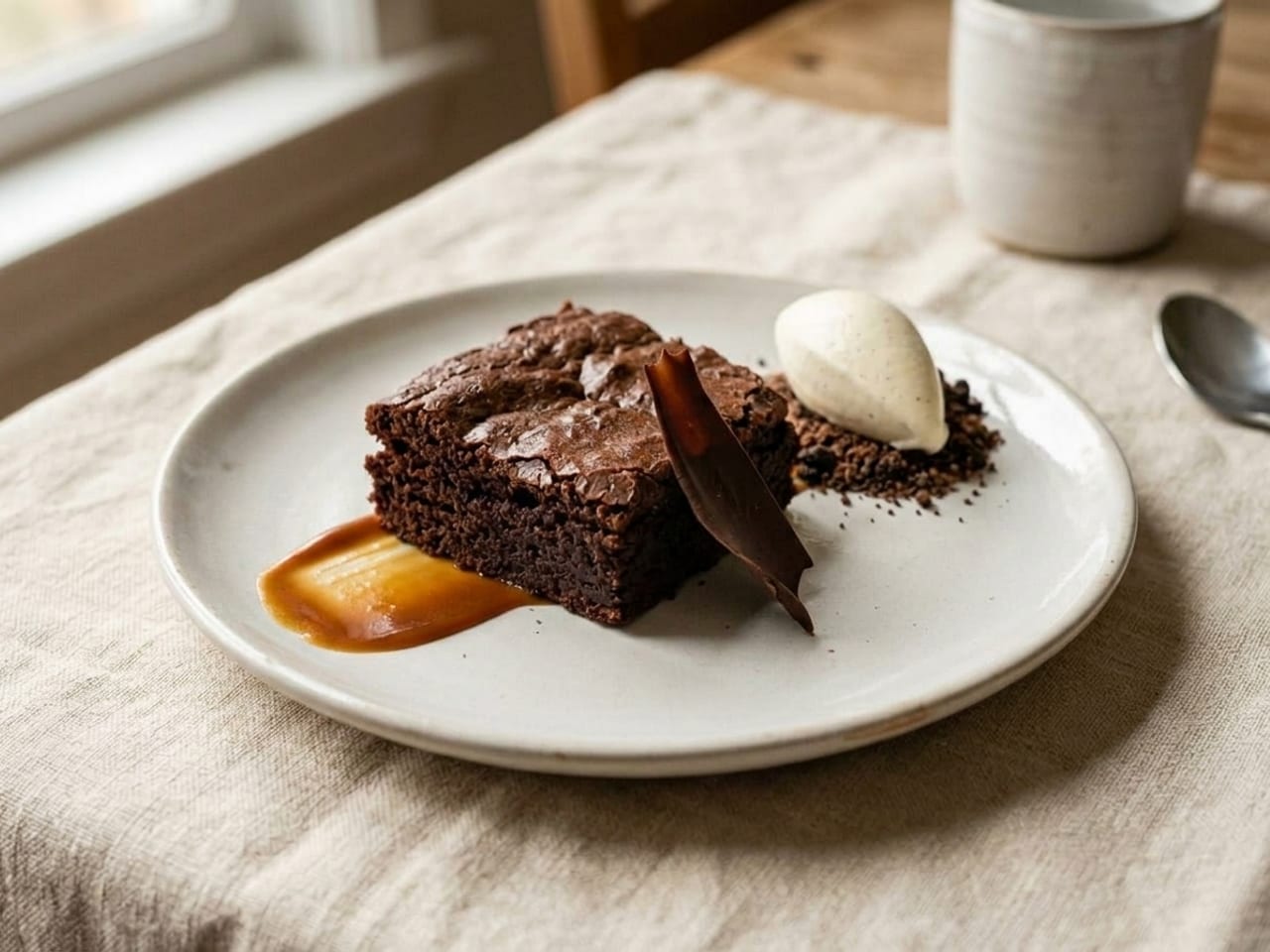
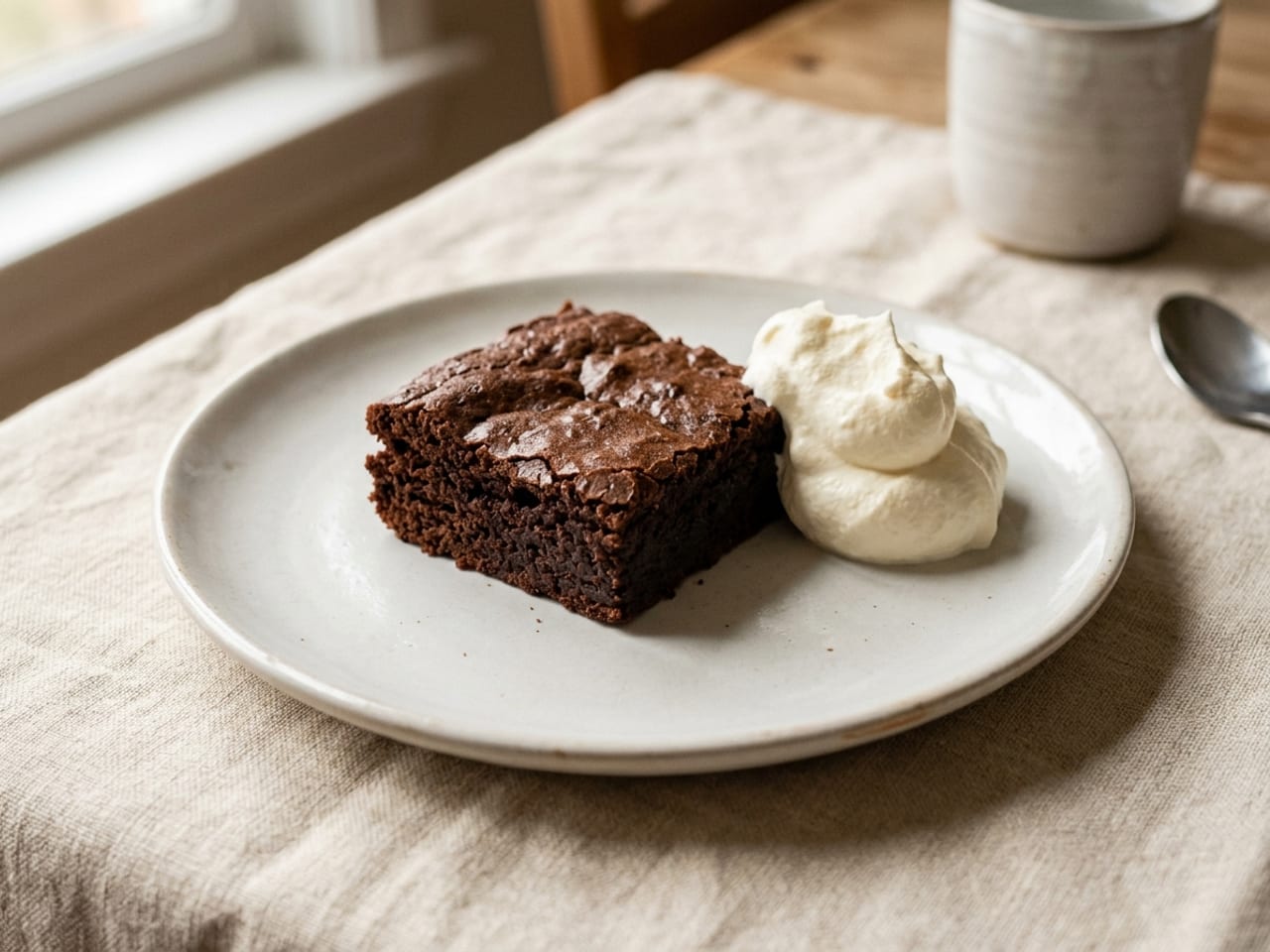 BeforeAfter
What research says about plating desserts
- The white plate is a flavor decision. The identical strawberry dessert on a white plate was rated sweeter, more flavor-intense and better liked than on black.1 Dark plates remain a legitimate frame for pale desserts — but white starts ahead.
- Round reads sweet. People consistently map rounded shapes to sweetness and angular shapes to bitterness and sourness.2 The pastry classics — quenelles, domes, round plates, curved smears — have been exploiting the correspondence for decades. Save the hard angles for a dessert whose story is bitter chocolate or citrus.
- Centered beats artfully off-center. In a real dining context, diners preferred the main element centered — and were willing to pay more for it — versus offset plating.3 Center the hero; put the asymmetry in the height and the sauce instead.
- The odd-number rule didn't survive testing. Across experiments with 3 versus 4 scallops, no reliable preference for odd counts emerged.4 Plate the number the dessert wants.
- Artistry pays. A salad plated after a Kandinsky painting was liked more before AND after eating, rated tastier, and diners were willing to pay significantly more for the identical ingredients.5 Composition is real value, not vanity — dessert is where you're allowed to use all of it.
- The vessel seasons the dessert. Identical popcorn tasted sweeter or saltier depending on bowl color6 — worth remembering when choosing between the white plate, the slate, and grandmother's floral china (see Color on the Plate).
The 60-second dessert audit
Run it before the plate leaves the kitchen — the whole list takes less time than the quenelle has.
- Chill or warm the plateCold desserts on chilled plates, warm desserts on warm ones. A room-temperature plate is a countdown timer for the quenelle.
- Sauce before heroSmears, dots and pools go down first, on the bare plate. Sauce added after the hero always lands as an apology.
- Anchor anything that slidesCrumble under the quenelle, a dab of cream under the tuile, sauce under the cake. Nothing on the plate should be able to travel.
- One point of height, off-centerA single vertical moment — a shard, a curl, a leaning tuile. Centered food, off-center peak: composed, not symmetrical.
- Frozen last, serve nowThe ice cream lands after everything else is done, and the plate leaves immediately. Dessert plating is a sprint finish, not a still life.
- Wipe the rimPowdered sugar dust and sauce fingerprints on the rim undo everything inside it. Damp towel, ten seconds, every plate.
Six dessert plating mistakes
The failure modes are as classic as the moves — every one of these has a fix that costs nothing.
- The sauce floodA moat of coulis drowning the plate. Sauce is an accent and an anchor — a smear, a pool the size of the hero, dots. If the spoon can skate, there's too much.
- Powdered sugar snowDusting the entire plate — rim included — reads as 1995. If you dust, dust the food only, through a fine sieve, from high up, and wipe the rim after.
- The mint sprig reflexA raw mint sprig that no one eats, planted in the cream because a garnish felt mandatory. Garnish must belong to the dessert: candied zest on a citrus tart, toasted nuts on praline, a real berry on a berry dish.
- Overcrowding the canvasFive components is a composed plate; nine is a buffet. The empty plate around the dessert is doing work — it frames, and it promises restraint.
- Slow plating, dead dessertIce cream weeping, tuiles going soft, cake gone cold while the dots got fussed over. Stage every component, rehearse the order, then plate in under a minute.
- Inedible decorationFlowers from a florist, glitter, lacquered sugar art nobody can bite. If it can't be eaten with pleasure, it's clutter with a stem.
Practice on tonight's dessert
Dessert plating is rehearsal-friendly: the components hold, the stakes are low, and the same five roles repeat on every plate. Photograph your next dessert from 45°, run the audit above, fix one thing, and shoot it again — the camera will show you the composition your sweet tooth forgives.
Or let Plate Artists run the rehearsal for you: upload the photo and the AI re-plates your own dessert — same food, pastry -section discipline — with the concrete steps explaining what changed, down to where the smear went and why the quenelle moved.
See your dessert, plated by the pass
Snap tonight's dessert and get the fine-dining version back — plus the exact moves to plate it that way yourself.
Start free · 1 enhancement →Free account · 1 free enhancement · No credit card
Dessert plating questions, answered
How do you plate a dessert like a restaurant?
Build it from five roles: a hero (the cake, tart or cream that IS the dessert), a sauce (smear, pool or dots, applied to the bare plate first), a crunch (crumble, tuile, praline), a cream or frozen element (quenelle, ideally anchored on the crumble), and one deliberate garnish that belongs to the flavor. Compose it with the hero roughly centered, one off-center point of height, and generous empty rim — then plate fast and serve immediately. Restaurants don't have a secret beyond roles, order and speed.
What is a quenelle and how do you make one?
A quenelle is a smooth oval of ice cream, cream or mousse shaped with a spoon. Warm a deep spoon in hot water, tap it dry, and draw it through slightly tempered ice cream in one motion so the ice cream curls over itself: that one-spoon version is a smooth egg, which many kitchens call a rocher. Two spoons passed back and forth give the classic three-sided quenelle. Set it on a bed of crumble so it can't slide. Our quenelle guide has both methods step by step, food by food.
Should dessert be served on a white or black plate?
White is the tested default: in a controlled study, the identical strawberry dessert served on a white plate was rated significantly sweeter, more intense in flavor and better liked than on a black plate. Reach for dark plates as a visual frame when the dessert itself is pale — panna cotta, meringue, vanilla ice cream — but know you're trading a little measured flavor advantage for contrast.
Should you plate desserts in odd numbers?
The odd-number rule is the most repeated plating tip on the internet — and when researchers actually tested it (3 versus 4 scallops, across multiple experiments), diners showed no reliable preference for odd. Arrange components where the composition wants them and stop counting. What DOES have evidence: keeping the main element centered, which diners consistently preferred and even paid more for.
How do you keep ice cream from sliding on the plate?
Give it soil. A bed of cookie crumble, streusel or crushed praline grips the quenelle, adds a texture contrast the soft dessert needs anyway, and buys you serving time. The same logic anchors everything on the plate: cream under tuiles, sauce under cake. A plated dessert should be able to survive the walk to the table tilted five degrees.
What sauces work best for dessert plating?
Thick, glossy sauces that hold an edge: crème anglaise, chocolate ganache loosened to pouring, fruit coulis reduced until it coats a spoon, salted caramel. Thin, watery sauces bleed and can't hold a smear or a dot. Match the sauce to the plating move — anglaise pools, ganache smears, coulis dots — and remember the color guide: a deep-colored sauce promises intensity, so make sure the flavor keeps the promise.
The research behind this guide
Peer-reviewed studies, retrieved via PubMed and Crossref. Every figure quoted above comes from one of these papers.
- Piqueras-Fiszman, B., Alcaide, J., Roura, E., & Spence, C. (2012). Is it the plate or is it the food? Assessing the influence of the color (black or white) and shape of the plate on the perception of the food placed on it. Food Quality and Preference, 24(1), 205–208. doi:10.1016/j.foodqual.2011.08.011
- Spence, C. (2023). Explaining visual shape–taste crossmodal correspondences. Multisensory Research, 36(4), 313–345. doi:10.1163/22134808-bja10096
- Michel, C., Velasco, C., Fraemohs, P., & Spence, C. (2015). Studying the impact of plating on ratings of the food served in a naturalistic dining context. Appetite, 90, 45–50. doi:10.1016/j.appet.2015.02.030
- Woods, A. T., Michel, C., & Spence, C. (2016). Odd versus even: a scientific study of the ‘rules’ of plating. PeerJ, 4, e1526. doi:10.7717/peerj.1526
- Michel, C., Velasco, C., Gatti, E., & Spence, C. (2014). A taste of Kandinsky: assessing the influence of the artistic visual presentation of food on the dining experience. Flavour, 3, 7. doi:10.1186/2044-7248-3-7
- Harrar, V., Piqueras-Fiszman, B., & Spence, C. (2011). There’s more to taste in a coloured bowl. Perception, 40(7), 880–882. doi:10.1068/p7040
Keep going
The quenelle, step by step
One spoon or two, how warm the spoon should be, the right texture for each food, and the fixes when it tears or slides.
Plating components: coulis, tuile, quenelle
How to make what goes on the plate: coulis, tuiles, crumb, crémeux, meringue shards, powders, gels and foams.
Plating 101 — the composition guide
The clock method, height, negative space and sauce work — the full system these dessert moves plug into.
Michelin-star plating, dissected
The purée-sear-crunch anatomy of a fine-dining plate — the savory sibling of the dessert blueprint above.
Bake something worth plating
Start with crème brûlée, no blowtorch needed, then work through the dessert shelf. Each recipe ends with three ways to plate it.
How to cut fruit
The mango hedgehog, citrus suprêmes, strawberry fans and ten more fruit cuts, step by step, for the plate and the platter.
24 fancy desserts for a dinner party
Sorted by how much work is left once guests are seated, each with its make-ahead window and one way to plate it.