Michelin-star plating — the anatomy of a fine-dining plate
Strip the mystique and a starred plate is a repeatable structure: canvas, base, hero, crunch, height, restraint. This guide dissects it, teaches the five signature moves, and shows you how to run the same pass in a home kitchen.
Updated · The photos on this page are AI-generated illustrations.
First, the honest part: Michelin stars are awarded for what's on the fork (ingredients, harmony, technique, personality, consistency), not for plating. But the kitchens that clear that bar compose plates with the same discipline they cook with, and their shared visual vocabulary is what everyone means by "michelin star plating". It's worth learning because it works: an artistically composed plate of identical ingredients was rated tastier and diners were willing to pay significantly more for it.1For what each star level means and how inspectors award them, see how Michelin stars work.
Better still, the vocabulary is small. A handful of structural decisions and five hand moves cover most starred plates you've ever admired — and every one of them scales down to a Tuesday kitchen. The studies are at the bottom.
Michelin star plating in six parts
Michelin star plating is the fine-dining way of composing a plate: an oversized plain plate as the frame, a base of purée or sauce, one hero element that shows its technique, one crunchy element, a single point of height and only three to five components in all, plated the same way every time with the rim wiped clean.
- Oversized canvas: a plain plate one size too big, the food in the center third.
- Base: purée or sauce goes down first.
- Hero: the protein seared or sliced to show its technique, set on the base.
- Crunch: a tuile, crisp skin or nuts against the soft parts.
- Height: one peak; everything else stays low.
- Restraint: three to five components, then wipe the rim and send it.
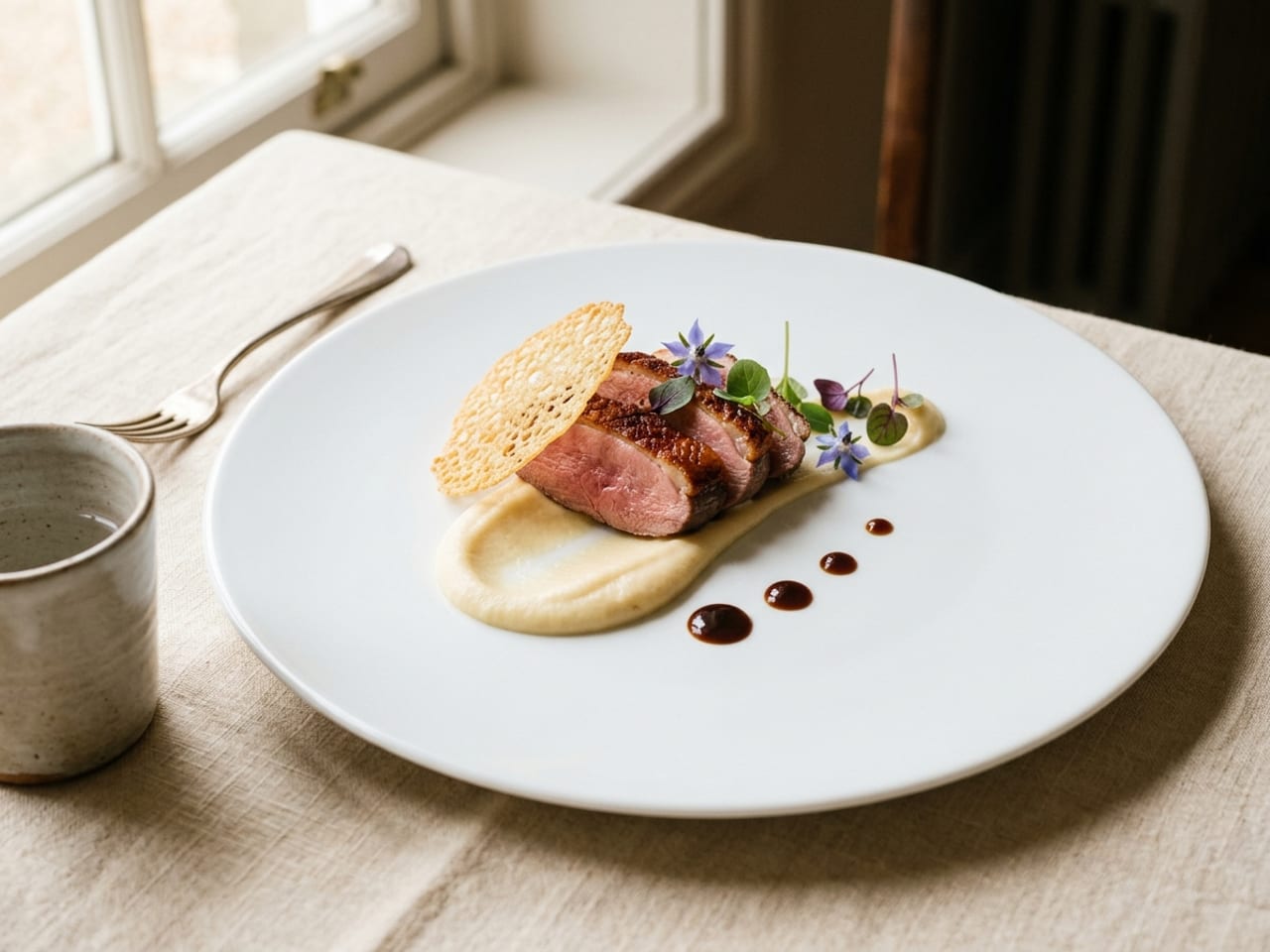
Each part is explained below, then the five hand moves and a six-step routine for doing it at home. To see it on food you cooked yourself, re-plate a photo of your dish with our free AI tool.
The anatomy of a starred plate
Six structural decisions, made before any food touches ceramic. The classic modern version is even shorter: a purée, a sear, and something with crunch.
The oversized canvas
A plate one size too big, food occupying the center third. The empty rim isn't waste — it's the frame that makes a modest portion read as precious, and the practical margin that keeps sauce work off the diner's thumb.
The base layer
Purée, velvety sauce or a swoosh laid down first. It anchors the composition, holds the protein in place, and supplies the color field everything else stands against. The base is the plate's stage floor.
The hero, placed
One protein or centerpiece with visible technique — a crusted sear, a glazed surface, a precise slice showing the interior. Set ON the base, slightly toward the diner, never dropped in the dead center of an empty plate.
The crunch
A tuile, crisped skin, toasted nuts, a fried element — placed against or atop the soft components. Fine-dining kitchens treat texture contrast as non-negotiable: every soft plate carries something that snaps.
Height and lean
One vertical moment: the crunch leaning on the hero, a vegetable propped at an angle, micro herbs standing rather than lying. Everything else stays low — a single peak reads as architecture, three read as a pile.
The restraint
Three to five components, visibly separated, each with a job. The instantly recognizable fine-dining look is mostly what ISN'T on the plate — the starch bulk, the second sauce, the sixth garnish all left in the kitchen.
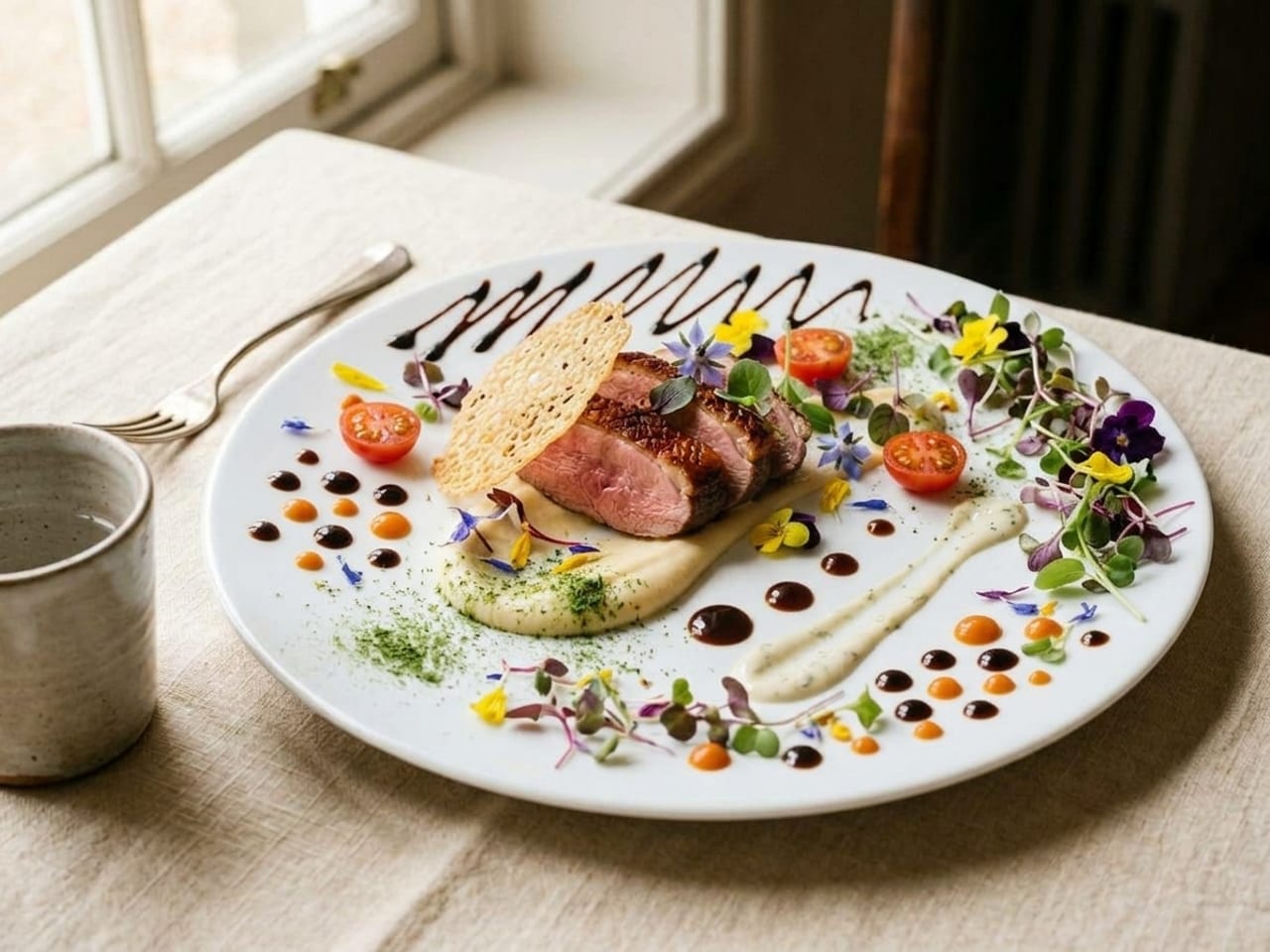 Everything onRestraint
Five signature moves of fine-dining plating
- The swooshA spoonful of thick purée, back of the spoon, one confident pull. It gives the plate direction — the hero sits at its thick end. One per plate, always.
- Dots in descending sizeSauce dots shrinking along a curve, spaced unevenly on purpose. Squeeze bottle, wiped nozzle, done in four seconds — rhythm, not decoration.
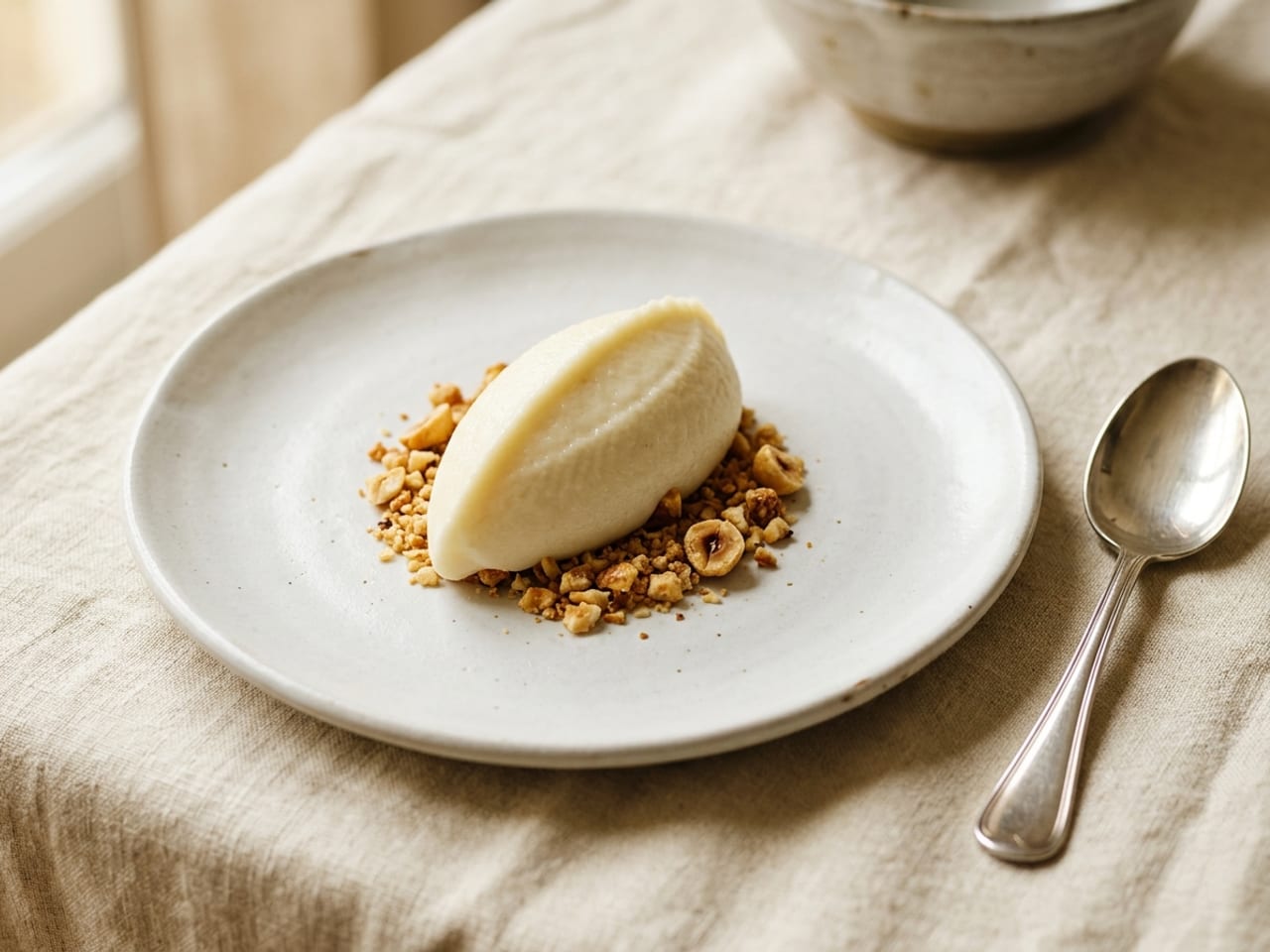
- The quenelleThe smooth spoon-shaped oval: purée, mousse or crème fraîche as often as ice cream. Two spoons passed back and forth give it three faces; one warm spoon drawn through in a single motion gives a smooth egg, which many kitchens call a rocher. Land it on an anchor so it holds its edges.
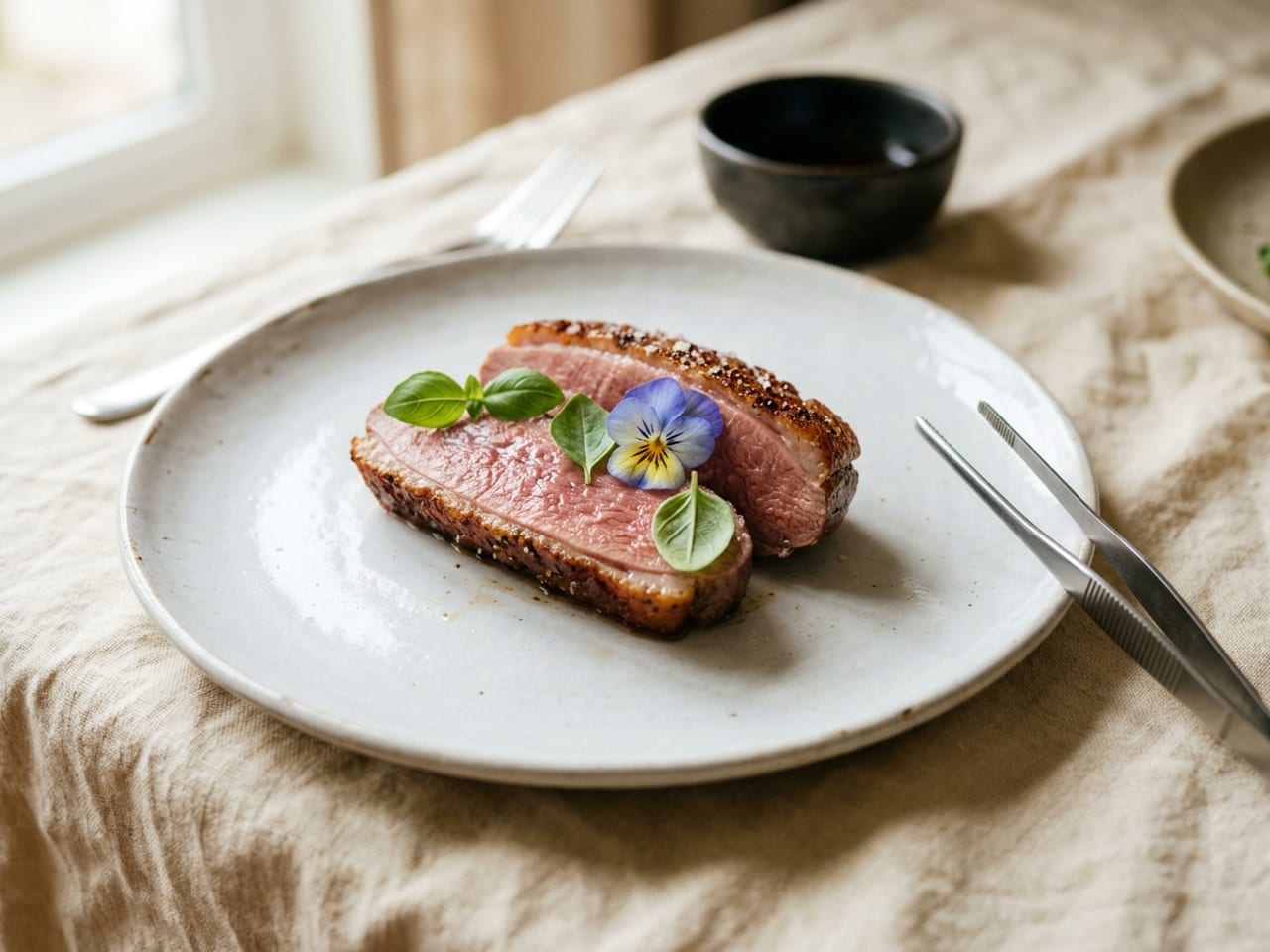
- Tweezer garnish, placed onceMicro herbs and flowers set exactly where they belong — angled, not sprinkled. The discipline isn't the tweezers; it's placing each item once and refusing to fiddle.
- The wiped rimA clean cloth around the rim before the plate leaves. In a starred kitchen this is reflex, not a step — and it's the single fastest way to make a home plate look professional.
The sauce moves, with their other names and the thickness each needs, have a guide of their own: sauce plating techniques.
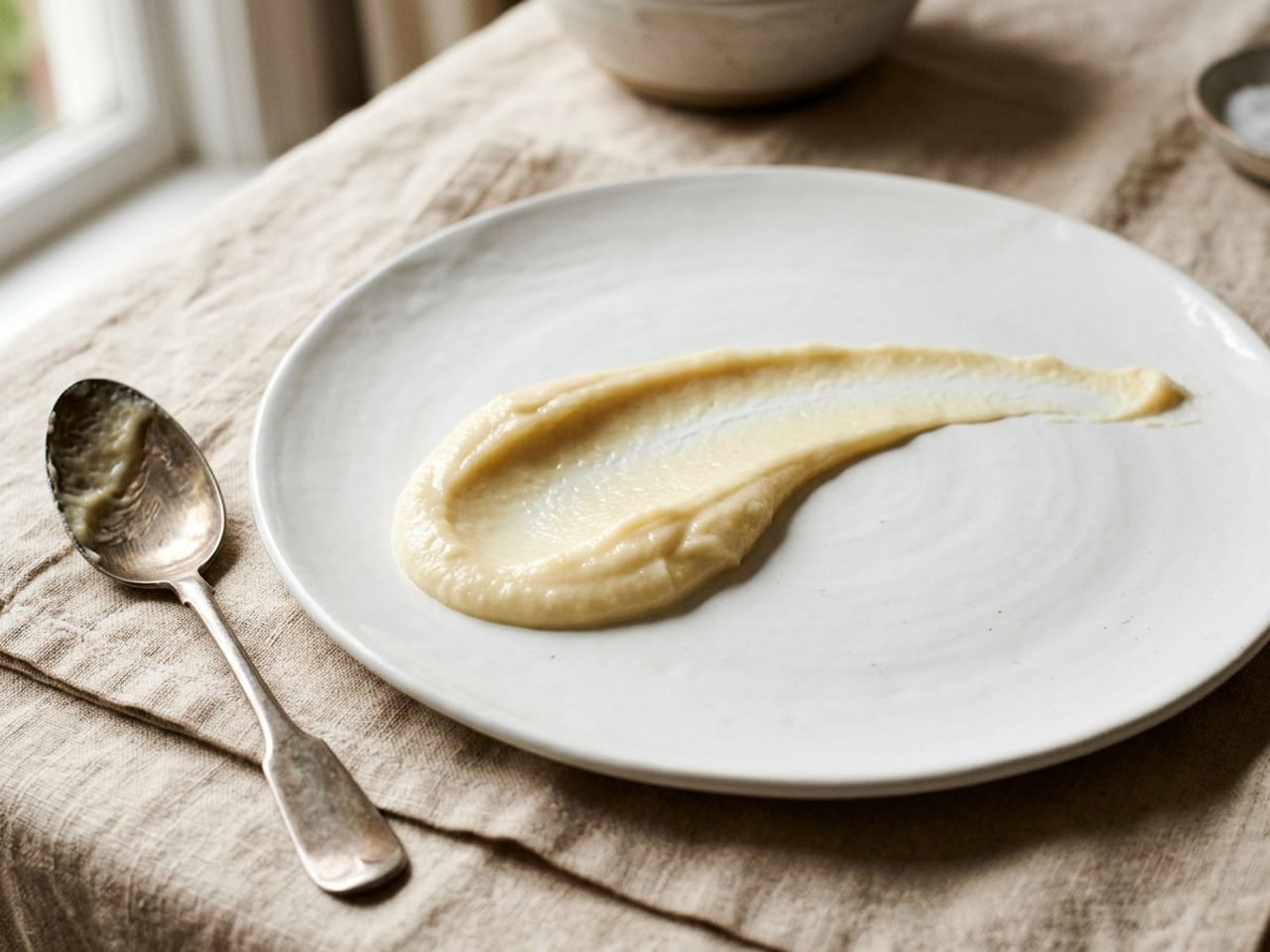
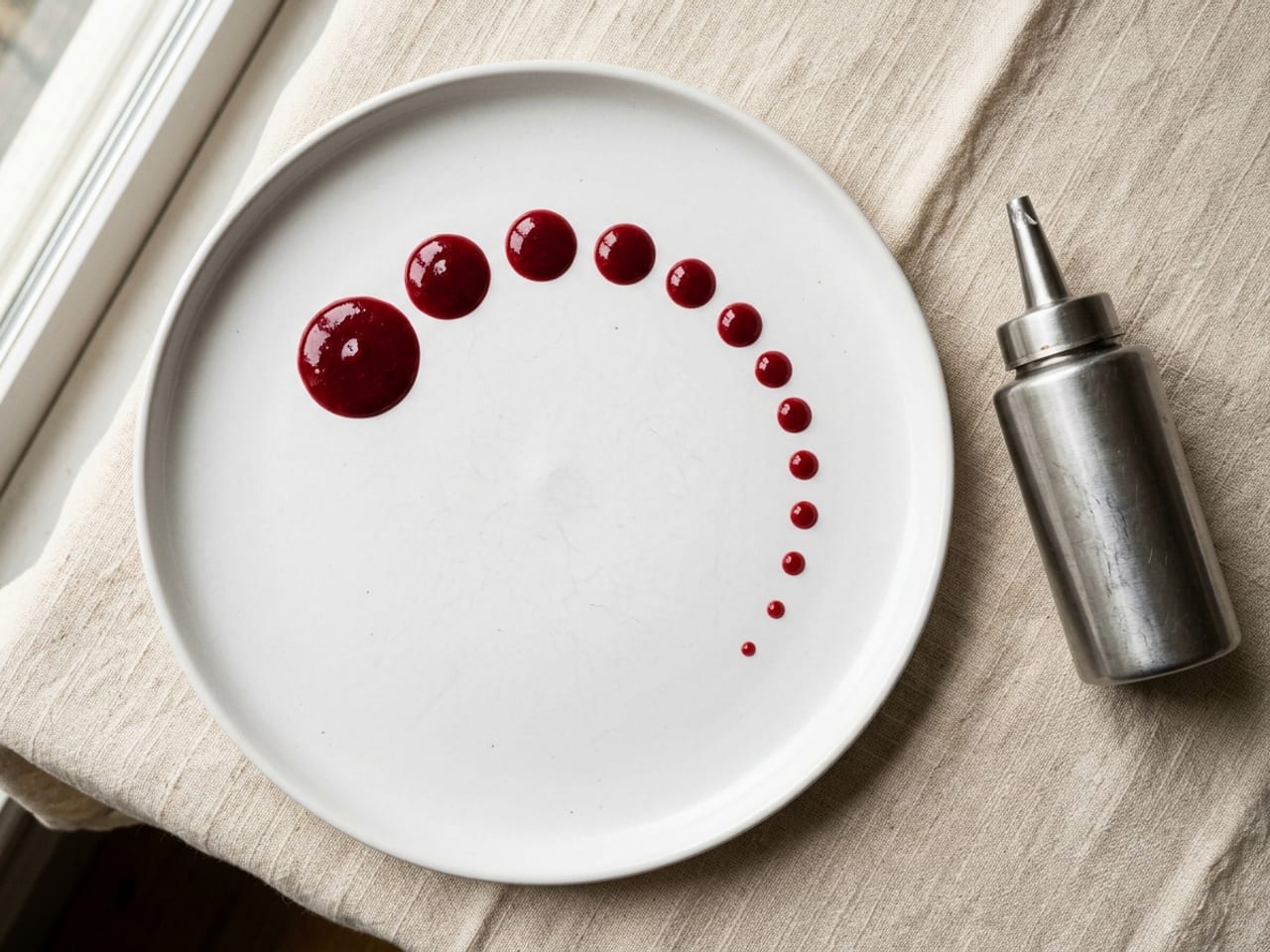
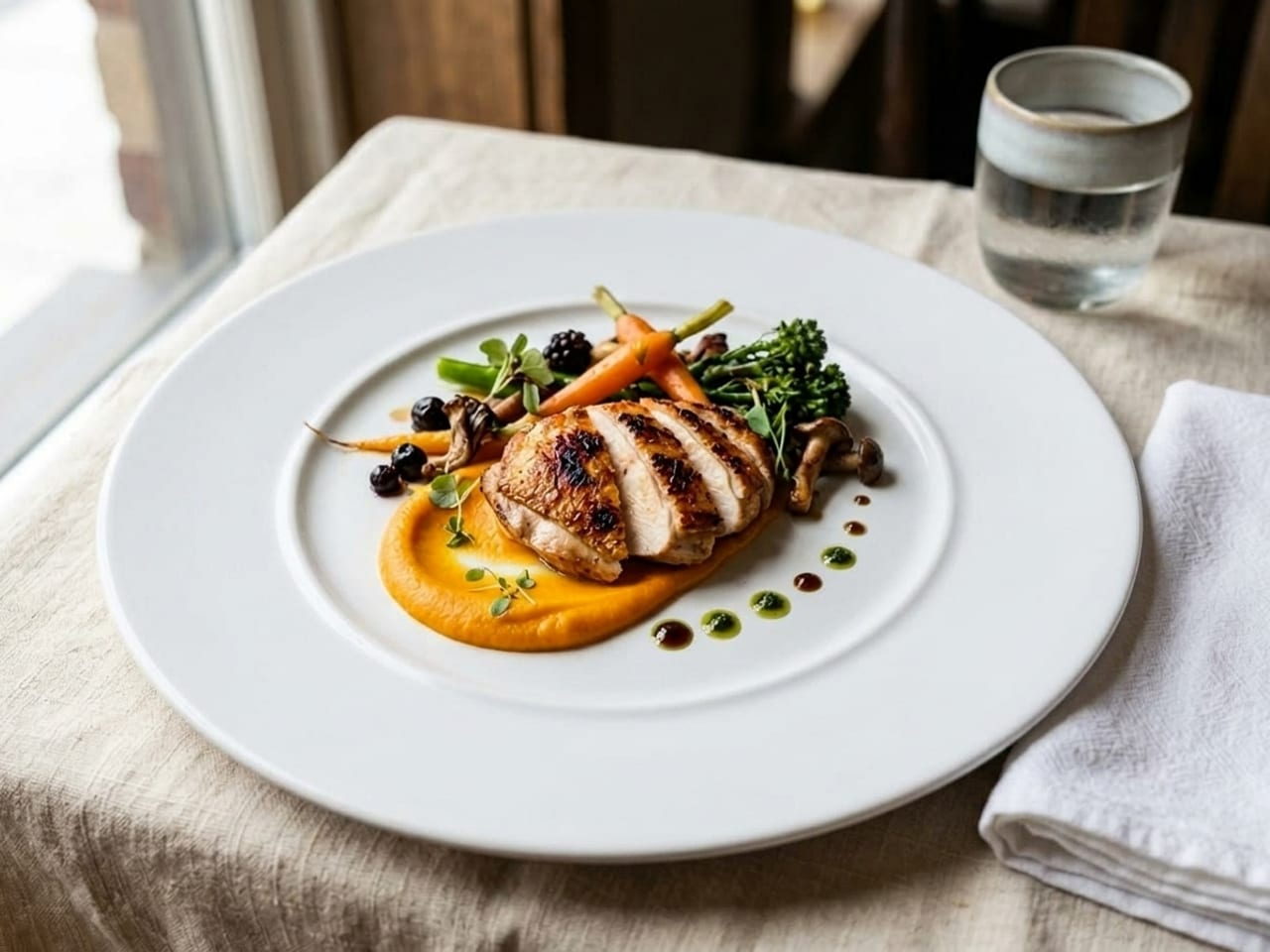
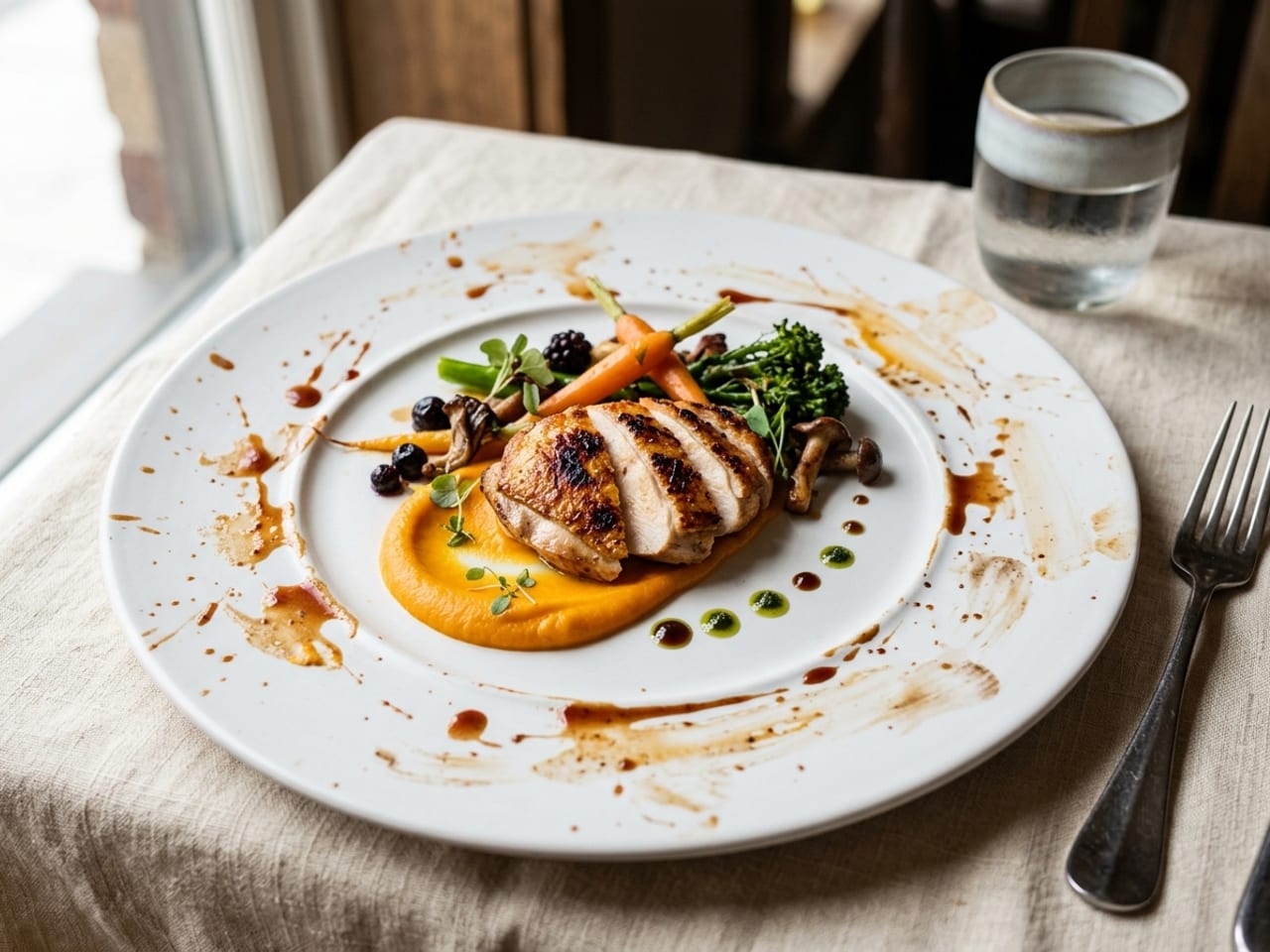 Before the wipeWiped
The fine-dining plating toolkit
Everything the five moves need fits in one drawer, and all of it is cheap kitchen-shop kit.
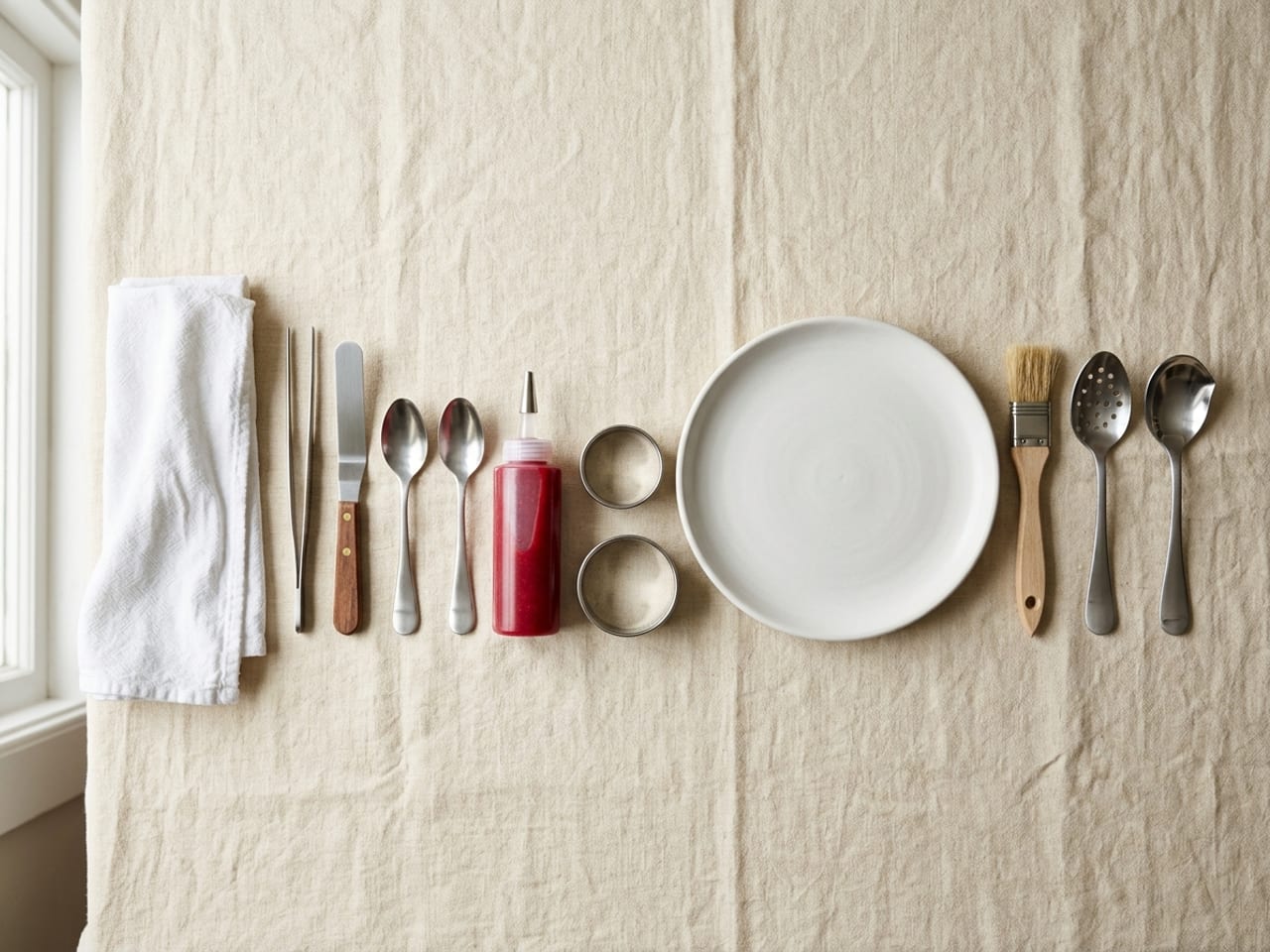
- Rim cloth: the wiped rim; clean, folded, and used for nothing else.
- Plating tweezers: herbs and flowers, placed once.
- Offset spatula: lifting a fillet or a slice of terrine without breaking it.
- Two spoons: quenelles, and the back of one for the swoosh.
- Squeeze bottle: dots in descending size; wipe the nozzle between plates.
- Ring mould: a neat round of tartare or grain, lifted off before serving.
- Pastry brush: a brushed stroke of sauce or a glaze on the hero.
- Oversized plain plates: the canvas, and the cheapest upgrade of the lot.
What each tool is called, what to use from the drawer instead and what tested reviews looked for are in the plating tools guide.
The same dinner, run through the pass
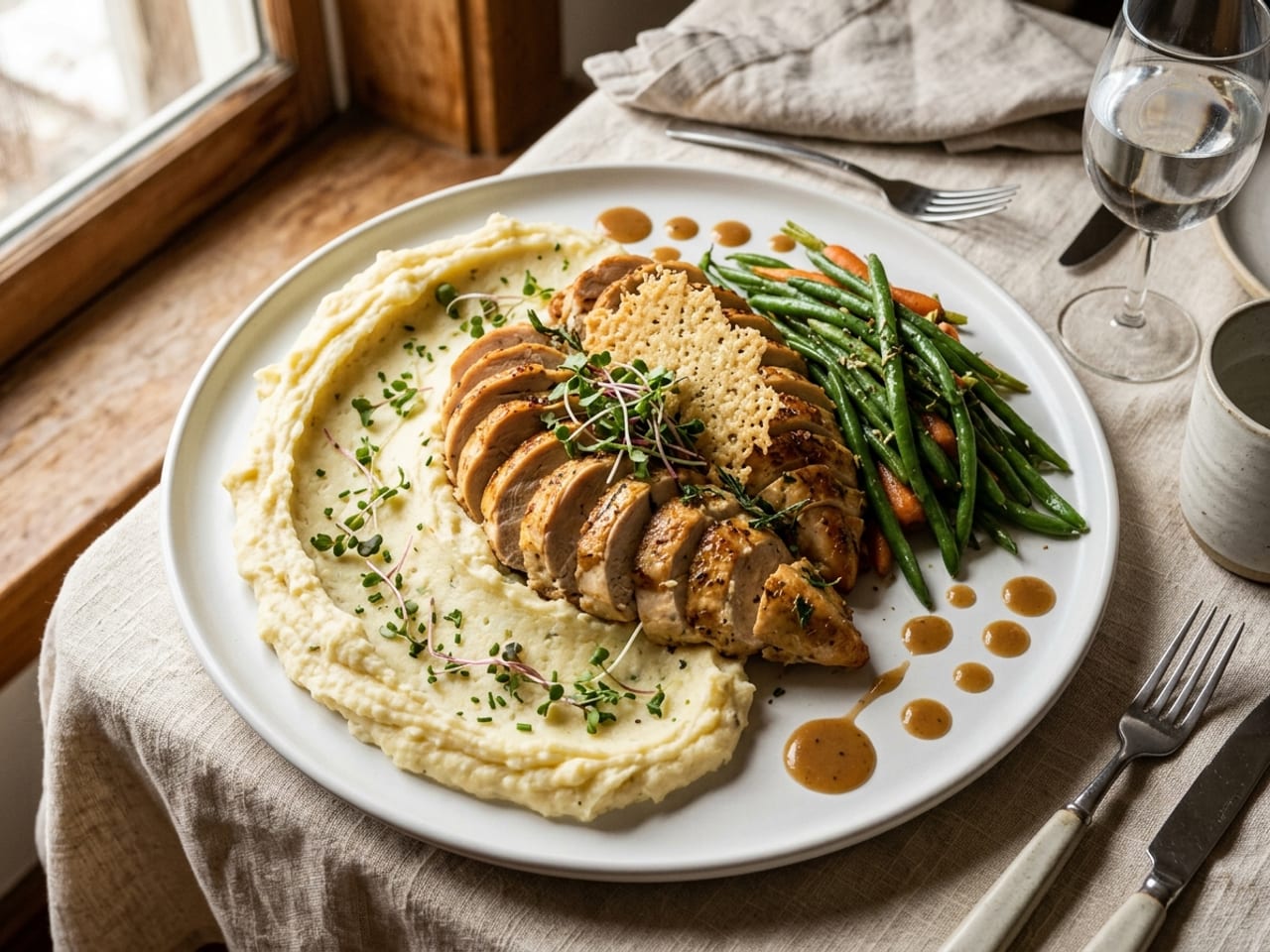
Identical food — chicken breast, potato purée, green beans — plated family-style, then plated like a pass would send it.
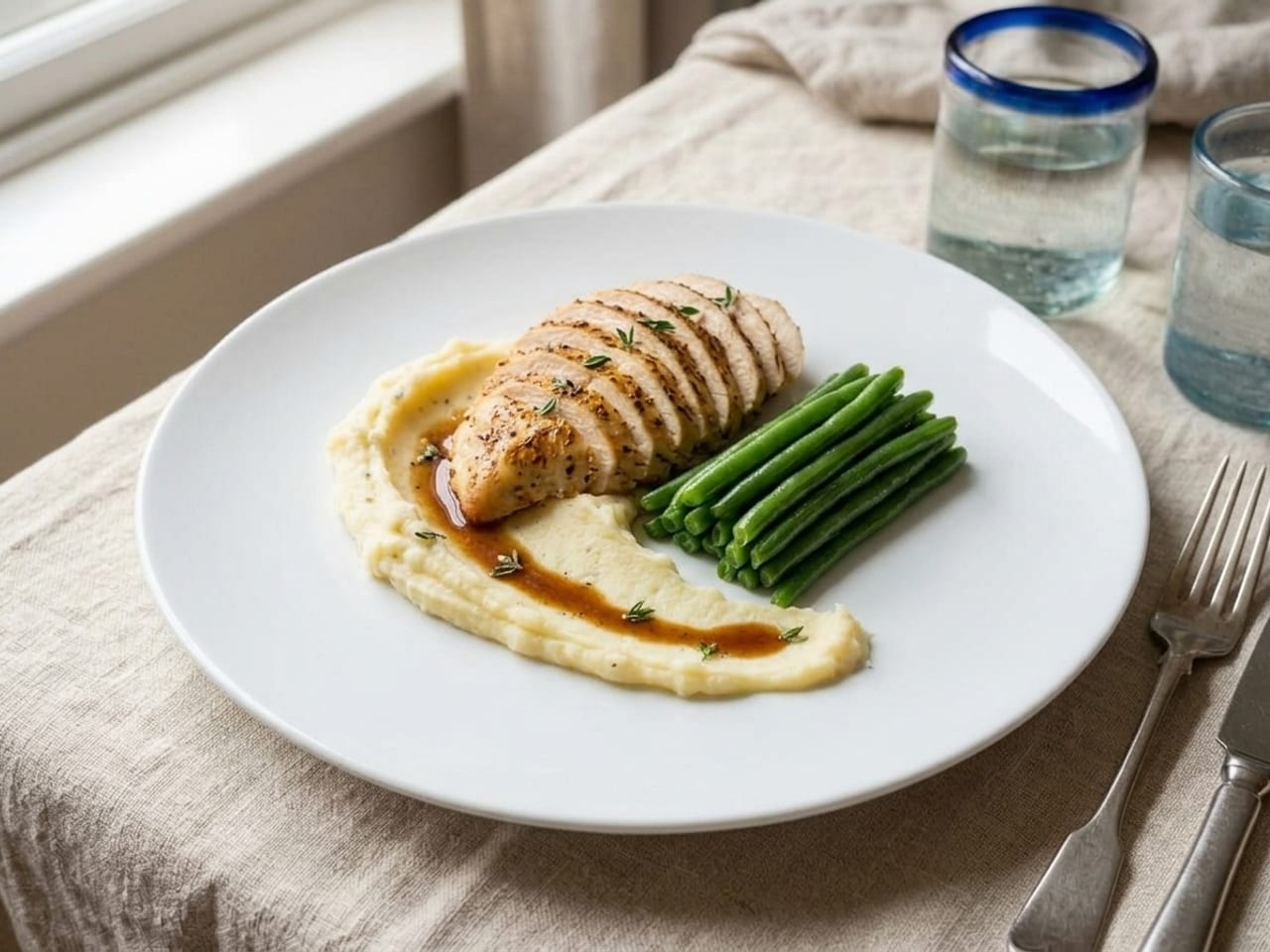
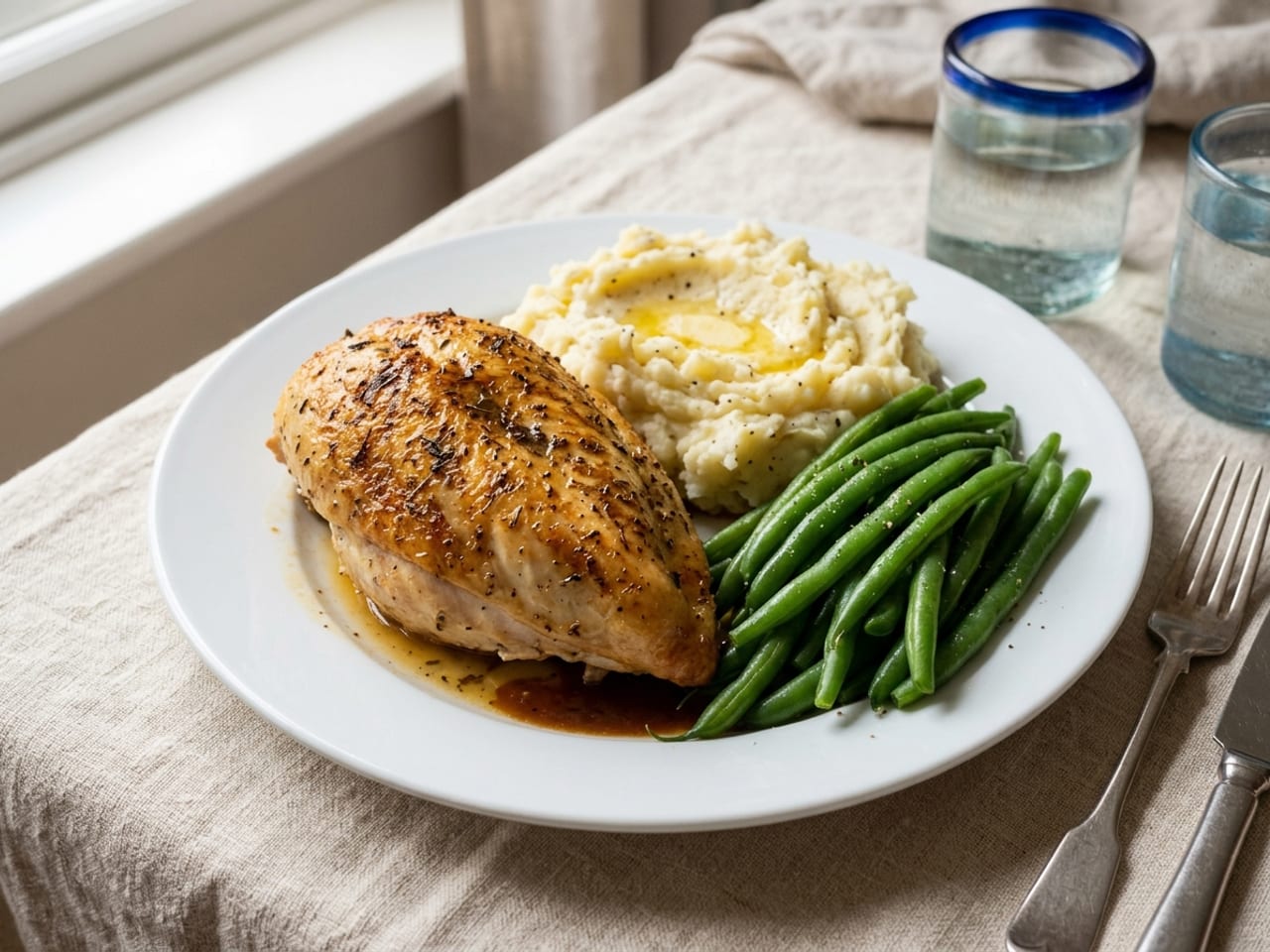 Home styleThrough the pass
Want to see your own dinner through the pass?
Re-plate your dish free →Upload a photo of a plate you cooked. Once a day, no sign-up.
Home plate vs Michelin-star plate
| Element | Typical home plate | Michelin-star plate |
|---|---|---|
| Plate | Whatever fits the portion, often patterned | Plain, matte, one size too big; the empty rim frames the food |
| Components | The whole meal, side by side | Three to five, each with a job; seconds go on the table |
| Layout | Foods share the plate in sections | Built in layers: base, hero on top, crunch against it |
| Protein | One whole piece | Rested, then sliced to show the cross-section |
| Height | Flat, or a pile | One deliberate peak, everything else low |
| Sauce | Poured over the top | A swoosh under the hero, or dots and a spooned pool, last |
| Garnish | Chopped parsley, sprinkled | Edible and chosen, placed once with tweezers |
| Temperature | Cold plates, slow plating | Warm plates, sixty seconds from first spoon to table |
| Rim | Drips and smudges left on | Wiped with a damp cloth before it leaves |
The same anatomy on salad, fish, soup and dessert
The six parts are not only for a protein main: the same thinking shapes every course of a tasting menu. The salad course has its own guide: how to plate salad. The order the courses come in is in the courses of a meal, in order.
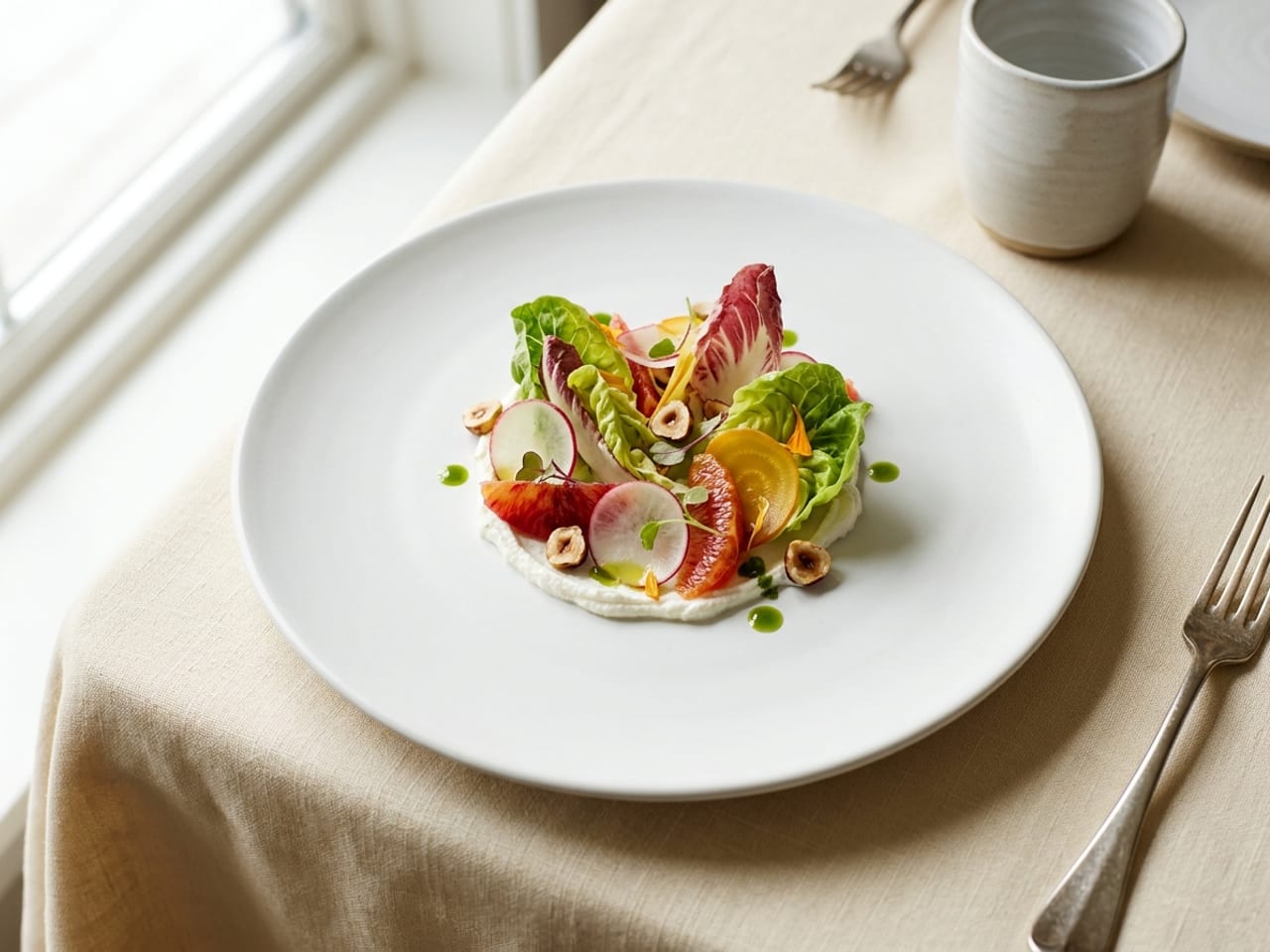
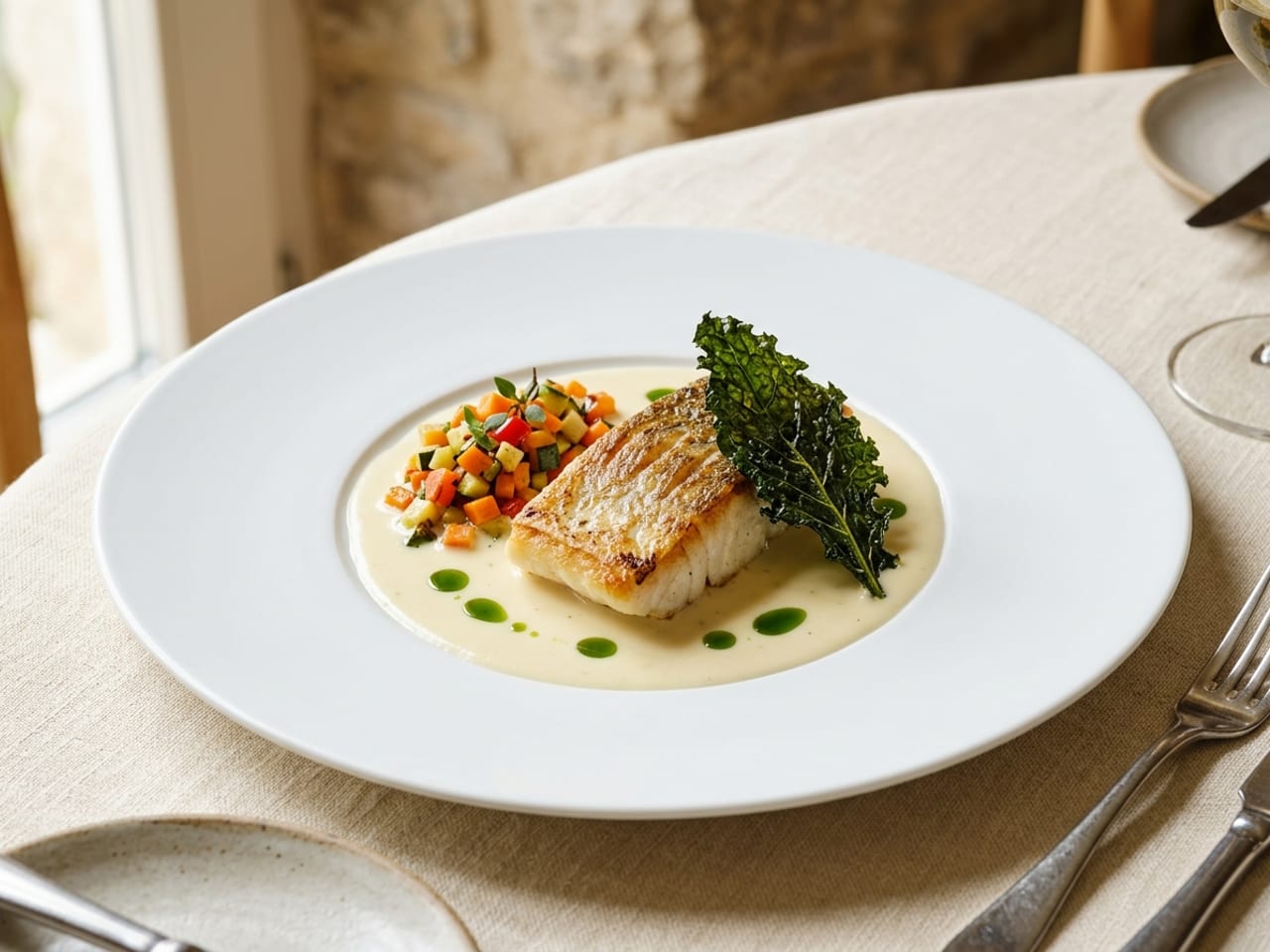
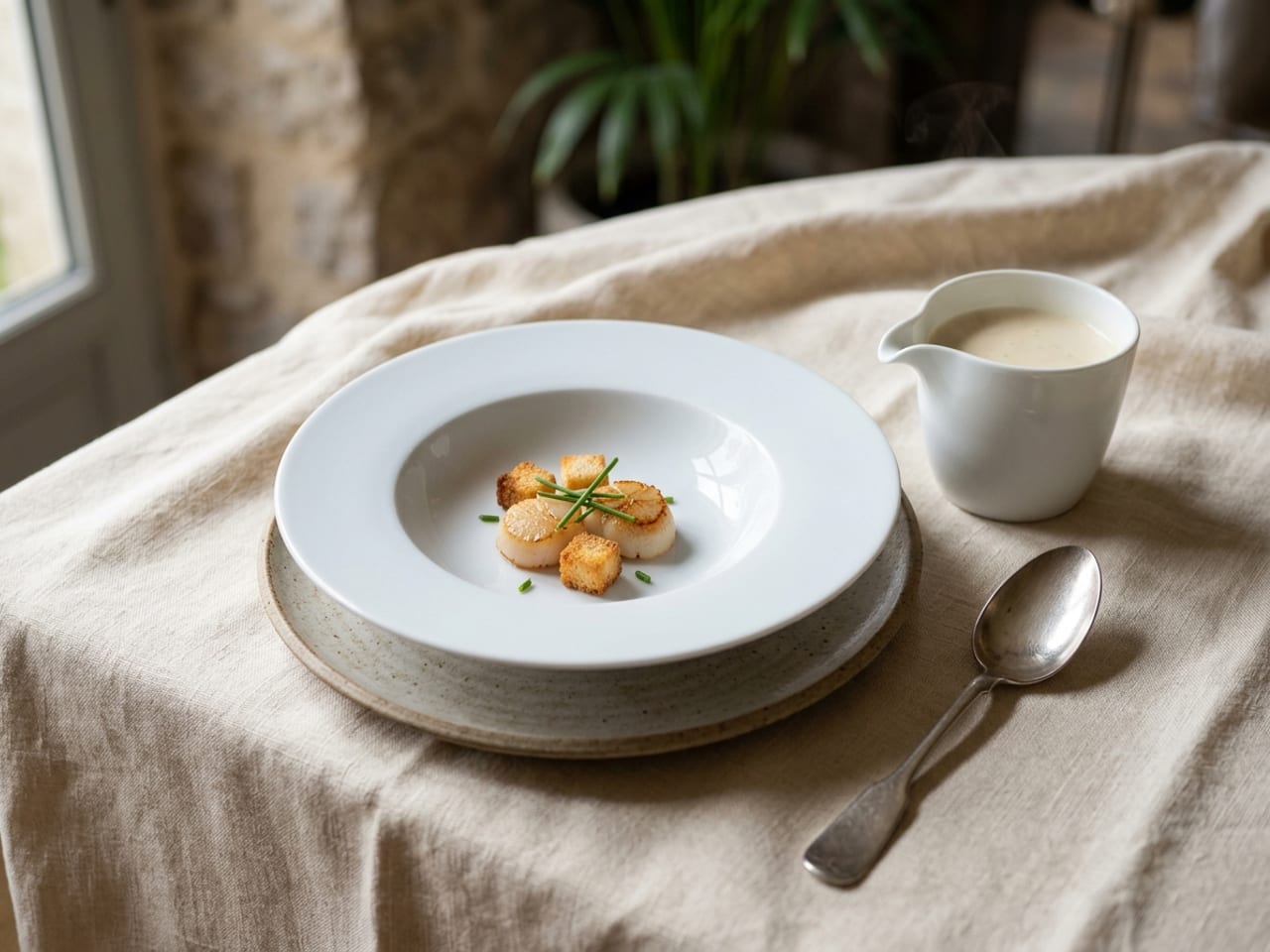
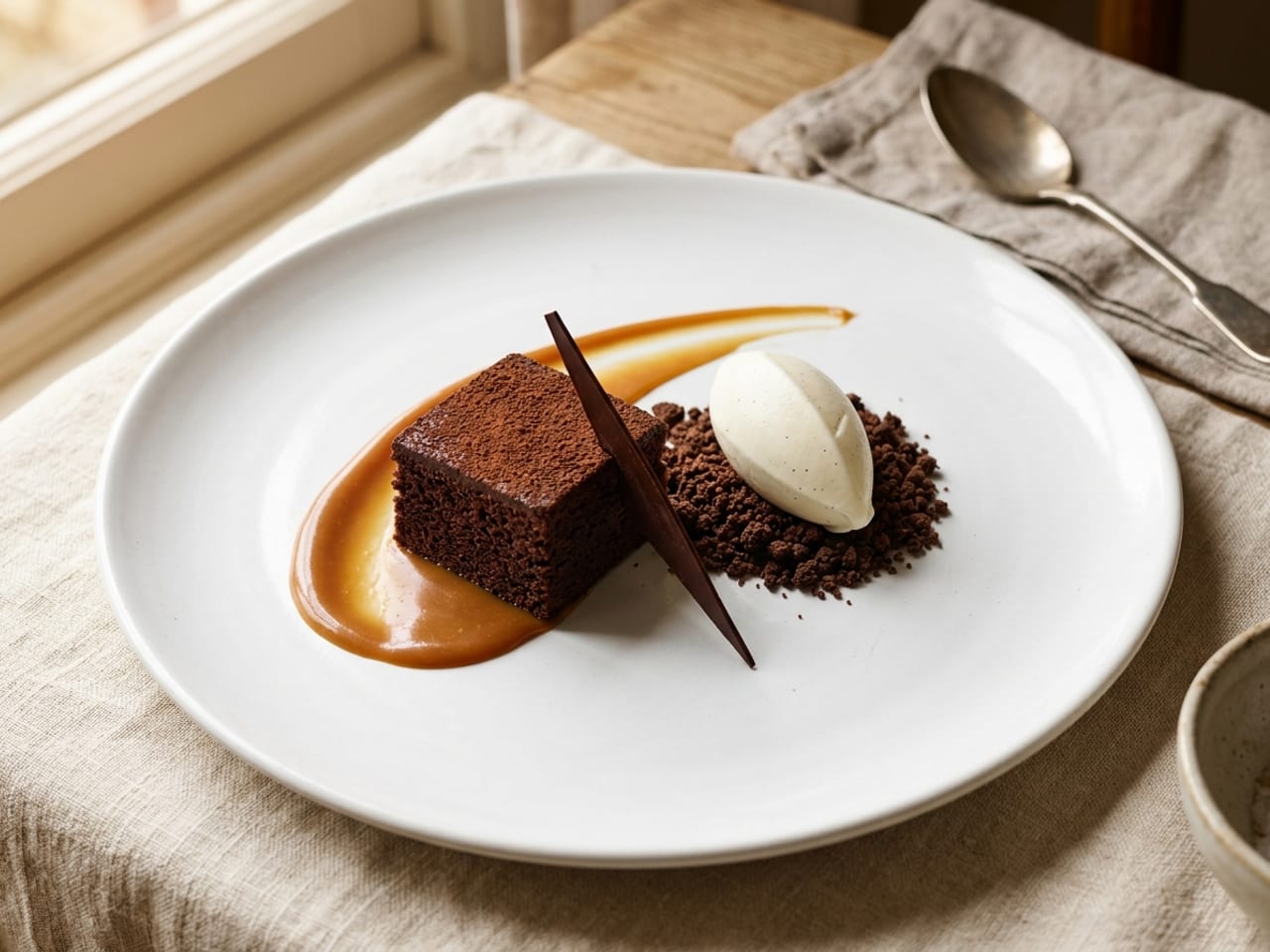
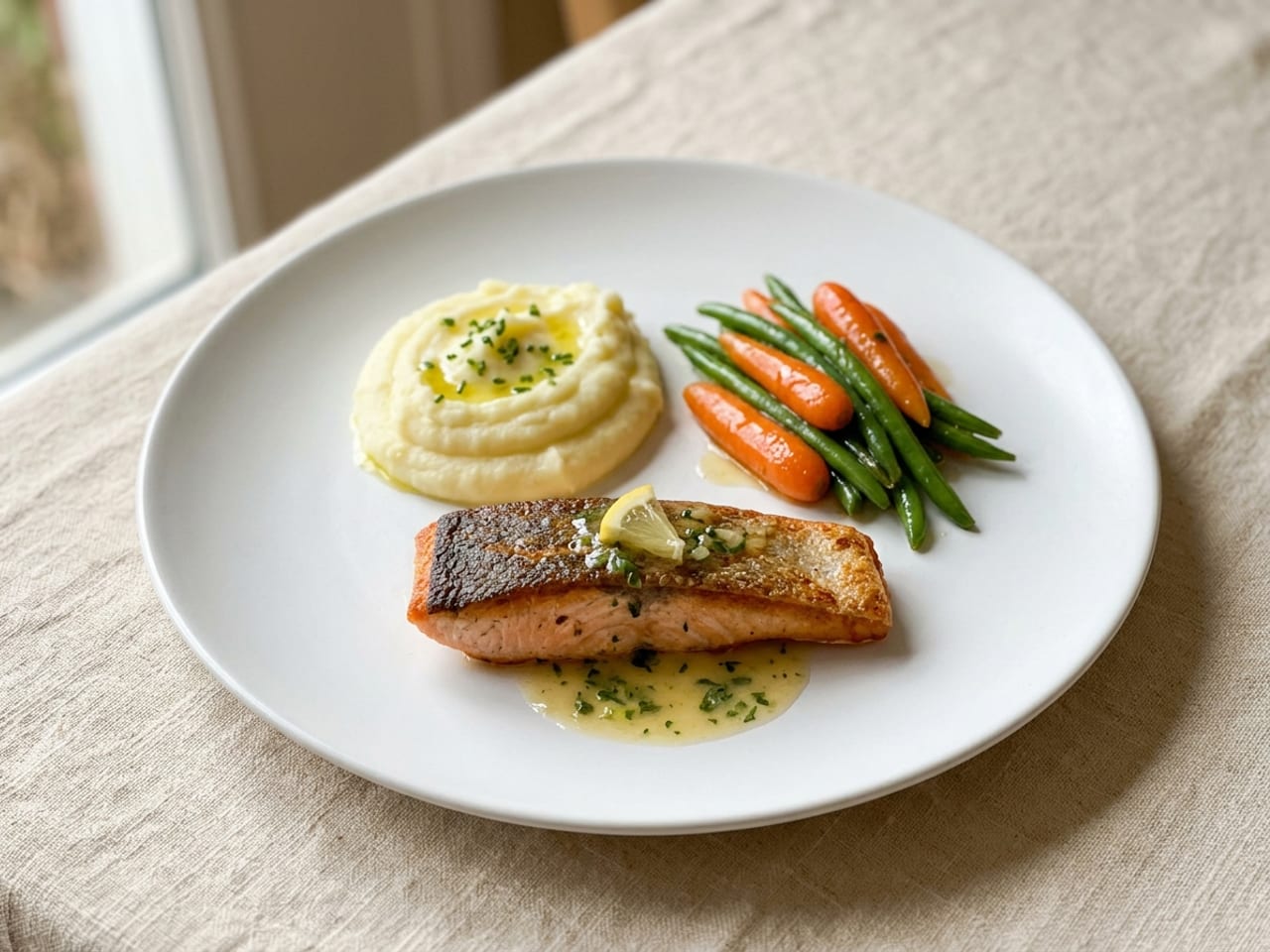
Four plating styles you will see in starred kitchens
The anatomy stays the same; the arrangement changes with the kitchen. The first three are the same salmon dinner. Every style is defined in the glossary.
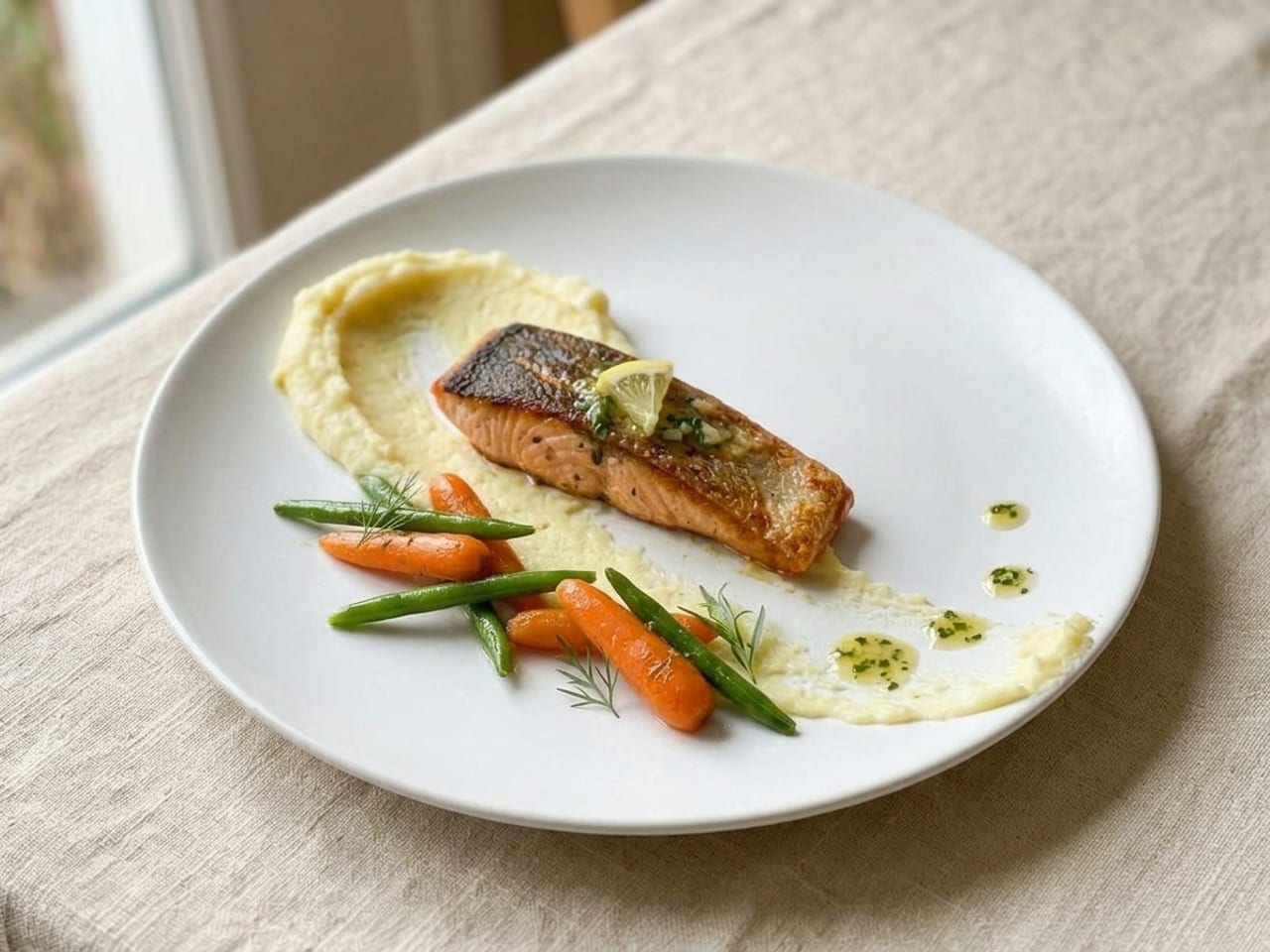
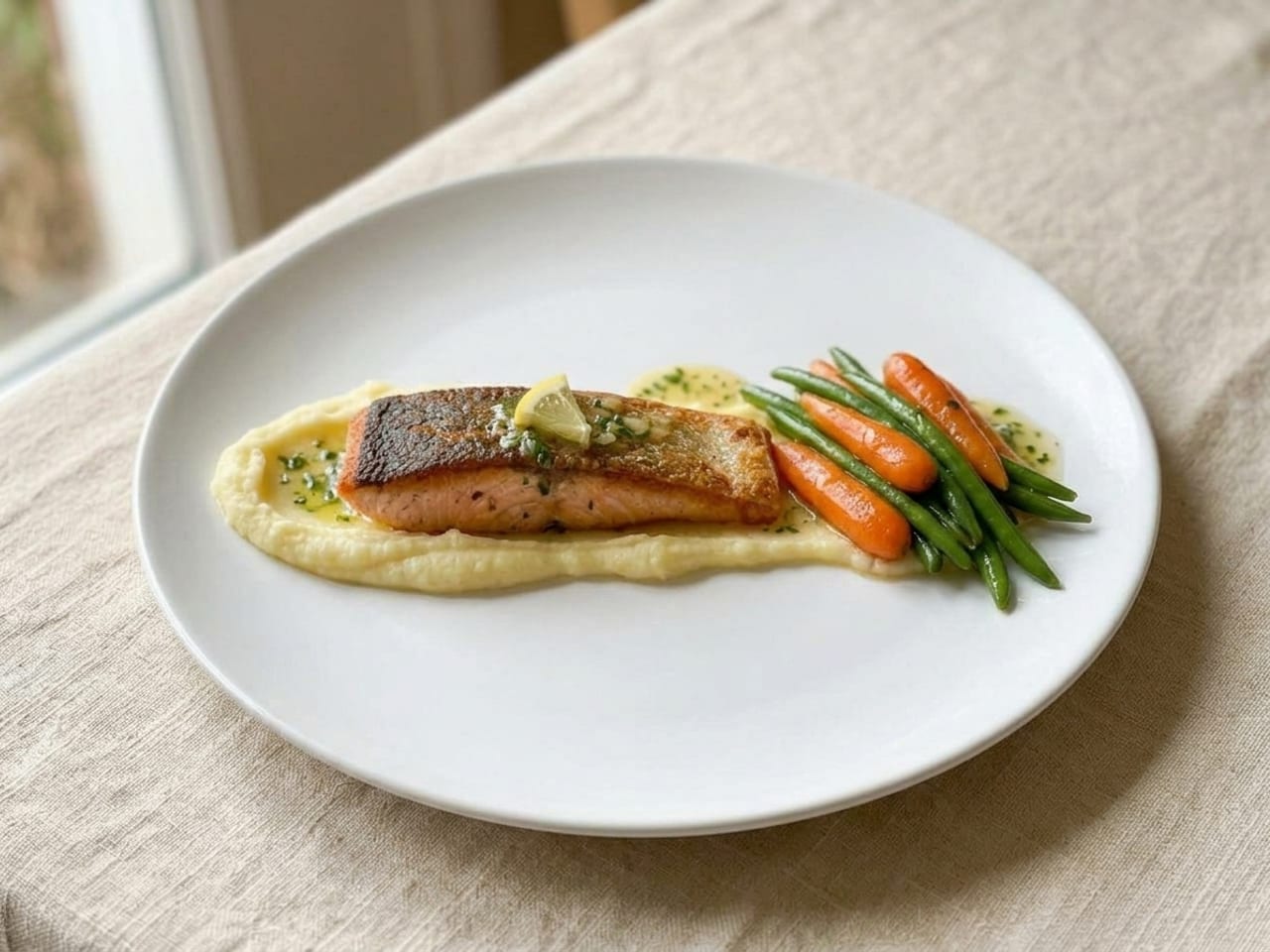
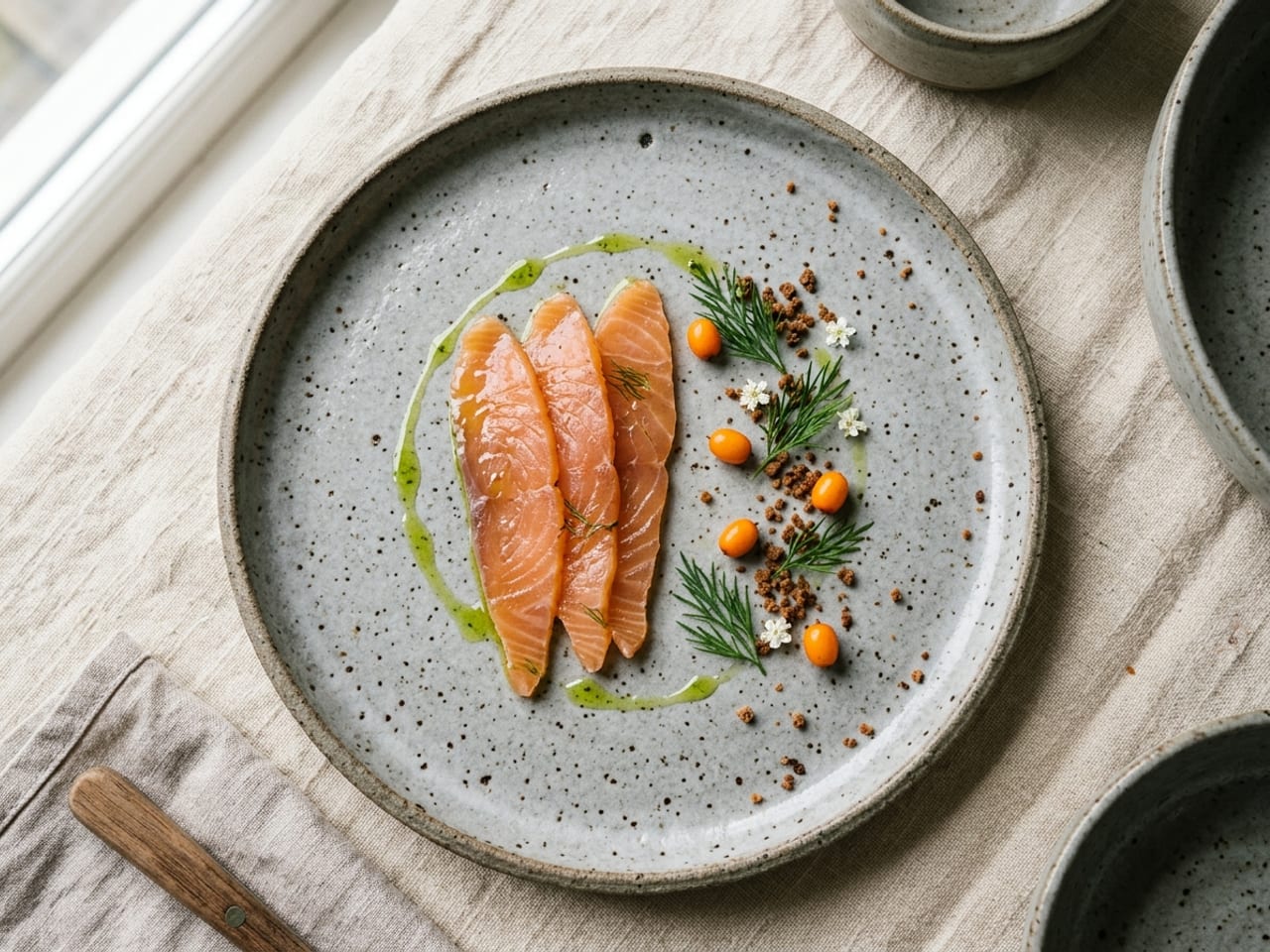
Composed plates measurably taste better
- Artistic plating raises taste ratings and price. The Kandinsky-inspired salad was liked more than the same ingredients tossed, was rated tastier after eating, and earned a significantly higher willingness to pay. The same ingredients laid out in neat rows did no better than the tossed pile.1
- Centered wins. In a naturalistic restaurant setting, diners preferred the main element centered on the plate and were willing to pay more for it than offset versions.2 The starred look's apparent asymmetry lives in the sauce and the height — the hero itself usually holds the center.
- Neatness alone moves flavor. Careful versus careless presentation of the identical food changed how much people liked its taste.3 The wiped rim isn't pedantry; it's seasoning.
- The odd-number rule is folklore. Tested head-on (3 vs 4 scallops), diners showed no reliable preference for odd counts.4 Starred kitchens plate the count the dish needs — so should you.
Run a fine-dining pass at home
The starred kitchen's real secret is sequence, not skill. Six steps, in order, sixty seconds of plating.
 1
1Warm the plates
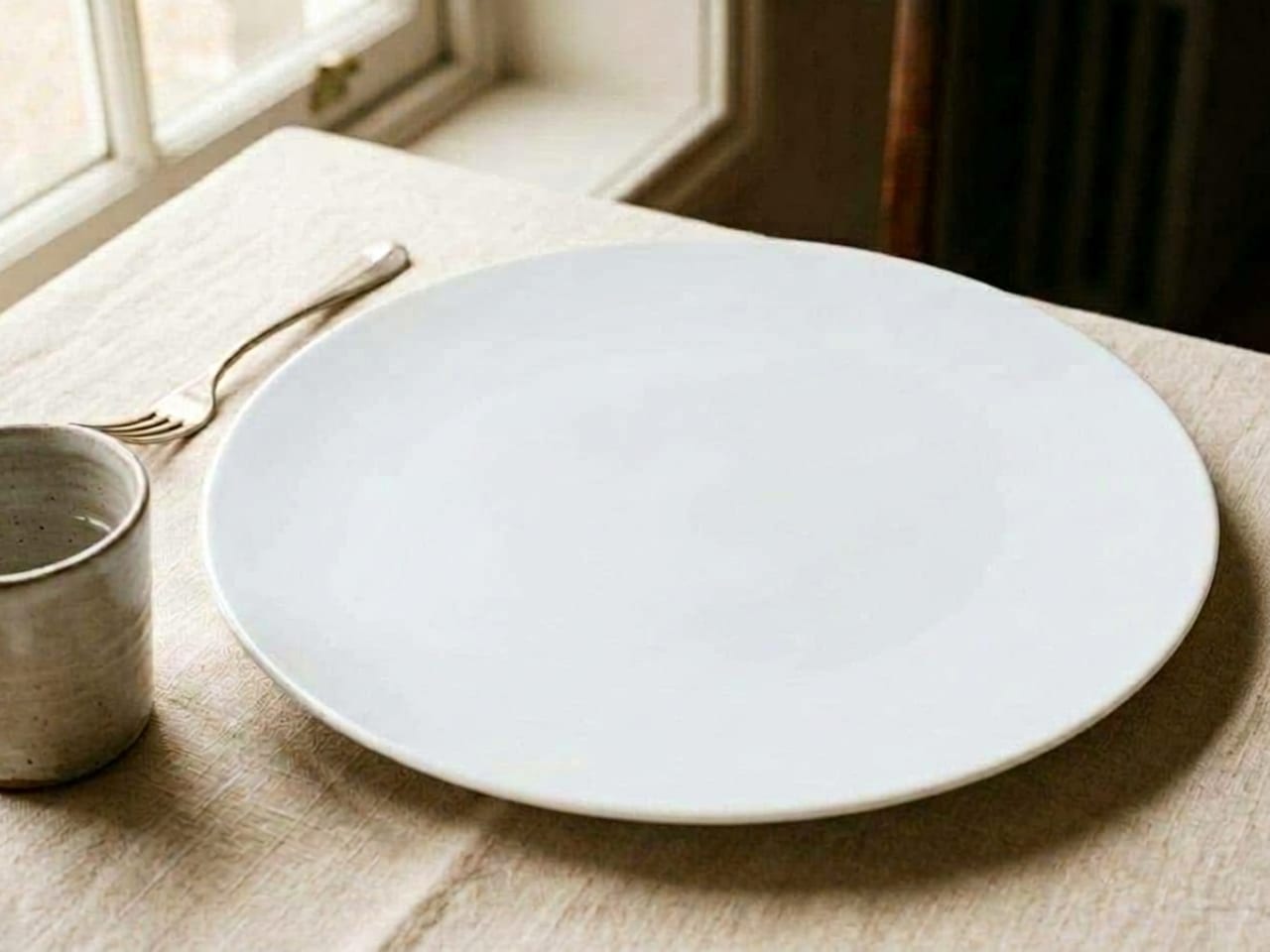
Ten minutes in a low oven. Cold plates kill sauces and drop the food's temperature before it reaches the table — no starred kitchen plates on cold china.
 2
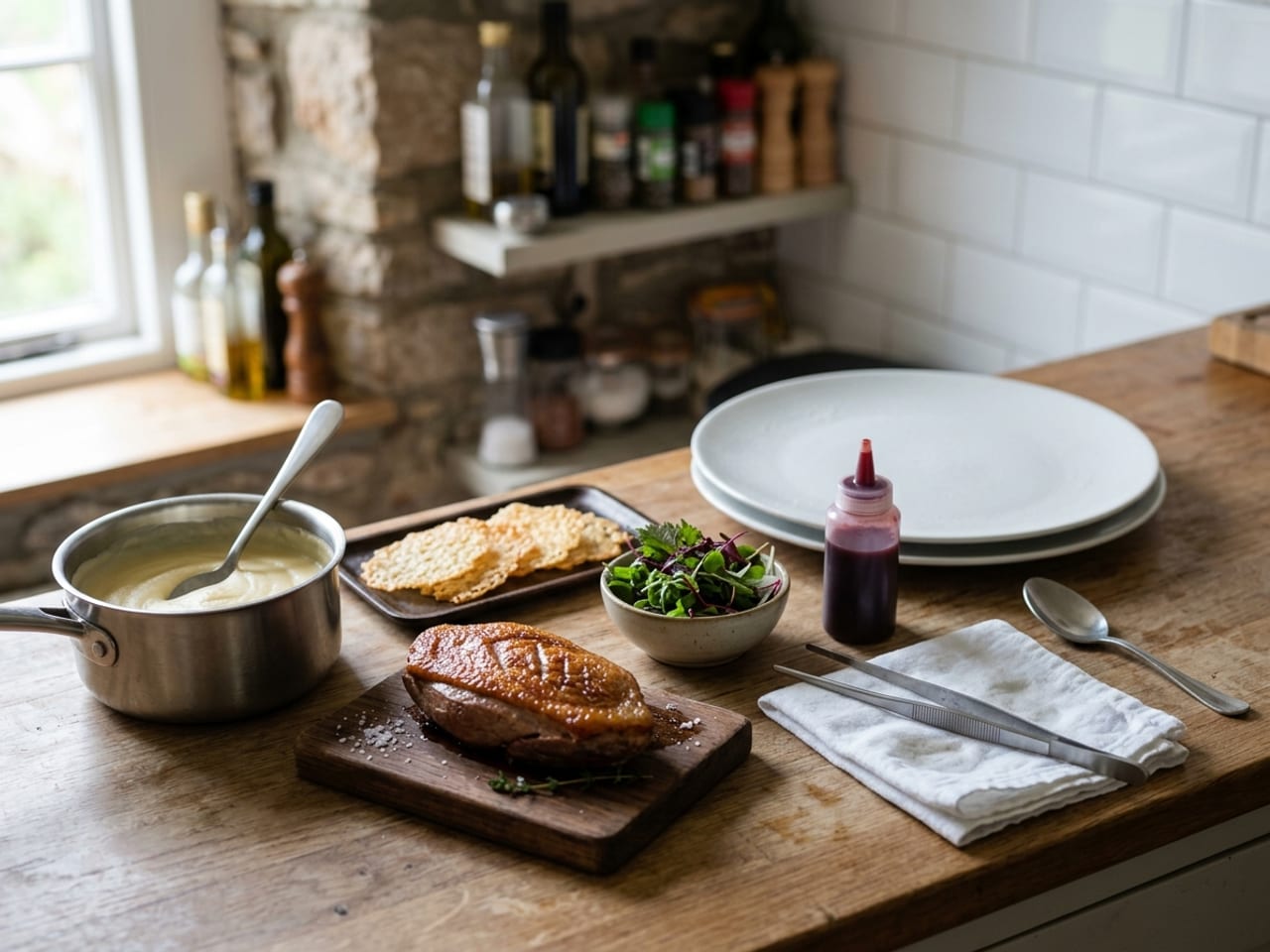
2Stage like a pass
Every component finished and within arm's reach: purée in a pot, protein resting, crunch on a tray, garnish in a bowl, clean cloth folded. Plating starts when everything is ready and not before.
 3
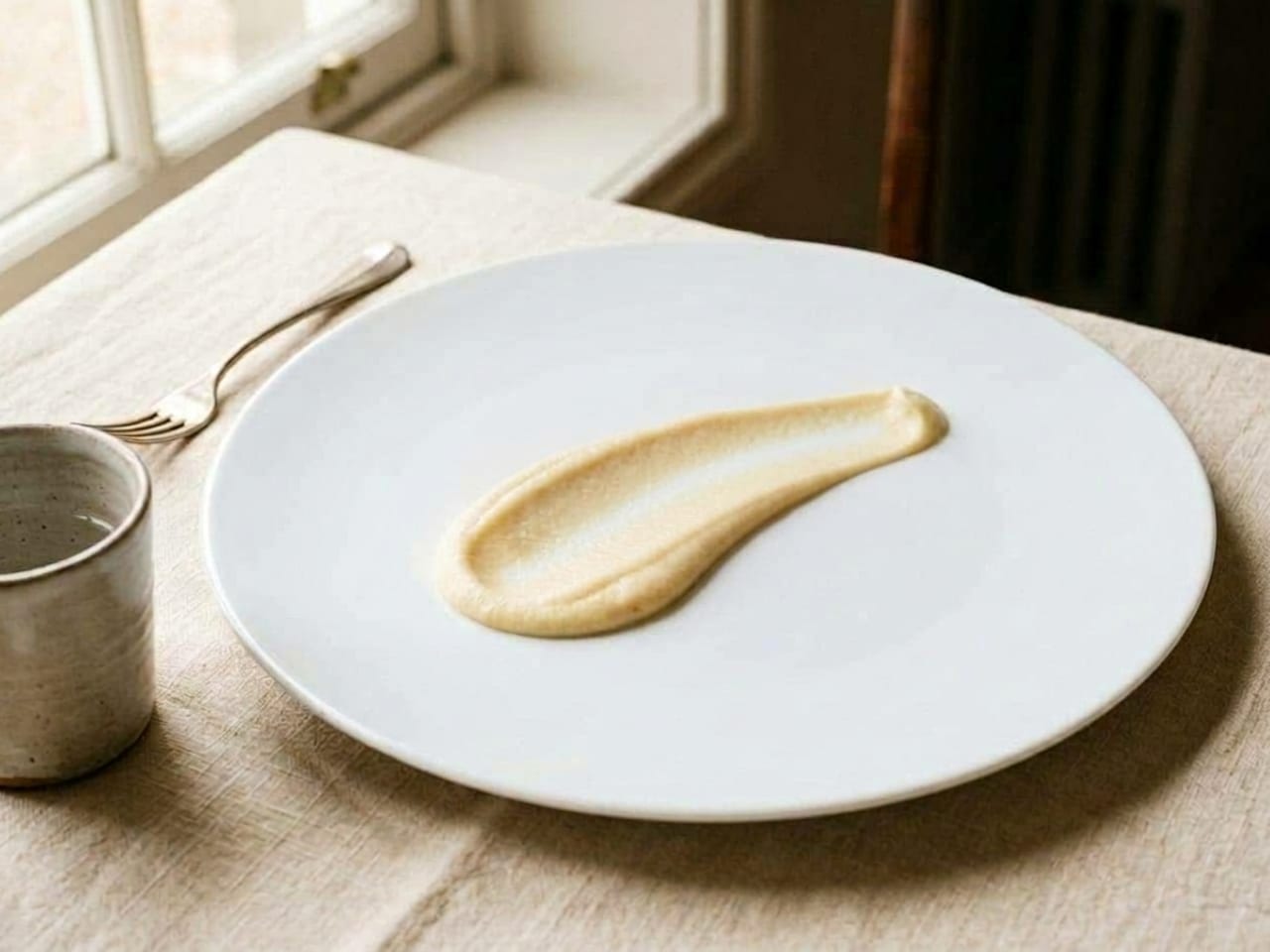
3Base first, hero second
Swoosh or purée down, protein on it, crunch against the protein, sauce last. The order is the same on virtually every starred plate you've admired.
 4
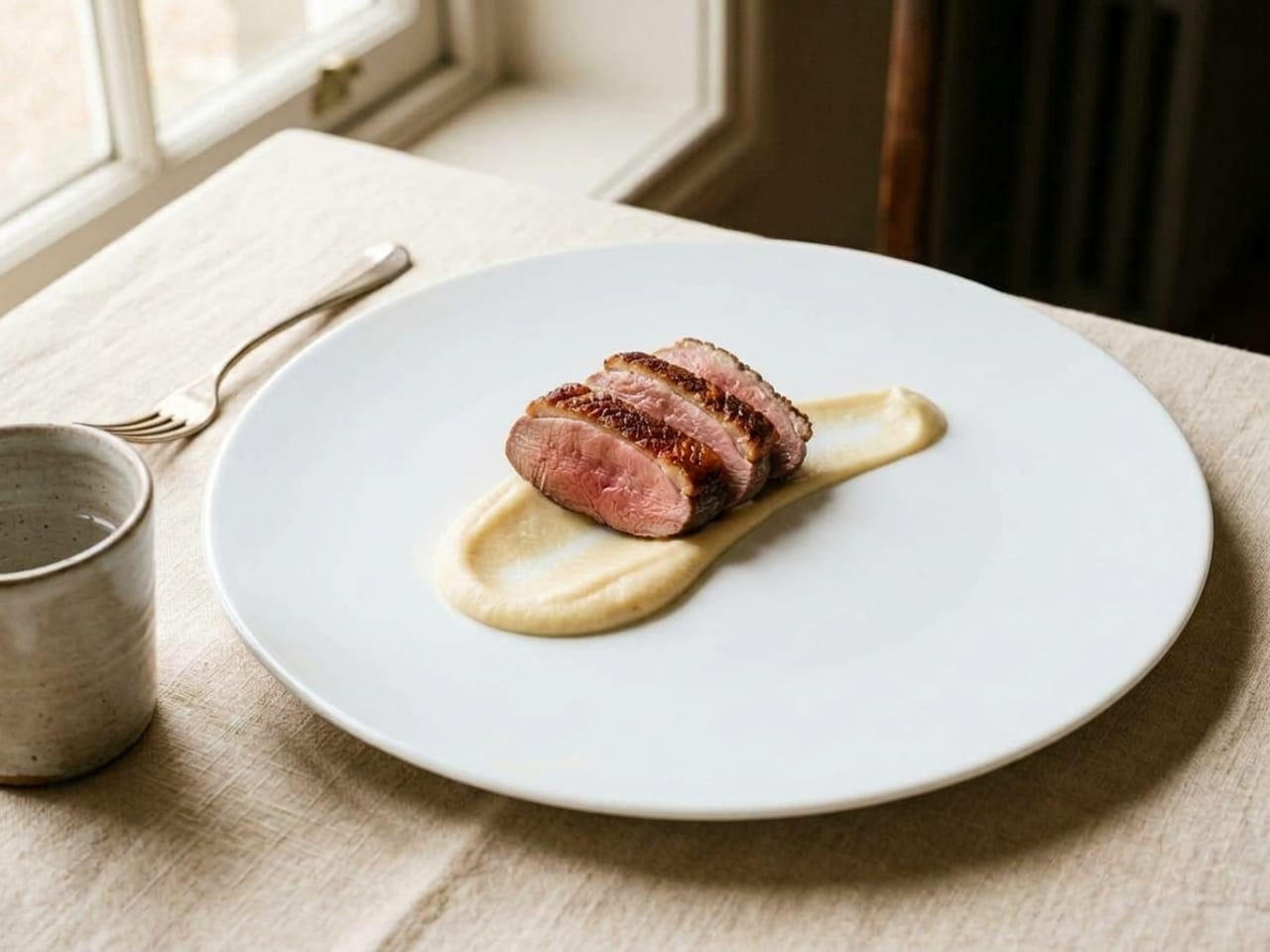
4Slice to show technique
The rosy interior, the layers, the stuffing — fine dining shows the cross-section. Rest the meat first, use the sharp knife, wipe it between cuts.
- 5
One minute per plate, then stop
Composed food must still be hot food. Set a real limit: sixty seconds of plating, one adjustment, serve. The fiddled-with plate is always the worse one.
- 6
Wipe, look, send
Rim wiped, one squinting look from the diner's seat, out. Chefs call it 'the pass' because the plate passes inspection once — not a photoshoot.
Six ways home cooks overshoot fine dining
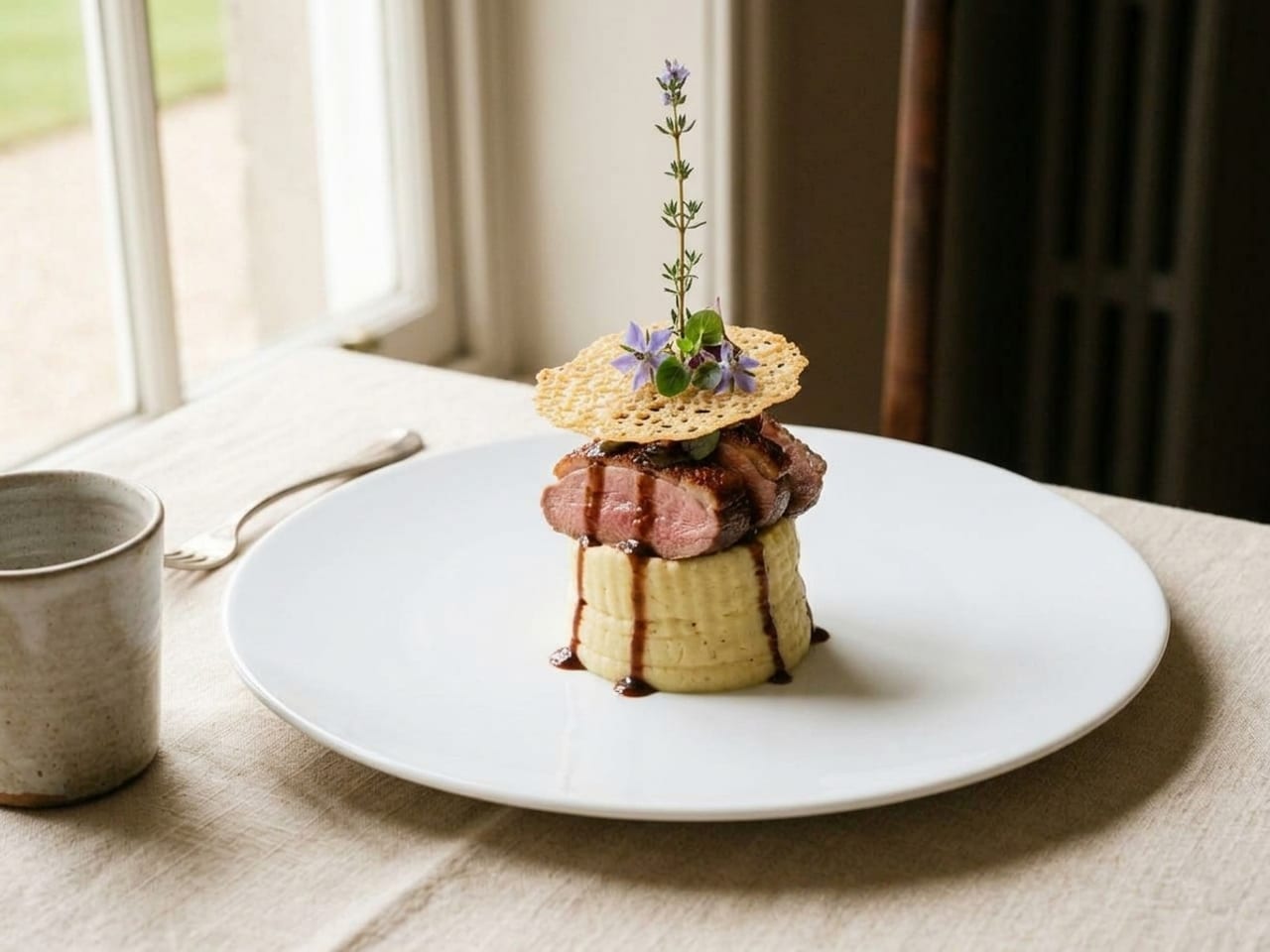
Height for height's sake
The 90s tower is dead for a reason: stacked food eats badly and topples. Fine dining builds ONE modest peak with a purpose — everything else horizontal.
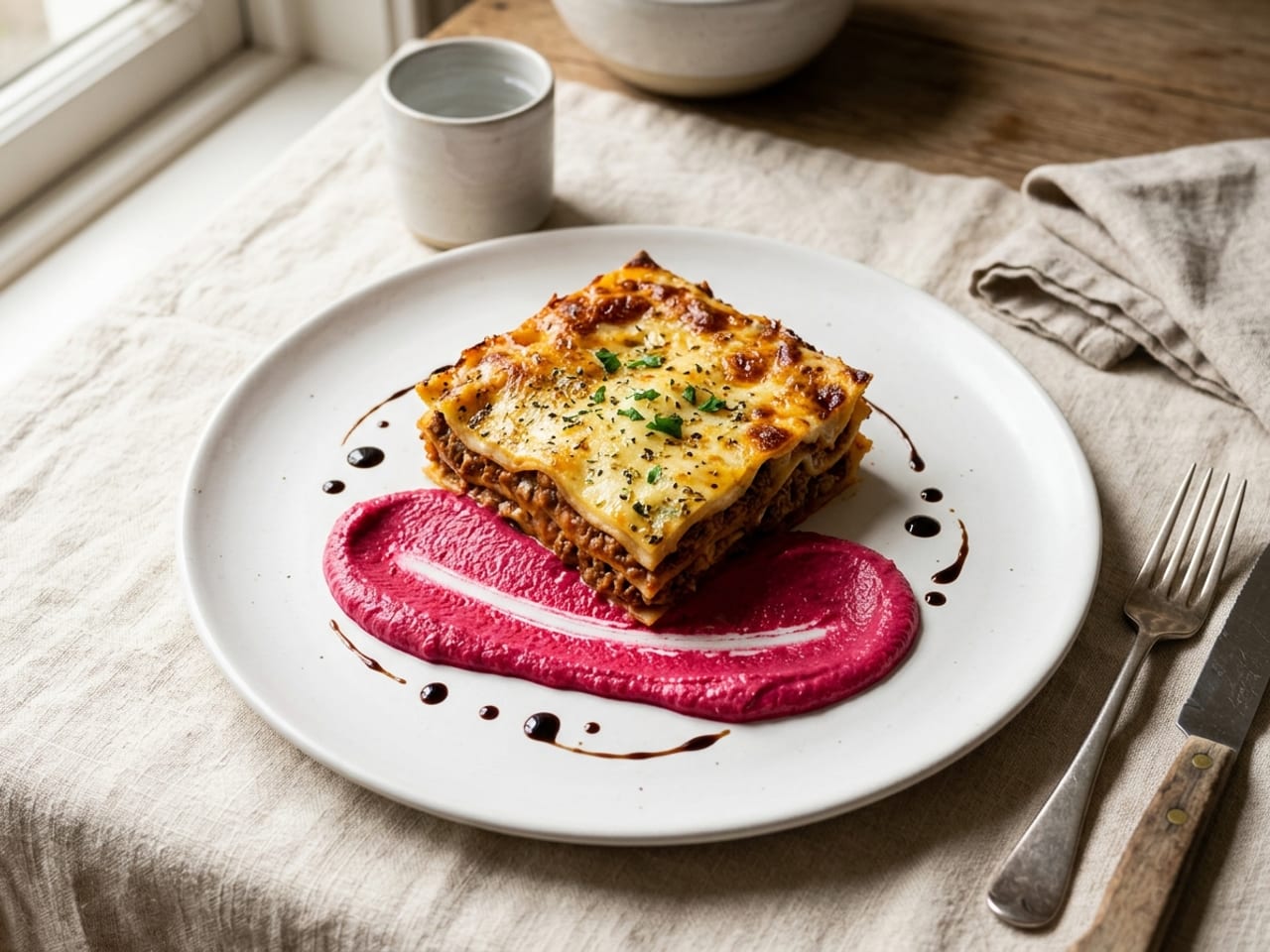
The smear reflex
A swoosh under food that has no sauce logic is decoration pretending to be cooking. If the purée isn't a component the dish needs, plate without it — restraint reads as more confident than technique.
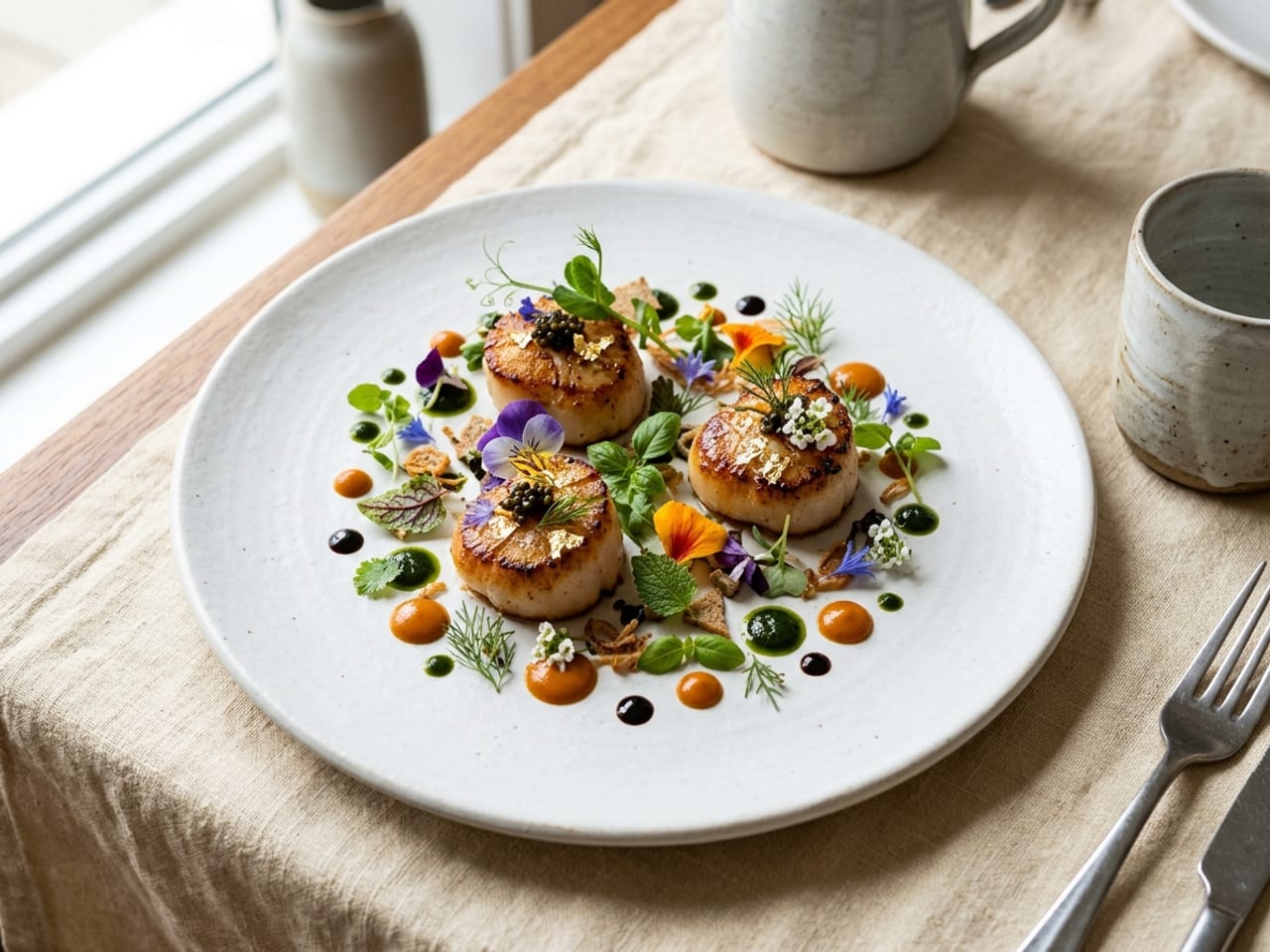
Tweezered clutter
Fifteen micro-garnishes don't add up to fine dining; they add up to fussiness. Three placed elements beat fifteen sprinkled ones every time.
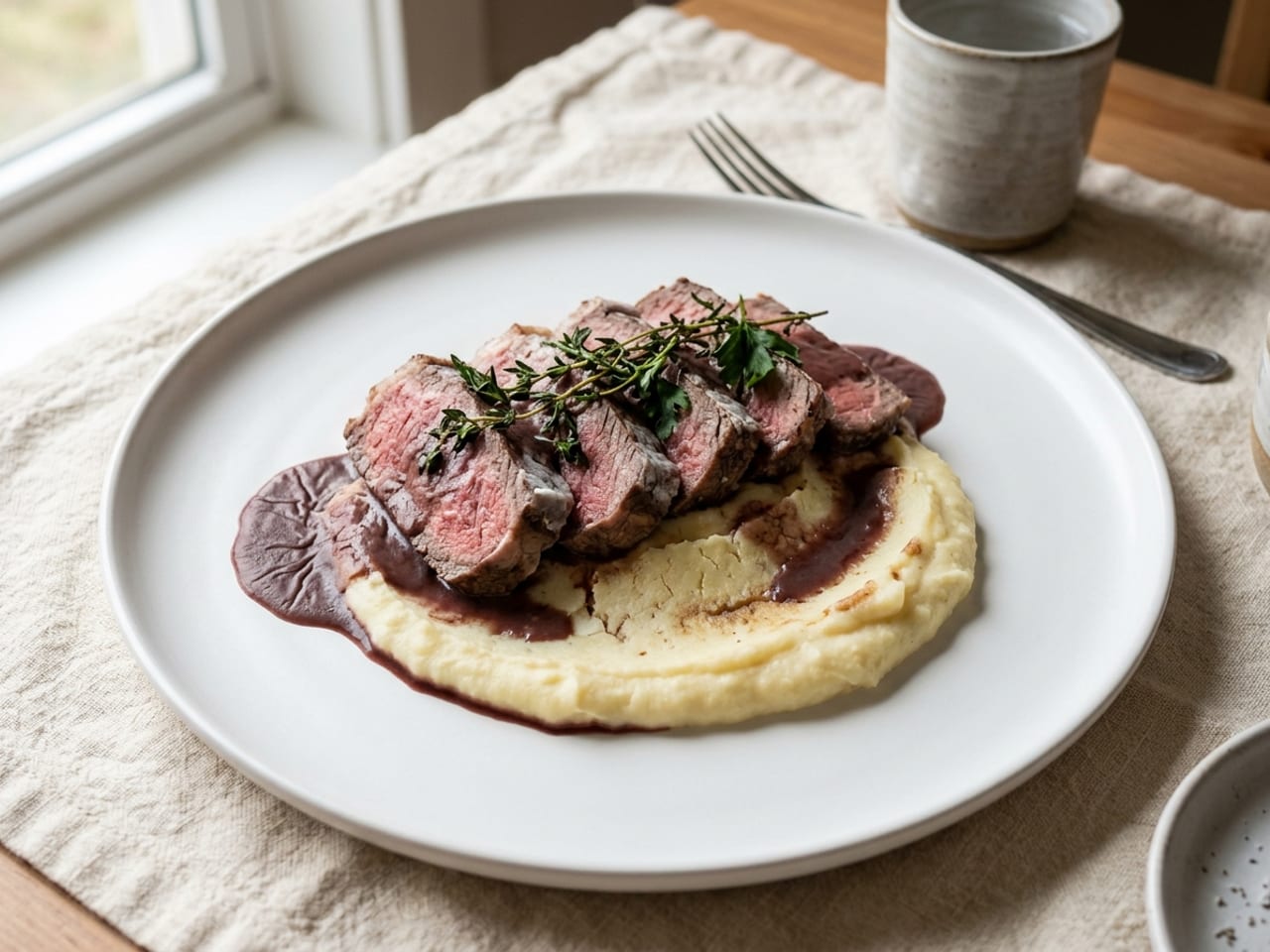
Cold food, perfect plate
The cardinal sin of ambitious home dinners. If the composition costs the temperature, the composition loses — simplify the plating until it fits inside a hot minute.
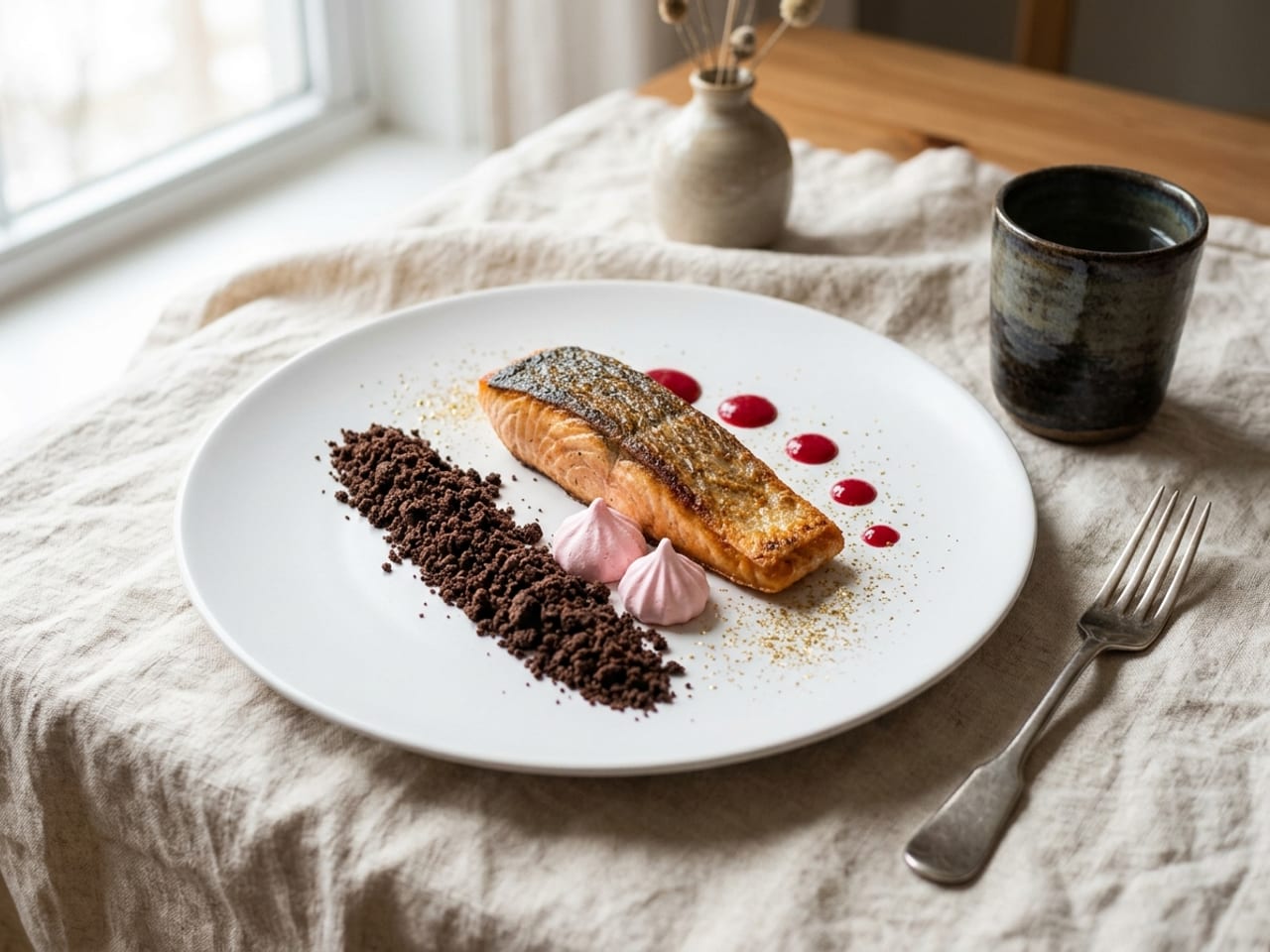
Copying the look without the flavor logic
Every element on a starred plate is on the menu description — the crunch belongs to the dish, the purée is a flavor, the flower is edible and chosen. Plating that isn't cooking is set dressing.
Portion panic
Fine-dining portions look small because the tasting menu has nine of them. At home, plate the elegant portion and put seconds on the table — don't cram the full serving into the composed look.
See your dinner through a starred lens
The fastest way to internalize the anatomy is to see it applied to food you actually cooked. Upload a photo of tonight's plate and Plate Artists re-plates your own dish with fine-dining discipline — base, hero, crunch, height, restraint — plus the concrete steps a pass would have taken, so next time you can take them yourself.
Your dish, plated like the pass would
Snap it, upload it, and get the Michelin-worthy version back — with the exact moves to recreate it on a real plate.
Start free · 1 enhancement →Free account · 1 free enhancement · No credit card
Fine-dining plating questions, answered
What is michelin star plating?
It's shorthand for the visual discipline of fine-dining kitchens: an oversized plate used as a frame, a base layer of purée or sauce, one hero element with visible technique, a texture contrast, a single point of height, and hard restraint on the number of components — all executed identically on every plate that leaves the pass. It isn't one style (starred rooms range from architectural to nearly rustic); it's the consistency and intent behind the composition.
Do Michelin inspectors actually judge plating?
Officially, no. Michelin's published criteria are about what's on the fork: the quality of ingredients, the harmony of flavors, the mastery of techniques, the personality of the chef as expressed through their cuisine, and consistency across the entire menu and over time. Michelin says it awards Stars for the food on the plate, nothing more. Presentation isn't a listed criterion. In practice, the kitchens that hit those criteria plate with the same discipline they cook with, which is why the look and the stars travel together. The plating vocabulary is a symptom of the standard, not the standard itself.
How many components should be on a fine-dining plate?
Three to five, visibly separated, each with a distinct job — hero, base, crunch, sauce, garnish. Below three the plate reads as unfinished; past five it starts reading as a buffet and the temperature clock runs out before the plating does. If a component has no job you can name, it stays in the kitchen.
What plates do Michelin-starred restaurants use?
Predominantly large, plain, matte plates — white first, then stone, slate-grey and warm neutrals — sized one step up from the portion so the rim frames the food. Busy patterns are rare because the food is meant to be the loudest thing on the table. You can reproduce the effect at home with one set of oversized plain white dinner plates; it's the cheapest single upgrade in this guide.
How do restaurants plate food so fast?
Nothing is decided at plating time. Every component is finished, held at temperature and staged before service; the plating order is fixed and rehearsed; each cook repeats one motion per plate; and the head chef checks the result against a reference photo at the pass. Sixty seconds of execution, hours of preparation. The home version is the same idea: stage everything, fix the order, plate inside a minute.
Does fancy plating actually change how food tastes?
Measurably, yes. The identical salad plated artistically (after a Kandinsky painting) was rated tastier after eating and diners were willing to pay significantly more for it; the same salad laid out in neat rows did no better than the tossed one. A separate study found careful presentation raised liking for the flavor of identical food, and in a real dining room diners preferred (and paid more for) the main element centered. Composition isn't vanity; it's part of the seasoning.
The research behind this guide
Peer-reviewed studies, retrieved via PubMed and Crossref. Every figure quoted above comes from one of these papers.
- Michel, C., Velasco, C., Gatti, E., & Spence, C. (2014). A taste of Kandinsky: assessing the influence of the artistic visual presentation of food on the dining experience. Flavour, 3, 7. doi:10.1186/2044-7248-3-7
- Michel, C., Velasco, C., Fraemohs, P., & Spence, C. (2015). Studying the impact of plating on ratings of the food served in a naturalistic dining context. Appetite, 90, 45–50. doi:10.1016/j.appet.2015.02.030
- Zellner, D. A., Loss, C. R., Zearfoss, J., & Remolina, S. (2014). It tastes as good as it looks! The effect of food presentation on liking for the flavor of food. Appetite, 77, 31–35. doi:10.1016/j.appet.2014.02.009
- Woods, A. T., Michel, C., & Spence, C. (2016). Odd versus even: a scientific study of the ‘rules’ of plating. PeerJ, 4, e1526. doi:10.7717/peerj.1526
Keep going
Food plating tools: 20 names and uses
The toolkit above, tool by tool: tweezers, the sauce spoon, squeeze bottle and ring mould, with the kitchen-drawer substitutes that named sources give.
How Michelin stars work
What one, two and three stars mean in Michelin's own words, the five criteria, how inspectors decide, and dated counts.
The components: coulis, tuile, quenelle and 13 more
The parts that fill this anatomy: coulis, tuile, quenelle, purée, crumb, fluid gel, foam, herb oil and pickles, each with a base ratio and the usual failure.
Plating 101 — the composition guide
The fundamentals under the fine-dining look: the clock method, height, negative space, sauce work and garnish rules.
Dessert plating — the sweet pass
The pastry section's version of this anatomy: quenelles, smears, soil and temperature contrast.
Plating techniques & styles — the glossary
Every named style and technique on this page, defined and shown: free-form, landscape, the swoosh, the quenelle, the ring mould.
How to plate food — dish by dish
The anatomy applied to steak, lamb chops, salmon, pasta and more, each a home plate re-plated on the same table.
How to plate steak
One dish in full: whole or sliced, slicing against the grain, where each sauce goes, and every side from mashed potatoes to fries.
The five French mother sauces
Béchamel, velouté, espagnole, tomate and hollandaise — how each is made and thickened, its daughters, and where it goes on the plate.
What is an amuse-bouche?
The free first bite: the word, its history, how it differs from canapés and appetizers, and twelve ideas to make at home.
Which plate color? The free pairing tool
Pick your food's main color and see which plate flatters it and which makes it vanish, with the contrast logic behind it.
Build a tasting menu at home
A free 3, 5 or 7-course meal builder: courses in the classic order, portions, timing and a make-ahead plan.
Cook a plate worth composing
100+ recipes with step-by-step methods and three plating ideas each — practice material for the home pass.