Prix fixe meaning: vs à la carte, tasting menus and more
What prix fixe means and how to say it, the real math against à la carte, every other menu term from table d'hôte to omakase, the fine print on the bill, and how to cook, pace and plate a tasting menu at home.
The photos on this page are AI-generated illustrations.
Prix fixe (say pree FEEKS or pree FIX) is French for "fixed price": a complete meal of several courses, set by the restaurant and sold for one price, often with a choice of dishes in each course. Merriam-Webster defines it as "a complete meal offered at a fixed price; also: the price charged".1 Its opposite is à la carte, where every dish has its own price.
Both pronunciations are in the dictionaries: Merriam-Webster lists both, and the Oxford English Dictionary gives "pree FEEKS" for American English and both for British.1, 2 The x in prix is silent and the x in fixe is always said, so "pree fee" is wrong. The spelling is prix fixe, or prix-fixe before a noun ("a prix-fixe menu");3 pre fixe, pre-fix and prefix menu are misspellings born of the sound, common enough to be logged in the Eggcorn Database.4
One more surprise: French restaurants rarely print the phrase. In France a fixed-price meal is simply le menu (or a cheaper formule), and the full list of dishes is la carte.4, 7, 8 This guide covers that false friend and every other menu term, the dated prices behind "is it cheaper?", the history, and then the part no dictionary covers: running a prix fixe or tasting menu in your own kitchen. Sources are at the bottom.
| Term | Say it | Watch out |
|---|---|---|
| Prix fixe | pree FEEKS, or pree FIX | The x in prix is silent; the x in fixe is always said. Never “pree fee”. |
| À la carte | ah luh KART | A carte is a card, not a cart. |
| Table d'hôte | TAH-buhl DOHT | Hôte is the host; the h is silent. |
| Degustation | dee-guh-STAY-shun | The English way; French says dégustation. |
| Omakase | oh-muh-KAH-say | English plural: omakases. |
| Plat du jour | plah duh ZHOOR | Plural: plats du jour. |
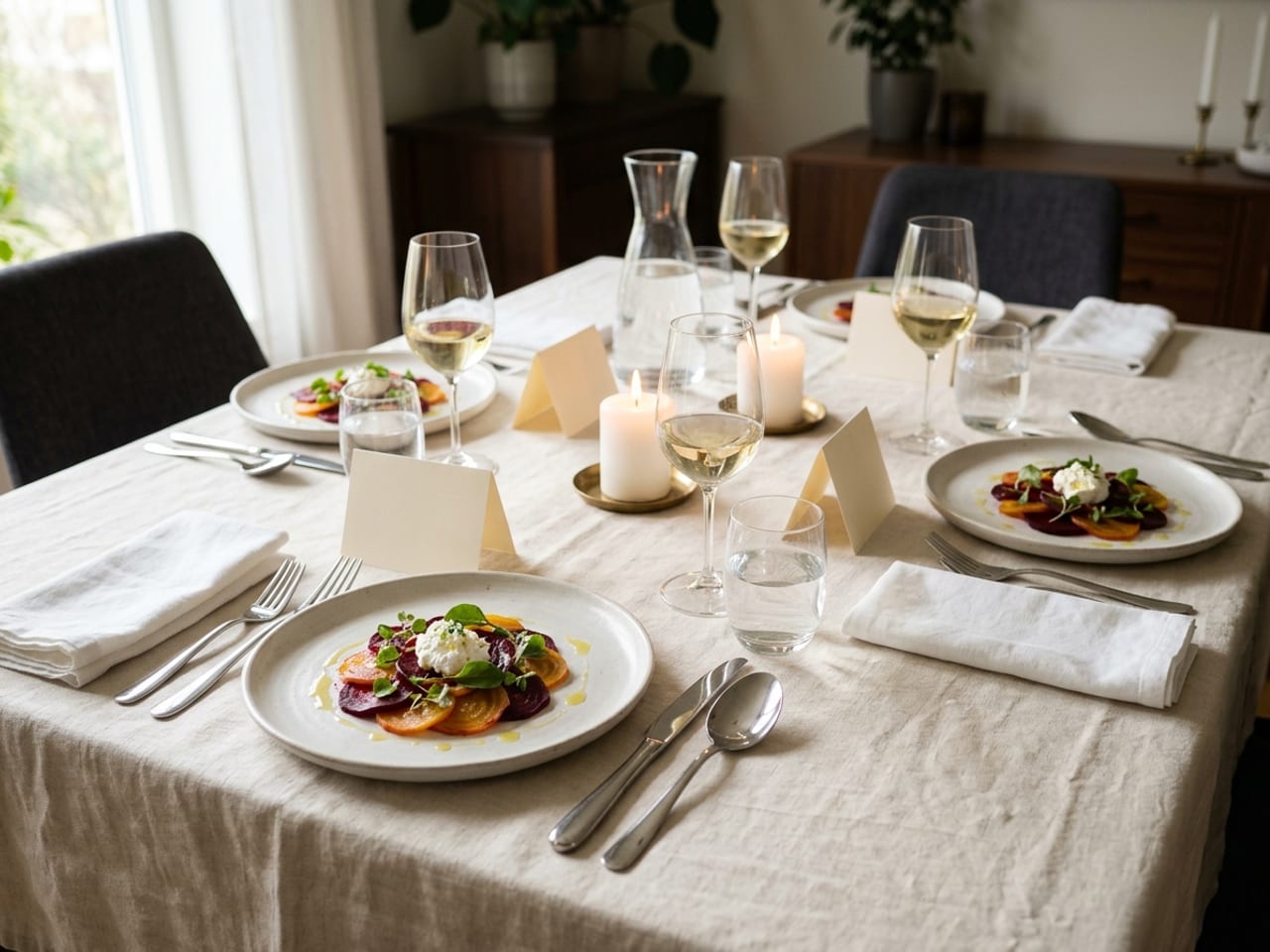
Prix fixe vs à la carte, with the actual math
What does à la carte mean? Literally "by the card", the bill of fare: you choose each dish from the full list and each one is priced separately.5 The TLFi, the standard historical dictionary of French, gives its opposite as à prix fixe.7 Both arrived in English in the 19th century, à la carte in 1816 and prix fixe in 1851.6, 2
Whether a set price is a deal depends on what you would have ordered anyway. Here are two real cities, with prices dated because they change every year.
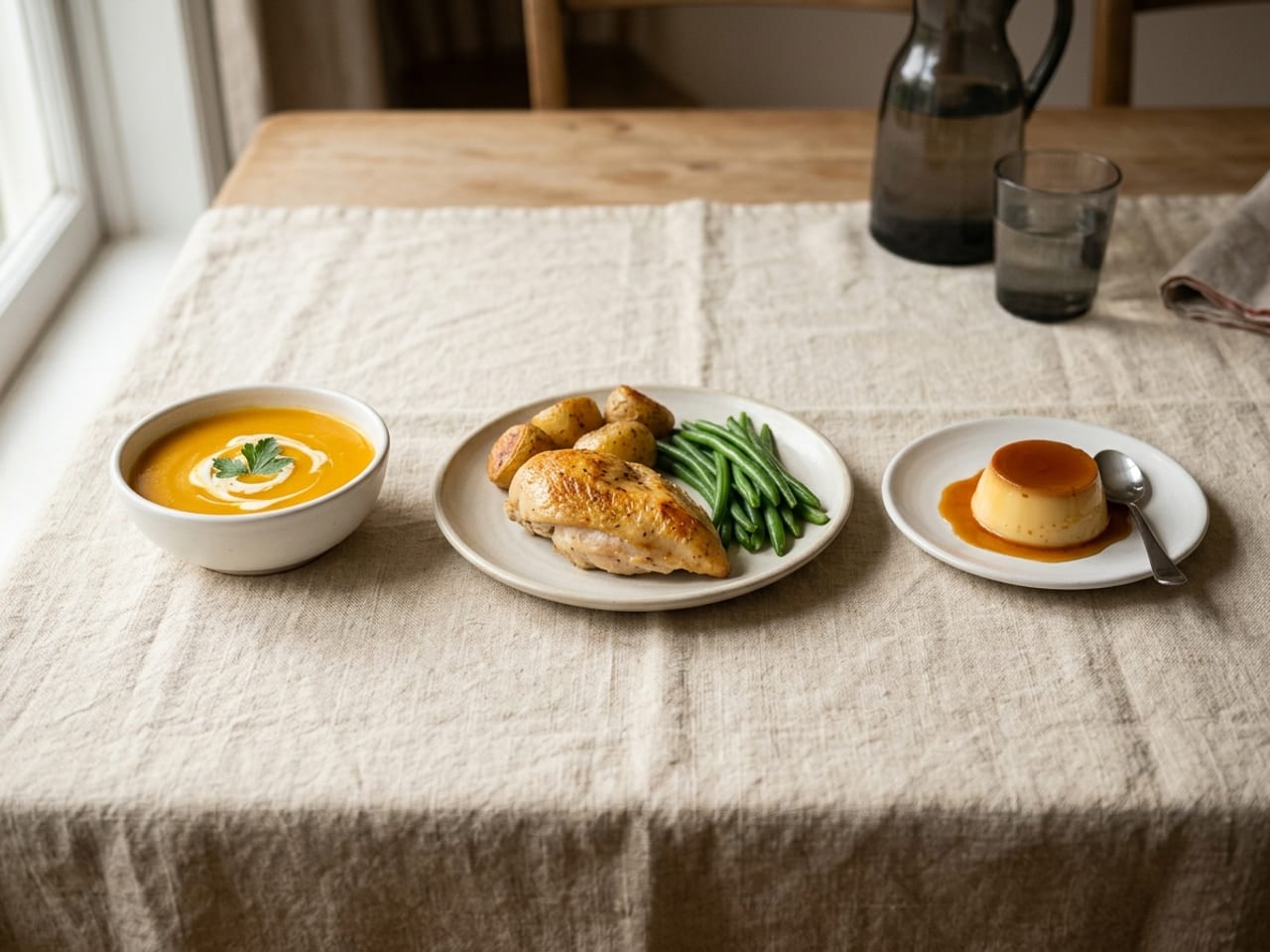
Paris: a three-course lunch for half the price
| At Chez Julien, Paris | Starter | Main | Dessert | Total |
|---|---|---|---|---|
| Weekday lunch formule (the chef's market menu) | One price for all three | €29 | ||
| Cheapest three dishes on the carte | €14 | €32 | €12 | €58 |
| Dearest three dishes on the carte | €68 | €69 | €19 | €156 |
On the menu card PDF on Chez Julien's website (dated September 2024, still the posted card when we checked on October 1, 2026), the formule midi is €29 for "Entrée + Plat + Dessert", Monday to Friday, 11:30 to 14:30, while the carte runs €14 to €68 for starters, €32 to €69 for mains and €12 to €19 for desserts.26 Even the cheapest à la carte route costs about twice the formule. The catch: the formule dishes are the chef's choice of the day, not the carte's. Cheaper Paris lunches show how the third course is priced: Le Fooding's January 2026 list has Pistil at €17 for a two-course formule and €19.50 for the three-course menu, so dessert costs €2.50.27
New York: three ways to eat at one three-star restaurant
| Le Bernardin, September 2026 | Courses | Price | Per course |
|---|---|---|---|
| Lunch prix fixe (weekdays), you choose | 3 | $139 | $46.33 |
| Dinner prix fixe, you choose | 4 | $225 | $56.25 |
| Dinner prix fixe with the Dover sole supplement | 4 | $253 | $63.25 |
| Chef's tasting menu, the chef chooses | 8 | $350 | $43.75 |
| Chef's tasting menu with wine pairing | 8 | $530 | $66.25 |
Le Bernardin's dining room has no à la carte at all: it is one fixed price or another. The lounge is where you order by the dish, and it also sells a three-course weekday lunch for $49.25 The tasting menu costs less per course, but its courses are smaller; the honest comparison is that $125 more buys four more, smaller dishes and no decisions. At the accessible end, New York Restaurant Week sells prix-fixe meals at $30, $45 and $60,28 two courses at lunch and three at dinner, and the prices exclude tax and tip.29 A $60 dinner for two with a 20% tip on the pre-tax bill is $144 before tax.
Which one wins?
| If | Pick | Why |
|---|---|---|
| You want one dish and a glass of wine | À la carte | You pay for what you eat and nothing else. |
| You want three courses anyway | Prix fixe | The set price is usually below the sum of the dishes: in the Paris example below it is about half.26 |
| A famous room on a budget | Prix fixe at lunch | Le Bernardin's three-course weekday lunch is $139 in the dining room against $225 for four courses at dinner, and $49 in the lounge (September 2026).25 |
| A celebration where nobody wants to choose | Tasting menu | The chef decides, and the whole table eats in step. |
| Allergies, strict diets or a picky eater | À la carte, or a prix fixe with choices | Some tasting menus can't adapt: one New York counter lists vegan and vegetarian diets, fish, shellfish, soy, gluten and allium as off limits.34 |
Why one price can feel better than a running bill
- The meter stops runningBehavioral economists call it the "pain of paying": like a taxi meter, watching a bill grow takes some pleasure out of what you are buying, and their model assumes that "consumption that has already been paid for can be enjoyed as if it were free".84 A price agreed before the first course is one way to switch the meter off. This is theory backed by surveys, not a restaurant experiment.
- A bundle loosens the money's-worth itchIn lab studies, people imagining a ski trip on a four-day pass were less likely to ski on the last day than people with four one-day tickets, and in real ticket data, theater subscribers skipped a given show more often than single-ticket buyers. One reason, the authors found, is that one payment is hard to split across several days.85 Applied to dinner, that is an inference: under one price, skipping the cheese course doesn't feel like throwing money away.
- Diners price a set menu by its best dishesA choice-survey study that treated a prix fixe menu as a price bundle found people weighting the higher-priced starters and mains, judged against their à la carte prices, when choosing between set menus.86
- Fewer choices help only sometimesPooled across 50 experiments, the famous "too many choices" effect averaged out to roughly nothing.87 A later meta-analysis found it is real when the options are complex, unfamiliar or hard to compare, or when people just want the decision over with,88 which plausibly describes a long menu in a language you half read.
- What nobody has testedNo study we could find has compared how much diners enjoy a prix fixe against the same food ordered à la carte. Everything above is about pricing and choice in general.
The other set-price words, and how they differ
Table d'hôte and set menu
Table d'hôte means "the host's table": the innkeeper's common table, where every guest ate the same meal at a set hour for a set price.9 English borrowed it in 1617.10 Today it lives on in three different ways. In English it is a slightly formal synonym for a set-price meal; in Québec it is the regional word for a set-price menu;7 and in France a table d'hôtes is now the dinner a B&B host cooks for lodgers, which the official guidance says must be a single menu at one shared table.11 Set menu is the same idea in plain English; its earliest OED example is from 1878, in American Magazine, but Merriam-Webster now labels it British.12, 13
The French false friend: menu, carte, formule
Order "the menu" in Paris and you get a set meal. In French, le menu is the fixed-price meal and la carte is the full list, so a French menu is an English prix fixe and an English menu is a French carte.7, 8 English took menu, from the French for "small, detailed", as a list of dishes in 1830.103 Before restaurants, a menu was simply the list of everything served at one meal, as at a banquet.47 A formule is the cheaper short set, often starter and main or main and dessert at lunch, though some places use the word for three courses.4, 27
Tasting menu and menu dégustation
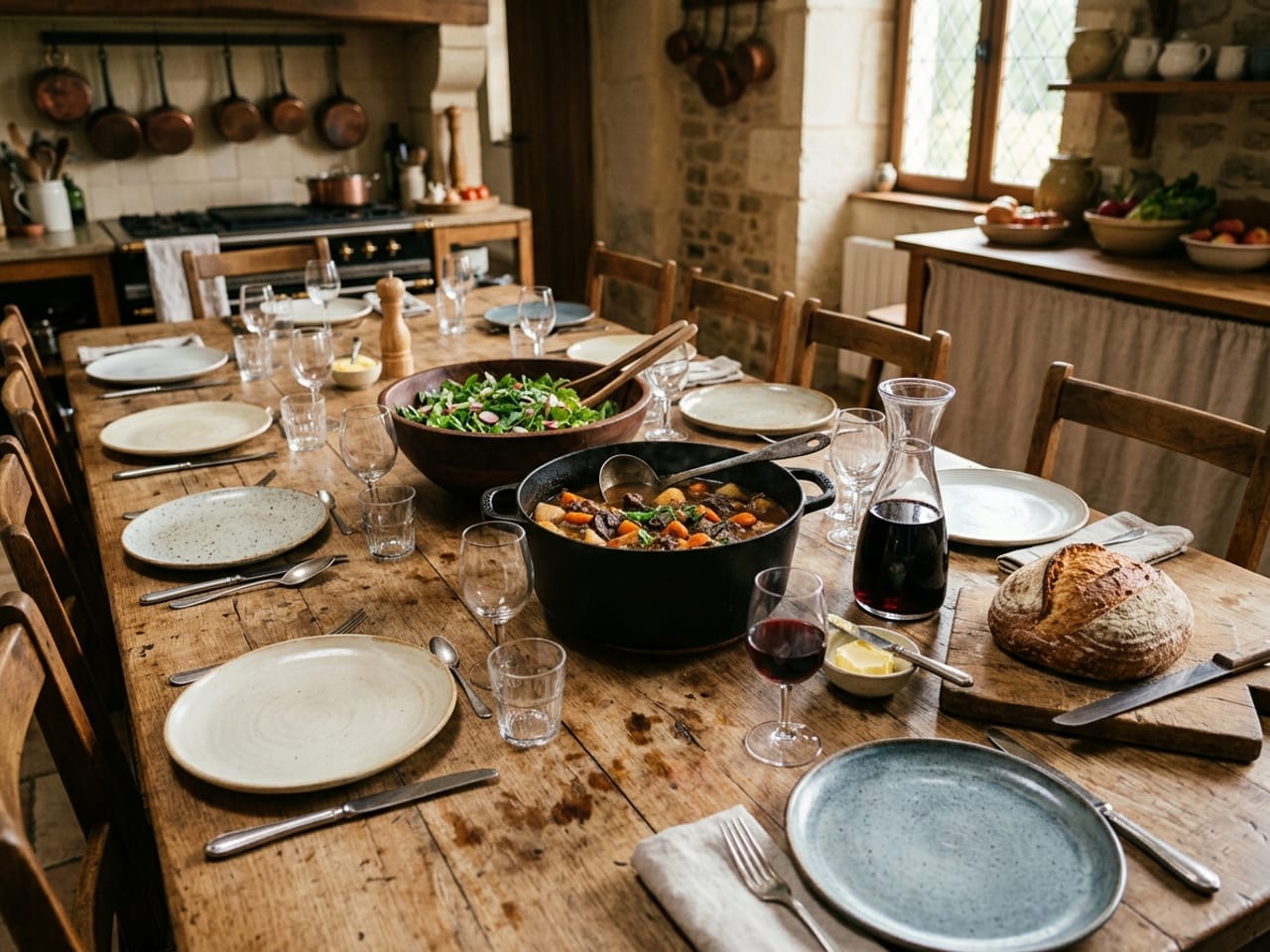
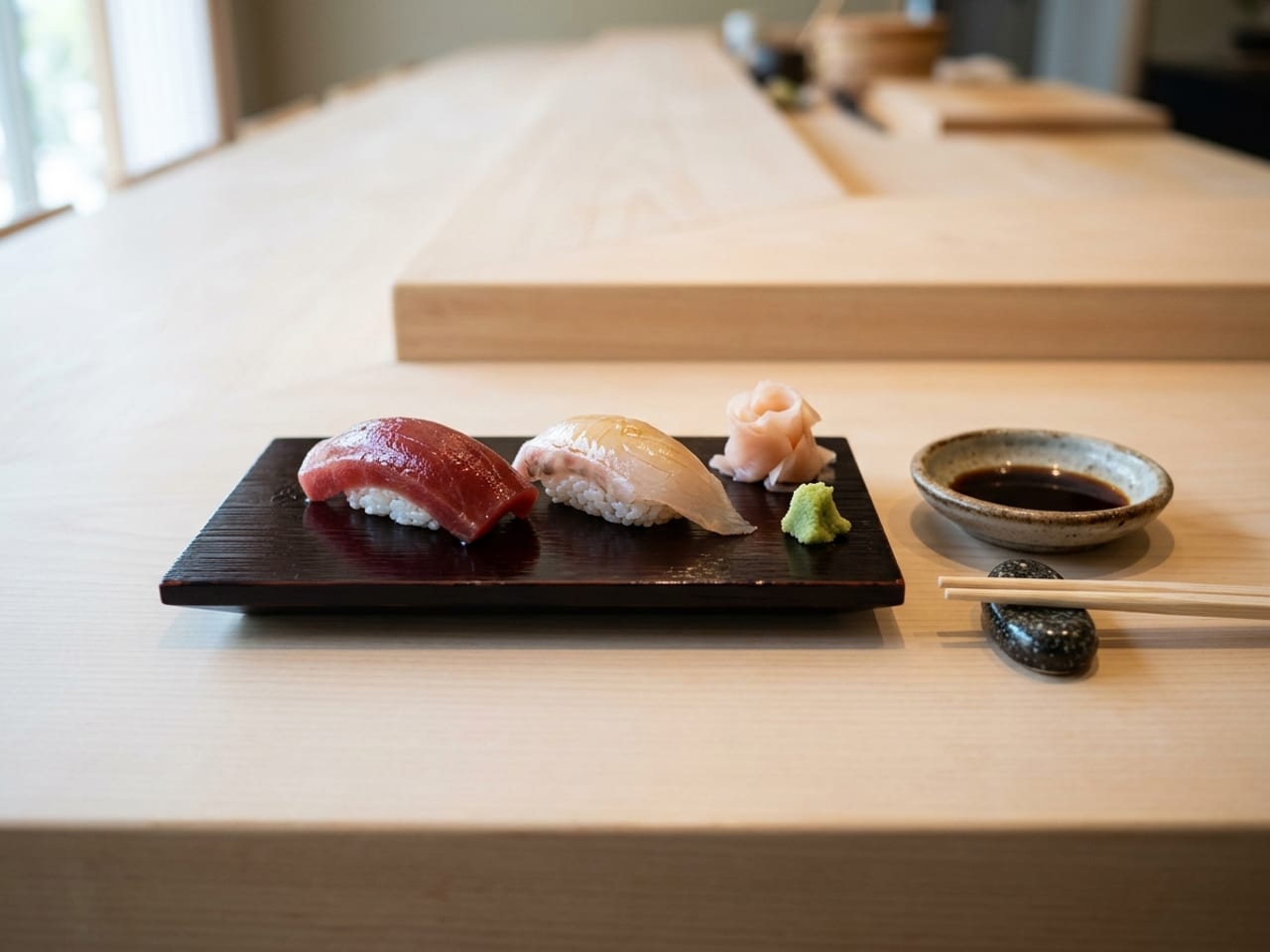
A tasting menu is "a set multicourse meal that a restaurant offers to all diners for a single price", as Alison Pearlman defines it in the Oxford Research Encyclopedia of Food Studies.15 It is a prix fixe with the choices taken away: the chef picks a run of small courses and everyone at the table eats them in step. The French name is menu dégustation(dégustation just means tasting, in any series of small portions; English has used degustation for a tasting since 1651).16, 104 A French restaurant guide of 1977 already lists Lameloise's menu dégustation as six or seven dishes in small amounts,56 and the English phrase is in the Chicago Tribune by 1979.14 Today Per Se in New York serves two nine-course tasting menus a day, in which "No single ingredient is ever repeated".37
Prix fixe vs tasting menu
Every tasting menu is a prix fixe; most prix fixes are not tasting menus. A prix fixe gives you a choice in each of three or four normal-sized courses. A tasting menu gives you no choice (beyond dietary swaps arranged ahead) across six, eight or more small ones, takes longer, and is more often sold as a prepaid ticket. Le Bernardin offers both side by side.25 Menus are getting shorter, too: one New York omakase cut from 21 courses to 19 and another from 13 to 10 because guests struggled to finish.38
Omakase and kaiseki
Omakase is Japanese for leaving the choice to someone else; Merriam-Webster defines it as "a series of small servings or courses (as of sushi) offered at a fixed price and whose selection is left to the chef's discretion". Merriam-Webster dates it in English to 1967; the OED's earliest example is from 1979.17, 18 At New York's Masa the Chef's Reserve counter omakase is listed at $1,200 a person on its booking page, paid as a deposit when you book.35 The MICHELIN Guide's distinction is the useful one: "kaiseki is a style of cuisine, while omakase is a style of service." 19
Kaiseki is two words that sound the same. 懐石, "breast-pocket stone", is the light meal of the tea ceremony, named for the warmed stone Zen monks held against hunger; the earliest known text to use it is the Nanpōroku, presented as a disciple's record of Sen no Rikyū's teachings but now thought to have been written by Tachibana Jitsuzan around 1690, a century after Rikyū's death.20, 21 会席, the banquet meal of restaurants, is drink-led and ends with rice and soup, where the tea meal serves them first.21 English has had the word since 1920.22 Writers including the historian Alison Pearlman argue that kaiseki influenced the French tasting menu, as French chefs began visiting Japan in the mid-1960s; Eater notes the influence is hard to prove dish by dish.15, 58
Chef's table
A chef's table is a seat, not a menu: a table in or beside the kitchen. The MICHELIN Guide traces it to chefs feeding family and friends at a small table in the kitchen, which "eventually evolved into a fully bookable table".23 It usually comes with a set or tasting menu; we found no entry for it in Merriam-Webster or the OED.
Menu terms cheat sheet
What each word means literally, what arrives at the table, how the bill works, and when English first used it (from Merriam-Webster and the Oxford English Dictionary).
| Term | Literally | What you get | How you pay | First in English |
|---|---|---|---|---|
| Prix fixe | fixed price | A complete meal of several courses set by the house, often with a choice in each | One price for the meal | 1851 |
| À la carte | by the card (the bill of fare) | Any dish you like from the full list | Each dish has its own price | 1816 |
| Table d'hôte | the host's table | Once the innkeeper's shared meal at a set hour; now a set-price menu in Québec, and a B&B host's dinner in France | One price for the meal | 1617 (the inn table); 1821 (the set meal) |
| Set menu | a menu that is set | A fixed meal, sometimes with a small choice | One price for the meal | 1878 |
| Le menu (in France) | a detailed list (from menu, small) | The set-price meal; the full list of dishes is la carte | One price for the meal | 1830 (English menu, a list of dishes) |
| Formule | formula | A cheaper short set, often two courses (starter and main, or main and dessert), usually at lunch | One price for the set | French only |
| Menu du jour | menu of the day | The day's set meal | One price for the meal | French only |
| Plat du jour | dish of the day | One featured dish that changes daily | Its own price | 1890 |
| Carte du jour | card of the day | That day's list of dishes | Each dish priced | Date not checked |
| Tasting menu | a menu for tasting | The chef's run of many small courses, the same for the whole table | One price per person; drinks and pairings extra | 1979 |
| Menu dégustation (degustation) | tasting | The French name for a tasting menu; on its own the word means any tasting | One price per person | 1651 (degustation, a tasting) |
| Omakase | leaving it to someone (from makaseru, to entrust) | The chef's choice, classically at a sushi counter, piece by piece | One price, usually set when you book | 1967 (Merriam-Webster); 1979 (OED) |
| Kaiseki | two words: 'breast-pocket stone' (the tea meal) and 'gathering seat' (the banquet) | A Japanese multi-course meal in a set seasonal order | One price at a restaurant | 1920 |
| Chef's table | the chef's own table | A table in or beside the kitchen, booked as a whole, usually with a set menu | Usually one price per person | No dictionary entry found |
Prix fixe · say pree FEEKS or pree FIX
A complete meal of several courses, set by the restaurant and sold for one price, often with a choice of dishes for each course; the term fixes the price, not how many courses there are.
À la carte · say ah luh KART
Ordering dish by dish from the full menu, each item priced separately; the opposite of a fixed-price meal.
Table d'hôte · say TAH-buhl DOHT
Originally the shared meal an innkeeper served all guests at a set hour for a set price; in English a fixed-price complete meal, and in Québec the regional word for a set-price menu, while in France today a table d'hôtes is the dinner a B&B host serves to lodgers.
Formule
The everyday French name for a short fixed-price combination, often two courses at lunch, though some restaurants use it for three.
Plat du jour · say plah duh ZHOOR
A single dish featured by a restaurant for that day, priced on its own; plural plats du jour.
Carte du jour · say kart duh ZHOOR
The day's à la carte list of dishes, as in Escoffier's sample 'cartes du jour'; in English mostly an old-fashioned word for the menu.
Menu dégustation (degustation) · say dee-guh-STAY-shun (English degustation)
French for a tasting menu: several courses in small portions chosen by the chef; the bare word degustation means any tasting.
Omakase · say oh-muh-KAH-say
Japanese for 'I leave it to you': a series of small courses, classically sushi served piece by piece at the counter, chosen by the chef at a fixed price.
Kaiseki · say kigh-SECK-ee
A Japanese multi-course meal served in a fixed seasonal sequence; two words share the sound, the light meal of the tea ceremony and the restaurant banquet meal.
Chef's table
A seat, not a menu: a bookable table in or beside the kitchen, usually served a set or tasting menu with the cooks in view.
A short history of the fixed price
The twist in the story: in the first Paris restaurants, the fixed price was the price of each dish. The innovation of the first Paris restaurants was a posted price per dish at any hour, instead of the innkeeper's one meal at one hour, and set-price dinners grew up beside it.47, 49 Serving the courses one after another, the backbone of every modern prix fixe, came with "service à la Russe". It is often credited to a Russian ambassador, Prince Kurakin, around 1810, but we found no source from the time; the earliest detailed account we found is Carême's, in 1822.50 Escoffier noted in 1912 that the menu card at every place only became general once Russian service replaced French.52
| Year | What happened |
|---|---|
| 1617 | Table d'hôte enters English, for the innkeeper's shared table, in the travel writing of Fynes Moryson.10 |
| 1767 | The first Paris restaurants, sellers of restorative bouillons, are open on the rue des Poulies. Historian Rebecca Spang credits Mathurin Roze de Chantoiseau, who dated them to 1766; the first press notice, in March 1767, names a master caterer called Minet.47 |
| 1777 | Roze describes the idea as food served "not at a table d'hôte, but at any hour of the day, by the dish, and at a fixed price".47 In the first restaurants, the fixed price was a printed price for each dish, not the price of a set meal. |
| 1816 | À la carte appears in English.5, 6 |
| 1822 | Carême describes "service à la Russe", the dishes brought one after another instead of all at once, in his Maître d'hôtel français.50 |
| 1825 | Brillat-Savarin defines a restaurateur as someone whose dishes are sold "en portions à prix fixe", and describes "restaurateurs à prix fixe" serving a decent dinner for two francs. Both meanings now exist side by side.49 |
| 1851 | Prix fixe enters English, in Harper's Magazine, meaning the set-price meal.1, 2 |
| 1856 | Dubois and Bernard build a whole cookbook on Russian service, which they say had never been described, calling a menu at each place "d'une urgente nécessité", since diners can no longer see what is coming. The order of courses, they add, "n'était pas immuable". 51 |
| 1878 | Set menu first appears, in American Magazine; today Merriam-Webster labels it British.12, 13 |
| 1890 | Plat du jour appears in English, in The Times.24 |
| 1912 | Escoffier notes small tables replacing the old shared tables at fixed hours, and that in many houses the table d'hôte menu is already "une réduction de la carte de restaurant".52 |
| 1973 | Gault & Millau's ten commandments of nouvelle cuisine tell chefs to shorten the carte ("Tu allègeras ta carte"). They say nothing about tasting menus.55 |
| 1977 | A French restaurant guide lists Lameloise's "menu dégustation": "six ou sept plats en petite quantité", six or seven dishes in small amounts.56 |
| 1979 | Tasting menu appears in English, in the Chicago Tribune.14 |
| 1987 | A French ministerial order requires posted prices to include service where service is charged: "Prix service compris".43 |
| 1992 | Tim Zagat and Joe Baum launch New York Restaurant Week in July, for the Democratic National Convention: a three-course lunch for $19.92.53 The next year it cost $19.93.54 |
Seven menu myths
- “A prix fixe and a tasting menu are the same thing”A tasting menu is one kind of prix fixe: the one where the chef chooses every course. Le Bernardin sells both, $225 for four courses you choose and $350 for eight the chef chooses (September 2026).25
- “Table d'hôte offers choices and prix fixe doesn't” (or the reverse)Several explainer sites state one rule or the other. Merriam-Webster defines both as a complete meal at a fixed price, with nothing about choice.1, 9 Cambridge does say a table d'hôte offers little choice, but even by 1912 Escoffier noted that many table d'hôte menus let diners pick from a shortened carte.52 Menus use the words loosely, so read what is printed under each course.
- “The classical French menu has 17 courses, fixed by Escoffier”The 17-course list circulates in hotel-school notes, and it is not Escoffier's. He did print an order of dishes, in Le Livre des menus (1912): prose, unnumbered and not seventeen, with the relevés before the entrées, the reverse of most 17-course lists.52 Dubois and Bernard wrote in 1856 that the order was not fixed.51 Which textbooks really print the list is in the courses of a meal, in order.
Reading the fine print on a prix fixe or tasting menu
Prices below are as listed at the end of September 2026; they change, usually upward, every year.
- SupplementsA "+" next to a dish on a set menu means it costs extra. At Le Bernardin in September 2026: Royal Osetra caviar at $145 an ounce, Dover sole $28, a salt-crust snapper for two $25 a person with 24 hours' notice.25 Chez Julien in Paris lists truffle versions of its dishes, the tomato starter going from €16 to €22.26
- Drinks and wine pairingsIn the US drinks are almost always extra. Le Bernardin's $350 tasting is $530 with wine, so the pairing adds $180;25 Eleven Madison Park's pairings start at $125.30 Pours are small: one resort tasting room pours 2½ ounces (75 ml) with each of its eight courses,45 which still adds up to about four US standard drinks of 5 ounces (150 ml) at 12%.46 In France the menu must say whether a drink is included ("boisson comprise").44
- The whole-table ruleMany tasting-menu restaurants ask everyone at the table to order the same menu. "If one person at a table has 10 courses and another has six, it's much more difficult to line up their dining experiences," as chef Shaun Hergatt puts it.39 It is common, not universal: ask when you book.
- Tip and service: three countries, three rulesUS: read the listing. Eleven Madison Park does not include gratuity;30 Per Se and The French Laundry said "All prices are inclusive of service" at their January 2025 price rise;32 Atomix takes no tips but adds a 10% administrative fee that "is not a gratuity".34 Where nothing is included, the Emily Post Institute's guide is 15 to 20% of the pre-tax bill,40 and Restaurant Week prices exclude both tax and tip.29 France: by a 1987 order, any service charge must be included in the posted price ("service compris"); anything extra is a free choice.43, 44 UK: a discretionary service charge on the bill, long 12.5% in London and increasingly 15%,41 and since October 2024 employers in Great Britain must pass the tips and service charges they control to staff in full, apart from tax.42
- Dietary requests go in with the bookingEleven Madison Park confirms restrictions by email before the visit;30 one New York chef asks for "at least a day" and calls the guest who announces allergies as the food arrives "terrible".39 Some restaurants run a whole vegetarian tasting menu at its own price (Le Bernardin: $270).25
- Lunch is the cheap way inSet lunches are usually the lowest price a kitchen offers. In France, a cheaper menu served only at certain hours must say so, with the exact times.44
How many courses is a prix fixe?
As many as the kitchen decides: the price is fixed, the count is not. Two courses is the classic lunch (a Paris formule, a Restaurant Week lunch), three the classic dinner, four at Le Bernardin, six at Eleven Madison Park, nine at Per Se.27, 29, 25, 30, 37 An amuse-bouche at the start and mignardises with coffee usually come on top and aren't counted. For the order of a 3, 4, 5, 7 or 12-course meal, who prints it and where the lists disagree, see the courses of a meal, in order; for a menu dealt from real recipes, use the course meal builder; for where the free bites fit, see the course-order timeline in our amuse-bouche guide.
How to host a prix fixe or tasting menu at home
A home tasting menu is not a restaurant menu made smaller; it is a dinner party where most of the cooking is finished before the doorbell rings. Plan the format, the arc and the plates first, then the recipes.
- Pick the format: one menu for everyoneAt home, a tasting menu (no choices) is far easier than a prix fixe with a choice per course: every choice you offer is another dish to prep, plate and keep hot. Offer a choice only where a guest needs one, and ask about allergies when you invite.
- Cook only two courses to orderA home cook who served seven courses made five ahead; "the only in-the-moment dishes were the scallops and the steak, both of which took only a few minutes", and the cooking started at 2 p.m. for an 8 p.m. dinner.63 Ina Garten's rule for any dinner party works here too: one dish made ahead, one in the oven, one on the stove and one at room temperature, so no four things need to be hot at the same moment.106
- Build an arc, light to rich and backChef Naomi Pomeroy describes a six-course menu as "a bell curve. You have the buildup, and then there is the peak moment, and then you are coming back again."61 Sat Bains adds the rule for neighbors: "If you're going to have something rich you want to follow it with something acidic or fresh or clean."62
- Make every course different in more than flavorIn a lab study, people ate more when three yogurts in a row differed in taste, texture and color, but not when they differed only in flavor; the more different the foods, the authors concluded, the bigger the effect.90 Alternate hot and cold, soft and crisp, pale and bright.
- Never two courses in a row on the same plateA home cook who runs ten-course dinners plans the plates as carefully as the food: if two neighboring courses need the same plate, you are washing up between them. Alternating also lets one set chill while another warms.64
- Five plated courses is plenty for one cookOur rule of thumb, not a study: three to five plated courses, plus a one-bite amuse-bouche and sweets with coffee that are made ahead. Go longer only if most of the courses are cold or reheated.
A seven-course tasting menu at home, course by course
One autumn menu on one family of plates, as an example of the arc: cold, then hot, the peak, a pause, and a sweet finish. Only the fish and the lamb are cooked while guests wait.
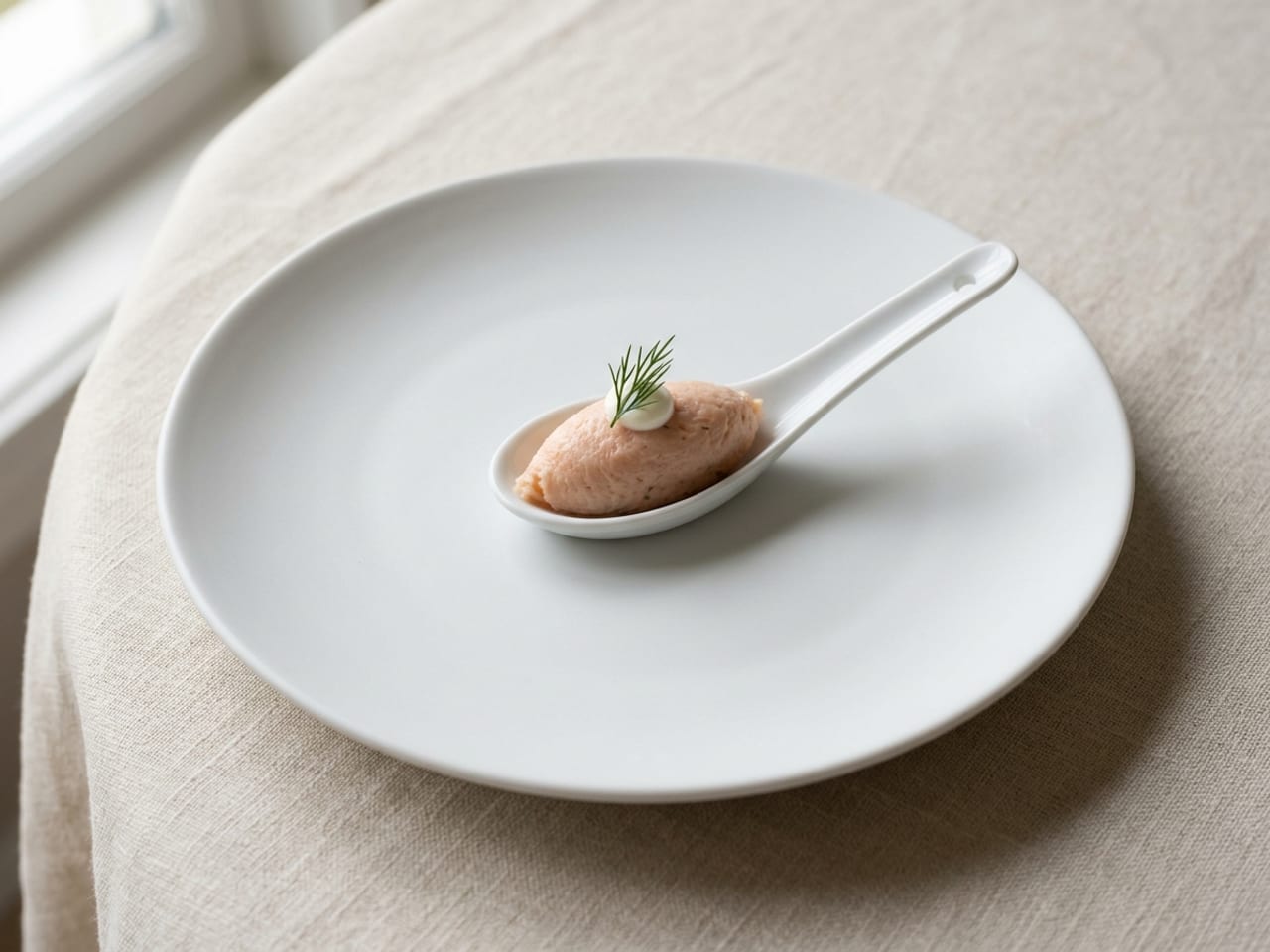
1. Amuse-bouche
One bite · cold · made the day before
One bite as everyone sits: here, smoked trout rillette on a tasting spoon with a dot of crème fraîche and dill. Restaurants send it free; at home it buys you five quiet minutes.
Pregnant or at-risk guest? Swap the smoked trout for something cooked, such as a warm gougère; the FDA lists refrigerated smoked seafood among the foods to avoid.76
More ideas: twelve make-ahead amuses in our amuse-bouche guide.
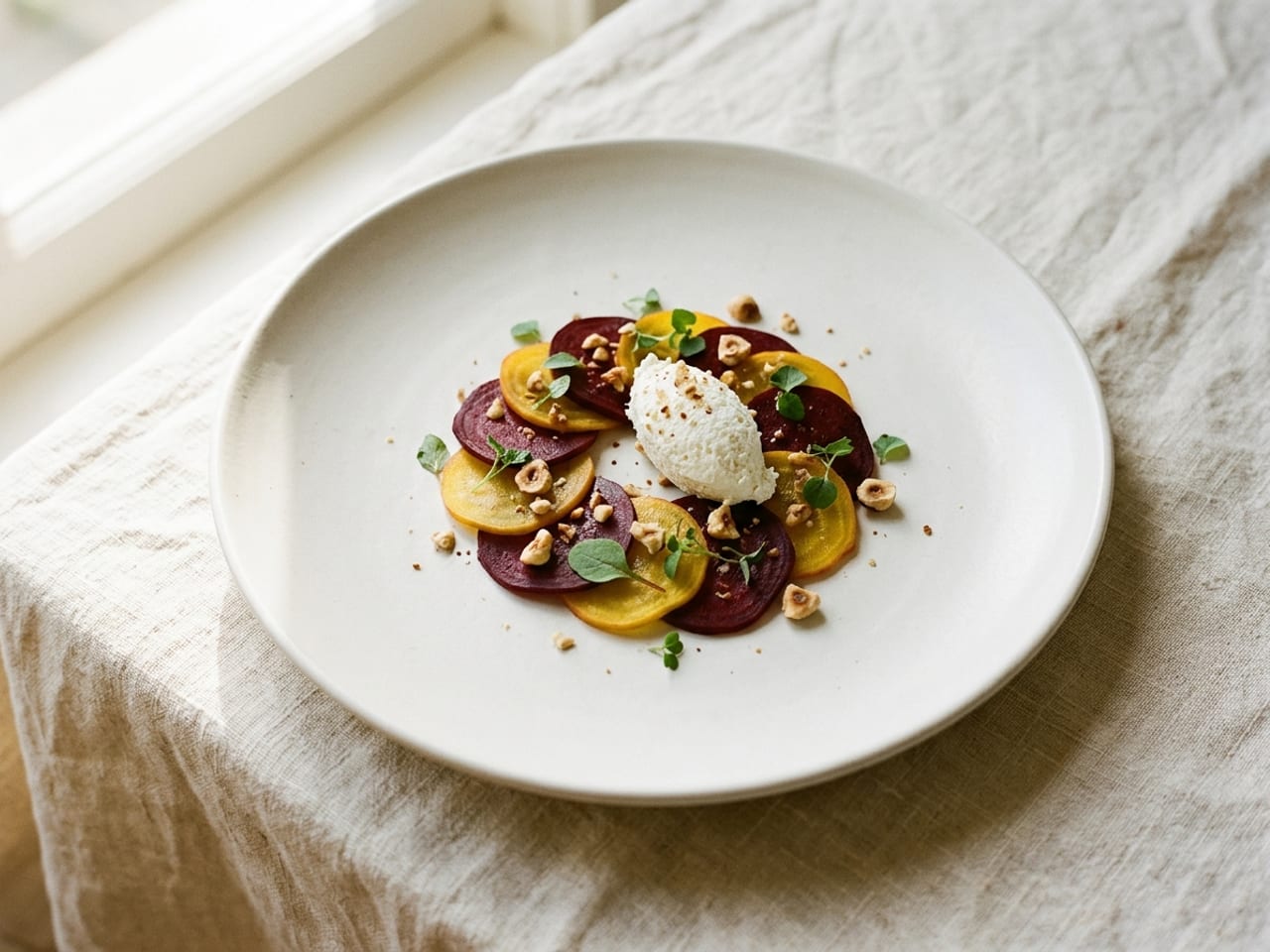
2. Cold starter
A few bites · cold · beets roasted the day before
Thin slices of red and golden beetroot, a spoon of whipped goat cheese, toasted hazelnuts, a few small leaves. Nothing touches the stove on the night, so you can plate it before the amuse goes out. Use a pasteurized goat cheese so every guest can eat it.76
Plate it: on chilled plates, assembled no more than a few minutes ahead.
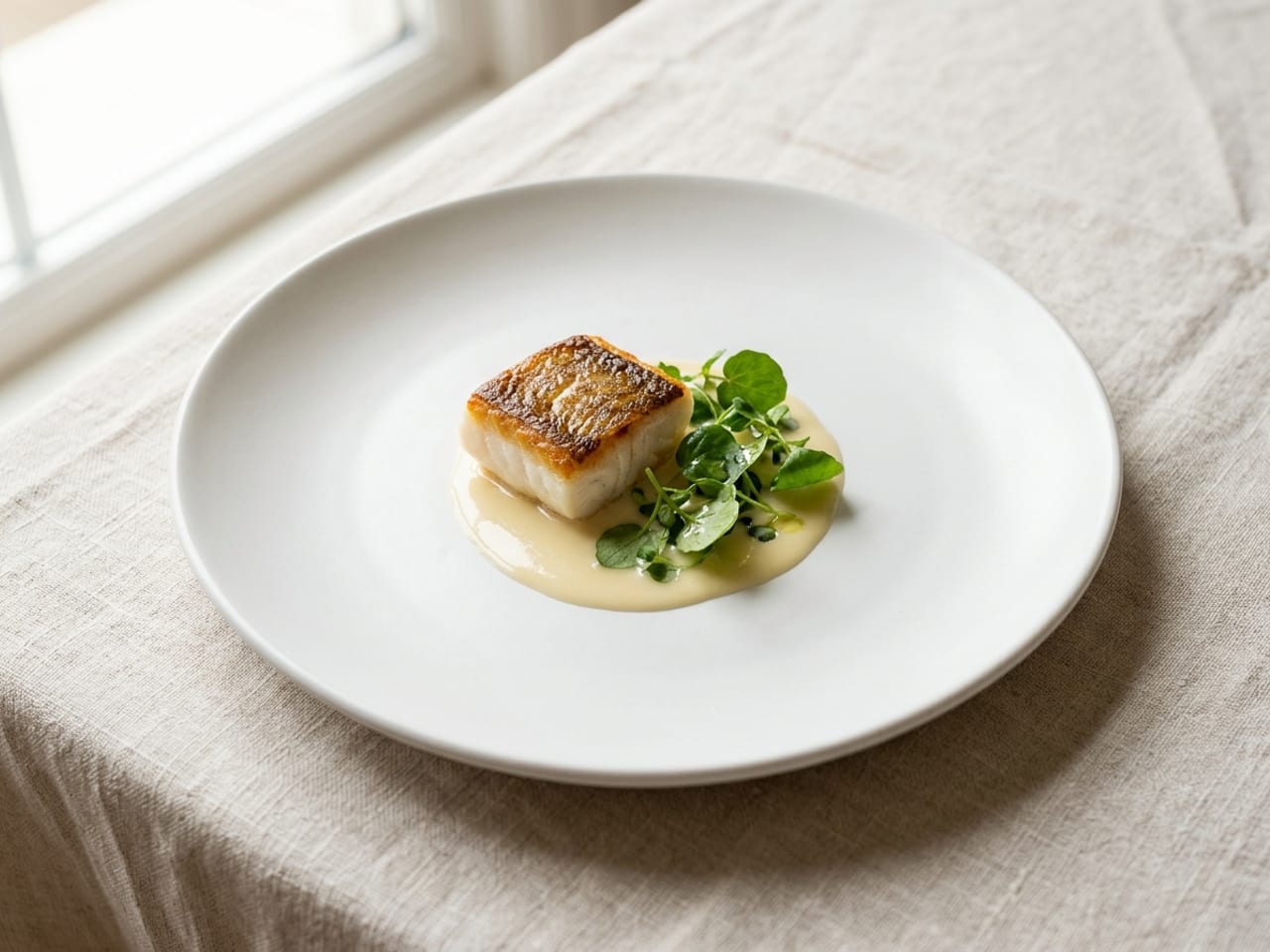
3. Fish
About 2 oz (57 g) · hot · cooked to order
A small piece of seared cod on beurre blanc with a few green leaves: the first of the two courses cooked to order. Per Se's kanpachi course in New York magazine's lab test weighed 2.2 oz (62 g).59
Plate it: on warm plates, sauce first, fish on top, crisp skin up.
Safety: USDA's minimum for fish is 145 °F (63 °C), or until the flesh is opaque and flakes.105, 73 Reduce the wine and shallots for the beurre blanc in the afternoon, whisk in the butter during the cold starter, and keep it in a warmed vacuum flask; it can't be held hot like a jus, so use it within two hours.70
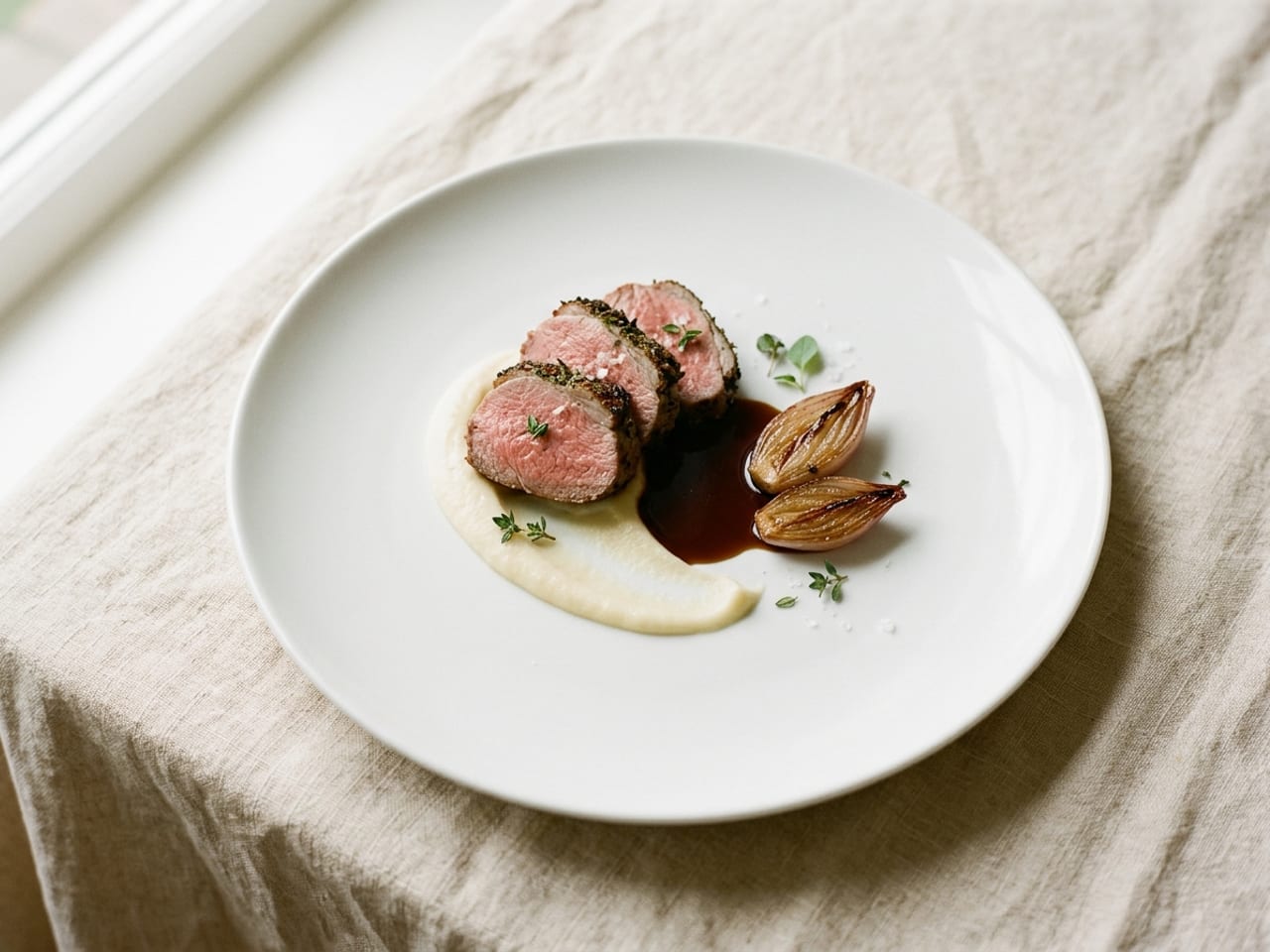
4. Meat, the peak
2 to 2½ oz (57 to 71 g) · hot · jus and purée made the day before
Two or three slices of lamb loin on celeriac purée with a dark jus: the richest course and the second one cooked to order. The purée and jus are made the day before and stay in the fridge until the fish course goes out; then bring the jus to a boil and heat the purée until steaming, once only.71, 73 Per Se's two meat courses weighed 1.9 and 2.7 oz (54 and 77 g).59
Safety: USDA's minimum for whole cuts of lamb is 145 °F (63 °C) and a 3-minute rest.71
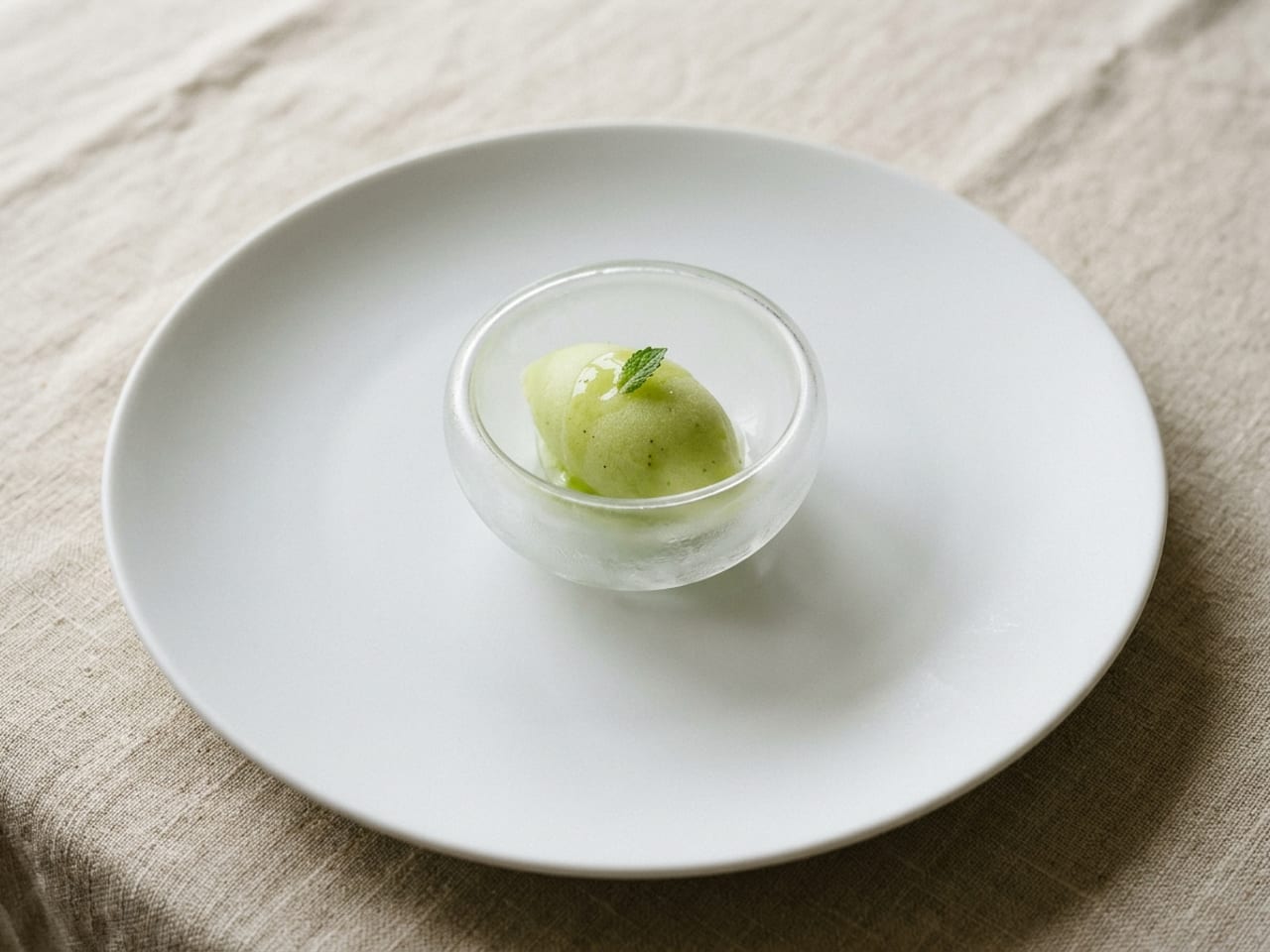
5. Palate pause
One small scoop · frozen · made 2 days ahead
A sharp green-apple sorbet in a chilled glass. It is the trou normand idea, a pause in a long meal,68 but not a digestive: a dietitian points out that the traditional Calvados actually slows digestion.69 Per Se's sorbet was 0.6 oz (17 g).59 Where else this course can go, and what else to serve in it, is in our guide to the palate cleanser.
Plate it: small glasses straight from the freezer, one quenelle each.
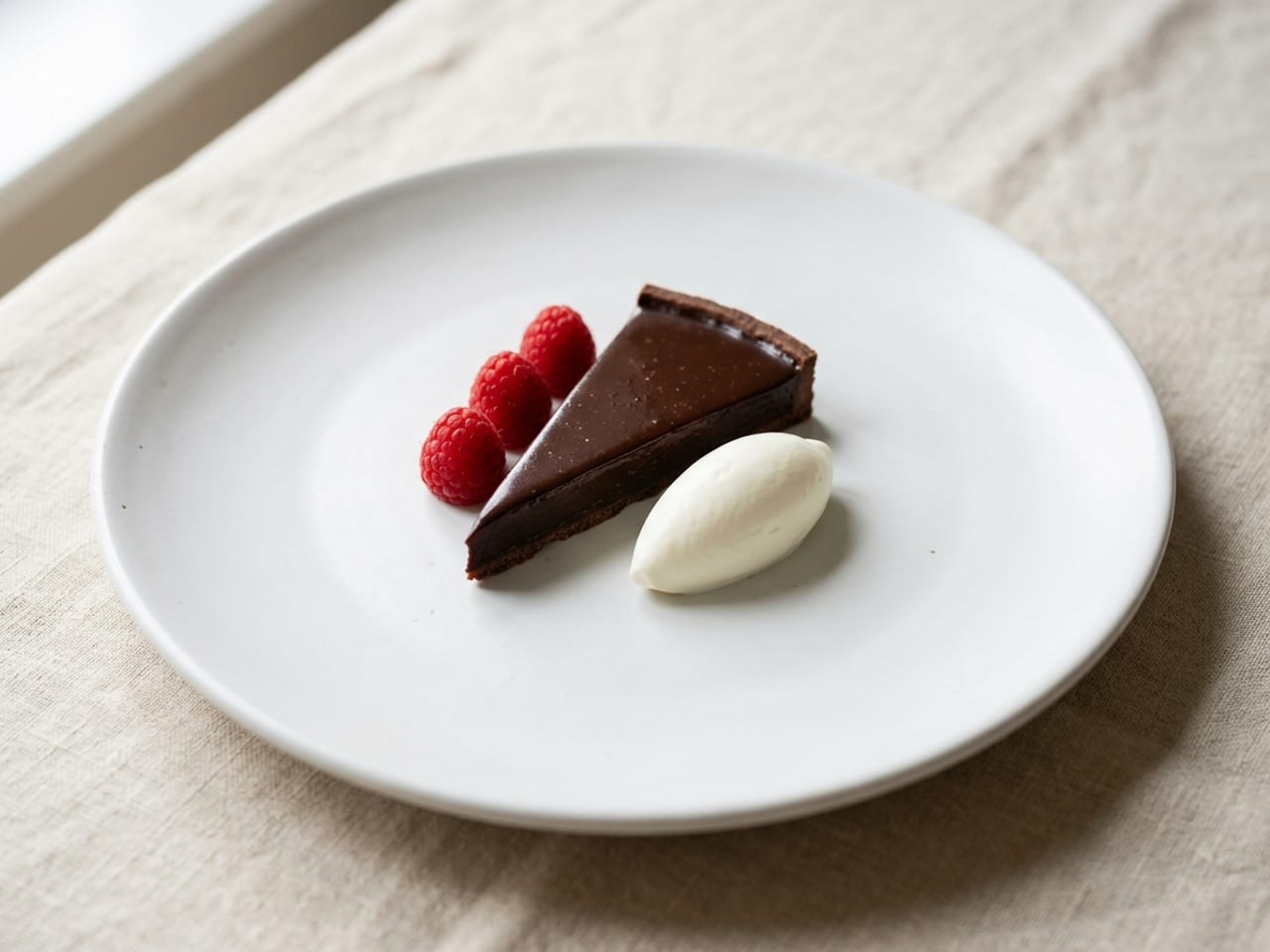
6. Dessert
A small slice · room temperature · baked the day before
A thin slice of dark chocolate tart with a spoon of crème fraîche and a few raspberries. In a four-course lab lunch, eating a savory food made other savory foods taste less pleasant than sweet ones,89 which helps explain why dessert still appeals after a savory meal.
Plate it: see the dessert plating guide for the plate and the quenelle guide for the spoon of crème fraîche.
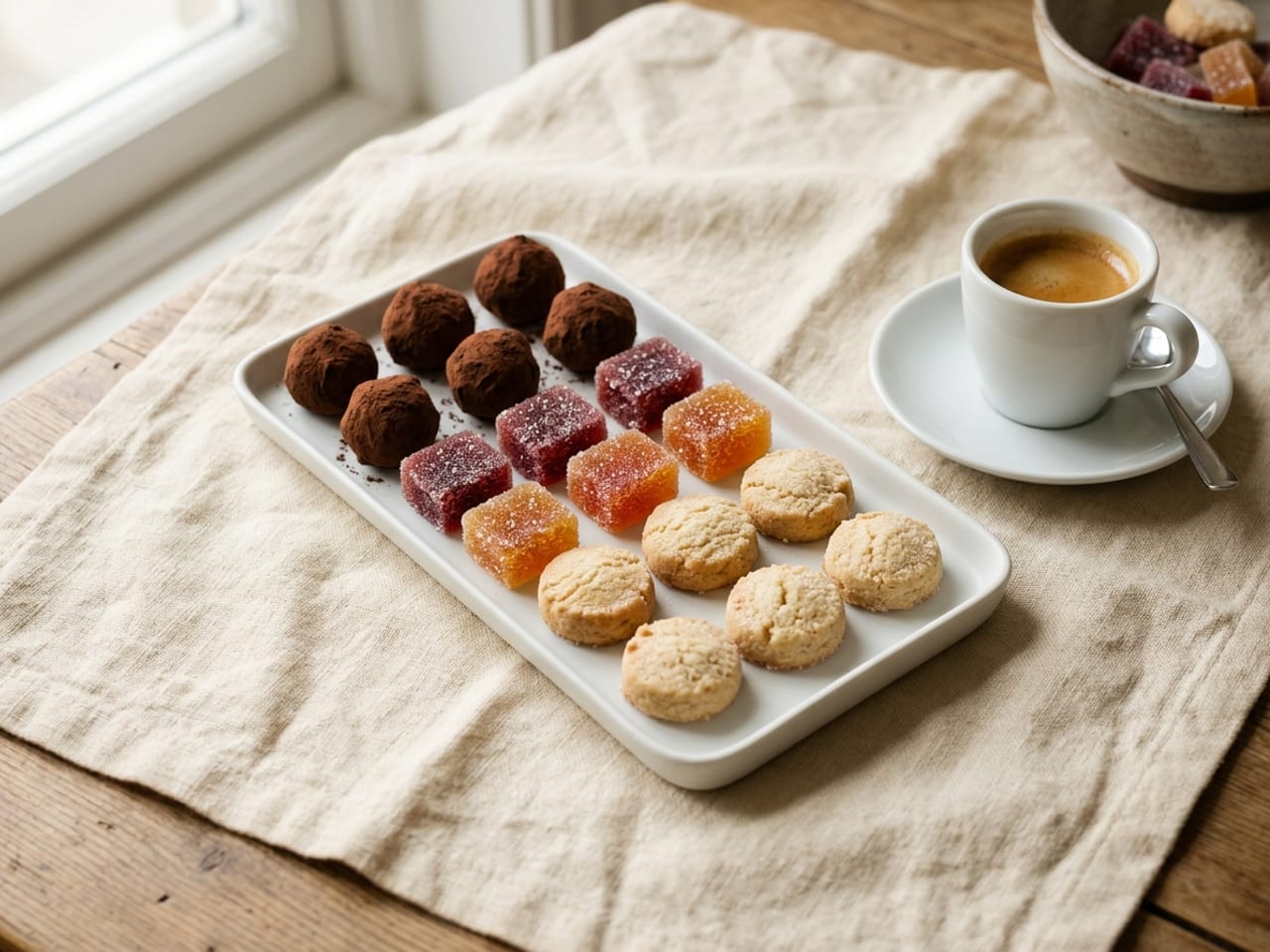
The make-ahead plan
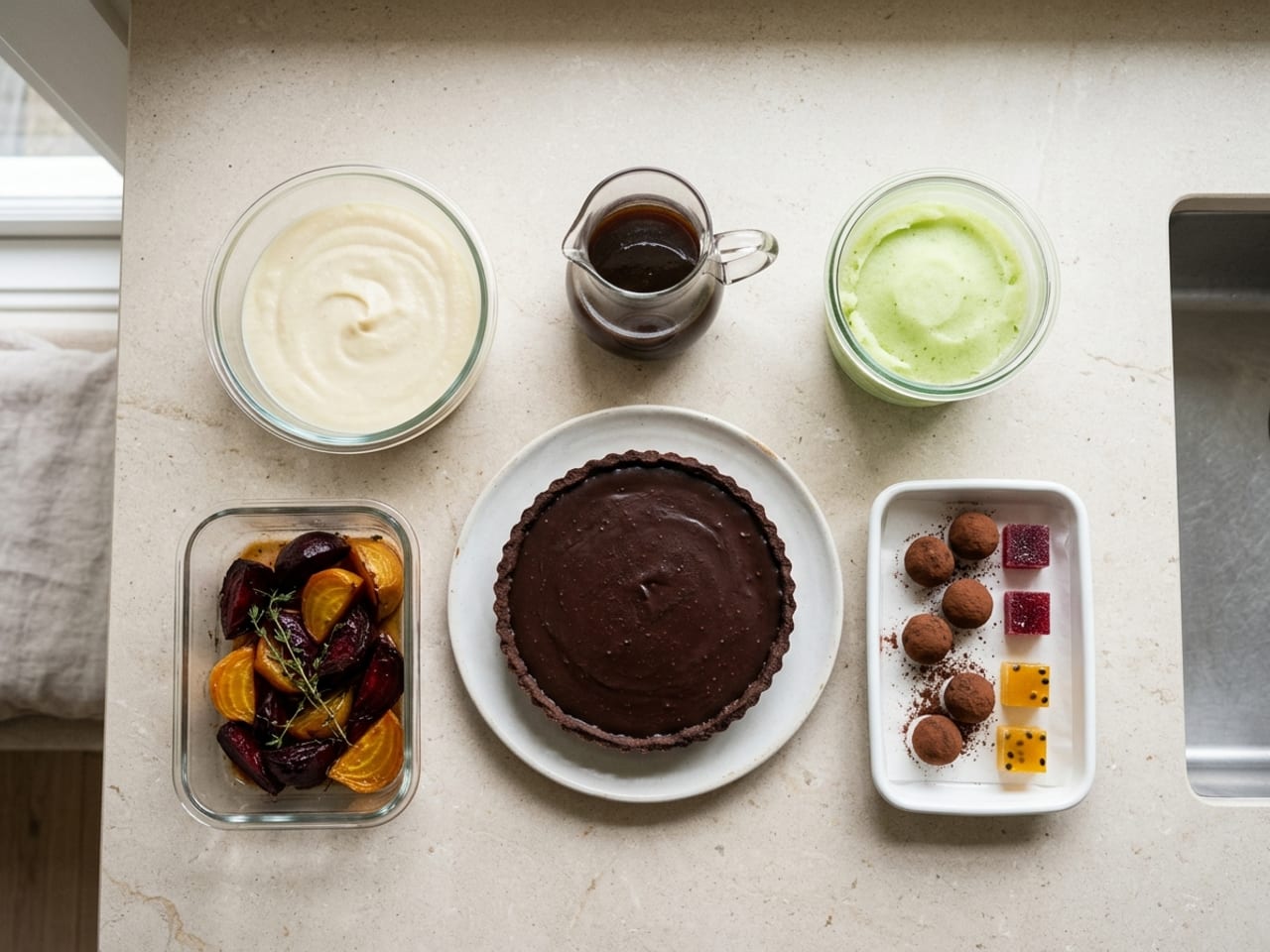
| When | What |
|---|---|
| 4 days out | Menu, shopping list, written schedule; count plates and glasses per course |
| 2 days out | Sorbet, tart pastry, mignardises: everything that keeps or freezes |
| The day before | Jus, purée, roast beets, bake the tart, rillette; buy the fish |
| The morning | Pick and box garnishes; set the table; chill wine and the cold-course plates |
| 1 hour before | Plates warming; sorbet glasses into the freezer; jus and purée stay in the fridge |
| At the table | One course at a time; boil the jus, heat the purée; fish and lamb cooked to order |
The windows come from food-safety limits: USDA gives cooked food, jus included, 3 to 4 days in the fridge and fresh fish 1 to 2,71, 105 which is why the sauces can be made ahead but the fish is bought the day before.
Tasting-menu portion sizes, measured
The best numbers come from a lab test: in 2007 New York magazine weighed every course of Per Se's nine-course tasting lunch.59 Nine courses came to 17.5 oz (496 g) of food, a little over a pound, and 1,230.8 calories.
| Per Se course (2007) | Weight |
|---|---|
| Cauliflower panna cotta | 0.5 oz (14 g) |
| Foie gras torchon | 3.7 oz (105 g) |
| Sesame-crusted kanpachi | 2.2 oz (62 g) |
| Butter-poached lobster | 2.6 oz (74 g) |
| Duck breast | 1.9 oz (54 g) |
| Beef calotte | 2.7 oz (77 g) |
| Cheese with poached apples | 1.5 oz (43 g) |
| Buttermilk sorbet | 0.6 oz (17 g) |
| Café liégeois | 1.8 oz (51 g) |
| All nine courses | 17.5 oz (496 g) |
Two lessons for a home menu. First, the fish, lobster and meat courses were 1.9 to 2.7 oz (54 to 77 g) each, while a normal single-main dinner serves 3 to 4 oz (85 to 115 g) of cooked meat:59, 65 the courses replace the main, they don't add to it. Chefs give the reason: "after two to four bites a dish becomes superfluous", says Alex Stupak.60 Second, the bread. The extras the magazine also counted (a salmon cornet, three rolls with three tablespoons of butter, three glasses of wine and two chocolates) brought the lunch to 2,416.2 calories, and the rolls and butter alone were 720.59 That is more than half of all nine courses put together. At home, serve one small piece of good bread and stop there.
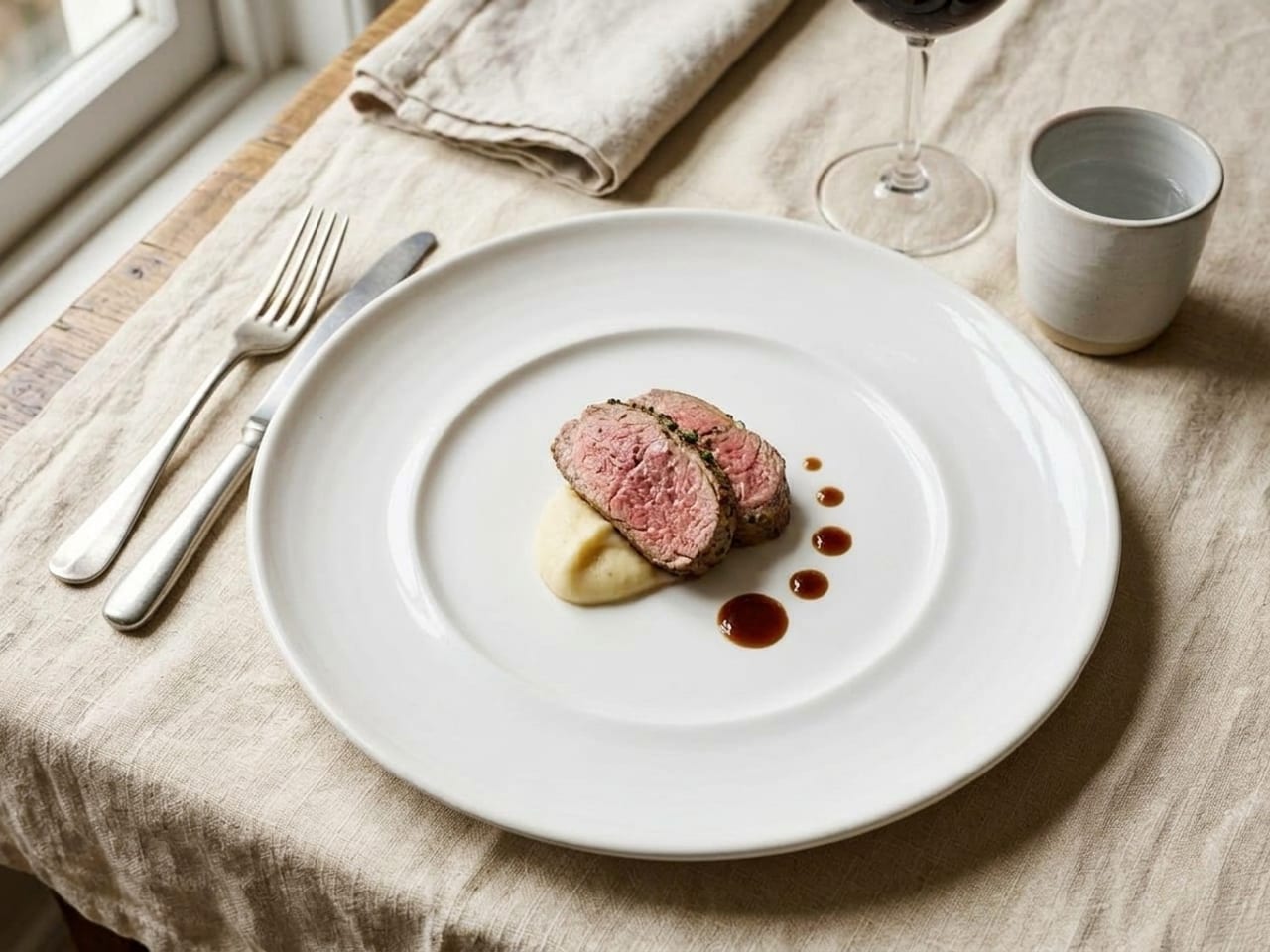
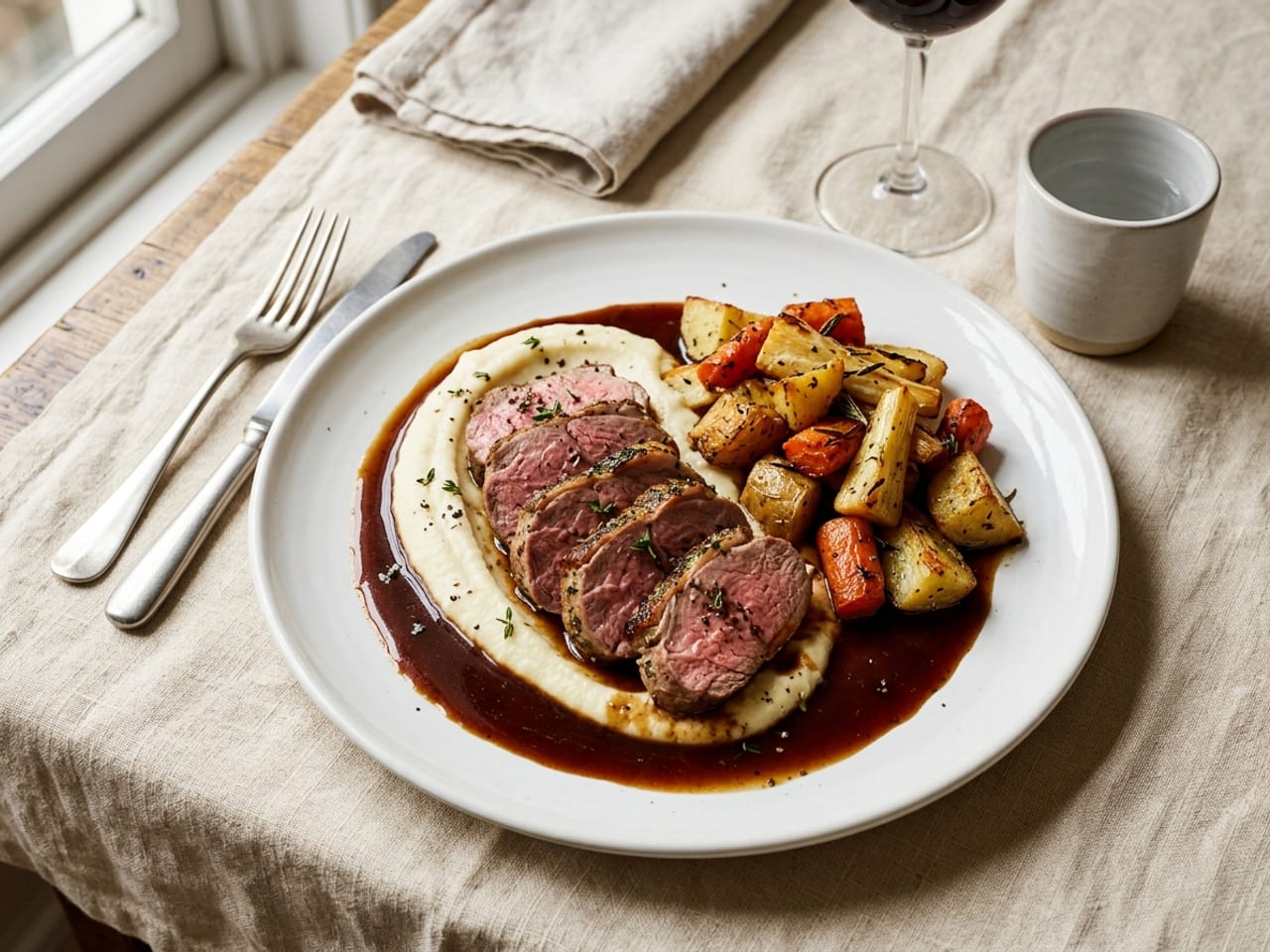 À la carteTasting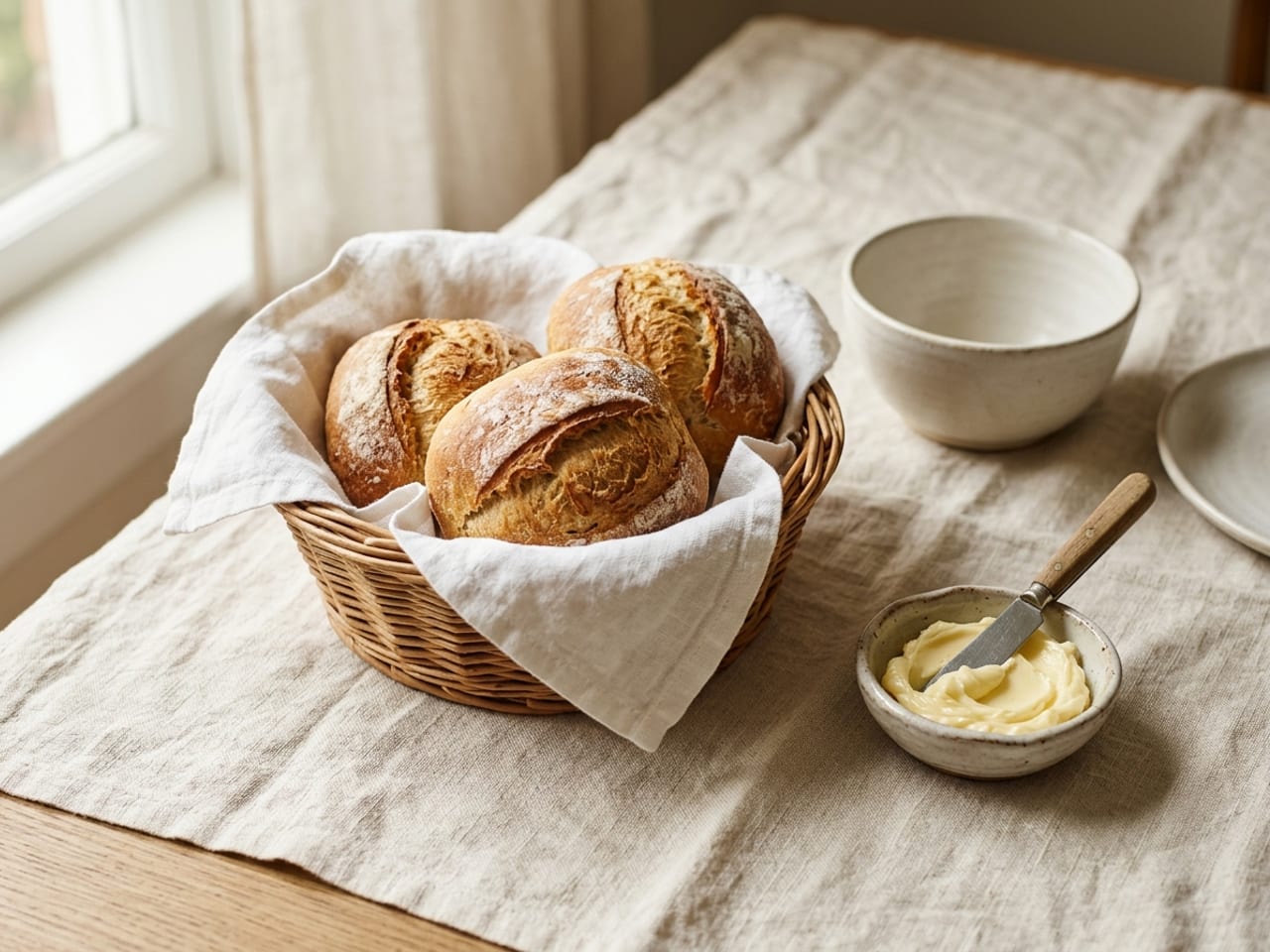
What the science says about a long menu
We found no study that has tested a tasting menu or an optimal number of courses. What follows comes from research on variety, portion size, memory and pace, with what each study does not show.
- Variety makes people eat moreIn a classic experiment with 48 people, intake was 60% higher at a four-course lunch when each course was a different food than when every course was the same, mostly in the third and fourth courses.89 That measured how much people ate, not how much they enjoyed it, but it is a good reason to keep each course of a varied menu small.
- Bigger portions get eaten, often without diners noticingAcross studies, doubling a portion raises intake by about 35%.91 In a real restaurant, serving a pasta main half as big again at the same price raised what people ate of it by 43%, and diners didn't rate the bigger portion as any less appropriate.92 Seven ordinary portions would be a feast; seven small ones are a meal.
- A change of scene doesn't reset the appetiteMoving the second course of a lab meal to a different setting did not raise intake; serving a different food did.93 Dessert on the sofa is a lovely ritual, but the new food does the work, not the new room.
- End on your best course, probablyWhen people rate a pleasant experience as a whole, a lesser extra at the end can pull the rating down: students who won one top film were happier than those given the same film plus a weaker one, and trick-or-treaters preferred a chocolate bar alone to the bar plus a piece of gum.94 People also say they prefer sequences that get better over time.95 In real seven-whisky tastings, the last whisky was rated highest and most often voted favorite.97 But a study of remembered meals found no peak or end effect, only weak evidence that meals getting better are preferred,96 so treat "finish strong" as good advice, not a law, and don't add a weak extra course after a great one.
- Don't rush itSurveyed diners appreciated a fast bill but not a rushed meal, and fine-dining guests were the most sensitive to pace.98 At home, about 20 to 25 minutes a course (eat, clear, plate) is our estimate: roughly two hours for five courses.
- Crackers beat water; sorbet is untestedIn a taste-panel test of six palate cleansers on seven foods, from jelly beans and coffee to smoked sausage and a spicy chip, only plain water crackers kept the panel's ratings steady for every food,99 and in a red-wine test crackers cut the build-up of astringency best while water did worst.100 We found no test of whether a mid-meal sorbet resets the palate. It is a pleasant pause without lab evidence. Other panels disagree about crackers; the full picture is in what palate-cleanser tests found.
Food safety for a multi-course dinner
A long dinner means food out for longer than usual, often a raw course, and one menu for guests whose health you may not know.
- The two-hour clock runs all eveningUSDA: keep cold food at 40 °F (4 °C) or below and hot food at 140 °F (60 °C) or above, and never leave perishable food out more than two hours, or one hour above 90 °F (32 °C).70 The UK's danger zone is 46 to 145 °F (8 to 63 °C), with chilled food out of the fridge for four hours at most during preparation.73, 74 Over a three-hour dinner, plated cold courses that sat out before guests arrived count.
- Use the home numbers, not the restaurant onesRestaurant inspectors work to the FDA Food Code's 41 °F (5 °C) cold and 135 °F (57 °C) hot.72 Those are right for a commercial kitchen with probes and logs; at home follow the consumer advice above.
- A raw course needs fish sold for raw useThe FDA Food Code has restaurants freeze most fish served raw at -4 °F (-20 °C) for seven days, or colder for less, to kill parasites; some tuna and farmed salmon are exempt.72 A home freezer, set to 0 °F (-18 °C),105 isn't cold enough, so buy fish sold for eating raw rather than freezing your own, and keep it in the fridge no more than a day or two.105
- Lemon doesn't make oysters or ceviche safe"Hot sauce and lemon juice don't kill Vibrio," says the CDC.75 The FDA advises pregnant guests, children under 5, older adults and anyone with a weakened immune system to avoid raw fish and shellfish, refrigerated smoked seafood, unpasteurized (raw-milk) cheese, and undercooked meat and eggs,76 so ask when you invite and have a cooked version ready. On the seven-course menu above, that means a different amuse (it is smoked trout) and a pasteurized goat cheese.
- Ask about allergies when you inviteA set menu means one allergy changes a course for everyone. US law names nine major allergens (milk, eggs, fish, crustacean shellfish, tree nuts, peanuts, wheat, soy and sesame);77 UK food businesses must declare fourteen, adding celery, lupin, molluscs, mustard and sulfites and counting all cereals with gluten.78 Cooking doesn't remove an allergen, so cook the allergy-safe plate first and keep it covered.79
Plating every course like a restaurant
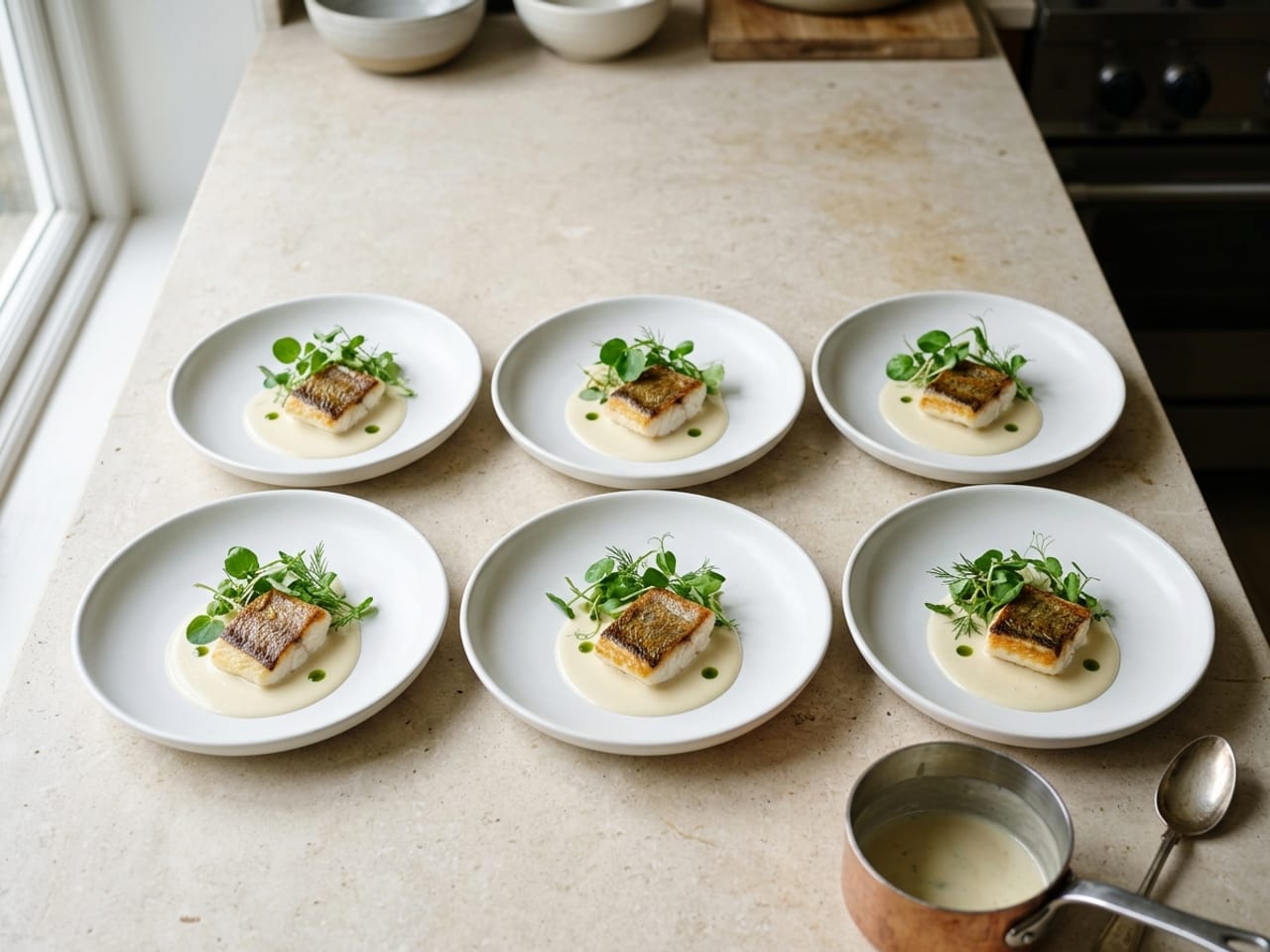
- Plate one master, then copy it down the lineLine up every plate for the course, plate one carefully, take a phone photo, then add one component to all of them before moving to the next. The photo stops plate six drifting away from plate one.
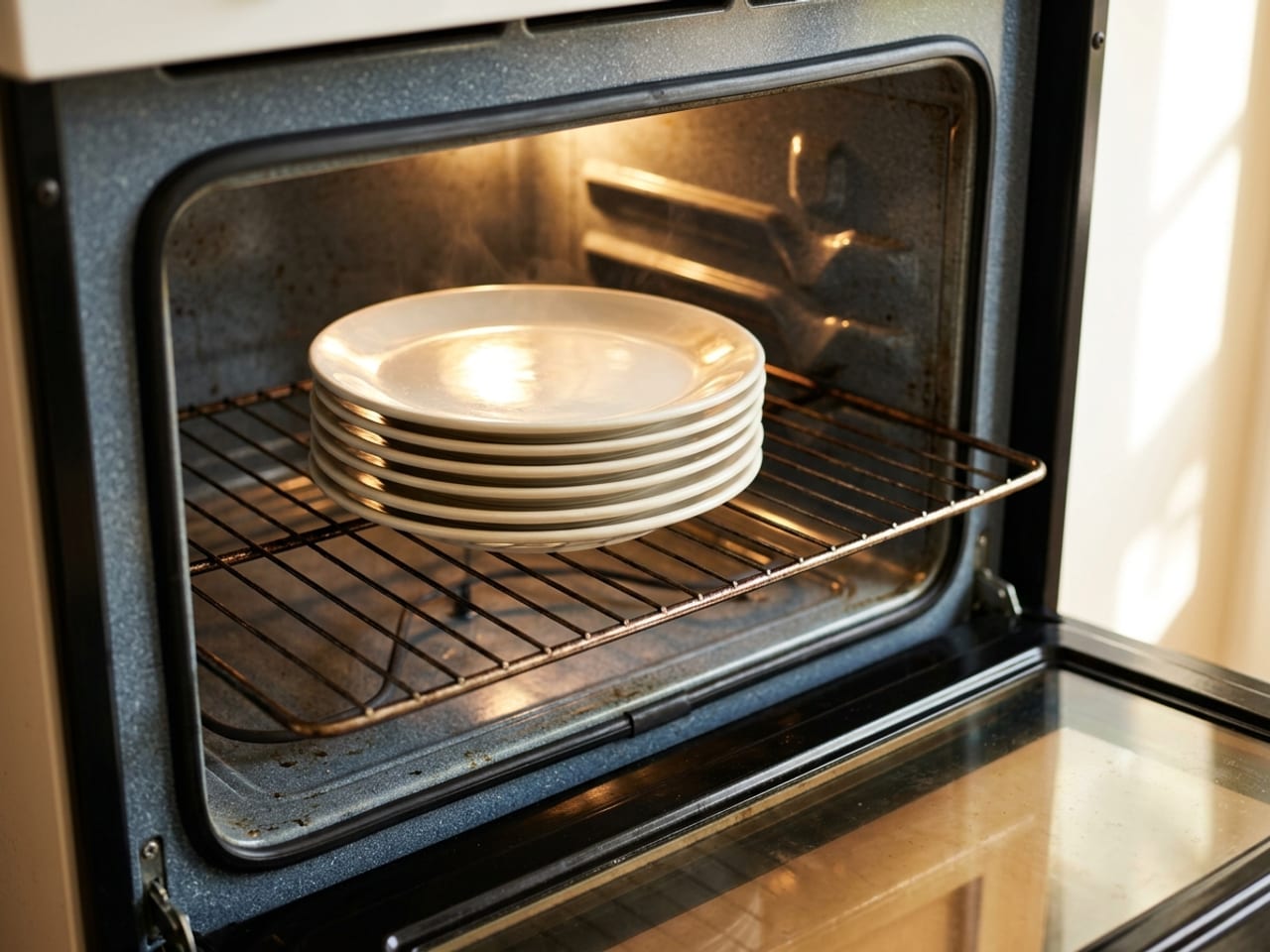
- Warm plates for hot courses, cold for coldWarm them to about 120 to 150 °F (50 to 65 °C): hot enough to matter, cool enough to carry. Restaurant plate warmers hold 104 to 122 °F (40 to 50 °C),81 and Wedgwood says its china is safe in an oven up to 149 °F (65 °C).80 Many home ovens bottom out at 150 °F (66 °C) or higher,83 so heat the oven to its lowest setting, switch it off and then put the plates in, or use the dishwasher's drying cycle or hot water and a towel.82 Plates for crudo or salad go in the fridge for 30 minutes to an hour.82 A warm plate slows cooling; it doesn't keep food at a safe holding temperature.
- Small portion, centered, lots of plateIn our experience, a tasting portion on a big plate reads as precise, not stingy, as long as it sits in the middle. In one real dining room, a centered main course was liked more, and diners said they would pay £15.35 for it against £11.65 for the same food off-center.101 At another lunch the same team found no clear effect from centering a starter,102 so this is a tendency, not a rule.
- Count the plates before you count the guestsSix guests and five plated courses is thirty plates, plus a spare or two per course. If the cupboard can't do it, change the menu, not the washing-up schedule.
| Course | Plate |
|---|---|
| Amuse-bouche | Tasting spoon, espresso cup or shot glass on a small plate |
| Cold starter | Salad plate, 8 to 9 in (20 to 23 cm), chilled |
| Fish | Shallow bowl, or a second set of 8 to 9 in (20 to 23 cm) plates, warmed |
| Meat | Dinner plate, about 10½ in (27 cm), or a smaller luncheon plate so a small portion doesn't look lost; warmed |
| Palate pause | Small glass or cup, straight from the freezer |
| Cheese (optional) | 7 to 8 in (18 to 20 cm) plate or a shared board |
| Dessert | 8 to 9 in (20 to 23 cm) plate or coupe |
| Mignardises | One small tray or plate to share, with the coffee |
The sizes and the plate names are in types of plates. For the plating itself, start with Plating 101 (the clock method, height and negative space), then how to plate food dish by dish, the dessert plating system for the sweet end, and the amuse-bouche guide for the first bite.
Plate your own tasting menu
The hardest part of a home tasting menu is making a small portion look deliberate. Photograph your first plate of the night and Plate Artists re-plates your own dish the way a chef would, with the moves named so you can copy it down the line.
Your dish, plated like a chef's
Snap it, upload it, and get the composed version back, with the steps to recreate it on a real plate.
Start free · 1 enhancement →Free account · 1 free enhancement · No credit card
Prix fixe, answered
What does prix fixe mean?
Prix fixe is French for 'fixed price': a complete meal of several courses, set by the restaurant and sold for one price, often with a choice of dishes for each course. Merriam-Webster defines it as 'a complete meal offered at a fixed price; also: the price charged'. In France itself the menu usually says menu or formule instead.
How do you pronounce prix fixe?
Pree FEEKS or pree FIX; Merriam-Webster lists both, and the Oxford English Dictionary gives both for British English. The x in prix is silent and the x in fixe is always pronounced, so 'pree fee' is wrong.
Is it prix fixe, pre fixe or prefix?
Prix fixe (also written prix-fixe, especially before a noun, as in a prix-fixe menu). Pre fixe, pre-fix and prefix menu are misspellings that come from the pronunciation; Merriam-Webster, Oxford and Cambridge don't list them.
What is the difference between prix fixe and à la carte?
With prix fixe you pay one price for a set run of courses; à la carte means every dish is priced separately and you order only what you want. À la carte is the better deal for one dish, prix fixe usually for three courses.
Is prix fixe cheaper than ordering à la carte?
Usually, for the same number of courses. At Chez Julien in Paris the weekday lunch formule of three courses is €29, while the cheapest three dishes on the carte add up to €58. Watch for supplements, drinks and service charges, which the set price rarely covers in the US.
What is the difference between prix fixe and a tasting menu?
A tasting menu is a kind of prix fixe in which the chef chooses every course, usually many small ones, and the whole table eats the same meal. A prix fixe often lets you choose a dish in each course. Le Bernardin sells both: four courses you choose for $225 and eight the chef chooses for $350 (September 2026).
Is table d'hôte the same as prix fixe?
In English, essentially yes: Merriam-Webster defines both as a complete meal at a fixed price. Cambridge adds that a table d'hôte offers little choice, but real menus use both words loosely, so check what is printed under each course. In Québec, table d'hôte is the regional word for a set-price menu, while in France today a table d'hôtes is the dinner a B&B host serves to lodgers.
Is a set menu the same as prix fixe?
Yes. Set menu is the everyday British phrase (Merriam-Webster labels it British) for what Americans call a prix fixe: fixed courses at one price.
Is dégustation the same as a tasting menu?
On a restaurant menu, yes: menu dégustation is French for a tasting menu. On its own the word means tasting, in any series of small portions.
What is the difference between omakase and a tasting menu?
Omakase, Japanese for 'I leave it to you', is the chef's choice served piece by piece, classically sushi at the counter. A tasting menu is usually a fixed sequence of plated courses set for the night. The MICHELIN Guide puts it this way: kaiseki is a style of cuisine, omakase a style of service.
What does carte du jour mean?
Card of the day: the day's list of dishes, each priced, as opposed to the menu du jour, the day's set-price meal. In English carte du jour is mostly an old-fashioned way of saying menu.
How many courses are in a prix fixe menu?
Any number: prix fixe fixes the price, not the count. Two courses is common at lunch (a Paris formule, a Restaurant Week lunch), three at dinner, four at Le Bernardin, and tasting menus run to six, eight or nine. An amuse-bouche or mignardises usually come free on top.
Does a prix fixe price include drinks, tax and tip?
In the US, usually not: drinks, tax and tip are extra, as at NYC Restaurant Week, though some restaurants include service (Per Se and The French Laundry said so in January 2025). In France, by law any service charge is already in the posted price, and the menu must say whether a drink is included. In London a 12.5 to 15% service charge is often added to the bill.
Can one person at the table order the tasting menu?
Often not. Many restaurants ask the whole table to take the same tasting menu so the courses arrive together; it is common rather than universal, so ask when you book.
How long does a tasting menu take?
About two to three hours for six courses at Eleven Madison Park, around three and a half hours for Alinea's full menus, and as little as 90 minutes for a short five or six-course menu. At home, our estimate is 20 to 25 minutes a course.
How many courses should a tasting menu at home have?
Three to five plated courses is plenty for one cook, plus a one-bite amuse-bouche and make-ahead sweets with coffee. Cook only two of them to order and make the rest cold, room temperature or reheated.
The dictionaries, menus and research behind this guide
English and French dictionaries; restaurant menus, booking pages and price reporting read at the end of September 2026; French texts from 1782 to 1977 read in Internet Archive, Gutenberg and Bibliothèque nationale de France scans; French and UK law; the US and UK food-safety agencies; and nineteen peer-reviewed papers (experiments, surveys, two meta-analyses and two theory papers) verified through Crossref. We found no study comparing how prix fixe and à la carte diners enjoy a meal, or testing a tasting menu; the research sections say what each study does and does not show.
- Merriam-Webster (2026). Prix fixe (entry). Merriam-Webster.com Dictionary, definition, both pronunciations, first known use 1851; read in the Internet Archive copy of 4 April 2026. merriam-webster.com (archived)
- Oxford English Dictionary (2026). Prix fixe, n. Oxford University Press, earliest evidence 1851, in Harper's Magazine; British and US pronunciations. oed.com
- Cambridge Dictionary (2026). Prix fixe (entry). Cambridge University Press, spellings prix fixe and prix-fixe; UK and US pronunciations. dictionary.cambridge.org
- O'Conner, P., & Kellerman, S. (2016). Prix fixe or prefix menu? Grammarphobia, August 2016; the pre-fix spelling in the Eggcorn Database, and French menus that say menu or formule. grammarphobia.com
- Merriam-Webster (2026). À la carte (entry). Merriam-Webster.com Dictionary, 'by the bill of fare'; first known use 1816; read in the Internet Archive copy of 9 March 2026. merriam-webster.com (archived)
- Oxford English Dictionary (2026). À la carte, adj. Oxford University Press, earliest evidence 1816, in the writing of L. Tronchet. oed.com
- ATILF / CNRS (1994). Carte; menu; prix; table (entries), Trésor de la langue française informatisé. CNRTL, à la carte opposed to à prix fixe; le menu as the set-price meal; table d'hôte, regional (Québec): a fixed-price menu. cnrtl.fr
- Larousse (2026). Menu (entry). Dictionnaire de français Larousse, sense 2: 'Repas à prix fixe servi dans un restaurant'. larousse.fr
- Merriam-Webster (2026). Table d'hote (entry). Merriam-Webster.com Dictionary, 'host's table'; both senses and pronunciation. merriam-webster.com
- Oxford English Dictionary (2026). Table d'hôte, n. Oxford University Press, earliest evidence 1617, in the writing of the traveler Fynes Moryson. oed.com
- Service-Public.fr (2026). Chambre d'hôtes et table d'hôtes. Direction de l'information légale et administrative, a single menu, served only to lodgers at one shared table. service-public.gouv.fr
- Oxford English Dictionary (2026). Set menu, n. Oxford University Press, earliest evidence 1878, in American Magazine. oed.com
- Merriam-Webster (2026). Set menu (entry). Merriam-Webster.com Dictionary, labeled British: 'a menu with items that cannot be changed'. merriam-webster.com
- Oxford English Dictionary (2026). Tasting menu, n. Oxford University Press, North American; earliest evidence 1979, in the Chicago Tribune. oed.com
- Pearlman, A. (2024). The tasting menu. Oxford Research Encyclopedia of Food Studies, abstract; the tasting menu as a set multicourse meal offered to all diners for a single price. oxfordre.com
- Merriam-Webster (2026). Degustation (entry). Merriam-Webster.com Dictionary, 'tasting especially in a series of small portions'; pronunciation. merriam-webster.com
- Merriam-Webster (2025). Omakase (entry). Merriam-Webster.com Dictionary, definition, etymology, first known use 1967; read in the Internet Archive copy of 19 October 2025. merriam-webster.com (archived)
- Oxford English Dictionary (2026). Omakase, n. Oxford University Press, earliest evidence 1979, in the New York Times. oed.com
- MICHELIN Guide (2026). Kaiseki vs. omakase: what's the difference? MICHELIN Guide, kaiseki as a style of cuisine, omakase as a style of service. guide.michelin.com
- Kotobank (2026). 懐石 (kaiseki), entries from the Nihon Kokugo Daijiten and Heibonsha encyclopedias. Kotobank, the warmed-stone etymology and the Nanpōroku citation. kotobank.jp
- Tsuji Culinary Research Institute (2026). 懐石と会席 (the two kaiseki), interview. Watobi, tea kaiseki serves rice and soup first; banquet kaiseki ends with them. watobi.jp
- Oxford English Dictionary (2026). Kaiseki, n. Oxford University Press, earliest evidence 1920, in The Japan Advertiser; pronunciation. oed.com
- MICHELIN Guide (2019). Evolution of the chef's table in Hong Kong. MICHELIN Guide, from chefs feeding family and friends in the kitchen to a bookable table. guide.michelin.com
- Oxford English Dictionary (2026). Plat du jour, n. Oxford University Press, earliest evidence 1890, in The Times; pronunciation. oed.com
- Le Bernardin (2026). Dinner, lunch, Chef's Tasting and Vegetarian Tasting menus. le-bernardin.com, menus dated 11, 14 and 28 September 2026; prices, supplements and the cancellation fee; the lounge à la carte and its $49 City Harvest lunch. le-bernardin.com
- Chez Julien (2024). La carte (menu card). chezjulien.paris, the weekday lunch formule and the à la carte prices; PDF dated September 2024, checked 1 October 2026. chezjulien.paris
- Le Fooding (2026). 10 déjeuners bien attablés pour moins de 20 € à Paris. Le Fooding, 29 January 2026; formule and menu prices at ten Paris lunch spots. lefooding.com
- New York City Tourism + Conventions (2026). NYC Restaurant Week. nyctourism.com, prix-fixe meals at $30, $45 and $60. nyctourism.com
- Rockefeller Center Magazine (2026). NYC Restaurant Week summer 2026: what to know before booking. rockefellercenter.com, two-course lunches, three-course dinners, prices exclude tax and tip. rockefellercenter.com
- Eleven Madison Park (2026). Frequently asked questions. elevenmadisonpark.com, menu length and price, pairings, dietary requests, gratuity not included. elevenmadisonpark.com
- Sutton, R. (2026). Eleven Madison Park's new menu and price hike. The LO Times, 12 March 2026; prepaid, non-refundable reservations; the bill for two after tax and tip. thelotimes.com
- Sutton, R. (2025). Per Se and The French Laundry raise prices. The LO Times, 7 January 2025; 'All prices are inclusive of service'. thelotimes.com
- The French Laundry (2026). Reservations. Tock, prepaid reservations, price per person plus add-ons. exploretock.com
- Atomix (2026). Reservations. Tock, no gratuities, a 10% administrative fee that 'is not a gratuity', and the diets the counter menu cannot accommodate. exploretock.com
- Masa (2026). Reservations and FAQ. Tock, omakase counter and table prices (deposits). exploretock.com
- Alinea (2026). Reservations. Tock, prepaid tickets and how long each menu lasts. exploretock.com
- Thomas Keller Restaurant Group (2026). Per Se: today's menus. thomaskeller.com, two nine-course tasting menus daily; 'No single ingredient is ever repeated'. thomaskeller.com
- TASTE (2024). The tasting menu gets a trim. TASTE, September 2024; shorter menus and omakases cut from 21 to 19 and 13 to 10 courses. tastecooking.com
- DuJour (2026). The 10 commandments of tasting menus. DuJour, chefs Shaun Hergatt and René Stein on the whole-table rule, allergies and portions. dujour.com
- The Emily Post Institute (2026). General tipping guide. emilypost.com, sit-down wait service 15 to 20%, pre-tax. emilypost.com
- Time Out London (2025). Why are so many London restaurants now charging a 15% service charge? Time Out, March 2025; 12.5% was once the standard. timeout.com
- Acas (2026). Tips, gratuities and service charges. acas.org.uk, the Employment (Allocation of Tips) Act 2023, in force October 2024. acas.org.uk
- République française (1987). Arrêté du 27 mars 1987 relatif à l'affichage des prix dans les établissements servant des repas, denrées ou boissons à consommer sur place. Légifrance, 'Prix service compris', and menus and drinks displayed outside. legifrance.gouv.fr
- DGCCRF (2025). Restaurants (fiche pratique). Ministère de l'Économie, prices are free; service included in the posted price; menus must say whether a drink is included. economie.gouv.fr
- Disney Food Blog (2026). Sommelier Room at Citricos in Disney's Grand Floridian Resort. disneyfoodblog.com, eight courses, each paired with 2½ ounces of wine. disneyfoodblog.com
- Centers for Disease Control and Prevention (2026). Standard drink sizes. cdc.gov, one US standard drink is 5 ounces of 12% wine. cdc.gov
- Spang, R. L. (2020). The Invention of the Restaurant: Paris and Modern Gastronomic Culture, with a new preface. Harvard University Press, Roze de Chantoiseau, Minet and the 1767 notice; the Boulanger story; printed cartes. hup.harvard.edu
- Le Grand d'Aussy, P. J.-B. (1782). Histoire de la vie privée des François, tome 2 (1815 edition). Laurent-Beaupré, Paris, the first printing of the Boulanger story; Internet Archive scan. archive.org
- Brillat-Savarin, J. A. (1825). Physiologie du goût, Méditation XXVIII: Des restaurateurs. Sautelet, Paris, Project Gutenberg edition. gutenberg.org
- Carême, M.-A. (1822). Le Maître d'hôtel français, tome 2: Observations sur le service des tables servies à la Russe. Paris, digitized by the Bibliothèque nationale de France. gallica.bnf.fr
- Dubois, U., & Bernard, É. (1856). La Cuisine classique: études pratiques, raisonnées et démonstratives de l'école française appliquée au service à la Russe. Paris, digitized by the Bibliothèque nationale de France. gallica.bnf.fr
- Escoffier, A., with Gilbert, P., & Fétu, É. (1912). Le Livre des menus. Paris, the individual menu card, the table d'hôte, cartes du jour, and the order of dishes on pages 10 and 11; digitized by the Bibliothèque nationale de France. gallica.bnf.fr
- New York City Tourism + Conventions (2026). The history of New York City Restaurant Week. nyctourism.com, July 1992, Tim Zagat and Joe Baum, a $19.92 lunch. nyctourism.com
- The New York Times (1993). Lunches for $19.92 were so popular they're now $19.93. The New York Times, 23 June 1993. nytimes.com
- Gault&Millau (2026). Historique: les 10 commandements de la nouvelle cuisine (1973). gaultmillau.org, commandment 3, 'Tu allègeras ta carte'. gaultmillau.org
- de Rabaudy, N. (1977). Guide des 50 meilleurs restaurants de France. Paris, Lameloise, Chagny: 'Menu dégustation … Six ou sept plats en petite quantité'; digitized by the Bibliothèque nationale de France. gallica.bnf.fr
- Andrews, C. (2004). After nouvelle cuisine. Saveur, 'three courses became six or eight'. saveur.com
- McCarron, M. (2017). The Japanese origins of modern fine dining. Eater, 7 September 2017; Bocuse, Tsuji and kaiseki, and why the influence is hard to prove. eater.com
- New York Magazine (2007). Lab test: Per Se's nine-course tasting menu. New York, weight and calories of every course, the bread, the butter and the wine. nymag.com
- Eater NY (2013). New York chefs discuss the tyranny of entrées. Eater NY, 3 June 2013; Alex Stupak on the first few bites. ny.eater.com
- Eater (2017). How to design a tasting menu (The Upsell, with Naomi Pomeroy). Eater, 11 April 2017; the bell curve. eater.com
- Great British Chefs (2026). Sat Bains and the science of the tasting menu. greatbritishchefs.com, rich followed by acid; when guests should feel full. greatbritishchefs.com
- The Kitchn (2022). I hosted a seven-course tasting menu dinner party at home. The Kitchn, five of seven courses made ahead; two cooked in the moment. thekitchn.com
- Culinary Crush (2026). Hosting a tasting menu at home. culinarycrush.biz, never two courses in a row on the same plate. culinarycrush.biz
- Utah State University Extension (2026). Feeding a crowd. KSL Studio 5, a meat serving is 3 to 4 oz of cooked meat without bone. studio5.ksl.com
- MICHELIN Guide (2026). Petit fours at seven MICHELIN-starred restaurants. MICHELIN Guide, mignardises and petits fours defined. guide.michelin.com
- Hertzmann, P. (2015). Mignardises. hertzmann.com, only sweets that can be made in quantity and stored or frozen. hertzmann.com
- James Beard Foundation (2026). Eat this word: trou normand. jamesbeard.org, the Calvados pause in a multi-course meal. jamesbeard.org
- France 3 Normandie (2025). Boire un trou normand en plein milieu d'un repas, est-ce que ça aide vraiment à digérer ? franceinfo, December 2025; a dietitian on why it is a pause, not a digestive. franceinfo.fr
- USDA Food Safety and Inspection Service (2026). Danger zone (40 °F to 140 °F). fsis.usda.gov, the two-hour and one-hour rules, hot and cold holding. fsis.usda.gov
- USDA Food Safety and Inspection Service (2026). Leftovers and food safety. fsis.usda.gov, refrigerate within two hours; 3 to 4 days in the fridge; reheat sauces to a rolling boil; safe minimum temperatures. fsis.usda.gov
- U.S. Food and Drug Administration (2022). Food Code 2022, chapter 3: Food (3-501.16 holding temperatures; 3-402.11 parasite destruction). Champaign-Urbana Public Health District copy, 135 °F and 41 °F holding; freezing times for fish served raw, and the species exempt. c-uphd.org
- Food Standards Agency (2026). Cooking your food. food.gov.uk, the danger zone between 8 and 63 °C; eat leftovers within 48 hours; reheat only once; fish is cooked when opaque and flaking. food.gov.uk
- Food Standards Agency (2026). How to chill, freeze and defrost food safely. gov.uk, fridge 0 to 5 °C; chilled food out of the fridge for four hours at most during preparation. gov.uk
- Centers for Disease Control and Prevention (2026). Vibrio and oysters. cdc.gov, 'Hot sauce and lemon juice don't kill Vibrio'. cdc.gov
- U.S. Food and Drug Administration (2026). People at risk of foodborne illness. fda.gov, who should avoid raw fish and shellfish, refrigerated smoked seafood, unpasteurized (raw-milk) cheese and raw or undercooked meat and eggs. fda.gov
- U.S. Food and Drug Administration (2026). Food allergies. fda.gov, the nine major food allergens. fda.gov
- Food Standards Agency (2026). Allergen guidance for food businesses. food.gov.uk, the 14 allergens. food.gov.uk
- FARE (Food Allergy Research & Education) (2026). Avoiding cross-contact. foodallergy.org, cooking does not remove an allergen; cook the allergy-safe food first. foodallergy.org
- Wedgwood (2026). Care instructions. wedgwood.com.au, tableware may be warmed in the oven up to 65 °C. wedgwood.com.au
- Hatco (2026). Plate warmer (PW). hatcocorp.com, holds plates at 104 °F to 122 °F (40 °C to 50 °C). hatcocorp.com
- America's Test Kitchen (2026). How to warm dinner plates. americastestkitchen.com, and chill plates for crudo, sushi and salad for 30 minutes to an hour. americastestkitchen.com
- The Kitchn (2008). Tip: warm the plates. The Kitchn, the lowest oven setting, 150 °F on most US ovens. thekitchn.com
- Prelec, D., & Loewenstein, G. (1998). The red and the black: mental accounting of savings and debt. Marketing Science, 17(1), 4–28. doi:10.1287/mksc.17.1.4
- Soman, D., & Gourville, J. T. (2001). Transaction decoupling: how price bundling affects the decision to consume. Journal of Marketing Research, 38(1), 30–44. doi:10.1509/jmkr.38.1.30.18828
- Myung, E., Hale Feinstein, A., & McCool, A. C. (2008). Using a discrete choice model to identify consumer meal preferences within a prix fixe menu. Journal of Hospitality & Tourism Research, 32(4), 491–504. doi:10.1177/1096348008321367
- Scheibehenne, B., Greifeneder, R., & Todd, P. M. (2010). Can there ever be too many options? A meta-analytic review of choice overload. Journal of Consumer Research, 37(3), 409–425. doi:10.1086/651235
- Chernev, A., Böckenholt, U., & Goodman, J. (2015). Choice overload: a conceptual review and meta-analysis. Journal of Consumer Psychology, 25(2), 333–358. doi:10.1016/j.jcps.2014.08.002
- Rolls, B. J., Van Duijvenvoorde, P. M., & Rolls, E. T. (1984). Pleasantness changes and food intake in a varied four-course meal. Appetite, 5(4), 337–348. doi:10.1016/S0195-6663(84)80006-9
- Rolls, B. J., Rowe, E. A., Rolls, E. T., Kingston, B., Megson, A., & Gunary, R. (1981). Variety in a meal enhances food intake in man. Physiology & Behavior, 26(2), 215–221. doi:10.1016/0031-9384(81)90014-7
- Zlatevska, N., Dubelaar, C., & Holden, S. S. (2014). Sizing up the effect of portion size on consumption: a meta-analytic review. Journal of Marketing, 78(3), 140–154. doi:10.1509/jm.12.0303
- Diliberti, N., Bordi, P. L., Conklin, M. T., Roe, L. S., & Rolls, B. J. (2004). Increased portion size leads to increased energy intake in a restaurant meal. Obesity Research, 12(3), 562–568. doi:10.1038/oby.2004.64
- Hendriks, A. E. M., Nederkoorn, C., van Lier, I. M. J., van Belkom, B., Bast, A., & Havermans, R. C. (2021). Sensory-specific satiety, the variety effect and physical context: does change of context during a meal enhance food intake? Appetite, 163, 105179. doi:10.1016/j.appet.2021.105179
- Do, A. M., Rupert, A. V., & Wolford, G. (2008). Evaluations of pleasurable experiences: the peak-end rule. Psychonomic Bulletin & Review, 15(1), 96–98. doi:10.3758/PBR.15.1.96
- Loewenstein, G. F., & Prelec, D. (1993). Preferences for sequences of outcomes. Psychological Review, 100(1), 91–108. doi:10.1037/0033-295X.100.1.91
- Rode, E., Rozin, P., & Durlach, P. (2007). Experienced and remembered pleasure for meals: duration neglect but minimal peak, end (recency) or primacy effects. Appetite, 49(1), 18–29. doi:10.1016/j.appet.2006.09.006
- Quigley-McBride, A., Franco, G., McLaren, D. B., Mantonakis, A., & Garry, M. (2018). In the real world, people prefer their last whisky when tasting options in a long sequence. PLOS ONE, 13(8), e0202732. doi:10.1371/journal.pone.0202732
- Noone, B. M., Kimes, S. E., Mattila, A. S., & Wirtz, J. (2007). The effect of meal pace on customer satisfaction. Cornell Hotel and Restaurant Administration Quarterly, 48(3), 231–244. doi:10.1177/0010880407304020
- Lucak, C. L., & Delwiche, J. F. (2009). Efficacy of various palate cleansers with representative foods. Chemosensory Perception, 2(1), 32–39. doi:10.1007/s12078-009-9036-6
- Ross, C. F., Hinken, C., & Weller, K. (2007). Efficacy of palate cleansers for reduction of astringency carryover during repeated ingestions of red wine. Journal of Sensory Studies, 22(3), 293–312. doi:10.1111/j.1745-459X.2007.00107.x
- Michel, C., Velasco, C., Fraemohs, P., & Spence, C. (2015). Studying the impact of plating on ratings of the food served in a naturalistic dining context. Appetite, 90, 45–50. doi:10.1016/j.appet.2015.02.030
- Michel, C., Velasco, C., & Spence, C. (2015). Cutlery matters: heavy cutlery enhances diners' enjoyment of the food served in a realistic dining environment. Flavour, 4, 26. doi:10.1186/s13411-015-0036-y
- Merriam-Webster (2026). Menu (entry). Merriam-Webster.com Dictionary, French, from menu 'small, detailed'; first known use 1830; read in the Internet Archive copy of 21 May 2026. merriam-webster.com (archived)
- Oxford English Dictionary (2026). Degustation, n. Oxford University Press, earliest evidence 1651, in the writing of Joseph Hall. oed.com
- USDA Food Safety and Inspection Service (2024). Keep food safe! Food safety basics. fsis.usda.gov, cold storage chart, fresh fish 1 to 2 days; fish 145 °F; hold hot food at 140 °F or warmer; freezer at 0 °F. fsis.usda.gov
- Martinko, K. (2023). Ina Garten's #1 entertaining hack makes me want to host more dinner parties. Allrecipes, 4 July 2023; quotes Garten's four-dish rule from a Food & Wine interview. allrecipes.com
Keep going
Course meal builder
A 3, 5, 7 or 12-course menu in order, dealt from real recipes, with portions and a cooking plan for the night.
Palate cleansers: when to serve one and 14 ideas
The sorbet course in full: its names, where it goes in the meal, what the tests found, and how to portion and plate it.
What is an amuse-bouche?
The free first bite of a tasting menu: where it came from and twelve you can make ahead.
Types of plates
Charger to saucer, rimmed to coupe, and which plate to serve each course on.
Table setting diagram
Every fork, knife and glass placed for the courses you are serving, printable.
How to set a table
Set the table from the menu: what each course adds, and the reason behind every rule.
How Michelin stars work
What one, two and three stars mean, the five criteria inspectors judge, and why decor and service don't count.