How to plate food like a chef — dish by dish
The six-step method every plate shares, then ten everyday dishes plated twice: the honest home version, and the same food re-plated the way a chef would send it. Drag each slider.
The photos on this page are AI-generated illustrations.
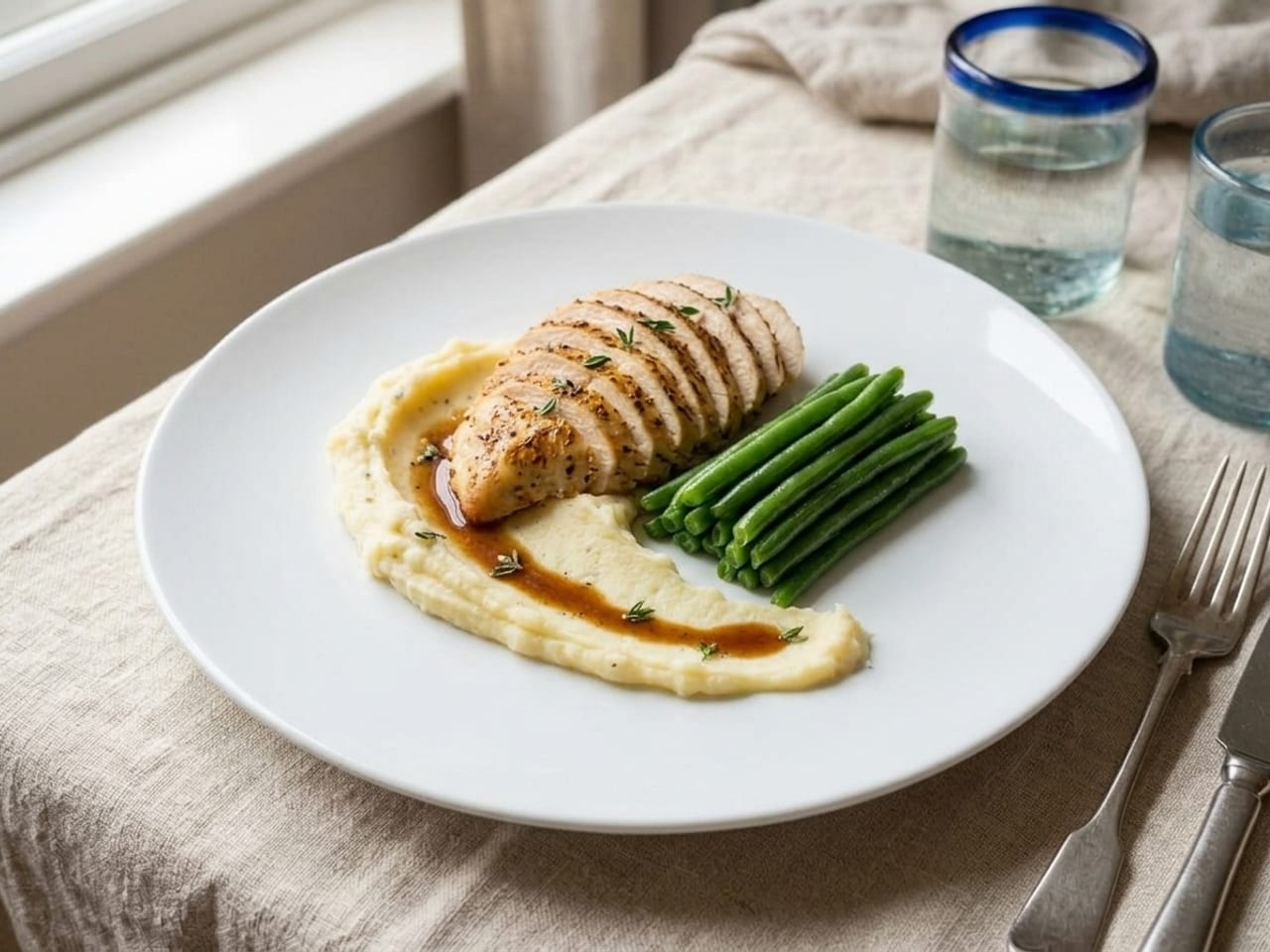
How do you plate food like a chef? Start with a plate one size larger than you think you need, plain and warm. Pick one focal point, usually the protein. Set it in the centre or just off it, keep the food inside the middle two-thirds, and put the starch and vegetables where the clock method puts them. Sauce usually goes under or beside the food, in one move. Add one point of height and one edible garnish. Wipe the rim. That is the whole method, and it takes about ninety seconds per plate.
It is worth the ninety seconds. In controlled tests, the identical food arranged with care was liked more and its flavour rated higher,2 judged to come from a better kitchen,3 and diners at a real luncheon were willing to pay more for it.1 But the question people actually ask is never “how do I plate food”. It is “how do I plate this”: the spaghetti, the steak, the deviled eggs for Thursday. So after the method, this guide takes ten dishes people cook every week and shows each one twice, as AI illustrations: the home plate as it usually leaves the kitchen, and the same food, same table, re-plated. Every pair is a slider. Every rule is one you can do tonight with a spoon and a damp cloth. The sources are at the bottom.
Six steps every plate on this page follows
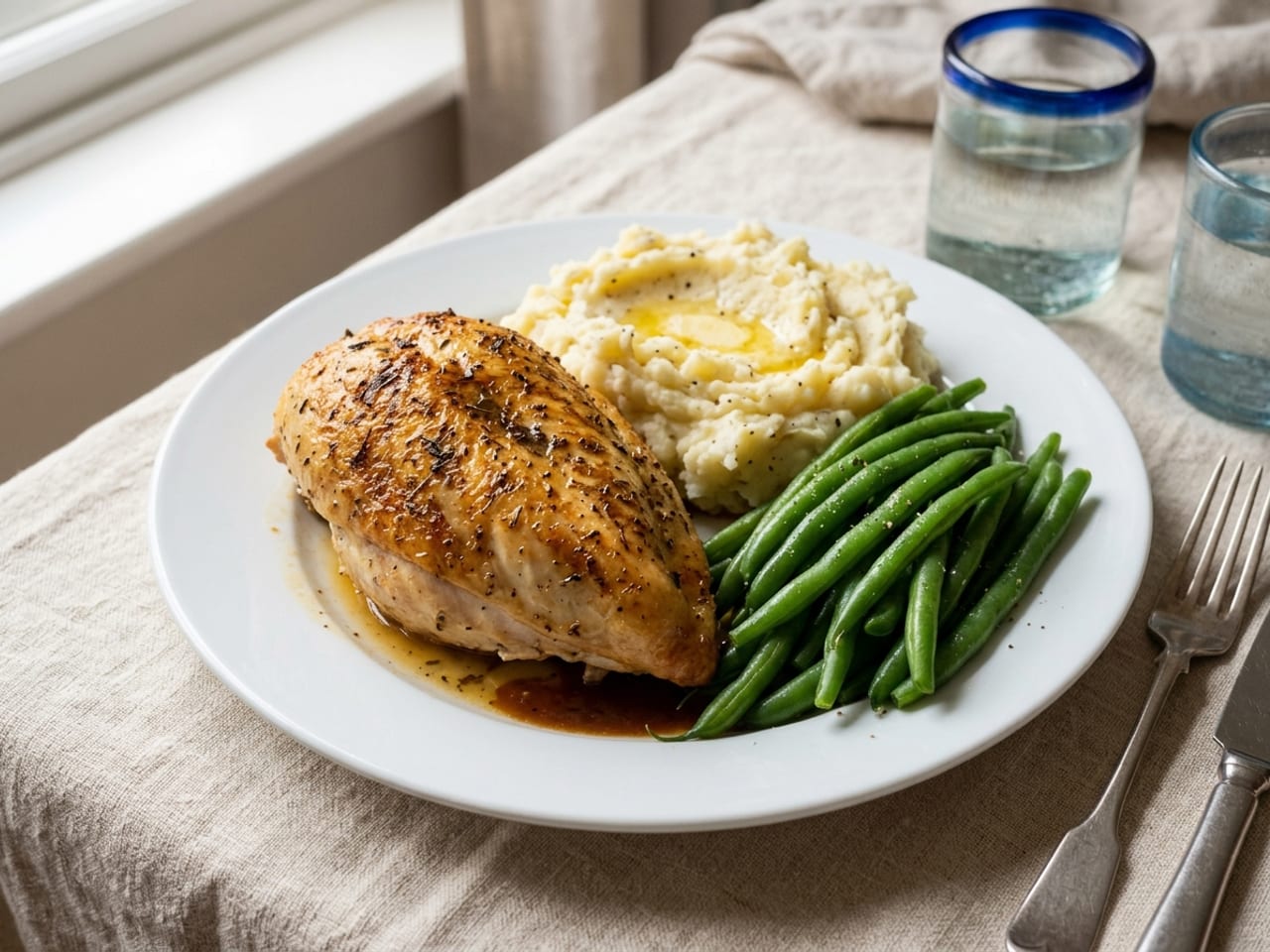
One home dinner, the six steps applied. Drag the divider, then read the steps; every dish section below is these six in a different order.
 BeforeAfter
1. Choose the plate: one size up, plain, round, warm
A plate one size larger than the portion seems to need, so the food can sit in the middle two-thirds with a clean rim around it. Plain white and round is the safe default: the same cheesecake was rated sweeter, more intense, higher in quality and better liked on a white round plate than on the alternatives,4 and a strawberry dessert read as sweeter and more intense on white china than on black.5 A wide rim helps rather than hurts: people judged the same portion about 10 percent larger by area on a wide-rimmed plate than on a thin-rimmed one.6 And a bigger plate does not reliably make anyone eat more; a meta-analysis of nine experiments found no consistent effect of dishware size on intake.7Warm the plate for anything hot.
2. Pick one focal point
Usually the protein; sometimes the sauce, sometimes the one thing you are proud of. Everything else supports it. A plate with two heroes has none, and a plate where every element gets equal billing reads as a buffet.
3. Place it: centred or just off, inside the middle two-thirds
Diners at a luncheon in a large dining room preferred, and were willing to pay more for, the main element set in the centre of the plate rather than pushed to one side,1 and a centred dessert was judged a larger portion than the identical dessert plated off-centre.8 For a three-component dinner, one published clock layout puts the protein at the centre or between 3 and 9 o’clock, the starch at 10 and the vegetables at 2; a second published clock differs (both are drawn in how to plate steak). Whatever the layout, keep it balanced: identical ingredients arranged in balanced compositions were preferred over lopsided ones every time.9
4. Sauce under or beside, in one move
A pool the protein sits on, a swoosh it leans on, or dots along one side keeps a crust, a sear or a crumb visible. That is our default, not a rule: where a sauce goes depends on the sauce, and pan sauces such as peppercorn are poured over the steak in the published recipes. One sauce move per plate; the second one is where plates start to look busy. Each move is in sauce plating techniques.
5. One point of height, everything else long and low
Lean, stand or prop one element for a single vertical moment, and lay the rest out horizontally. The same food arrayed flat was rated a larger portion, liked more and worth more than the identical food stacked,8 and people prefer a composition whose dominant line rises to the right.10
6. Garnish from the dish, then wipe the rim
A garnish is something already in the dish, placed rather than scattered: three basil leaves, a curl of the same bacon, a lemon cheek. Then the damp cloth around the rim. Neat beats messy in every measure tested: the same food arranged neatly was liked more, expected to taste better, and assumed to come from a better kitchen.3
The full version of the method, built step by step on one plate, is Plating 101; the vocabulary (swoosh, quenelle, fanning, the clock) is defined and shown in the techniques glossary. What follows is the method applied.
How to plate pasta
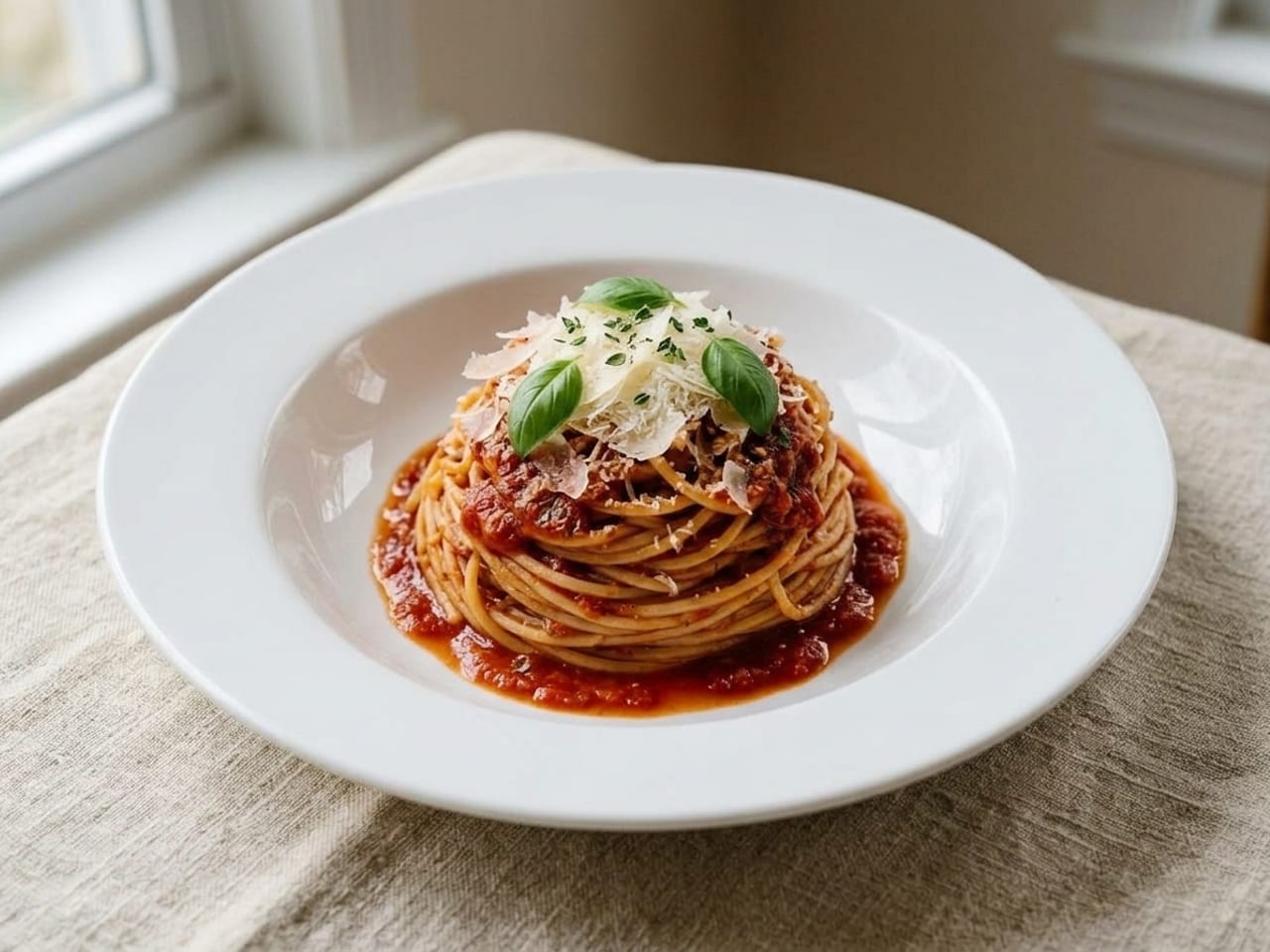
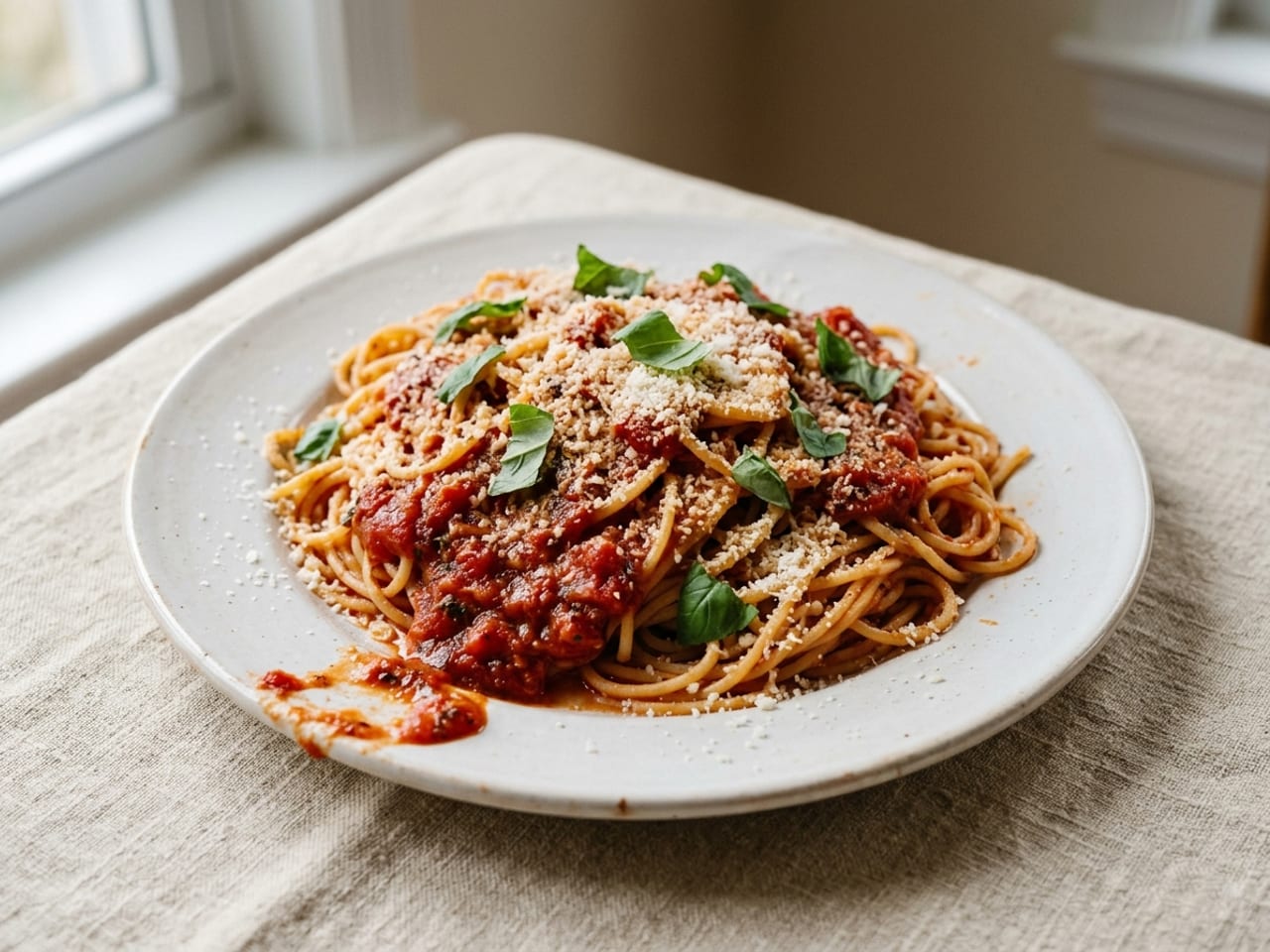
Long pasta is the easiest dish on this page to plate well, because the twirl gives you height and shape for free. The home version fails on one thing: sauce poured over a pile instead of tossed through it.
 BeforeAfter
- Toss, do not topFinish the pasta in the pan with the sauce so every strand is coated and the sauce clings. A ladle of sauce poured over plain pasta is the first tell of a home plate, and it also eats worse.
- Twirl a nestTongs or a carving fork turned inside a ladle: lift, twist, and set the nest in the centre of a warmed wide shallow bowl. The twirl is the height; nothing needs stacking.
- Sauce around the base, not over the crownA little pooled at the foot of the nest is right. The top stays dry enough that you can see the strands.
- Toppings last and on topCheese, cracked pepper, crisp guanciale, whole basil leaves: placed on the crown at the end, where they show. Grate cheese in a fine snow, not a heap.
- Short pasta mounds, it does not twirlRigatoni, penne and orecchiette are shaped by the spoon: a loose mound in the well of the bowl, with the sauce solids tucked into the top layer so every spoonful gets one.
- The bowl is the frameA rimmed pasta bowl, food in the well, rim spotless. If sauce lands on the rim, wipe it before the bowl leaves the kitchen.
Cook it: Spaghetti carbonara · Cacio e pepe · Ragù alla Bolognese
How to plate steak and mashed potatoes
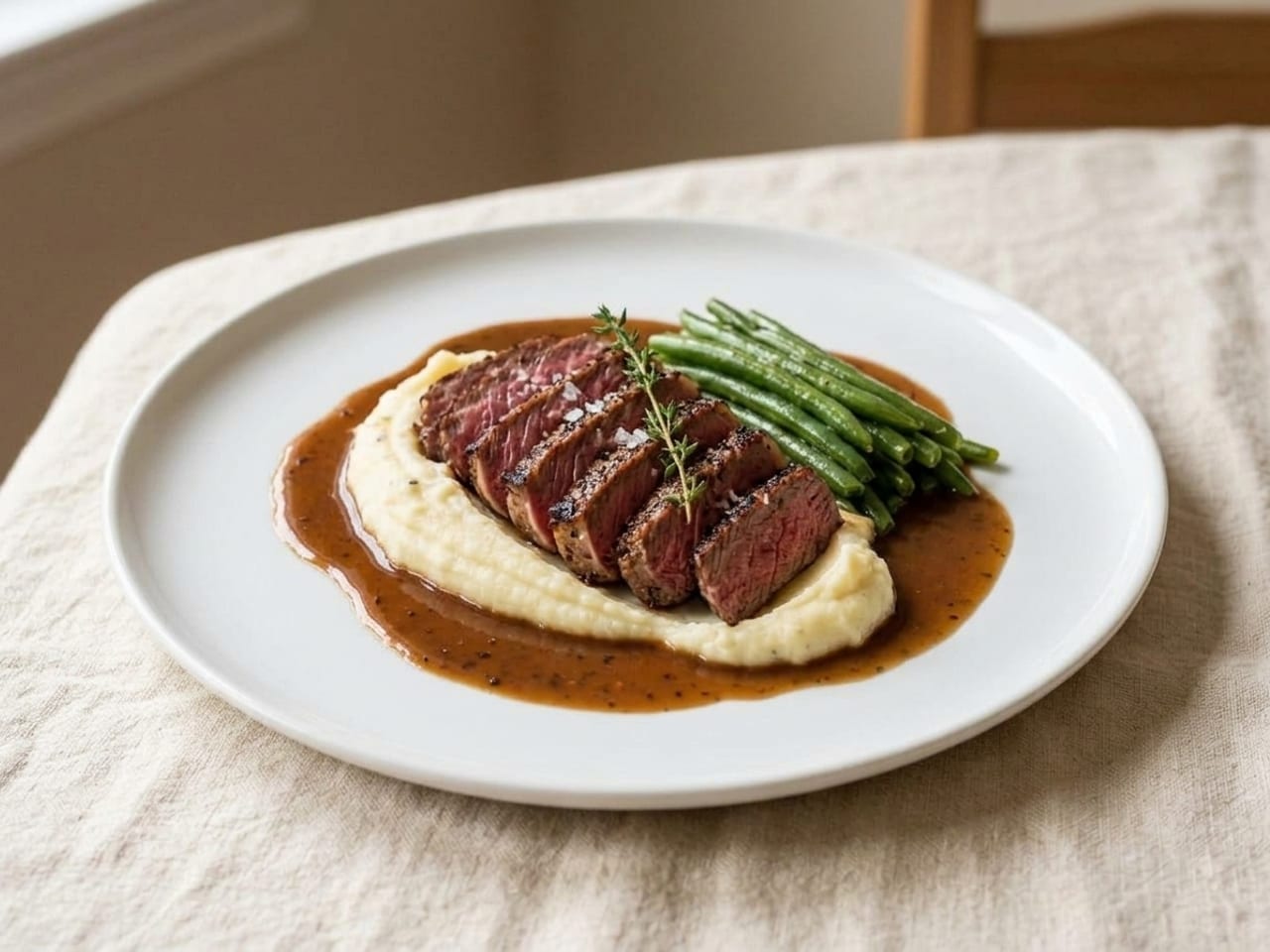
A whole steak on a plate shows one brown surface. Sliced and fanned, it shows the cook you got right. The mash is the base, the vegetables are a bundle, and the sauce goes beside. This is the summary; every cut, sauce and side, with the sources, is in how to plate steak.
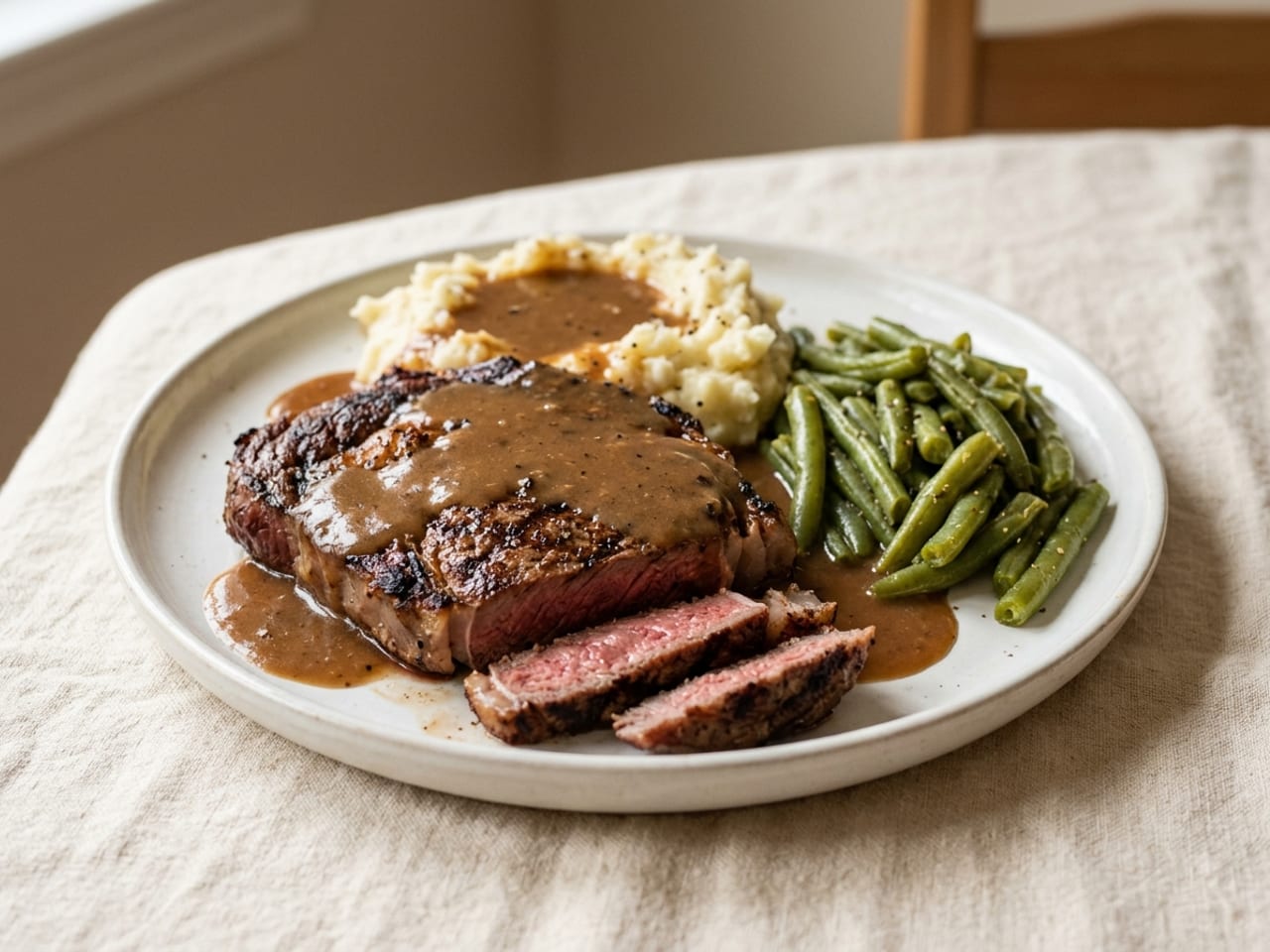 BeforeAfter
- Slice against the grain, then fanLet the steak settle off the heat first; how long is contested, and published rest times run from none to 20 minutes, or as long as the steak cooked. Then cut slices about 1 cm (3/8 in) thick across the grain and fan them so the pink faces up. The slices are the proof of the cook; a whole steak hides it.
- Mash is the baseSpread it into a swoosh with the back of a spoon, or press it into a moulded round, and set the steak on or against it. Plated alone, mashed potatoes want a quenelle or a smooth mound with a well of melted butter and cracked pepper, never a flat scoop.
- Bundle the greenBeans or asparagus in one tight parallel bundle beside the meat. A bundle reads as decided; a heap reads as served.
- Jus beside; the sauce decidesSpoon a jus or gravy beside the meat so the crust you cooked for stays visible. Béarnaise is served beside the steak too. A pan sauce is the exception: peppercorn sauce and other pan sauces are poured or spooned over in the published recipes.
- FinishFlaky salt on the cut faces, one sprig of thyme or a spoon of chimichurri, and a warm plate: beef fat firms as the steak cools.
Cook it: Mashed potatoes · Fanning and the swoosh, defined · How to plate steak, in full
How to plate chicken parmesan (and any breaded cutlet)
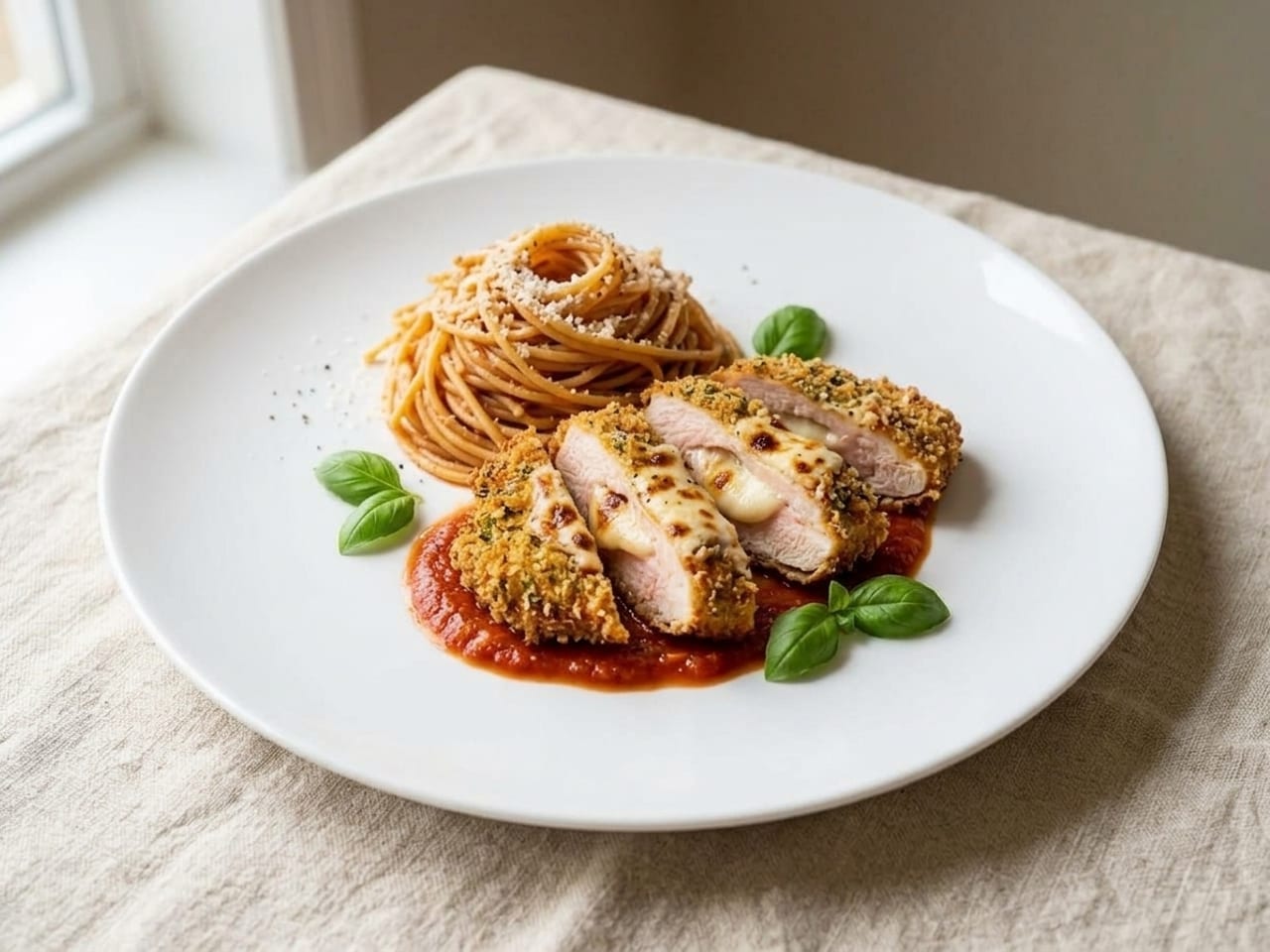
The home plate drowns the cutlet: sauce over the crumb, pasta under everything. The fix is to invert it. Sauce under, cheese on top, pasta beside, and the cutlet sliced so its layers show.
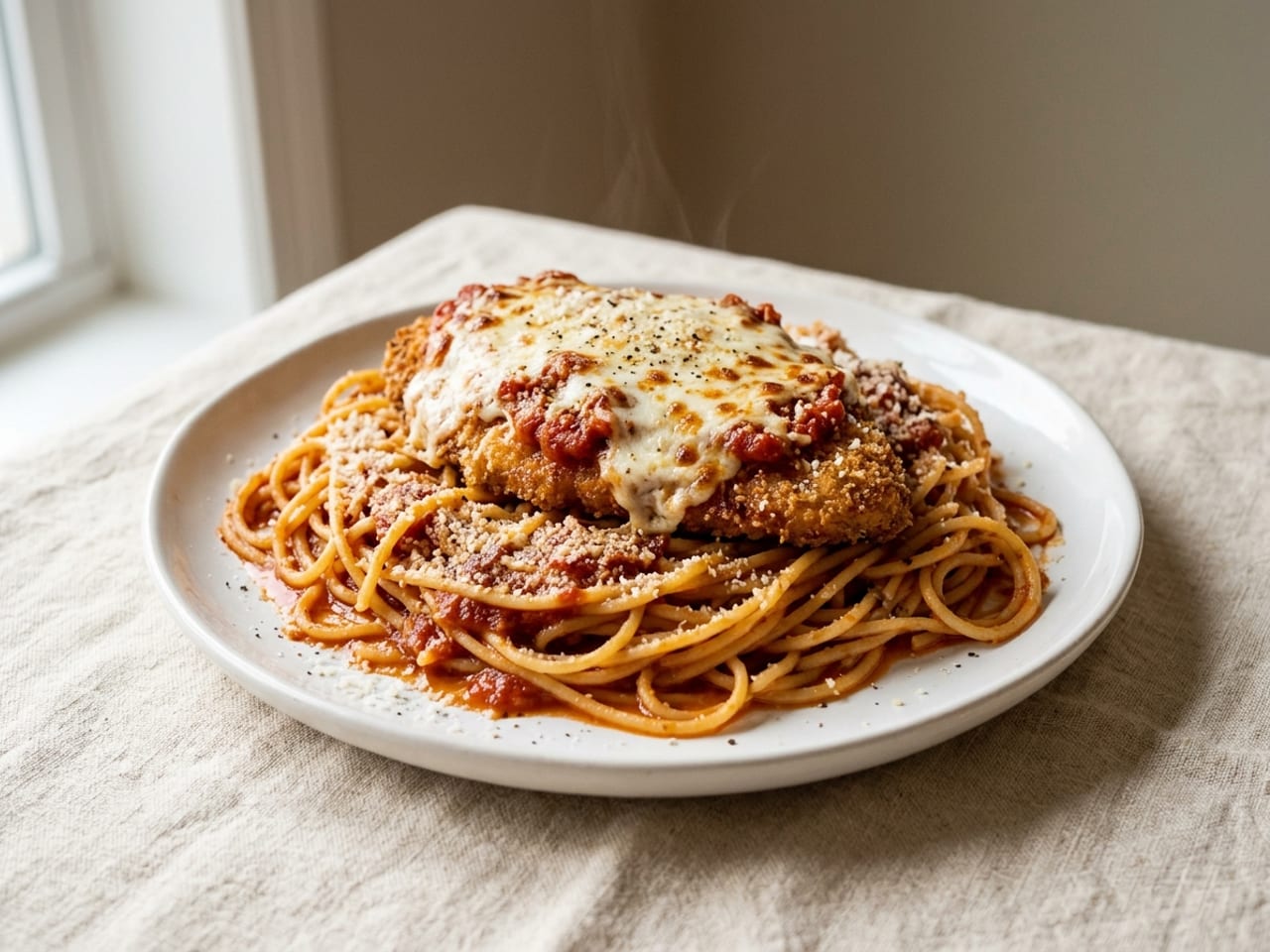 BeforeAfter
- Sauce under, cheese on topMarinara on the plate first, cutlet on it, so the crumb stays crisp and the melted cheese stays the visible top layer. A cutlet buried in sauce is soft within minutes.
- Slice and fanThree or four thick strips, fanned so each cut face shows the bands of crumb, white chicken and cheese. It also makes the plate easier to eat.
- Pasta beside, not underA twirled nest at the back of the plate, or a small bowl of its own. The chicken is the hero; a bed of pasta under it makes the pasta the hero and the chicken a topping.
- Same for katsu and schnitzelKatsu is sliced in strips with the sauce beside, never over. A schnitzel keeps its whole shape, with the lemon and the potatoes beside it, so the crumb stays dry and golden.
- Green lastBasil leaves placed on the cutlet, a light grating of parmesan on the pasta only. Cheese dusted over the whole plate is the buffet look.
Cook it: Breaded chicken schnitzel · Chicken katsu
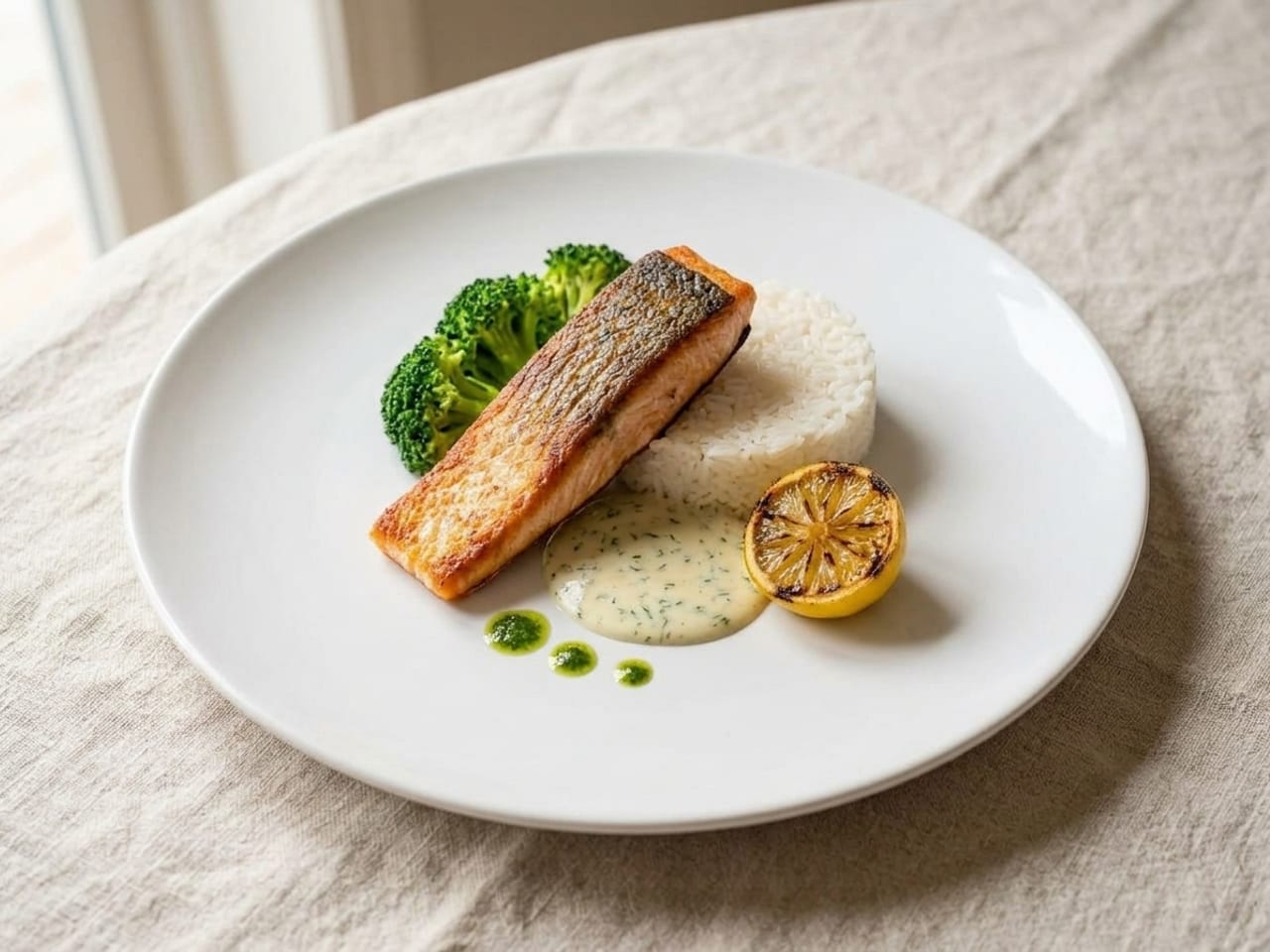
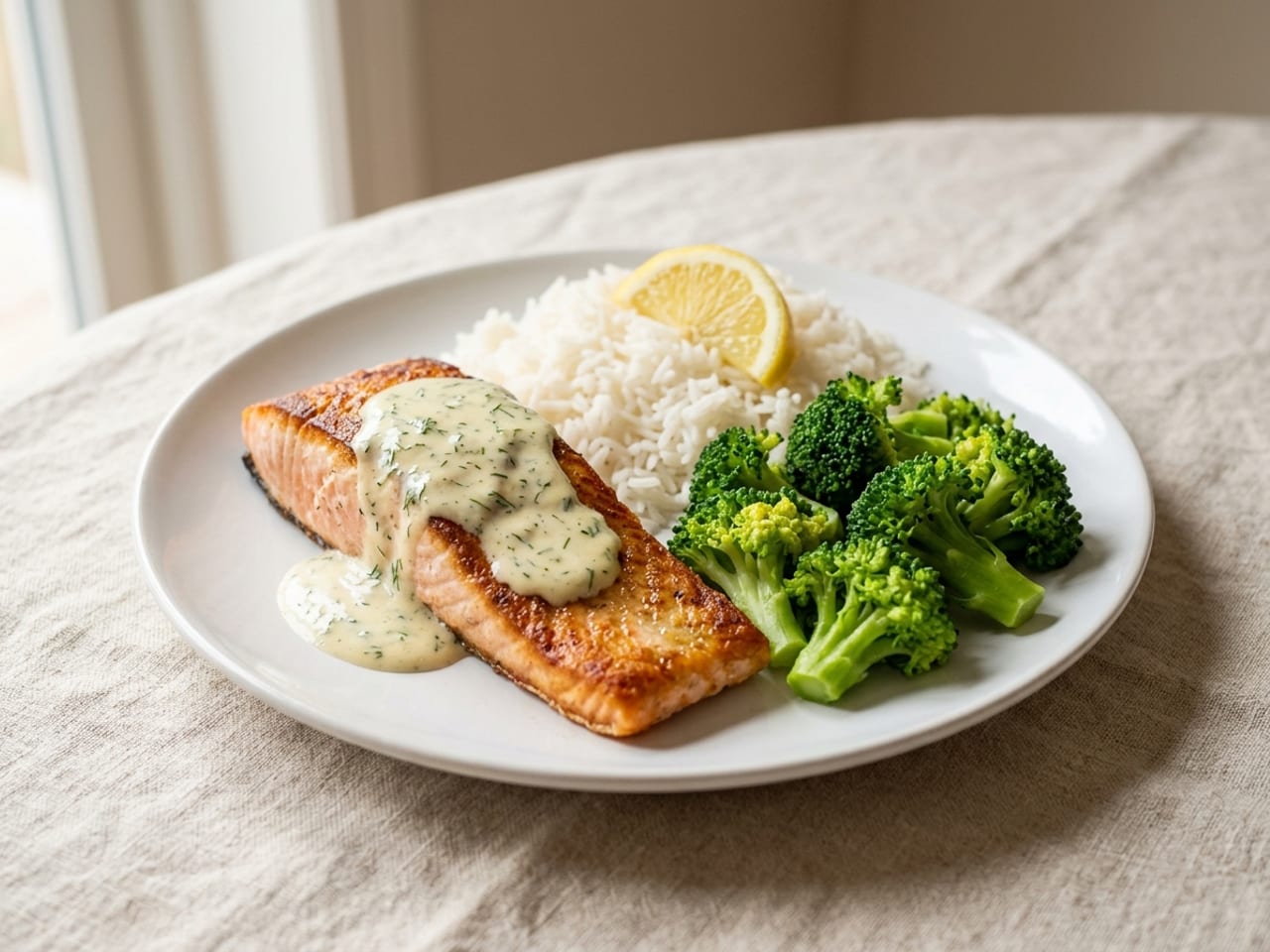
How to plate salmon
Salmon brings its own colour, so the plating job is to keep that coral pink and crisp skin visible. The home plate covers both with sauce and lays the fillet flat between two heaps.
 BeforeAfter
- Skin up if it is crispCrisp skin is the best-looking surface on the fish. Set the fillet skin up, or lean it against the starch at an angle so the skin catches the light. If the skin went soft, take it off and show the flake side instead.
- Give it a baseA moulded round of rice, a swoosh of purée, a pool of sauce. Salmon set on a bare plate looks like it landed there.
- Cluster the vegetablesThree florets standing in a group, or a bundle of greens. Not a heap, and not spread around the fish like a moat.
- Sauce beside, not onCream or dill sauce dolloped on the fillet hides the colour. A pool beside it, or a few dots of herb oil, keeps the pink in view.
- Gloss and citrusBrush the flesh with a little oil or butter before it goes out; a glossy surface is what the eye reads as fresh in fish.11 Citrus as a charred half or a trimmed cheek, not a limp wedge.
Cook it: Teriyaki salmon · Citrus salmon with pea purée · Grilled salmon
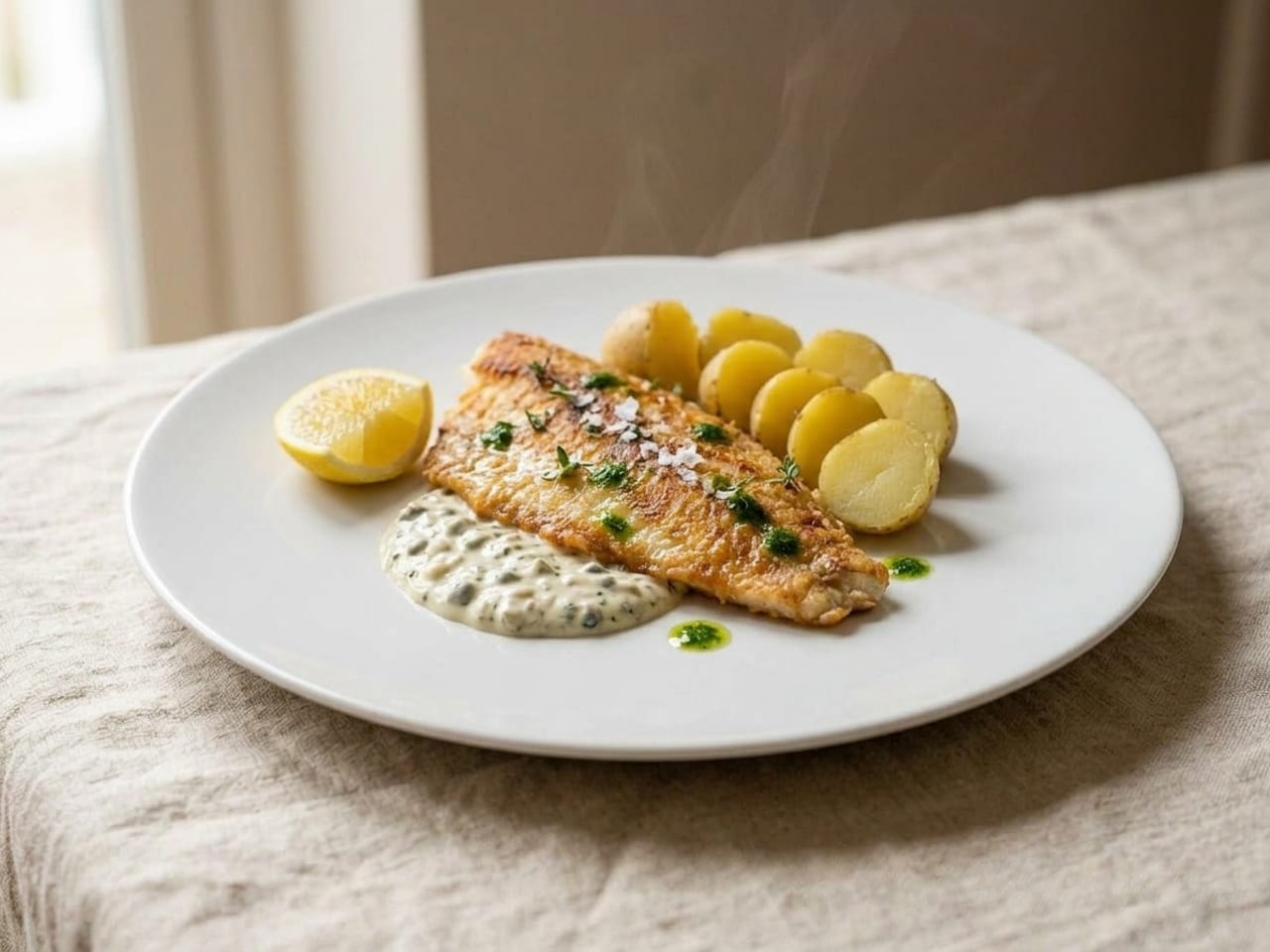
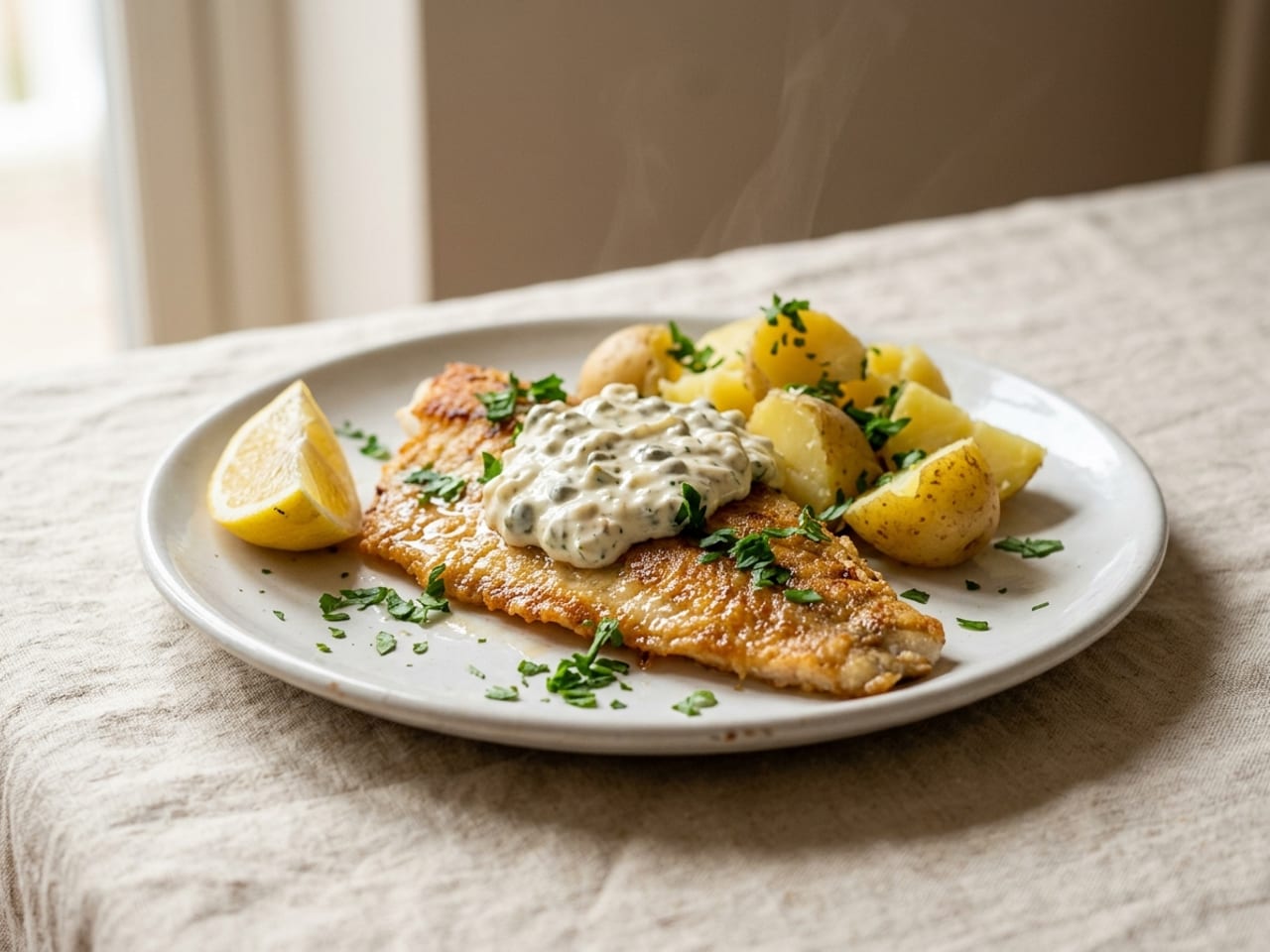
How to plate fish (a white fish fillet)
White fish is pale, so the plate needs one line of colour and one clean sauce move. The home version puts the sauce on the fish and the parsley on everything.
 BeforeAfter
- The poolSauce first, fillet on it, crust up. Beurre blanc, tartar, salsa verde, brown butter: all the same move. The sauce is where the fork goes, and the crust stays crisp.
- Show the cut facesHalve the potatoes and line them up cut side up. Cut faces catch the light; whole boiled potatoes do not.
- One line of colourDots of parsley oil, a few capers, three herb leaves placed. Not a green dusting over the whole plate.
- The lemonA cheek with the pith trimmed, set at the edge, or a charred half. The wedge on top of the fish is the diner-plate tell.
- Warm plate, one moveFish cools faster than meat, so the plate is warm. Move the fillet once, with an offset spatula; a repositioned fillet breaks.
Cook it: Fish fillet · Sesame-crusted tuna steak
How to plate lamb chops
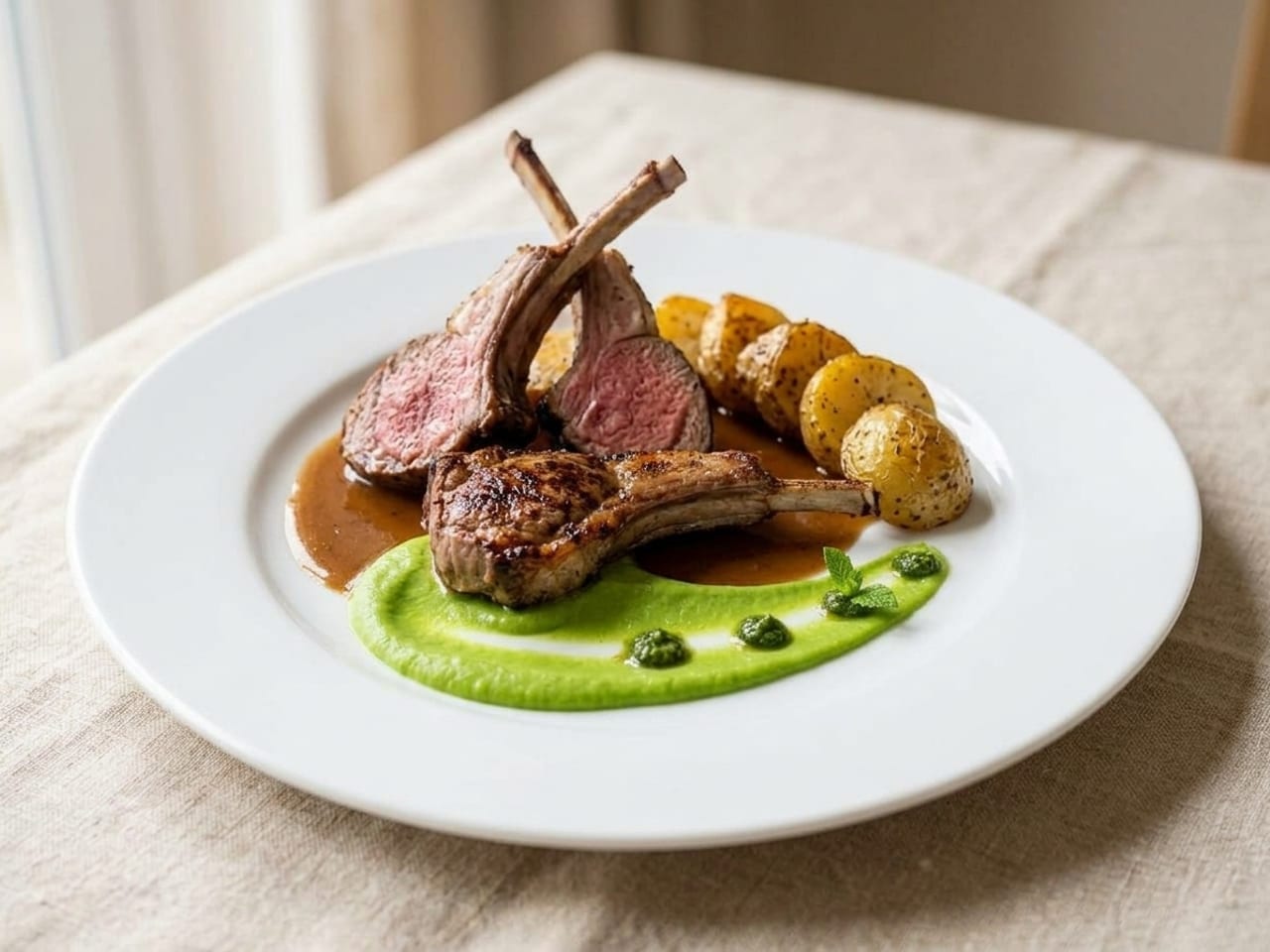
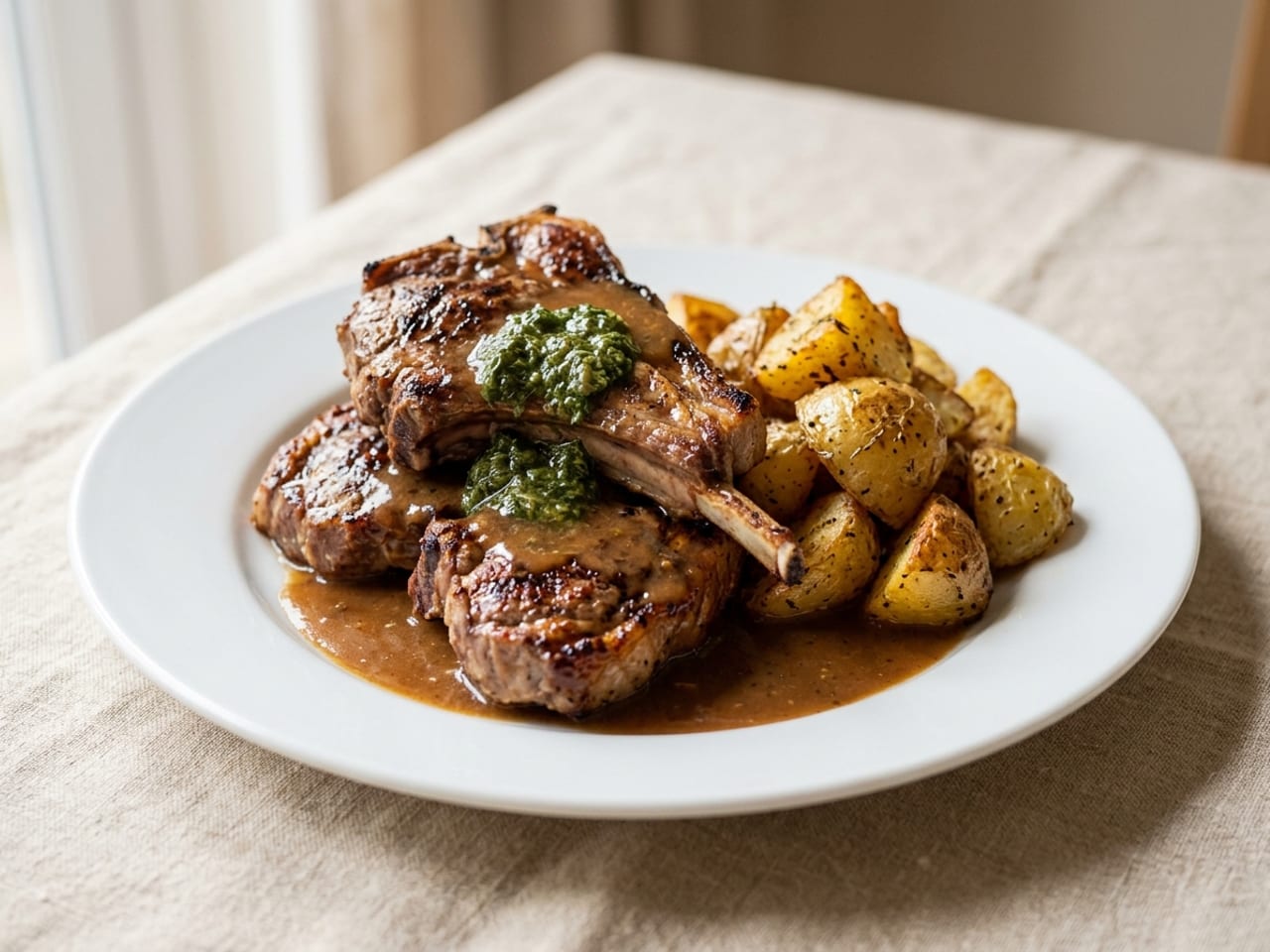
Lamb chops come with their own architecture: the bone. Two chops leaned together with the bones crossing is the one point of height, built by the dish itself, and the green purée underneath is the colour story.
 BeforeAfter
- Two or three chops, leaningLean two chops together so the frenched bones cross and point up. That is the vertical moment; no stacking, no ring mould.
- Show the pinkTurn the chops so the cut faces face the diner, or slice one chop and fan it. Lamb cooked pink deserves to be seen pink.
- A green basePea or mint purée as a swoosh under the chops. Green against pink is the whole plate’s palette; it needs no third colour.
- Shingle the potatoesFanned or overlapped in one short line beside the chops. Roasted potatoes in a pile pull the eye away from the meat.
- Mint sauce as dots, jus aroundThe mint sauce in three dots along the swoosh, or in a small dish. The jus spooned around the meat, never over it. Wipe the bones clean before the plate goes out.
Cook it: The purée, sear, crunch anatomy
How to plate shrimp cocktail
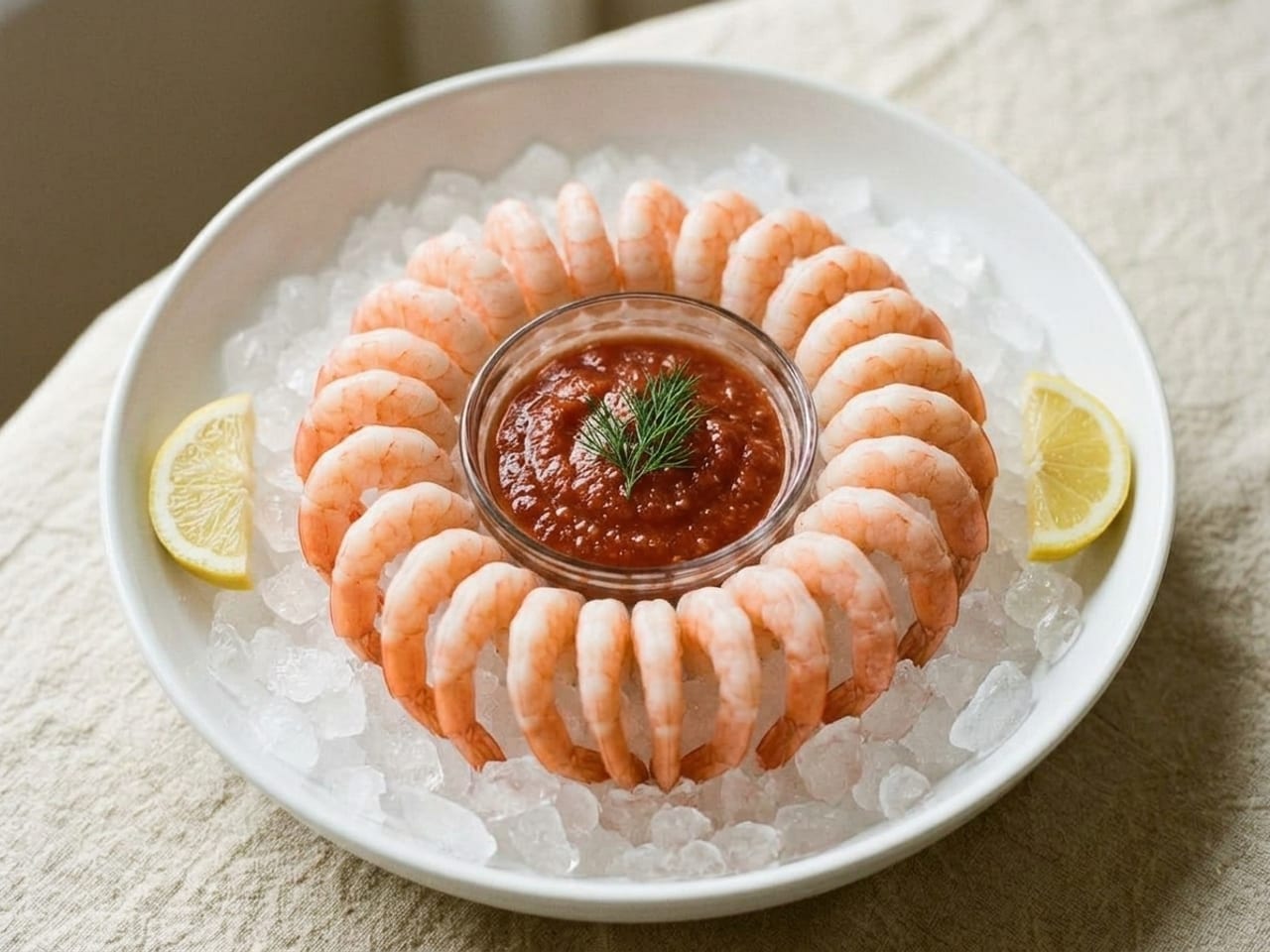
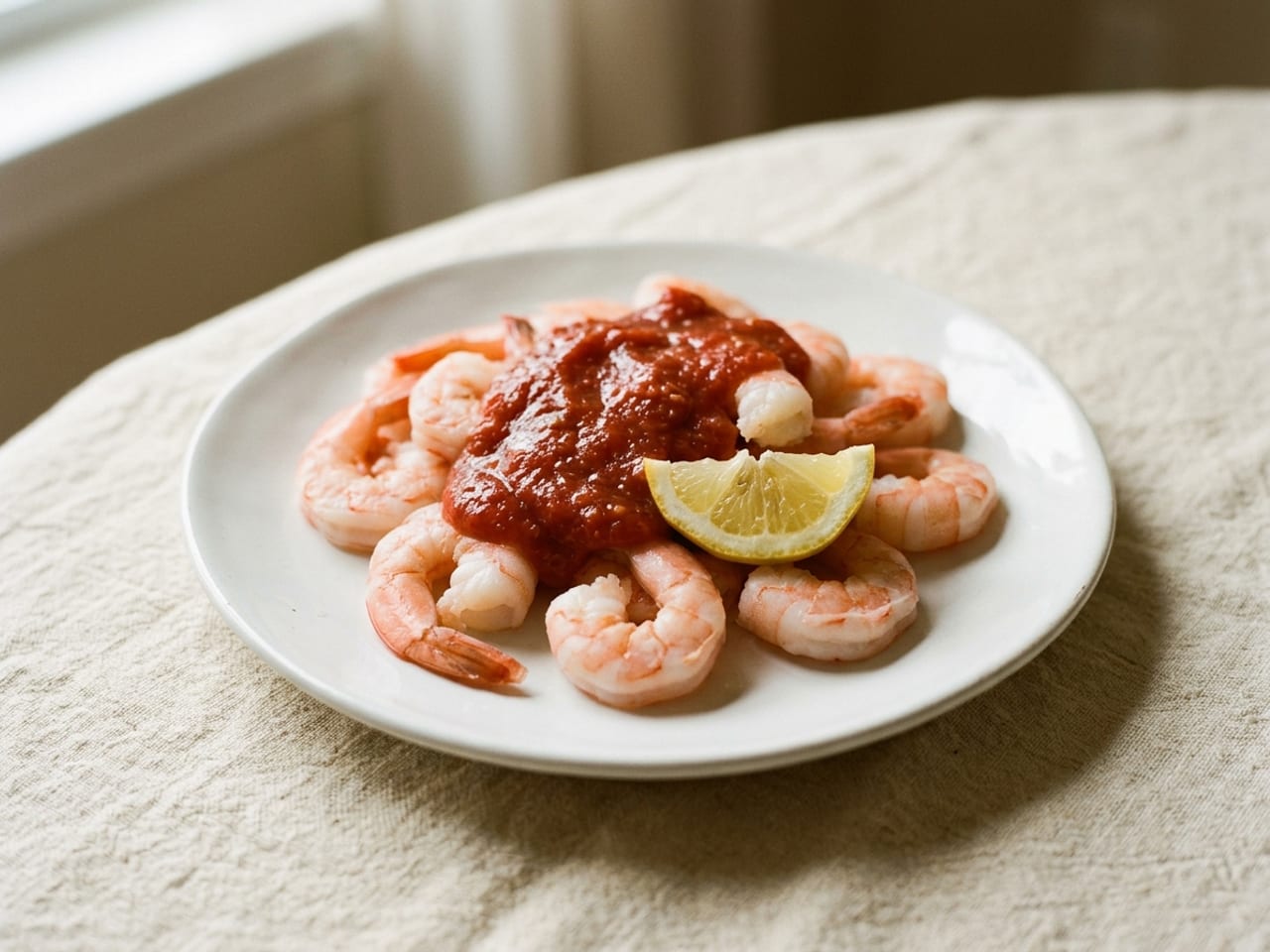
Shrimp cocktail is a geometry dish: the sauce in the centre, the shrimp in a ring around it, and cold underneath. The heap-with-a-blob-on-top version wastes the one shape shrimp already have.
 BeforeAfter
- Cold is the plateCrushed ice in a wide chilled bowl, or a chilled coupe. The classic hung-on-the-glass-rim serve still works, but it hides most of each shrimp behind the glass.
- Sauce in the centre, in its own vesselA small glass dish or ramekin, so the sauce stays a clean red circle and the shrimp stay dry until they are dipped.
- The ringShrimp hooked around the dish with the tails outward, evenly spaced. Odd or even count makes no difference to how much people like it; that rule was tested and did not hold.12
- Tail on, shell off, vein outThe tail is the handle and the shape. Shells anywhere else on the plate are a mess in waiting.
- For a crowdA platter with the sauce dish in the middle and the shrimp in concentric rings, the platter set on a tray of ice. Lemon as clean wedges at the edge; a sprig of dill or a chive on the sauce.
Cook it: Shrimp ceviche · Aguachile
How to plate deviled eggs
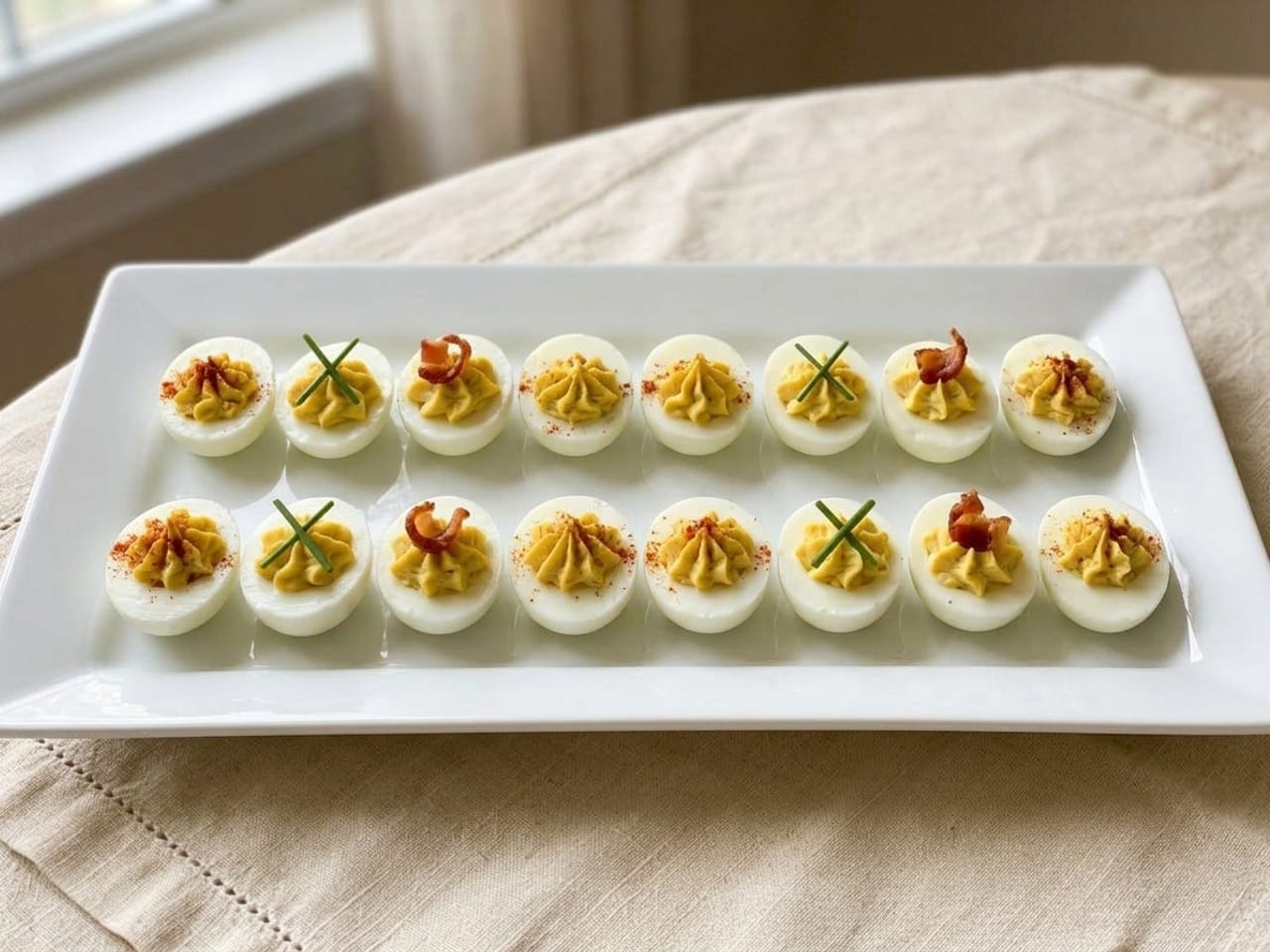
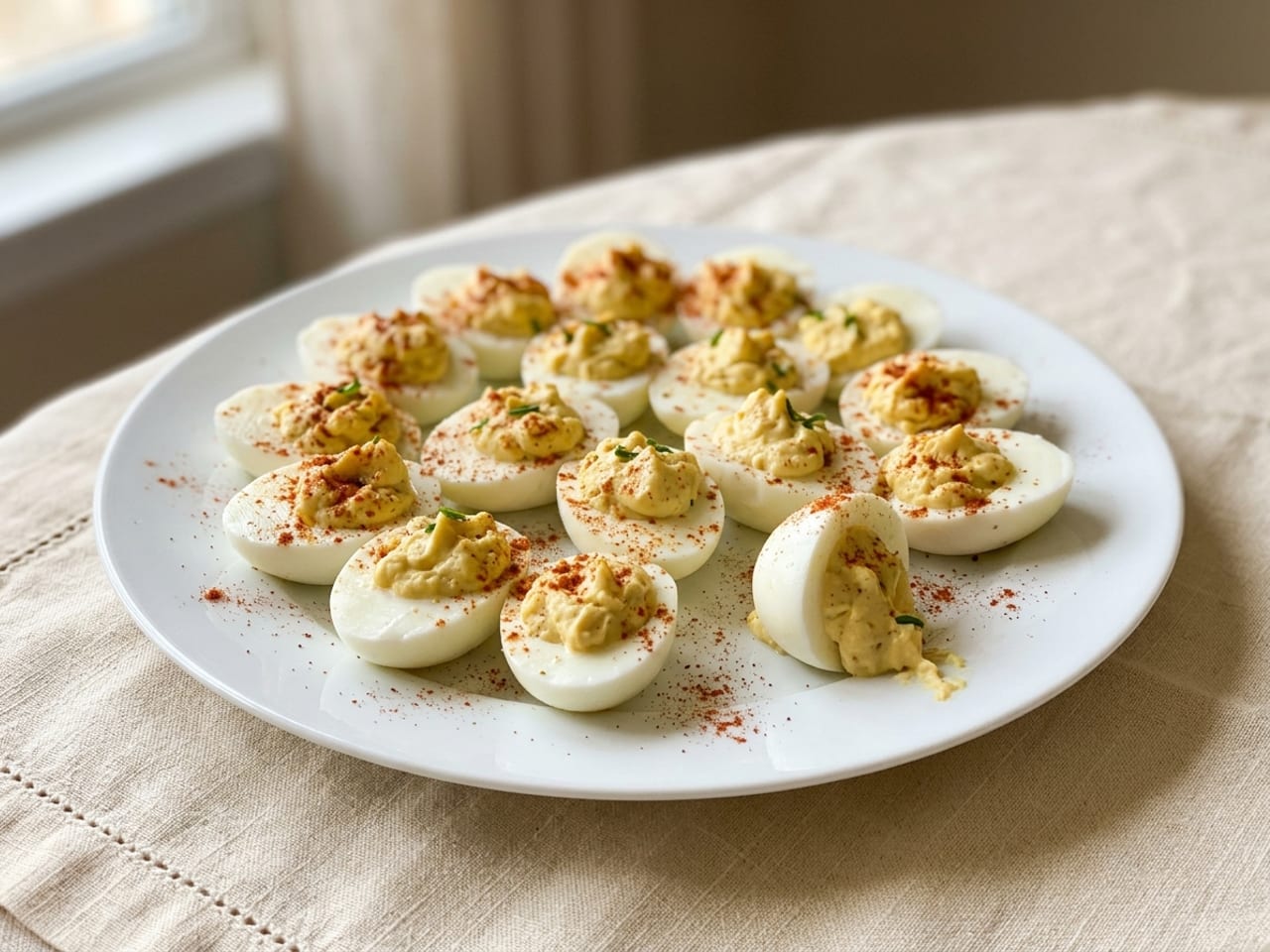
Deviled eggs fail in two ways: they roll, and they are spooned instead of piped. Solve the roll, pipe the filling, and put the garnish in a pattern; the rest is spacing.
 BeforeAfter
- Stop the rollSlice a thin sliver off the base of each white so it sits flat, or use a deviled-egg platter with hollows, or set the eggs on a bed: shredded lettuce, coarse salt, or crushed ice for a picnic.
- Pipe, do not spoonA piping bag with a star tip, or a zip bag with one corner cut, gives the rosette. It takes the same time as a spoon and looks like a different dish.
- Rows, spaced, none touchingTwo rows on a long platter; spokes or concentric rings on a round one. Space is the design; crowding is the enemy.
- Garnish in a patternA pinch of smoked paprika, two crossed chive lengths, a bacon curl, repeating along the row. The repetition is what reads as deliberate.
- Fill at the last hour, garnish at the last minutePaprika bleeds into the filling if it sits, and chives wilt. Whites and filling can wait separately in the fridge; assembly is the last job.
How to plate rice
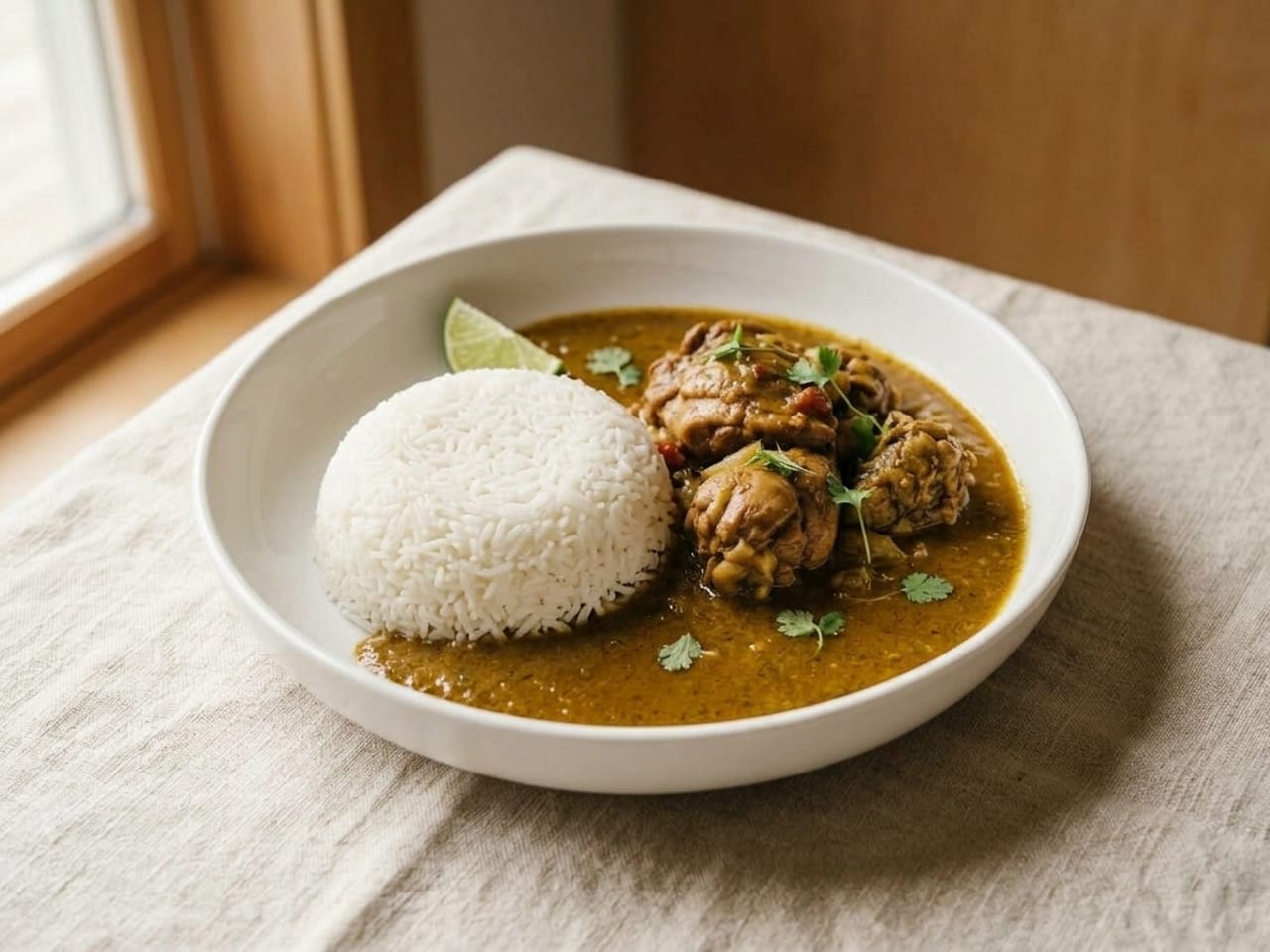
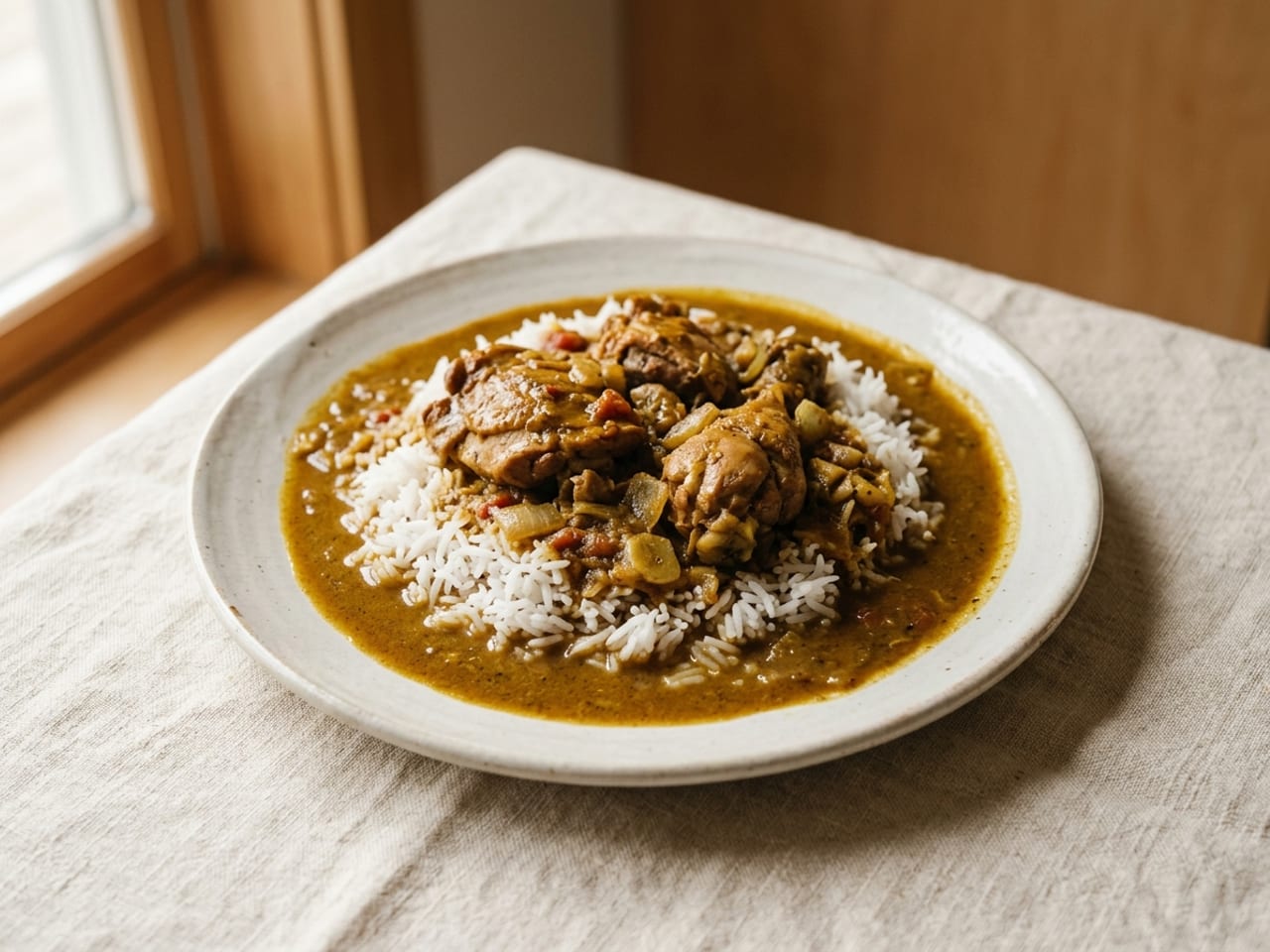
Loose rice spreads to the rim and a ladle of sauce over it turns the whole plate one colour. Mould the rice, set the sauce beside it, and let the two meet along one line.
 BeforeAfter
- Mould itPack the rice into a small bowl or a ring mould and turn it out as a dome or a disc. A wet spoon smooths the top. Loose rice has no edge, and a plate with no edges has no composition.
- Rice and sauce side by sideCurry, stew or stir-fry beside the rice, meeting along one clean line, so the white stays white and the sauce stays glossy. The protein on top of the sauce, not buried in it.
- Fried rice is a domeMould it, or serve it in a shallow bowl with the egg and greens turned to the top layer where they show.
- Risotto lies flatSpoon it into a warmed wide shallow bowl and tap the bowl once on the counter so the risotto settles level, the way Italian kitchens serve it all’onda. The topping goes in the centre; the rim stays clean.
- One green, one acidCilantro or parsley leaves placed on the sauce, a lime or lemon wedge at the edge. Plain steamed rice at the table goes in its own small bowl, dome smoothed.
Cook it: Risotto alla Milanese · Kimchi fried rice · Katsu curry · Steamed rice
How to plate a sandwich
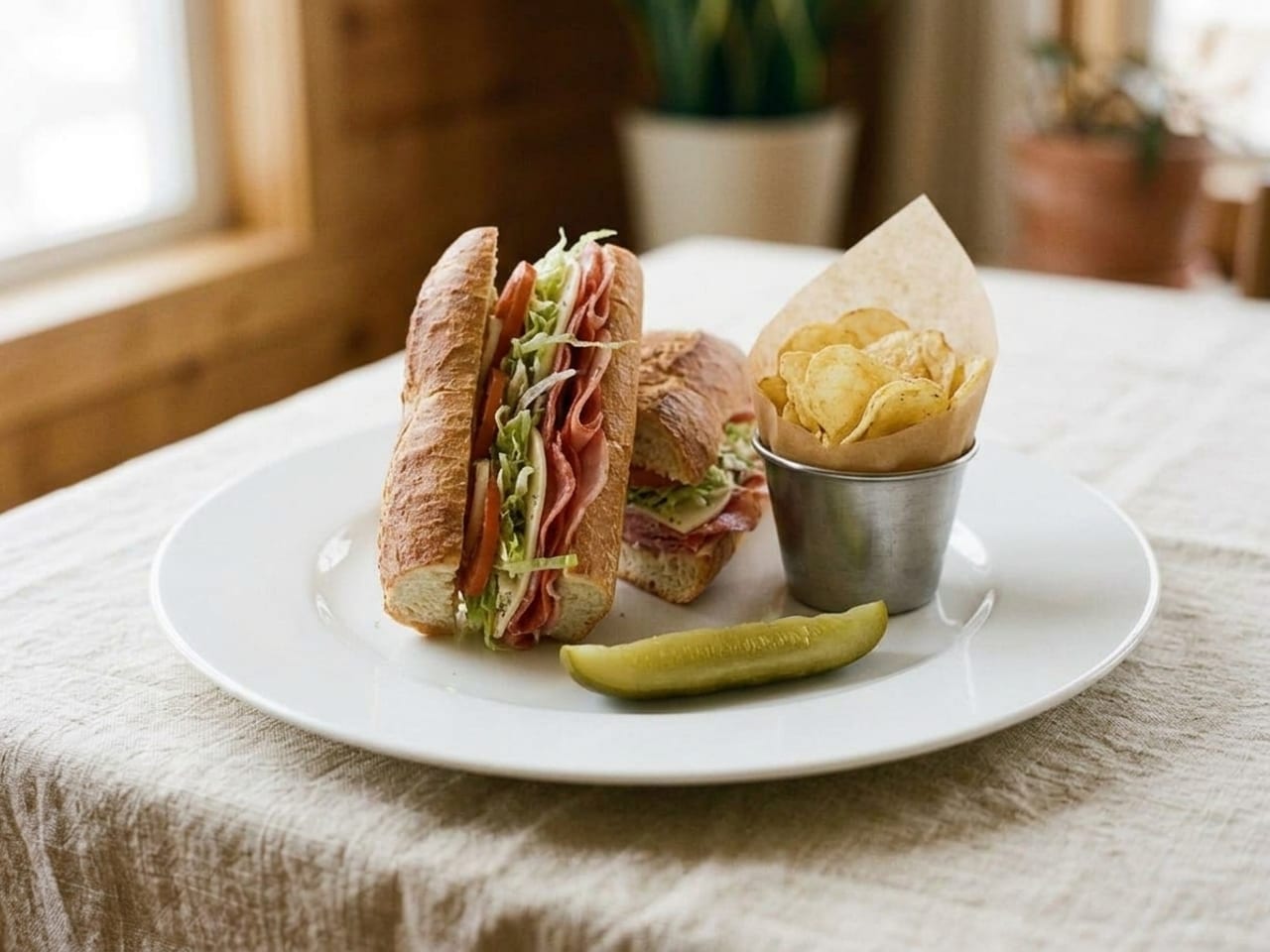
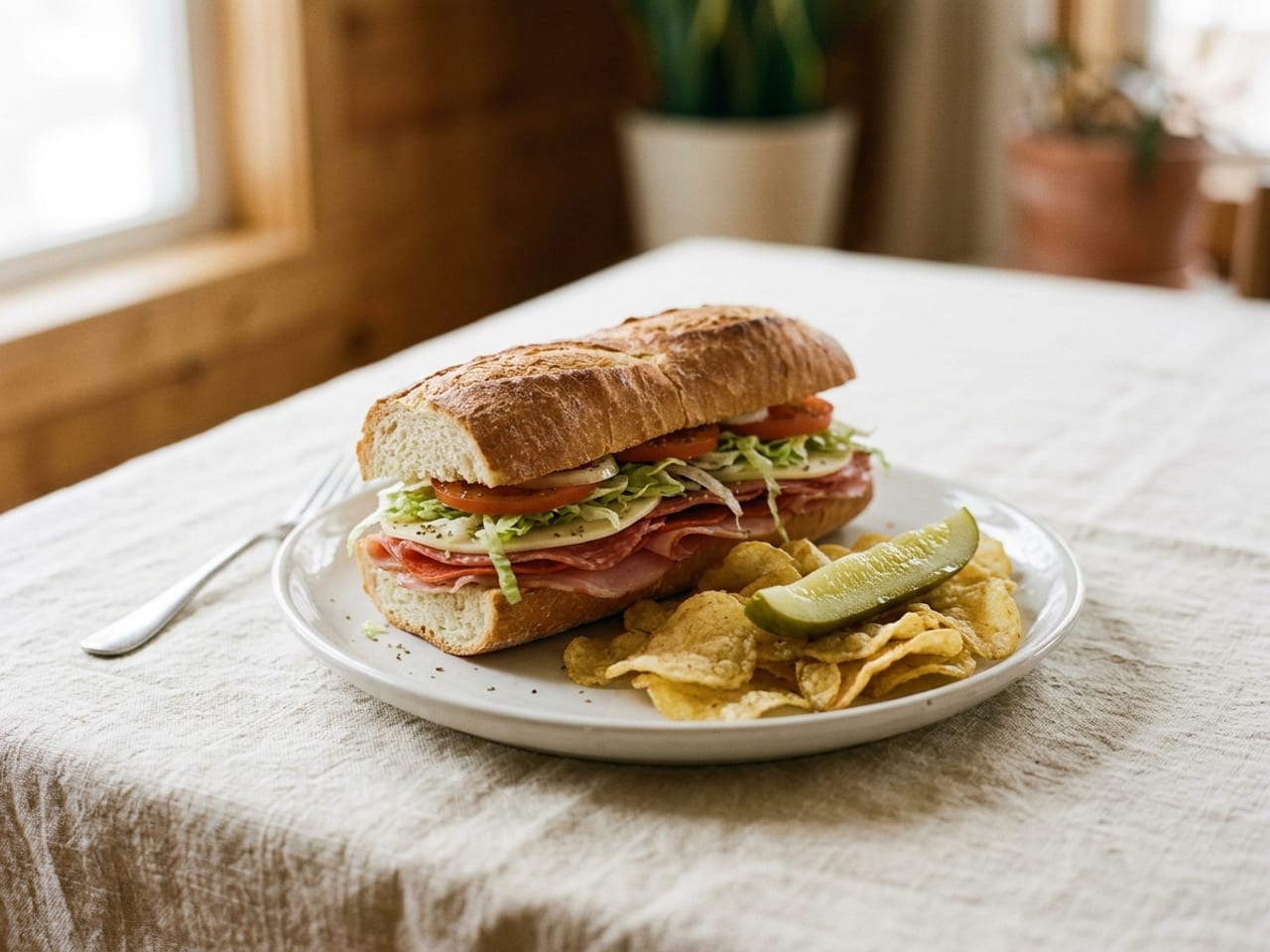
A sandwich plate has exactly one thing to show: the cross-section. Everything in this section is about making the cut face the first thing the eye lands on, and keeping the sides out of its way.
 BeforeAfter
- Cut on the diagonal, all the way throughA serrated knife, one long stroke, corner to corner. The diagonal gives a longer cut face than a straight cut, and a sandwich that is half cut tears when it is picked up.
- Stand one halfLean it against the other so the cut face faces the diner, or lay both halves down with the cut faces out. Either way the layers are the picture.
- Sides in their own vesselChips in a small cup or a paper cone, slaw in a ramekin, fries stacked in a cup. Nothing loose on the plate.
- Pickle in front, alignedOne spear, parallel to the plate’s edge. A toothpick through the sandwich only if it needs it to stand.
- BurgersWhole, on a board or a plate, with the bun lid tilted back to show the patty and the cheese, or cut in half for the cross-section. Brush the plate of crumbs before it goes out.
Cook it: Italian grinder sandwich · Chopped Italian sandwich · Smash burger · Banh mi
How to plate desserts
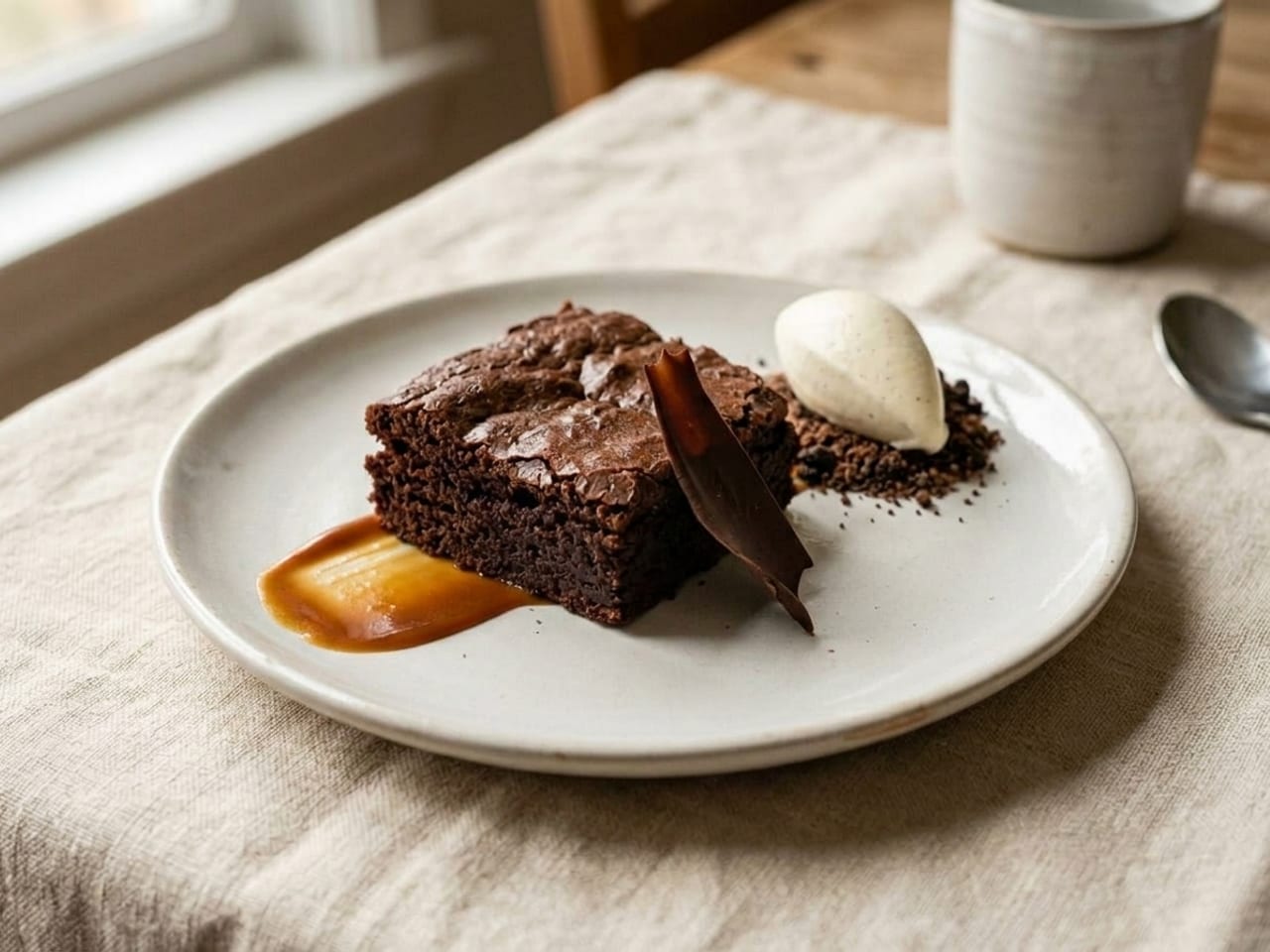
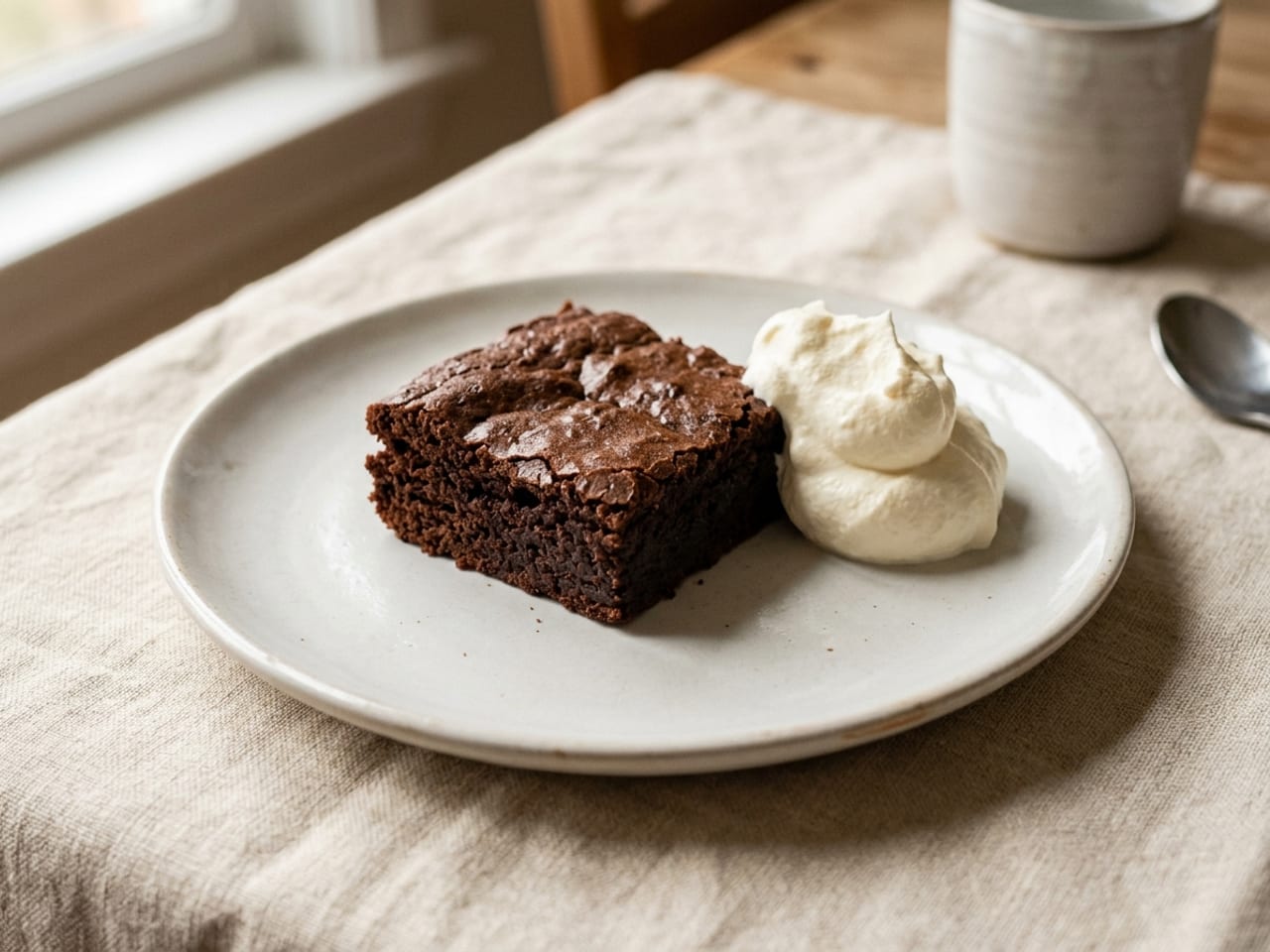
Desserts get the same six steps and three extra moves: the smear, the quenelle and the soil. The short version is here; the full pastry system has its own guide.
 BeforeAfter
- Sauce first, as a smear or a poolCaramel, coulis or crème anglaise goes on the plate before the dessert does, in one stroke. The dessert sits on its thick end.
- Centre itA centred dessert was judged a larger portion than the same dessert set off to one side,8 so the slice or the cake goes in the middle, and the accents move around it.
- One quenelle, on a bedCream, ice cream or mascarpone shaped with one hot spoon and landed on crumble or soil so it holds its edges and does not slide.
- One lean for heightA tuile, a chocolate shard or a biscuit propped against the main element. One, not three.
- Fruit as a count, not a scatterThree berries placed, or a fan of sliced strawberry, rather than a handful thrown across the plate.
Go deeper: Dessert plating, the pastry chef’s system · Crème brûlée
What every plate above has in common
Read the ten “after” frames again and the same moves repeat. The plate is a size up and the rim is clean. There is a base: mash, purée, rice, a pool of sauce, a bed of ice. The hero is cut so its inside shows (the steak fanned, the cutlet in strips, the sandwich on the diagonal, the potatoes halved cut side up) and it sits on or against the base. Everything loose has been gathered into one shape (a bundle of beans, a cluster of florets, a ring of shrimp, two rows of eggs). The sauce is under or beside. And there is one garnish, taken from the dish, placed with intent.
That is why the method transfers to dishes not on this page. Three colours and three to four components is what adults in the United States, Italy and Japan all agreed looks right,13 and an arrangement that reads as composed changes how the food itself is rated: a salad plated after a Kandinsky was liked more, tasted better to the people eating it and earned a higher price than the same ingredients tossed together, though laying them out in neat rows did no better than tossing.14 A chef is not doing anything on the plate that a spoon, a knife and a folded cloth cannot do at home. They are just doing it in the same order every time. Plating a salad is not covered on this page; it has its own guide: how to plate salad. Nor is carving a holiday bird and arranging its platter: see how to carve a turkey.
See your own dinner re-plated
The sliders above are the same idea as the tool: a photo of the home plate in, the composed version of the same food out. Upload a photo of what you cooked tonight and Plate Artists re-plates it, names the moves it used, and gives you the steps to do it on a real plate.
Your dish, plated like a chef
Snap it, upload it, and get the re-plated version back with every move explained.
Start free · 1 enhancement →Free account · 1 free enhancement · No credit card
How to plate, dish by dish
How do you plate food like a chef?
Use a plain white round plate one size larger than the portion needs, warmed if the food is hot. Pick one focal point, usually the protein, and set it in the centre or just off it, keeping all the food inside the middle two-thirds of the plate. For a three-component dinner, one published clock layout puts the protein at the centre or between 3 and 9 o’clock, the starch at 10 and the vegetables at 2. Where the sauce goes depends on the sauce: put it under or beside the food in one move (a pool, a swoosh or dots) when you want a crust or a sear to show; sauces that define the dish, such as peppercorn sauce on steak, are poured over. Give the plate one point of height, such as slices fanned over a swoosh or two lamb chops leaning together, and lay everything else long and low. Garnish with something already in the dish, placed rather than scattered, then wipe the rim with a damp cloth. In controlled tests, identical food plated this carefully was rated tastier, worth more and from a better kitchen than the same food plated plainly.
How do you plate pasta?
Finish the pasta in the pan with its sauce so every strand is coated, then twirl long pasta into a nest using tongs or a carving fork turned inside a ladle, and set the nest in the centre of a warmed wide shallow bowl. Let only a little sauce pool around the base; the crown should stay dry enough to show the strands. Put the toppings on last and on top: a fine snow of cheese, cracked pepper, crisp guanciale or whole basil leaves. Short pasta is mounded loosely rather than twirled, with the sauce solids tucked into the top layer. Keep the rim of the bowl spotless.
How do you plate steak and mashed potatoes?
Let the steak settle off the heat (published rest times run from none to 20 minutes, or as long as the steak cooked, and the tests disagree on what resting does), slice it against the grain into pieces about 1 cm (3/8 in) thick and fan the slices with the pink centre facing up. Spread the mashed potatoes into a swoosh with the back of a spoon, or press them into a moulded round, and set the steak slices on or against the potatoes. Bundle the green vegetables in one tight parallel stack beside the meat. Spoon a jus or gravy beside the meat so the crust stays visible; a pan sauce such as peppercorn is poured over in the published recipes. Finish with flaky salt on the cut faces and one sprig of thyme, on a warmed plate.
How do you plate mashed potatoes?
As a base or as a shape, never as a flat scoop. Under a protein, spread them into a swoosh with the back of a spoon or press them into a ring mould and lift it straight up. On their own, shape a quenelle with two hot spoons, or pile them into a smooth mound, press a well into the top with the back of a spoon and fill it with melted butter, then finish with cracked pepper and chives. Wipe any smears off the rim.
How do you plate salmon?
Give the fillet a base (a moulded round of rice, a swoosh of purée or a pool of sauce) and set it skin side up if the skin is crisp, or lean it against the base at an angle so the skin catches the light. Cluster the vegetables in one group beside it rather than spreading them around the fish. Put cream or dill sauce in a pool beside the salmon, not on top of it, so the coral colour stays visible, and add a few dots of herb oil for contrast. Brush the flesh with a little oil or butter for gloss, which reads as freshness, and finish with a charred lemon half or a trimmed lemon cheek rather than a wedge.
How do you plate chicken parmesan?
Invert the usual order: spoon the marinara onto the plate first, set the cutlet on it so the crumb stays crisp and the melted mozzarella stays the visible top layer, then slice the cutlet into three or four thick strips and fan them so each cut face shows the crumb, the chicken and the cheese. Serve the spaghetti as a twirled nest at the back of the plate or in its own small bowl, not as a bed under the chicken. Finish with basil leaves placed on the cutlet and a light grating of parmesan on the pasta only.
How do you plate deviled eggs?
First stop them rolling: slice a thin sliver off the base of each egg white, use a deviled-egg platter with hollows, or set them on a bed of shredded lettuce, coarse salt or crushed ice. Pipe the filling with a star tip (a zip bag with one corner cut works) rather than spooning it. Arrange the eggs in straight, evenly spaced rows on a long platter, or in rings or spokes on a round one, with none touching. Garnish in a repeating pattern along the row, for example smoked paprika, crossed chive lengths and a curl of crisp bacon. Fill the eggs within the last hour and garnish in the last minutes, because paprika bleeds and chives wilt.
How do you plate shrimp cocktail?
Serve it cold on cold: crushed ice in a wide chilled bowl or a chilled coupe. Put the cocktail sauce in a small glass dish or ramekin set in the centre, then hook the shrimp around the rim of the dish in one evenly spaced ring with the tails pointing outward. Leave the tails on and the shells off, with the vein removed. Add clean lemon wedges at the edge and a sprig of dill or a chive on the sauce. For a crowd, use a platter set on a tray of ice, with the sauce in the middle and the shrimp in concentric rings.
How do you plate lamb chops?
Spread a swoosh of green purée (pea or mint) across the plate, then lean two frenched chops together so their bones cross and point upward, with the pink cut faces turned toward the diner; lay a third chop in front if there is one. Shingle the potatoes in a short overlapping line beside the chops. Spoon the jus around the meat rather than over it, and put the mint sauce as a few dots along the swoosh or in a small dish. Rest the chops before plating and wipe the bones clean.
How do you plate rice?
Pack the rice into a small bowl or a ring mould and turn it out as a dome or a disc, smoothing the top with a wet spoon, so it has an edge. Set the curry, stew or stir-fry beside the rice rather than over it, so the two meet along one clean line and the white stays white, with the protein on top of the sauce. Fried rice is moulded into a dome or served in a shallow bowl with the egg and greens turned to the top. Risotto is spooned into a warmed wide shallow bowl and the bowl tapped once on the counter so it settles level, with the topping in the centre. Finish with one green herb and one wedge of citrus.
What plate should you use to plate food?
A plain white round plate one size larger than the portion seems to need, so the food can sit in the middle two-thirds with a clean rim as a frame, and warmed for hot food. In testing, the same dessert was rated sweeter, more intense, higher in quality and better liked on a white round plate than on black or square plates, and a wide rim made the same portion look about ten percent larger by area. A bigger plate does not reliably make people eat more; a meta-analysis of the experiments found no consistent effect of dishware size on intake. Wide shallow bowls are the exception for pasta, risotto, rice dishes and anything with a broth.
The research behind this guide
Peer-reviewed studies, verified via PubMed and Crossref. Every finding quoted above comes from one of these papers.
- Michel, C., Velasco, C., Fraemohs, P., & Spence, C. (2015). Studying the impact of plating on ratings of the food served in a naturalistic dining context. Appetite, 90, 45–50. doi:10.1016/j.appet.2015.02.030
- Zellner, D. A., Loss, C. R., Zearfoss, J., & Remolina, S. (2014). It tastes as good as it looks! The effect of food presentation on liking for the flavor of food. Appetite, 77, 31–35. doi:10.1016/j.appet.2014.02.009
- Zellner, D. A., Siemers, E., Teran, V., Conroy, R., Lankford, M., Agrafiotis, A., Ambrose, L., & Locher, P. (2011). Neatness counts. How plating affects liking for the taste of food. Appetite, 57(3), 642–648. doi:10.1016/j.appet.2011.08.004
- Stewart, P. C., & Goss, E. (2013). Plate shape and colour interact to influence taste and quality judgments. Flavour, 2, 27. doi:10.1186/2044-7248-2-27
- Piqueras-Fiszman, B., Alcaide, J., Roura, E., & Spence, C. (2012). Is it the plate or is it the food? Assessing the influence of the color (black or white) and shape of the plate on the perception of the food placed on it. Food Quality and Preference, 24(1), 205–208. doi:10.1016/j.foodqual.2011.08.011
- McClain, A. D., van den Bos, W., Matheson, D., Desai, M., McClure, S. M., & Robinson, T. N. (2014). Visual illusions and plate design: the effects of plate rim widths and rim coloring on perceived food portion size. International Journal of Obesity, 38(5), 657–662. doi:10.1038/ijo.2013.169
- Robinson, E., Nolan, S., Tudur-Smith, C., Boyland, E. J., Harrold, J. A., Hardman, C. A., & Halford, J. C. G. (2014). Will smaller plates lead to smaller waists? A systematic review and meta-analysis of the effect that experimental manipulation of dishware size has on energy consumption. Obesity Reviews, 15(10), 812–821. doi:10.1111/obr.12200
- Rowley, J., & Spence, C. (2018). Does the visual composition of a dish influence the perception of portion size and hedonic preference? Appetite, 128, 79–86. doi:10.1016/j.appet.2018.06.005
- Velasco, C., Michel, C., Woods, A. T., & Spence, C. (2016). On the importance of balance to aesthetic plating. International Journal of Gastronomy and Food Science, 5–6, 10–16. doi:10.1016/j.ijgfs.2016.08.001
- Youssef, J., Juravle, G., Youssef, L., Woods, A., & Spence, C. (2015). Aesthetic plating: a preference for oblique lines ascending to the right. Flavour, 4, 27. doi:10.1186/s13411-015-0037-x
- Murakoshi, T., Masuda, T., Utsumi, K., Tsubota, K., & Wada, Y. (2013). Glossiness and perishable food quality: Visual freshness judgment of fish eyes based on luminance distribution. PLoS ONE, 8(3), e58994. doi:10.1371/journal.pone.0058994
- Woods, A. T., Michel, C., & Spence, C. (2016). Odd versus even: a scientific study of the ‘rules’ of plating. PeerJ, 4, e1526. doi:10.7717/peerj.1526
- Zampollo, F., Wansink, B., Kniffin, K. M., Shimizu, M., & Omori, A. (2012). Looks good enough to eat: How food plating preferences differ across cultures and continents. Cross-Cultural Research, 46(1), 31–49. doi:10.1177/1069397111418428
- Michel, C., Velasco, C., Gatti, E., & Spence, C. (2014). A taste of Kandinsky: assessing the influence of the artistic visual presentation of food on the dining experience. Flavour, 3, 7. doi:10.1186/2044-7248-3-7
Keep going
Plating 101 — the composition guide
The six steps in full, built on one plate frame by frame: the clock method, height, negative space, sauce work and garnish.
Plating techniques & styles — the glossary
Every move used above, defined and shown: the swoosh, the quenelle, fanning, the ring mould, and the eight named styles.
Michelin-star plating — the fine-dining anatomy
The purée-sear-crunch structure behind the lamb and steak plates, and the sixty-second home pass.
The five French mother sauces
Béchamel, velouté, espagnole, tomate and hollandaise — how each is made and thickened, its daughters, and where it goes on the plate.
Types of plates — the dinnerware glossary
Every plate, bowl and platter defined and sized: charger to saucer, rimmed to coupe, porcelain to slate, and which one to plate on.