Pick 3, 5, 7 or up to 12 courses and get the menu in the classic order: a real dish for every course (swap it, choose your own or keep it), the plate and portion for each, the time each one lands, a cooking plan that keeps you out of the kitchen, and a menu card to print. No sign-up.
Or swap, choose or keep any single course below.
Your 5-course menu, built around Czech food
Guests sit down at 7:30 pm (drinks and hors d'oeuvres from 7:00 pm), and coffee is over around 9:05 pm: about 1 hour 35 minutes at the table.
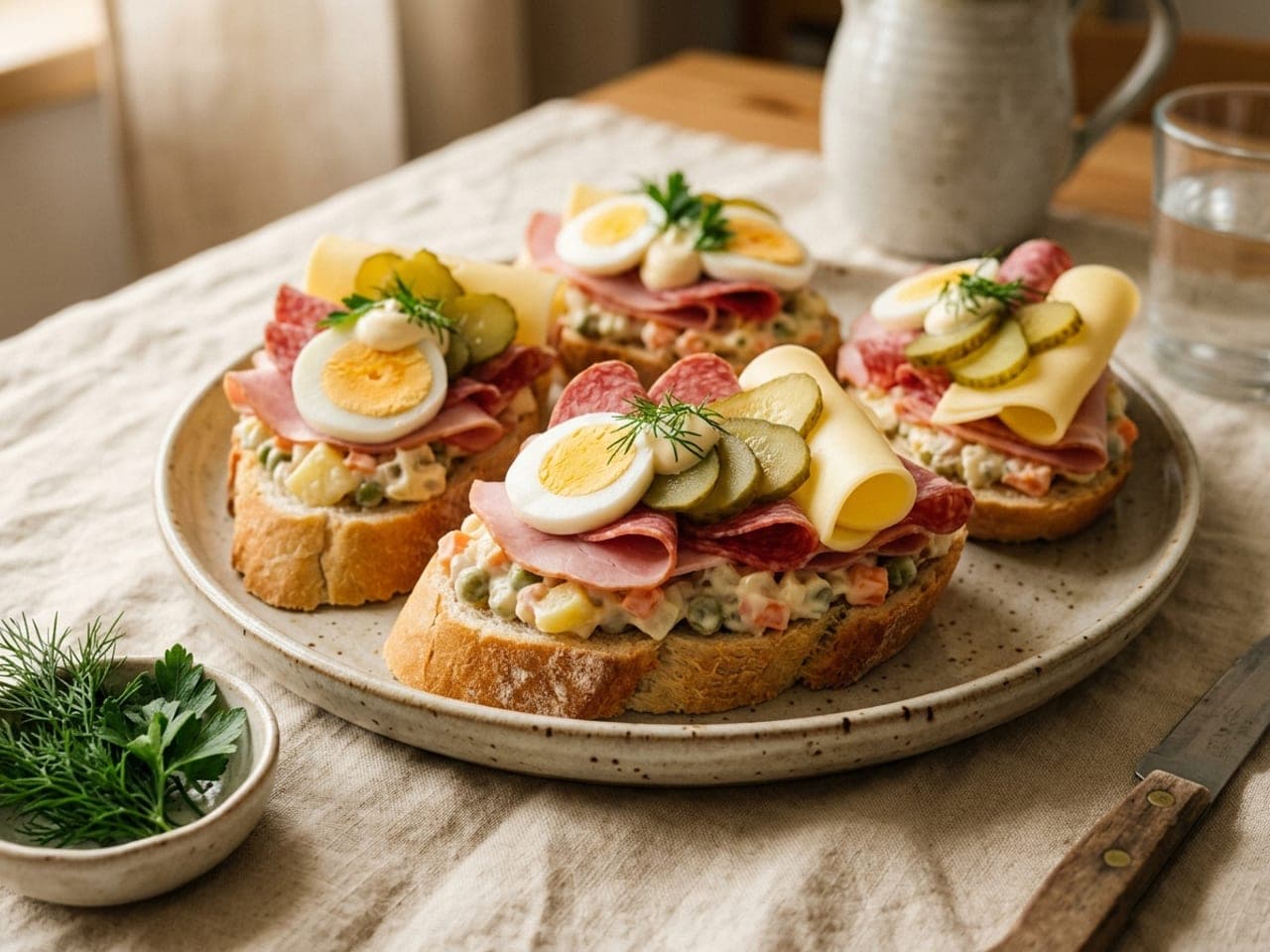
7:00 pm · Hors d'oeuvreOpen-faced sandwiches (Chlebíčky)Three to five bites each · one batch (serves 6) · Platter or tray, passed with drinks
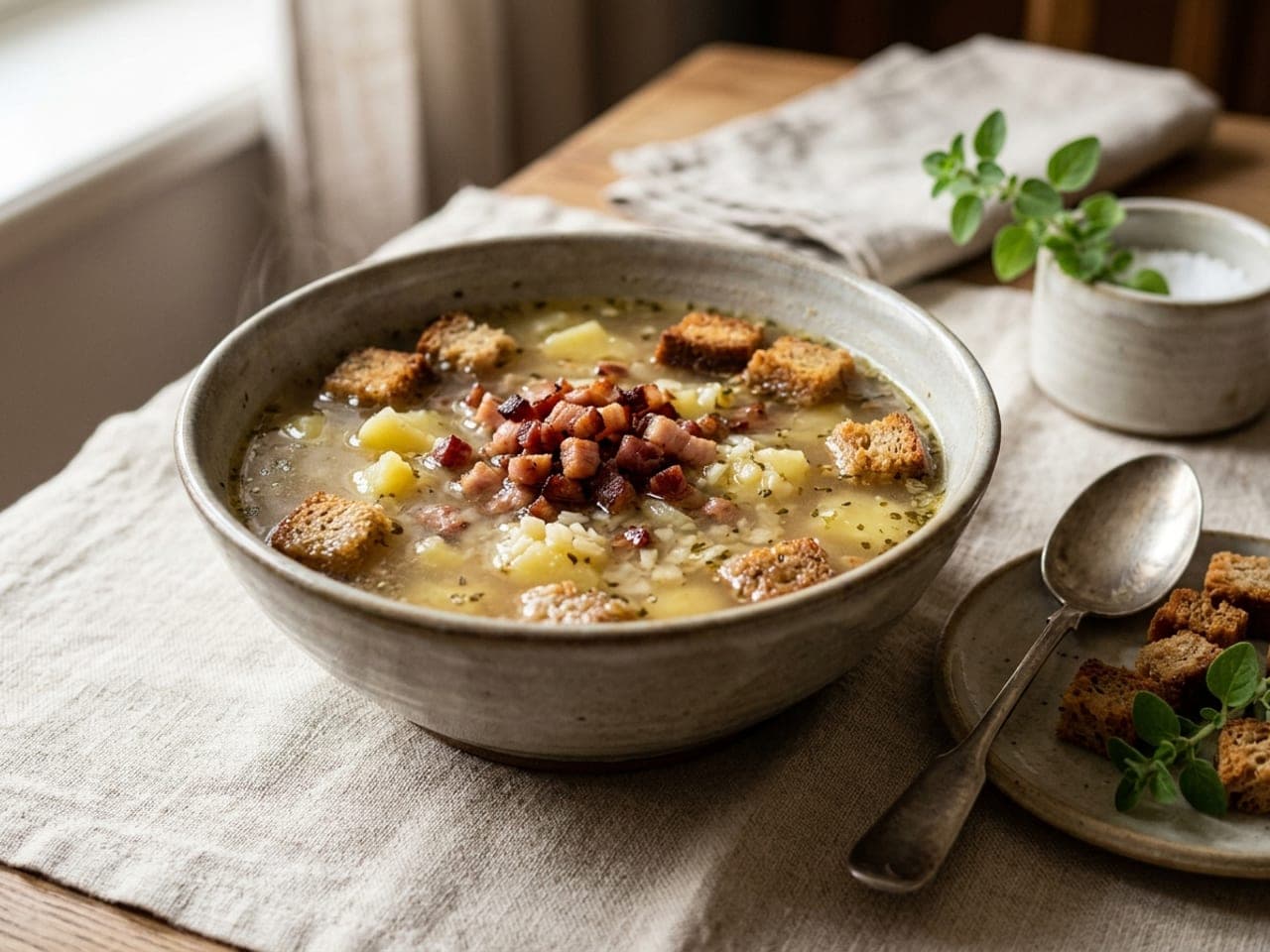
7:30 pm · AppetizerGarlic soup (Česnečka)A little under half a usual portion · one batch (serves 4) · Salad plate, 7 to 8.5 in / 18 to 22 cm
3
7:50 pm · SaladBitter leaves with pear and walnutsChicory or radicchio against something sweet.Half a usual portion · Salad plate, 7 to 8.5 in / 18 to 22 cm
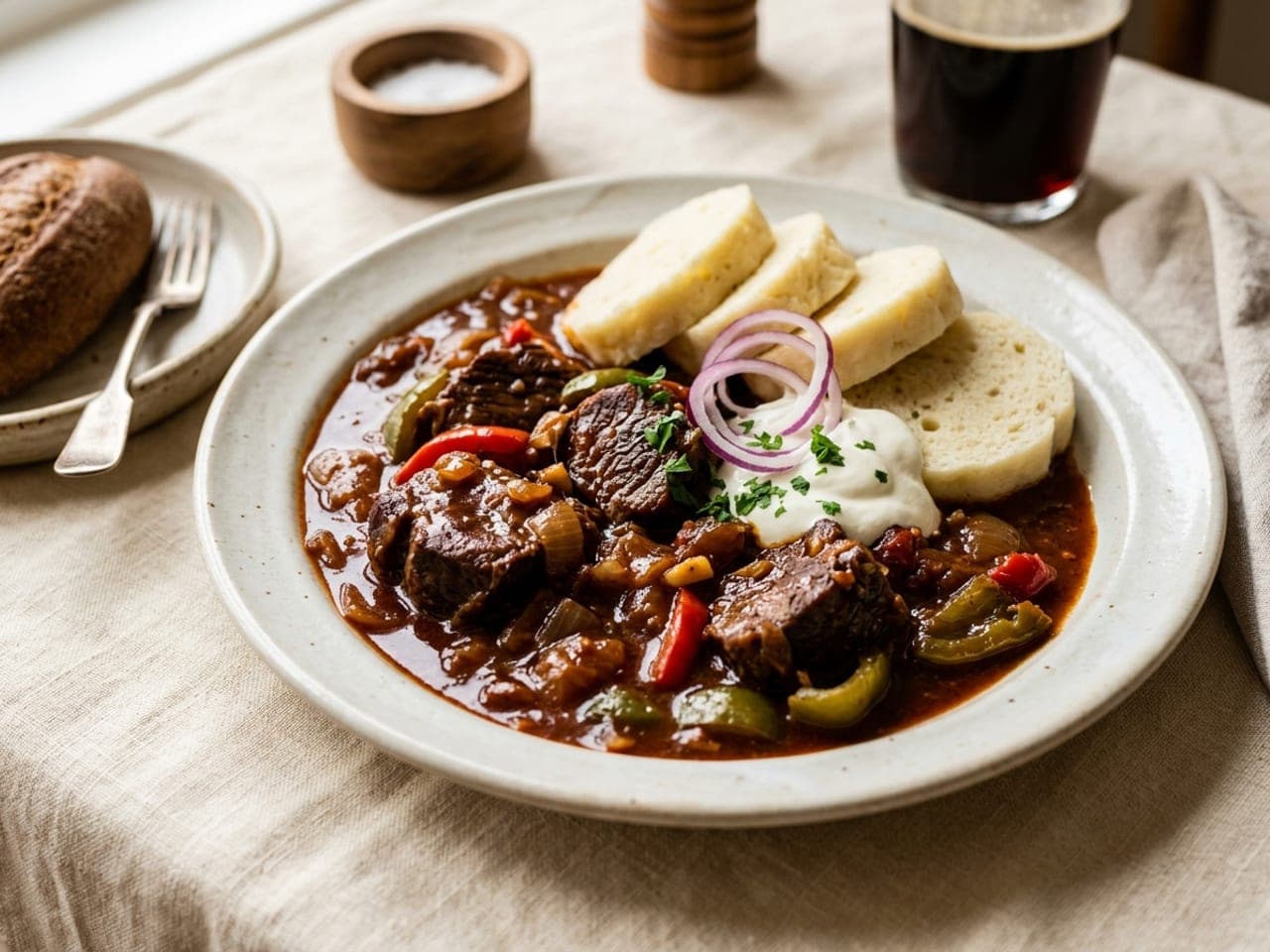
8:05 pm · Main courseBeef goulashThree quarters of a usual portion · one batch (serves 5) · Dinner plate, 10 to 12 in / 25 to 30 cm
Nothing here is cooked to order: once guests arrive, every course is made ahead, reheats or sits in the oven.
On the day
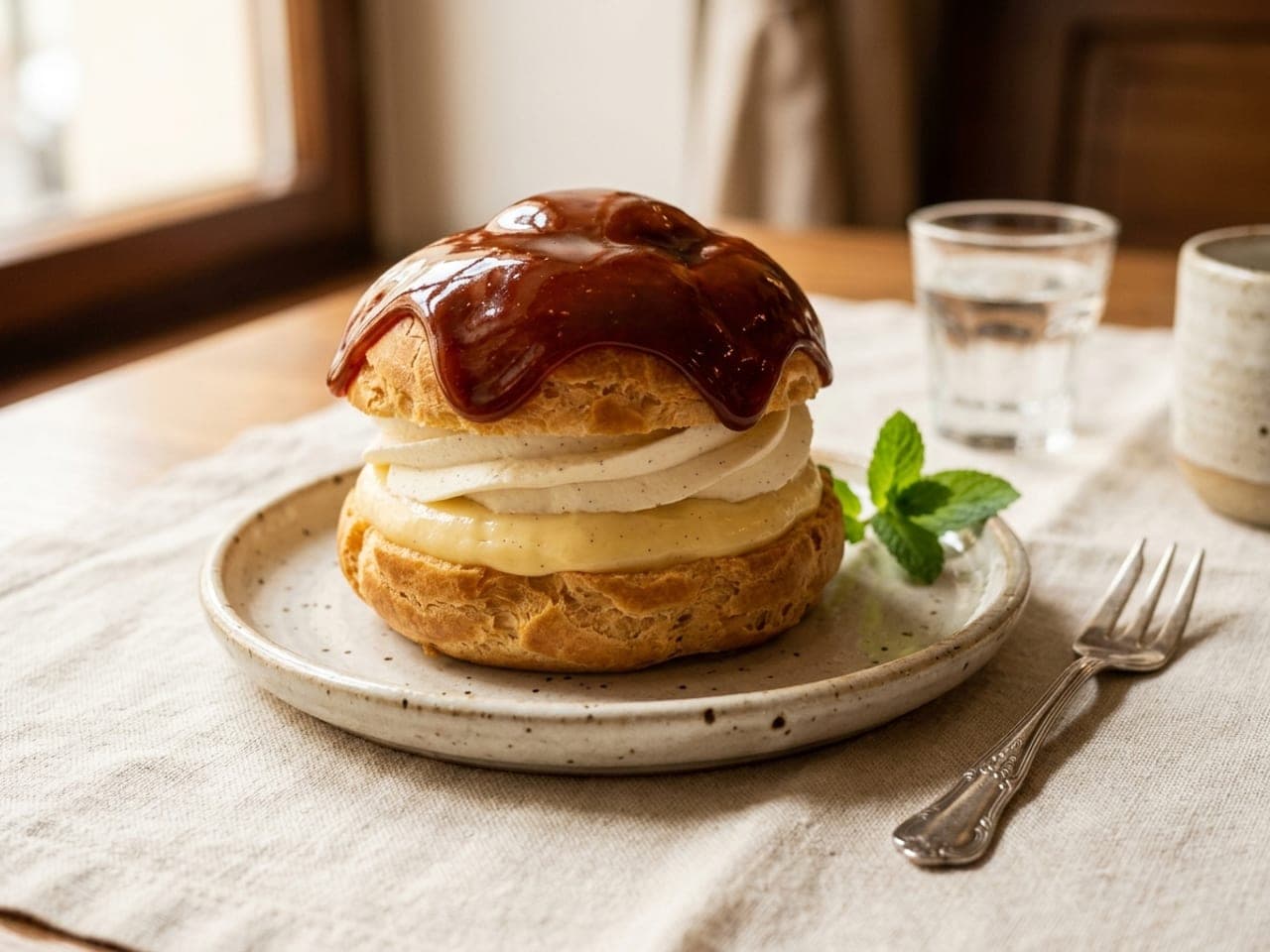
5:55 pmMake the dessert: Větrník (choux pastry cream puff)About 95 minutes. Have it done before guests sit down; serve it warm or at room temperature.
6:05 pmStart the main course: Beef goulashAbout 120 minutes from start to plate.
6:20 pmStart the hors d'oeuvre: Open-faced sandwiches (Chlebíčky)About 40 minutes from start to plate.
7:00 pmStart the appetizer: Garlic soup (Česnečka)About 30 minutes from start to plate.
7:00 pmServe the hors d'oeuvrePass it round with the drinks.
7:30 pmServe the appetizerGuests sit down.
7:40 pmSalad: Bitter leaves with pear and walnutsSlice the pear and dress the leaves at the last minute.
7:50 pmServe the saladClear the last plates first.
8:05 pmServe the main courseClear the last plates first.
8:40 pmServe the dessertClear the last plates first.
Start times count each recipe's own prep and cook minutes back from its course, and the prep for anything cooked once guests are here moves before they arrive. Which dishes wait, the pace between courses and the portion sizes are our assumptions; stretch the evening as you like.
Menu card
Menu
Hors d'oeuvreOpen-faced sandwiches (Chlebíčky)
AppetizerGarlic soup (Česnečka)
SaladBitter leaves with pear and walnuts
Main courseBeef goulash
DessertVětrník (choux pastry cream puff)
Menu ideas
Sample 3, 5, 7 and 12-course menus
Czech classics in three courses
3 courses · for 6 · about 1 hour 20 minutes at the table
Garlic soup, then svíčková, beef braised in a creamy root-vegetable sauce, then apple strudel. The beef braises on its own through the afternoon and the strudel is baked before anyone sits down.
Burrata that only needs slicing, a ragù that simmers all afternoon, and crème brûlée that sets the day before. On the night there is nothing left to cook but the pasta.
A turkey breast roasts in under an hour, so a table of six gets the season as courses: deviled eggs with drinks, pumpkin soup, a sharp salad of bitter leaves and pear, the turkey, and pecan pie baked the day before.
Nothing here is cooked to order: a board with the drinks, a tomato soup that simmers while the drinks go round, a green salad dressed at the last minute, beef roulades that braise on their own, and a crème brûlée cheesecake that chills overnight.
Olives and almonds with drinks, beet carpaccio with goat cheese, a chickpea salad, spinach risotto, and mango sticky rice. The risotto is the one dish cooked to order; everything else is ready before guests sit down.
At the stove once guests are here: main course, about 30 minutes.
Open-faced chlebíčky with drinks, dill soup with a poached egg, Hermelín cheese marinated four days ahead, a soft herb salad, roast duck, cream puffs and shortbread with the coffee. The duck roasts on its own while you are at the table.
Gougères with drinks, a mushroom tartlet, beef broth, beet carpaccio, a green salad, citrus salmon, roast duck, lemon sorbet, roast beef, three cheeses, crème brûlée and truffles. Both roasts cook on their own; the salmon is the one dish cooked to order.
At the stove once guests are here: fish course, about 18 minutes.
The ladder above, and in the builder, is the set of sample sequences printed by WebstaurantStore; the Escoffier School prints the same five courses, and a three that may open with a salad. It is a modern convention rather than an old rule, which shows in its quirks: fish only arrives at nine courses, cheese only at twelve, and the salad always comes before the main. Other named sources print other lists; our guide to the courses of a meal explains why this order, and the lists that disagree.
The etiquette books were stricter. Emily Post wrote in 1922 that a private dinner, “no matter how formal,” never ran to more than hors d'oeuvre, soup, fish, entrée, roast, salad and dessert, then coffee, and that an informal dinner left out the entrée and possibly the hors d'oeuvre or the soup. Her salad comes after the roast, and she has no cheese course and no sorbet: a dinner “interlarded with a row of extra entrées, Roman punch, and hot dessert” was, to her, for public dinners.
Salad before or after the main. After is the older and the French place. Escoffier wrote in 1907 that “simple, or raw salads always accompany hot roasts,” and Larousse Gastronomique describes the French menu as a main dish followed by salad, cheese and dessert. Before the main is the American habit, and it is the ladder's. The builder's “Salad after the main” switch moves it.
Cheese before or after dessert. In France, before: UNESCO's listing of the French gastronomic meal gives its courses as a starter, fish and/or meat with vegetables, cheese and dessert. The traditional English formal dinner ended the other way round: a savoury course came after the pudding. The twelve-course ladder follows the French.
The sorbet. Escoffier served sherbets “after the Entrées” to freshen the stomach, “preparing it to properly receive the roast.” The 10 and 12-course menus here keep that slot, between the two mains; the 8 and 9-course menus put the palate cleanser after the single main, before dessert. Larousse links it to the trou normand, once a small glass of spirit drunk in the middle of a big meal and now sometimes a fruit sorbet with a matching spirit poured over. Older books and modern menus put the sorbet course in other places too; our palate cleanser guide maps them and says what the course is for.
Entrée. The word that confuses every menu. In American English it is the main course; in British English a small dish before the main; in Larousse's classical order it came third, after the soup and the fish and before the roast. The builder says appetizer and main course instead.
Timing
How long a multi-course dinner takes
Courses
From the first drink
Courses served
3
About 1 hour 20 minutes
3 at the table
4
About 1 hour 50 minutes
3 at the table
5
About 2 hours 5 minutes
4 at the table
6
About 2 hours 25 minutes
5 at the table
7
About 2 hours 45 minutes
6 at the table
8
About 2 hours 50 minutes
7 at the table
9
About 3 hours 5 minutes
8 at the table
10
About 3 hours 10 minutes
9 at the table
12
About 3 hours 25 minutes
11 at the table
The pace is ours, and deliberately unhurried: half an hour of drinks and hors d'oeuvres, then 15 to 35 minutes a course at the table, a little quicker as the plates get smaller in long menus. It sits inside the published numbers. Food Republic allows 15 to 30 minutes between courses and about three hours for a three-course dinner party; Eleven Madison Park says its six-course tasting menu “typically lasts about two to three hours”; and Sons & Daughters told the MICHELIN Guide its 24 courses take “around three and a half to four hours.” Stretch it as you like; the cooking plan moves with the clock.
How big each course should be
The rule is the one Tasting Table gives hosts: “the more dishes you serve, the less of each you need to make.” Its numbers are a starting point: about 4 ounces (115 g) of meat or fish a person for a piece of protein, and three to five bites of food per person with drinks before dinner. An amuse-bouche is “usually only one-to-two bites,” as the former Eleven Madison Park chef Connie Chung told Vice, and a palate cleanser the same, one or two bites of something light.
The builder turns that into fractions of each recipe's own serving, our assumption: a full main in a three or four-course meal, three quarters of one from five courses and half from nine, half a portion of soup or salad, a little under half for a plated appetizer, and smaller desserts as the menu grows. It then tells you how many times to make each recipe for your guest count, and from seven courses it moves the main from the dinner plate to the smaller luncheon plate, so half a portion does not look lost.
Where the dishes come from
Every cooked course is a full recipe from the Plate Artists catalog, with ingredients in US and metric units, a step-by-step method and plating ideas. The main is dealt first, to the cuisine you pick; the other courses try to match it and say so when they borrow from another kitchen, because the catalog is strongest on Czech and Central European food and thinner on plated starters. Vegetarian is a hard rule: in a vegetarian menu the fish course becomes a vegetable course. The courses nobody cooks from a recipe card, like the palate cleanser, the cheese and the mignardises, get a named idea with what to do ahead, and the amuse-bouche comes from our twelve amuse-bouche ideas. The builder deals three cleansers; there are more in our palate cleanser ideas.
The cooking plan works back from each course, and it knows which dishes wait. Soups and braises are made before guests arrive and reheated, roasts sit in the oven, and cold starters and baked desserts are ready before anyone sits down. Anything fried, seared, grilled or stirred to order, like pasta or risotto, needs you at the stove just before its course: the plan moves its chopping and measuring to before the doorbell rings and tells you how long you will be away from the table. Anything that chills for two hours or more goes on the day before, and a four-day marinade starts four days ahead.
Tick Make-ahead menu and the builder deals dishes that wait wherever the catalog has one, and swaps out any course cooked to order. Or build around a dish you already have in mind: Choose picks any dish that fits a course, Keep holds it while you deal the rest, and a kept soup or salad moves to its own course when you add courses.
Snap a course you cooked and the AI re-plates it the way a fine-dining kitchen would send it, with the steps that explain what changed. The first one is free.
Free account · 1 free enhancement · No credit card
FAQ
Course meals, answered
What is a 3-course meal?
An appetizer, a main course and a dessert. The appetizer can be a soup, a salad or a small plated starter. It is the classic home dinner party and the usual restaurant set menu, and at our pace it takes about 1 hour 20 minutes at the table.
What are the courses of a 5-course meal?
In the order of WebstaurantStore's sample sequences, which the builder follows: hors d'oeuvre, appetizer, salad, main course and dessert. The hors d'oeuvres go round with drinks, so three of the courses are before the main. There is no soup course in that ladder, so the builder may deal a soup as the appetizer. American menus put the salad before the main; in France it comes after it, before the cheese and dessert. Tick "Salad after the main" in the builder to switch.
What is a 7-course meal?
Hors d'oeuvre, soup, appetizer, salad, main course, dessert and mignardises. The hors d'oeuvres are passed with drinks before anyone sits down and the mignardises, tiny sweets, come with the coffee. At our pace that is about 2 hours 45 minutes from the first drink. Emily Post's formal 7 courses in 1922 were different: hors d'oeuvre, soup, fish, entrée, roast, salad and dessert.
What courses are in a 12-course meal?
Hors d'oeuvre, amuse-bouche, soup, appetizer, salad, fish course, main course, palate cleanser, second main, cheese, dessert and mignardises. The first main is usually white meat, such as chicken or duck, and the second red meat, such as beef or lamb, with the sorbet between them as a pause. At our pace, with small portions, it takes about 3 hours 25 minutes.
What is the difference between a course meal and a tasting menu?
A course meal follows a set order, one kind of dish per course. A tasting menu is a chef's run of many small dishes in the kitchen's own order, so the guest can taste the cooking at its best; at the top end they run three or four hours and 20 courses or more. The builder's 9, 10 and 12-course menus are the classic structure at tasting-menu length, with every portion cut down to suit.
How much food do I need for a multi-course meal?
Less of each course than you would serve on its own: the more dishes you serve, the less of each you need. The builder serves a full main in a 3 or 4-course meal, three quarters of one from 5 courses and half of one from 9, under half a usual portion for a starter, and three to five bites of hors d'oeuvres with drinks. It tells you how many times to make each recipe for your guest count.
How do I host a multi-course dinner without being stuck in the kitchen?
Serve dishes that wait for you. Soups and braises can be made before guests arrive and reheated, a roast cooks on its own in the oven, and cold starters, salads and most desserts are ready before anyone sits down. What keeps a host at the stove is anything fried, seared, grilled or stirred to order, like pasta or risotto, so have at most one of those, and do its chopping and measuring before the doorbell rings. Tick Make-ahead menu in the builder and it deals dishes that wait wherever it can, and its cooking plan says how long you will be away from the table.
What does entrée mean on a menu?
In the United States the entrée is the main course. In British English, and at formal meals in France, it is a small dish served before the main. In the classical French order it came third, after the hors d'oeuvre or soup and the fish, and before the roast. The builder avoids the word and says appetizer and main course.