Courses of a meal in order: 3 to 12 courses, the 17-course menu, and who says so
The order of courses for a three, five, seven or twelve-course meal, with the name of the source beside every list, the lists that disagree with it, and what is known about why the order is what it is.
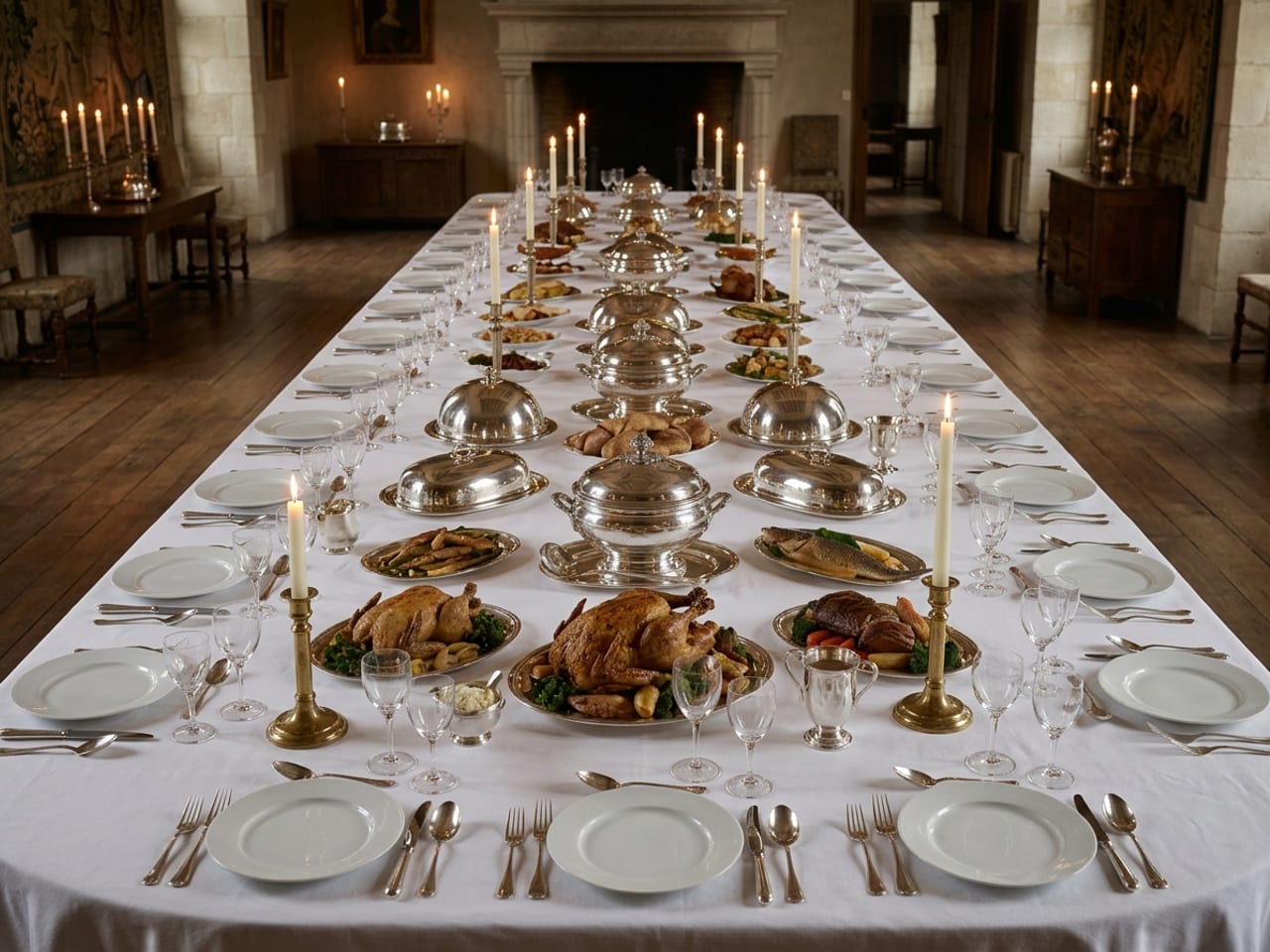
The photos on this page are AI-generated illustrations.
The order of courses in a meal, from 3 to 12
A three-course meal is appetizer, main course and dessert. Five courses are hors d'oeuvre, appetizer, salad, main course and dessert. Seven are hors d'oeuvre, soup, appetizer, salad, main course, dessert and mignardises. Twelve run hors d'oeuvre, amuse-bouche, soup, appetizer, salad, fish course, main course, palate cleanser, second main, cheese, dessert and mignardises. That is one published version, the "sample full course meal sequences" of the restaurant-supply site WebstaurantStore, and the one our course meal builder uses; the Auguste Escoffier School of Culinary Arts prints the same five.1, 2 It is a modern convention, not a rule: WebstaurantStore itself adds "you can choose which meal courses you plan to include on your menu", and the five named sevens we could verify all differ.1
| Courses | The order, first to last | New at this count | Plan one |
|---|---|---|---|
| 3 | Appetizer, main course and dessert | Appetizer, Main course, Dessert | Build 3 courses |
| 4 | Hors d'oeuvre, appetizer, main course and dessert | Hors d'oeuvre | Build 4 courses |
| 5 | Hors d'oeuvre, appetizer, salad, main course and dessert | Salad | Build 5 courses |
| 6 | Hors d'oeuvre, soup, appetizer, salad, main course and dessert | Soup | Build 6 courses |
| 7 | Hors d'oeuvre, soup, appetizer, salad, main course, dessert and mignardises | Mignardises | Build 7 courses |
| 8 | Hors d'oeuvre, soup, appetizer, salad, main course, palate cleanser, dessert and mignardises | Palate cleanser | Build 8 courses |
| 9 | Hors d'oeuvre, soup, appetizer, salad, fish course, main course, palate cleanser, dessert and mignardises | Fish course | Build 9 courses |
| 10 | Hors d'oeuvre, soup, appetizer, salad, fish course, main course, palate cleanser, second main, dessert and mignardises | Second main | Build 10 courses |
| 12 | Hors d'oeuvre, amuse-bouche, soup, appetizer, salad, fish course, main course, palate cleanser, second main, cheese, dessert and mignardises | Amuse-bouche, Cheese | Build 12 courses |
The table is drawn from the builder's own data, which follows WebstaurantStore's page row for row; the page prints no eleven-course row.1 Its quirks are worth knowing before you copy it (our reading of the rows): the soup first appears at 6 courses, the seventh course is the mignardises, the fish arrives only at 9, the amuse-bouche and the cheese only at 12, and the salad comes before the main in every row that has one. Course one, from four courses up, is not eaten at the table: it is "typically served during cocktail hour or as guests arrive".1
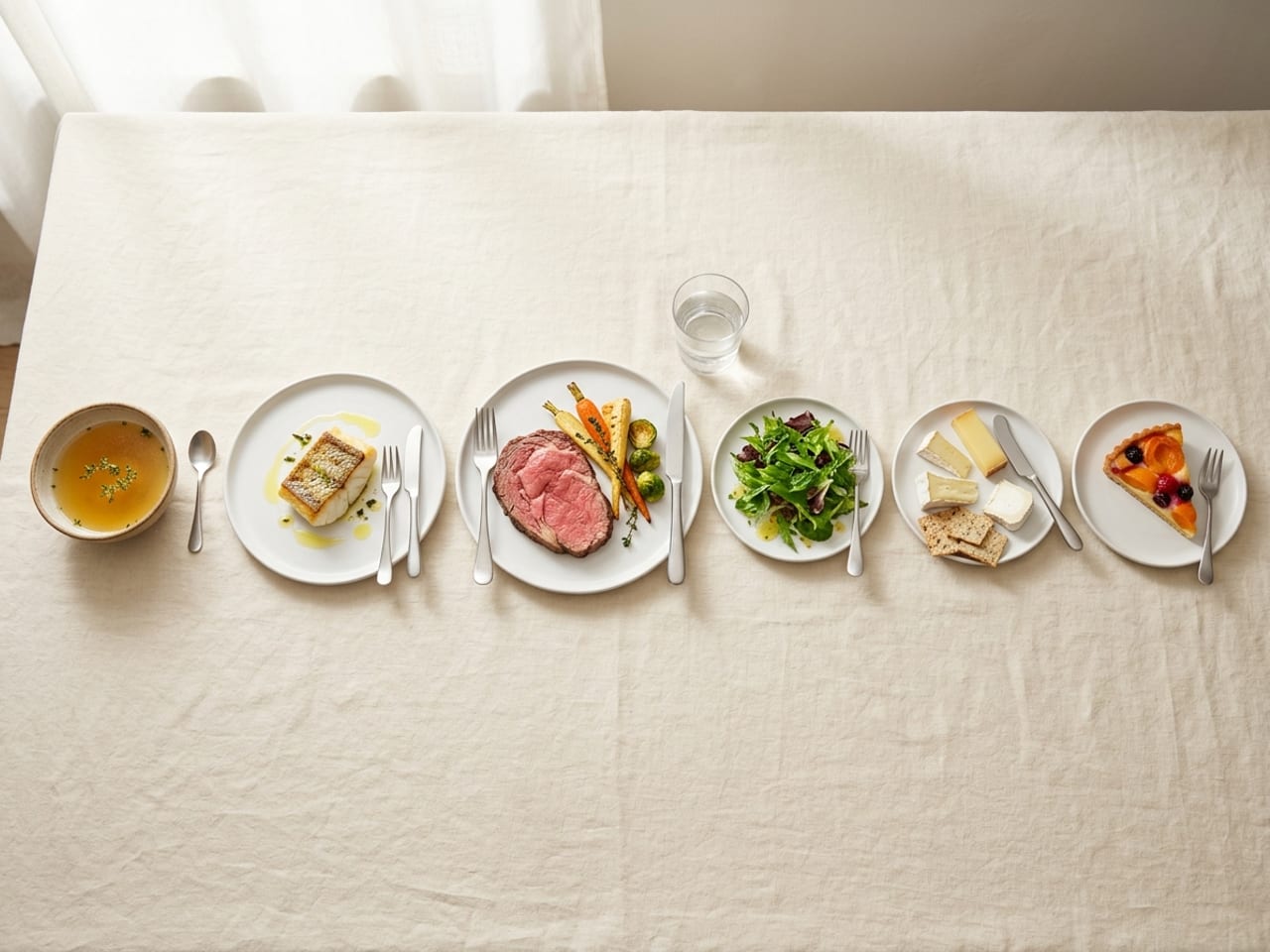
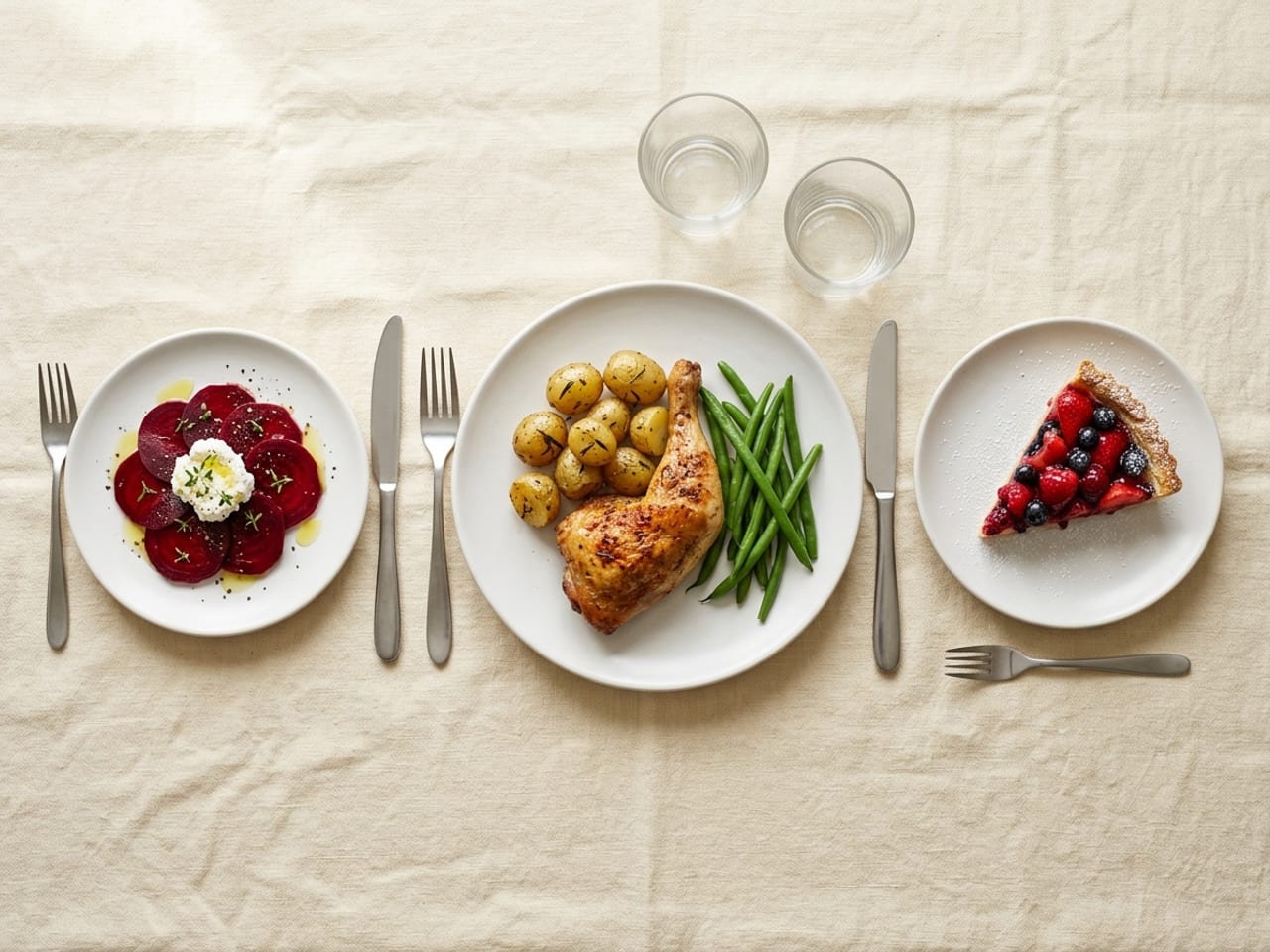
What a 3, 5, 7 or 12-course meal is, one count at a time
Each block gives the ladder's order, what that count is used for and by whom, and a link that opens the builder at that count. The times are the builder's, and its pace is our own model.
3-course meal
The order: appetizer, main course and dessert.1 One American culinary textbook calls three courses the typical North American meal: "The first course may be a hot or cold appetizer, soup or salad. The second course is the entrée or main dish".25 The Escoffier School's three is "an appetizer or salad, a main dish, and a dessert", so its first course may be a salad.2 A state banquet at Windsor Castle in December 2025 served three courses, then coffee and petits fours.61
On our pace: about 1 hour 20 minutes at the table. Build a 3-course menu with a dish for every course, plates and a cooking plan.
4-course meal
The order: hors d'oeuvre, appetizer, main course and dessert.1 On this ladder a four-course meal is the three-course meal with hors d'oeuvres first, a course it says is "typically served during cocktail hour or as guests arrive". 1 Other fours are different meals. UNESCO's French gastronomic meal has "at least four successive courses, namely a starter, fish and/or meat with vegetables, cheese and dessert",26 and the White House state dinner for the British Prime Minister in March 2012 ran first course, salad, main course, dessert.60
On our pace: about 1 hour 20 minutes at the table after 30 minutes of drinks. Build a 4-course menu with a dish for every course, plates and a cooking plan.
5-course meal
The order: hors d'oeuvre, appetizer, salad, main course and dessert.1 The salad joins. The Escoffier School prints the same five ("hors d'oeuvres, an appetizer, a salad, an entrée, and a dessert"), says "three or five courses are good options for home cooks" and adds that there is "some debate on the components of a five-course meal".2 Fannie Farmer's five-course home dinner, in the 1910 printing of her cookbook, was a different five: soup; meat or fish with potatoes and two other vegetables; a vegetable salad; dessert; then crackers, cheese and black coffee.8
On our pace: about 1 hour 35 minutes at the table after 30 minutes of drinks. Build a 5-course menu with a dish for every course, plates and a cooking plan.
6-course meal
The order: hors d'oeuvre, soup, appetizer, salad, main course and dessert.1 The soup joins, ahead of the plated appetizer. The Emily Post Institute's formal place setting today is laid for a different six: shellfish, soup or fruit, fish, entrée, salad, then dessert; the page says such a setting "is used at home for a meal of more than three courses".3 Eleven Madison Park in New York describes its full tasting menu as "a six course experience".73
On our pace: about 1 hour 55 minutes at the table after 30 minutes of drinks. Build a 6-course menu with a dish for every course, plates and a cooking plan.
7-course meal
The order: hors d'oeuvre, soup, appetizer, salad, main course, dessert and mignardises.1 The seventh course on this ladder is the mignardises, the small sweets with coffee, and not a fish or a cheese course.1 Emily Post's seven of 1922 is a different meal, and so is every other named seven we found: they are set side by side below.5
On our pace: about 2 hours 15 minutes at the table after 30 minutes of drinks. Build a 7-course menu with a dish for every course, plates and a cooking plan.
8-course meal
The order: hors d'oeuvre, soup, appetizer, salad, main course, palate cleanser, dessert and mignardises.1 The palate cleanser joins, after the main course and before dessert.1 For eight, nine and ten courses the only other named lists we found are columns of Charles Ranhofer's card of 1894, which prints one for every dinner from six courses to fourteen.6
On our pace: about 2 hours 20 minutes at the table after 30 minutes of drinks. Build an 8-course menu with a dish for every course, plates and a cooking plan.
9-course meal
The order: hors d'oeuvre, soup, appetizer, salad, fish course, main course, palate cleanser, dessert and mignardises.1 The fish course joins, between the salad and the main.1 Per Se in New York offers "a nine-course chef's tasting menu",71 and when New York magazine weighed one in 2007 its nine were not these nine: see what counts as a course.72
On our pace: about 2 hours 35 minutes at the table after 30 minutes of drinks. Build a 9-course menu with a dish for every course, plates and a cooking plan.
10-course meal
The order: hors d'oeuvre, soup, appetizer, salad, fish course, main course, palate cleanser, second main, dessert and mignardises.1 A second main course joins, with the palate cleanser between the two mains. The page's course notes say the first main "is often white meat, such as chicken, duck, or turkey" and the second "is red meat" or game.1
On our pace: about 2 hours 40 minutes at the table after 30 minutes of drinks. Build a 10-course menu with a dish for every course, plates and a cooking plan.
12-course meal
The order: hors d'oeuvre, amuse-bouche, soup, appetizer, salad, fish course, main course, palate cleanser, second main, cheese, dessert and mignardises.1 The amuse-bouche and the cheese course join.1 Three other twelves are in print and none matches: the banquet menu that Gisslen's textbook calls "The Classical Menu", Fannie Farmer's "A Full Course Dinner", and the twelve-line column of Ranhofer's card.6, 8, 24 The ladder skips eleven. The one eleven-course list we found is Ranhofer's: oysters, two soups, side dishes hot and cold, fish, a remove, two entrées, a punch, a roast with salad, a hot dessert, then an ice with dessert.6
On our pace: about 2 hours 55 minutes at the table after 30 minutes of drinks. Build a 12-course menu with a dish for every course, plates and a cooking plan.
How this page was made. Every list, date and quotation here comes from the published source named beside it: etiquette books, cookbooks and menus from 1393 to 1922 read in digitized copies, catering and culinary textbooks, dictionaries, UNESCO, peer-reviewed papers (most of them read as abstracts only; each reference says which) and food-safety agencies. Plate Artists cooked, timed and tasted nothing for it. The textbooks (Lillicrap and Cousins, Kinton and Ceserani, Cracknell, Fuller, the Culinary Institute of America, Gisslen, Labensky and Hause) were read only as short search fragments of Internet Archive scans, without page images, so their quotations are brief and some break off. Several older books reached us only through Wikipedia or another writer, and the sentence says so where it happens. Escoffier is quoted from two books only, the 1907 English edition of his guide and Le Livre des menus of 1912; translations from French, Italian and Latin are ours. Where sources disagree we set them side by side. Anything marked "ours" is our own reading, count or arithmetic. Sources are at the bottom.
There is no official list
Ask for "the seven courses" and the answer depends on whom you ask. These are the five seven-course lists from named sources that we could verify, and no two are the same meal.
| Who, and when | The seven | Salad | Fish | Sorbet | Cheese |
|---|---|---|---|---|---|
| WebstaurantStore, "Full Course Meals Explained", updated January 2026 (US) | Hors d'oeuvre, soup, appetizer, salad, main course, dessert and mignardises.1 Counts the mignardise as the seventh course; the hors d'oeuvre is served as guests arrive. | Before the main | None | None | None |
| Emily Post, Etiquette, 1922 (US) | "1. Hors d'oeuvre 2. Soup 3. Fish 4. Entrée 5. Roast 6. Salad 7. Dessert 8. Coffee".5 Her list has eight numbered lines and the eighth is coffee, which she says is "never served at a fashionable dinner table". It is her maximum, not her rule. | After the roast | Third | Left out | No cheese course |
| Restaurant India, "What Is a 7 Course Menu?", August 2026 (India) | Amuse-bouche, appetizer or starter, soup or warm intermediate course, fish or seafood, palate cleanser, main course, dessert.12 Counts the amuse-bouche; calls its list "a representative structure, not a universal rule". | None | Fourth | Before the main | Optional, before dessert |
| Alonzo Fields, My 21 Years in the White House, as Wikipedia quotes it, 1960 (US) | "An entrée" (a cold hors d'oeuvre to start the meal, in Wikipedia's gloss), "soup, fish, a meat course, salad, dessert, and a serving of fruit."9 Here "entrée" opens the meal, in an American book. We did not open Fields's book. | After the meat | Third | None | None |
| Charles Ranhofer, The Epicurean, page 4, the seven-line column, 1894 (US) | Oysters, one soup, fish with potatoes, one entrée with vegetables, a punch, a roast with salad, then an ice with dessert.6 One column of a card that prints a dinner of every length from six courses to fourteen, at ten minutes a course. | With the roast | Third | Punch, before the roast | None |
Emily Post's list is one of two that Wikipedia cites for seven courses (the other is Fields's), and it is a ceiling: "Under no circumstances would a private dinner, no matter how formal, consist of more than" those lines. An informal dinner, she goes on, "would leave out the entrée, and possibly either the hors d'oeuvre or the soup."5, 9 For eight, nine, ten and eleven courses we found two named sources that print a list, WebstaurantStore (which skips eleven) and Ranhofer's card of 1894, whose nine columns run from fourteen courses down to six; for twelve, four that differ (our finding, from the sources cited on this page).6
What today's search results print. This is our own count, made on 6 October 2026. We ran ten searches of this kind ("order of courses in a meal", "7 course meal order" and the like) on Brave Search and DuckDuckGo and opened the pages, a few of them as Internet Archive captures; two of the pages we opened came only from a third search tool, one that does not disclose its engine. Bing returned nothing we could read, and Google was read only through its autocomplete suggestions. From the opened pages we collected twenty lists of about seven courses (one runs to eight headings and one to nine lines): nineteen different orders. The salad comes before the main course in eight of the twenty and after it in ten; thirteen have a fish course; nine have cheese; a sweet dessert is the only course in all twenty. Of the 23 pages opened for the five most general searches, twelve print such a list, and one of the twelve cites a published source for it: Wikipedia, citing Emily Post.
Shorter and longer lists, each with its source
One row per named source. The seventeen-course sequence has a section of its own.
| Courses | Who prints it, and when | The order | Note |
|---|---|---|---|
| 3 and 5 | Cracknell, Practical Professional Catering, 1983 (UK) | Three: a first course chosen from hors d'oeuvre, soup and fish; a main dish; then sweet dishes, savouries "and perhaps Cheeses". Five: hors d'oeuvre or soup, fish, entrée, relevé, then sweet or savoury.19 | The three is "excluding coffee". Read as search fragments. |
| At least 4 | UNESCO, "Gastronomic meal of the French", 2010 (France) | A starter, fish and/or meat with vegetables, cheese, dessert, between an apéritif and liqueurs.26 | The drinks frame the meal and are outside the count. More under the French order. |
| 5 lines | Italian Cooking For Dummies cheat sheet, read in a 2019 capture (US) | Antipasto, primo, secondo, contorno, dolce.30 | The contorno is served with the secondo. More under the Italian order. |
| 6 | The Emily Post Institute, "The Formal Place Setting", read October 2026 (US) | "Appetizer: Shellfish", "First Course: Soup or fruit", "Fish Course", "Entrée", "Salad", then dessert.3 | Salad after the entrée, though the page allows it first as well. No cheese, no sorbet. |
| Unnumbered | Escoffier, with Gilbert and Fétu, Le Livre des menus, 1912 (France) | Hors-d'oeuvre and soups as "apéritifs"; then the relevés or, failing them, the fish; the entrées; sorbets; hot roasts with a salad; sometimes a cold roast; a vegetable; an entremets; an ice with petits fours; fruit.46 | Prose, with no numbers; the relevé and the cold roast are optional. Set out step by step under what Escoffier really wrote. |
| 12 | Fannie Farmer, The Boston Cooking-School Cook Book, "A Full Course Dinner", 1910 printing (US) | Clams or oysters; clear soup; bouchées or rissoles; fish; a roast of venison, mutton, lamb or beef with potatoes and a vegetable; an entrée "of light meat or fish"; a vegetable; "punch or cheese course"; game with a salad; dessert, "usually cold"; frozen dessert and fancy cakes; "cracker, cheese, and café noir".8 | She shrinks it at once: for a simpler dinner the third, seventh, eighth and tenth courses "may be omitted". |
| 12 | Gisslen, Professional Cooking, "The Classical Menu", 7th edition (US) | "1. Cold hors d'oeuvres", "2. Soup", "3. Hot hors d'oeuvres", "4. Fish"; then a main course "or pièce de resistance", a hot entrée, a cold entrée, a sorbet and a vegetable; and at the end "11. Sweet" and "12. Dessert", which is "fruit and cheese and, sometimes, small cookies or petits fours".24 | A menu "that may have been served at a great banquet early in the twentieth century". Read as search fragments; the scan does not show the numbers of the middle items, so we give no order for them, and one of the twelve lines was not captured at all. |
| 13 | Lillicrap, Food and Beverage Service, first edition, 1971 (UK) | Hors d'oeuvre, soup, fish, entrée, relevé, sorbet, roast, vegetable, sweet, savoury, cheese, dessert (fresh fruit and nuts), café.13 | The book says it is "very rarely served". Coffee is numbered thirteen. Read as search fragments. |
| 13 | Kinton and Ceserani, The Theory of Catering, 1973 printing (UK) | Hors d'oeuvre, soup, fish, entrée, relevé, sorbet, roast, cold dish, hot dish, sweet, savoury, cheese, dessert.18 | A different thirteen, with the coffee after it and unnumbered. Read as search fragments. |
| 14 | Charles Ranhofer, The Epicurean, 1894 (US) | Oysters; two soups; "S. D. hot and cold" (his heading elsewhere reads "Hors-d'oeuvre, side or light dishes"); two fish; a remove; three entrées; a punch; one or two roasts; one or two cold dishes with salad; a hot sweet; cold sweets; ices and dessert.6 | Remove before the entrées, punch before the roast, salad after it, no cheese line. The card's eight shorter columns run down to six courses; its seven is in the table above. |
| 16 lines | Mary F. Henderson, Practical Cooking and Dinner Giving, 1877 (US) | Raw oysters; soup; cold hors-d'oeuvres; fish; hot hors-d'oeuvres; relevés; Roman punch; entrées; dressed vegetables; game; salad; cheese; sweet entremets; ices; dessert of fruit and nuts; coffee.7 | A pick-list, in her own words: "Bills of fare can be easily made by selecting more or less dishes, and serving them in the order indicated in the table." |
Each course: what it is, who counts it, how much, on what plate
In the order of the ladder's longest menu. A portion is given only where a named source prints a figure; the plates and their sizes are the builder's, from our types of plates guide.
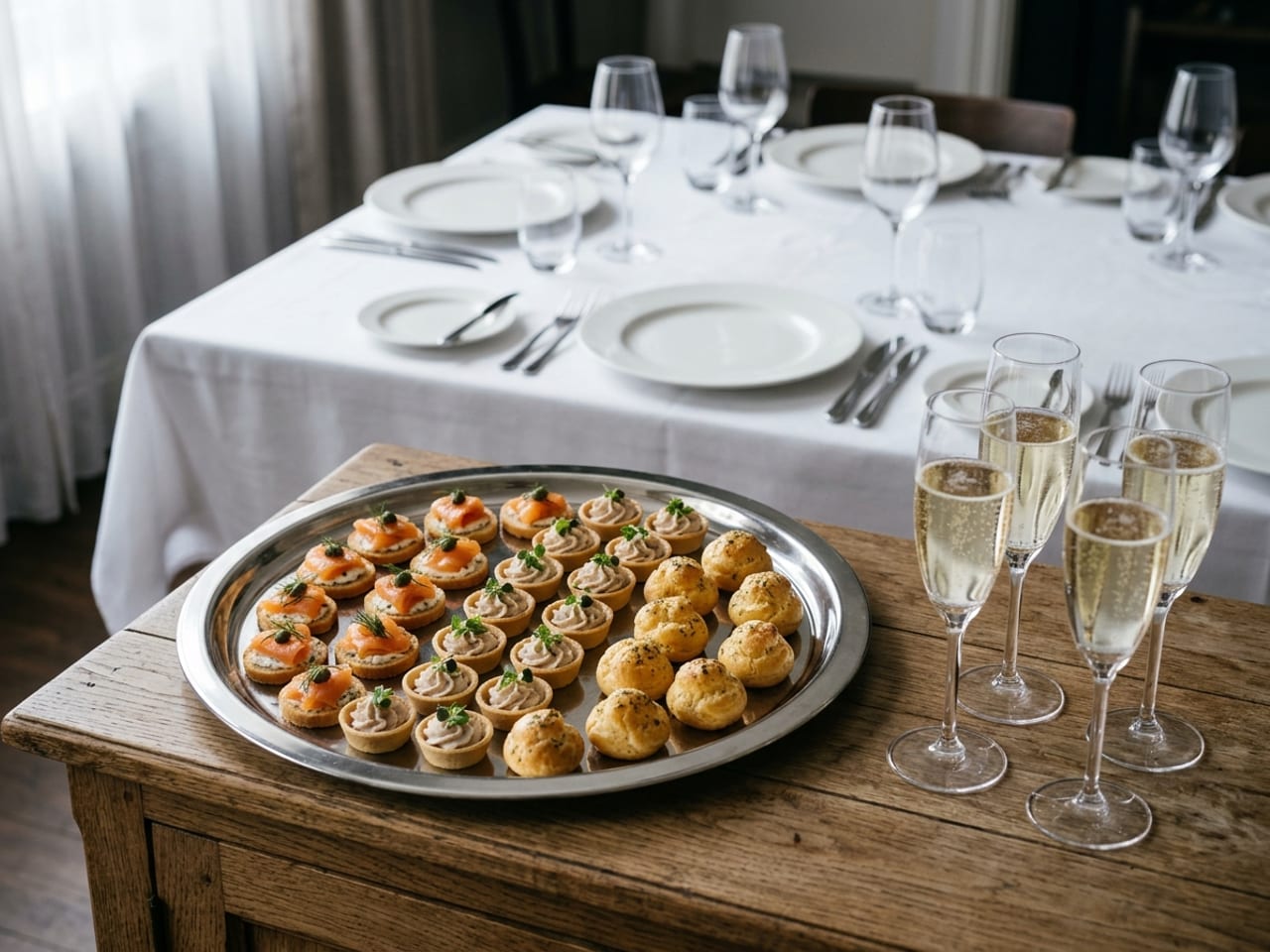
Hors d'oeuvre
Merriam-Webster: "any of various savory foods usually served as appetizers", from the French for "outside of the work".37 The word means two things. Cambridge gives a British sense, "a small savoury (= not sweet) dish eaten at the start of a meal", and an American one, "small pieces of food eaten at a party".39
Who counts it. WebstaurantStore counts it as course one although it is "typically served during cocktail hour or as guests arrive".1 In the older lists it is a seated first course: Emily Post's "1. Hors d'oeuvre", the British textbooks' course one.5, 17 Escoffier wanted no cold ones at dinner, caviare and fine oysters excepted: see what he rejected.47
Portion. One culinary textbook: for a "one-hour cocktail reception before a dinner, three to five hors d'oeuvre per person is usually sufficient".25 The Culinary Institute of America: "Small enough to eat in one or two bites."23
Plate. Platter or tray, passed with drinks. On the ladder from 4 courses. How it differs from a canapé, an appetizer and an amuse-bouche is in our amuse-bouche guide.
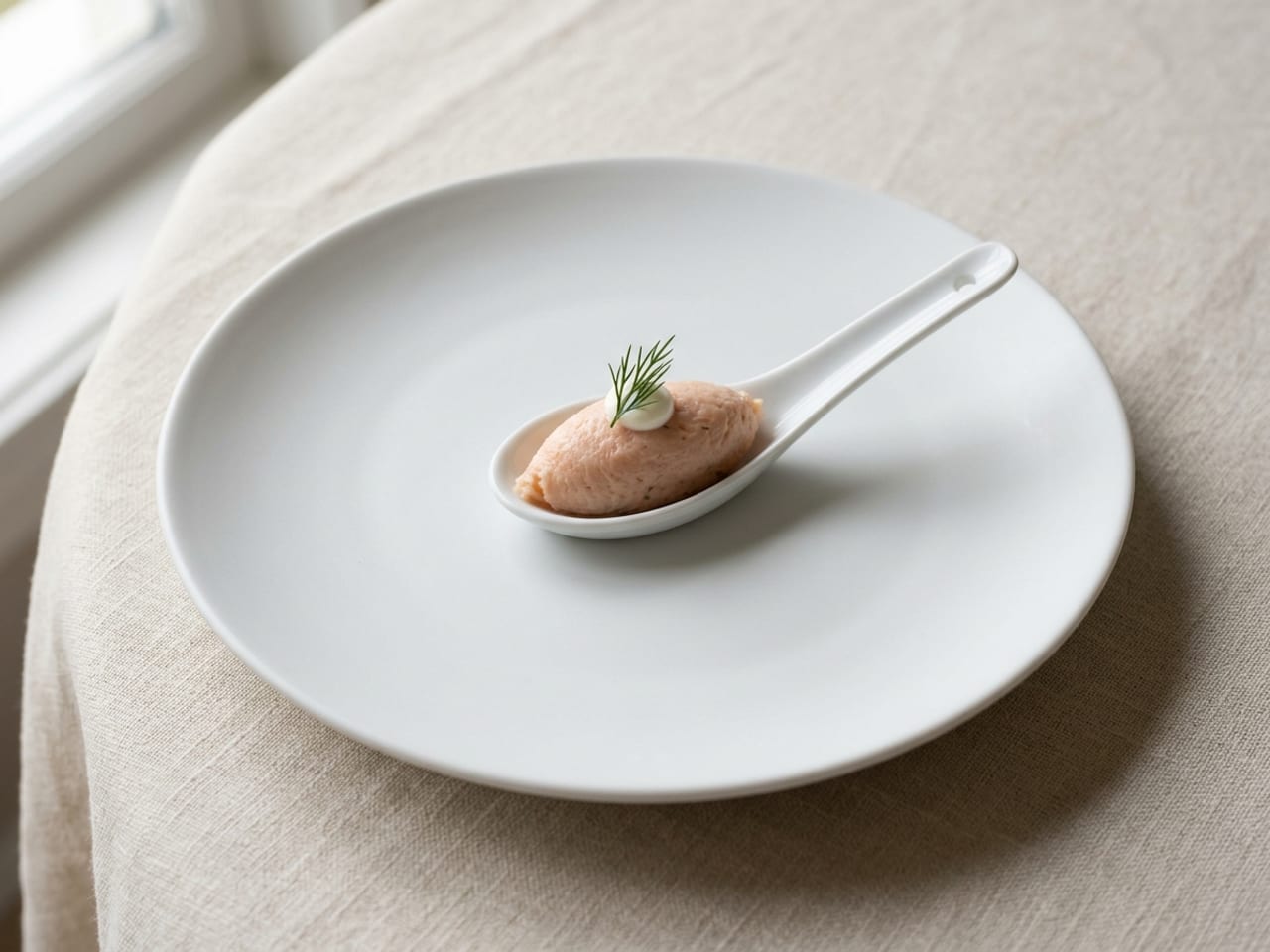
Amuse-bouche
Merriam-Webster: "a small complimentary appetizer offered at some restaurants", first known use 1959.37 Cambridge: "a small dish served before a meal or between the courses (= parts served separately) of a meal".39
Who counts it. Both definitions put it outside the courses. Two modern lists count it anyway: WebstaurantStore's twelve, where it is course two, and Restaurant India's seven, where it is course one.1, 12
Portion. At Per Se's nine-course lunch in 2007, where New York magazine listed it as an extra, the amuse-bouche, a salmon cornet, weighed ".48 ounces", about 14 g (the conversion is ours).72
Plate. Appetiser plate or tasting spoon, 4 to 7 in / 10 to 18 cm. On the ladder from 12 courses. Twelve ideas, vessels and the make-ahead plan are in the amuse-bouche guide.
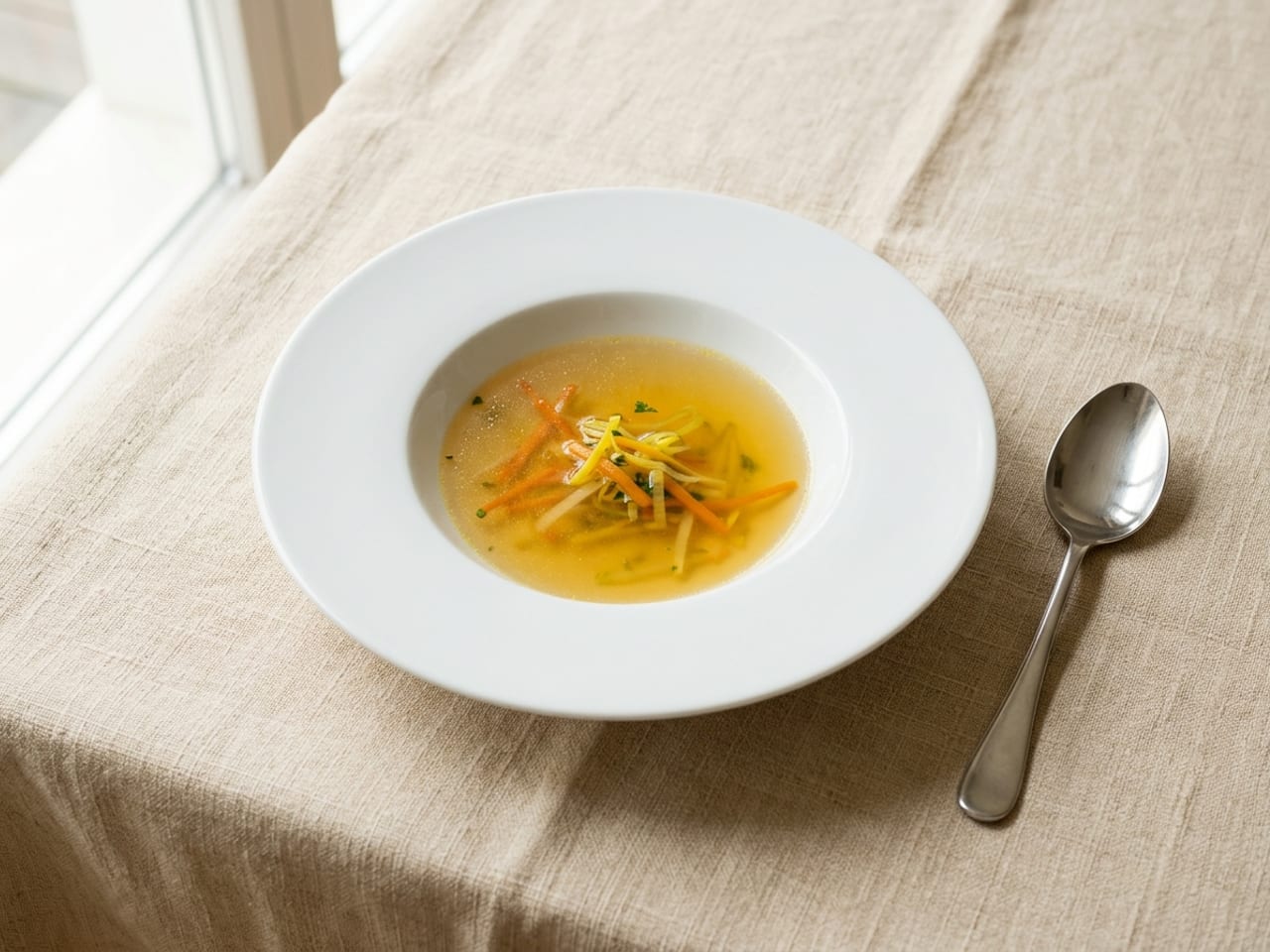
Soup
In French, "le potage" also names the moment: the Trésor de la langue française glosses it as the "début du dîner", the start of dinner.28 A Victorian etiquette manual: "All well-ordered dinners begin with soup, whether in summer or winter."50
Who counts it. Nearly every long list has it, and the ladder adds it only at six courses.1
Portion. Gisslen's textbook, under "Standard Portion Sizes": "Appetizer portion: 6 to 8 oz (200 to 250 mL) Main course portion: 10 to 12 oz (300 to 350 mL)". The metric figures are the book's.24
Plate. Soup plate, 9 to 10 in / 23 to 25 cm. On the ladder from 6 courses. Which spoon, and where it lies, is in how to set a table.
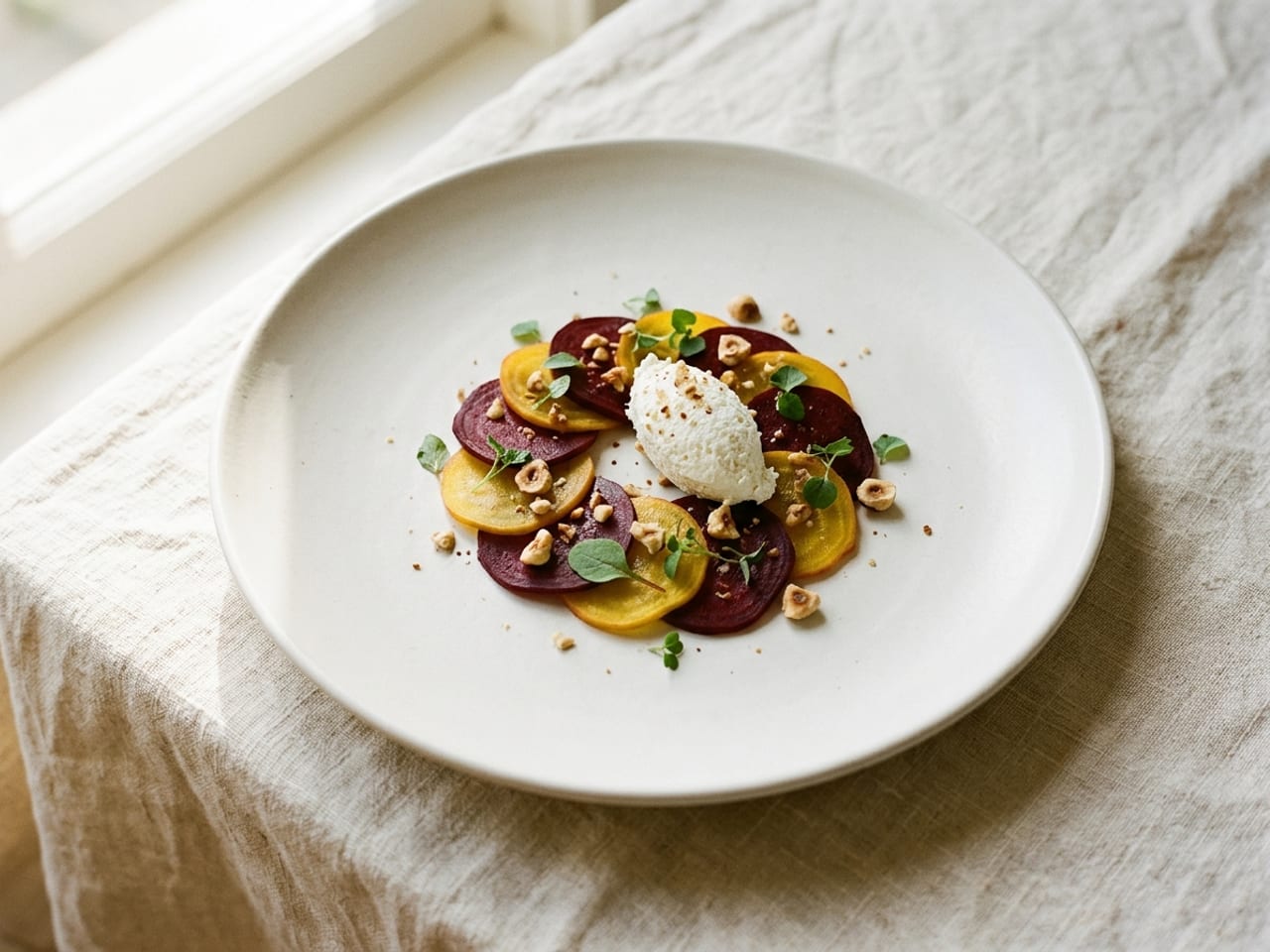
Appetizer or starter
Merriam-Webster: "a food or drink that stimulates the appetite and is usually served before a meal".37 Cambridge's "starter" is "a small dish served as the first part of a meal", and Collins labels that word "mainly British".39, 43 One American textbook treats the two as one: "Appetizers, or starters, whether hot or cold, are generally the first course or introduction" (the search fragment ends there).25
Who counts it. Every list has a first small course; what moves is its place. The ladder puts the plated appetizer after the soup from six courses up, Restaurant India puts it before the soup, and the Emily Post Institute's informal menu opens with the soup.1, 4, 12
Portion. No weight in the sources we read. The Culinary Institute of America says only: "Generally, appetizers should be served in small servings."23
Plate. Salad plate, 7 to 8.5 in / 18 to 22 cm. On the ladder from 3 courses. Plating a small first course is in Michelin-star plating, course by course.
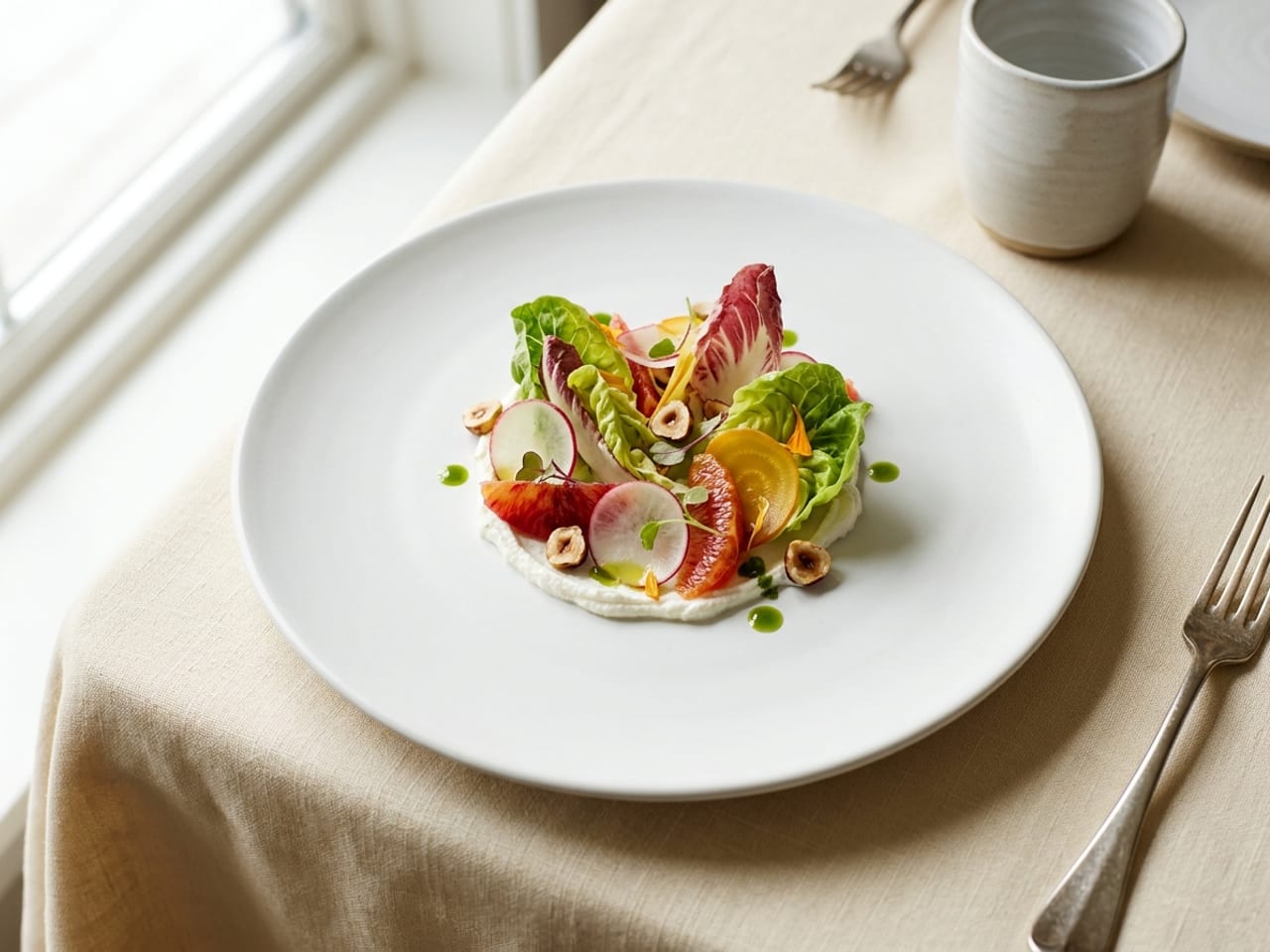
Salad
A small plate of dressed leaves. The British service textbook: "Often refers to a small plate [of] salad that is taken after a main course (or courses)".17 The Culinary Institute of America says American diners "generally choose soup, salad, or appetizer", not all three, so that "the salad is a form of appetizer course".21
Who counts it. A numbered course for Emily Post (line 6) and on the ladder from five courses up.1, 5 In Ranhofer's list it rides with another course, "1 or 2 Colds, salad", and Escoffier serves it with the roast.6, 46 Its place is the oldest argument on this page: see salad before or after the main.
Portion. One private chef's figure for a dinner party, her own: for "a leafy salad", "budget about ¾ cup per person" (about 180 ml; the conversion is ours).76
Plate. Salad plate, 7 to 8.5 in / 18 to 22 cm. On the ladder from 5 courses. Piling, dressing and sixteen classics are in how to plate salad.
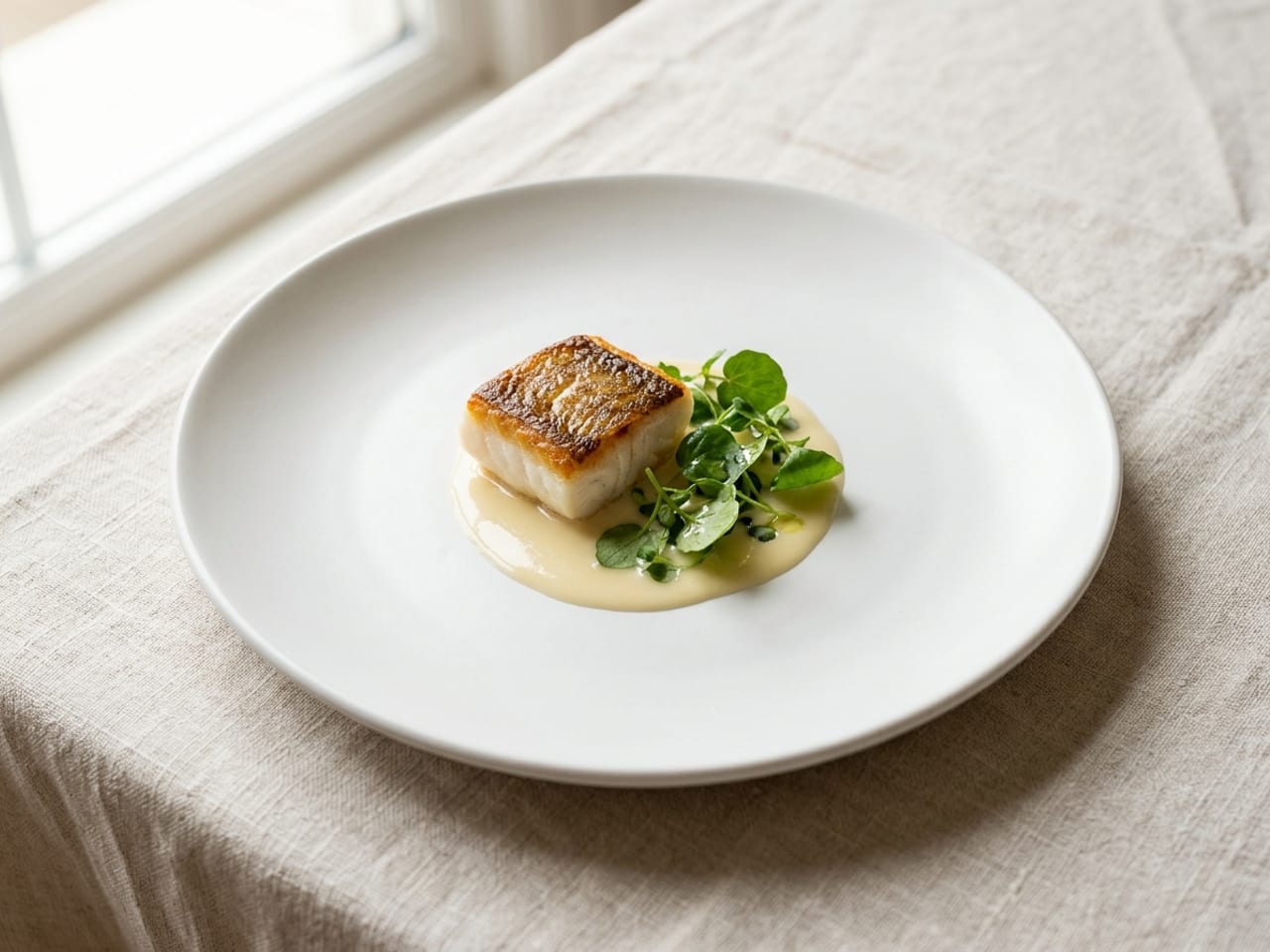
Fish
A small fish or shellfish dish before the meat. WebstaurantStore: "a flavorful light protein before the main courses".1 The British textbook of 1971: "A Fish (Poisson) course is always included in a dinner or banquet menu".13
Who counts it. The old formal lists have it: it is Emily Post's line 3 and Ranhofer's "2 Fish".5, 6 The ladder brings it in only at nine courses.1 Why fish goes first is less obvious than it looks.
Portion. Measured at Per Se in 2007: the kanpachi course weighed 2.2 ounces (62 g) and the lobster 2.6 ounces (74 g); the gram figures are our conversions.72
Plate. Fish plate, 8 to 9 in / 20 to 23 cm. On the ladder from 9 courses. A fish course plated step by step is in Michelin-star plating.
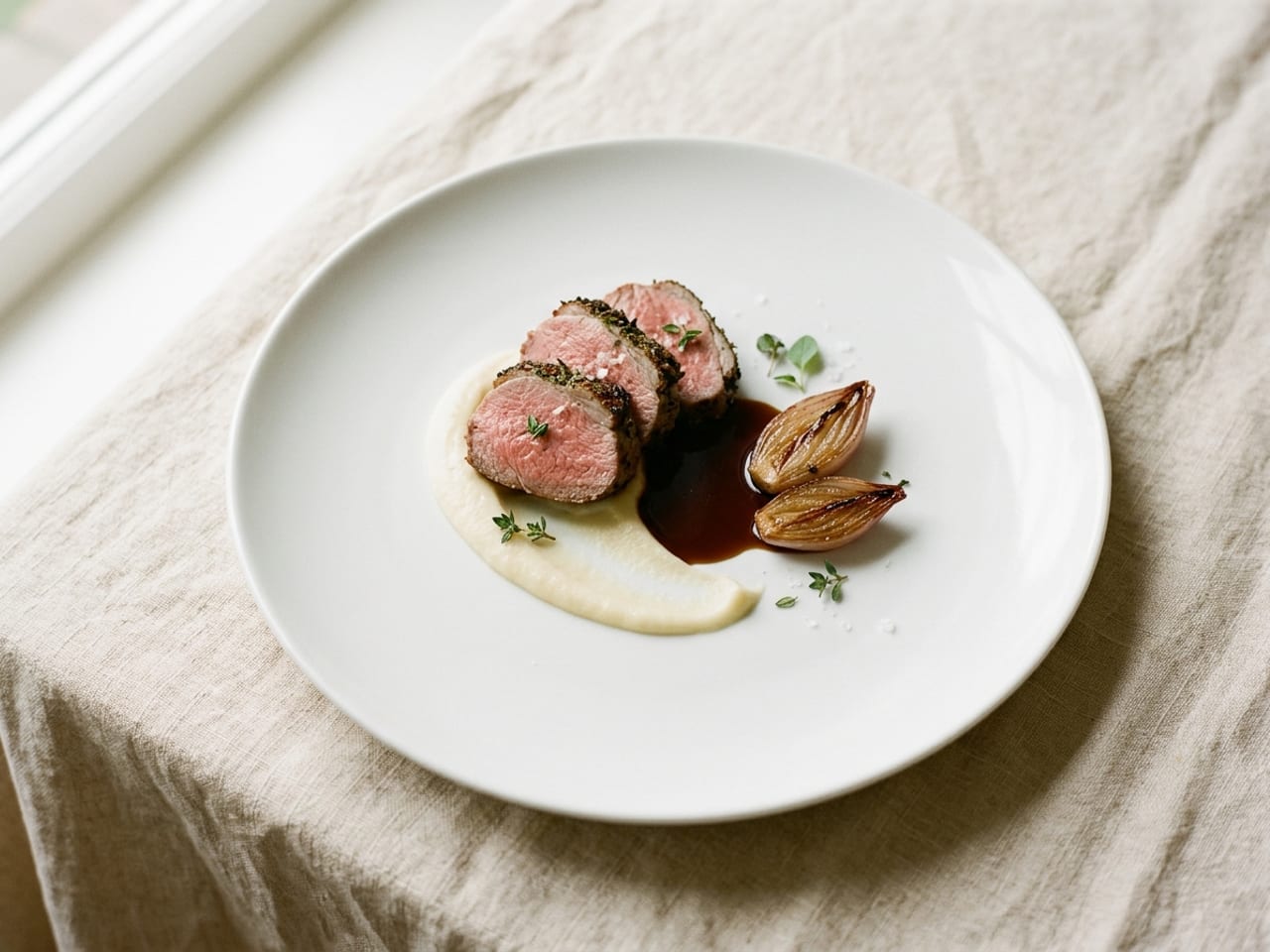
Main course
Cambridge: "the largest or most important part of a meal in which there are different parts served separately".39 Merriam-Webster gives "entrée" as "the main course of a meal in the U.S."38 Gisslen: "The main dish is the centerpiece of the modern meal. If the meal consists of only one dish, it is considered the main course, even if it is a salad or a bowl of soup."24
Who counts it. Every list has one. What the old lists call it differs: Emily Post has an "Entrée" and then a "Roast", and the textbooks an entrée, a relevé and a roast.5, 17 The words are untangled in the glossary.
Portion. A restaurant main on its own, in the Culinary Institute of America's formulas: "1 boneless portion (6 to 8 oz/170 to 227 g) meat, poultry, or seafood". 23 In a nine-course menu at Per Se the two meat courses weighed 1.9 and 2.7 ounces (54 and 77 g, our conversions).72 One private chef's dinner-party figure, her own: "about four ounces per person" (about 113 g, our conversion).76
Plate. Dinner plate, 10 to 12 in / 25 to 30 cm. On the ladder from 3 courses. Placement, sauce and slicing are in how to plate steak and how to plate food, dish by dish. From seven courses up the builder serves the main on a luncheon plate.
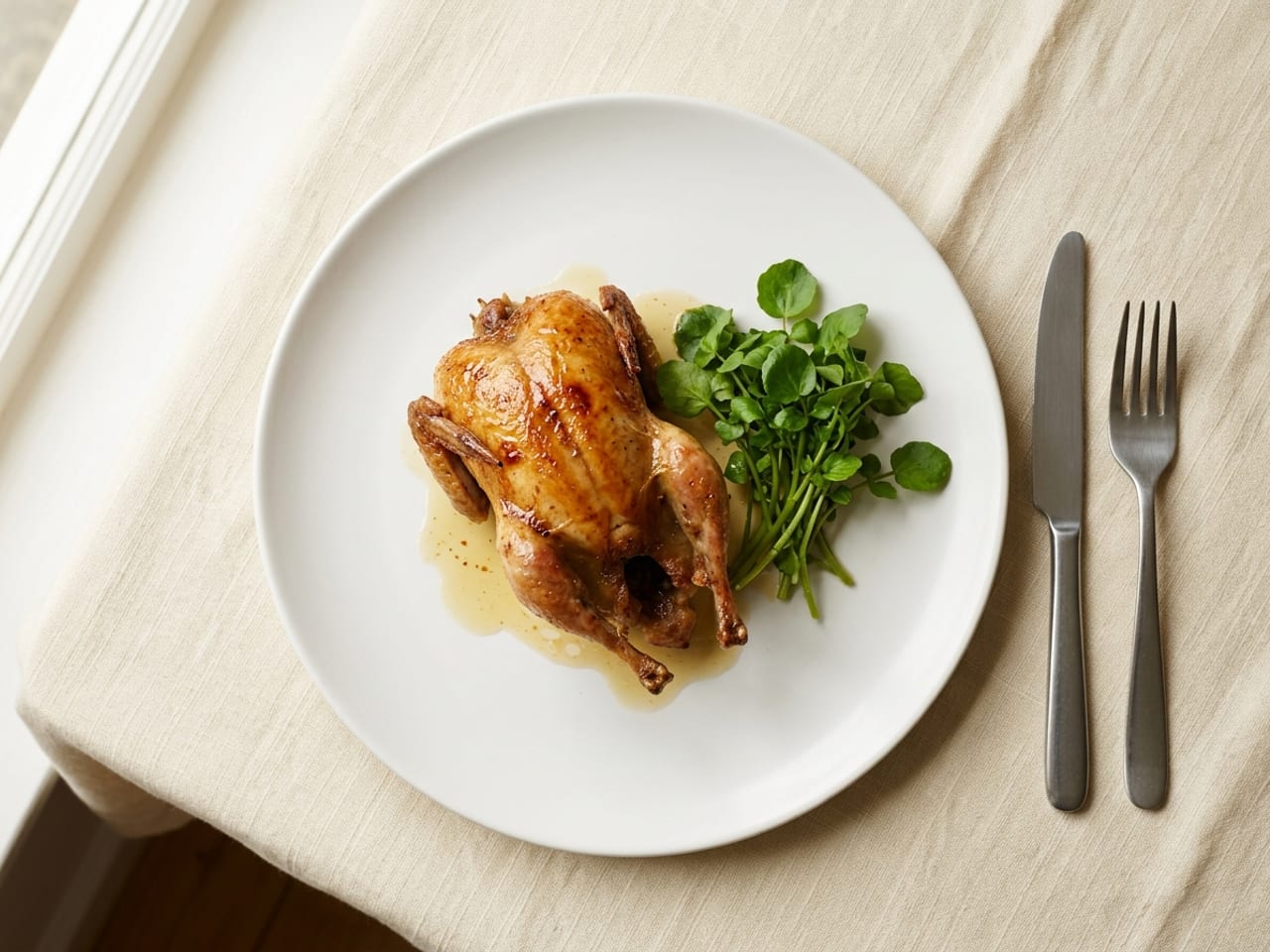
Second main, or the roast
On the ladder, a second meat course: "Typically, the second main course is red meat, such as premium beef and lamb, or game meats such as venison".1 In the classical order it is the roast, which the French dictionary defines as the service that "suit celui des potages et des entrées", follows that of the soups and the entrées.28 The British textbooks narrow it: the roast "always consists of roast game or poultry".13
Who counts it. The ladder adds it at ten courses.1 Gisslen: "There is usually only one main course, although large banquets may still have more than one, such as a poultry dish followed by a meat dish."24
Portion. No figure in the sources we read.
Plate. Dinner plate, 10 to 12 in / 25 to 30 cm. On the ladder from 10 courses. A roast with its jus is in the au jus guide; carving and slicing in how to plate steak.
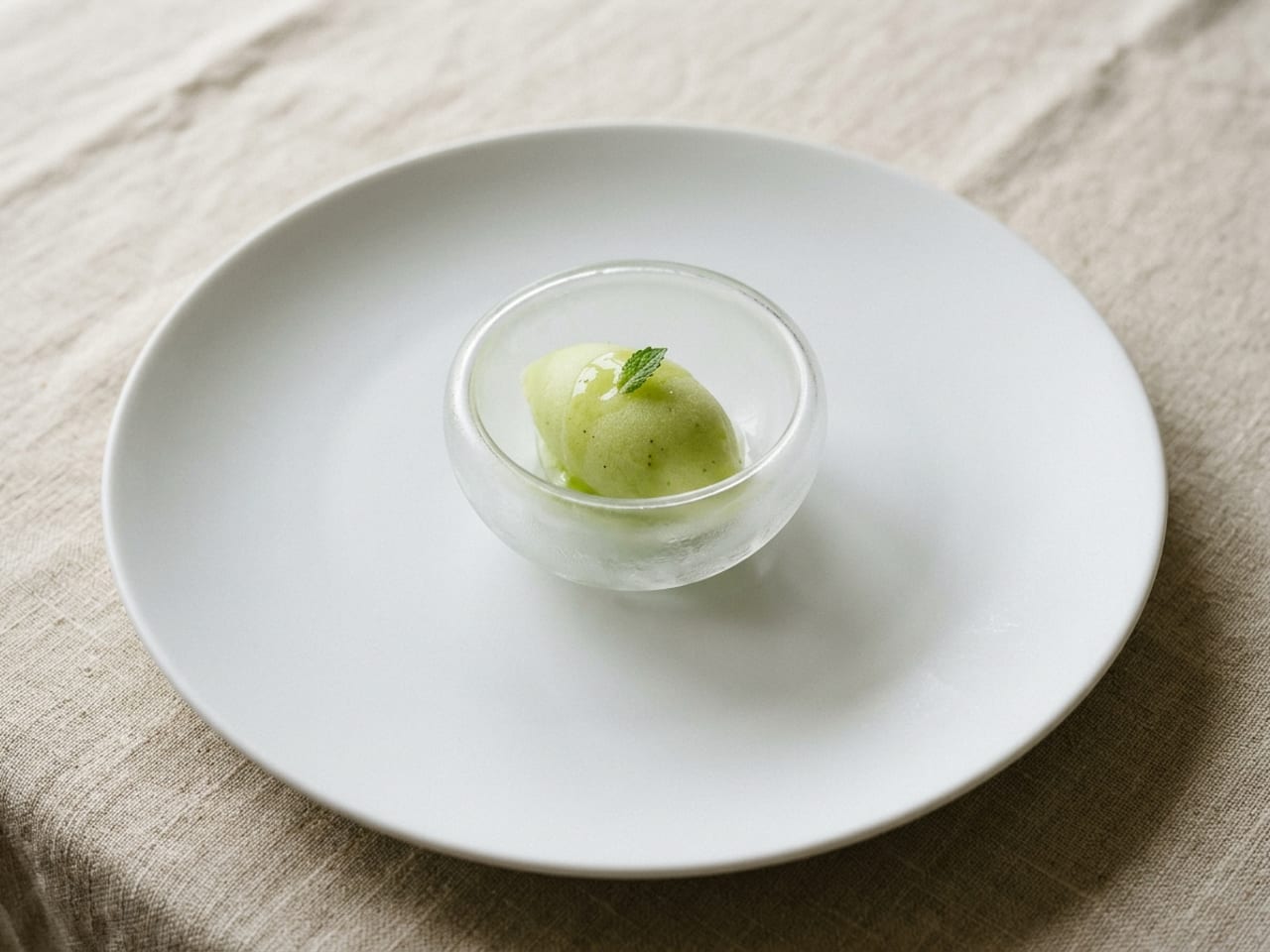
Sorbet, or palate cleanser
A small cold pause in the middle of a long meal. One British service textbook calls it "a pause during a long meal, supposed to 'settle' dishes served and stimulate the appetite"; the "supposed to" is the author's.20 WebstaurantStore calls it "a reset for your taste buds", which is the page's claim: our palate cleanser guide found no test of a sorbet between courses.1
Who counts it. The ladder counts it from eight courses, and Per Se's sorbet was one of its nine.1, 72 Ranhofer serves one and tells the menu writer "do not make an extra heading on the menu for these"; Emily Post leaves "Roman punch" out of a private dinner altogether.5, 6
Portion. Per Se's buttermilk sorbet weighed ".6 ounces", about 17 g (our conversion).72
Plate. Small glass or cup on a saucer, saucer 4.5 to 6.5 in / 11 to 16 cm. On the ladder from 8 courses. Names, positions, the evidence and fourteen ideas are in the palate cleanser guide.
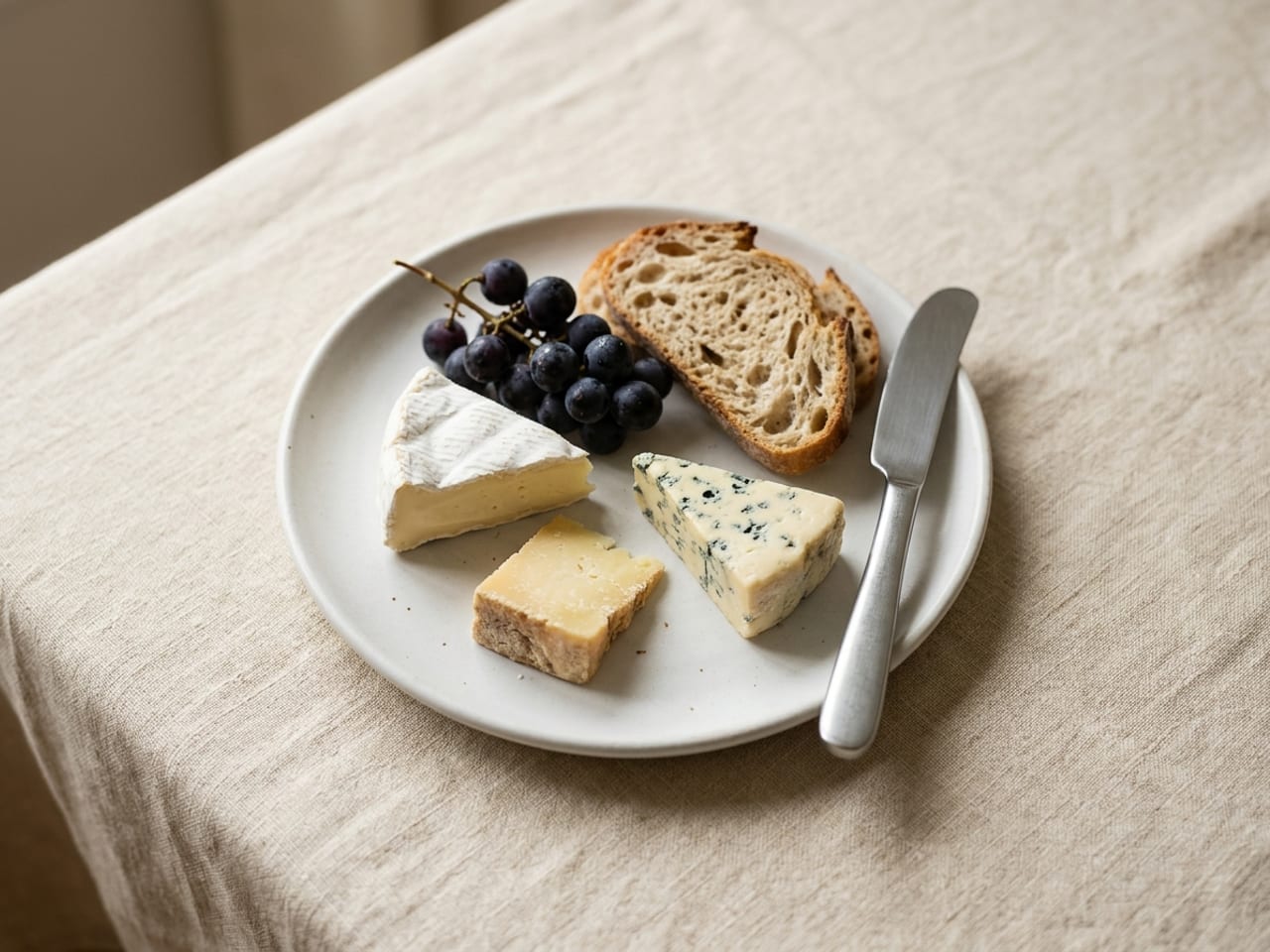
Cheese
A few cheeses with bread or crackers. It is one of the four courses UNESCO names for the French gastronomic meal.26 The British textbook: "Includes the range [of] cheeses and various accompaniments".17
Who counts it. Its own course in UNESCO's four, in the textbook sequences and in the ladder's twelve; absent from Emily Post's list and from every shorter row of the ladder.1, 5, 17, 26 Gisslen folds it into the last course, "fruit and cheese".24
Portion. The Culinary Institute of America's service manual: "One ounce of each type of cheese is an appropriate portion size for a selection of three or four cheese", and "a total of three to five ounces of cheese" is enough (28 g a type, 85 to 140 g in all; our conversions).22 Per Se's cheese course weighed 1.5 ounces (43 g, our conversion).72
Plate. Dessert plate, 6 to 8.5 in / 15 to 22 cm. On the ladder from 12 courses. Whether it goes before or after the sweet is argued below; how long a board can sit out is under food safety.
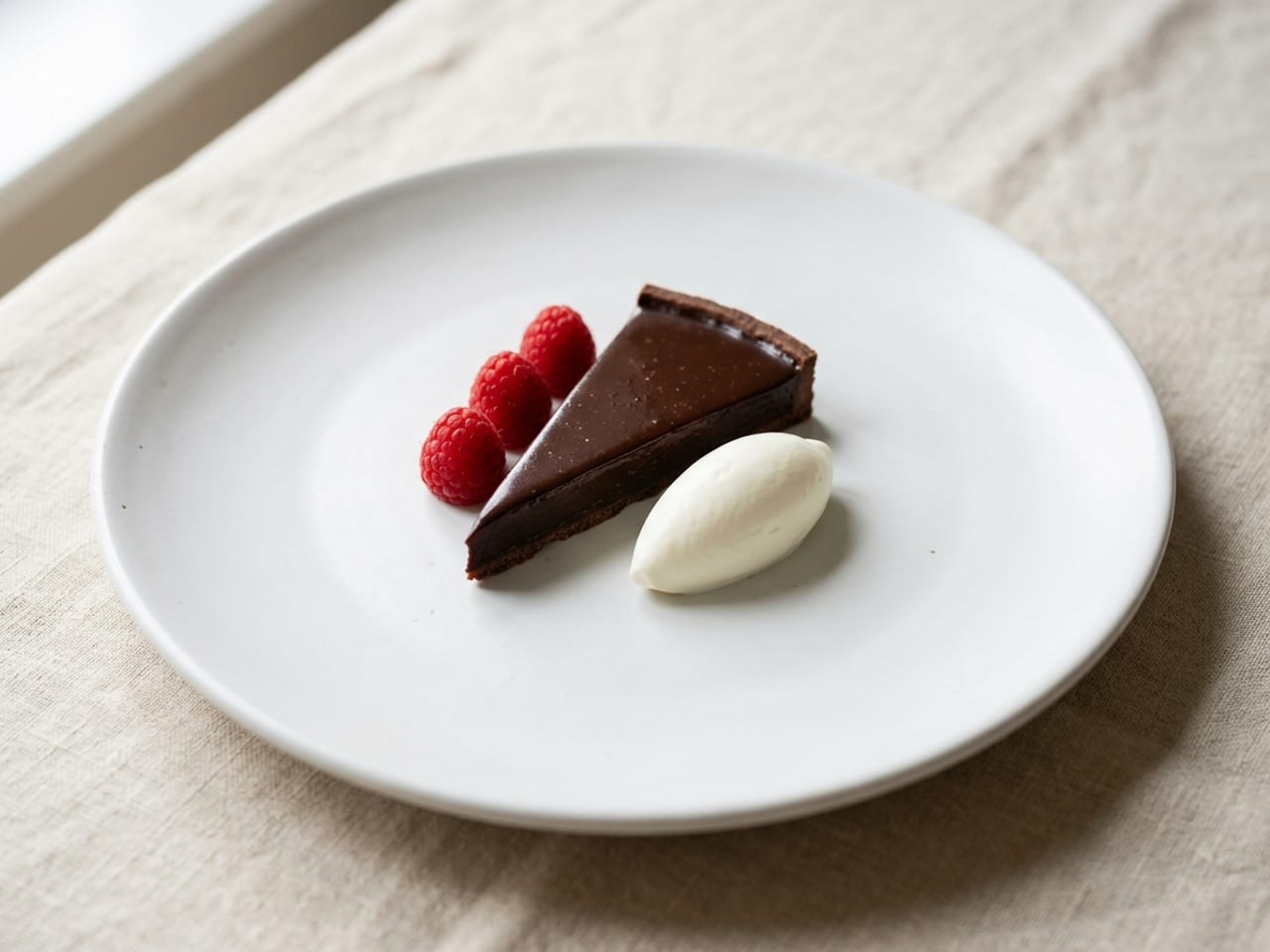
Dessert
Merriam-Webster: "a usually sweet course or dish (as of pastry or ice cream) usually served at the end of a meal", from the French for clearing the table.37 Emily Post, 1922: "dessert means everything sweet that comes at the end of a meal."5 In older British usage the word meant the fruit that came after the sweet: see the glossary.
Who counts it. Everyone. In the twenty lists we collected from the search results of 6 October 2026, a sweet dessert was the only course present in all twenty (our count; see the results read).
Portion. Per Se's dessert, a café Liégeois, weighed 1.8 ounces (51 g, our conversion).72 One private chef's advice, her own: "Keep dessert servings small."76
Plate. Dessert plate, 6 to 8.5 in / 15 to 22 cm. On the ladder from 3 courses. Plating moves are in dessert plating; twenty-four make-ahead ideas in fancy desserts for a dinner party.
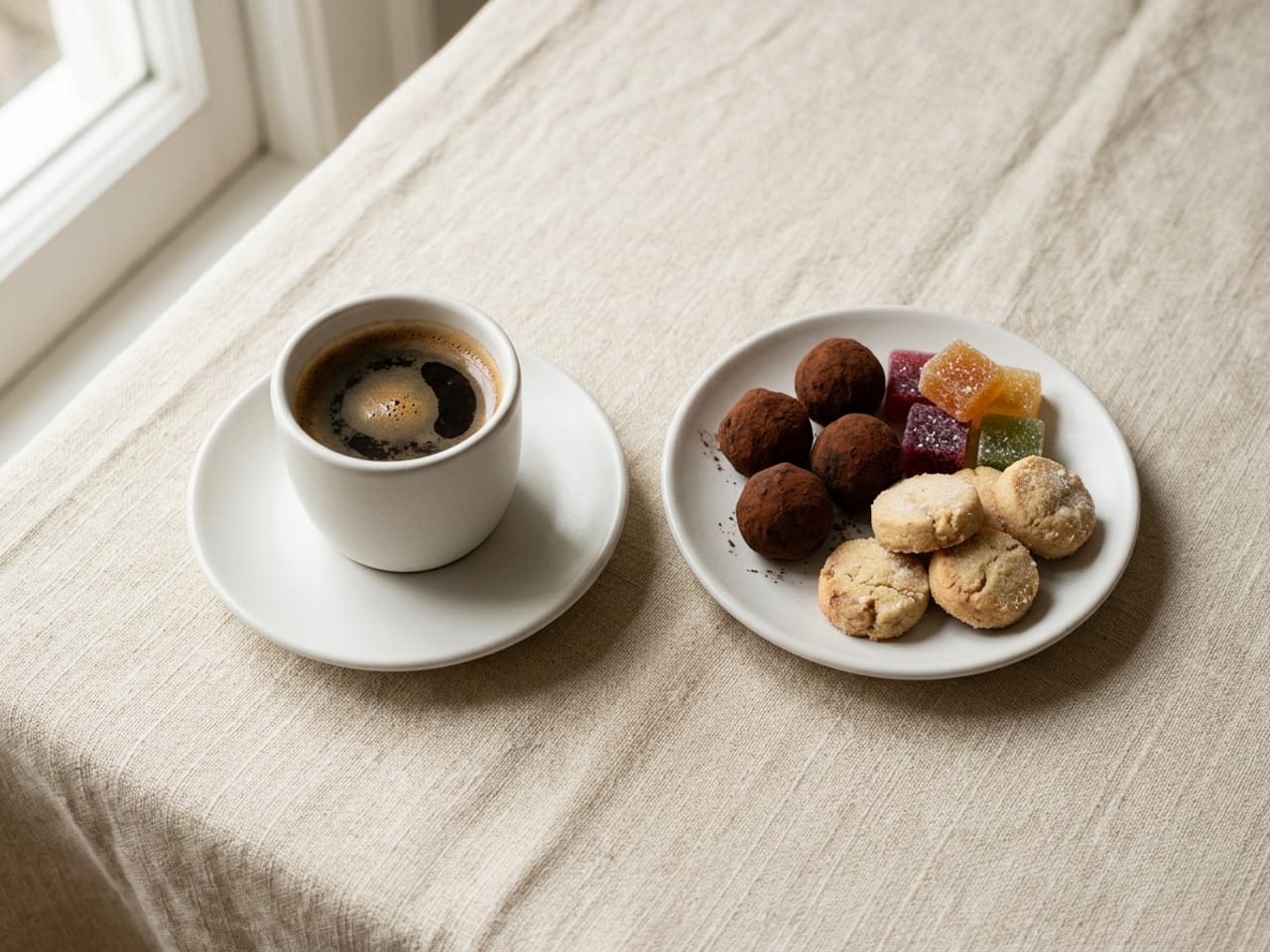
Mignardises and coffee
Tiny sweets with the coffee. The French dictionary: "Petits gâteaux servis à la fin du repas (avec le café et les liqueurs le plus souvent)", small cakes served at the end of the meal, most often with the coffee and liqueurs; its one citation is from 1984.27 Cambridge on the petit four: "a small cake or biscuit, usually served at the end of a meal with coffee".39
Who counts it. WebstaurantStore counts the mignardise in every row from seven up.1 The textbooks do not: in 1971 "petit fours will be placed on the table" with the coffee, and the Culinary Institute of America calls mignardises "lagniappes", something extra.13, 21 Coffee itself is a course on some lists and not on others: see what counts.
Portion. No figure in the sources we read.
Plate. One shared tray, with the coffee. On the ladder from 7 courses. A tray of them, made ahead, is the last card of the prix fixe guide's home menu.
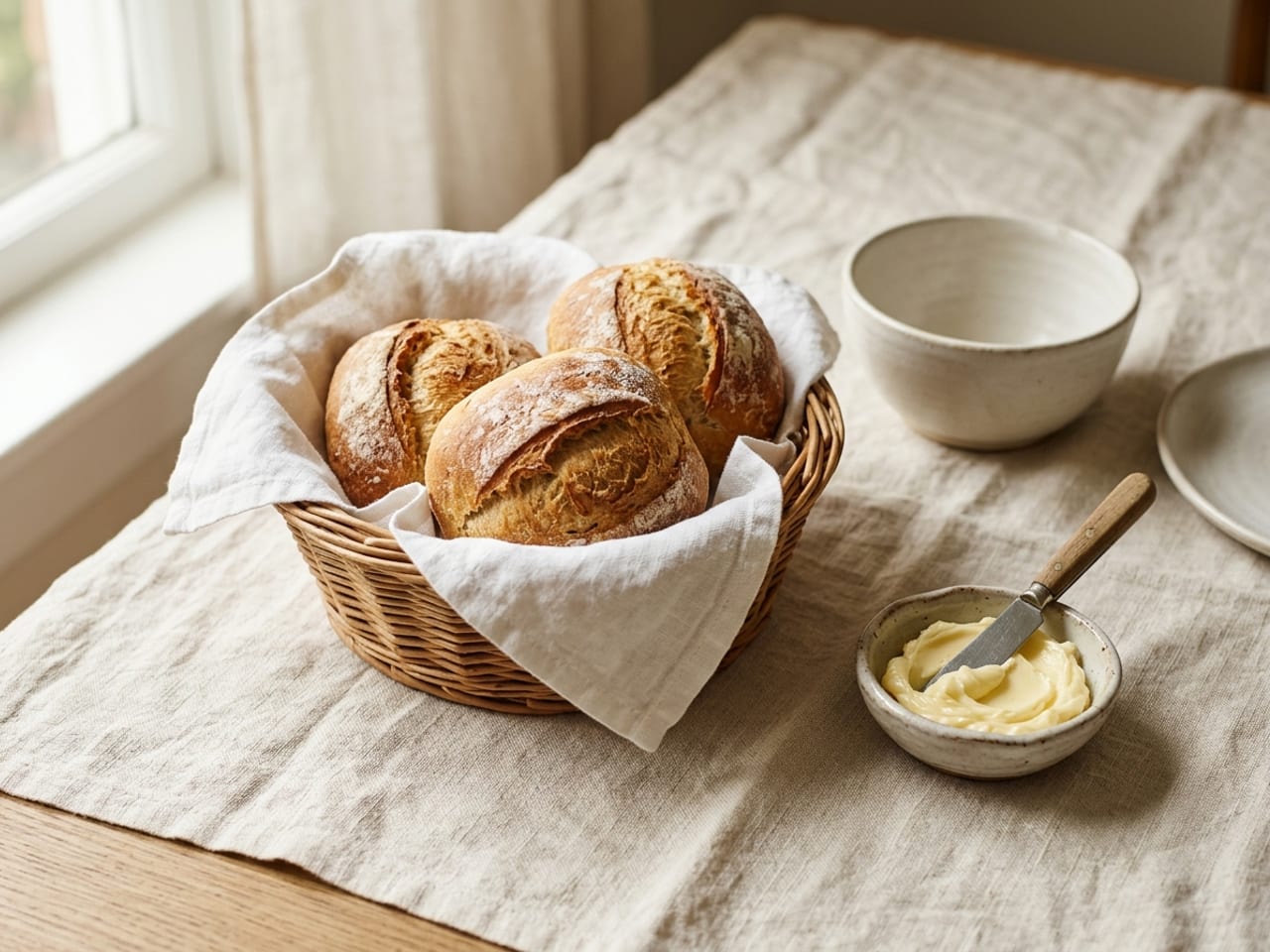
Bread: not a course
Bread and butter come with the meal, not as a stage of it. We found no source that counts bread as a course, and none that says in so many words that it is not one (our finding).
Who counts it. The one list we found with bread in a numbered line was a four-course list on Wikipedia ("Soup/Bread"), which carried no citation and was deleted in 2024.10 At Per Se, New York magazine listed "Three rolls with three tablespoons butter" among the extras.72
Portion. No figure in the sources we read.
Plate. Bread or side plate, upper left of the setting. Where the bread plate goes is in how to set a table.
Salad, cheese, soup, fish, sorbet: the arguments, with each side's best source
Is salad served before or after the main course?
| Who | When | Salad comes | In their words |
|---|---|---|---|
| Martial, Epigrams | about AD 85 | First, where it used to be last | "Cludere quae cenas lactuca solebat avorum, dic mihi, cur nostras inchoat illa dapes?" Lettuce, which used to close our grandfathers' dinners, tell me, why does it begin our feasts? (Our translation.)64 |
| John Evelyn, Acetaria | 1699 | Leans to first, leaves it open | "Whether it were better, or more proper, to Begin with Sallets, or End and Conclude with them?" He sets out both medical arguments, finds that "the French do well, to begin with their Herbaceous Pottage", and closes on Martial's couplet: "the Question still remains undecided with them".65 |
| Carême; Escoffier | 1822; 1907 and 1912 | With the hot roast | Carême's Russian-service order has "le plat de rôt avec la salade", the roast with the salad.57 Escoffier: "Simple, or raw salads always accompany hot roasts", and in 1912 the hot roasts are those "qu'une salade accompagne généralement", which a salad generally accompanies.46, 47 |
| Emily Post, Etiquette | 1922 | After the roast | Line 6 of her list, after "5. Roast"; her salad fork is the one nearest the plate, "the third used".5 |
| The American Home magazine | July 1933 | First, as a new idea | "Have you tried serving salad as a first course? It simplifies the serving of a dinner, whether formal or informal, and makes a tempting appetizer as well."66 |
| The Culinary Institute of America, Remarkable Service | 2009 | After, in Europe | "NOTE: In Europe, salad greens are served after the main course."21 |
| Gisslen, Professional Cooking | 7th edition | Either, never both | Salads may "be served either before or after the main course (but not both). In more traditional meals, they are served after the main course to refresh the appetite before the cheese and sweet courses".24 |
| The Emily Post Institute | today | After the entrée, or first | Its formal menu puts the salad after the entrée and its fork advice covers both: "If the salad is served after the entrée" and "If the salad is to be served first".3 |
| WebstaurantStore; the Escoffier School | 2026; 2023 | Before the main | The ladder's place in every row that has a salad, with a concession: "Some restaurants in parts of Europe serve salad after the main course, but it is also common to serve salad before it."1 The Escoffier School's five has the salad before the entrée too.2 |
So the argument is some nineteen hundred years old, and the classical French answer is neither "before" nor "after" but with the roast. Why Americans moved the salad to the front we could not establish: we found no food historian's account of the cause. The 1933 article gives a practical reason, that it "simplifies the serving of a dinner".66 Wikipedia dates the habit "After the 1950s" and cites a 1953 article by Louis Diat, which we did not open.9 Search snippets of American books from 1947 to 1969 call salad first a California custom; we could not read the pages around them, so we do not cite them. How to plate the salad itself, either way, is in how to plate salad.
Does cheese come before or after dessert?
| Who | When | Cheese comes | In their words |
|---|---|---|---|
| Brillat-Savarin | 1825, read in the 1848 edition | Inside the dessert | His provincial dinner of about 1740 ends "Dessert: du fromage; du fruit; un pot de confitures": cheese, fruit, a pot of jam.48 The French dictionary still defines dessert as "fromage, pâtisserie, fruit, entremets sucré".27 |
| UNESCO; the Trésor de la langue française | 2010; today | Before the sweet (France) | UNESCO's four end "cheese and dessert".26 The dictionary defines the modern entremets as a "plat sucré servi après le fromage et avant le dessert proprement dit", a sweet dish served after the cheese and before the dessert proper.27 |
| Routledge's Manual of Etiquette | 1875 or later | After the sweets, with port (England) | Its wines by course: "madeira with sweets; port with cheese; and for dessert, port, tokay, madeira, sherry, and claret."50 |
| Henderson; Fannie Farmer | 1877; 1910 printing | Both ways (United States) | Henderson's cheese is her twelfth line, before the sweet entremets.7 Farmer ends on "cracker, cheese, and café noir", after the dessert.8 |
| Lillicrap and Cousins, Food and Beverage Service | 1990, then 2002 on | After the sweet, then before it | 1990: sweet, savoury, cheese, fresh fruit.15 From 2002: cheese, sweets, savoury, fruit.16 The 2010 edition adds that "the sweet course is still sometimes offered before the cheese course".17 |
| Debrett's | 2023 | It names the split | A cheese course, "if you are following the French style, you will have it between the main course and pudding; the English fashion is to eat cheese at the end of the meal, preferably washed down with a glass of port."32 Its Burns supper runs starter, main course, pudding, cheeseboard.33 |
In France the cheese was long counted inside the dessert, so "cheese before dessert" is really cheese first within the last service (our reading of the rows above). The reasons on record are about wine: Hugh Johnson reports the French explanation as "you finish your red with the cheese", and the Victorian manual pairs cheese with port.36, 50 We found no historian's account of when or why the two countries parted, and the story that the ladies withdrew while the men stayed for port and cheese is one we could not confirm.
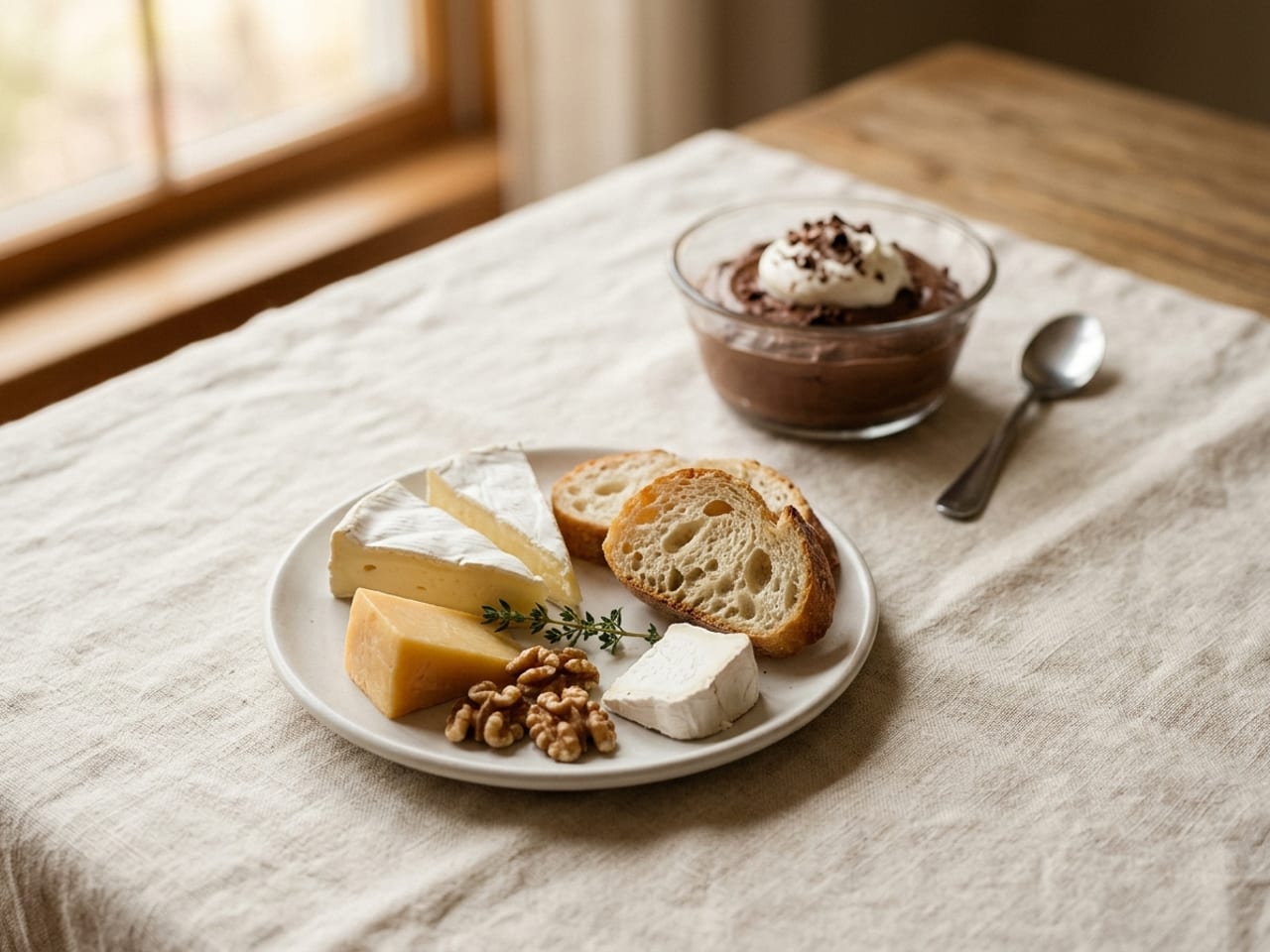
- Soup or appetizer first?Four positions are on record for the small savoury dish. After the soup: Carême in 1822 ("après le potage succèdent les hors-d'œuvres"), Henderson in 1877, who calls it "a French custom", Ranhofer in 1894, and the French dictionary, which defines the hors-d'oeuvre as served "au début du repas, après le potage ou avant le premier service".6, 7, 28, 57 Before the soup: Emily Post's list of 1922.5 Oysters before everything: Ranhofer and Fannie Farmer.6, 8 And, as a general rule, none in a meal that has soup, which was Escoffier's view: "hors-d'oeuvres should only form part of a meal that does not comprise soup", with caviare and fine oysters tolerated.47 Among today's lists, the ladder serves the soup and then a plated appetizer, Restaurant India the appetizer and then the soup.1, 12 A Victorian food writer held that the soup "is, properly speaking, no part of" the first course, "and is rather a natural preface to the whole dinner".51
- Where the fish goes, and why it is firstFish before meat is a rule of position, not of lightness (our reading of the texts below). In the old service the fish was the dish that replaced the soup on the table: Mrs Beeton's 1861 bill of fare has "Mock Turtle Soup, removed by Cod's Head and Shoulders".49 Ranhofer states it as service: "In the American and English service, first comes the fish, then the removes."6 Escoffier, 1912: "les poissons suivent les potages ou les Hors-d'œuvre", the fish follows the soups or the hors-d'oeuvre.46 None of them gives lightness as the reason, in the passages we read. The exceptions are old too: Carême's 1822 order has fish among the entrées, after the big joint, and Dubois and Bernard wrote in 1856 that the fish's place was "une simple question de préférence", simply a matter of preference.57, 58 The ladder has no fish course until nine courses, where it sits between the salad and the main.1
- Where the sorbet goesSix places, each in print. After the entrées and before the roast: Ranhofer, "A punch or sherbet is always served after the entrées and before the roast", and Escoffier, for whom the sorbets "terminent la première partie du Dîner", end the first part of the dinner.6, 46 After the entrée and before the relevé: the British textbook from 1990, and Cracknell, "between the Entrée and the Relevé".15, 19 After the relevé and before the roast: the same textbook in 1971, Kinton and Ceserani, and Fuller, "a sorbet before the roast".13, 18, 20 After the single main and before dessert: the ladder's eight and nine. Between two mains: its ten and twelve.1 Between the fish and the main: Restaurant India.12 Our palate cleanser guide maps them and says what the course is for.
What counts as a course
| The item | Counted by | Left out by |
|---|---|---|
| Hors d'oeuvres with drinks | WebstaurantStore, as course one of every row from four up.1 | Take it out and the ladder shifts down by one: its five is four courses at the table (appetizer, salad, main, dessert) and its four is the classic three. The arithmetic is ours. |
| Amuse-bouche | WebstaurantStore's twelve; Restaurant India's seven.1, 12 | Merriam-Webster calls it "complimentary", and at Per Se it was an extra.37, 72 |
| Sorbet or punch | The textbooks (course 7 of the seventeen) and the ladder from eight courses.1, 17 | Emily Post leaves it out, and the British textbook's own grouping into starters, main courses and afters puts course 7 in none of the three.5, 17 |
| Cheese | UNESCO, the textbooks, the ladder's twelve.1, 17, 26 | Britain's 1916 order: "plain cheese shall not be regarded as a course". 62 Gisslen folds it into dessert.24 |
| Coffee and other drinks | Emily Post's "8. Coffee", the 1971 textbook's "13. Café", and the seventeenth line of the classic sequence, "Beverages". 5, 13, 17 | The same textbook, in terms: "beverages are not counted as a course as such and therefore should not be included when the number of courses for a meal is stated."17 Post herself counts luncheon "not counting the passing of a dish of candy or after-dinner coffee as a course".5 |
| Petits fours, mignardises | WebstaurantStore, from seven courses.1 | The textbooks serve them with the coffee, and Per Se's two chocolates were extras.13, 72 |
One restaurant's count is on record in detail. Per Se offers "a nine-course chef's tasting menu".71 When New York magazine had one weighed in 2007, the nine were a cauliflower panna cotta, foie gras, kanpachi, lobster, duck, beef, a cheese course, a sorbet and a dessert; the amuse-bouche, three rolls with butter, two chocolates and the wine were listed as extras.72 So there the cheese and the sorbet counted, and the amuse-bouche, the bread and the petits fours did not. Even the unit is unsettled: for Mrs Beeton in 1861 "each dish may be considered a course".49
The order of courses in a French meal and in an Italian meal
France: UNESCO's wording
The one institutional description we found is UNESCO's, from 2010: "The gastronomic meal should respect a fixed structure, commencing with an apéritif (drinks before the meal) and ending with liqueurs, containing in between at least four successive courses, namely a starter, fish and/or meat with vegetables, cheese and dessert."26 It describes a festive meal, not everyday eating.
| Step | In the original | One of the courses? | What the source says |
|---|---|---|---|
| Apéritif | un apéritif | No | UNESCO glosses it "drinks before the meal". Outside the count. |
| Starter | une entrée | Yes | The English text says "a starter" where the French says "une entrée". |
| Fish and/or meat with vegetables | du poisson et/ou de la viande avec des légumes | Yes | One course or two: "and/or" is UNESCO's. Both make five. |
| Cheese | du fromage | Yes | A course of its own, before the dessert. |
| Dessert | un dessert | Yes | The last of the "at least four". |
| Liqueurs | un digestif | No | The meal is "ending with liqueurs"; the French text says "un digestif". Outside the count. |
UNESCO mentions no soup, no salad, no sorbet and no coffee, so the popular string "apéritif, entrée, plat, fromage, dessert, café, digestif" is its structure with a coffee added; we found no official source that prints it.26 The dictionary does place the coffee, in its entry for the pousse-café: "Alcool que l'on prend à la fin d'un repas, après le café", a spirit taken at the end of a meal, after the coffee.27 And French has no word "course" for a part of a meal: UNESCO's French says "quatre plats", and the older word is "service".26, 28
Italy: the words are solid, the ten-step list is not
| Step | In the original | What the source says |
|---|---|---|
| Antipasto | antipasto | "Insieme di vivande di vario genere servite all'inizio del pasto": assorted dishes served at the start of the meal. The word is built from "anti-" and "pasto", before the meal. |
| Primo | primo (piatto) | "la prima portata di un pranzo o di una cena, generalm. costituita da pasta asciutta o minestra": the first course of a lunch or dinner, generally pasta or soup. |
| Secondo | secondo (piatto) | "la seconda portata di vivande, a pranzo o a cena": the second course. |
| Contorno | contorno | "Verdure o legumi, variamente preparati, che si mangiano insieme con la carne o col pesce": vegetables eaten together with the meat or fish. A side dish, not a later course. |
| Dolce | dolce | Any sweet "che si serve in fin di tavola", served at the end of the meal. |
| Caffè, then ammazzacaffè | ammazzacaffè | "Vino o liquore che si beve dopo il caffè": wine or liqueur drunk after the coffee. The dictionary labels the word jocular; it means "coffee-killer". |
The definitions in the table are Treccani's, the Italian dictionary.29 A published order in English, from a cookbook publisher's cheat sheet, has five lines: antipasto, primo ("Usually pasta, rice, soup, or polenta"), secondo, contorno and dolce, where "On most days, the dolce is a bowl of fruit."30 The long form found all over the web (aperitivo, antipasto, primo, secondo, contorno, insalata, formaggi e frutta, dolce, caffè, digestivo) is, line for line, Wikipedia's, which presents it as the meal "in its full form, usually used during festivities" and says elsewhere that "Full meals in Italy contain four or five courses." Its sources for the list are a restaurant's blog and a small website, we found no Italian academy or dictionary that prints it, and it contradicts itself on whether the coffee or the digestivo comes last.31
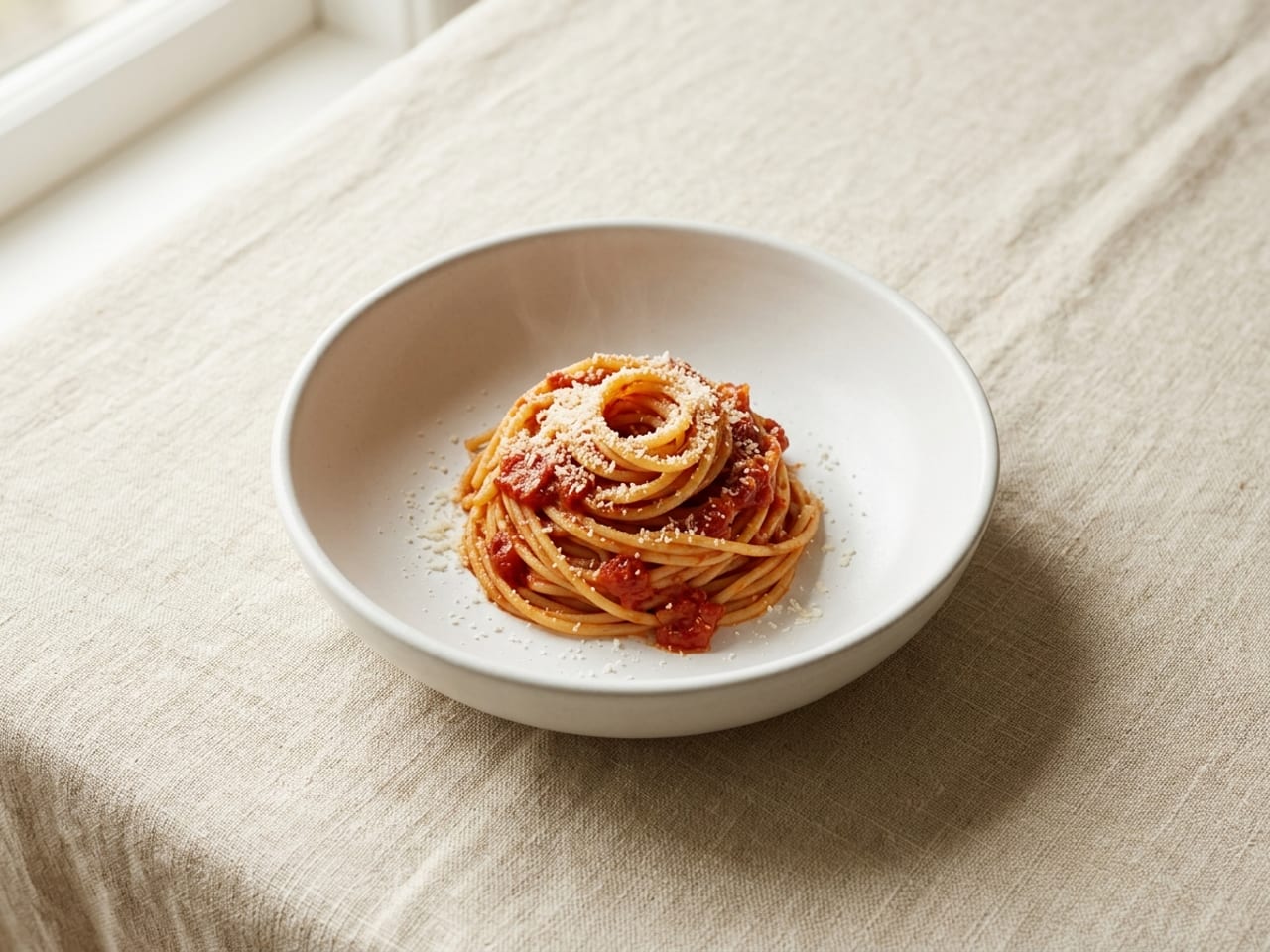
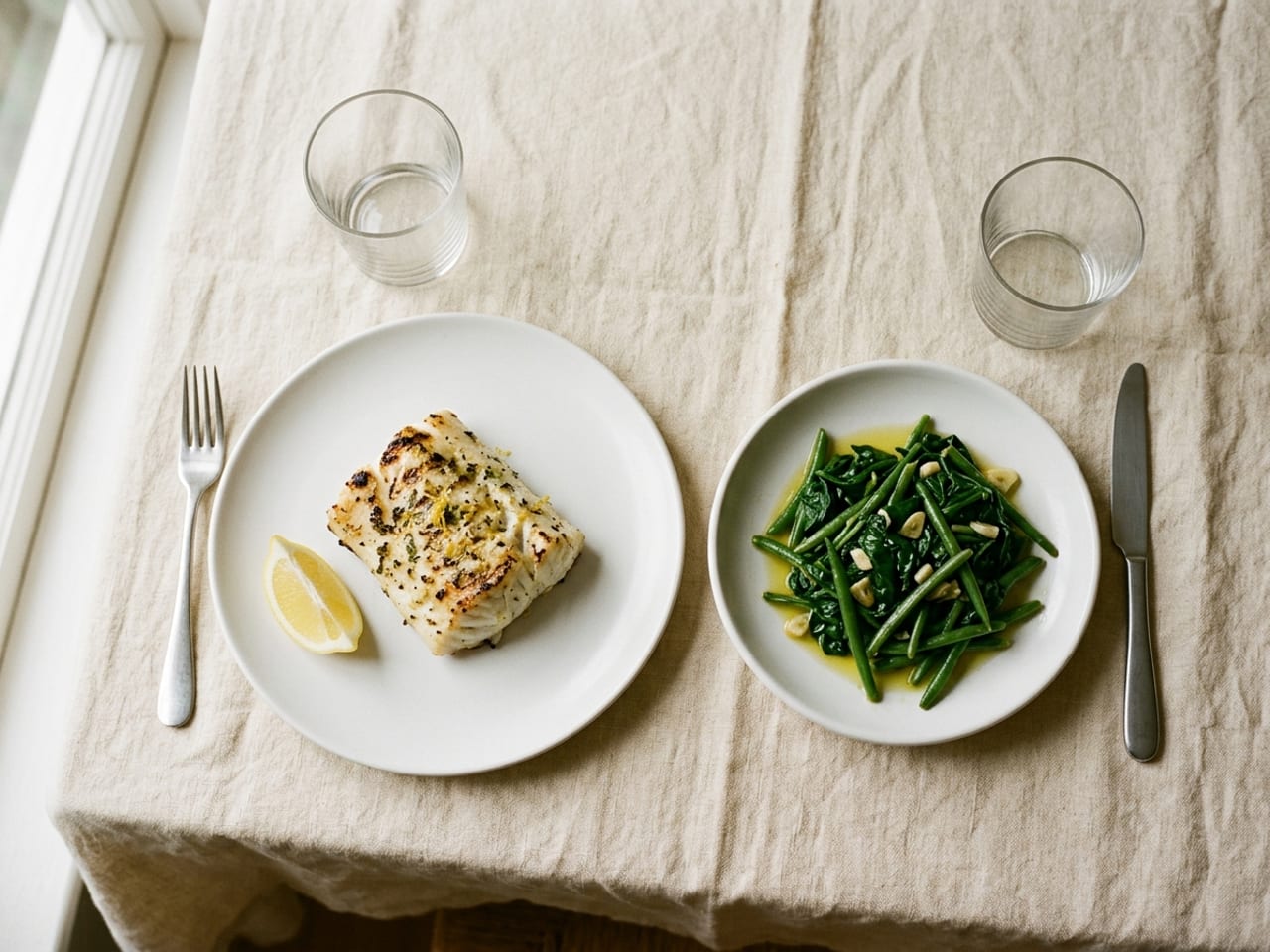
This is the list, as the British textbook Food and Beverage Service prints it in 2010 under "Classic menu sequence"; the words after each heading are the book's own, from search fragments, and some break off.17
- Hors-d'oeuvres. "Traditionally this course consisted of a variety of compound salads"
- Soups (potages). "Includes all soups, both hot and cold."
- Egg dishes (oeufs).
- Pasta and rice (farineux). "Includes all pasta and rice dishes."
- Fish (poisson).
- Entrée. "Entrees are generally small, well garnished dishes which come from the kitchen ready for service."
- Sorbet. "Traditionally sorbets (sometimes now called granites) were served to give a pause within a meal"
- Relevé. "This refers to the main roasts or other larger joints of meat, which would be served together with potatoes and vegetables."
- Roast (rôti). "This term traditionally refers to roasted game or poultry dishes."
- Vegetables (légumes). "Apart from vegetables served with the Releve or Roast courses, certain vegetables (e.g. asparagus and artichokes) may"
- Salad (salade). "Often refers to a small plate [of] salad that is taken after a main course (or courses)"
- Cold buffet (buffet froid). "This course includes a variety of cold meats and fish, cheese"
- Cheese (fromage). "Includes the range [of] cheeses and various accompaniments"
- Sweets (entremets). "Refers to both hot and cold puddings."
- Savoury (savoureux). "Sometimes simple savouries, such as Welsh rarebit or other items on toast, or in pastry"
- Fruit (dessert). "Fresh fruit, nuts and sometimes candied fruits."
- Beverages. "Traditionally this referred to coffee but nowadays includes a much wider range of beverages"
Where it is printed. In Lillicrap and Cousins from the 1990 edition, the earliest of the six editions we searched (1971, 1983, 1990, 2002, 2006 and 2010), and in the Culinary Institute of America's Remarkable Service of 2009: "A full classic menu includes seventeen courses".15, 21 Its first printing is not established: all we can say is "since at least 1990". In the first edition of the same British textbook, in 1971, the "French classical menu" had thirteen courses and was already "very rarely served"; seventeen was the number of sections of an à la carte menu, a different list with grills and ices and no sorbet or relevé; the 1983 edition says the same.13, 14 The last courses changed order between editions (1990: sweet, savoury, cheese, fruit; 2002 on: cheese, sweets, savoury, fruit), which is why copies of the list disagree.15, 16 The American list of 2009 ends sweets, savories, cheese, fresh fruit, then beverages and tobacco.21
It is sixteen courses, by its own rule. The seventeenth line is "Beverages", and the book says "beverages are not counted as a course as such". It also says what the list is for: it "provides the guide for the compilation" of menus, and its courses "are often now grouped together" as starters (1 to 4), main courses (5, 6 and 8 to 12) and afters (13 to 16).17 Two of its French words do not survive a French dictionary: a relevé there is a dish served between the soup and the entrées, which the Académie calls light, and "savoureux" is an adjective.28
What Escoffier really wrote, in 1912
Neither fragment set names Escoffier as the author of the seventeen, and the prix fixe research found no seventeen in his Livre des menus, in Carême or in Dubois and Bernard. What the 1912 book does have, on pages 10 and 11, is an order of dishes in prose. He starts from Brillat-Savarin's rule, most substantial first, and ends with a warning: these rules are far from generally accepted, "chaque pays a ses coutumes", every country has its customs.46 (The title page credits Philéas Gilbert and Émile Fétu with him.)
- Hors-d'oeuvre and soupsThey play "le rôle d'apéritifs", the part of appetisers, and are not where the dinner proper begins.
- The relevés, or the fishA dinner generally begins, he says, with what the old cookery called the relevés: the large pieces of fish, butcher's meat, poultry and game. Where a menu has no relevé, "les poissons suivent les potages", the fish follows the soups.
- The entréesButcher's meat first, then poultry or game; hot mousses, soufflés and the cold entrées only after those.
- The sorbetsThey "end the first part of the dinner, the part that corresponds to the first service of the old French school" (our translation).
- The hot roasts, with a salad"qu'une salade accompagne généralement": which a salad generally accompanies.
- Sometimes a cold roastA pâté, a terrine or a parfait of foie gras.
- A vegetable, an entremets, an ice with petits fours, fruitThese complete the menu. No cheese is named in the passage, and no coffee.
The three courses of the seventeen that Escoffier rejected
- Eggs at dinnerEggs, he writes, "never appear on the menu of a dinner save in Lent"; he files them with the hors-d'oeuvres, which "like eggs, should only be served at luncheons".47
- The savoury"I consider it a positive gastronomical heresy to eat fish, meats, fowl-remains, &c., after delicate Entremets and Ices", and: "I should advise the total suppression of Savouries in a dinner."47 In French, five years later: the savoury "est une absurdité au point de vue gastronomique", an absurdity from the gastronomic point of view, though "imperiously demanded by local custom" in England (our translations).46
A fourth point: the list puts the relevé after the entrée, which Escoffier calls the English custom and contrary to "common sense".47 The nearest nineteenth-century relative of the seventeen that we found is American: Henderson's sixteen-line table of 1877, which she offers as a list to pick from.7
A short history: from tablefuls to plates
For most of its history in France and England a "course" was everything set on the table at once. The modern meaning there, one dish after another, is about two hundred years old.
| When | What happened |
|---|---|
| about 1393 | Le Ménagier de Paris sets out dinners by "mets" or "assiettes", services: two to four in most of its menus and six in the two grandest, each a group of dishes brought together, the roast usually in the second, and on some menus spiced wine and wafers to finish.52 |
| about 1460 | John Russell's Boke of Nurture gives "A dynere of flesche" in three courses. "The Furst Course" alone holds brawn with mustard, pottage, beef, mutton, pheasant, swan, capon, pig and baked venison, then "A Sotelte", a table showpiece.53 |
| 1660 (read in the 1685 edition) | Robert May's Christmas bill of fare has two courses, of twenty and nineteen numbered dishes. "A grand Sallet" is dish 3 of the first course and the custard is in the first course too: sweet and savoury are not yet separated.54 |
| 1769 | Elizabeth Raffald, in Manchester: "my Bill of Fare is twenty-five in each Course".55 A course is a tableful. |
| 1808 | Service à la française on an ordinary day: Grimod de La Reynière's first menu for fifteen people, which he calls "assez simple", fairly simple, has two soups, eight entrées, two relevés, two large pieces, two roasts and eight entremets, twenty-four dishes before dessert (the count is ours).56 |
| 1822 | Carême describes dinners served "à la Russe", one dish after another: oysters, soup, hors-d'oeuvres, a cold entrée, the large joint, the entrées, the roast with the salad, the sweets. It is the earliest full order of this kind we hold.57 |
| 1856 | Dubois and Bernard call Russian service "une méthode nouvelle, qui s'avance vers nous à grands pas", a new method advancing on us with great strides, and say the rule for the order of dishes "n'était pas immuable", was not set in stone.58 |
| 1861 | Mrs Beeton marks the change of meaning in one line: "In a dinner à la Russe, the dishes are cut up on a sideboard, and handed round to the guests, and each dish may be considered a course." She adds that such dinners "are scarcely suitable for small establishments".49 |
| 1877 | Mary Henderson, writing in St. Louis for a New York publisher, prints a sixteen-line table to choose from, and gives the cook's view: "It is very simple to prepare a dinner served à la Russe, as it matters little how many courses there may be."7 |
| 1880s | The long dinner at its height in Washington: President Arthur's first state dinner "was served in fourteen courses, with which there were served eight varieties of wines", and the guests "were two hours at the table".59 |
| 1894 | Charles Ranhofer of Delmonico's does the sum: "a dinner of ten minute intervals can be served with fourteen courses in two hours and twenty minutes". Because nothing stands on the table any more, "Menus are indispensable", one for each guest.6 |
| 1907 and 1912 | Escoffier: "Nowadays a dinner rarely consists of more than two soups, two Relevés (one of which is fish), and two or three Entrées for the first service."47 Five years later: the menu "devra toujours être aussi court que les circonstances le permettent", must always be as short as circumstances allow.46 |
| 1916 | Britain makes it law. The Regulation of Meals Order, in force from 18 December 1916, forbids any public eating place to serve a meal "consisting of more than three courses if the meal begins between the hours of 6 p.m. and 9.30 p.m., or of more than two courses if the meal begins at any other time." It even defines the unit: plain cheese is no course, and an hors d'oeuvre without fish or meat, a dessert of fruit alone and a soup with no solid meat in it "shall each be computed as half a course".62 |
| 1922 | Emily Post caps a private dinner at seven courses and coffee and says the long dinner is already history: "Formal dinners have been as short as the above schedule for twenty-five years." The very rich, she adds, "sit down to three, or at most four, courses when alone". She offers the war as one possible reason people eat less, and vanity as the other.5 |
| 1942 | Britain again: the Minister of Food "insisted that hotel meals consist of only three courses and cost 5s", from 1 June 1942.63 Whether the two wartime rules fixed the modern three-course meal, no historian we could open says; the laws existed, the cause is not shown. |
| 2012 and 2025 | What heads of state serve now. The White House state dinner of 14 March 2012: first course, salad, main course, dessert.60 The state banquet at Windsor Castle on 3 December 2025, as the press reported it: a trout and langoustine tartlet, partridge, Baked Alaska, then "Coffee and Petit Fours".61 |
Does the order of courses matter? What the studies found
Claim by claim. "Supported" never means proven for a dinner party: nearly all of this is one laboratory meal at a time. "Supported, narrowly" means the study tested less than the claim says; "Mixed", that the results point both ways; "Not supported", that a study tested the claim and found no difference; "No evidence found", that we found no study at all. Most of the papers were read as abstracts only; each reference says which. We found no study that compares one whole order of courses with another.
| The claim | Verdict | Who was studied | What was found | What it does not show |
|---|---|---|---|---|
| A soup first makes you eat less | Supported, narrowly | 60 normal-weight men and women, five weekly laboratory lunches. | "When soup was consumed, subjects reduced meal energy intake by 20%", counting the soup.77 | The comparison was soup against no soup, not soup first against soup later. The soup was compulsory and low in calories, and the study covers one lunch, not a habit or anyone's weight. |
| A salad first makes you eat less | Mixed | 42 women, seven weekly laboratory lunches: pasta, six times after a compulsory salad. | Light salads cut the meal "by 7% for the small portion and 12% for the large"; salads with more dressing and cheese "increased intake (by 8% for the small portion and 17% for the large)".78 | Women only, in a laboratory. What is in the salad mattered more than having one. |
| Salad before the main cuts what you eat more than salad with the main | Not supported | 46 women who were not dieting, five weekly laboratory lunches. | The one direct test of timing: "mean energy intake was 490 ± 17 kcal" with the salad 20 minutes before the pasta "and 488 ± 18 kcal" with the salad alongside it. The authors: "maximizing the amount of salad eaten may be more important than the timing of consumption."79 | Salad after the main, the French and classical place, was not tested, and the authors say the results "may not apply to men or to women who are dieting". |
| Vegetables and protein before starch flatten blood sugar | Mixed | Small trials, mostly in people with type 2 diabetes: 11 patients on metformin in the letter everyone cites, 16 in a randomised follow-up; and 16 healthy Chinese adults.80, 81, 82 | Lower glucose in the first hour or two when the starch came last. The famous figure, an area under the curve "73% lower", comes from those 11 patients, who ate the two orders a week apart without randomisation.80 Pooled, the effect is short-lived and uncertain: a 2022 meta-analysis in type 2 diabetes found "no evidence for the potential efficacy" of recommending it beyond standard advice, and a 2026 meta-analysis of 18 trials found glucose lower at 30 and 60 minutes and higher at 120, all at "very low certainty".84, 85 Longer trials are split: the 2026 review says "individual studies indicate beneficial effects on HbA1c", and a 16-week pilot in 45 adults with overweight or obesity and prediabetes found changes "similar between groups".83, 85 | None of these trials tested a coursed dinner, and none shows a long-term benefit in healthy people. This page makes no health claim for any order of courses. |
| Many different courses make people eat more | Supported | 48 people given a four-course lunch in 1984; 49 women given three courses in 2023; 30 studies pooled in 2021. | With a different food in each course, "Energy intake was elevated by 60%" against the same food four times, mostly in the third and fourth courses.86 The 2023 study found the effect again in a different design: 30 g more across three varied courses.87 The pooled analysis also found more eaten with variety.88 | These measured how much people ate when they could eat as much as they liked, not how much they enjoyed it. They say nothing about which order is better. |
| Eating dessert first changes how much you eat | Not supported | 20 normal-weight men, each fed the same three courses twice. | The only course-reversal experiment we found swapped a candy bar and cheese on crackers between first and last: "Total energy intake over the entire meal was 6% higher when the candy bar was eaten last, but this was not significant."89 | The "eat dessert first" headline is a different study, about choosing: in a cafeteria line, diners who met an indulgent dish first went on to choose lower-calorie dishes. Nobody ate dessert first at a table.90 |
| Cheese at the end protects teeth | Supported, narrowly | Studies of acidity in dental plaque. The two cheese abstracts we read give no number of subjects; the one study of where the sugar sits had six adults. | Cheese eaten just before or just after sugar kept plaque less acid.92, 93 | Plaque acidity, not tooth decay in diners. In the one study of where the sugary item sits in a meal (egg and crispbread, not cheese) the benefit "was negated by a pause between the sugary and non-sugary courses".91 And the French order puts the sugar after the cheese. |
| The order (salad last, a sorbet, a digestif) aids digestion | No evidence found | For alcohol: 20 healthy adults eating cheese fondue. For salad and sorbet: no study found. | We found no study of salad after the main course and digestion, and none of a sorbet course. For a drink, the trial we read points the other way: "Gastric emptying was significantly faster when fondue was consumed with tea or water than with wine or schnapps", and "No difference in dyspeptic symptoms was present."94 A French trial of a calvados "trou normand" in eight people finished in March 2026 and had posted no results when we read the registry.95 | So a spirit does not speed the stomach up; that is all the trial shows. "We found no study" is not "no study exists": our searches were of PubMed only. |
The rule the classics actually give. It is Brillat-Savarin's, in aphorisms of the Physiologie du goût, numbered here as in the 1848 edition. Food runs from heavy to light and drink the other way, and the cheese belongs to the dessert.48
- XI. "L'ordre des comestibles est des plus substantiels aux plus légers." The order of foods is from the most substantial to the lightest. (Our translation.)
- XII. "L'ordre des boissons est des plus tempérées aux plus fumeuses et aux plus parfumées." The order of drinks is from the mildest to the headiest and most perfumed. (Our translation.)
- XIV. "Un dessert sans fromage est une belle à qui il manque un oeil." A dessert without cheese is a beauty who lacks an eye. (Our translation.)
Courses at home: how many, how fast, what to make ahead
| Whose meal | Courses | How long, in their words |
|---|---|---|
| Eleven Madison Park, New York | 6 | "about two to three hours", for a table of two.73 |
| Sons & Daughters, San Francisco | 24 | "around three and a half to four hours", in its general manager's words to the MICHELIN Guide.74 |
Those are restaurants' own totals. Per course they come to 20 to 30 minutes at six courses and about 9 to 10 at twenty-four, so the time per course falls as the count rises (our arithmetic). The builder's times, by count, are in the blocks above.
- How many courses: three to five is our suggestionThat is ours, not a study: we found no study that has tested a tasting menu or an optimal number of courses, and no source gives a maximum for one cook. The published advice points the same way. The Escoffier School: "three or five courses are good options for home cooks", and of seven, "be realistic about how much you can, and want to, accomplish!"2 Escoffier's own book, in 1912: it is "cent fois préférable de servir un Menu très court, mais bien équilibré et parfait d'exécution", a hundred times better to serve a very short menu, well balanced and perfectly executed.46 And Emily Post, against the opposite mistake: a dinner should not "consist of samples, especially if set before men who are hungry!"5
- Pacing: our model, and the one published home figureThe times in the count-by-count blocks are the builder's, and the builder's pace is our own model: half an hour of drinks from four courses up, then 10 to 35 minutes a course at the table (as little as ten for a sorbet or an amuse-bouche), a little quicker in long menus. The one published figure for a home dinner that we found is a food writer's, Jennifer Mathews in Food Republic: "For three courses (appetizer, entrée, and dessert), expect the party to run for about three hours, allowing 15 to 30 minutes between courses so guests don't feel rushed."75 Her three hours is door to door: she has guests arrive to drinks and sit an hour later, and leave "an hour after dessert is served" (our reading of her article). The Emily Post Institute and Debrett's pages we read give no minutes per course at all. For drinks before food Debrett's gives two figures, "within an hour" of the guests' arrival and "an hour to an hour-and-a-half".34, 35
- What to make aheadDebrett's: "make sauces that can be re-heated, concoct cold desserts like sherry trifle or compote, or prepare baked puddings so they are ready to pop into the oven once the main course has been cooked."34 The full plan (which courses to cook to order, which to serve cold, a seven-course run with its timings) is in the prix fixe guide's home section and make-ahead plan, and the builder has a make-ahead switch that prefers dishes that wait.
Food safety for a long dinner
A long dinner strains the home rules by default, because food sits out while the earlier courses are eaten. United States consumer advice comes first below, and United Kingdom advice is marked where it differs. Follow your own country's.
- The 2-hour rule starts when the hors d'oeuvres come outUSDA: "Never leave food out of refrigeration over 2 hours. If the temperature is above 90 °F, food should not be left out more than 1 hour."96 FoodSafety.gov prints the Celsius: above "90°F (32°C)".97 On the builder's own pace a five-course dinner lasts 2 hours 5 minutes from the first drink, so a platter put out as guests arrive is past the limit before the table is cleared (our arithmetic). The FDA's fix: "Prepare a number of small platters and dishes ahead of time, and replace the serving dishes with the fresh ones throughout the party", and "Don't add new food to an already filled serving dish."98 Reheating does not rescue food that sat out: some bacteria "produce poisons or toxins that are not destroyed by high cooking temperatures".100
- The cheese board: soft cheese is on the clock, hard cheese has no numberUSDA: "Soft cheeses such as cream cheese, cottage cheese, shredded cheeses, and goat cheese must be refrigerated for safety. As a general rule, hard cheeses such as cheddar, processed cheeses (American), and both block and grated Parmesan do not require refrigeration for safety, but they will last longer if kept refrigerated."101 It gives no number of hours for hard cheese, and another USDA answer lists "dairy products" among foods that "must be kept refrigerated for safety", so the two pull in different directions for a block of cheddar.102 Put out small amounts and replace them (ours, following the FDA's platter advice).
- Hold hot courses hot and cold courses coldUSDA's rule is hot food "at or above 140 °F" and cold food "at or below 40 °F": 140°F (60°C) and 40°F (4°C).96, 97 The FDA warns that "some warmers only hold food at 110 °F to 120 °F" (about 43 to 49°C) and suggests keeping back-up hot dishes "in the oven set at 200 °F to 250 °F" (about 93 to 121°C).98 A made-ahead soup is reheated on the stove first: "cold cooked foods and leftovers should not be reheated in a slow cooker."103
- Reheating a course made aheadUSDA: "When reheating leftovers, be sure they reach 165° F as measured with a food thermometer. Reheat sauces, soups and gravies by bringing them to a rolling boil." That is 165°F (74°C). Cooked dishes go into the fridge "Within 2 hours of cooking", in shallow containers so they cool fast, and keep "3 to 4 days" on USDA's advice.99 The UK's Food Standards Agency is shorter: "Eat leftovers within 48 hours".119 On reheating twice the countries differ too. USDA allows it, each time to 165°F (74°C).104 The UK's Food Standards Agency: "you should only ever reheat once."119
- Raw or undercooked courses: oysters, crudo, tartare, raw-egg saucesThe US agencies advise against all of them. CDC: "You can get very sick from eating raw oysters", and hot sauce and lemon juice do not kill the germs.108 FDA on raw fish: "if you choose to eat raw fish anyway, one rule of thumb is to eat fish that has been previously frozen", but "freezing doesn't kill all harmful germs", and "the safest route is to cook your seafood".109 USDA answers its own question "Is a rare steak safe to eat?" with "No.", and a USDA post on raw ground beef, the one USDA page we found that names steak tartare, says "Raw meat is never safe to consume."105, 107 For sauces and desserts with raw egg the FDA says to use pasteurized eggs or egg products.110 Two points of UK advice differ, and we record them without blending. The Food Standards Agency says whole cuts of meat such as steaks and joints, except poultry and pork, can be "served pink in the middle" once seared; that is about a seared steak, and its page does not cover tartare or carpaccio.119 On eggs it says pregnant women, young children, older people and people with an underlying health condition "can now safely eat raw or lightly cooked hen eggs" that carry the British Lion mark or come from the Laid in Britain scheme, and that this "does not apply to individuals who are severely immunocompromised and require medically supervised diets". Its advice for community events is stricter: "don't use raw eggs in anything that won't be thoroughly cooked, such as icing or mousse". 118, 121
- Who is at risk, in the agencies' own wordsFDA: "Pregnant women", "Children", "Older adults" and "Persons with weakened immune systems (such as transplant patients and individuals with HIV/AIDS, cancer, and diabetes)".109 CDC: "people who are 65 and older, children under 5, people with weakened immune systems, and pregnant women."112 The FDA advises people in those groups to avoid, among other things, "Raw or undercooked meat or poultry", "Raw fish, partially cooked seafood (such as shrimp and crab), and refrigerated smoked seafood", "Raw shellfish (including oysters, clams, mussels, and scallops) and their juices", raw or undercooked eggs, and also cold cuts and dry sausage unless they are reheated until steaming hot, and unpasteurized refrigerated pâtés.111 If one of them is at your table, cook that course through for everyone or plate them a cooked version (ours).
- Soft cheese and pregnancy: the conditions, by countryUnited States. FoodSafety.gov says to avoid "Any type of cheese made with unpasteurized (raw) milk" and unheated queso fresco-type cheeses even when pasteurized, and to choose "Hard cheeses, when made with pasteurized milk" and "Cottage cheese, cream cheese, string cheese, feta, and mozzarella, when made with pasteurized milk", or the others "when heated to 165°F or until steaming hot" (74°C).113 The CDC's table names raw-milk brie, camembert and blue-veined cheese as riskier.114 A USDA answer last updated in October 2024 is broader and tells at-risk people to avoid "soft cheeses (such as feta, Brie, Camembert, blue-veined, and Mexican-style cheese)" outright.106 United Kingdom. The NHS lists "pasteurised or unpasteurised hard cheeses, such as cheddar, gruyère and parmesan" as safe to eat, and says of mould-ripened soft cheeses such as brie and camembert, and of soft blue cheeses, pasteurised or not: "these must be thoroughly cooked".122 The two countries disagree on unpasteurised hard cheese and on pasteurised brie; follow your own.
- Allergens, across many coursesMore courses means more ingredients to check. The FDA: "The major food allergens are milk, eggs, fish, Crustacean shellfish, tree nuts, peanuts, wheat, soybeans, and sesame." Its labelling law covers packaged food, so a home dinner is the host's job (our reading).115 The UK lists 14 regulated allergens, adding celery, lupin, molluscs, mustard and sulphites among others, and its advice to home cooks is blunt: "just taking it off their plate is not enough".120 FARE, a US allergy charity: "ask your guests about any food allergies they may have", and "Hang on to packaging, or snap a photo of the ingredients label".116
- Restaurant numbers are not home numbersThe FDA Food Code is, in the FDA's words, "a model" for "regulating the retail and food service segment of the industry (restaurants and grocery stores and institutions such as nursing homes)". It binds restaurants where a jurisdiction adopts it, and not home kitchens (our reading of its scope). Its numbers are 135°F (57°C) hot and 41°F (5°C) cold, with up to four hours out of temperature control under written procedures; the home advice above is 140°F (60°C) and 40°F (4°C), and two hours.117 In the UK the nearest advice to a home buffet is written for community events in England, Wales and Northern Ireland: chilled food "should be left out of the fridge for no more than four hours", and "In extremely hot weather, use food that's been out of the fridge within 2 hours."118
Six myths about the courses of a meal
- "Escoffier fixed the classical menu at 17 courses"He printed an order of dishes, in Le Livre des menus (1912), and it is prose, unnumbered and much shorter; he called its rules far from generally accepted.46 Three of the seventeen (cold hors-d'oeuvres at dinner, eggs, the savoury) are things his books reject.47 The seventeen is a textbook sequence, in print since at least 1990.15 The full story is above.
- "Ziryab invented the three-course meal in ninth-century Córdoba"The credit is not in the sources we could open. The 1843 English translation of the main Arabic source, an abridged one, credits him with asparagus, a fried dish, crystal vessels and leather dining trays, and its passage on his table reforms says nothing about an order of courses.68 The soup, meat and sweets sentence is a twentieth-century French historian's, written in French menu vocabulary ("potages", "entrées", "relevés").69 A scholar of the sources notes that Ziryab "has come down to us almost entirely via a single account", a biography written in the seventeenth century, and calls its making a "mythification"; the eleventh-century chronicle he names behind that biography is one we did not open.67 A thirteenth-century Andalusian cookbook does praise serving dishes "one after another", in an order of seven that ends with honeyed dishes; it calls this the old practice of al-Andalus and names no inventor.70
- "The order of courses aids digestion"At least eight of the pages we opened from the search results of 6 October 2026 say so, none with a source (our count). We found no study behind it: see the evidence. The argument is old and was used for both ends of the meal. John Evelyn, 1699: "Some think the harder Meats should first be eaten for better Concoction; others, those of easiest Digestion, to make way, and prevent Obstruction".65 The French reason for salad late in the meal, in the texts we read, is that it goes with the roast.47, 57
- "The classical rule is light before heavy"Brillat-Savarin says the reverse: food "des plus substantiels aux plus légers", from the most substantial to the lightest.48 Escoffier's book quotes him with approval in 1912, and Ranhofer tells the menu writer to "Place on the bill of fare first the heaviest entree, and conclude with the lightest". 6, 46 We found light before heavy stated as a rule in none of the old texts we read; WebstaurantStore states it today ("start with light plates, continue with richer dishes").1
- "A full course meal is seven courses" (or five, or twelve)It has never meant one number. Sixteen lines to choose from in 1877; twelve in Fannie Farmer's "Full Course Dinner"; seven and coffee as Emily Post's ceiling in 1922; three by law in British restaurants in 1916; "at least four" for UNESCO; four at the White House in 2012 and three at Windsor in 2025.5, 7, 8, 26, 60, 61, 62 WebstaurantStore, the source of the ladder, says in one section that the basic full course meal "consists of three or four courses" and in the next "2 or 3".1
- "Prince Kurakin brought Russian service to Paris in 1810"Disputed. It is often credited to him, but we found no source from the time, and none of the nineteenth-century books read for this page names him. The earliest account we hold is Carême's, in 1822.57 A safer dating is Dan Jurafsky's: the service "took over in France in the 19th century; in England and the US the custom shifted roughly between 1850 and 1890."45
Plan the menu, then see it plated
The course meal builder turns any row of the ladder into a menu with a dish for every course, plates, portions and a cooking plan, and its switch moves the salad after the main. When a course is cooked, photograph it: Plate Artists re-plates your own dish the way a restaurant would, with the moves named so you can repeat them.
Your dish, plated like a chef's
Snap it, upload it, and get the composed version back, with the steps to recreate it at home.
Start free · 1 enhancement →Free account · 1 free enhancement · No credit card
Course words, defined
First-use dates are each dictionary's own and often disagree; where they do, both are given. The two service styles are defined in our table-setting glossary.
Course
A part of a meal served at one time, separately from the other parts; a course can hold several dishes, and in France and England until the nineteenth century it meant everything set on the table together.
Where it comes from. From Latin cursus, a running, through Anglo-French (Merriam-Webster). Etymonline dates the meal sense to the late 14th century; the Oxford English Dictionary's date for that sense is behind its paywall. Another English word for it was service, in this sense from about 1450 and now rare.11, 37, 39, 42, 44
First course
The first course eaten at the table: an appetizer in the United States, a starter in Britain, an entrée in France and the primo, which follows the antipasto, in Italy.
Where it comes from. Not a dictionary headword in Cambridge. The Emily Post Institute's formal menu gives the label to the soup, after an appetizer.3, 29, 39
Entrée
The main course in the United States; in British usage a small dish before the main; in France a dish before the main and, by extension, the main dish itself; in the classical order, a made dish served after the fish and before the roast.
Where it comes from. French. The Oxford English Dictionary's earliest evidence is 1653, under food and cooking; Merriam-Webster's note traces the culinary sense to 18th-century Britain; Etymonline says 1759. Dan Jurafsky finds the French word in 1555, for the opening course of a banquet. Merriam-Webster on why Americans kept it for the main dish: "perhaps because it is a French word".28, 38, 39, 40, 44, 45
Main course · main, main dish, plat principal
The largest or most important part of a meal that is served in separate parts.
Where it comes from. Merriam-Webster's free entry for the phrase has only a ship's sail. The Oxford English Dictionary has a second entry with earliest evidence from 1870; its definition is behind the paywall, so that it is the meal sense is our inference. Cambridge labels the short form "main" mainly British.37, 39, 40
Appetizer
A food or drink served before a meal to stimulate the appetite and, in American usage, the first course of the meal.
Where it comes from. English, from appetize. First known use 1782 in Merriam-Webster; the Oxford English Dictionary's earliest evidence is 1821, in Byron. The two disagree.37, 39, 40
Starter
A small dish served as the first course of a meal.
Where it comes from. The Oxford English Dictionary dates the sense from 1908, and its first two quotations are American ("Soup is always regarded as a starter only"). Collins now labels the word mainly British and gives appetizer as the American one.39, 41, 43
Hors d'oeuvre
A small savoury dish: in British usage one eaten at the start of a meal, in American usage finger food eaten at a party.
Where it comes from. French, literally "outside of the work". First known use 1714 in Merriam-Webster; the Oxford English Dictionary's earliest evidence is 1715. A food term in French since 1690. No dictionary we read defines an appetizer as plated and an hors d'oeuvre as passed; the only dictionary split is Cambridge's British and American one.28, 37, 39, 40
Amuse-bouche · amuse-gueule
A small complimentary bite offered by a restaurant before the meal or between its courses.
Where it comes from. French. First known use 1959 in Merriam-Webster, and the Oxford English Dictionary's earliest evidence is from the same year.37, 39, 40
Potage
Soup; in French also the moment at the start of dinner when the soup is served.
Where it comes from. French, from pot. First known use 1505 in Merriam-Webster; the Oxford English Dictionary's earliest evidence is 1653. Merriam-Webster narrows the English word to "a thick soup"; the textbooks' course includes all soups.17, 28, 37, 40
Relevé · remove
In the old French service, the dish that replaced the soup on the table; in the textbook sequence, the large joint of meat served after the entrée.
Where it comes from. The Oxford English Dictionary's earliest evidence for relevé is 1825, and for remove 1512, in food and cooking from the early 1600s. Collins defines the remove as "a dish to be changed while the rest of the course remains on the table". The Trésor de la langue française puts the relevé between the soup and the entrées, and the Académie's dictionary calls it a light dish; the textbooks put it after the entrée and make it the big joint. Escoffier called the name "quite meaningless" by 1907.17, 28, 40, 43, 47
Rôti · rôt, roast
The roast course: in French the service that follows the soups and the entrées, and in the British textbooks a course of roast game or poultry.
Where it comes from. French rôt, in this sense from 1666; the French dictionary labels it dated.13, 28
Entremets
Literally "between dishes": once the dishes, savoury or sweet, served between the roast and the dessert, and today the sweet course, which in France follows the cheese.
Where it comes from. Old French entre, between, and mes, dish. Merriam-Webster's first known use is the 15th century; the Oxford English Dictionary's earliest evidence is 1477, in a translation by William Caxton.27, 37, 39, 40
Savoury · savoury course
In English formal dinners, an extra course of a small, highly seasoned dish served at the end of the meal, after the sweet.
Where it comes from. English. Cambridge is the one dictionary we read that defines the course. The textbooks' French for it, "savoureux", is an adjective in French and not a course.28, 39, 47
Intermezzo
On American menus, a light course that acts as an intermission between the heavier courses of a long meal, usually a sorbet.
Where it comes from. Italian. None of Merriam-Webster, Cambridge and Collins lists a food sense: their entries are about music and the theatre, and Merriam-Webster's nearest sense is "a usually brief interlude or diversion". The food sense is trade usage, in print in the Culinary Institute of America's glossary.21, 37, 39, 43
Dessert
The usually sweet last course of a meal; in older British usage, the fruit and nuts served after the sweet course.
Where it comes from. French, from desservir, to clear the table. The Oxford English Dictionary's earliest evidence is 1540; Merriam-Webster's first known use is 1600. The two disagree.27, 37, 40, 43
Pudding, sweet, afters
British words for the sweet course at the end of a meal.
Where it comes from. Merriam-Webster labels all three British in this sense, and Cambridge calls pudding informal. Afters is first recorded in 1909, on which Merriam-Webster and the Oxford English Dictionary agree.37, 39, 40
Mignardises · petits fours, friandises
Small sweets served at the end of a meal, most often with the coffee; a petit four is a small cake or biscuit.
Where it comes from. Petit four is French for "small oven", first recorded in English in 1875 (Merriam-Webster and the Oxford English Dictionary agree). Among the dictionaries we read, only the French one defines mignardise as a sweet, with a citation from 1984; Cambridge has no entry, and the Oxford English Dictionary's entry (earliest evidence 1603) keeps its three meanings behind the paywall.27, 37, 39, 40
Apéritif and digestif
Drinks, not courses: an alcoholic drink taken before a meal, and one taken after it.
Where it comes from. French. Aperitif: first known use 1885. Digestif: 1909 in Merriam-Webster, 1908 in the Oxford English Dictionary. Every entry we read defines them as drinks.26, 37, 40
Antipasto, primo, secondo and contorno · primo piatto, secondo piatto
The stages of an Italian meal, as Treccani defines them: assorted dishes served at the start; the first course, generally pasta or soup; the second course; and the vegetables eaten together with the meat or fish.
Where it comes from. Italian. Antipasto is anti- and pasto, before the meal, in English from 1590 in Merriam-Webster and 1600 in the Oxford English Dictionary. Primo and secondo are first and second; the word for a course is portata.29, 37, 40
The courses of a meal, answered
What are the courses of a meal in order?
There is no single official list. One modern version, WebstaurantStore's, runs hors d'oeuvre, amuse-bouche, soup, appetizer, salad, fish course, main course, palate cleanser, second main, cheese, dessert and mignardises for twelve courses, and shorter meals drop courses from it: a three-course meal is appetizer, main course and dessert. Older lists put the salad after the main course or with the roast, and the French order puts the cheese before the dessert.
What are the 7 courses of a meal in order?
On WebstaurantStore's ladder: hors d'oeuvre, soup, appetizer, salad, main course, dessert and mignardises. Emily Post's seven of 1922 were hors d'oeuvre, soup, fish, entrée, roast, salad and dessert, followed by coffee. The five named sevens we could verify all differ.
What is a 3 course meal?
Appetizer, main course and dessert. The Escoffier School words it as an appetizer or salad, a main dish and a dessert, and one American culinary textbook calls three courses the typical North American meal.
What are the 4 courses in a meal?
On WebstaurantStore's ladder, hors d'oeuvre, appetizer, main course and dessert, with the hors d'oeuvres typically served as guests arrive. UNESCO's French gastronomic meal has at least four courses of another kind: a starter, fish and/or meat with vegetables, cheese and dessert.
What is a 5 course meal?
Hors d'oeuvre, appetizer, salad, main course and dessert on WebstaurantStore's ladder; the Escoffier School prints the same five and notes there is some debate over it. Fannie Farmer's five-course home dinner, in the 1910 printing of her cookbook, was soup, meat or fish with vegetables, salad, dessert, then crackers, cheese and black coffee.
What is a full course meal?
A dinner served in several courses. It has never meant one number: WebstaurantStore, whose ladder this page and our course meal builder use, says the basic full course meal consists of three or four courses, and its sample sequences run up to twelve.
How many courses are in a formal dinner?
It depends on who is counting, and when. Emily Post in 1922 allowed a private formal dinner no more than seven courses and coffee. The Emily Post Institute says today that a formal place setting is for a meal of more than three courses. A White House state dinner in 2012 had four courses and a Windsor Castle state banquet in 2025 had three.
What is the first course of a meal called?
An appetizer in the United States, a starter in Britain, an entrée in France and the primo in Italy, where it follows the antipasto. On the Emily Post Institute's formal menu the shellfish is the appetizer and the soup is labelled the first course.
What comes after the main course?
On the modern American ladder, dessert, or a palate cleanser and then dessert in longer menus. In the French order the cheese comes next and then the dessert. In the classical order and in older American lists a salad follows the roast, and in the English fashion the cheese comes after the pudding.
Is salad served before or after the main course?
Both are in print. Before the main is the place on WebstaurantStore's ladder and at the White House state dinner of 2012. After it, or with the roast, is the classical place: Escoffier wrote that raw salads always accompany hot roasts, and Emily Post's 1922 list has the salad after the roast. One culinary textbook says either, but not both.
Does cheese come before or after dessert?
Before the dessert in France, where UNESCO lists cheese and then dessert. After the pudding in the English fashion, which Debrett's describes as cheese at the end of the meal with a glass of port. A British catering textbook printed the cheese after the sweet in 1990 and before it from 2002.
Is soup served before or after salad?
Before, in every list on this page that names both. On WebstaurantStore's ladder the soup comes ahead of the appetizer and the salad, and in Emily Post's 1922 list the soup is second and the salad sixth.
What is a 17 course meal?
The "classic menu sequence" of catering textbooks, often called the 17-course French classical menu: hors-d'oeuvres, soups, egg dishes, pasta and rice, fish, entrée, sorbet, relevé, roast, vegetables, salad, cold buffet, cheese, sweets, savoury, fruit, beverages. It is a planning sequence, in print in a British textbook since at least 1990 and in a Culinary Institute of America textbook in 2009; both of those put the cheese after the sweet and the savoury, and the order given here is the British textbook's from 2002. Its seventeenth line is beverages, which the British textbook says are not counted as a course, and Escoffier did not write it.
What is the order of courses in a French meal?
UNESCO's description of the French gastronomic meal: an apéritif, then at least four successive courses (a starter, fish and/or meat with vegetables, cheese, dessert), then liqueurs. The drinks are outside the count, and the cheese comes before the dessert.
What is the order of courses in an Italian meal?
Antipasto, then the primo (generally pasta or soup), then the secondo with its contorno of vegetables, then the dolce. The popular ten-step list from aperitivo to digestivo is Wikipedia's, and the sources it cites for it are a restaurant's blog and a small website.
How long does a 7 course meal take?
On our course meal builder's pace, about 2 hours 15 minutes at the table after 30 minutes of drinks; that pace is our own model. One published figure is a restaurant's own: Eleven Madison Park says its six courses take about two to three hours. In 1894 Charles Ranhofer reckoned fourteen courses, at ten minutes apiece, at two hours and twenty minutes.
What is an entrée?
In the United States, the main course. In British usage, a small dish served before the main. In France, the dish before the main and, by extension, the main dish itself. In the classical order it was a made dish served after the fish and before the roast.
What is an intermezzo course?
What American menus call a light course, usually a sorbet, that acts as an intermission between the heavier courses of a long meal. None of the three dictionaries we checked lists a food sense for the word; it is in the Culinary Institute of America's service glossary.
The books, menus, dictionaries, papers and agencies behind this guide
How the textbooks, the old books and the second-hand quotations were read is under how this page was made and in each entry. Peer-reviewed papers are cited by DOI and were read in full or as abstracts, as each entry says. Agency pages are named with their country, and a page that could only be read in an Internet Archive capture links to the capture and gives its date. Readings, counts and arithmetic marked as ours are our own.
- Herrera, H. (WebstaurantStore) (2026). Full Course Meals Explained: A Definitive Guide. WebstaurantStore blog, page heading "Full Course Meals Explained"; "Last updated on Jan 14, 2026"; the section "Sample Sequences for Up to 12 Meal Courses" and the course-by-course notes; the live page refuses scripts, so it was read in the Internet Archive capture of 17 April 2026. webstaurantstore.com (archived)
- Auguste Escoffier School of Culinary Arts (2023). How To Plan a Cohesive Multi-Course Meal. Escoffier Online (the school's blog), no author named; "Posted May 1, 2023", first published 16 April 2014; the school's blog, not a text by Auguste Escoffier; its three-course and five-course meals. escoffieronline.com
- The Emily Post Institute (2026). The Formal Place Setting. emilypost.com, no author or date shown; the menu its illustrated setting is laid for, the two places for the salad fork and the three-implement rule; read 6 October 2026. emilypost.com
- The Emily Post Institute (2026). Informal Table Setting. emilypost.com, the informal three-course dinner and its four menu lines; read 6 October 2026. emilypost.com
- Post, E. (1922). Etiquette in Society, in Business, in Politics and at Home. Funk & Wagnalls, New York; Project Gutenberg eBook #14314, chapter XIV, "Formal Dinners", section "The Menu", and the luncheon and dessert passages; read in Project Gutenberg's text, which has no page numbers; the list is on page 189 of the Internet Archive scan of the Funk & Wagnalls printing of October 1923, its ninth ("Copyright, 1922"). gutenberg.org
- Ranhofer, C. (1894). The Epicurean. New York; Internet Archive scan, the table-service pages at the front of the book (bills of fare and their classification, the card on page 4, the pace per course, the model menus on pages 63 and 64); the card on page 4 was read on the page image (a column for every dinner from fourteen courses down to six); the rest as the scan's text. archive.org
- Henderson, M. F. (1877). Practical Cooking and Dinner Giving. Harper, New York; Project Gutenberg eBook #59713, "To Prepare Company Dinners" and the sixteen-line "Bill-of-Fare Table". gutenberg.org
- Farmer, F. M. (1910). The Boston Cooking-School Cook Book. revised edition; Project Gutenberg eBook #65061, the 1910 printing of the revised edition, never "1896"; "A Full Course Dinner" in twelve courses and the five-course home dinner that follows it. gutenberg.org
- Wikipedia contributors (2026). Full-course dinner. Wikipedia, revision 1374505602 of 12 September 2026, read as wikitext; cited for Wikipedia's own sentences and for the books it quotes that we did not open (Flandrin 2007, the Manuel de Gastronomie of 1825, Louis Diat 1953, Alonzo Fields 1960, Marie Smith 1967, Mrs. Seely 1902); the article carries a "more citations needed" banner dated July 2015. en.wikipedia.org
- Wikipedia contributors (2023). Full-course dinner (revision of 18 October 2023). Wikipedia, revision 1180684336, with the section "Course composition"; that section was deleted on 3 February 2024 in revision 1202966250, edit summary "Remove uncited list of what n-course meals are"; both read through the MediaWiki API. en.wikipedia.org (old revision)
- Wikipedia contributors (2026). Course (food). Wikipedia, revision 1374959312 of 15 September 2026, a stub; its definition of a course ("a group of dishes served together during a meal"). en.wikipedia.org
- Ghosal, S. (2026). What Is a 7 Course Menu? Complete Course-by-Course Guide. Restaurant India, dated 20 August 2026; "a representative structure, not a universal rule". restaurantindia.in
- Lillicrap, D. R. (1971). Food and Beverage Service. Edward Arnold, London, first edition; the thirteen-course "French classical menu" under "Order of Courses" and the seventeen sections of an à la carte menu; read only as full-text search fragments of the Internet Archive scan, so quotations are brief; two-column lists were put back in order by their printed numbers; one fragment shows the page number 63 just before the list. archive.org
- Lillicrap, D. R. (1983). Food and Beverage Service. E. Arnold, London, second edition; still thirteen courses, with the seventeen à la carte sections beside them; read only as full-text search fragments of the Internet Archive scan, no page number recorded. archive.org
- Lillicrap, D. R., & Cousins, J. (1990). Food and Beverage Service. Hodder & Stoughton, London, ISBN 0340505141; the seventeen-line "Classic menu sequence" (the index fragment gives page 62), the earliest of the six editions we searched (1971, 1983, 1990, 2002, 2006 and 2010) to print it; read only as full-text search fragments of the Internet Archive scan, whose catalogue record names only Lillicrap; the two-column list was put back in order by its printed numbers. archive.org
- Lillicrap, D. R., & Cousins, J. (2002). Food and Beverage Service. Hodder & Stoughton Educational, London, the edition in which the cheese is printed before the sweet; the 2006 Hodder Arnold edition (Internet Archive item foodbeverageserv0007lill) keeps that order; both read only as full-text search fragments, no page number recorded. archive.org
- Lillicrap, D., & Cousins, J. (2010). Food and Beverage Service. Hodder Education, London, section 4.2, "Classic menu sequence", which the contents fragment puts on page 90; the seventeen headings, their glosses, the rule that beverages are not counted, and the grouping into starters, main courses and afters; read only as full-text search fragments of the Internet Archive scan, whose text drops the accents; the edition number is not in the catalogue record. archive.org
- Kinton, R., & Ceserani, V. (1973). The Theory of Catering. Edward Arnold, London, ISBN 0713117818 (the Internet Archive dates its copy 1973; the edition number is not in the record); chapter 13, "Menu Planning or Menu Compilation": a thirteen-course dinner with the coffee unnumbered; read only as full-text search fragments; one fragment shows the running head of page 338. archive.org
- Cracknell, H. L. (1983). Practical Professional Catering. Macmillan, London, the section "The Sequence of Courses": the three-course and five-course dinners and where a sorbet belongs; the catalogue record names only Cracknell; read only as full-text search fragments of the Internet Archive scan, no page number recorded. archive.org
- Fuller, J. (1986). Essential Table Service for Restaurants: a new version of the standard textbook The Waiter. Hutchinson, London, the remove, the sorbet and the extra vegetable course; read only as full-text search fragments of the Internet Archive scan, no page number recorded. archive.org
- The Culinary Institute of America (2009). Remarkable Service: A Guide to Winning and Keeping Customers for Servers, Managers, and Restaurant Owners. John Wiley & Sons, Hoboken, ISBN 9780470197400; the section "Menu and Sequence of Courses" ("A full classic menu includes seventeen courses"), its course notes and its glossary; read only as full-text search fragments of the Internet Archive scan; the table cells came back out of order and were put back by row, and its shorter columns are not used here. archive.org
- The Culinary Institute of America (2013). Remarkable Service: A Guide to Winning and Keeping Customers for Servers, Managers, and Restaurant Owners. John Wiley & Sons, Hoboken, ISBN 978-1-118-11687-6, the third edition (the Internet Archive dates its copy 2013); the tasting-menu sentence and the cheese-course portion; read only as full-text search fragments, no page number recorded; a further fragment about more than four cheeses is garbled in the scan and is not used. archive.org
- The Culinary Institute of America (2011). The Professional Chef, 9th edition. John Wiley & Sons, Hoboken, ISBN 978-0-470-42135-2; chapter 29, "Hors d'Oeuvre and Appetizers", and the one-entrée-portion line of its basic formulas; read only as full-text search fragments of the Internet Archive scan, no page number recorded for the quotations. archive.org
- Gisslen, W. (2011). Professional Cooking, 7th edition. John Wiley & Sons, Hoboken, ISBN 978-0-470-19752-3 (the Internet Archive dates its copy 2011); "The Classical Menu", "Modern Menus: Courses and Arrangement", the tasting-menu sentences and the soup chapter's "Standard Portion Sizes"; read only as full-text search fragments, no page number recorded; a sidebar is interleaved in the scan's text, so the order of the middle of its twelve-course list is not given here. archive.org
- Labensky, S. R., & Hause, A. M. (2007). On Cooking: A Textbook of Culinary Fundamentals. Pearson Prentice Hall, Upper Saddle River, ISBN 0131713272 (the Internet Archive dates its copies 2007); the three-course North American meal, the glossary entry for entrée and the hors d'oeuvre count per person; read only as full-text search fragments of two Internet Archive scans (the second is item oncookingtextboo0000labe_b3h9), no page number recorded; several fragments break off mid-sentence. archive.org
- UNESCO (2010). Gastronomic meal of the French. UNESCO Intangible Cultural Heritage, Representative List, inscribed in 2010 (decision 5.COM 6.14); the sentence on the meal's fixed structure, read in English and in the French original ("Le repas gastronomique des Français"). ich.unesco.org
- ATILF / CNRTL (2026). Dessert; entremets; mignardise; four (petit four); pousse-café; trou (trou normand). Trésor de la langue française informatisé, with the dictionaries of the Académie française (4th, 8th and 9th editions), six entries, each read through the CNRTL's data interface on 6 October 2026, which returns the dictionary text without page layout; the link goes to the first, and the others are at the same address with the headword changed. cnrtl.fr
- ATILF / CNRTL (2026). Entrée; relevé; rôt; hors-d'œuvre; potage; plat; service; course; savoureux. Trésor de la langue française informatisé, with the dictionaries of the Académie française (4th, 8th and 9th editions), nine entries, each read through the CNRTL's data interface on 6 October 2026, which returns the dictionary text without page layout; the link goes to the first, and the others are at the same address with the headword changed. cnrtl.fr
- Istituto della Enciclopedia Italiana (2026). Primo; secondo; antipasto; contorno; portata; dolce; ammazzacaffè; digestivo; aperitivo. Treccani, Vocabolario on line, nine entries, each read on its own page on 6 October 2026 (the page for the first is titled "Primo - Significato ed etimologia - Vocabolario - Treccani"); the link goes to the first. treccani.it
- John Wiley & Sons (2019). Serving a Traditional Italian Meal in Order. Dummies.com (Italian Cooking For Dummies cheat sheet), no author on the page; the live address now returns an error, so it was read in the Internet Archive capture of 14 November 2019. dummies.com (archived)
- Wikipedia contributors (2026). Italian meal structure. Wikipedia, revision 1369823402 of 17 August 2026; the ten-step list and the sources it rests on, which are a restaurant's blog (Cucina Toscana, 2015) and a UK website (Italiana, 2010). en.wikipedia.org
- Debrett's (2023). Hosting Hazards. debretts.com, published 14 December 2023 (page data), no byline; the French and the English place for the cheese. debretts.com
- Debrett's (2026). Burns Night traditions and etiquette. debretts.com, undated; "The Bill o'Fare": starter, main course, pudding, cheeseboard; read 6 October 2026. debretts.com
- Debrett's (2022). How to be the Perfect Host. debretts.com, published 10 December 2022 (page data), no byline; drinks before dinner, clearing plates, what to prepare beforehand. debretts.com
- Debrett's (2024). Ten Hosting Faux Pas. debretts.com, published 18 March 2024 (page data), no byline; food within an hour of the guests' arrival. debretts.com
- Johnson, H. (2012). Hugh Johnson: November 2012 column. Decanter, the page says it was last updated 26 May 2015; the cheese before pudding or pudding before cheese argument at English dinner parties. decanter.com
- Merriam-Webster (2026). Course; main course; main dish; pièce de résistance; appetizer; starter; hors d'oeuvre; antipasto; amuse-bouche; side dish; potage; remove; relevé; entremets; savory; intermezzo; dessert; pudding; sweet; afters; petit four; digestif; aperitif. Merriam-Webster.com Dictionary, twenty-three entries, each read on its own page in an Internet Archive capture made between 2025 and October 2026 because the live site refuses scripts; the link goes to the capture of "course" (13 September 2026), whose page is titled "COURSE Definition & Meaning - Merriam-Webster"; an entry we could not find a capture for is reported as not found, never as absent from the dictionary. merriam-webster.com (archived)
- Merriam-Webster (2026). Entrée (entry, with its "Did you know?" note). Merriam-Webster.com Dictionary, page title "ENTRÉE Definition & Meaning - Merriam-Webster"; sense 2 and the note on the word's history; read in the Internet Archive capture of 10 February 2026. merriam-webster.com (archived)
- Cambridge University Press & Assessment (2026). Course; entrée; main course; main; appetizer; starter; hors d'oeuvre; antipasto; amuse-bouche; entremets; savoury; intermezzo; pudding; sweet; afters; petit four; aperitif. Cambridge Dictionary, seventeen entries, each read live on its own page on 6 October 2026; the link goes to "course"; the dictionary returned no entry for full-course, first-course, fish-course, cheese-course, digestif or mignardise. dictionary.cambridge.org
- Oxford English Dictionary (2026). Course, n.¹; entrée, n.; appetizer, n.; hors d'oeuvre; antipasto, n.; main course, n.² ; potage, n.; relevé, n.; remove, n.; entremet, n.; savoury; intermezzo, n.; dessert, n.; afters, n.; petit four, n.; mignardise, n.; friandise, n.; digestif, n.; aperitif, n.; amuse-bouche, n. Oxford University Press, the free summary pages only (etymology line, earliest-evidence line, subject list), each read on its own page on 6 October 2026; the definitions and the dates of individual senses are behind the paywall, so a date given here is the word's earliest evidence unless we say it is the food sense; the link goes to "course". oed.com
- Oxford English Dictionary (2026). Starter, n. Oxford University Press, sense II.12.e, dated from 1908, with its quotations of 1908, 1918 and 1968; this entry was served in full. oed.com
- Oxford English Dictionary (2026). Service, n.¹ Oxford University Press, sense V.i.29.b, dated from about 1450: a part or division of a meal, "a course"; this entry was served in full. oed.com
- Collins (2026). Course; starter; hors d'oeuvre; remove; dessert; intermezzo. Collins English Dictionary and Collins COBUILD, six entries, each read on its own page in an Internet Archive capture (the capture for hors d'oeuvre is from 2016, the one for intermezzo from 2021, the rest from 2026); the link goes to the capture of "course". collinsdictionary.com (archived)
- Harper, D. (2026). Course; entree. Online Etymology Dictionary, an online etymology dictionary, not one of the standard dictionaries above; the meal sense of course dated "late 14c.", the cookery sense of entree dated 1759. etymonline.com
- Jurafsky, D. (2009). The Language of Food: Entrée. The Language of Food (blog), posted 25 August 2009, later reworked in his book The Language of Food (2014), which we did not open; his dated history of the word, including his transcriptions of a menu of 1555, of Larousse Gastronomique (1938) and of Alan Davidson. languageoffood.blogspot.com
- Escoffier, A., with Gilbert, P., & Fétu, É. (1912). Le Livre des menus. Paris; digitized by the Bibliothèque nationale de France (Gallica), the introduction, pages 7 to 13: the menu "as short as circumstances allow", the order of dishes on pages 10 and 11, cold hors-d'oeuvre on pages 11 and 12, England and the savoury on page 12; read in Gallica's text of the scan, translations ours. gallica.bnf.fr
- Escoffier, A. (1907). A Guide to Modern Cookery. William Heinemann, London; Internet Archive scan of the Cornell copy, the 1907 English edition ("Copyright 1907 by William Heinemann" on the scan), not the revised 1909 edition that Project Gutenberg carries; pages 135 to 138, 352 to 353 and 615; read as the scan's text. archive.org
- Brillat-Savarin, J. A. (1848). Physiologie du goût. Gabriel de Gonet, Paris (illustrated by Bertall); Project Gutenberg eBook #22741, first published in December 1825 with a title page dated 1826; aphorisms XI, XII and XIV as numbered in this 1848 edition, and note 49 to Méditation XXVII; translations ours. gutenberg.org
- Beeton, I. (1861). The Book of Household Management. S. O. Beeton, London; Project Gutenberg eBook #10136, the bill of fare in paragraph 1887, the notes to menus 2137 and 2138 and "Dinners à la Russe" (paragraph 2188). gutenberg.org
- George Routledge and Sons (publisher) (c. 1875). Routledge's Manual of Etiquette. London; Project Gutenberg eBook #12426, undated; the text speaks of "a 'grande dame' of 1875" and of "the late lamented Prince Albert", so the printing read is of 1875 or later (Debrett's page "Victorian Dining Etiquette" dates the manual 1860); soup and fish as separate courses, and the wines by course. gutenberg.org
- Kettner's (E. S. Dallas) (1877). Kettner's Book of the Table: a manual of cookery, practical, theoretical, historical. Dulau, London; Internet Archive scan, the entries "Entrées and Entremets" (pages 173 to 176), "Hors d'oeuvre" and the passage on soup; read as the scan's text; publisher and date from the Internet Archive record. archive.org
- Anonymous; Pichon, J. (ed.) (1846). Le ménagier de Paris (v. 1 & 2). Paris; Project Gutenberg eBook #44070, written about 1393; the dinner menus set out by mets, and the editor's 1846 note on the desserte, the issue and the boute-hors; translations ours. gutenberg.org
- Furnivall, F. J. (ed.) (1868). Early English Meals and Manners. Early English Text Society; Project Gutenberg eBook #24790, Early English Text Society edition of 1868, reprinted 1894 and 1904; contains John Russell's Boke of Nurture, usually dated about 1460: "A dynere of flesche" in three courses and his advice on what to serve first and last; spelling lightly modernised. gutenberg.org
- May, R. (1685). The Accomplisht Cook, or the Art & Mystery of Cookery. fifth edition, printed for Obadiah Blagrave, London; Project Gutenberg eBook #22790, first published 1660; the text read is the fifth edition of 1685; the Christmas bill of fare reads the same in the Internet Archive scan of the 1660 first edition, checked in its text; "A Bill of Fare for Christmas Day". gutenberg.org
- Raffald, E. (1769). The Experienced English Housekeeper. Manchester; Internet Archive scan of the Wellcome copy, "Directions for a Grand Table", pages 361 to 362; read as the scan's text, long s modernised. archive.org
- Grimod de La Reynière, A. B. L. (1808). Manuel des amphitryons. Paris; digitized by the Bibliothèque nationale de France (Gallica), the first menu for a table of fifteen, pages 129 to 130; read in Gallica's text of the scan. gallica.bnf.fr
- Carême, M.-A. (1822). Le Maître d'hôtel français, tome 2: Observations sur le service des tables servies à la Russe. Paris; digitized by the Bibliothèque nationale de France (Gallica), the order of a dinner served in the Russian manner, book page 150; read for our prix fixe guide and confirmed in its fact-check; translation ours. gallica.bnf.fr
- Dubois, U., & Bernard, É. (1856). La Cuisine classique: études pratiques, raisonnées et démonstratives de l'école française appliquée au service à la Russe. Paris; digitized by the Bibliothèque nationale de France (Gallica), the preface, page VI (Gallica view 9): Russian service as a new method; the opening page of the text (view 16): the order of dishes as a matter of preference; read in Gallica's text of the scan; translation ours. gallica.bnf.fr
- Poore, B. P. (1886). Perley's Reminiscences of Sixty Years in the National Metropolis. Project Gutenberg eBook #20290, President Arthur's first state dinner "in fourteen courses"; Poore gives no date for it. gutenberg.org
- Curtis, C. (The White House) (2012). UK State Dinner: What's On The Menu? whitehouse.gov blog (Obama White House archive), 14 March 2012: first course, salad, main course, dessert. obamawhitehouse.archives.gov
- ITV News / PA (2025). Partridge and pageantry: What's on the menu at the state banquet? STV News, 3 December 2025; a press report of the Windsor Castle state banquet for the German President; the royal household's own page could not be opened. news.stv.tv
- Pulling, A. (ed.) (1917). Manuals of Emergency Legislation. Defence of the Realm Manual (3rd Enlarged Edition) revised to February 28th, 1917. London; Internet Archive scan, pages 223 to 224: the Regulation of Meals Order, 1916, made by the Board of Trade on 5 December 1916 and in force from 18 December 1916; read as the scan's text. archive.org
- Murphy, M. E. (1943). The British War Economy 1939-1943. New York; Internet Archive scan, page 284: hotel meals limited to three courses and five shillings from 1 June 1942; read as the scan's text. archive.org
- Martial (M. Valerius Martialis) (c. 85). Martial XIII (Epigrams, book 13, no. 14, "Lactucae"). The Latin Library, Latin text; translation ours; the date is the usual one and was not checked. thelatinlibrary.com
- Evelyn, J. (1699). Acetaria: A Discourse of Sallets. London; Project Gutenberg eBook #15517, read in Project Gutenberg's text of the Brooklyn Botanic Garden reprint of 1937; spelling as printed. gutenberg.org
- Field, F. E. (recipes) (1933). Salad as a first course. The American Home, July 1933 (vol. 10, no. 2), p. 80, read as the text of the Internet Archive scan of the issue. archive.org
- Reynolds, D. F. (2008). Al-Maqqarī's Ziryāb: The Making of a Myth. Middle Eastern Literatures, 11(2), 155-168; read in the author's proof, in an Internet Archive capture of his university's copy. doi:10.1080/14752620802223756
- al-Makkari, A.; Gayangos, P. de (trans.) (1843). The History of the Mohammedan Dynasties in Spain, Vol. II. London; Internet Archive scan, pages 120 to 121, on Ziryab (spelled Zaryab); an abridged translation of 1843, read as the scan's text. archive.org
- Ghazi, M. F. (1959). Un groupe social : « Les Raffinés » (Ẓurafā'). Studia Islamica 11, 39-71; Internet Archive scan, page 49 quotes Évariste Lévi-Provençal's sentence on Ziryab and the ordering of a meal; Lévi-Provençal's own books were not opened; translation ours. archive.org
- Anonymous; Perry, C. (trans.) (13th century). An Anonymous Andalusian Cookbook of the 13th Century. web edition hosted by David Friedman, the section "How the Service of Dishes is Ordered, and Which is Fitting to be First, and Which Last"; Perry's English translation, the Arabic was not consulted. daviddfriedman.com
- Thomas Keller Restaurant Group (2026). Per Se: today's menus. thomaskeller.com, two nine-course tasting menus daily; read for our prix fixe guide. thomaskeller.com
- Platkin, C. S. (2007). Per Se, Per Calorie. New York Magazine, 27 April 2007; page title "How Many Calories of Big Macs Is One Meal at Per Se? -- New York Magazine - Nymag"; the table "Nine Courses (Plus Extras!) by the Numbers": the weight of each of the nine courses, and the amuse-bouche, bread, chocolates and wine listed as extras. nymag.com
- Eleven Madison Park (2026). FAQs. elevenmadisonpark.com, the page title is "FAQs" followed by the restaurant's name; the six-course menu and its length, as the page read on 6 October 2026. elevenmadisonpark.com
- Shortell, D. (2026). How Sons & Daughters Makes a 24-Course Tasting Menu Feel Intimate and Engaging. MICHELIN Guide, 24 June 2026; the length is in the words of the restaurant's general manager, Frida Blomdahl Hay, as the writer quotes her; the page is drawn by script and was read through a fetch tool. guide.michelin.com
- Mathews, J. (2023). Never Break This Timing Rule When Hosting A Dinner Party. Food Republic, 3 June 2023; the writer's own figures, no source given: about three hours for three courses, 15 to 30 minutes between courses. foodrepublic.com
- Carl, A. W. (2014). Everyday Entertaining: How To Plan The Right Amount Of Food For A (the page's title tag, which is cut off there). Tasting Table, 8 October 2014; a private chef's rules of thumb for a dinner party, her own figures. tastingtable.com
- Flood, J. E., & Rolls, B. J. (2007). Soup preloads in a variety of forms reduce meal energy intake. Appetite, 49(3), 626-634; 60 normal-weight adults, five weekly laboratory lunches; abstract only. doi:10.1016/j.appet.2007.04.002 · PMID 17574705
- Rolls, B. J., Roe, L. S., & Meengs, J. S. (2004). Salad and satiety: energy density and portion size of a first-course salad affect energy intake at lunch. Journal of the American Dietetic Association, 104(10), 1570-1576; 42 women, seven weekly laboratory lunches; abstract only. doi:10.1016/j.jada.2004.07.001 · PMID 15389416
- Roe, L. S., Meengs, J. S., & Rolls, B. J. (2012). Salad and satiety. The effect of timing of salad consumption on meal energy intake. Appetite, 58(1), 242-248; 46 women, five weekly laboratory lunches; full text read (author manuscript, PMC3264798). doi:10.1016/j.appet.2011.10.003 · PMID 22008705
- Shukla, A. P., Iliescu, R. G., Thomas, C. E., & Aronne, L. J. (2015). Food Order Has a Significant Impact on Postprandial Glucose and Insulin Levels. Diabetes Care, 38(7), e98-e99; a two-page letter, 11 people with type 2 diabetes treated with metformin, order not randomised; full text read. doi:10.2337/dc15-0429 · PMID 26106234
- Shukla, A. P., Andono, J., Touhamy, S. H., Casper, A., Iliescu, R. G., Mauer, E., Shan Zhu, Y., Ludwig, D. S., & Aronne, L. J. (2017). Carbohydrate-last meal pattern lowers postprandial glucose and insulin excursions in type 2 diabetes. BMJ Open Diabetes Research & Care, 5(1), e000440; 16 people with type 2 diabetes, three orders in random order; abstract. doi:10.1136/bmjdrc-2017-000440 · PMID 28989726
- Sun, L., Goh, H. J., Govindharajulu, P., Leow, M. K., & Henry, C. J. (2020). Postprandial glucose, insulin and incretin responses differ by test meal macronutrient ingestion sequence (PATTERN study). Clinical Nutrition, 39(3), 950-957; 16 healthy Chinese adults, randomised crossover, five orders of vegetables, chicken and white rice; abstract. doi:10.1016/j.clnu.2019.04.001 · PMID 31053510
- Shukla, A. P., Karan, A., Hootman, K. C., et al. (2023). A Randomized Controlled Pilot Study of the Food Order Behavioral Intervention in Prediabetes. Nutrients, 15(20), 4452; 45 adults with overweight or obesity and prediabetes, 16 weeks; abstract. doi:10.3390/nu15204452 · PMID 37892527
- Okami, Y., Tsunoda, H., Watanabe, J., & Kataoka, Y. (2022). Efficacy of a meal sequence in patients with type 2 diabetes: a systematic review and meta-analysis. BMJ Open Diabetes Research & Care, 10(1), e002534; 230 participants in eight trials; full text read. doi:10.1136/bmjdrc-2021-002534 · PMID 35210284
- Kampmann-Gongoll, K., Schlesinger, S., Noreik, M., Kuss, O., & Lang, A. (2026). Effect of eating vegetables before carbohydrates on glucose, insulin and glycemic control - A systematic review and meta-analysis of randomized controlled trials. Clinical Nutrition, 66, 106775; online ahead of print 2 September 2026; 18 trials in adults with and without health conditions; abstract only. doi:10.1016/j.clnu.2026.106775 · PMID 42748597
- Rolls, B. J., Van Duijvenvoorde, P. M., & Rolls, E. T. (1984). Pleasantness changes and food intake in a varied four-course meal. Appetite, 5(4), 337-348; 48 people; abstract only, which does not say who they were or what the foods were. doi:10.1016/S0195-6663(84)80006-9 · PMID 6529260
- Cunningham, P. M., Roe, L. S., Keller, K. L., & Rolls, B. J. (2023). Variety and portion size combine to increase food intake at single-course and multi-course meals. Appetite, 191, 107089; women only, 42 in the first experiment and 49 in the second, where the dishes came as three courses; abstract only. doi:10.1016/j.appet.2023.107089 · PMID 37844692
- Embling, R., Pink, A. E., Gatzemeier, J., Price, M., Lee, M. D., & Wilkinson, L. L. (2021). Effect of food variety on intake of a meal: a systematic review and meta-analysis. American Journal of Clinical Nutrition, 113(3), 716-741; 30 studies pooled; read for our prix fixe guide and checked there, not re-read for this page. doi:10.1093/ajcn/nqaa352 · PMID 33515033
- Rolls, B. J., Laster, L. J., & Summerfelt, A. (1991). Meal order reversal: effects of eating a sweet course first or last. Appetite, 16(2), 141-148; 20 normal-weight men, each tested twice; abstract only. doi:10.1016/0195-6663(91)90039-U · PMID 2064392
- Flores, D., Reimann, M., Castaño, R., & Lopez, A. (2019). If I indulge first, I will eat less overall: The unexpected interaction effect of indulgence and presentation order on consumption. Journal of Experimental Psychology: Applied, 25(2), 162-176; four experiments, one in a cafeteria line; abstract only, which gives no sample or effect sizes. doi:10.1037/xap0000210 · PMID 30730158
- Rugg-Gunn, A. J., Edgar, W. M., & Jenkins, G. N. (1981). The effect of altering the position of a sugary food in a meal upon plaque pH in human subjects. Journal of Dental Research, 60(5), 867-872; six adults; the foods were egg, crispbread and sugared coffee, not cheese; abstract only. doi:10.1177/00220345810600050201 · PMID 6938562
- Sönmez, I. S., & Aras, S. (2007). Effect of white cheese and sugarless yoghurt on dental plaque acidogenicity. Caries Research, 41(3), 208-211; cheese eaten five minutes after a sugar rinse; abstract only, which gives no number of subjects. doi:10.1159/000099320 · PMID 17426401
- Jensen, M. E., & Wefel, J. S. (1990). Effects of processed cheese on human plaque pH and demineralization and remineralization. American Journal of Dentistry, 3(5), 217-223, processed cheese eaten before a sugar rinse; abstract only, which gives no number of subjects; PubMed lists no DOI, so the link goes to its record, PMID 2076251. pubmed.ncbi.nlm.nih.gov
- Heinrich, H., Goetze, O., Menne, D., Iten, P. X., Fruehauf, H., Vavricka, S. R., Schwizer, W., Fried, M., & Fox, M. (2010). Effect on gastric function and symptoms of drinking wine, black tea, or schnapps with a Swiss cheese fondue: randomised controlled crossover trial. BMJ, 341, c6731; 20 healthy adults aged 23 to 58; abstract re-read for this page. doi:10.1136/bmj.c6731 · PMID 21156747
- Hospices Civils de Lyon (2026). Gastric Emptying With Trou Normand (GASTON; ClinicalTrials.gov NCT06728761). ClinicalTrials.gov registry record, eight participants; calvados with apple sorbet against water with apple sorbet in the middle of a large meal; completed 11 March 2026, no results posted when the registry was read on 6 October 2026. clinicaltrials.gov
- USDA Food Safety and Inspection Service (2023). "Danger Zone" (40°F - 140°F). fsis.usda.gov (United States), last updated 28 June 2023; read in the Internet Archive capture of 30 September 2026. fsis.usda.gov (archived)
- FoodSafety.gov (U.S. Department of Health and Human Services) (2023). 4 Steps to Food Safety. foodsafety.gov (United States), date last reviewed 18 September 2023; the one US page read that prints Celsius itself; read in the Internet Archive capture of 5 October 2026. foodsafety.gov (archived)
- U.S. Food and Drug Administration (2024). Serving Up Safe Buffets. fda.gov (United States), content current as of 5 March 2024; the 2-hour rule, small platters, holding temperatures and reheating; read in the Internet Archive capture of 29 September 2026. fda.gov (archived)
- USDA Food Safety and Inspection Service (2020). Leftovers and Food Safety. fsis.usda.gov (United States), last updated 31 July 2020; cooling, storage and reheating; read in the Internet Archive capture of 30 September 2026. fsis.usda.gov (archived)
- USDA Food Safety and Inspection Service (2024). If I forget to put food away in the refrigerator, will proper heating or reheating kill its bacteria content? ask.fsis.usda.gov (United States), last updated 9 September 2024; read live on the question-and-answer portal, as rendered in a browser. ask.fsis.usda.gov
- USDA Food Safety and Inspection Service (2024). Does all cheese need to be refrigerated? ask.fsis.usda.gov (United States), last updated 18 September 2024; gives no time limit for hard cheese; read live on the question-and-answer portal. ask.fsis.usda.gov
- USDA Food Safety and Inspection Service (2024). What foods are perishable? ask.fsis.usda.gov (United States), last updated 18 September 2024; read live on the question-and-answer portal. ask.fsis.usda.gov
- USDA Food Safety and Inspection Service (2024). At what temperature should I hold hot foods? ask.fsis.usda.gov (United States), last updated 17 December 2024; read live on the question-and-answer portal. ask.fsis.usda.gov
- USDA Food Safety and Inspection Service (2025). How many times can I reheat foods? ask.fsis.usda.gov (United States), last updated 23 April 2025; read live on the question-and-answer portal. ask.fsis.usda.gov
- USDA Food Safety and Inspection Service (2024). Is a rare steak safe to eat? ask.fsis.usda.gov (United States), last updated 2 October 2024; read live on the question-and-answer portal. ask.fsis.usda.gov
- USDA Food Safety and Inspection Service (2024). Are there any foods persons at-risk should not eat? ask.fsis.usda.gov (United States), last updated 1 October 2024; the broader soft-cheese list; read live on the question-and-answer portal. ask.fsis.usda.gov
- Lichtman, S. (USDA Food Safety and Inspection Service) (2018). Tips for Eating Cannibal Sandwiches this Holiday Season. USDA blog (United States), published 17 December 2018; about raw ground beef; the only USDA page found that names steak tartare; read in the Internet Archive capture of 18 May 2026. usda.gov (archived)
- Centers for Disease Control and Prevention (2024). Vibrio and Oysters. cdc.gov (United States), 14 May 2024; read in the Internet Archive capture of 28 September 2026. cdc.gov (archived)
- U.S. Food and Drug Administration (2024). Selecting and Serving Fresh and Frozen Seafood Safely. fda.gov (United States), content current as of 5 March 2024; raw seafood, the at-risk groups and serving seafood for a party; read in the Internet Archive capture of 30 September 2026. fda.gov (archived)
- U.S. Food and Drug Administration (2024). What You Need to Know About Egg Safety. fda.gov (United States), content current as of 5 March 2024; read in the Internet Archive capture of 3 October 2026. fda.gov (archived)
- U.S. Food and Drug Administration (2025). People at Risk of Foodborne Illness. fda.gov (United States), content current as of 16 January 2025; the group headings and the foods to avoid; read in the Internet Archive capture of 3 October 2026. fda.gov (archived)
- Centers for Disease Control and Prevention (2025). People at Increased Risk for Food Poisoning. cdc.gov (United States), 31 January 2025; read in the Internet Archive capture of 14 September 2026. cdc.gov (archived)
- FoodSafety.gov (U.S. Department of Health and Human Services) (2026). People at Risk: Pregnant Women. foodsafety.gov (United States), date last reviewed 25 September 2026; cheeses to avoid and to choose, and foods that may contain raw eggs; read in the Internet Archive capture of 3 October 2026. foodsafety.gov (archived)
- Centers for Disease Control and Prevention (2025). Safer Food Choices for Pregnant Women. cdc.gov (United States), 31 January 2025; the cheese row of its riskier and safer choices; read in the Internet Archive capture of 28 September 2026. cdc.gov (archived)
- U.S. Food and Drug Administration (2026). Food Allergies. fda.gov (United States), content current as of 11 March 2026; the nine major food allergens and what the labelling law covers; read in the Internet Archive capture of 3 October 2026. fda.gov (archived)
- FARE (Food Allergy Research & Education) (2026). Tips and Takeaways for Your Teal Thanksgiving. foodallergy.org (a US non-profit, not a government agency), no date on the page; the section "For hosts"; read 6 October 2026. foodallergy.org
- U.S. Food and Drug Administration (2026). FDA Food Code. fda.gov (United States), content current as of 17 September 2026; what the Food Code is and whom it is for; the holding temperatures (section 3-501.16) and the time limit (3-501.19) are in FDA's PDF of the 2026 edition, fda.gov/media/194741/download, read in the Internet Archive capture of 29 September 2026; landing page read in the capture of 2 October 2026. fda.gov (archived)
- Food Standards Agency (2026). Providing food at community and charity events. GOV.UK (England, Wales and Northern Ireland), updated 4 September 2026; written for volunteers at community events, the nearest FSA text to a home buffet: chilled food out of the fridge for no more than four hours, two in extremely hot weather, and no raw eggs in food that will not be thoroughly cooked. gov.uk
- Food Standards Agency (2017). Cooking your food. GOV.UK (England, Wales and Northern Ireland), published 18 December 2017; reheating only once, leftovers within 48 hours, and whole cuts of meat other than poultry and pork served pink. gov.uk
- Food Standards Agency (2026). Food allergy and intolerance advice for consumers. GOV.UK (England, Wales and Northern Ireland), updated 7 August 2026; the 14 regulated allergens and the section "Eating in and preparing an allergy-safe meal". gov.uk
- Food Standards Agency (2026). Home food fact checker. GOV.UK (England, Wales and Northern Ireland), updated 21 August 2026; the answer to "Are raw eggs safe to eat?", with its exclusion for people who are severely immunocompromised. gov.uk
- NHS (2026). Foods to avoid in pregnancy. nhs.uk (United Kingdom), page last reviewed 15 June 2026; the cheeses to eat and to avoid. nhs.uk
Keep going
Course meal builder
Pick 3 to 12 courses and get a dish for every course, the plates, the portions and a cooking plan.
Prix fixe, tasting menu and the other menu words
What each set-price menu means, what it costs, and a seven-course menu to cook at home.
How to set a table
Which fork for which course, and how the setting changes with the menu.
Amuse-bouche
The one-bite opener: twelve ideas, the vessels and the make-ahead plan.
Palate cleanser
The sorbet course: its names, where sources put it, the evidence and fourteen ideas.