Food garnishes: types, ideas, and how to make them
Twelve types of garnish with a photo of each, step-by-step how-tos from lemon wedges to crispy shallots, a garnish-by-dish chart, which flowers are safe to eat and which are poisonous, why parsley is on every plate, and what the research says.
The photos on this page are AI-generated illustrations.
A garnish is an edible finishing touch added to a dish just before it is served, for flavour, aroma, texture or looks: a herb, citrus zest, a crunchy topping, a dollop of cream, a dusting of spice, an edible flower. The word comes from the Old French garnir, to equip or fortify,1 and the best garnishes still do a job: they finish the dish rather than decorate it.
This guide is about food. For drinks, see cocktail garnishes; for the sauces, gels and crisps chefs build a plate from, see plating components. Everything here comes from cookbooks back to 1660, test kitchens, extension services, food-safety regulators and peer-reviewed research. Sources are at the bottom.
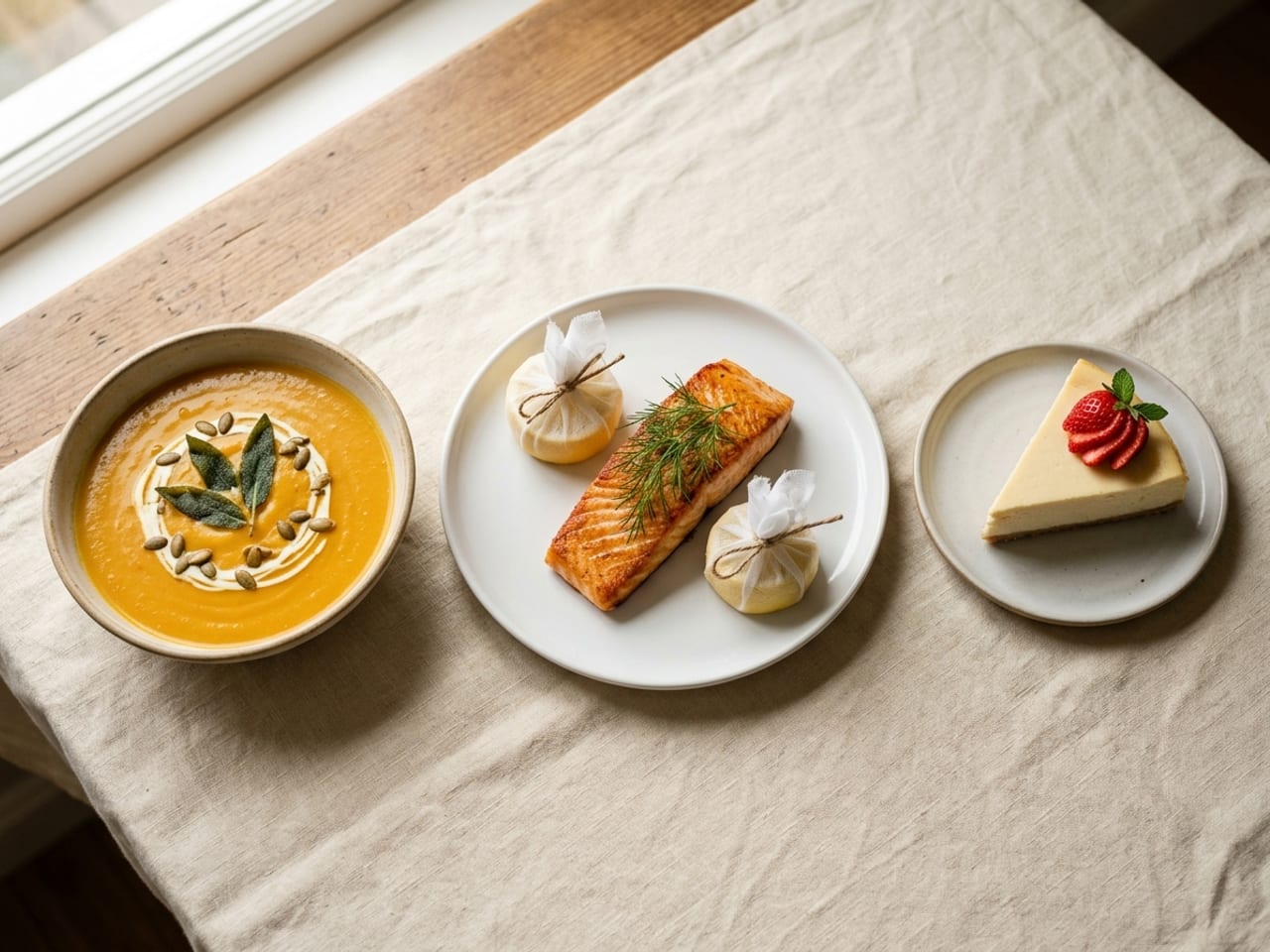
The five rules of garnishing
- It belongs to the dishEscoffier's rule, from 1903: garnishes "must always relate directly to the item they accompany", and any whim or foreign addition "must be strictly banned".3 Dill on salmon promises the dill that is in the sauce; a sprig of something that isn't in the dish promises a flavour that never arrives.
- It goes on lastCut herbs wilt, crunch goes soggy, and in 1747 Hannah Glasse was already warning that garnish made steaks go cold while the cook fussed with it.6 Prep ahead (here is what keeps), but place the garnish in the last minute before the plate leaves.
- It sets the expectationColour is the strongest cue we have for what food will taste like,58 so a garnish is a promise: lemon zest says citrus, a green herb says fresh, chilli slices say heat. Make it a promise the dish keeps.
12 types of food garnish
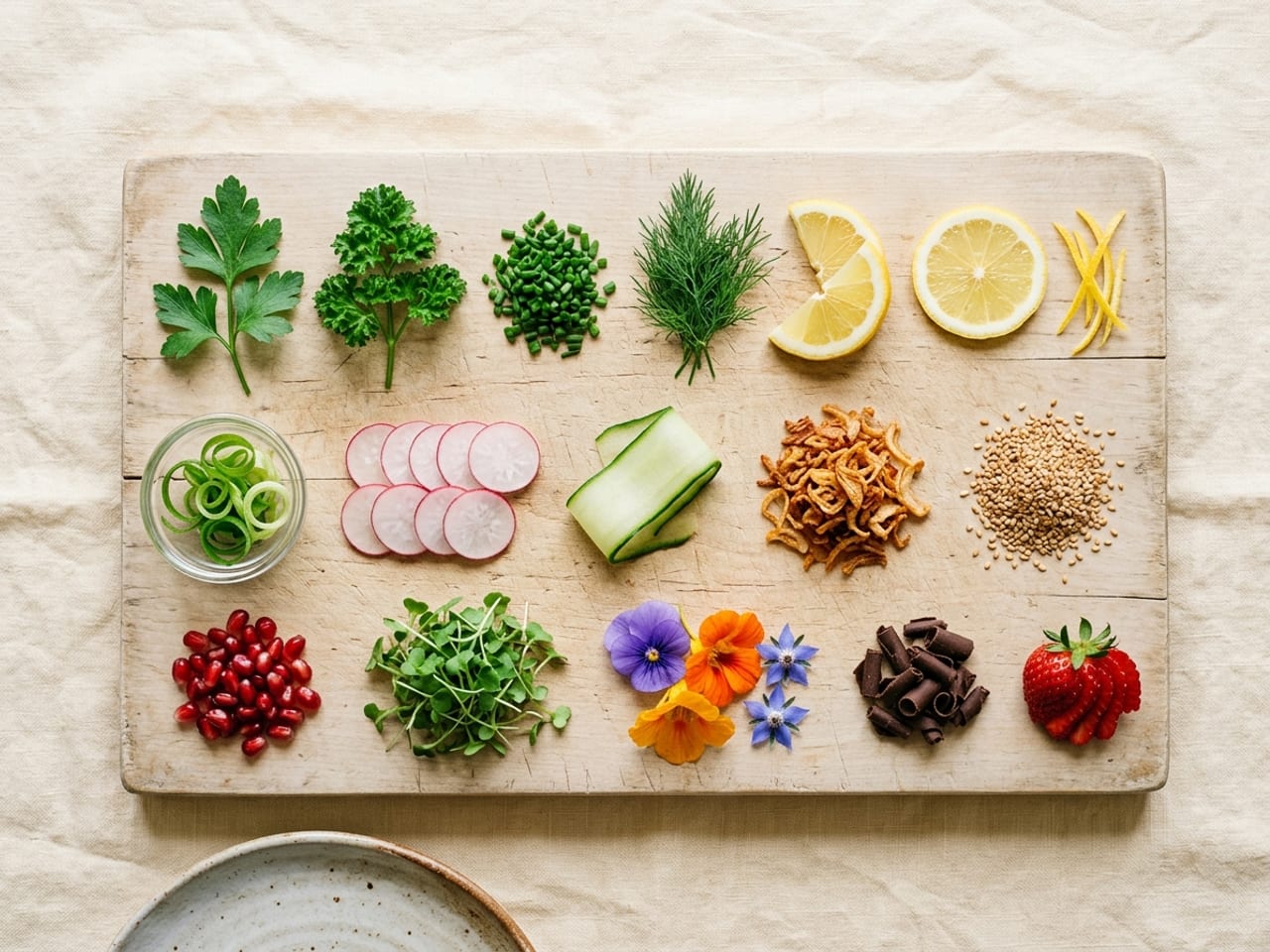
1. Fresh herbs
parsley · chives · dill · cilantro · basil · chervil
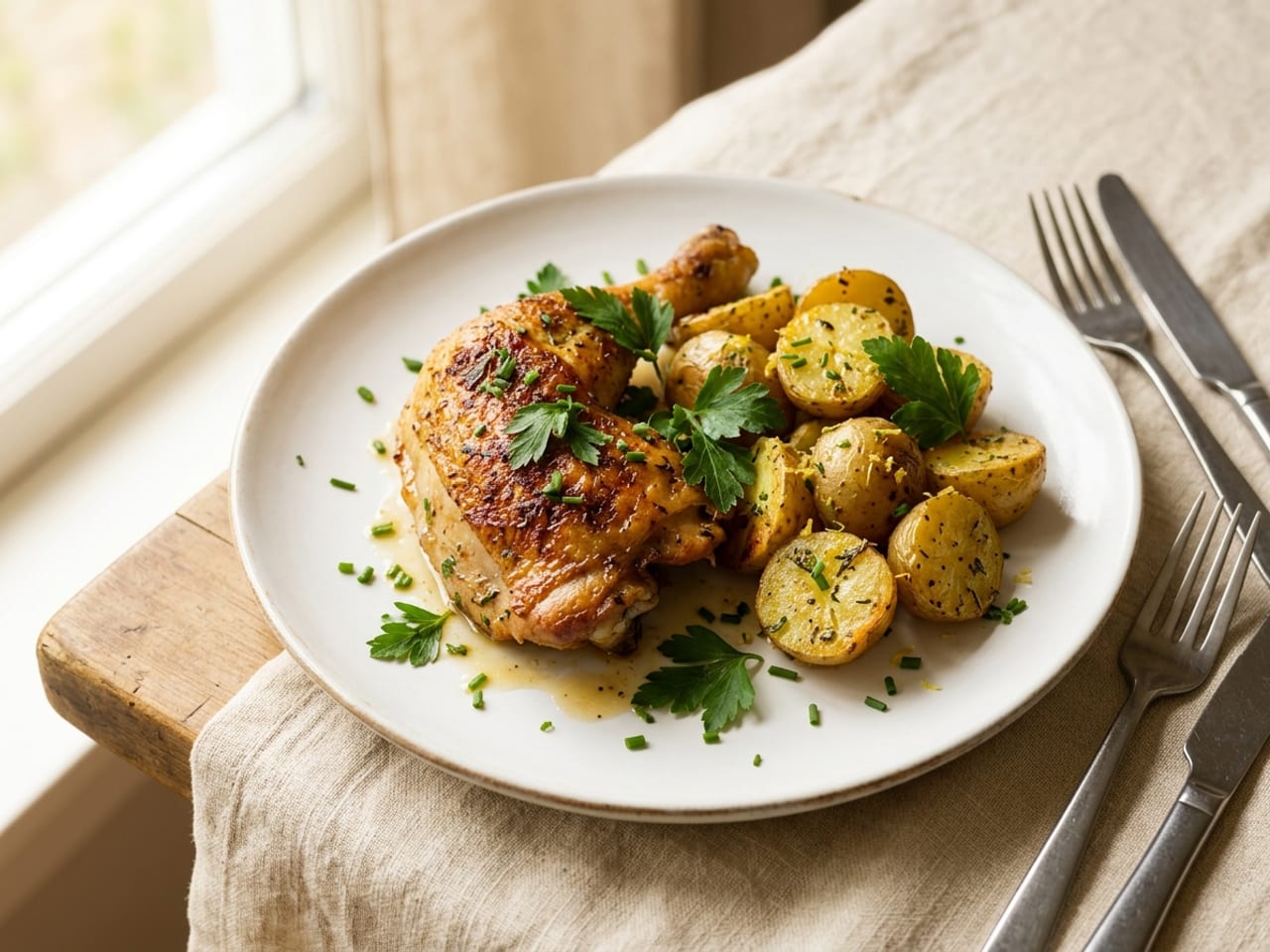
The default garnish, and the best one when the herb is already in the dish. Soft herbs (parsley, chives, dill, cilantro, chervil, basil) go on raw; America's Test Kitchen calls dill "best used as a finishing herb" for seafood, potatoes and eggs, while sage "should be cooked".18
Do it: pick whole leaves for a loose, natural scatter, or chop finely just before serving. See parsley and chiffonade.
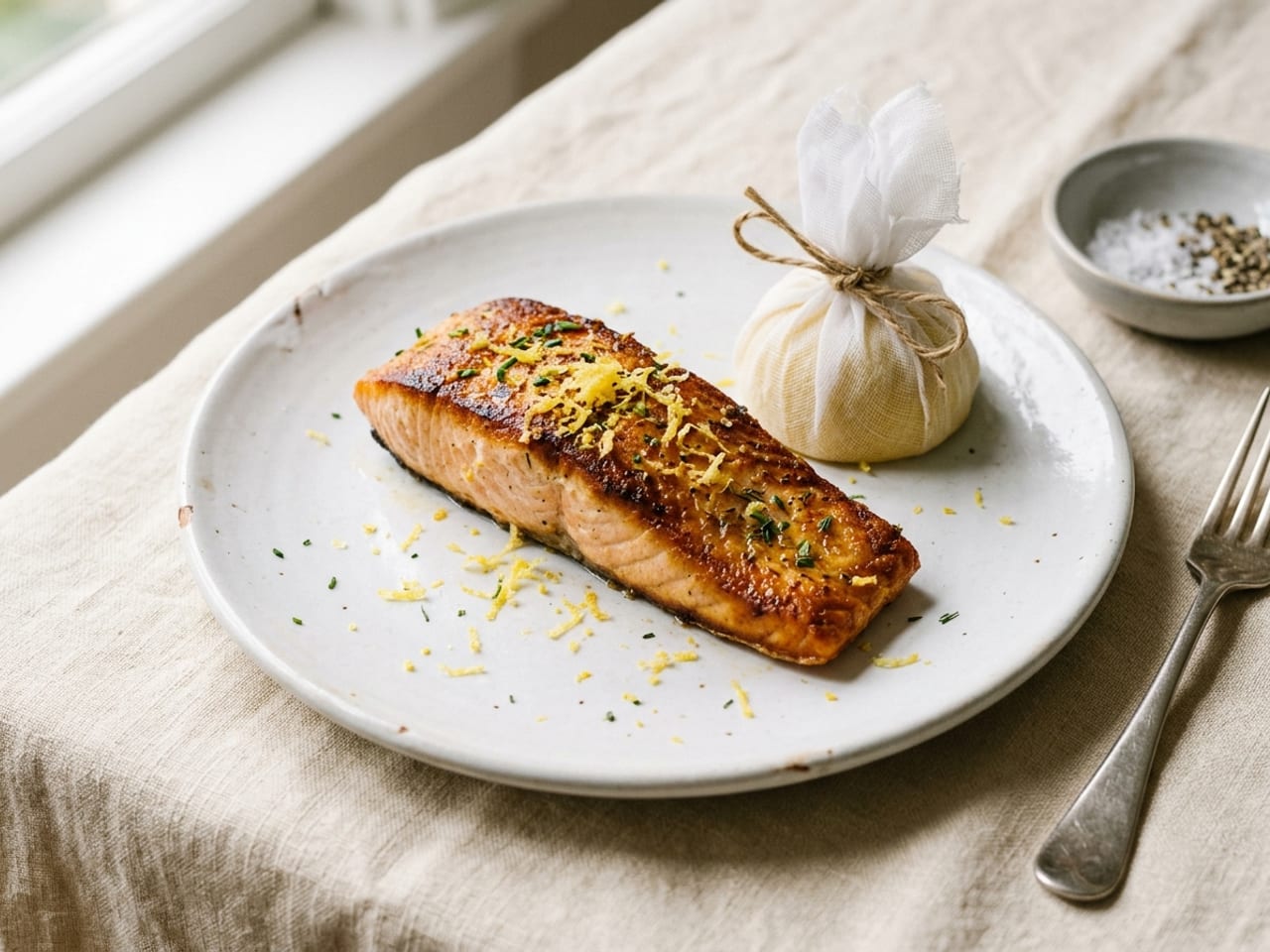
2. Citrus
wedges · wheels · zest · strips · suprêmes
A wedge lets the diner add acid; zest adds the aroma without the juice. The smell of lemon lives in the peel oil, which is mostly limonene, with more of the lemony citral compounds than orange peel carries.59
Do it: zest straight over the plate at the last moment, or serve a wedge on the side. The cuts are below; for segments see how to cut fruit.
3. Fresh fruit
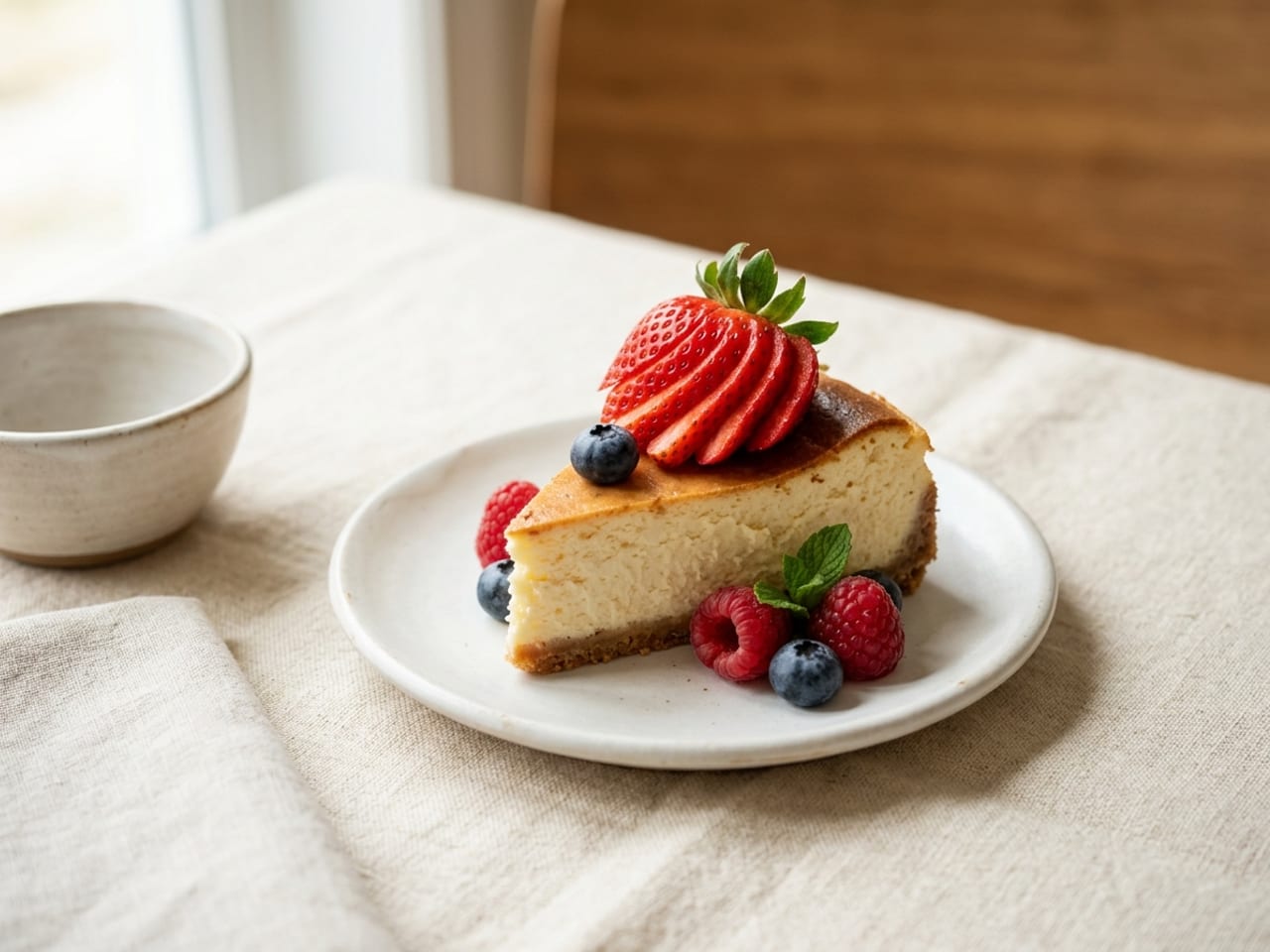
berries · strawberry fans · pomegranate · figs
The natural finish for cheesecake, panna cotta, yogurt and chocolate, and pomegranate seeds work on savoury plates too. Pick fruit that is already in the dessert or cuts its richness.
Do it: strawberries taste best at room temperature, so take them out of the fridge a little before you garnish.31 The fan is below.
4. Vegetable cuts
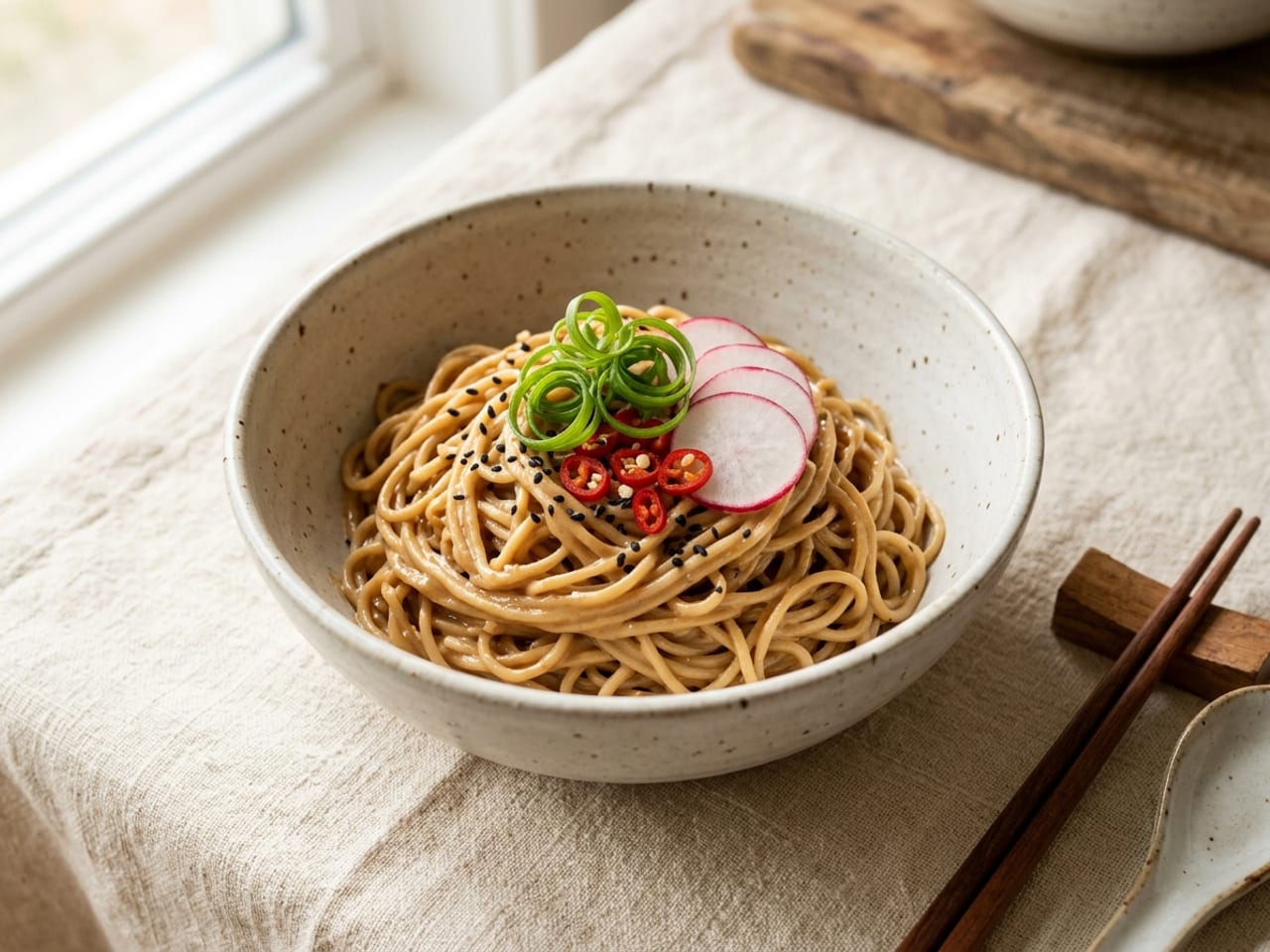
scallion curls · radish · cucumber ribbons · chilli
Raw vegetables cut thin add crunch, colour and freshness to noodles, rice bowls, tacos and salads. Scallion curls are "a fun technique that restaurants use", and they take ten minutes.22
Do it: slice as thin as you can, crisp in ice water, then dry well before they touch the food. Step by step.
5. Crunch
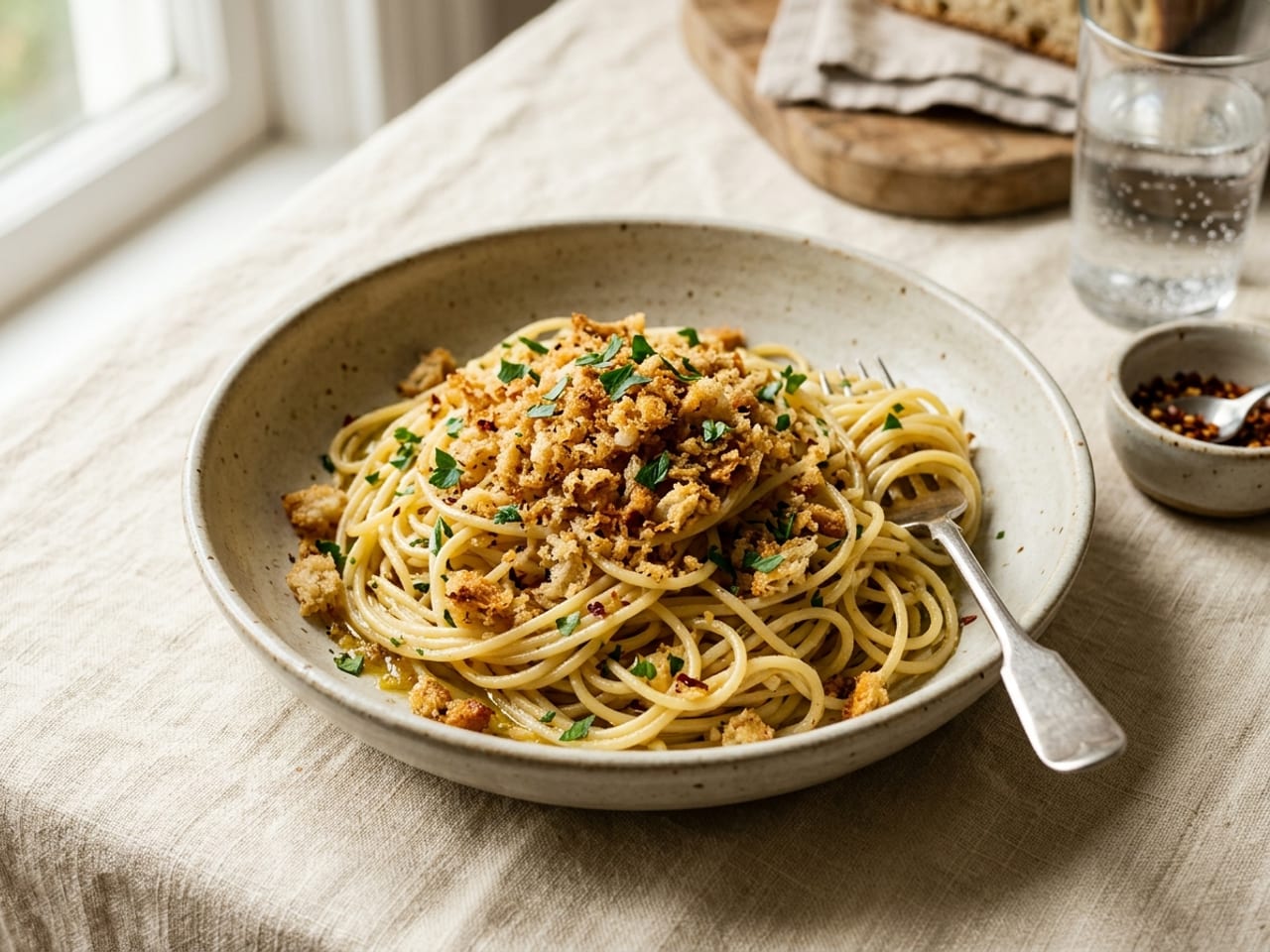
toasted breadcrumbs · nuts · seeds · crispy shallots · capers
A crisp topping on something soft is the garnish that changes how a dish eats, not just how it looks. People describe foods they like with a texture contrast about twice as often as foods they dislike.64
Do it: toast breadcrumbs, nuts or seeds; fry shallots or capers. Add them at the table, never under a sauce. Crispy shallots.
6. Oils and sauces
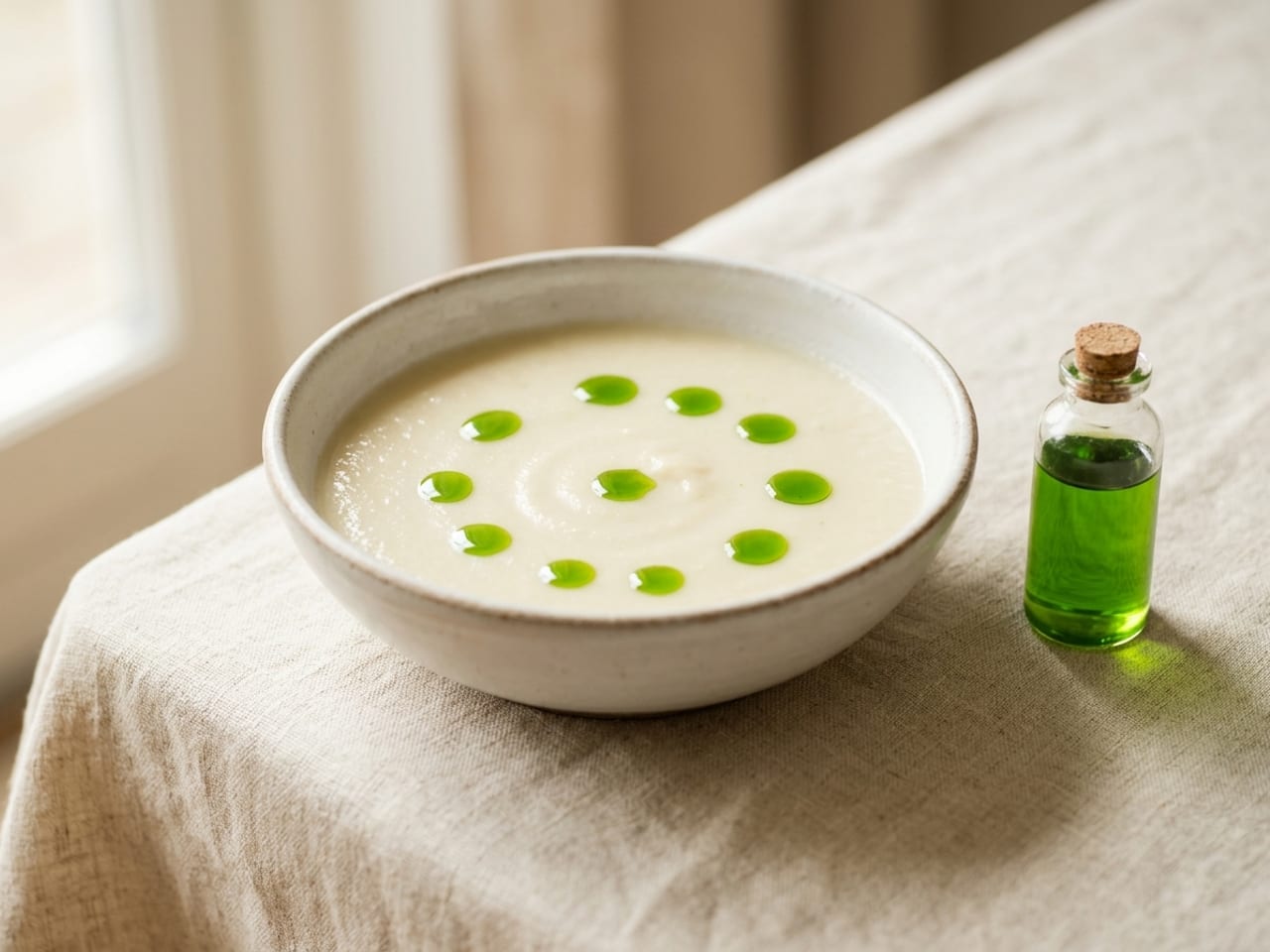
herb oil · a drizzle of olive oil · dots · a swirl
A few drops of bright herb oil or a thread of good olive oil on a soup, a swirl of cream or a line of sauce. In one experiment, laying out the same salad's sauces and elements like a painting, instead of tossing them together, made it more liked.55
Do it: herb oil, gels and dots have their own guide: plating components.
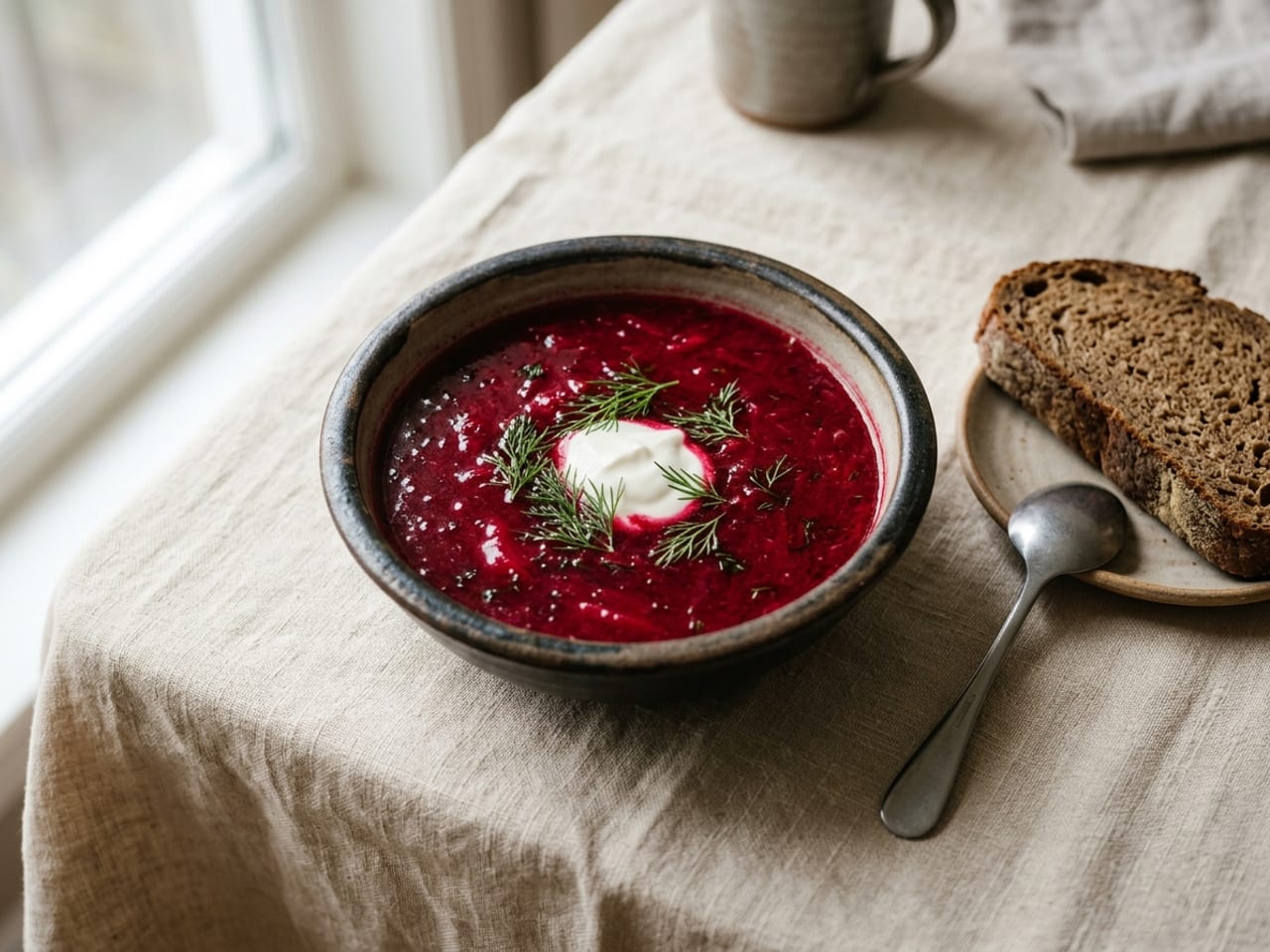
7. Cream and cheese
sour cream · crème fraîche · yogurt · shaved Parmesan
A cool dollop on a hot soup or a curry, a spoon of yogurt on something spicy, shaved Parmesan on pasta or risotto. It is flavour, fat and a white accent in one.
Do it: one neat spoonful, a herb on top, and serve at once so it just starts to melt at the edges.
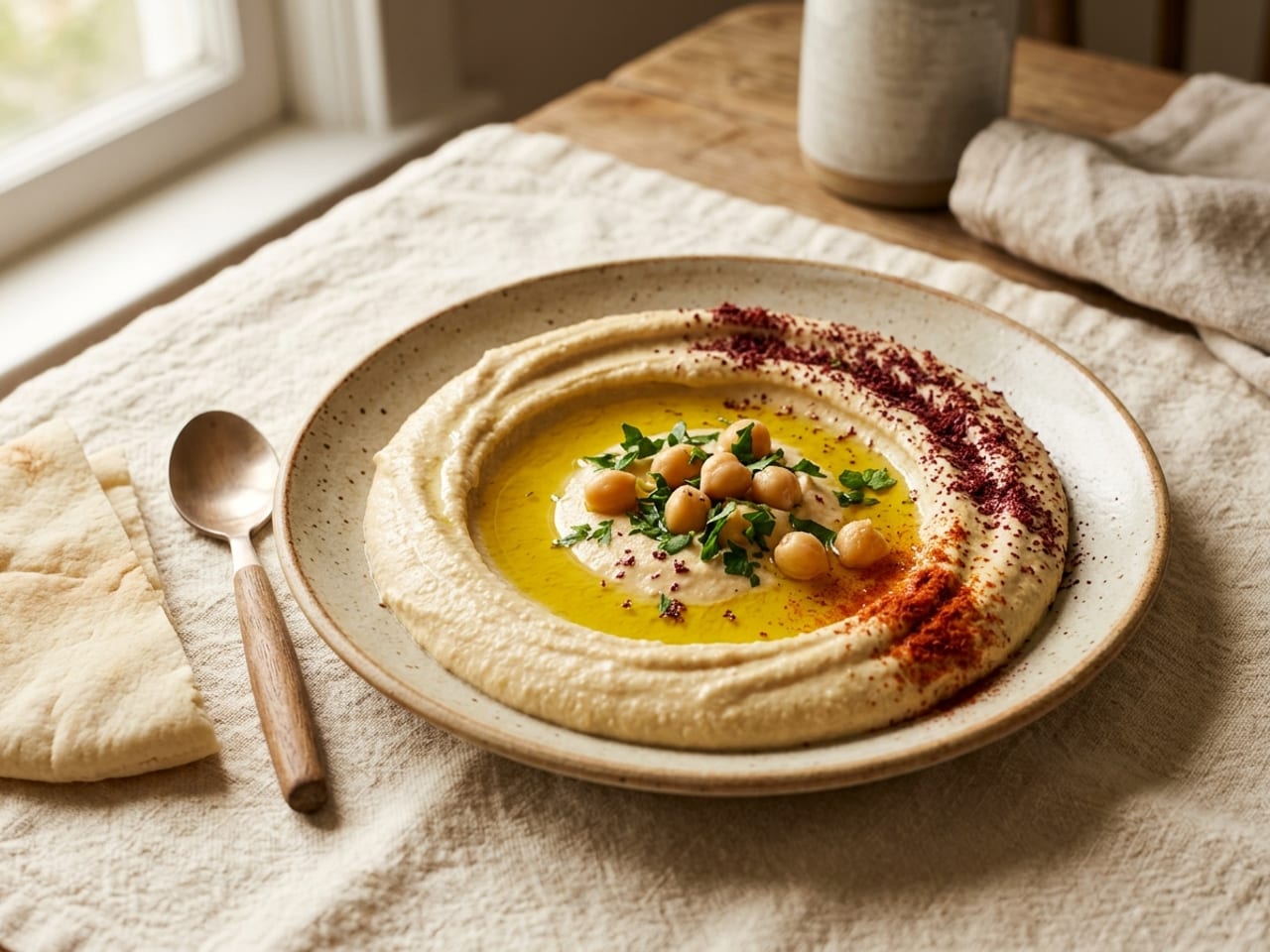
8. Spice dust
paprika · sumac · chilli flakes · black pepper · flaky salt
Paprika on deviled eggs, sumac on hummus, a grind of pepper, a pinch of flaky salt. Colour and a last hit of flavour in one move.
Do it: dust from a height through your fingers or a small sieve, over the food and not the rim. Use a sealed, in-date jar, since the spice goes on raw.
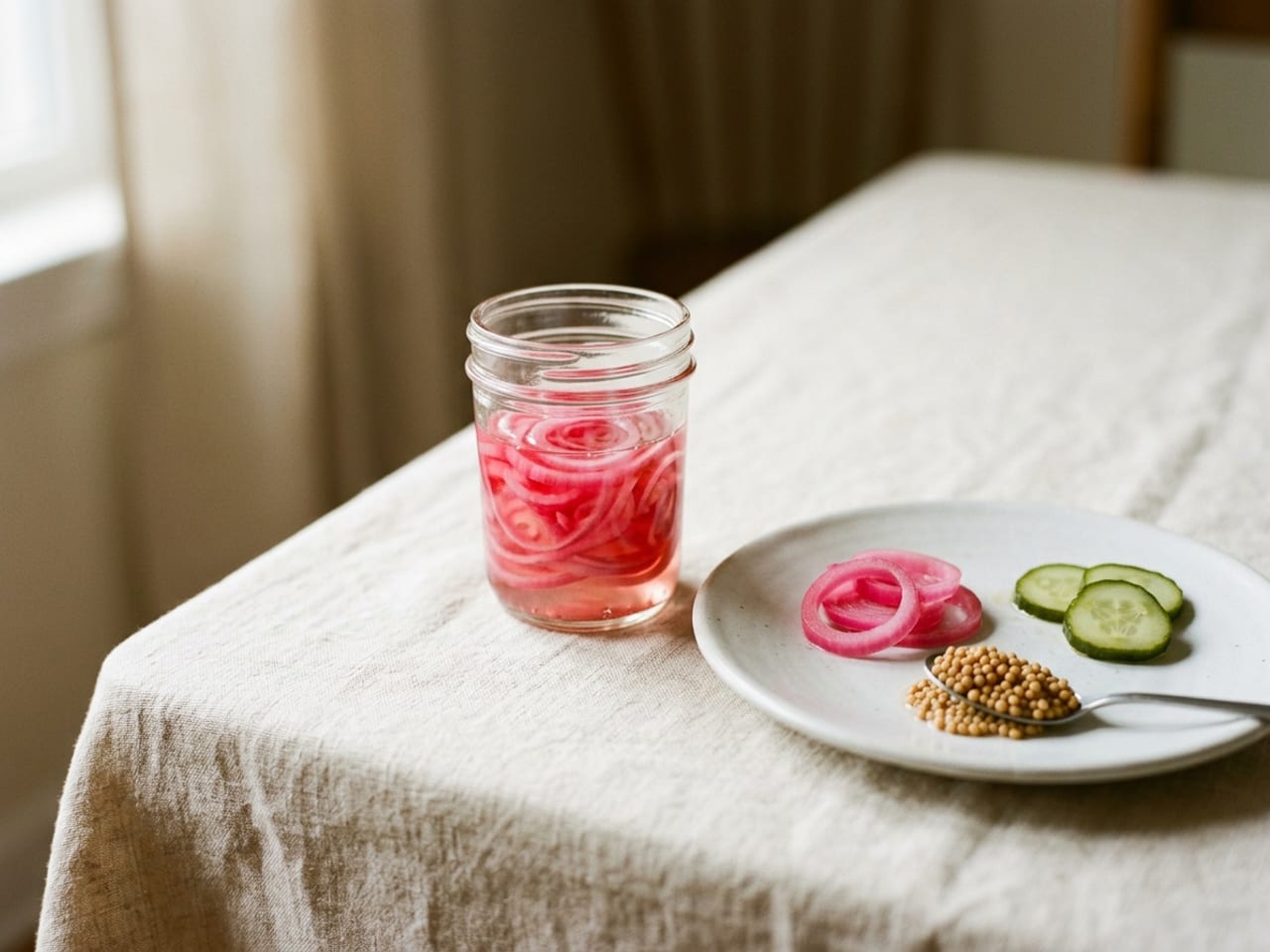
9. Pickles
pickled red onion · shallot rings · pickled mustard seeds
Bright pink pickled onions on tacos, grain bowls and rich braises: acid, crunch and colour that keeps for days in the fridge.
Do it: the quick recipe is below; more on pickles in plating components.
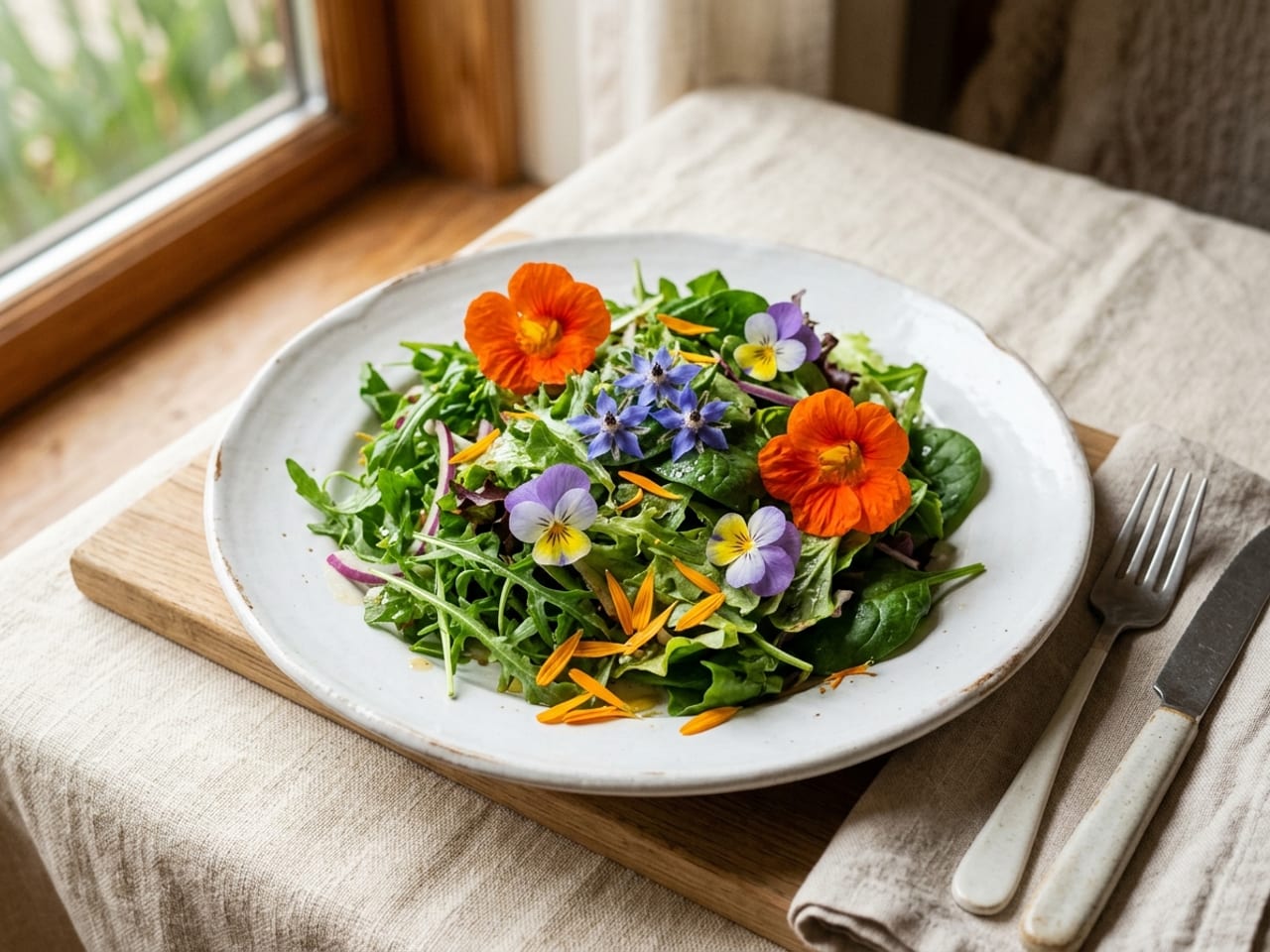
10. Edible flowers
nasturtium · viola · borage · calendula · chive blossom
The most striking garnish and the one with real rules: only flowers you can name, grown to be eaten, never from a florist.32 Nasturtium tastes peppery like watercress, borage like cucumber.
Do it: the list of what is safe, what is poisonous and how to prepare each is below. On a salad they go on last, after the dressing: how to plate salad.
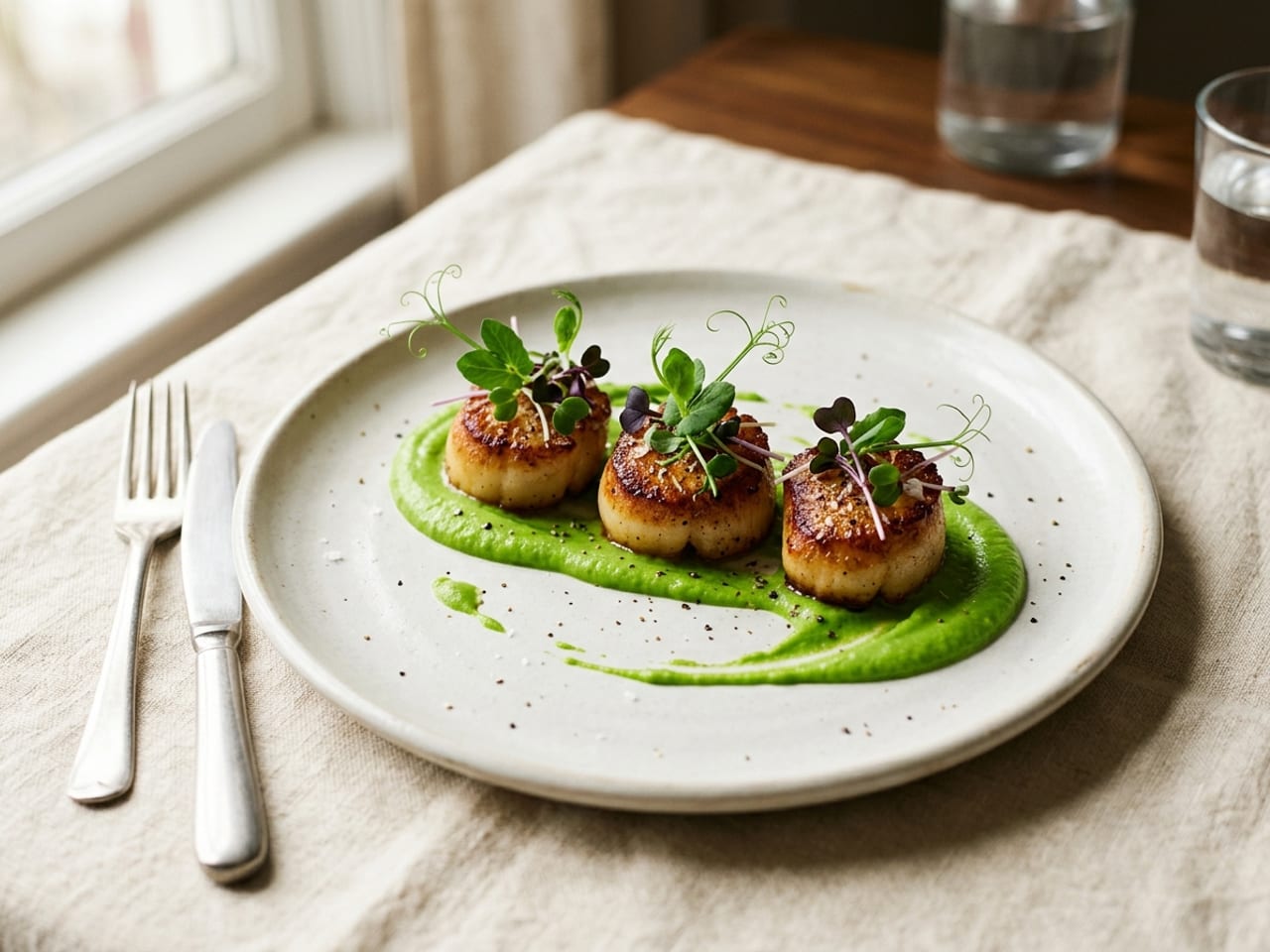
11. Microgreens
pea shoots · radish · sunflower · amaranth · shiso
Seedlings cut at the seed-leaf stage, which chefs use "to garnish and sign their plates".38 Each tastes of the plant it would have become: radish is spicy, pea shoots sweet.39
Do it: a small tuft, placed last with tweezers or fingertips. The types.
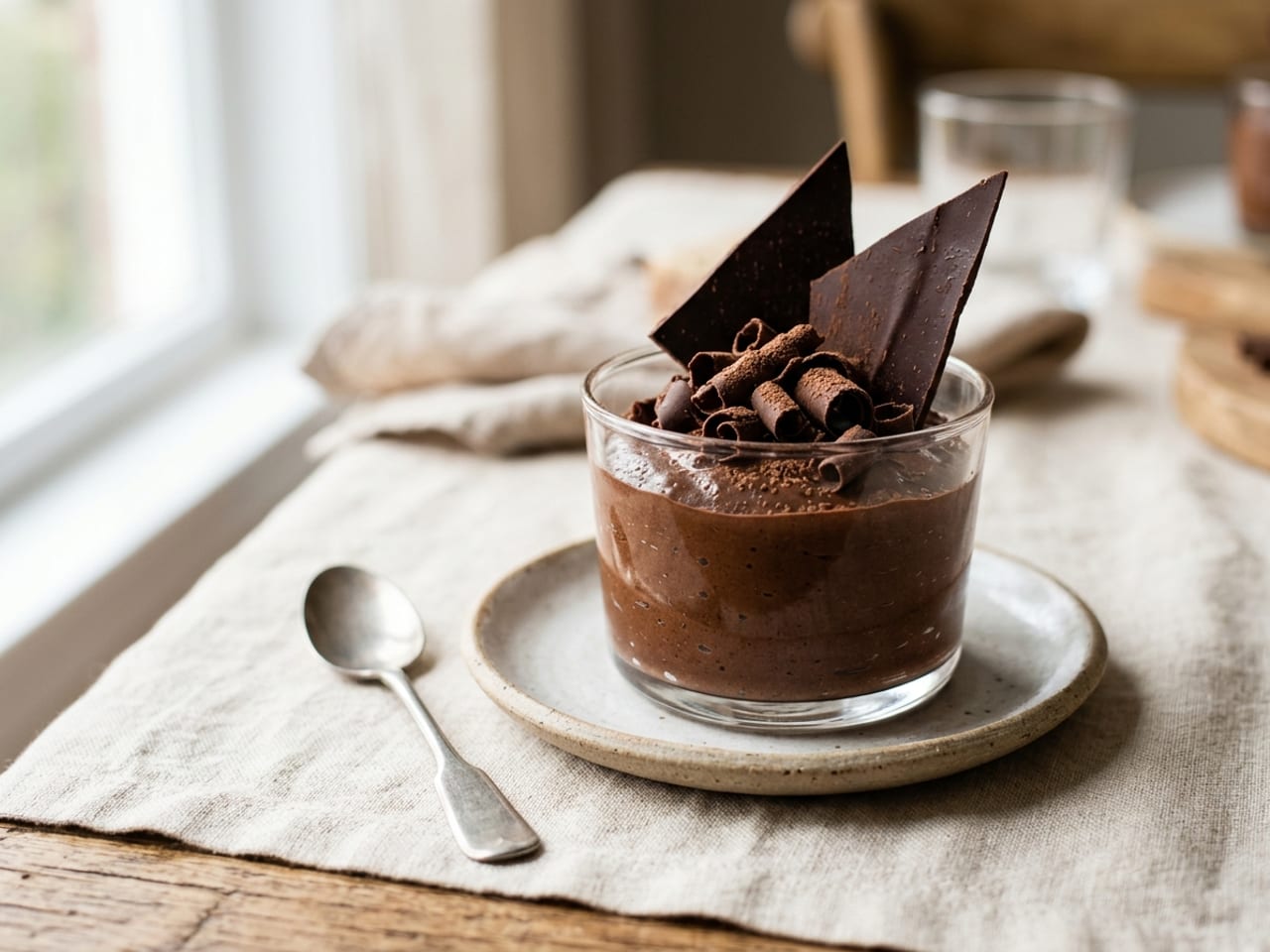
12. Chocolate and sweet
chocolate curls · shards · cocoa dust · icing sugar
Curls and shards on mousse, tarts and cakes; a dusting of cocoa or icing sugar through a sieve. Match the chocolate to the dessert.
Do it: curls need a softened block and a peeler, step by step. For tuiles and crumbs see dessert plating.
Eight garnishes, step by step
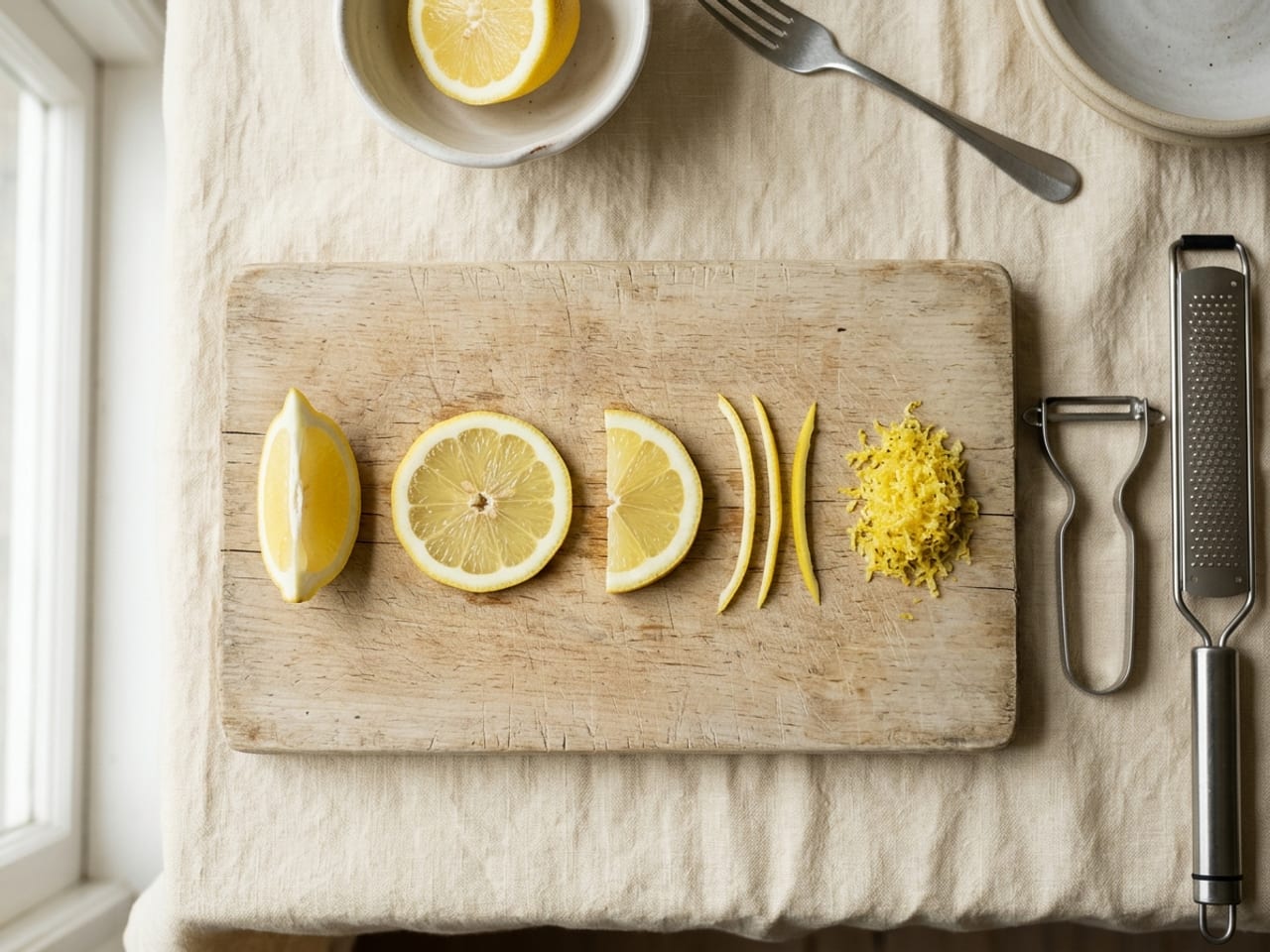
Lemon garnishes for food: wedges, wheels and zest
- Scrub the lemon under plain running water with a brush, no soap (and buy unwaxed if you will eat the peel).43
- Wedges: cut off both ends, halve lengthwise, and cut each half into three or four wedges ¼ to ½ inch (6 to 12 mm) thick.30 Slice off the white central ridge and flick out the pips so the diner gets juice, not seeds.
- Wheels: slices ⅛ to ¼ inch (3 to 6 mm) thick;30 cut one in half for a half-wheel that lies flat beside fish.
- Zest: grate only the coloured skin on a fine rasp, straight over the dish. For strips, run a Y-peeler lightly so no white pith comes with it: the pith is bitter.
- For fish: wrap a lemon half in muslin and tie it; the juice comes through and the pips stay in.
For a lemon twist in a drink, see cocktail garnishes.
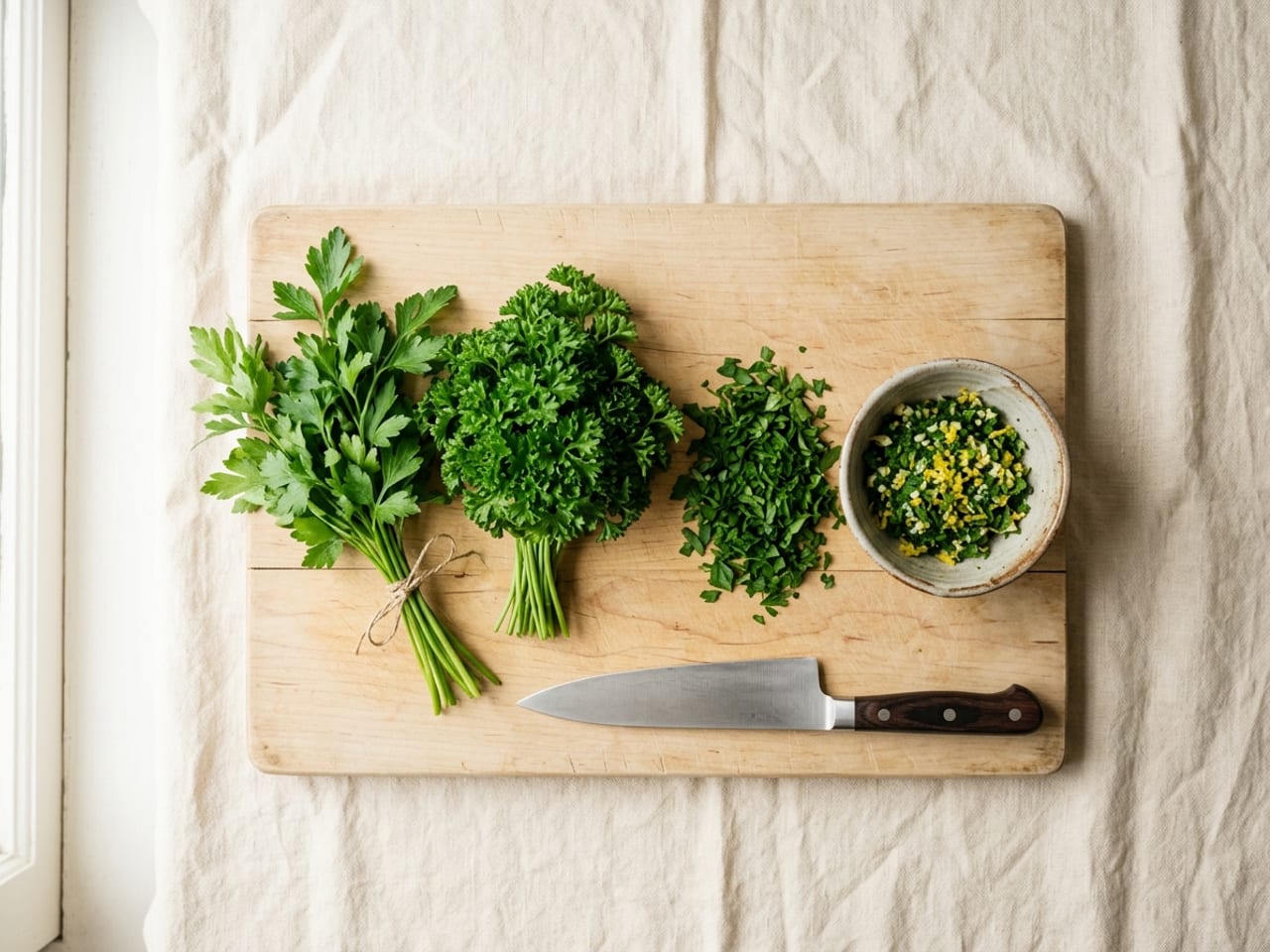
Chopped parsley and gremolata
- Wash and dry the parsley completely; wet herbs chop into paste. Flat-leaf has more flavour; curly holds its shape as a sprig.18
- Pick the leaves off the thick stems, bunch them tight and rock a sharp knife through, gathering and re-chopping until fine.
- Gremolata: 2 tablespoons of minced parsley, 1 minced garlic clove and 1 teaspoon of grated lemon zest, stirred together.21 It "helps jazz up soups, pasta, fish, and just about any cut of meat", and is the classic on osso buco.
- Chop small batches close to serving and keep them cold: chopped parsley left out all day was the common thread in the 1998 outbreaks (why).40
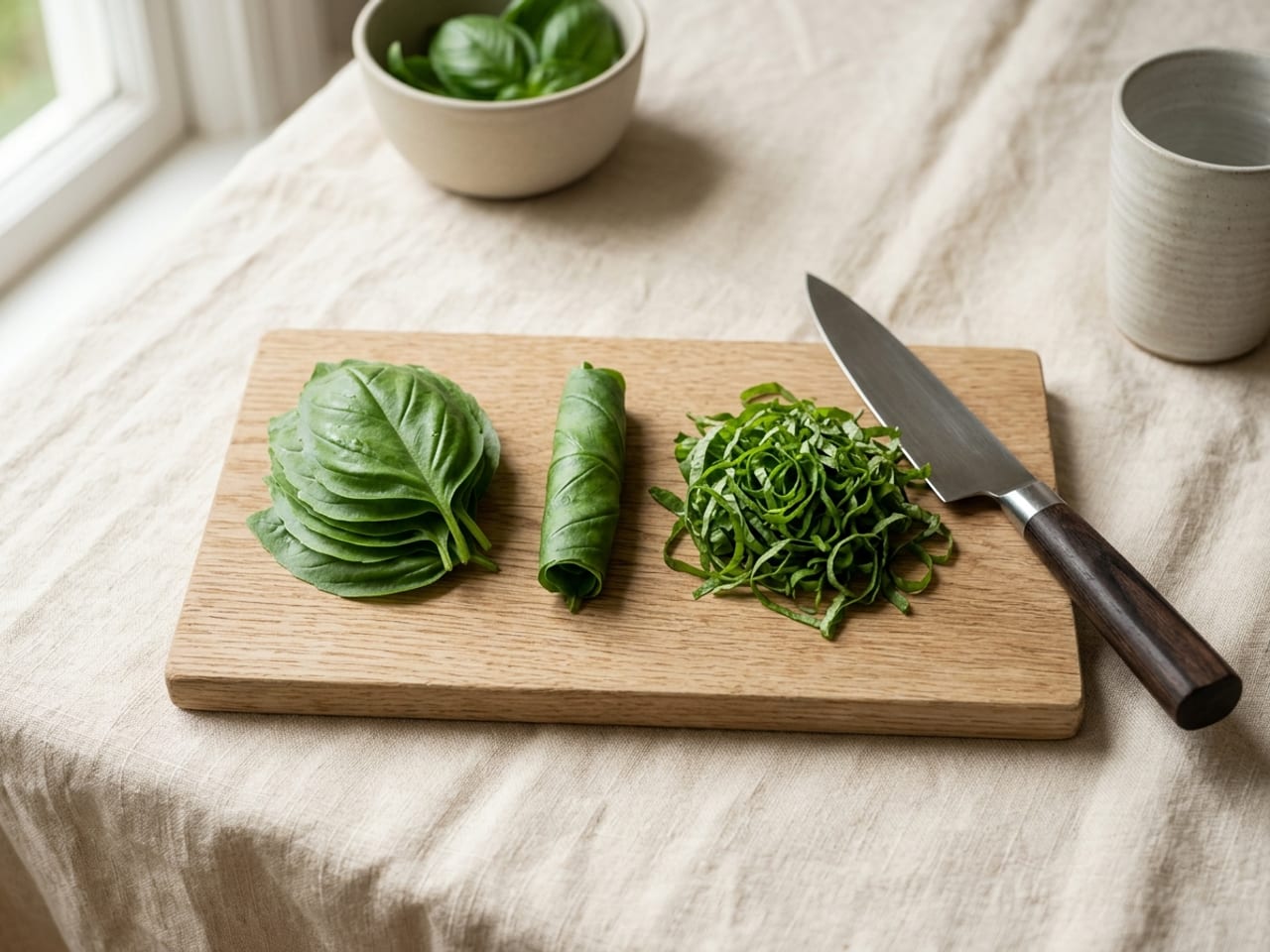
Basil chiffonade (herb ribbons)
- Pick large, dry leaves and stack five or six of them, biggest at the bottom.
- Roll the stack tightly lengthwise into a cigar.
- Slice across the roll as thinly as you can with a very sharp knife, then fluff the ribbons apart with your fingertips.
- Cut at the last minute: the cut edges darken as they sit, the same kind of enzymatic browning that turns a cut apple brown.62
Escoffier's chiffonade was sorrel or lettuce cut "into fine strips";2 the same roll-and-slice works for mint, sage and spinach.
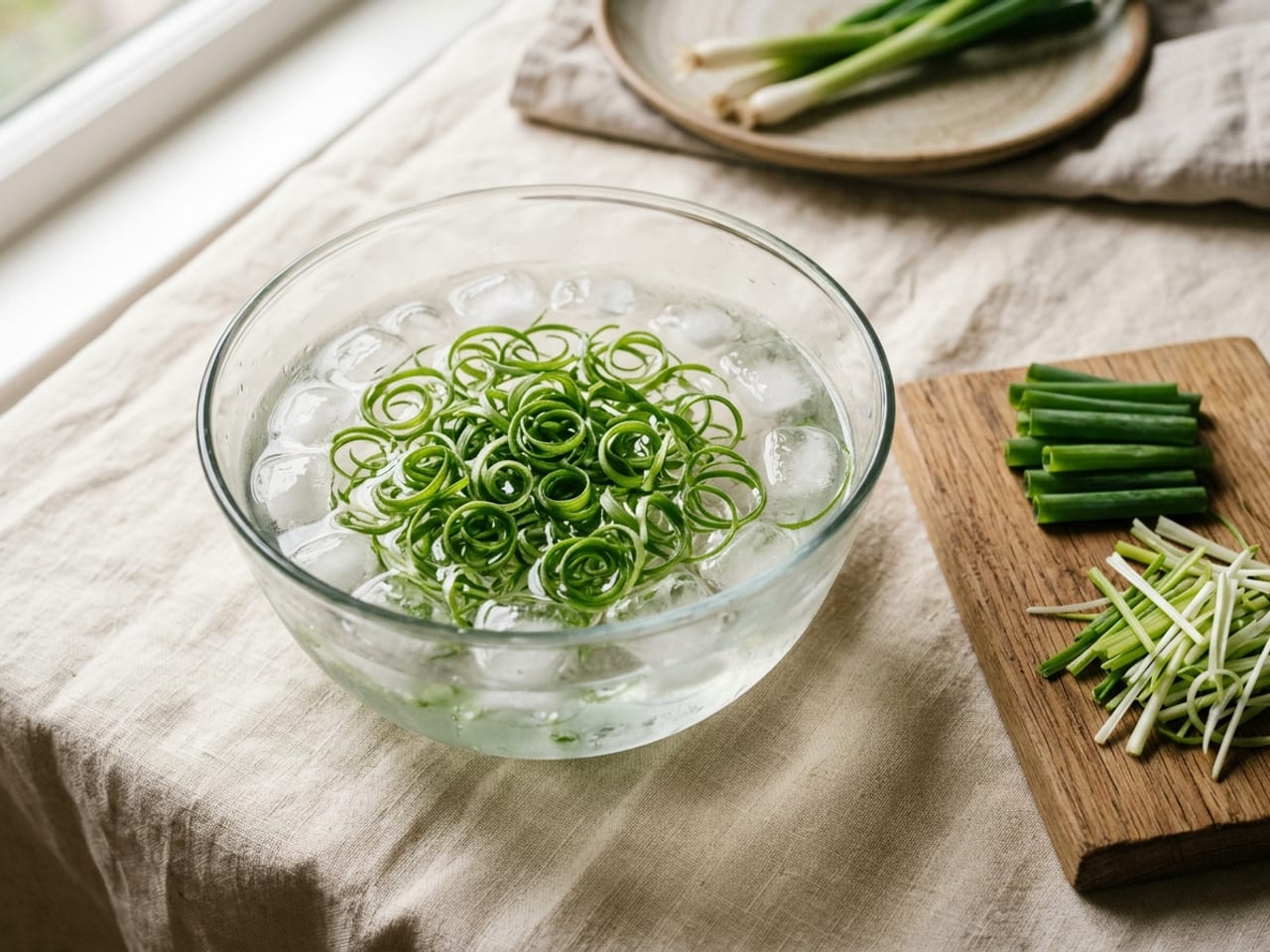
Scallion curls
- Cut scallions (spring onions) into 2-inch (5 cm) pieces, then slice each piece lengthwise into very thin strips.22
- Drop them into a bowl of ice water and leave about 10 minutes, until they curl and crisp.22 To make them ahead, leave the green parts under ice water in the fridge for 2 to 16 hours.22
- Drain and "dry thoroughly with paper towels"22 so they don't water down the dish.
The usual explanation is that thin strips take up water unevenly, so they curl; the same ice bath crisps radish slices and cucumber or carrot ribbons.
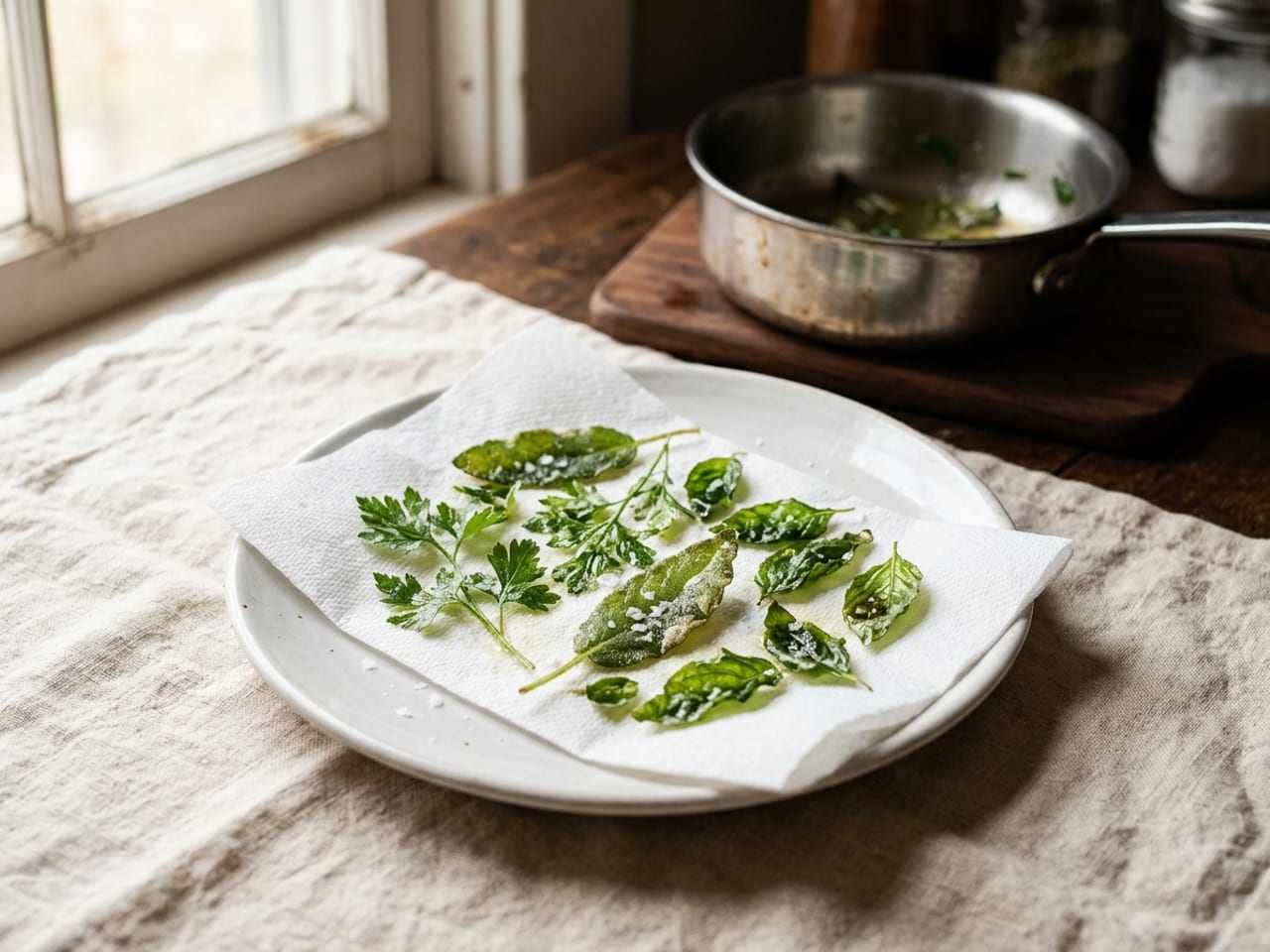
Fried sage, parsley and basil
- Wash and dry the leaves completely. Any water on them will spit in the oil.
- Heat a finger of neutral oil in a small pan until a test leaf sizzles at once.
- Fry a few leaves at a time for a few seconds, until the bubbling stops and they turn translucent and crisp. Beeton's rule for parsley still holds: "the quicker it is fried the better."7
- Lift out onto paper towel and salt at once.
Robert May garnished fried meat with fried parsley in the 1600s,5 and Beeton promised it would come out "green and crisp".7
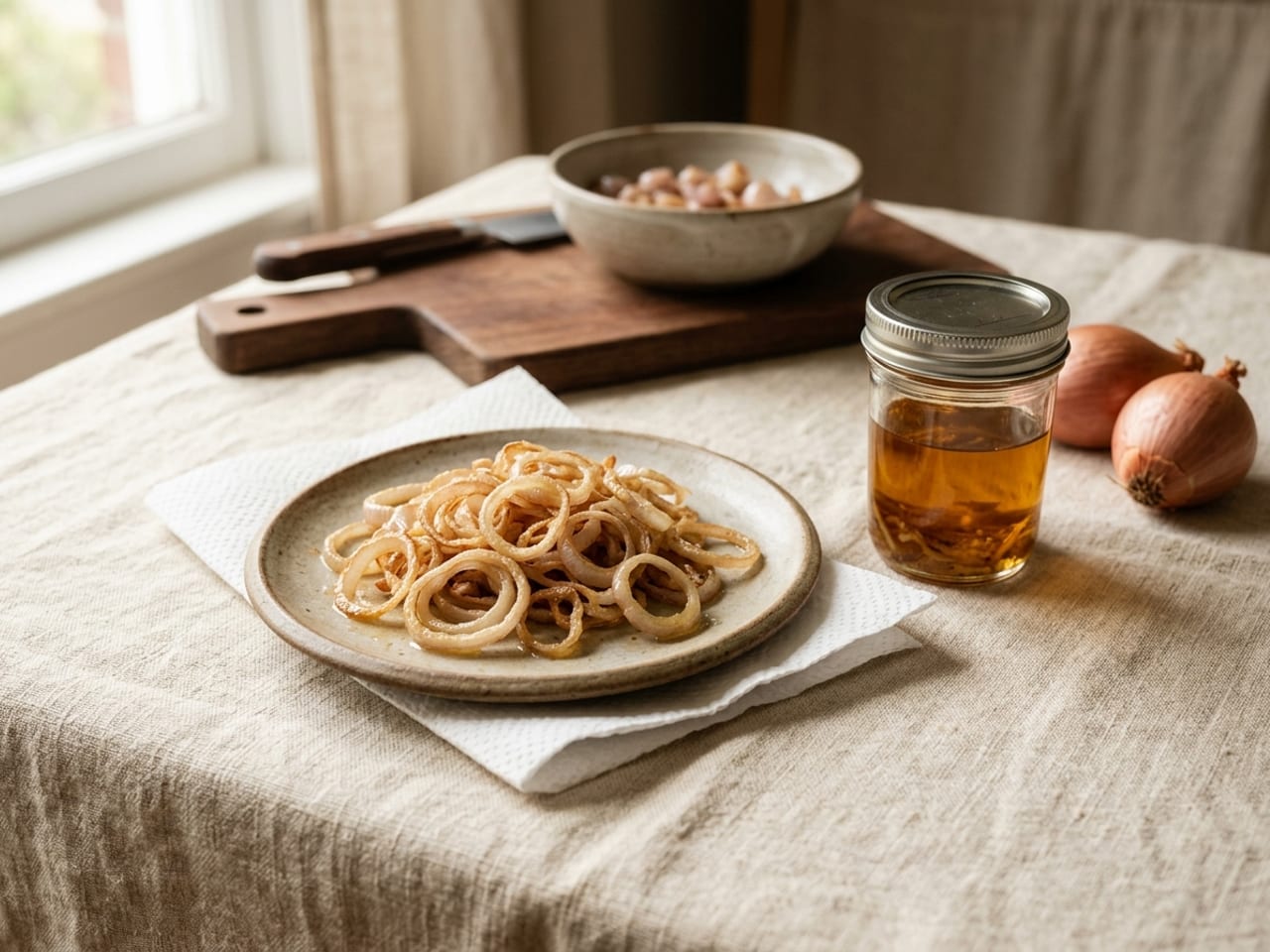
Crispy fried shallots
- Slice 1 pound (450 g) of shallots very thin, about 1/16 inch (1.5 mm), on a mandoline.23
- Put them in a saucepan with 2 cups (480 ml) of vegetable oil and then turn the heat to high: they start in cold oil. Stir often; after the oil bubbles hard, cook until a few turn golden, then lower the heat until they are deep golden.23
- Strain at once, salt, spread on paper towels, then dry in a 200°F (93°C) oven for 15 to 25 minutes until firm.23
- Keep the shallots at room temperature and the strained oil in the fridge; both last up to a month.23
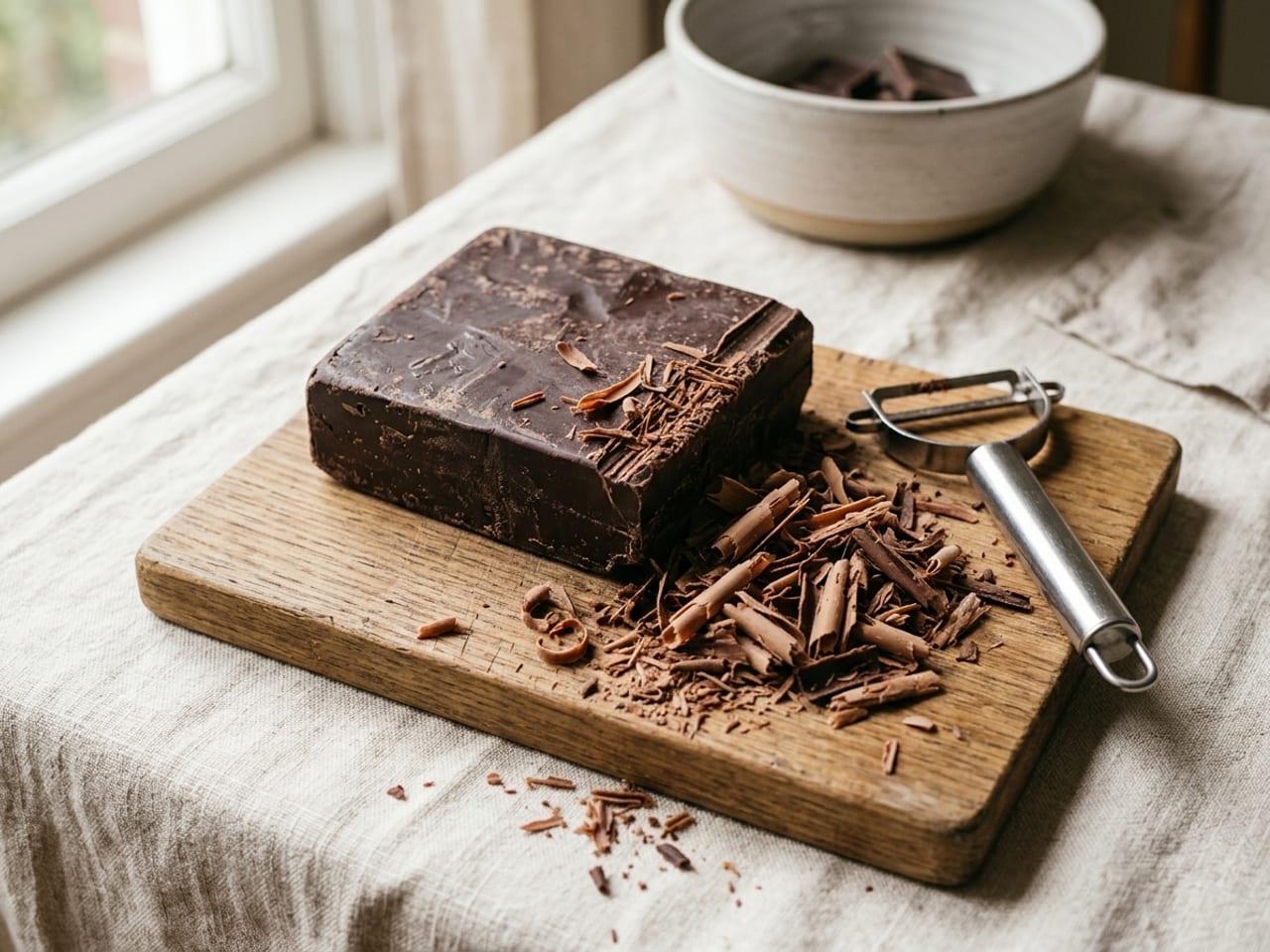
Chocolate curls
- Use block (not bar) chocolate at least 1 inch (2.5 cm) thick: semisweet, bittersweet or white.27
- Soften it a little on a plate on a warm windowsill, or 1 minute in the microwave on the lowest setting. It "shouldn't melt, but it should soften a little."27
- Run a vegetable peeler along the width of the block. The longer the block, the bigger the curl.27
- Lift curls with a cold spoon or a skewer, not your fingers, which melt them.
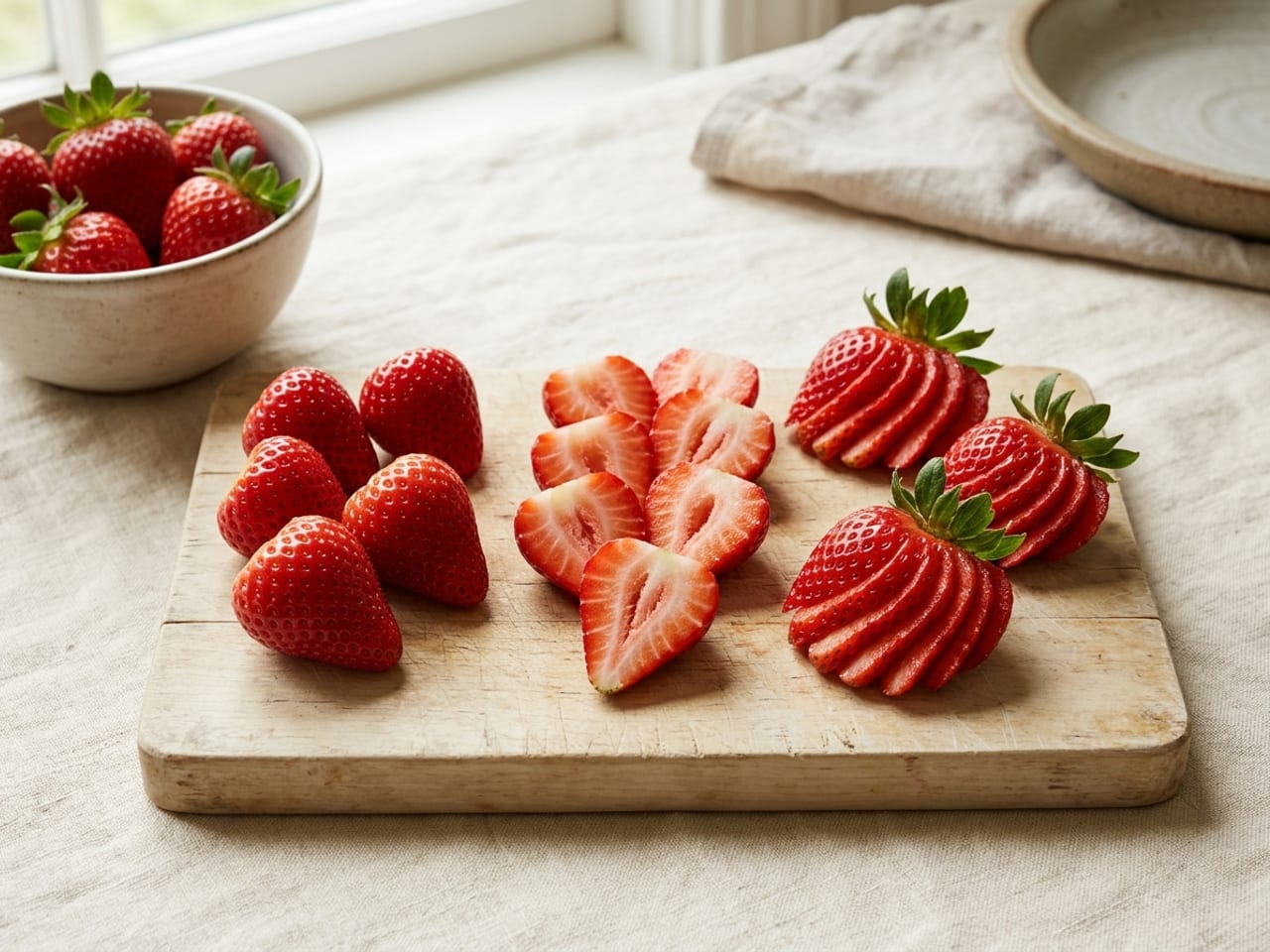
Strawberry fans
- Rinse strawberries with the green caps still on, then blot them dry.31
- Keep the cap on. With a small sharp knife, make thin lengthwise cuts from the tip up towards the cap, stopping just short of it so the slices stay joined.
- Press gently with a fingertip to fan the slices out, and set the fan on the dessert just before serving.
More berry cuts, and eleven other fruits, in how to cut fruit.
Quick pickled red onions. Bring 1 cup (240 ml) of red wine vinegar and ⅓ cup (65 g) of sugar with ¼ teaspoon of salt to the boil, pour it over one thinly sliced red onion and cool about an hour. They keep a week in the fridge.25
Toasted nuts and seeds. Spread on a baking sheet in a 350°F (175°C) oven for 5 to 10 minutes, checking and stirring early and often; a nut is done when it is golden all the way through, so cut one in half to check.26
Crispy capers. Rinse and dry ¼ cup of capers, cover them with ⅓ cup (80 ml) of olive oil in a bowl and microwave about 5 minutes, stirring halfway, until darker and shrunken. They open "like delicate little flower petals" and crisp as they cool.24
Parsley garnish: why it's everywhere, and what to use instead
It started as a real garnish. In the 1600s fried parsley was the standard finish for fried meat and fish,5 and in 1861 Mrs Beeton wanted "plenty of parsley, horseradish, and lemon" around fish.7 Escoffier chose the curly kind for garnishing, kept in fresh water until needed.2
Then it became a reflex. Food historian Jan Whitaker writes that "nothing decorated more restaurant plates in the 20th century than parsley, most of it by all accounts uneaten". It was there to fill empty space and add colour to dull food, and by 1915 diners found it a nuisance and suspected their sprig had been recycled from someone else's plate.9
Flat-leaf or curly? Flat-leaf (Italian) parsley has more flavour, which is why America's Test Kitchen cooks with it;18 curly holds its shape better as a sprig. Either way, it is food: a tablespoon of chopped parsley carries about 62 µg of vitamin K.68
Instead of parsley, use the herb the dish already has: chives on eggs and potatoes, dill on fish, cilantro on curry and tacos, basil on tomato, chervil or tarragon on French dishes. Or gremolata, scallion curls, microgreens or a little zest.
Edible flowers: which are safe, and how to use them
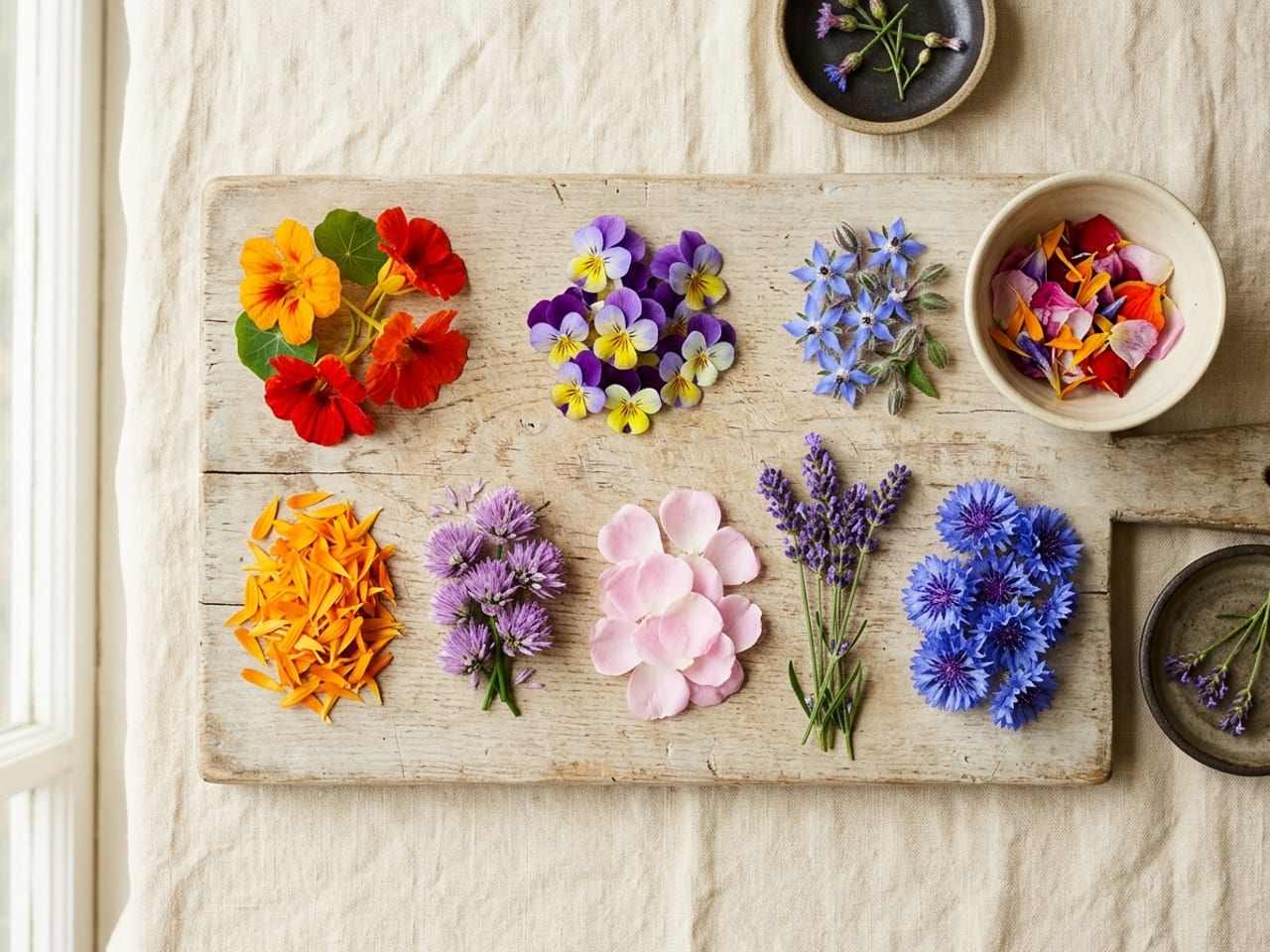
The rules first. Only eat a flower you can identify by its Latin name, and "if in doubt, do not eat it". Never use flowers from florists, garden centres or nurseries, which are not grown as food.32 Eat only the petals of most flowers, removing the pistils and stamens; keep the sepals only on violas and pansies; and cut off the bitter white base of rose, dianthus and marigold petals.33 Rinse gently just before use.
How to use them. Scatter whole small flowers or loose petals over salads, soups, rice, cakes and desserts, one or two kinds at a time. In a study of shoppers rating potted edible flowers, a mix of colours scored best, and two-thirds would not buy plants with 10% insect damage: flawless flowers matter.66
| Flower | Tastes like | What to use | Good on |
|---|---|---|---|
| Nasturtium Tropaeolum majus | Watercress, peppery | Whole flower | Salads, savoury plates |
| Pansy, Johnny-jump-up Viola × wittrockiana, V. tricolor | Stronger than violets | Whole flower, sepals on | Cakes, salads; candies well |
| Violet Viola odorata | Sweet | Whole flower | Desserts; candies well |
| Borage Borago officinalis | Cucumber | Flower | Salads, drinks, ice cubes |
| Calendula (pot marigold) Calendula officinalis | Tangy and peppery | Petals | Scatter over rice, salads, soups |
| Chive blossom Allium schoenoprasum | Onion, strong | Separated florets | Eggs, potatoes, soups |
| Rose Rosa spp. | Perfumed; sweet to bitter | Petals only, white base cut off | Desserts |
| Lavender Lavandula angustifolia | Highly perfumed | Flowers, sparingly | Desserts, lamb |
| Squash blossom Cucurbita spp. | Mild, raw squash | Whole, stamens removed | Stuffed and fried, or torn over pasta |
| Signet marigold Tagetes tenuifolia | Citrus | Petals, white base cut off | Salads, rice |
| Dianthus (pinks) Dianthus spp. | Spicy, cloves | Petals, white base cut off | Desserts, salads |
| English chamomile Chamaemelum nobile | Sweet apple | Flower | Ragweed allergy caution |
| Hibiscus Hibiscus rosa-sinensis | Citrus, cranberry | Flower | Desserts, drinks |
| Tuberous begonia Begonia × tuberhybrida | Citrus | Flower (hybrids only) | Can aggravate gout |
| Daylily Hemerocallis fulva | Asparagus and zucchini, cooked | Cooked; in moderation | NOT a true lily |
| Herb flowers dill, fennel, cilantro, basil, rosemary | Milder than the leaves | Flower heads | Wherever the herb goes |
| Anise hyssop Agastache foeniculum | Anise, licorice | Flowers | Fruit, desserts |
| Lilac Syringa vulgaris | Perfume, slightly bitter | Flowers | Candies well |
| Apple blossom Malus spp. | Floral to sour | Petals only | Seeds and leaves are poisonous |
| Cornflower Centaurea cyanus | Not described | Flowers | Colour; listed edible by NC State |
Taste words are Colorado State University Extension's,32 preparation from Nebraska Extension;33 cornflower from NC State.36 Begonia can aggravate gout.34
Poisonous flowers: never on food or cake
| Poisonous flower | Note |
|---|---|
| Lily of the valley | on both the CSU and Poison Control lists32,35 |
| Foxglove | on both lists32,35 |
| Oleander | on both lists32,35 |
| Daffodil, jonquil | on both lists32,35 |
| Hydrangea | flowers and leaves contain cyanogenic glycosides36 |
| Sweet pea (Lathyrus) | unlike garden pea flowers, which are edible32,34,36 |
| Azalea, rhododendron | on both lists32,35 |
| True lilies and calla lily | "Many Lilies contain alkaloids and are NOT edible"32 |
| Larkspur, delphinium, monkshood | CSU's toxic list32 |
| Baby's breath (Gypsophila) | listed as poisonous to humans, a cake favourite36 |
| Poppy flowers | some poppies have edible seed, but not edible flowers34 |
| Hyacinth, lantana, clematis | CSU's toxic list32 |
Look-alikes are the trap. Garden pea flowers are edible but sweet peas are not; daylilies are edible but true lilies are not.34,32 Organic or home-grown does not make a toxic flower safe, and neither does sugar.34
Flowers on cakes. Use edible flowers, sugar flowers or food-safe artificial ones. If you use fresh non-edible flowers for looks, the UK Food Standards Agency's food-contact team says stems that go into the cake need "a barrier" such as a cake pick, florist wire is not appropriate, and sap must not leak onto the food.34 To candy edible flowers, paint the petals with pasteurised egg white, dust with superfine sugar and let them dry.32
Microgreens for garnish: what each tastes like
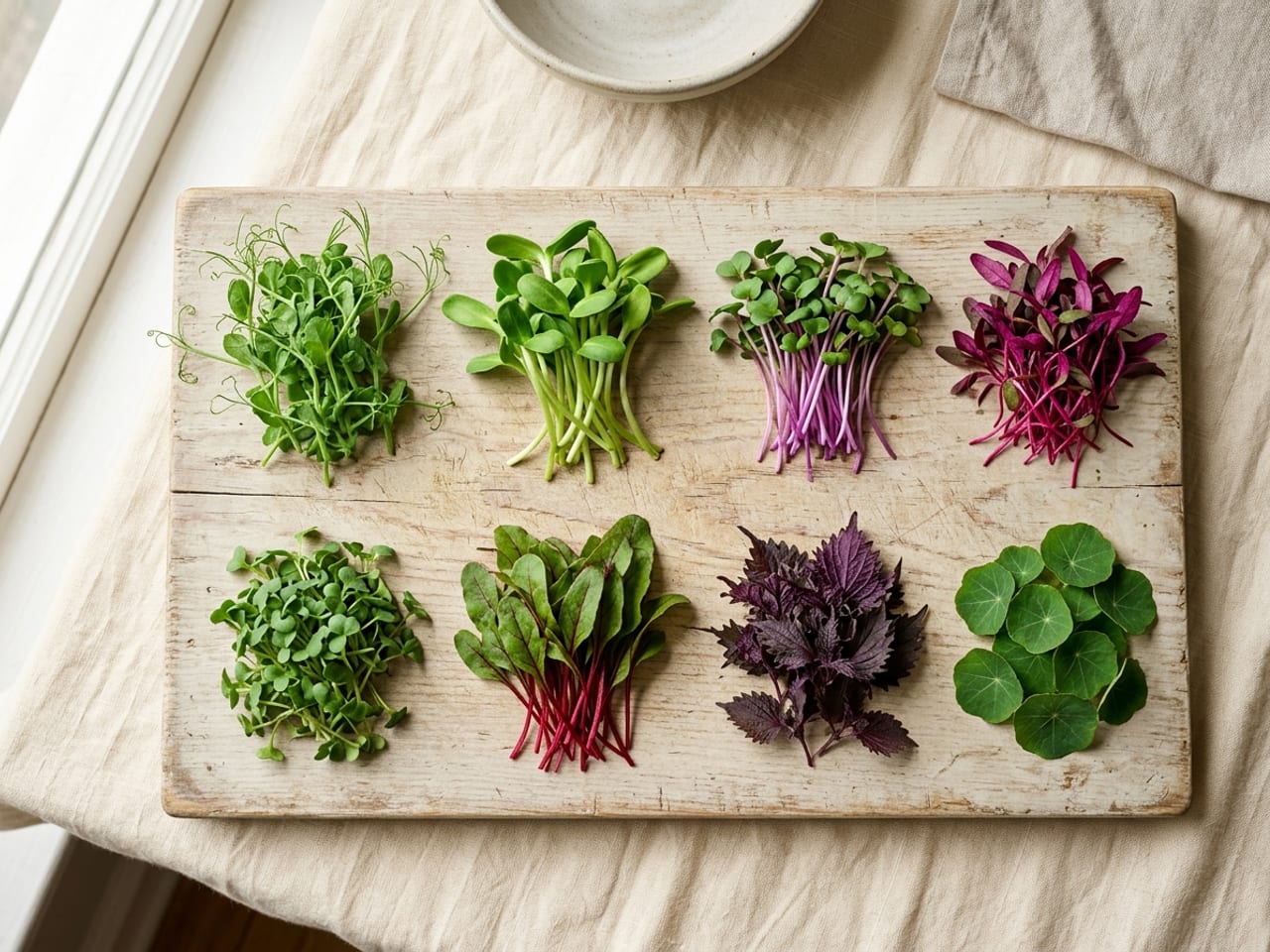
Microgreens are seedlings of vegetables and herbs cut above the soil at the seed-leaf stage, about one to three weeks after germination.38 The US Department of Agriculture calls the name "a marketing term", and, citing a local industry source, says they appeared on chefs' menus in San Francisco as early as the 1980s.12 They are not sprouts, which are eaten whole with root and seed.38 And not every seedling is food: tomato, pepper, eggplant and potato seedlings are not edible.38
| Microgreen | Tastes like | Days to harvest | Try it on |
|---|---|---|---|
| Pea shoots | Sweet pea | 8 to 10 | Scallops, spring soups, risotto |
| Sunflower | Nutty, sweet | 9 to 10 | Salads, sandwiches, grain bowls |
| Radish | Nutty, spicy | 8 to 12 | Fish, tacos, rich meats |
| Arugula | Peppery | 6 to 8 | Pizza, steak, burrata |
| Broccoli | Mild broccoli | About 7 to 8 | Eggs, noodles, soups |
| Kale | Strong brassica, nutty | About 7 to 8 | Grain bowls |
| Basil | Intense basil | 12 to 16 | Tomatoes, burrata, pasta |
| Cilantro | Cilantro | 21 to 28 | Curries, tacos, pho |
Taste words and days from Utah State University Extension;39 the cabbage family (broccoli, kale, radish, mustard) is ready in about a week and has its pungent bite.38 The "Try it on" column is ours.
Garnish ideas by dish
Sixteen dishes and what suits each. Pick one or two, not all of them. The dish names link to our recipes where we have one.
| Dish | Garnish ideas |
|---|---|
| Deviled eggs | Sweet paprika (the classic), snipped chives, dill, a caper, crispy shallots |
| Creamy soups | A swirl of cream, herb-oil dots, toasted seeds, crispy capers (Test Kitchen created theirs for a white bean soup24), fried sage |
| Tomato soup | Basil chiffonade, a thread of olive oil, croutons, black pepper |
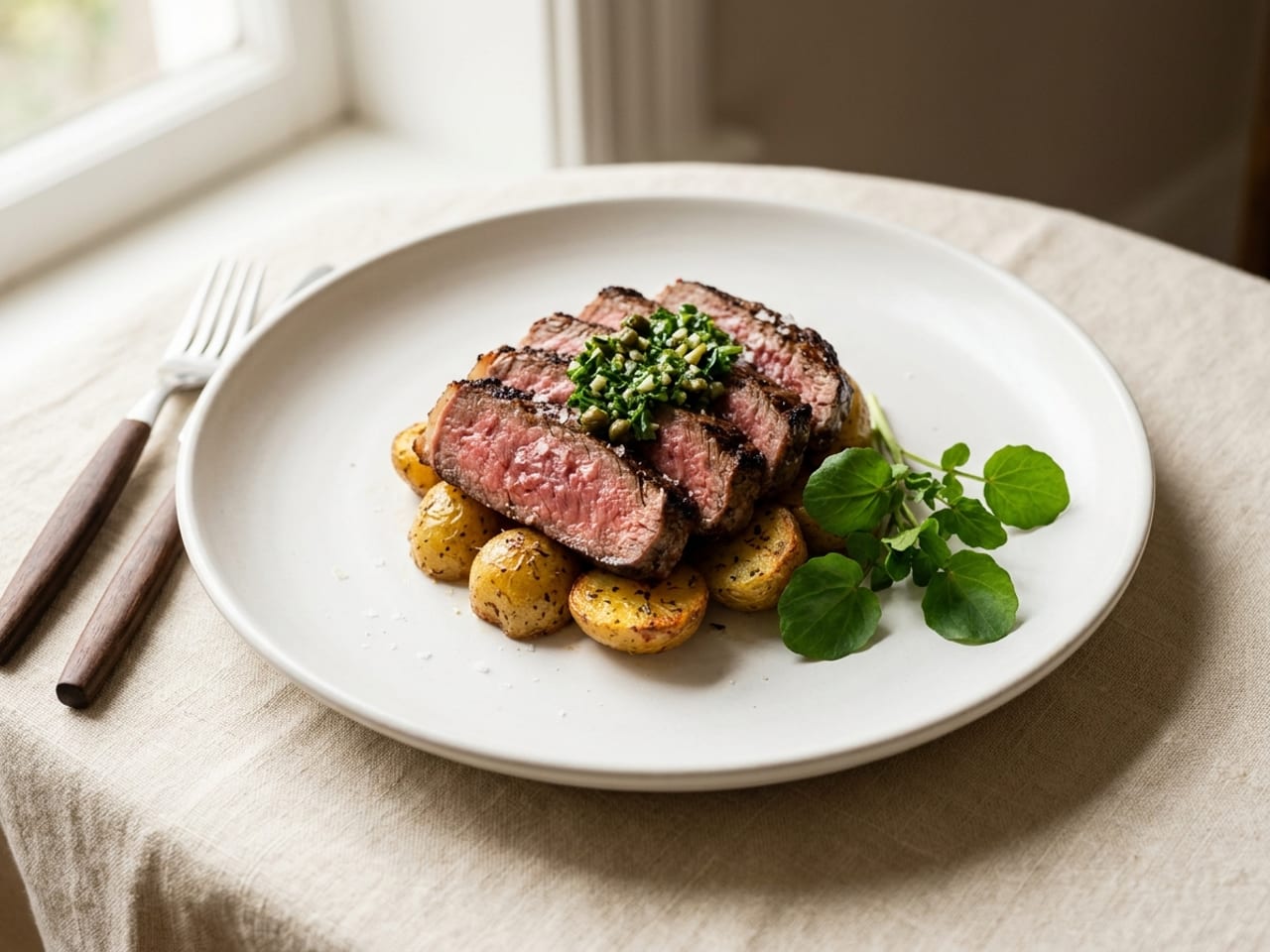
| Steak and roasts | Gremolata,21 salsa verde, flaky salt, watercress, or Glasse's choice for roast beef, "nothing but Horse-raddish"6 |
| Fish | Lemon (a wrapped half or a wheel), dill,18 capers, fried parsley;7 Beeton wanted "plenty of parsley, horseradish, and lemon"7 |
| Pasta | Grated cheese and black pepper, basil, toasted breadcrumbs, crispy capers24 |
| Risotto and osso buco | Grated Parmesan; gremolata on osso buco |
| Curries | Cilantro, a spoon of yogurt, crispy fried shallots, sliced chilli |
| Tacos | Diced white onion and cilantro, lime wedges, pickled red onion, radish |
| Ramen and noodles | Sliced scallions or scallion curls, nori, sesame seeds, chilli oil |
| Pho | The herb plate: bean sprouts, Thai basil, culantro, rice paddy herb, lime and chilli;17 it is a southern habit, still "hard to find in Hanoi"16 |
| Sashimi and sushi | Fine daikon threads (ken) under the fish, shiso, wasabi, pickled ginger;13 the green plastic grass is a divider, not food15 |
| Hummus and dips | A pool of olive oil, paprika or sumac, whole chickpeas, parsley |
| Salads | Edible flowers, toasted seeds, microgreens, shaved cheese |
| Cheesecake and cakes | Fresh berries, a strawberry fan, edible flowers (only edible ones), a mint leaf |
| Chocolate and custard desserts | Chocolate curls,27 cocoa dust, a few berries beside the dish, flaky salt |
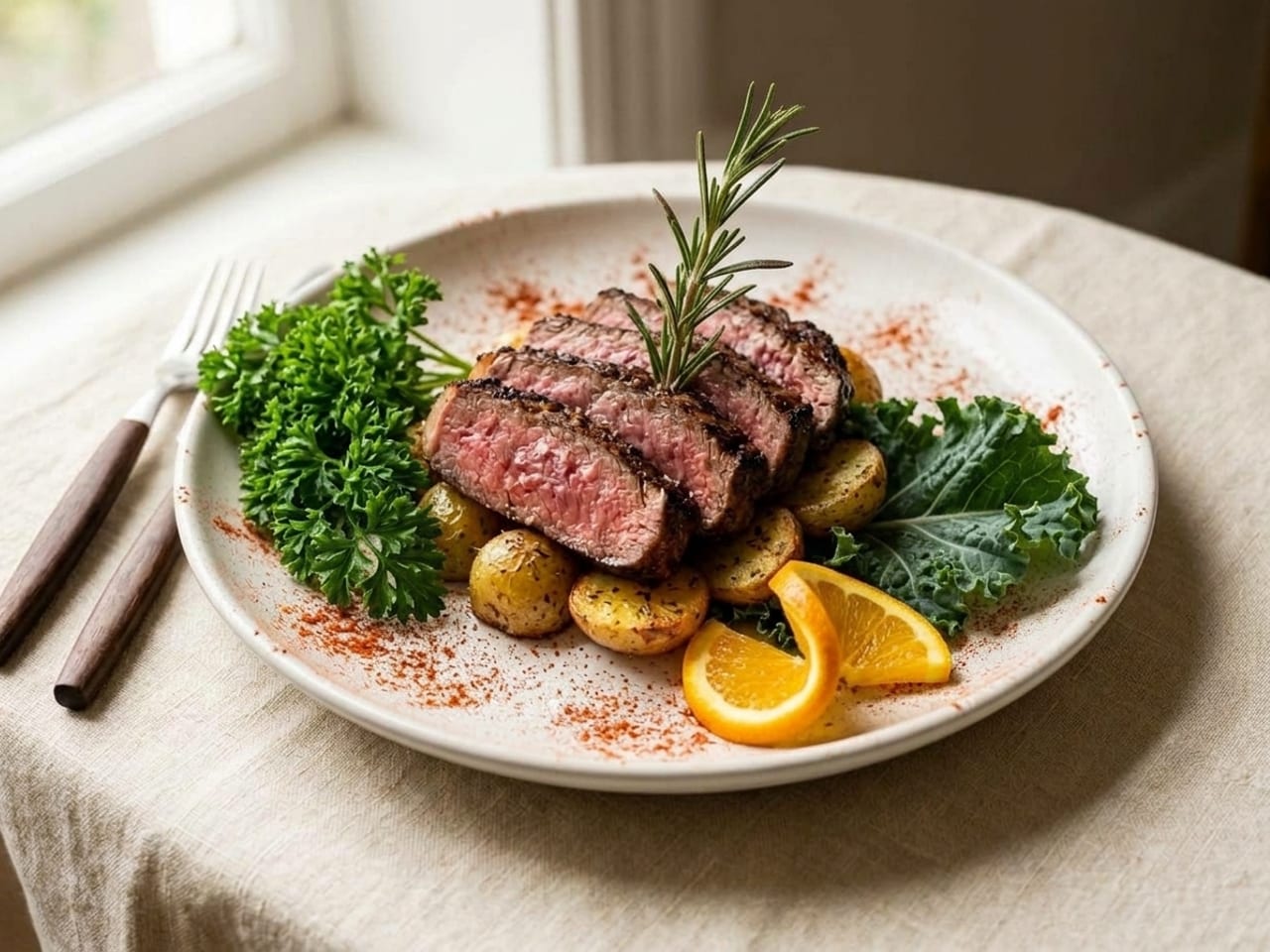
Reflex garnish vs a garnish that belongs
Garnish glossary: from garniture to baran
Garnish
An edible addition that finishes a dish, for flavour, aroma, texture or looks; from the Old French garnir, to equip or fortify.
Garniture
In classical French cooking, the named set of accompaniments served with a main item, such as jardinière vegetables; in general English, a trimming.
Jardinière
A classical garniture of carrots, turnips, peas, green beans, flageolets and cauliflower arranged in separate heaps of alternating colour.
Dubarry
A classical garniture of cauliflower, moulded into small balls, coated in Mornay sauce and gratinéed.
Printanier
A garnish of early spring vegetables cut to shapes.
Hâtelet · attelet
An ornamental skewer threaded with garnish such as truffles, crayfish or quenelles and stuck into a grand cold dish.
Zest
The coloured outer skin of citrus, taken without the white pith; it holds the aromatic oil.
Suprême · segment
A citrus segment cut free of all peel, pith and membrane.
Chiffonade
Leaves stacked, rolled and sliced across into fine ribbons; originally sorrel or lettuce.
Julienne
Cut into thin matchsticks.
Brunoise
Cut into very small dice, usually from a julienne.
Concassé
Roughly chopped; classically peeled, seeded and chopped tomato.
Pluches
Picked whole leaves of chervil or another soft herb, used as a garnish.
Gremolata
Minced parsley, garlic and grated lemon zest, the classic garnish for osso buco.
Persillade
Finely chopped parsley, often with garlic, added to a dish at the end of cooking.
Microgreens
Vegetable or herb seedlings cut above the soil at the seed-leaf stage, about one to three weeks after germination.
Sprouts
Germinated seeds grown in water and eaten whole, root and seed included.
Tsuma
The garnishes served with sashimi in Japan; in the idiom 'sashimi no tsuma' it also means a mere extra.
Ken
Very fine threads of daikon, carrot, cucumber or udo laid under sashimi.
Mukimono
The Japanese art of carving vegetables into shapes such as fish, cranes and turtles.
Kazari-giri
Everyday Japanese decorative cuts, such as a twisted-plum carrot slice or a chrysanthemum turnip.
Baran
The green divider in a bento or sushi box, now plastic, named after the haran (aspidistra) leaves once used; not food.
A short history of the garnish
First the dish, then the rim. English cooks of the 1600s garnished everything. Robert May's Accomplisht Cook (1660, quoted here from the 1685 edition) ends a boiled mutton with "garnish the dish with marigold-flowers, mace, lemon, and barberries", lays borage flowers on the rim of a salad dish, and gives a recipe "to candy flowers for sallets, as violets, cowslips, clove-gilliflowers, roses".5 In 1699 John Evelyn put flowers, the nasturtium among them, straight into salads.8 The nasturtium was then a newcomer from South America, grown in England by 1597.10
Hannah Glasse's stock ending in 1747 was "garnish with lemon", and her roast beef got "nothing but horse-raddish". She also made an early case against garnish: with steaks, "never garnish your dish, because both the garnishing will be dry, and the steaks will be cold".6
The peak, and the backlash. In Paris, Carême built cold dishes into architecture: a pedestal sculpted from lard, eight ornamental skewers and a pyramid needing twelve pounds of Périgord truffles.4 Escoffier swept it away. In 1903 he called a profusion of elaborate garnish "always a mistake from the gastronomic point of view" and cut garnitures to three or four elements;3 he wanted cold salmon in "its natural silver vestment" rather than piped butter, and banned reusing a lemon that had garnished another dish.2 His "garnishes" were mostly real food: the jardinière was a dish of vegetables.2
The 20th century's parsley. By 1915 parsley was on nearly every US restaurant plate, mostly uneaten; after the Second World War lettuce and watercress joined it, and James Beard called over-garnishing "stupid and gauche".9 Edible flowers, fashionable in Tudor England, came back with nouvelle cuisine in the 1980s,11 and microgreens appeared on San Francisco menus around the same time.12
Elsewhere, garnish is its own art. In Japan the garnishes served with sashimi are tsuma, and the fine daikon threads under the fish are ken; the idiom "sashimi no tsuma" means "a mere extra". Mukimono carves vegetables into cranes and turtles, and the green plastic divider in a bento, baran, is said to be named after the aspidistra leaves it replaced.13 In Vietnam, the herb plate Americans expect with pho arrived with southern pho after 1954 and is still "hard to find in Hanoi".16
Keeping garnishes fresh: what to prep when
| When | What |
|---|---|
| Up to a month ahead | Crispy fried shallots (room temperature) and their oil (fridge).23 |
| Up to 2 weeks ahead | Pickled red onions, in their liquid in the fridge.25 |
| The morning of | Wash and dry herbs. Basil goes stems-down in a jar of water on the counter; parsley, cilantro, thyme and mint go in damp paper towels in a zip-top bag in the fridge.18,19 Edible flowers go between damp paper towels in the fridge.32 |
| 2 to 16 hours ahead | Scallion curls under ice water in the fridge.22 |
| Within the hour | Cut citrus; microwave-fry capers (they crisp as they cool)24; mix gremolata; scallion curls in ice water for 10 minutes.22 |
| At the plate | Chop soft herbs, cut chiffonade, grate zest, then place flowers, microgreens, crunch and dust. Nothing wet, nothing wilted. |
In America's Test Kitchen's trial, basil in a jar on the counter was still usable after 50 days, and cilantro and thyme in damp towels lasted 40 and 46 days.19 Keep parsley and mint away from ripening fruit: they are sensitive to the ethylene it gives off.20
Garnish food safety
A garnish is raw food that nobody cooks after you place it. The rules below come from the FDA, the CDC, the USDA, the UK Food Standards Agency, university extension services and peer-reviewed studies.
- Wash herbs under plain running waterNo soap, detergent or produce wash: produce is porous and soap "can make you sick".43 Washing helps but is not a cure-all: the supplier in a 1997 outbreak linked to basil pesto (about 185 cases) did wash its basil,41 and the FDA says washing "may not be sufficient" against the parasite Cyclospora, which was linked to cilantro from Puebla, Mexico, in several summers.42
- Don't let chopped herbs sit outIn the 1998 Shigella outbreaks traced to curly parsley (43 confirmed and 167 probable cases in Minnesota alone), the parsley "was chopped in the morning and left at room temperature, sometimes until the end of the day". CDC's advice: chop smaller batches and keep them cold.40 At home, treat cut garnishes like any cut produce: back in the fridge within 2 hours, or 1 hour above 90°F (32°C).49
- Only flowers you can name, grown to be eatenIdentify by the Latin name, and never use flowers from florists, garden centres or nurseries, which "may have been treated with chemicals that are not safe to eat".32 Not from the roadside either.33 Candying a flower "will not detoxify" it.34 The list of poisonous ones is above.
- Sprouts are riskier than microgreensSprouts grow in warm, wet conditions that suit Salmonella, Listeria and E. coli, and the FDA tells children, older adults, pregnant women and people with weakened immune systems to avoid raw sprouts of any kind.43 Microgreens are cut above the soil instead, but their safety has been "studied only minimally"52: wash them and keep them cold like any raw greens.
- Glitter and luster dust must say edibleThe FDA: if the label says only "non-toxic" or "for decorative purposes only" and has no ingredient list, don't put it on food; remove non-edible decorations before serving.44 In 2018 a rose-gold frosting made six children ill in Rhode Island: it held about 900 mg of copper per slice. A petal dust in Missouri was 25% lead.45
- Gold and silver leaf: buy it sold as foodThe EU allows gold (E 175) and silver (E 174) as food colours, but its food-safety authority could not conclude that silver is safe as recently as 2025.47 In the US neither is a listed food colour: gold is delisted, silver is listed for nail polish only.46 Never use craft leaf.
- Buy unwaxed lemons for zestCitrus is often waxed and treated with post-harvest fungicides, and in one study no washing method removed more than 30% of the fungicide imazalil from lemon peel.50 If you will eat the peel, buy unwaxed; otherwise scrub it and accept that washing helps but doesn't remove everything.
- Nothing on the plate that isn't foodSushi grass is plastic.15 Flower stems and florist wire must never go into a cake: the UK Food Standards Agency says stems need a barrier such as a cake pick.34 Rhubarb leaves are poisonous,35 tomato, pepper, eggplant and potato seedlings are not edible,38 and stiff bay leaves have, rarely, lodged in throats: take them out before serving.51
- Wear gloves for chilliesMost of the heat is in the membranes around the seeds; if you touch the cut surfaces, Andrea Nguyen scrubs her hands with coarse salt.17
What science says about garnishes
- No study has tested a garnish on its ownNobody has served the same dish with and without a parsley sprig and measured the difference. The research is about presentation as a whole, and garnish is one of its tools. What follows is what that research suggests, with its limits.
- Colour alone didn't make food taste betterIn the closest test, adding colour to a plate made it more attractive only when the plate was balanced, and made no difference to how much people liked the flavour. People were actually more willing to try the plain, single-colour versions.53
- Deliberate placement changed liking and priceSixty people ate the same salad plated three ways. Before eating, they liked the art-inspired layout best and would pay about twice as much for it; after eating, its tastiness score rose from 6.8 to 8.3 out of 10, while the tossed version's slipped.55 Neat plating was liked more than messy plating in another study.54
- Better-presented food got eatenIn a hospital, lunches re-plated with advice from the Institut Paul Bocuse left less starch and main course on the plate, though vegetable waste did not change. It was a before-and-after study, not a randomised trial.56
- Contrast looks fresherRating photos of salads, people found red-green and light-dark contrasts more attractive and read colourfulness as freshness.57 A green herb on a brown stew is that contrast, though these were photos, not meals.
- Warm food carries a garnish's aromaLemon peel oil is usually 48 to 70% limonene, with the lemony citral pair, geranial and neral, at up to about 3% and 1.5%.59 In a lab study, aroma release from food emulsions rose with temperature,60 which is why zest or herbs on a warm dish smell stronger than on a cold one.
- Basil hates the fridgeBasil kept its looks about 12 days at 15°C (59°F) but lasted only 3 days at 5°C (41°F) and 1 day at 0°C (32°F) before chilling damage set in.61 Keep basil for garnish on the counter, stems in water.
- Crunch is (probably) why toppings workFood scientists proposed in 1993 that contrast while you chew is part of what makes food moreish.63 A three-country survey found people mention texture contrasts about twice as often for foods they like, though its authors call the idea "largely based upon anecdotal data".64
- The nutrition is real but smallA tablespoon of parsley has about 62 µg of vitamin K, a large share of a day's needs, but only about 5 mg of vitamin C.68 Microgreens are dense per gram (20 to 147 mg of vitamin C per 100 g),65 but a 5 g garnish gives only a few milligrams. And a flower garnish is too small to count as a health food, whatever its lab antioxidants.67
Six garnish mistakes
- Garnishing with something inedibleA raw kale leaf under the food, a florist's flower, a woody rosemary branch standing in a steak. If you wouldn't eat it, don't serve it.
- A garnish that isn't in the dishA mint sprig on a dessert with no mint, an orange twist on a steak. Escoffier banned "any whim or foreign addition".3
- The reflex parsley sprigBy 1915 the parsley sprig was on so many US restaurant plates that diners found it a nuisance and suspected it had been recycled.9 Use a herb that is in the dish, or none.
- Garnish on the rimThe rim is the frame; a dusting of paprika or a lemon wheel on it looks like a spill. Keep the garnish on the food. (More in plating techniques.)
- Too early, too wetHerbs wilt, crunch softens and scallion curls that weren't dried leave a puddle.22 Garnish last and dry everything.
See your own dish finished like a chef's
Picking the right garnish is easier when you can see the result. Photograph what you cooked and Plate Artists re-plates your own dish the way a chef would, garnish included, with the moves named so you can do it again for real.
Your dish, plated like a chef's
Snap it, upload it, and get the composed version back, with the steps to recreate it on a real plate.
Start free · 1 enhancement →Free account · 1 free enhancement · No credit card
Food garnishes, answered
What is a garnish?
A garnish is an edible finishing touch added to a dish just before serving, for flavour, aroma, texture or looks: a herb, citrus zest, a crunchy topping, a dollop of cream, a spice dust, an edible flower. The word comes from the Old French garnir, to equip. A good garnish belongs to the dish: it is made of something the dish already contains or that suits it.
What is the difference between a garnish and a decoration?
A garnish is food and should be eaten; a decoration can be purely ornamental. In classical French cooking a garniture was even more than a garnish: the named set of vegetables or other accompaniments served with a main dish. On a plate, stick to garnishes: guests assume everything they see is edible.
What is the most common garnish?
Parsley. By the early 1900s the parsley sprig was on almost every US restaurant plate, and it is still the default. Lemon is the other classic: 'garnish with lemon' ends dozens of recipes in Hannah Glasse's 1747 cookbook.
Should you eat the garnish?
Yes, if it is a real food garnish: herbs, citrus, microgreens, edible flowers and crunchy toppings are meant to be eaten and usually add flavour. Leave anything woody or tough, such as a whole rosemary branch or a bay leaf, and anything that isn't food, like plastic sushi grass or non-edible cake decorations.
Why do restaurants use parsley as a garnish?
It filled empty space on the plate and added colour to dull-looking food, as food historian Jan Whitaker puts it; by the early 20th century almost the whole US parsley crop went to restaurants and butchers. Escoffier himself recommended curly parsley for garnishing.
What can I use instead of parsley as a garnish?
Use the herb that is already in the dish: chives on eggs and potatoes, dill on fish, cilantro on curries and tacos, basil on tomato and pasta, chervil or tarragon on French dishes. Scallion curls, microgreens, gremolata, a crunchy topping or a little citrus zest also do the job.
When should you add the garnish?
At the very end, in the last minute before the plate goes out. Prep garnishes ahead (pickled onions, crispy shallots and washed herbs keep well) but cut soft herbs, zest citrus and place flowers, microgreens and crunch at the moment of serving so nothing wilts or goes soggy.
Which flowers are poisonous and should never go on food or cakes?
Lily of the valley, foxglove, oleander, daffodils, hydrangea, sweet pea, azalea and rhododendron, true lilies and calla lily, larkspur and delphinium, monkshood, hyacinth, and baby's breath (Gypsophila), which is often used on cakes. If you can't identify a flower by its Latin name as edible, don't put it on food.
Are flowers from a florist or supermarket bouquet safe to eat?
No. Flowers from florists, garden centres and nurseries are not grown as food and may have been treated with chemicals that are not safe to eat. Buy flowers sold as edible (often in the herb section) or grow your own without pesticides. For cakes, keep non-edible flower stems out of the cake with a food-safe pick.
How do you make a lemon twist without a channel knife?
Use a Y-shaped vegetable peeler: take a strip of peel about half an inch (12 mm) wide with as little white pith as possible, trim the edges straight with a knife, then twist it or wind it around a chopstick to curl it. For food, a strip or a few thin shreds of zest usually looks better than a full twist.
What herbs come with pho?
Southern-style pho comes with a plate of bean sprouts, Thai basil, culantro (sawtooth herb), often rice paddy herb, lime wedges and sliced chilli. The herb plate spread with southern pho after 1954, and it is still hard to find in Hanoi, where pho is traditionally served plainer.
What can I garnish deviled eggs with besides paprika?
Snipped chives, dill fronds, a caper, crispy fried shallots, smoked paprika or a pinch of chilli, crumbled bacon, a sliver of pickled red onion, or a few microgreens. Keep it to one or two, and add them just before serving.
How do you keep garnishes fresh?
Keep basil at room temperature with its stems in water, since it blackens in the fridge. Wrap parsley, cilantro, thyme and mint in damp paper towels in a bag in the fridge. Keep edible flowers between damp paper towels in the fridge, and cut garnishes back in the fridge within two hours.
Is edible glitter safe?
Only if it is sold as edible and has an ingredient list. The FDA warns against glitter or luster dust labelled only non-toxic or for decoration; in 2018 a non-edible rose-gold dust on a cake poisoned six children with copper in Rhode Island.
The cookbooks, rules and research behind this guide
Seven cookbooks from 1660 to 1907 read in Internet Archive and Project Gutenberg scans; America's Test Kitchen's tested methods; university extension services in Colorado, Nebraska, Pennsylvania, Utah, North Carolina and California; the FDA, CDC, USDA, EFSA and a UK Food Standards Agency reply; Japanese dictionaries; and nineteen peer-reviewed papers verified through Crossref. No study has tested a garnish on its own; the science section says what the research does and does not show.
- Harper, D. (2026). Garnish (v.), garnish (n.). Online Etymology Dictionary, from Old French garnir, 'provide, furnish; fortify'; the culinary sense predominant after about 1700; the legal sense from the 1570s. etymonline.com
- Escoffier, A. (1907). A Guide to Modern Cookery. William Heinemann, London, Preface; No. 179 (zest), No. 215 (chiffonade), No. 256 (lemons), No. 279 'Garnishes', No. 800 (cold salmon), parsley sprays, glossary; read in the Internet Archive scan. archive.org
- Escoffier, A. (1903). Le Guide culinaire. Paris, Introduction, pp. xi to xii, and the chapter 'Garnitures', p. 85; read in the Internet Archive scan, translations ours. archive.org
- Carême, M.-A. (1828). Le Cuisinier parisien (2nd ed.). Paris, the lard socle with eight hâtelets, pp. 151 to 152, and the table of chapters; read in the Internet Archive scan. archive.org
- May, R. (1660). The Accomplisht Cook. London, quoted from the 1685 edition: mutton pp. 17 and 50, capon p. 71, fried meats p. 120, sallets pp. 160 and 164; read in the Project Gutenberg text. gutenberg.org
- Glasse, H. (1747). The Art of Cookery, Made Plain and Easy. London, chapter I on roasting and the sauce for steaks, the shoulder of mutton and the Salamongundy; read in the Internet Archive scan, checked against the 1770 edition. archive.org
- Beeton, I. (1861). The Book of Household Management. S. O. Beeton, London, para. 222 on garnishing fish, No. 494 'Fried parsley, for garnishing', No. 1122 horseradish; read in the Internet Archive scan. archive.org
- Evelyn, J. (1699). Acetaria: A Discourse of Sallets. London, the entries 'Flowers' and 'Cresses'; read in the Internet Archive scan. archive.org
- Whitaker, J. (2015). Why the parsley garnish? Restaurant-ing through history, first published 2008, revised 22 March 2015. restaurant-ingthroughhistory.com
- Oxford Botanic Garden and Herbaria (2026). Tropaeolum (nasturtium). Plants 400, Gerard growing it by 1597; flowers used as garnishes. plants.ox.ac.uk
- Helou, A. (2014). Edible flowers are back on the menu. Newsweek, 18 July 2014. newsweek.com
- Bliss, R. M. (2014). Specialty greens pack a nutritional punch. AgResearch, USDA Agricultural Research Service, January 2014; the definition and the 1980s San Francisco menus. ars.usda.gov
- Kotobank (2026). Tsuma, ken, sashimi no tsuma, mukimono, kazari-giri, baran, haran. Heibonsha World Encyclopedia, Shogakukan Nipponica and Daijisen, Kodansha food dictionary, Japanese reference entries, translations ours. kotobank.jp
- Gordenker, A. (2015). Sashimi garnishes. The Japan Times, 28 November 2015, with chef Ayao Okumura. japantimes.co.jp
- Nippon.com (2026). Baran: Japan's 'sushi grass'. Nippon.com, Guide to Japan. nippon.com
- Nguyen, A. (2008). History of pho noodle soup. Viet World Kitchen, October 2008. vietworldkitchen.com
- Nguyen, A. (2017). Pho garnish plate. The Splendid Table, 9 March 2017. splendidtable.org
- America's Test Kitchen (2016). How and where to buy, use, and store fresh herbs. americastestkitchen.com, 4 November 2016. americastestkitchen.com
- Phares, E. (America's Test Kitchen) (2018). Herb keepers. americastestkitchen.com, 1 August 2018; basil in a jar on the counter, other herbs in damp towels. americastestkitchen.com
- UC Davis Postharvest Research and Extension Center (2025). Herbs (fresh culinary): produce fact sheet. University of California, Davis, chilling-sensitive basil and shiso; ethylene-sensitive parsley and mint. ucdavis.edu
- America's Test Kitchen (2011). Gremolata. americastestkitchen.com, 19 July 2011. americastestkitchen.com
- Souza, D. (America's Test Kitchen) (2016). Frisée and Bibb lettuce salad with radishes, scallions and fried shallot-sherry vinaigrette. americastestkitchen.com, 7 September 2016, the scallion curls; and A. Geary, 'Shaved vegetable salad with creamy miso dressing', 6 February 2023, the overnight method. americastestkitchen.com
- Souza, D. (America's Test Kitchen) (2016). Fried shallots and fried shallot oil. americastestkitchen.com, 17 August 2016. americastestkitchen.com
- Levine, M. (America's Test Kitchen) (2021). Microwave-fry your capers. americastestkitchen.com, 14 September 2021. americastestkitchen.com
- America's Test Kitchen (2016). Pickled red onions. americastestkitchen.com, 24 August 2016. americastestkitchen.com
- Kathan, S. (Cook's Country) (2022). What is the best way to toast nuts? americastestkitchen.com, 18 November 2022. americastestkitchen.com
- America's Test Kitchen (2026). Chocolate curls. americastestkitchen.com, how-to. americastestkitchen.com
- America's Test Kitchen (2026). Slicing citrus. americastestkitchen.com, how-to; suprêmes. americastestkitchen.com
- Penn State Extension (2026). Preserving color and preventing browning of foods. The Pennsylvania State University, updated 21 April 2026. extension.psu.edu
- Microplane (2026). Wedges, wheels and slices. microplane.com, manufacturer's guide to citrus cuts. microplane.com
- California Strawberry Commission (2026). Select and store strawberries; strawberry facts. californiastrawberries.com, rinse with the caps on; most flavorful at room temperature. californiastrawberries.com
- Newman, S. E. & Stoven O'Connor, A. (2025). Edible flowers (fact sheet 7.237). Colorado State University Extension, published 1996, reviewed August 2025; Table 1 (toxic plants) and Table 2 (edible flowers). extension.colostate.edu
- Frogge, M. J. (2023). Edible flower guide. Nebraska Extension in Lancaster County, 27 September 2023. lancaster.unl.edu
- UK Food Standards Agency (food contact materials team) (2023). Email reply on fresh flowers used to decorate cakes. published by the recipient, The Daisy Cake Company, dated 28 July 2023; a staff reply to a cake maker, not a formal FSA guidance page. daisycakeandco.com
- National Capital Poison Center (2026). Poisonous and non-poisonous plants. poison.org, plant lists. poison.org
- NC State Extension (2026). Extension Gardener Plant Toolbox. North Carolina State University, entries for Hydrangea macrophylla, Gypsophila paniculata, Lathyrus odoratus and Centaurea cyanus. plants.ces.ncsu.edu
- Ledford, D. K. (2023). Edible flower (Ask the Expert). American Academy of Allergy, Asthma and Immunology, 20 June 2023. aaaai.org
- Di Gioia, F. (2024). The ABCs of microgreens. Penn State Extension, updated 28 March 2024. extension.psu.edu
- Beck, S. (2026). Grow your own microgreens. Utah State University Extension, 2025, updated January 2026; flavour and days-to-harvest table. extension.usu.edu
- Centers for Disease Control and Prevention (1999). Outbreaks of Shigella sonnei infection associated with eating fresh parsley: United States and Canada, July to August 1998. Morbidity and Mortality Weekly Report, 48(14):285 to 289. cdc.gov
- Centers for Disease Control and Prevention (1997). Outbreak of cyclosporiasis: northern Virginia, Washington, D.C., Baltimore, Maryland, metropolitan area, 1997. Morbidity and Mortality Weekly Report, the basil-pesto pasta salad. cdc.gov
- US Food and Drug Administration (2024). Import Alert 24-23: fresh cilantro from the state of Puebla, Mexico; and Questions and answers regarding cilantro from Puebla. fda.gov, read via the Internet Archive. fda.gov
- US Food and Drug Administration (2026). Selecting and serving produce safely. fda.gov, washing, storing and the raw-sprout advice; read via the Internet Archive. fda.gov
- US Food and Drug Administration (2018). FDA advises home and commercial bakers to avoid use of non-edible food decorative products. fda.gov, content current as of 4 January 2018; read via the Internet Archive. fda.gov
- Viveiros, B., Caron, R., Barkley, J., et al. (2021). Cake decorating luster dust associated with toxic metal poisonings: Rhode Island and Missouri, 2018 to 2019. Morbidity and Mortality Weekly Report, 70(43), 29 October 2021. cdc.gov
- US Food and Drug Administration (2026). Regulatory status of color additives: gold; silver. fda.gov, gold delisted (no current use); silver listed for fingernail polish only, 21 CFR 73.2500. fda.gov
- EFSA Panel on Food Additives and Flavourings (FAF) (2025). Follow-up of the re-evaluation of silver (E 174) as a food additive. EFSA Journal, 23(4):e9316. doi:10.2903/j.efsa.2025.9316
- US Food and Drug Administration (2022). Food Code 2022. fda.gov, chapter 1 definitions ('leafy greens' excludes herbs such as cilantro or parsley) and the TCS foods; read via the Internet Archive. fda.gov
- USDA Food Safety and Inspection Service (2026). Danger zone (40°F to 140°F). fsis.usda.gov, the 2-hour and 1-hour rules. fsis.usda.gov
- Vass, A., Korpics, E. & Dernovics, M. (2015). Follow-up of the fate of imazalil from post-harvest lemon surface treatment to a baking experiment. Food Additives & Contaminants: Part A, 32(11):1875 to 1884. doi:10.1080/19440049.2015.1086824
- Buto, S. K., Tsang, T. K., Sielaff, G. W., et al. (1990). Bay leaf impaction in the esophagus and hypopharynx. Annals of Internal Medicine, 113(1):82 to 83. doi:10.7326/0003-4819-113-1-82
- Riggio, G. M., Wang, Q., Kniel, K. E. & Gibson, K. E. (2019). Microgreens: a review of food safety considerations along the farm to fork continuum. International Journal of Food Microbiology, 290:76 to 85. doi:10.1016/j.ijfoodmicro.2018.09.027
- Zellner, D. A., Lankford, M., Ambrose, L. & Locher, P. (2010). Art on the plate: effect of balance and color on attractiveness of, willingness to try and liking for food. Food Quality and Preference, 21(5):575 to 578. doi:10.1016/j.foodqual.2010.02.007
- Zellner, D. A., Siemers, E., Teran, V., et al. (2011). Neatness counts. How plating affects liking for the taste of food. Appetite, 57(3):642 to 648. doi:10.1016/j.appet.2011.08.004
- Michel, C., Velasco, C., Gatti, E. & Spence, C. (2014). A taste of Kandinsky: assessing the influence of the artistic visual presentation of food on the dining experience. Flavour, 3:7. doi:10.1186/2044-7248-3-7
- Navarro, D. A., Boaz, M., Krause, I., et al. (2016). Improved meal presentation increases food intake and decreases readmission rate in hospitalized patients. Clinical Nutrition, 35(5):1153 to 1158. doi:10.1016/j.clnu.2015.09.012
- Paakki, M., Sandell, M. & Hopia, A. (2019). Visual attractiveness depends on colorfulness and color contrasts in mixed salads. Food Quality and Preference, 76:81 to 90. doi:10.1016/j.foodqual.2019.04.004
- Spence, C. (2015). On the psychological impact of food colour. Flavour, 4:21. doi:10.1186/s13411-015-0031-3
- González-Mas, M. C., Rambla, J. L., López-Gresa, M. P., et al. (2019). Volatile compounds in citrus essential oils: a comprehensive review. Frontiers in Plant Science, 10:12. doi:10.3389/fpls.2019.00012
- Wu, S., Tsubaki, S. & Igura, N. (2025). Effectiveness of octanol-air partition coefficients in predicting aroma release behavior from food emulsions: impact of temperature and flavor intensity. LWT, 216:117300. doi:10.1016/j.lwt.2024.117300
- Lange, D. D. & Cameron, A. C. (1994). Postharvest shelf life of sweet basil (Ocimum basilicum). HortScience, 29(2):102 to 103. doi:10.21273/HORTSCI.29.2.102
- Moon, K. M., Kwon, E.-B., Lee, B. & Kim, C. Y. (2020). Recent trends in controlling the enzymatic browning of fruit and vegetable products. Molecules, 25(12):2754. doi:10.3390/molecules25122754
- Hyde, R. J. & Witherly, S. A. (1993). Dynamic contrast: a sensory contribution to palatability. Appetite, 21(1):1 to 16. doi:10.1006/appe.1993.1032
- Pellegrino, R., Cheon, B. K., Forde, C. G., et al. (2020). The contribution of texture contrasts and combinations to food acceptance across cultures. Journal of Texture Studies, 51(2):225 to 231. doi:10.1111/jtxs.12494
- Xiao, Z., Lester, G. E., Luo, Y. & Wang, Q. (2012). Assessment of vitamin and carotenoid concentrations of emerging food products: edible microgreens. Journal of Agricultural and Food Chemistry, 60(31):7644 to 7651. doi:10.1021/jf300459b
- Kelley, K. M., Behe, B. K., Biernbaum, J. A. & Poff, K. L. (2002). Combinations of colors and species of containerized edible flowers: effect on consumer preferences. HortScience, 37(1):218 to 221. doi:10.21273/HORTSCI.37.1.218
- Fernandes, L., Casal, S., Pereira, J. A., et al. (2017). Edible flowers: a review of the nutritional, antioxidant, antimicrobial properties and effects on human health. Journal of Food Composition and Analysis, 60:38 to 50. doi:10.1016/j.jfca.2017.03.017
- US Department of Agriculture (2026). FoodData Central: parsley, fresh (FDC ID 170416). fdc.nal.usda.gov, SR Legacy; 1 tablespoon = 3.8 g. fdc.nal.usda.gov
Keep going
Cocktail garnishes
The official garnish for twenty classic drinks, and how to cut twists, wheels, wedges and rims.
Plating components
Coulis, tuile, quenelle, gel, foam, soil, herb oil and the rest of what a chef builds a plate from.
How to cut fruit
Mango, pineapple, citrus suprêmes and nine more fruits, cut for a plate or a platter.
Color on the plate
Why a green garnish lifts a brown plate, and how to use colour without overdoing it.
Knife cuts chart, drawn to scale
Julienne, brunoise and chiffonade at true size, printable 1:1.