The five French mother sauces — explained, made and plated
Béchamel, velouté, espagnole, sauce tomate and hollandaise: what each one is, how it is thickened, the small sauces that come from it, and where it goes on the plate — with Carême's and Escoffier's own words and the food science underneath.
The photos on this page are AI-generated illustrations.
The five mother sauces of classical French cooking are béchamel (milk thickened with a white roux), velouté (white stock thickened with a blond roux), espagnole (brown stock thickened with a brown roux), sauce tomate (tomatoes cooked down with aromatics) and hollandaise (egg yolks and butter, warm). They are called mothers because almost every other sauce on a classical menu is one of them plus an addition or two: cheese turns béchamel into Mornay, cream turns velouté into suprême, red wine and marrow turn demi-glace into bordelaise.
The system has two authors. Marie-Antoine Carême named four grandes sauces in 1833 — espagnole, velouté, allemande and béchamel — "because with these four sauces we compose a very great number of small ones whose seasoning differs infinitely".1 Seventy years later Auguste Escoffier rewrote the list for the modern kitchen in Le Guide Culinaire: warm sauces, he wrote, "are of two kinds: the leading sauces, also called mother sauces, and the small sauces, which are usually derived from the first-named" — and his basic sauces were "Espagnole, Velouté, Béchamel, Tomato, and Hollandaise".2 Allemande became a velouté finished with yolks; tomato and the butter emulsion got promoted. That is the list culinary schools have taught ever since.
This guide is the glossary version: each mother defined in a sentence and shown on a plate, its daughters listed, the thickening explained by the food science rather than by folklore, the common failures and their fixes, and — because this is Plate Artists — a section on what chefs actually do with a sauce once it reaches the plate. Sources are at the bottom.
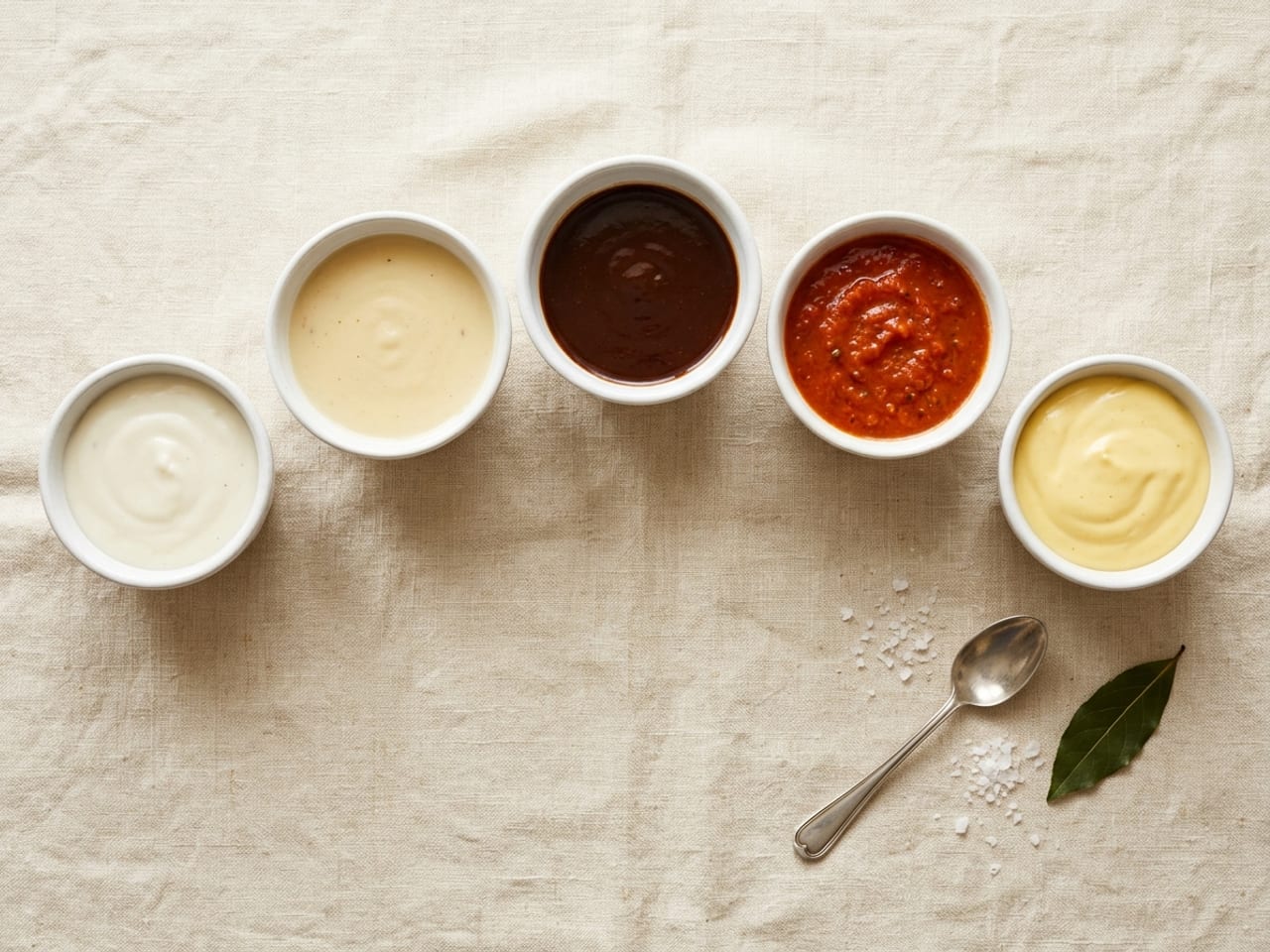
How a sauce works: liquid, body, flavour
Every mother sauce is a flavoured liquid given body — enough viscosity to cling to food instead of running off it. Classical cooking has three ways to add that body, and the five mothers use all of them.
- Starch: the rouxFour of the five are thickened with roux. When flour meets hot liquid its starch granules take up water, swell and burst, and the long starch molecules that spill out tangle through the liquid and slow it down — gelatinization, which for wheat starch runs from roughly 55 °C to 85 °C, so a roux-bound sauce only reaches full thickness near a simmer.3 Cooking the flour in butter first coats the granules in fat so they disperse without lumping and cooks off the raw-flour taste.
- Reduction: stock and gelatinSimmering drives off water and concentrates what is left. In a stock-based sauce the dissolved gelatin from bones and skin concentrates too, which is why a reduced jus turns glossy and coats a spoon with no flour at all. Espagnole and demi-glace are roux and reduction; a modern jus is reduction alone.
- Emulsion: yolk and butterHollandaise has no starch and no stock. Its body is butterfat broken into droplets so small that the sauce turns thick and opaque, held apart by the egg yolk's lipoproteins and lecithin.5 It is the most fragile of the five — heat sets the yolk, cold sets the butter — and the most rewarding to get right.
- Flavour rides on the body — and thickness mutes itEscoffier warned that sauces must "vary in savour, consistence and viscosity in accordance with the dishes they accompany",2 and the sensory science explains why the consistency matters to the taste: once a liquid passes a certain viscosity, people perceive its flavour as weaker even though the aroma released in the mouth is measurably unchanged.7 A thick sauce needs more seasoning than a thin one of the same recipe — taste it at the body you will serve it, not before.
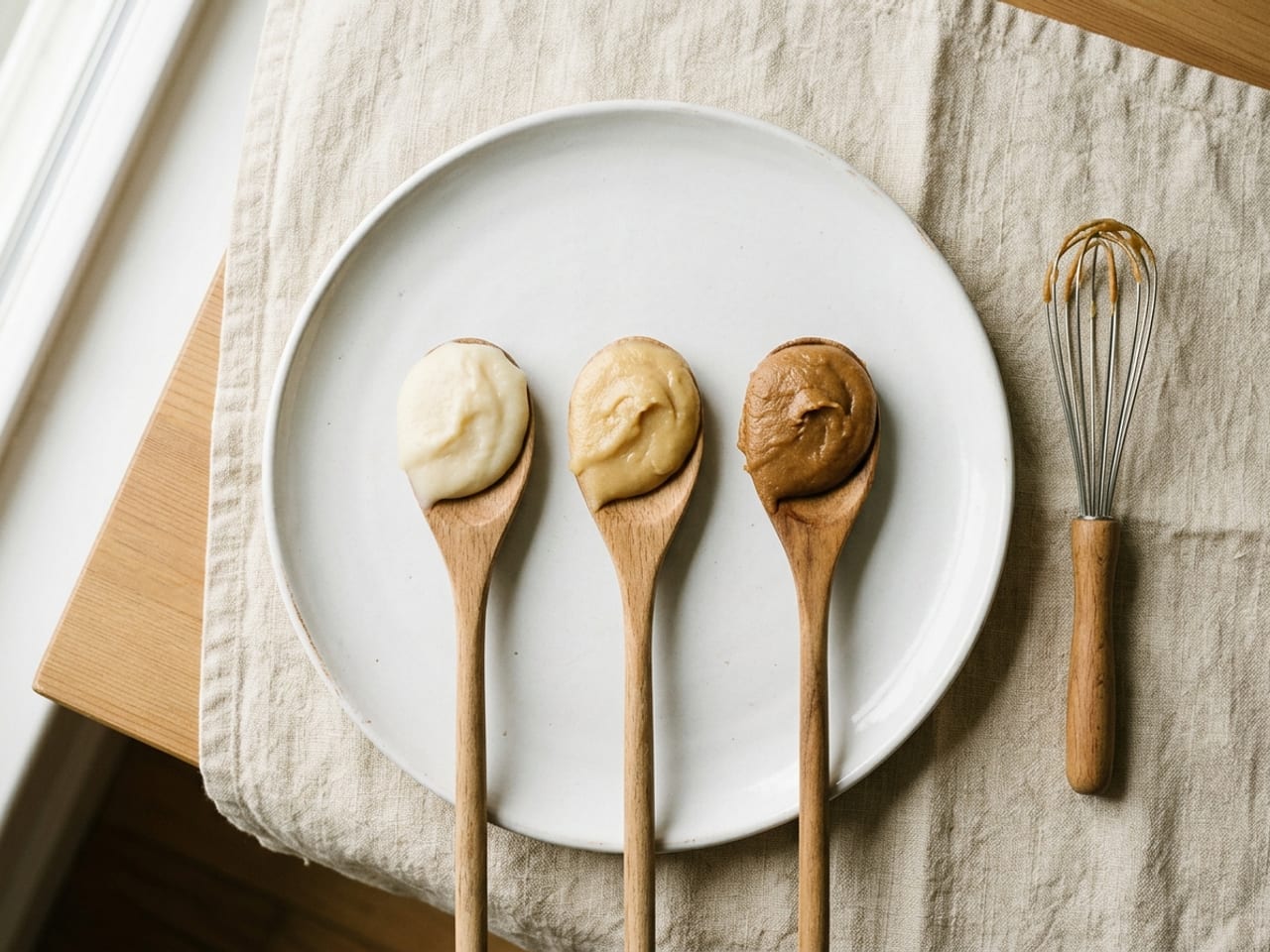
The three roux
"Three kinds of roux are used — brown roux, for brown sauces; pale roux, for veloutés or cream sauces; and white roux, for white sauces and béchamel." Escoffier, 1903.2
White roux
Equal weights of butter and flour cooked for two to three minutes without colour, just long enough to lose the raw-flour taste; the thickener for béchamel and cream sauces.
Blond roux
The same roux cooked a few minutes longer to the colour of straw and the smell of baking pastry; the thickener for velouté.
Brown roux
Roux cooked slowly to nut-brown and nutty-smelling; it thickens less than a white roux (browning breaks the starch down) but brings colour and toasted flavour to espagnole and gumbo.
The colour is flavour chemistry you can see. When roux is heated in steps from 100 °C to 180 °C, the aroma shifts from buttery and sweet towards the roasted, nutty pyrazines of browning,10 and in tasting panels the roux cooked between about 120 °C and 160 °C — white through light brown — scored highest for buttery, sweet and overall pleasant aroma.4 Push past that and a roux gains colour faster than it gains flavour, and loses thickening power as the heat breaks its starch down. Practical rule: a white roux for milk, a blond one for stock, a brown one only when the dish is built around it (espagnole, a Cajun gumbo), and never rushed — a brown roux is fifteen minutes of stirring over low heat, or half an hour in a moderate oven, as Escoffier had it.2
Proportions. Equal weights of butter and flour. For a litre of liquid: 40 g of each for a thin sauce (a soup base), 60 g for a coating sauce at nappe, 90 g for a binding sauce that holds a croquette together. In cups: one, two or three tablespoons of each per cup of liquid.
The five mother sauces, defined and plated
Each card: the one-sentence definition, how it is made, the body to aim for, its best-known daughters, and where it belongs on the plate.
Béchamel
Also: white sauce, sauce béchamel.
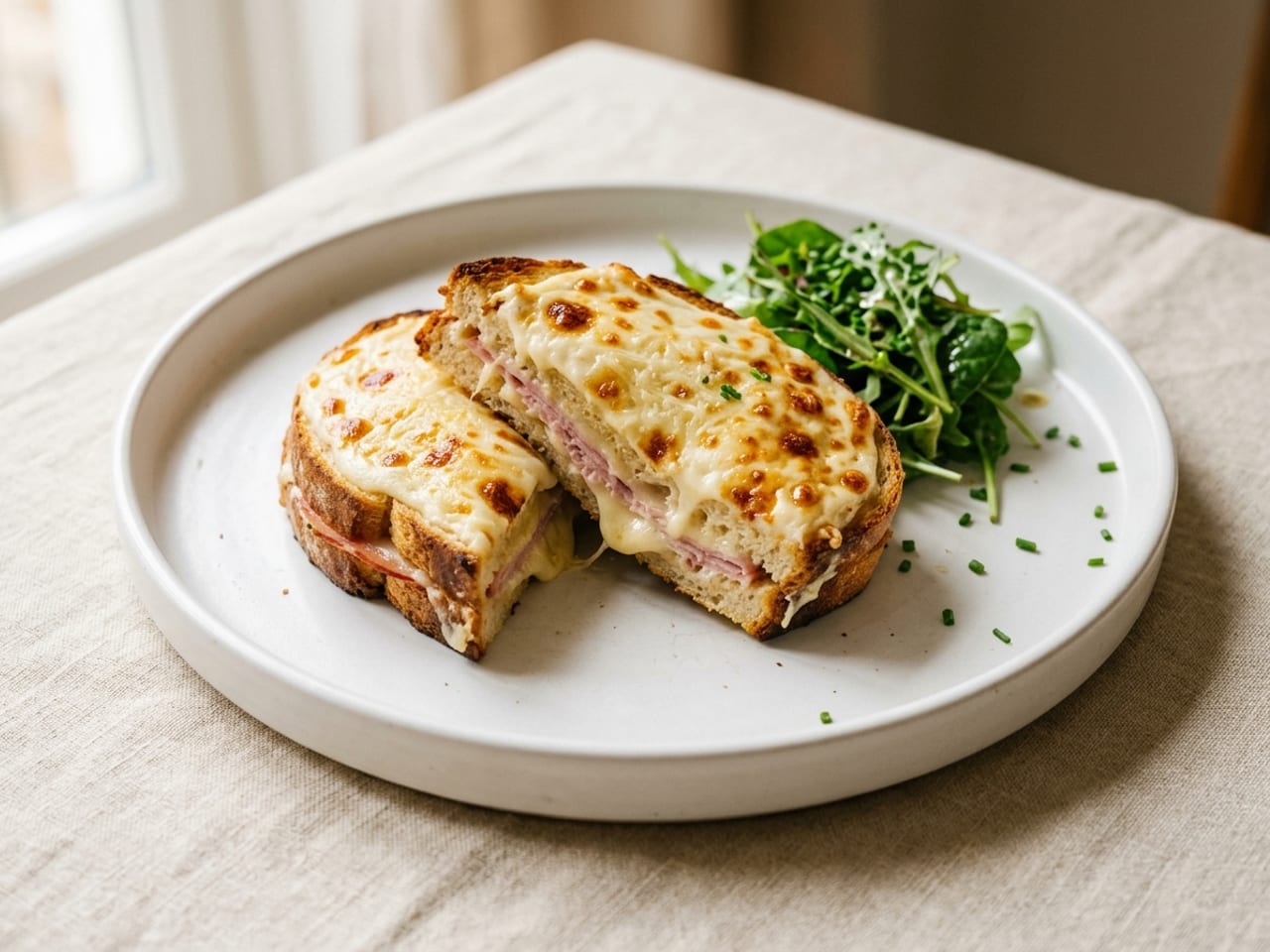
A white sauce of milk thickened with a white roux and seasoned with salt, white pepper and nutmeg — the base of Mornay, cream sauce, soubise and every gratin.
Make it: cook equal weights of butter and flour for two minutes without letting them colour, whisk in the milk, and simmer for ten to fifteen minutes with a bay leaf and a piece of onion if you have them; season at the end. Escoffier stewed lean veal in his for an hour and buttered the surface "lest a crust should form"2 — home kitchens dropped the veal a century ago and kept the butter trick.
Body: 60 g each of butter and flour per litre of milk (about two tablespoons of each per cup) for a coating sauce; 90 g for a binding sauce (croquettes, a soufflé base); 40 g for a thin one.
Small sauces: Mornay (Gruyère and Parmesan), crème (finished with cream), soubise (sweated onion), Nantua (crayfish butter).
On the plate: béchamel is the sauce you cook with more than the sauce you spoon on: it binds lasagne and moussaka, coats a gratin under the crust, tops a croque. When it is the finish, nap it thinly and let the grill colour it — an unbrowned white sauce is the beige plate every colour guide warns against.
Cook it: creamed spinach · baked pasta casserole
Velouté
Also: blond sauce, sauce velouté.
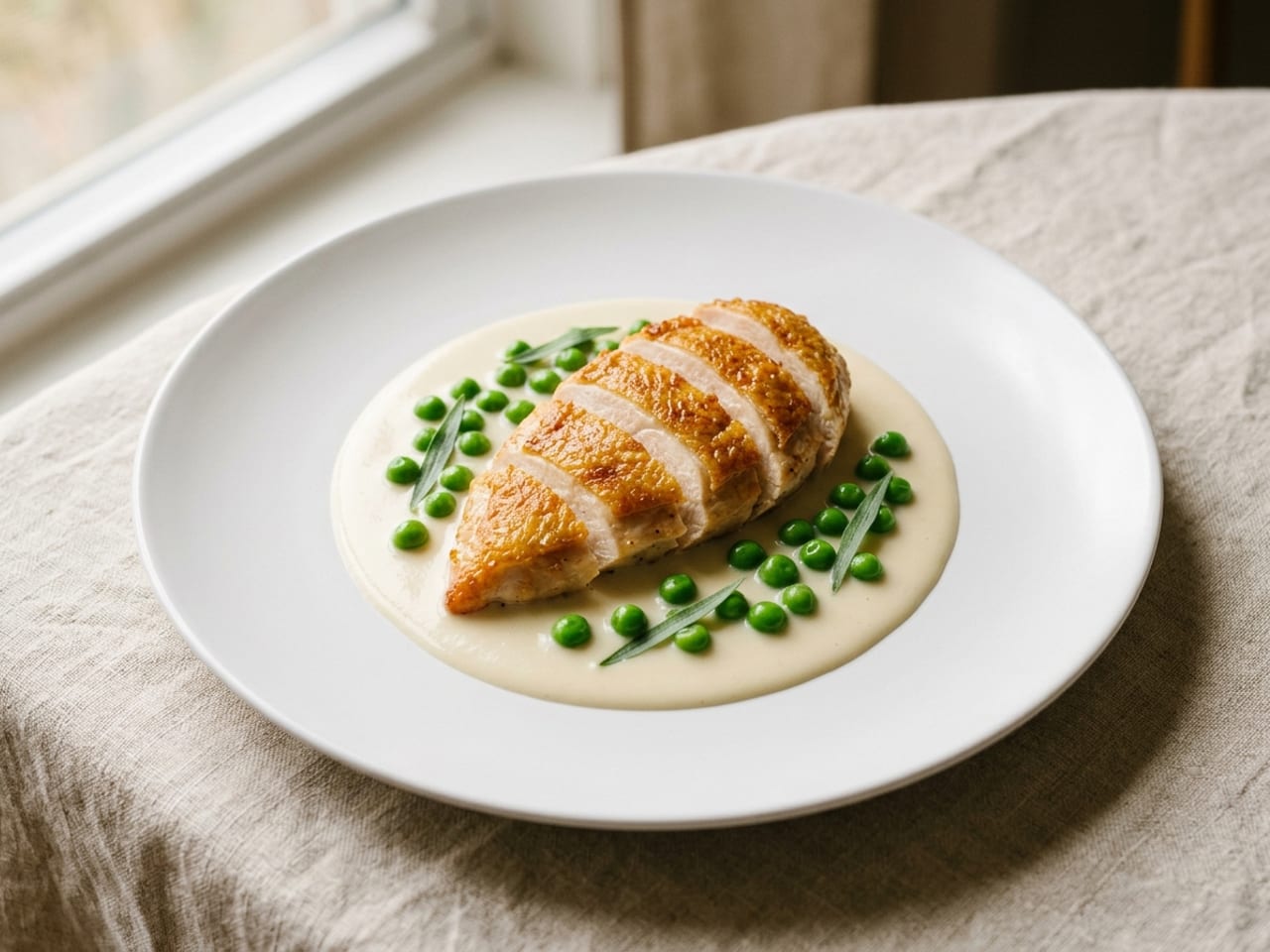
A blond sauce of white stock — chicken, veal or fish — thickened with a pale roux and simmered until smooth and velvety; the base of suprême, allemande, Bercy and Normande.
Make it: a blond roux (cooked a minute longer than a white one, to the colour of straw), a litre of good white stock per 60 g of roux, twenty to thirty minutes at a bare simmer, skimmed, then strained. Carême made his the day before a dinner and split it in two: one half became béchamel with cream, the other allemande, bound with egg yolks.1
Body: the stock does half the work — its gelatin gives velouté a sheen and a cling that flour alone cannot, so a thin stock needs more roux or a longer reduction.
Small sauces: suprême (chicken velouté with cream), allemande (yolks and lemon), Bercy (white wine and shallot, on fish velouté), Normande (mushroom and oyster liquor, cream), aurore (tomato).
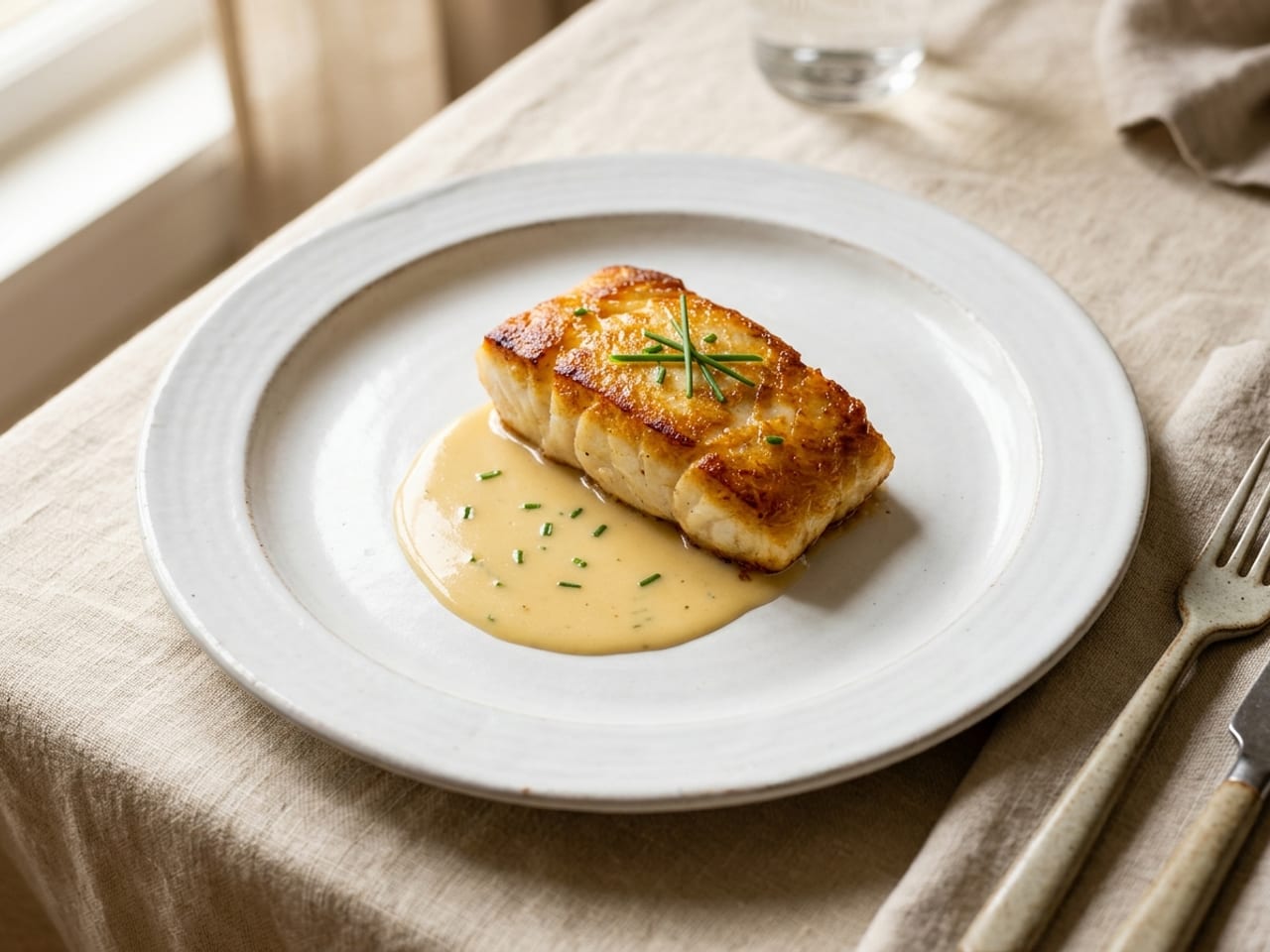
On the plate: a mirror of sauce. Spoon a thin, even pool down first, lay the sliced chicken or fish on it, and keep the sauce off the skin so the crisp side stays crisp.
Cook it: creamy dill sauce · mushroom sauce · svíčková
Espagnole
Also: brown sauce, sauce espagnole.
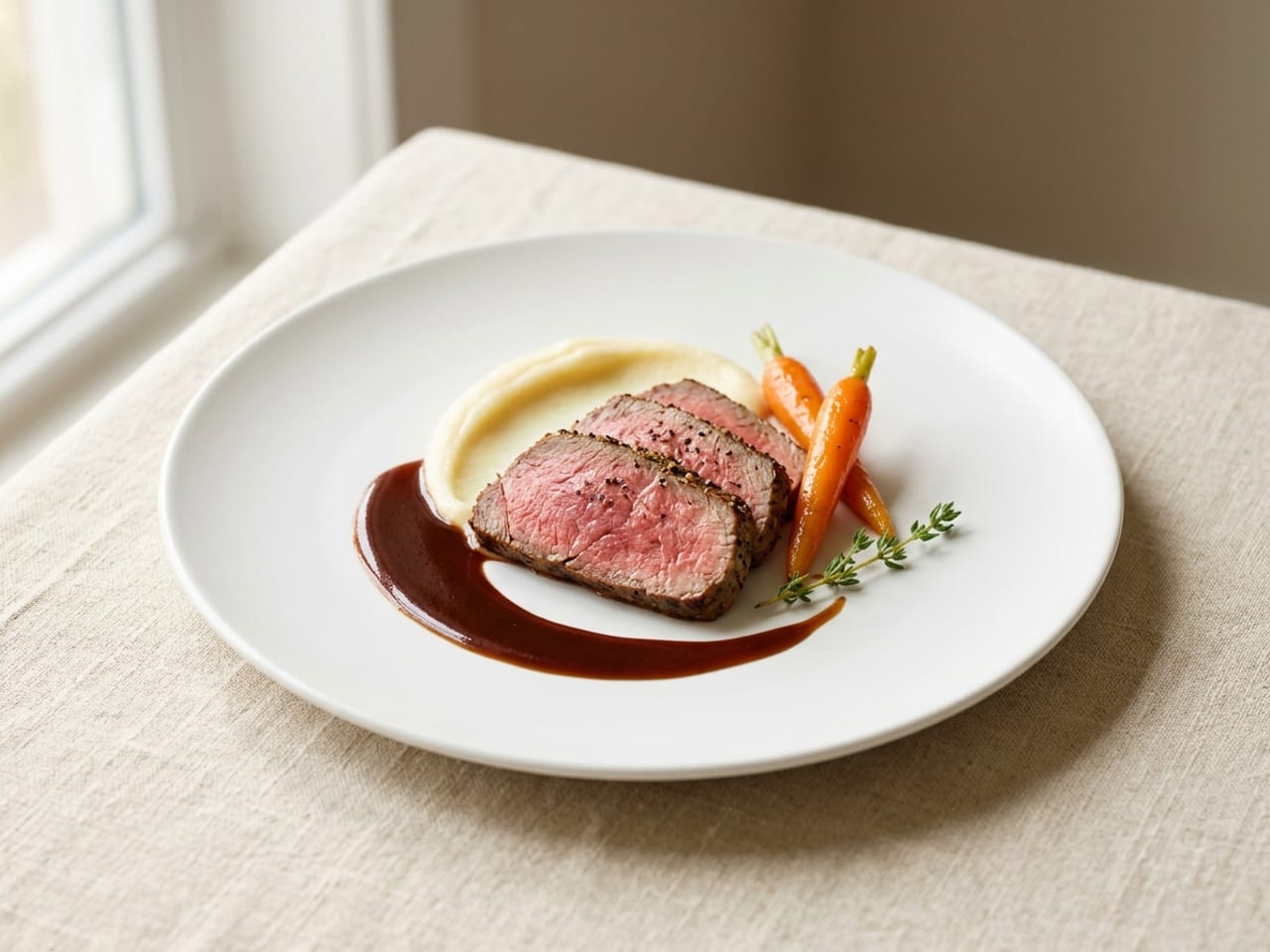
A brown sauce of brown stock, brown roux, mirepoix and tomato, simmered and skimmed for hours; reduced again with more brown stock it becomes demi-glace, the base of the classic brown sauces.
Make it: brown roux, a strong brown stock, a browned mirepoix and a spoon of tomato purée, then hours of slow simmering and skimming — Escoffier's word for it was despumation, and his 1903 method still ran to a day of it.2 Half espagnole, half brown stock, reduced by half, is demi-glace.
Today: most kitchens skip the mother and keep the idea. A good brown stock reduced to a jus, or thickened at the end with a slurry or beurre manié, plays the espagnole role on modern menus; the family survives as demi-glace and its daughters.
Small sauces: demi-glace, bordelaise (red wine, shallot, marrow), chasseur (mushroom, tomato, tarragon), Robert (onion and mustard), Madeira.
On the plate: around, not over. A brown sauce is spooned in a crescent or ring beside sliced meat so the seared crust stays dry — a spoon or two per portion, glossy, never a flood.
Cook it: beef roulades in gravy · beef goulash · roast beef
Sauce tomate
Also: tomato sauce, sauce tomat.
A tomato sauce in the French manner — tomatoes cooked down with salt pork, aromatics and stock, lightly bound with roux in Escoffier's version — the base of Provençale, Portugaise and Créole.
Make it: Escoffier renders salt pork with diced carrot and onion, cooks flour in the fat "until it begins to brown", adds raw tomatoes and white stock, and gives it an hour and a half in a moderate oven before sieving.2 The Italian branch — a soffritto, tomatoes, olive oil, no flour, no stock — is what most home cooks make now, and French cooks still file it under the same mother.
Why it is cooked: cooking collapses the tomato's cells, so the lycopene that gives it its colour is absorbed far better from a cooked paste than from raw fruit,11 and tomatoes cooked with olive oil raised blood lycopene where the same tomatoes cooked without oil did not.12 The long simmer also concentrates the tomato's glutamate — one of the reasons a tomato sauce tastes savoury rather than merely acidic.9
Small sauces: Provençale (garlic, olive oil, parsley), Portugaise (onion and garlic), Créole (onion, celery, pepper); on the Italian side, marinara, arrabbiata and ragù.
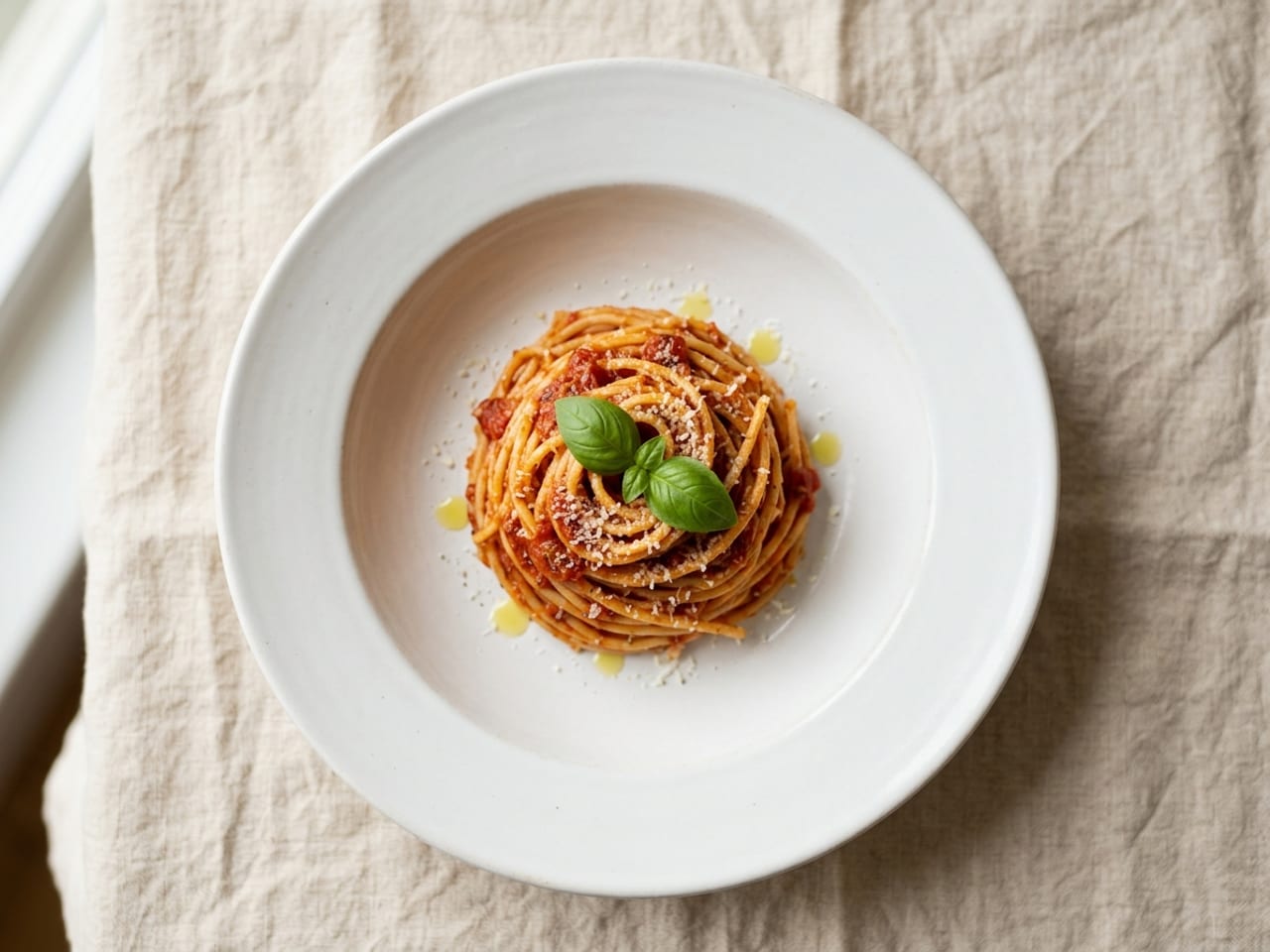
On the plate: coat, don't drown. Toss pasta in the sauce so every strand is dressed and twirl it into a nest with no puddle around it; under a protein, use a pool. Red wants a white plate and one green leaf, added last.
Cook it: tomato sauce with beef · ragù alla bolognese · stuffed peppers
Hollandaise
Also: sauce hollandaise, the warm butter emulsion.
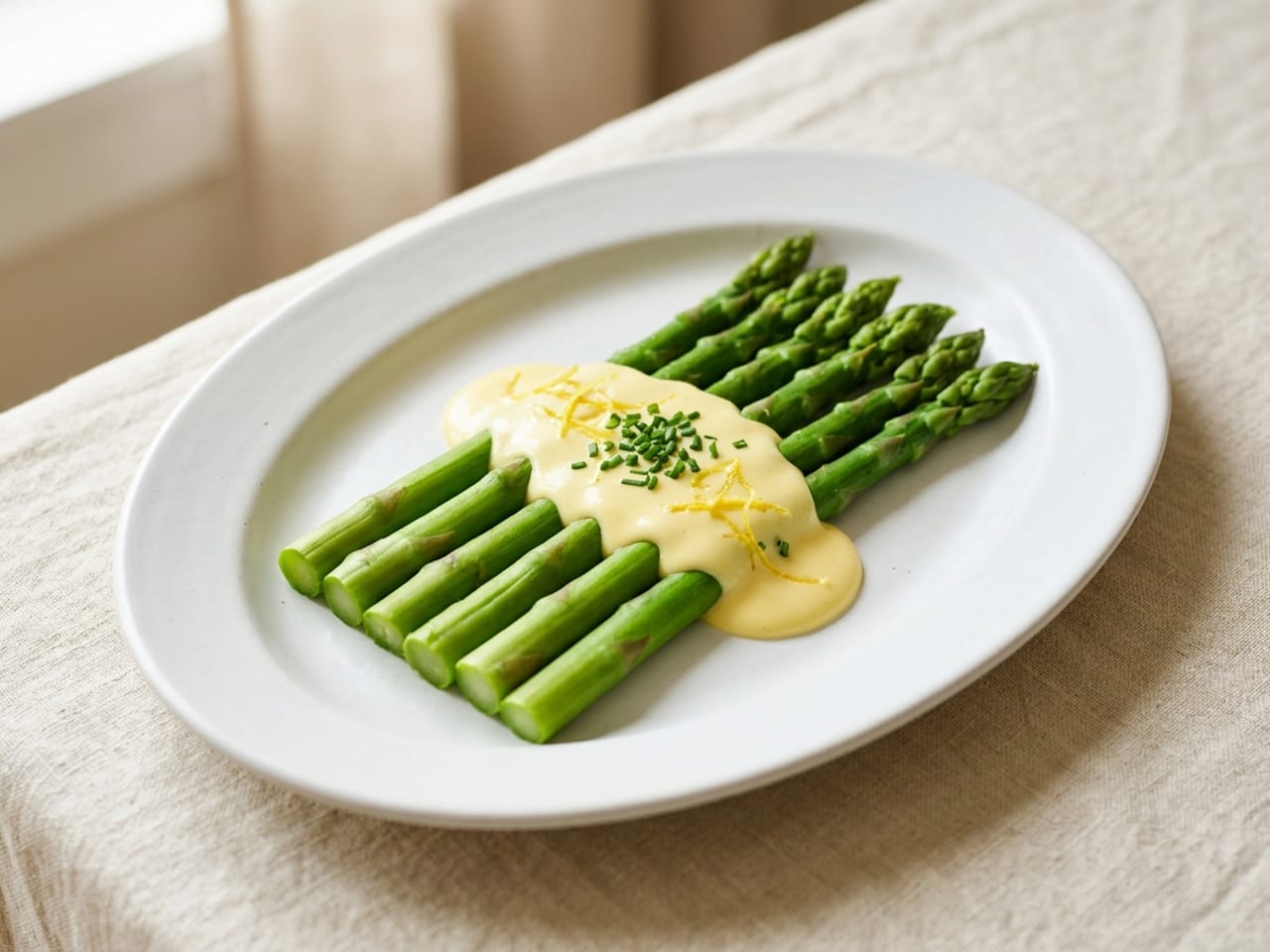
A warm emulsion of egg yolks and melted butter, sharpened with lemon or a vinegar reduction — the base of béarnaise, mousseline, maltaise and choron.
Make it: reduce a spoon of vinegar with a spoon of water and a few crushed peppercorns by three-quarters, whisk in the yolks over gentle heat until they thicken and hold a ribbon, then whisk in warm melted butter in a thin stream, finishing with lemon and salt. Escoffier's ratio for a quart was six yolks to a pound and a half of butter2 — three yolks to about 200 g of butter at home.
Why it holds: the yolk is the emulsifier. Its lipoproteins and lecithin coat the butterfat as it is whisked into droplets, so fat and water stay mixed instead of separating.5 Above roughly 65 °C the yolk proteins start to set and the sauce turns grainy; too much butter too fast, or a sauce left to cool, and it splits. The classic rescue — whisking the broken sauce, a spoonful at a time, into a little warm water or a fresh yolk — was explained in the pages of Nature: the fat droplets re-disperse in the new water phase.6
Small sauces: béarnaise (a tarragon and shallot reduction), mousseline (folded whipped cream), maltaise (blood orange), choron (béarnaise with tomato), foyot (béarnaise with meat glaze).
On the plate: the ribbon. Hollandaise goes over — one stripe across the middle third of the asparagus, the eggs or the fish, tips and edges left bare — never a flood. It should glisten, so make it within the hour and serve it warm, not hot.
Cook it: grilled salmon · citrus salmon · fish fillet
The family tree: mother sauces and their daughters
Every small sauce is a mother plus one or two additions. Learn the five and the rest of the classical repertoire is a single extra step each.
Mornay · from Béchamel
Béchamel enriched with grated Gruyère and Parmesan (and sometimes egg yolk) — the sauce under every gratin and on a croque monsieur.
Sauce crème · from Béchamel
Béchamel finished with cream and a squeeze of lemon; the everyday cream sauce for vegetables, eggs and poached fish.
Soubise · from Béchamel
Béchamel with a purée of slowly sweated onions folded in; classic with lamb and eggs.
Nantua · from Béchamel
Béchamel finished with cream and crayfish butter, served with quenelles and freshwater fish.
Suprême · from Velouté
Chicken velouté reduced with cream (Escoffier added mushroom cooking liquor); the sauce of poached chicken.
Allemande · from Velouté
Velouté bound with egg yolks and sharpened with lemon — Carême's fourth mother sauce, later filed under velouté; also called sauce parisienne.
Bercy · from Velouté
Fish velouté with reduced white wine and shallots, finished with butter and parsley.
Normande · from Velouté
Fish velouté with mushroom and oyster cooking liquor, bound with yolks and cream; the sauce of sole normande.
Aurore · from Velouté
Velouté (or béchamel) tinted pink with tomato purée and finished with butter.
Demi-glace · from Espagnole
Equal parts espagnole and brown stock reduced by half to a glossy, spoon-coating sauce — the working base of the brown small sauces.
Bordelaise · from Espagnole
Demi-glace with a reduction of red wine, shallot, thyme and pepper, finished with poached bone marrow; the steak sauce.
Chasseur · from Espagnole
Demi-glace with sautéed mushrooms, shallot, white wine and tomato, finished with tarragon and parsley — the hunter's sauce.
Sauce Robert · from Espagnole
Demi-glace with softened onion, white wine and vinegar, finished with mustard; classic with pork.
Madeira sauce · from Espagnole
Demi-glace reduced and finished with Madeira wine; the same idea with port or sherry carries the wine's name.
Provençale · from Tomate
Tomato sauce cooked with garlic, olive oil and parsley, often with mushrooms and olives.
Portugaise · from Tomate
Tomato sauce built on sweated onion with garlic and parsley, thinned with a little stock or demi-glace.
Créole · from Tomate
Tomato sauce with onion, celery and sweet pepper, seasoned with a bay leaf and a thread of cayenne.
Béarnaise · from Hollandaise
Yolks and butter emulsified over a reduction of tarragon, shallot, vinegar and pepper — technically a sibling made by the hollandaise method, and its most famous daughter.
Mousseline · from Hollandaise
Hollandaise lightened with softly whipped cream just before serving; also called sauce Chantilly.
Maltaise · from Hollandaise
Hollandaise finished with the juice and zest of blood oranges; the sauce for asparagus.
Choron · from Hollandaise
Béarnaise blushed with tomato purée, the tarragon garnish left out.
And the ones that are not on the tree. Mayonnaise is the cold emulsion — Escoffier kept it as the mother of the cold sauces (rémoulade, tartare, aïoli), and some schools now teach it as a sixth.2 Beurre blanc (a shallot and wine reduction mounted with cold butter), vinaigrette, a coulis and a salsa verde are modern or regional bases with no classical mother; a pan sauce — deglaze the pan, reduce, mount with butter — is the espagnole idea done in four minutes.
Why a sauce tastes of more than its ingredients
The stock-based mothers and the tomato are savoury in a way that none of their ingredients is alone, and the reason is well mapped. Meat and bones release inosinate into a stock; tomatoes, Parmesan, mushrooms and long-cooked onions supply glutamate; together the two taste far more intensely of umami than either does by itself — the synergy Yamaguchi measured in 1967,8 and the reason a spoon of tomato purée goes into espagnole, mushroom trimmings into velouté and Parmesan into Mornay.9 Browning adds the rest: the Maillard reaction between sugars and amino acids in a roasted bone, a brown roux or a browned mirepoix produces the roasted, meaty aroma compounds that make a brown sauce taste "deep".10
Tomato sauce is the same story with a nutrition footnote: cooking collapses the fruit's cells, so its lycopene is absorbed far better from a cooked sauce or paste than from raw tomatoes,11 and cooking the tomatoes with olive oil raised blood lycopene where cooking without oil did not12 — the fat in a proper sauce tomate is not only for flavour.
How chefs plate a sauce
A mother sauce made well and then poured over everything is the most common way a good dinner ends up looking like a canteen tray. Six moves cover almost every sauce on every plate. All the moves, their names and the thickness each needs are in sauce plating techniques.
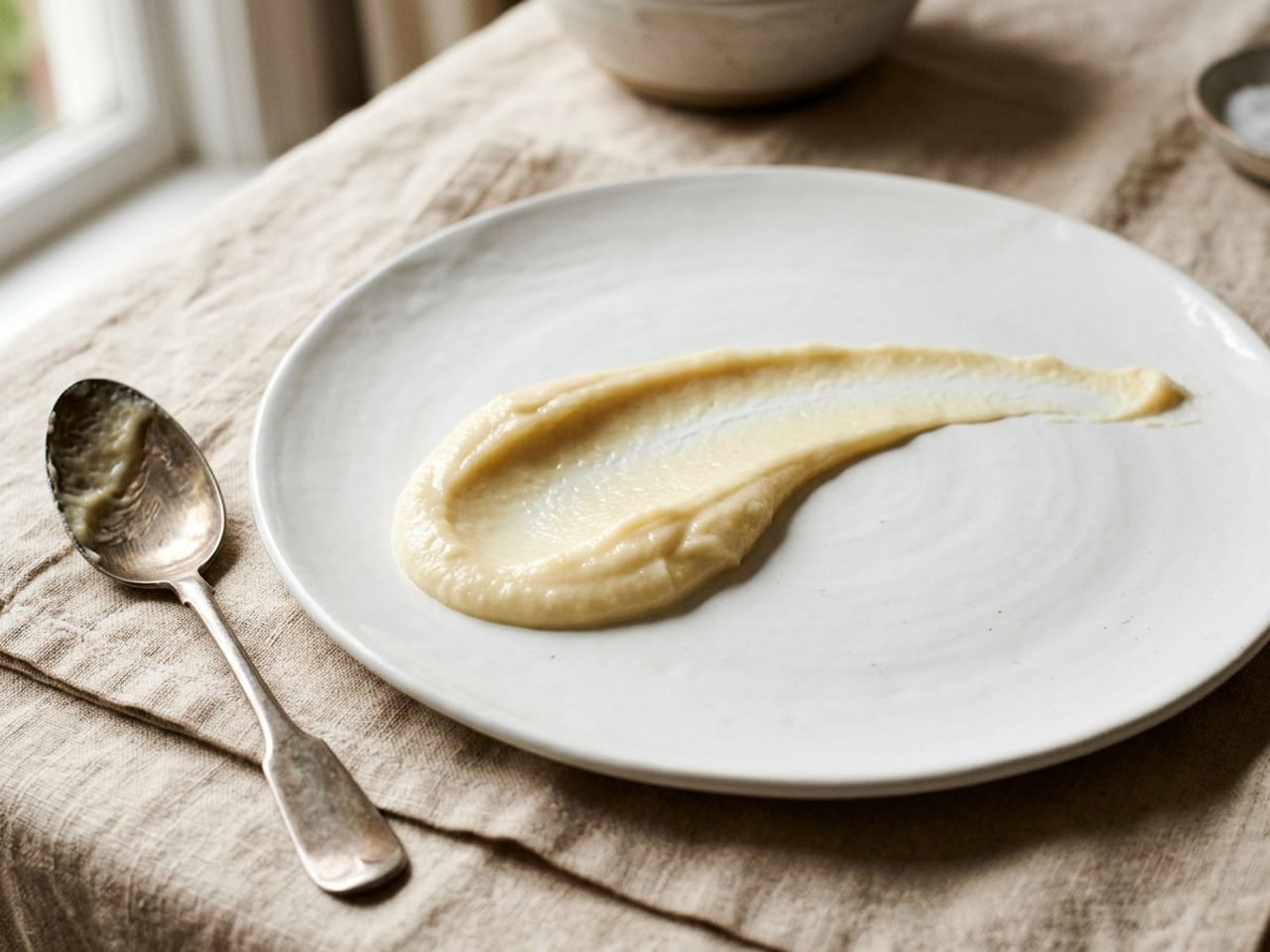
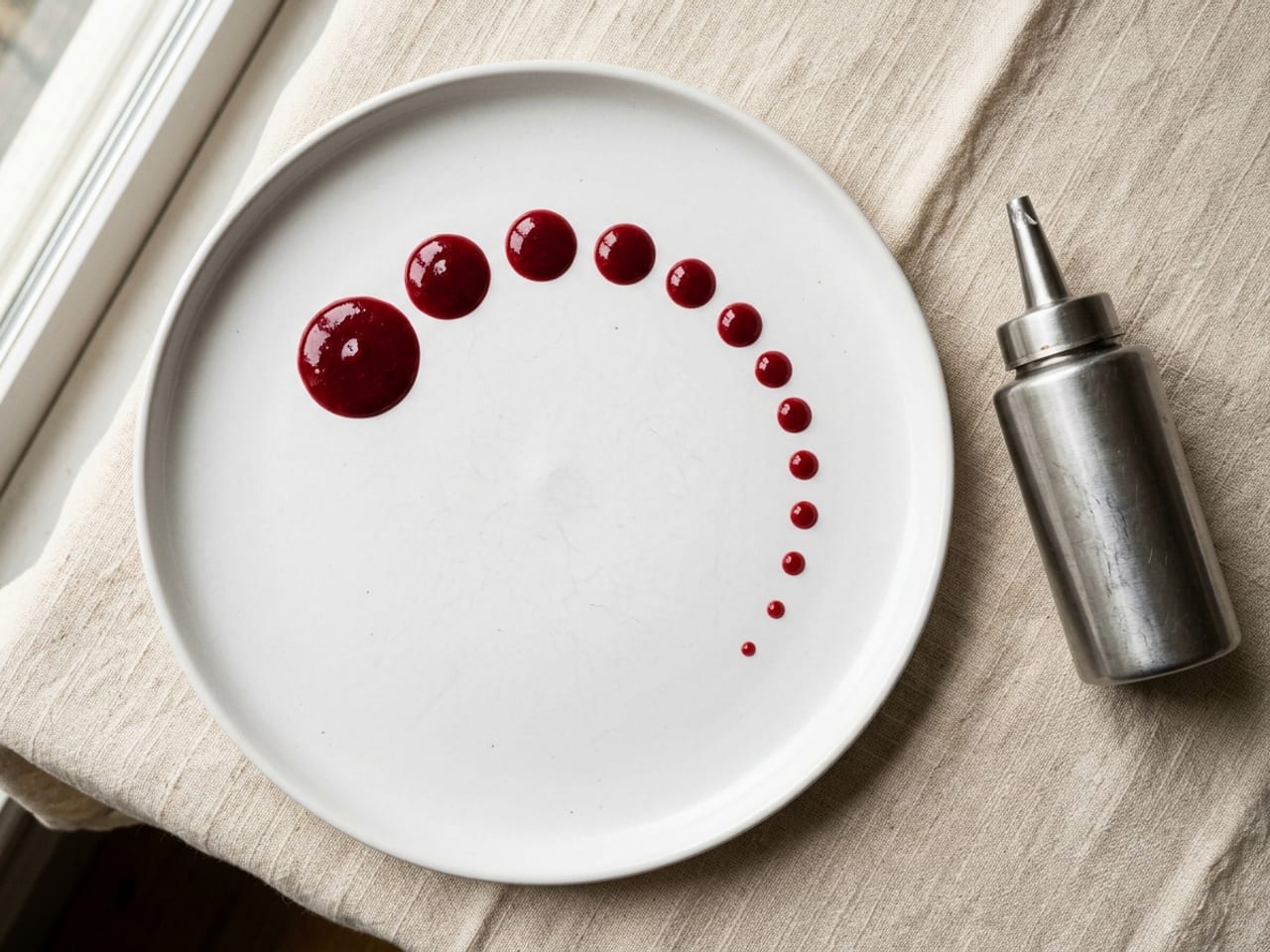
Same dinner, same sauce: drag to compare
A chicken breast, mash and beans with a cream mushroom sauce — poured over, then re-plated with the sauce as a pool underneath. Nothing was added but a pinch of chives.
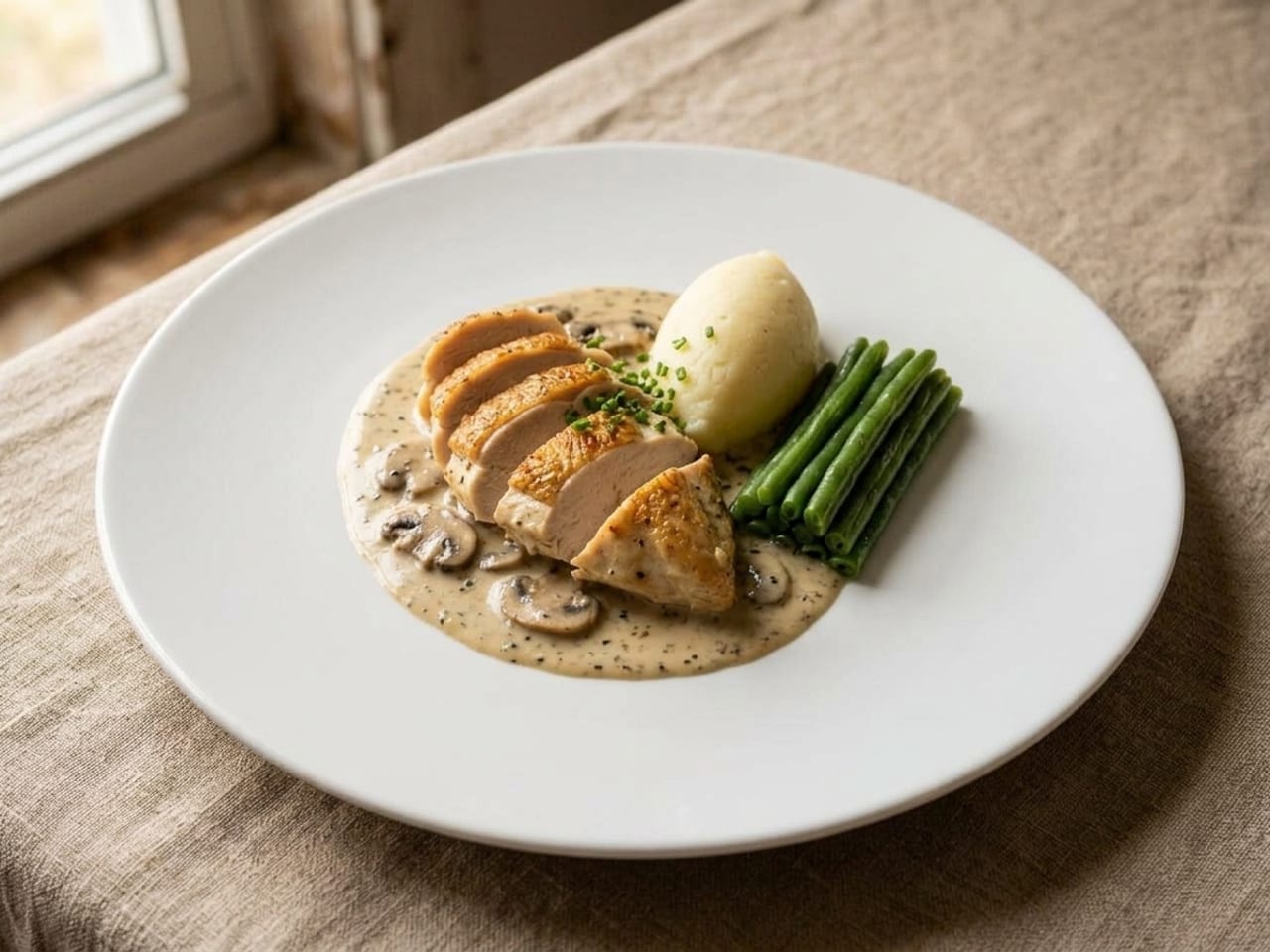
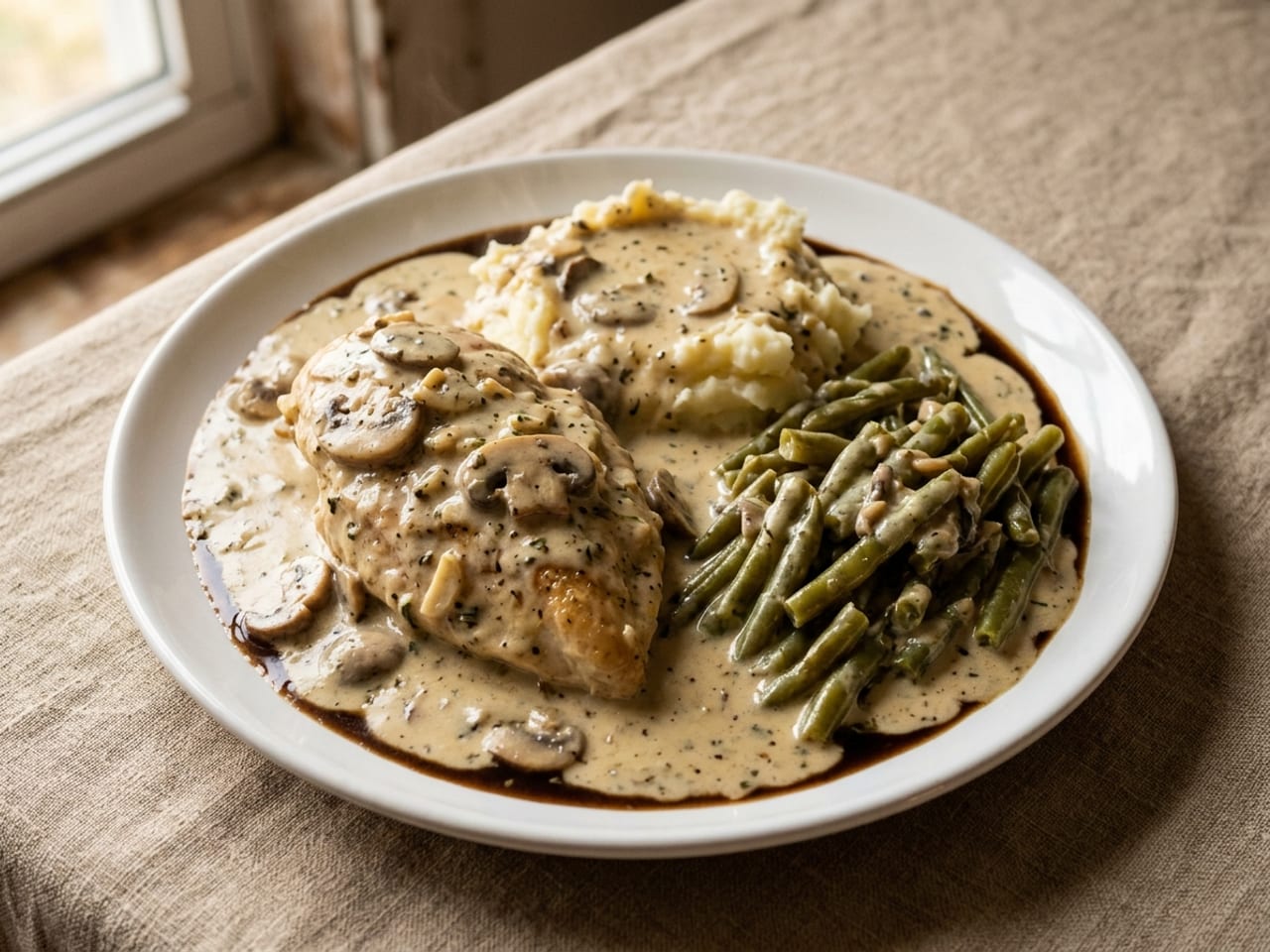 Poured overPooled under
- Decide where the sauce goes before anything touches the plateUnder (a pool) for sliced proteins and anything that should stay crisp on top; around (a crescent) for brown sauces beside meat; over (a ribbon) only for hollandaise and cream sauces on things that should glisten. The plating research treats a plate as a picture judged before the first bite,13 and the sauce is the largest block of colour in that picture.
- Two to three tablespoons per portionAbout 30–45 ml of a coating sauce is a restaurant portion — enough that every bite can meet it, not enough to pool at the rim. Put the rest in a warmed jug on the table.
- Nappe, then stopA sauce that coats the back of a spoon holds its edge on the plate. A thinner one runs to the rim; a thicker one sits in a lump. Adjust before plating — a splash of stock to thin, a minute's reduction or a nut of beurre manié to thicken.
- Sauce last, and warmPlate the food, then the sauce, then the garnish; a sauce that sits on the plate while you arrange the rest skins over and dulls. Warm the plates for anything with butter in it — hollandaise on a cold plate sets in seconds.
- Wipe the rimEvery drip on the rim reads as carelessness. Damp cloth, one wipe around, before the plate leaves the pass.
- One sauce per plate, or one plus an accentA main sauce and, at most, a few dots of a contrasting one (herb oil, a reduction). Two full sauces fighting for the same plate is the oldest banquet-hall mistake there is.
Seven sauce failures and the fix for each
- LumpsLiquid and roux met at the same temperature, or the liquid went in all at once. Add hot liquid to a cooled roux (or cold liquid to a hot one) and whisk hard as it goes in; lumps that form anyway come out through a fine sieve.
- Tastes of raw flourThe roux was not cooked long enough, or the sauce did not simmer long enough afterwards. Give a white roux two to three minutes before the liquid, then at least ten minutes at a simmer.
- Too thinReduce it uncovered, or whisk in beurre manié a piece at a time and simmer a minute. A brown roux thickens less than a white one, so an espagnole made with the darkest roux often needs the reduction.
- Too thickThin with the sauce's own liquid — milk, stock, tomato water — never plain water if you can help it, then re-season: a thicker sauce reads as less flavourful,7 so it was probably over-seasoned to compensate.
- A skin on topEscoffier's fix has not been improved on: butter the surface, or press a round of baking paper onto it while it waits.2
- Hollandaise split or scrambledGrainy means the yolks set — the bowl got too hot; there is no way back, start over with the bowl further from the heat. Oily and separated means the emulsion broke: whisk a tablespoon of warm water (or a fresh yolk) in a clean bowl and add the broken sauce a spoonful at a time.6
- Flat, however much salt goes inThe problem is body and umami, not salt. A spoon of tomato purée, a splash of reduced stock or a dried mushroom steeped in the liquid adds the glutamate and inosinate that make a sauce taste savoury together far more than either does alone.8
Sauce terms, defined
Mother sauce
One of the five base sauces of classical French cooking — béchamel, velouté, espagnole, sauce tomate and hollandaise — from which the small (daughter) sauces are made; Escoffier's leading sauces, Carême's grandes sauces.
Small sauce
A sauce derived from a mother sauce by one or two additions (cheese, wine, herbs, cream, a reduction); also called a daughter, secondary or compound sauce; Escoffier's petites sauces.
Roux
Fat and flour cooked together, used to thicken a liquid; the flour's starch granules swell and burst in the hot liquid and hold it in a smooth, stable suspension.
Nappe
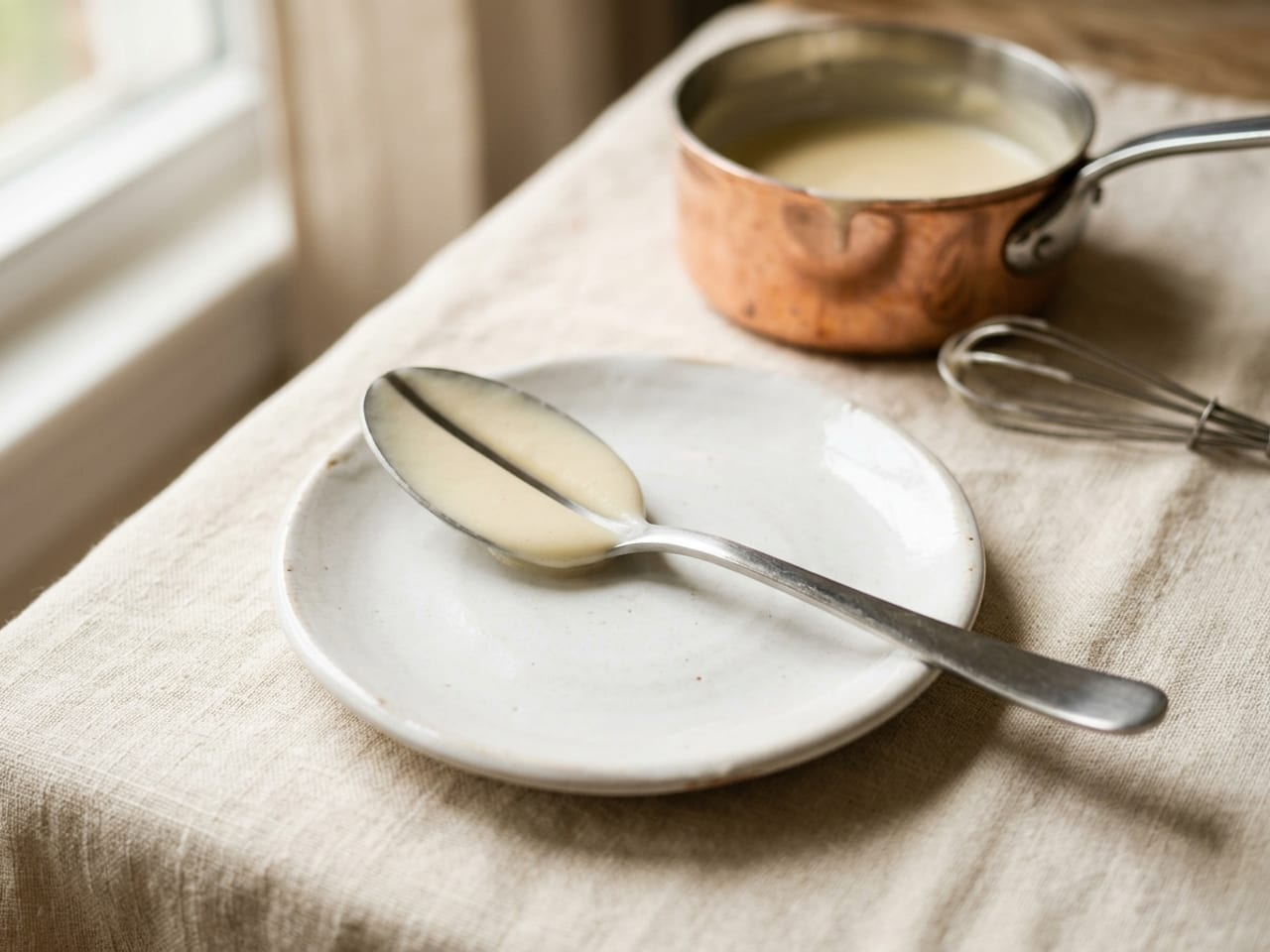
The consistency at which a sauce coats the back of a spoon and a finger drawn through the coating leaves a clean line that holds; the target body for a coating sauce.
Reduction
Simmering a liquid to evaporate water so what remains is thicker, glossier and more concentrated in flavour; the thickener behind jus, glace and demi-glace.
Liaison
A finishing binder of egg yolks and cream whisked into a hot sauce off the boil to enrich and thicken it; the move that turns velouté into allemande.
Beurre manié
Equal parts soft butter and flour kneaded to a paste and whisked into a simmering sauce in small pieces to thicken it at the last minute.
Slurry
Starch (cornflour, arrowroot or flour) stirred into cold liquid, then whisked into a simmering sauce; the fastest thickener and the one most likely to taste raw if the sauce is not brought back to the boil.
Monter au beurre
To finish a sauce by whisking in cold butter in pieces off the heat, for gloss, body and a rounder taste.
Emulsion
A stable mixture of fat and water held together by an emulsifier — egg yolk in hollandaise and mayonnaise, the milk solids and gelatin in a pan sauce mounted with butter.
See where the sauce should go on your own dinner
The pool-around-ribbon decision is easiest to learn on food you actually cooked. Upload a photo of tonight's plate and Plate Artists re-plates your own dish — moving the sauce to where a chef would put it, naming the move, and giving you the steps to do it on a real plate next time.
Your dish, sauced like a chef's
Snap it, upload it, and get the composed version back — with the sauce placement named and the moves to recreate it.
Start free · 1 enhancement →Free account · 1 free enhancement · No credit card
Mother sauces, answered
What are the 5 mother sauces?
The five mother sauces of classical French cooking are béchamel (milk thickened with a white roux), velouté (white stock thickened with a blond roux), espagnole (brown stock thickened with a brown roux, with mirepoix and tomato), sauce tomate (tomatoes cooked down with aromatics, lightly bound with roux in Escoffier's version) and hollandaise (a warm emulsion of egg yolks and butter with lemon). Each is a base from which the small, or daughter, sauces are made by one or two additions — Mornay from béchamel, suprême from velouté, bordelaise from espagnole, Provençale from tomate, béarnaise from hollandaise.
Who created the mother sauces?
Marie-Antoine Carême set out the system in 1833 in L'art de la cuisine française au dix-neuvième siècle, naming four great sauces — espagnole, velouté, allemande and béchamel — 'because with these four sauces we compose a very great number of small ones'. Auguste Escoffier revised the list in Le Guide Culinaire (1903): he treated allemande as a velouté finished with egg yolks and promoted tomato sauce and hollandaise, giving the five that culinary schools teach today. Escoffier's own wording was 'the leading sauces, also called mother sauces', and 'the basic sauces: Espagnole, Velouté, Béchamel, Tomato and Hollandaise'.
What are the 4 mother sauces?
The four are Carême's original list from 1833: espagnole, velouté, allemande and béchamel. Allemande is a velouté bound with egg yolks and lemon, so Escoffier later folded it into velouté and added sauce tomate and hollandaise in its place — which is why some sources say four mother sauces and most say five.
What is the difference between béchamel and velouté?
Both are roux-thickened white sauces; the difference is the liquid and the colour of the roux. Béchamel is milk on a white roux (cooked without colour) and is seasoned with nutmeg; velouté is white stock — chicken, veal or fish — on a blond roux cooked a few minutes longer to the colour of straw. Béchamel is neutral and creamy and is mostly used to bind and coat (gratins, lasagne, croques); velouté tastes of its stock and is the classic sauce to pool under poached or roasted chicken and fish.
What is espagnole sauce?
Espagnole is the classical brown mother sauce: brown stock thickened with a brown roux, simmered for hours with browned mirepoix and tomato purée and skimmed until it is smooth and glossy. Combined with an equal amount of brown stock and reduced by half it becomes demi-glace, the base of bordelaise, chasseur, Robert and Madeira sauces. Modern kitchens rarely make the full espagnole; a well-reduced brown stock (a jus) or a stock thickened at the end with a slurry plays the same role.
Is mayonnaise a mother sauce?
Not in the classical list of five, which covers warm sauces. Escoffier kept mayonnaise separate as the mother of the cold sauces (rémoulade, tartare, aïoli and the rest), and some modern curricula teach it as a sixth mother sauce for that reason. It is made by the same principle as hollandaise — egg yolk emulsifying fat — but cold, with oil instead of butter.
What are daughter sauces?
Daughter sauces — Escoffier's 'small sauces', also called secondary or compound sauces — are made from a mother sauce by adding one or two ingredients. Mornay is béchamel with Gruyère and Parmesan; suprême is chicken velouté with cream; bordelaise is demi-glace with red wine, shallot and marrow; Provençale is tomato sauce with garlic and olive oil; béarnaise is the hollandaise method over a tarragon and shallot reduction. Learn the five mothers and the daughters are a single extra step each.
What does nappe mean?
Nappe (from the French for a tablecloth) is the consistency at which a sauce coats the back of a spoon and a finger drawn through the coating leaves a clean line that does not run back together. It is the target body for a coating sauce: thick enough to hold its edge on the plate, thin enough to flow. Napper, the verb, means to coat food with sauce.
Which mother sauce is the easiest to make?
Béchamel. It needs butter, flour, milk and ten minutes: cook equal weights of butter and flour for two minutes, whisk in the milk, simmer until it coats a spoon, season with salt, white pepper and nutmeg. Tomato sauce is as easy and more forgiving. Velouté needs a good stock, espagnole needs hours, and hollandaise needs attention to temperature — but it is a five-minute sauce once the yolks have been scrambled once and the lesson is learned.
Why did my hollandaise break?
Two different failures look alike. If the sauce is grainy, the yolks cooked — the bowl was too hot (yolk proteins begin to set around 65 °C) — and it cannot be saved. If it is oily and separated, the emulsion broke because the butter went in too fast or the sauce was allowed to cool; whisk a tablespoon of warm water or a fresh yolk in a clean bowl and add the broken sauce a spoonful at a time, and the butter droplets re-disperse — the rescue whose physics a 1977 paper in Nature worked out for sauce béarnaise.
How do you plate a sauce like a chef?
Decide the sauce's place before plating. Published sources allow all three places, under, around or over the food, and disagree on whether the sauce goes down first or last, so what follows is our own suggestion, not a rule: under the food as a thin pool for sliced chicken or fish; around the food in a crescent for brown sauces and jus beside meat; over the food as one ribbon for hollandaise and cream sauces on things that should glisten. Use two to three tablespoons per portion (our figure), thicken the sauce until it coats a spoon, serve it warm, keep to one sauce plus at most a few dots of an accent, and wipe the rim before the plate goes out. What the published sources say about each place is in our sauce plating guide.
The texts and research behind this guide
Two primary culinary texts (Carême's 1833 treatise and the first English edition of Escoffier's 1903 guide, both read in the Internet Archive scans) and eleven peer-reviewed studies verified via Crossref and PubMed. Every quotation and finding above comes from one of these.
- Carême, M.-A. (1833). L'art de la cuisine française au dix-neuvième siècle, tome III: Observations préliminaires sur les grandes sauces. Paris, chez l'auteur, digitised by the Internet Archive from the Leeds University Library copy. archive.org
- Escoffier, A. (1907). A Guide to Modern Cookery, the first English edition of Le Guide Culinaire (first published in French in 1903), Part I, Chapter II: The leading warm sauces. Heinemann, digitised by the Internet Archive from the Cornell University Library copy. archive.org
- Ratnayake, W. S., & Jackson, D. S. (2008). Starch gelatinization. Advances in Food and Nutrition Research, 55, 221–268. doi:10.1016/S1043-4526(08)00405-1
- Kato, Y. (2003). Chemical and sensory changes in flavor of roux prepared from wheat flour and butter by heating to various temperatures. Food Science and Technology Research, 9(3), 264–270. doi:10.3136/fstr.9.264
- Anton, M. (2013). Egg yolk: structures, functionalities and processes. Journal of the Science of Food and Agriculture, 93, 2871–2880. doi:10.1002/jsfa.6247
- Perram, C. M., Nicolau, C., & Perram, J. W. (1977). Interparticle forces in multiphase colloid systems: the resurrection of coagulated sauce béarnaise. Nature, 270, 572–573. doi:10.1038/270572a0
- Hollowood, T. A., Linforth, R. S. T., & Taylor, A. J. (2002). The effect of viscosity on the perception of flavour. Chemical Senses, 27(7), 583–591. doi:10.1093/chemse/27.7.583
- Yamaguchi, S. (1967). The synergistic taste effect of monosodium glutamate and disodium 5′-inosinate. Journal of Food Science, 32, 473–478. doi:10.1111/j.1365-2621.1967.tb09715.x
- Yamaguchi, S., & Ninomiya, K. (2000). Umami and food palatability. The Journal of Nutrition, 130(4), 921S–926S. doi:10.1093/jn/130.4.921S
- van Boekel, M. A. J. S. (2006). Formation of flavour compounds in the Maillard reaction. Biotechnology Advances, 24, 230–233. doi:10.1016/j.biotechadv.2005.11.004
- Gärtner, C., Stahl, W., & Sies, H. (1997). Lycopene is more bioavailable from tomato paste than from fresh tomatoes. The American Journal of Clinical Nutrition, 66, 116–122. doi:10.1093/ajcn/66.1.116
- Fielding, J. M., Rowley, K. G., Cooper, P., & O'Dea, K. (2005). Increases in plasma lycopene concentration after consumption of tomatoes cooked with olive oil. Asia Pacific Journal of Clinical Nutrition, 14(2), 131–136. PubMed 15927929
- Spence, C., Piqueras-Fiszman, B., Michel, C., & Deroy, O. (2014). Plating manifesto (II): the art and science of plating. Flavour, 3, 4. doi:10.1186/2044-7248-3-4
Keep going
Plating techniques & styles — the glossary
The swoosh, the pool, dots, the smear and the brush stroke as hand moves, plus the eight named plating styles on one dinner.
Plating 101 — the composition guide
The clock method, height, negative space, sauce work and garnish rules, step by step on one plate.
Michelin-star plating — the fine-dining anatomy
The purée-sear-crunch structure, the five signature moves and the sixty-second home pass.
How to plate food — dish by dish
Pasta, steak, chicken, salmon and seven more everyday dinners, each shown before and after re-plating.
Types of plates — the dinnerware glossary
Every plate, bowl and platter defined and sized: charger to saucer, rimmed to coupe, porcelain to slate, and which one to plate on.
What is an amuse-bouche?
The free first bite: the word, its history, how it differs from canapés and appetizers, and twelve ideas to make at home.
Au jus: what it is and how to make it
The unthickened roast sauce, with or without drippings, and how it differs from jus lié, gravy and demi-glace.